On August 12, 2025, Stanford University’s Purvesh Khatri team published a research paper online in the journal Immunity, titled “A conserved immune dysregulation signature is associated with infection severity, risk factors prior to infection, and treatment response.” This study did not delve into the widely existing epidemiological associations but focused on exploring how risk factors influence the potential immune response before infection and whether this influence is related to the prognosis of severe infection patients (including mortality rates). The study identified a conserved gene feature consisting of 42 gene sets—Severe-or-Mild (SoM)—which can predict infection severity and all-cause mortality. Notably, the SoM feature can be modulated through healthy lifestyle interventions.
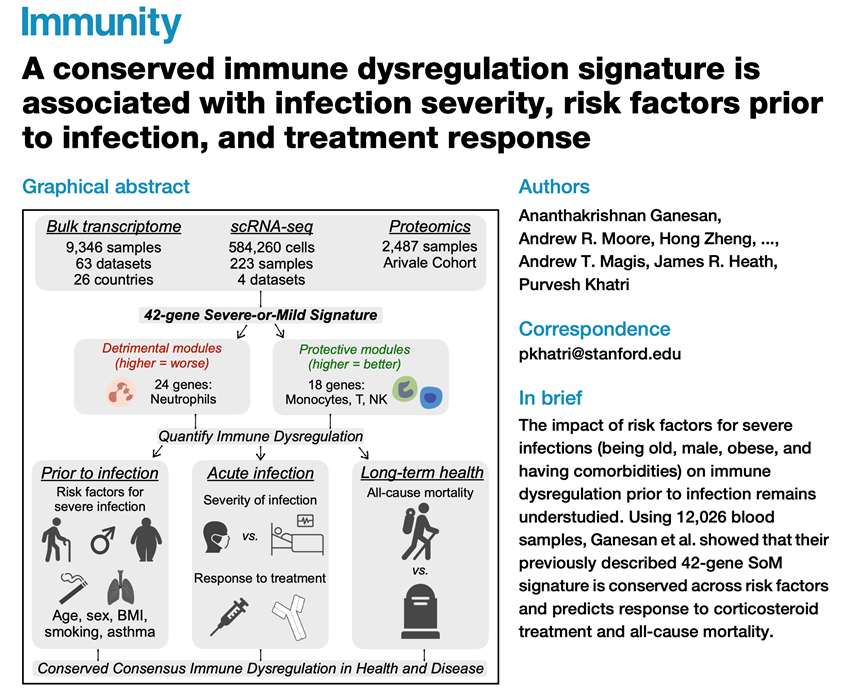
Figure 1. Article Cover
Research Background
Factors such as advanced age, male gender, obesity, smoking, and comorbidities (e.g., asthma, diabetes) are considered major risk factors for poor prognosis after severe infections. Approximately 70% of severe infection patients have at least one of these risk factors, and over 40% of patients have two or more. Despite overwhelming epidemiological evidence, the underlying mechanisms of these risk factors are mostly studied in isolation. The key issue is that it remains unclear how these risk factors affect the immune response status before infection and whether they increase the risk of severe consequences, including death, by affecting the same immune pathways.
Research Results
1. SoM Host Response Feature Scores are Conserved in Bacterial Infections and Correlate with Severity
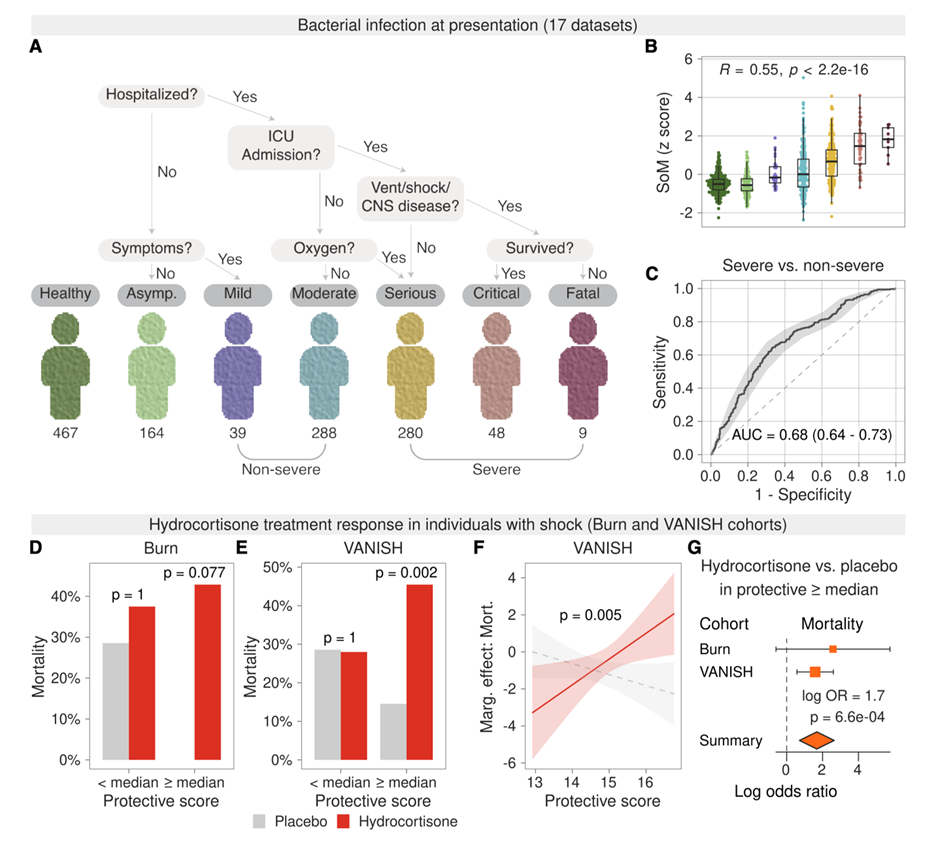
Figure 2. Quantifying immune dysregulation through SoM scores is conserved in bacterial infections, and the severity of the condition is related to different responses to hydrocortisone treatment.
Box 1.Supplementary BackgroundSoM score methodology was previously introduced by the authors in a 2021 article in Immunity: Multi-cohort analysis of host immune response identifies conserved protective and detrimental modules associated with severity across viruses. Here, a brief introduction to its acquisition method is provided to facilitate understanding of this article. The authors collected blood transcriptomes from 4,780 patients infected with 16 different viruses across 34 cohorts, as well as single-cell RNA sequencing profiles of over 700,000 immune cells from multiple cohorts. From this large integrated dataset, the authors identified four gene modules, including two conserved protective modules associated with mild cases and two detrimental modules associated with severe disease. The calculation of the SoM score:

Where GM represents the geometric mean expression value of genes in the module;Module 1 and Module 2 belong to the detrimental modules, while Module 3 and Module 4 belong to the protective modules; the higher the SoM score, the stronger the expression of detrimental modules relative to protective modules, which is associated with more severe symptoms. The geometric mean calculation for the module is as follows: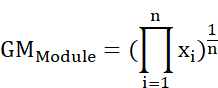 Where Xi = expression value of gene i in the samplen = number of genes in the module
This article primarily collected data from 1,295 samples, including 467 healthy individuals and 828 patients with varying severity of bacterial infections. The authors calculated the SoM score for each patient and found that this score positively correlates with the severity of bacterial infections. The SoM score distinguished severe bacterial infections from non-severe bacterial infections with an AUC of 0.68. Overall, these results strongly suggest that immune dysregulation exists in individuals with severe infections, regardless of whether the infection is caused by bacteria or viruses.
2. Protective Host Response Scores Correlate with Differential Responses to Hydrocortisone
The authors focused on the components of immune features—particularly whether the protective host response score derived from the SoM feature could predict the prognosis of sepsis patients receiving hydrocortisone treatment. By integrating transcriptomic data from multiple sepsis cohorts, the researchers divided patients into high and low protective response score groups:
-
The low protective score group showed significantly reduced survival rates after hydrocortisone treatment;
-
The high protective score group exhibited neutral or positive treatment responses (survival rates were unaffected or improved).
This indicates that the efficacy of hydrocortisone in treating sepsis is bidirectional: patients with a strong baseline immune status can tolerate or benefit from the drug, while those with impaired protective immune responses may be harmed by the drug. The study ultimately confirmed that the protective host response components within the SoM feature can serve as predictive biomarkers for hydrocortisone treatment in sepsis. This finding provides a new basis for personalized treatment decisions: patients suitable for hydrocortisone intervention can be precisely screened based on pre-treatment immune gene expression profiles. Thus, critical steps toward precision medicine in intensive care are achieved—immunomodulatory therapies are no longer solely reliant on clinical manifestations but are directly guided by baseline immune status.
3. Detrimental Host Response Modules are Primarily Driven by Neutrophils
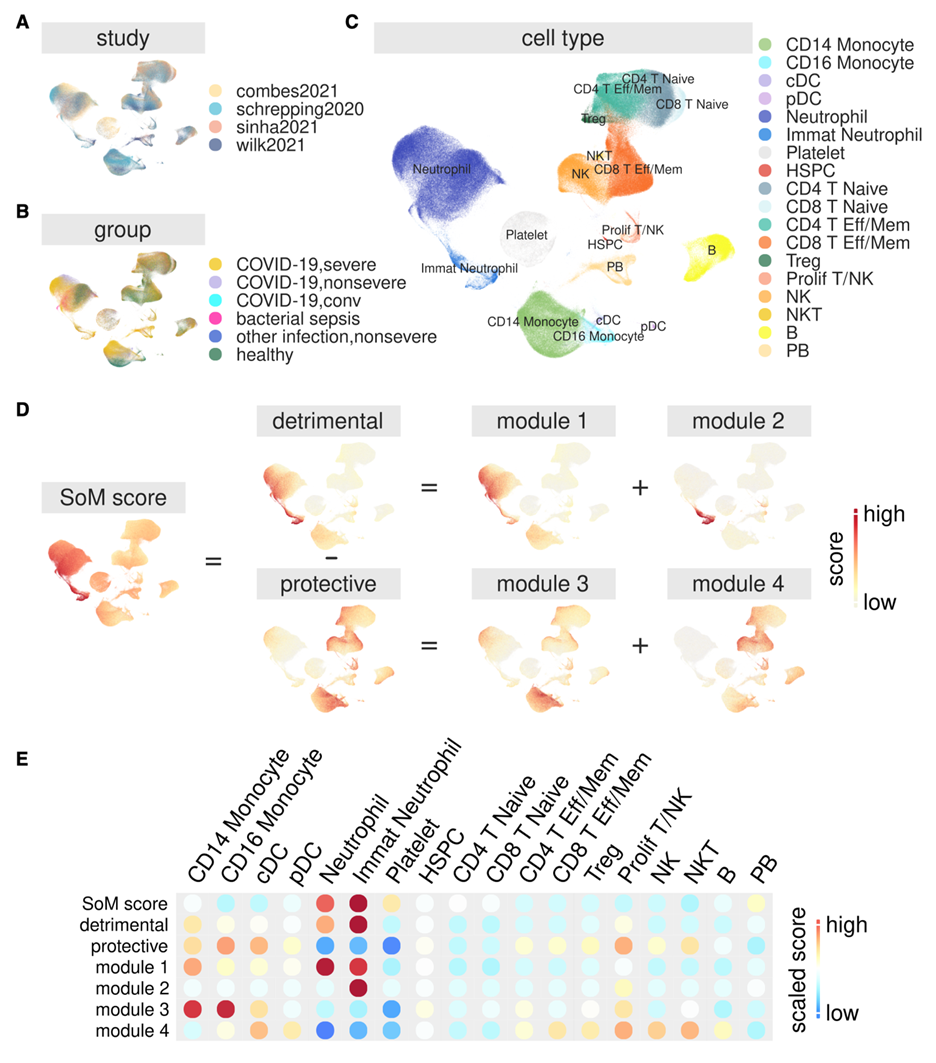
Figure 3. Gene modules in the SoM signature are preferentially expressed in different immune cell types.
The core objective of this phase of research is to elucidate the key immune cell populations driving detrimental host responses (modules 1/2 in the SoM feature) and to clarify their biological differences from protective modules (modules 3/4), with a focus on revealing the mechanisms of myeloid cells, such as neutrophils, in immune dysregulation during severe infections. Through integrative analysis, the researchers systematically addressed this scientific question: First, by utilizing integrated single-cell databases for cell type tracing, it was found that genes in modules 1/2 are preferentially expressed by neutrophils, while modules 3/4 are primarily enriched in lymphocytes (T cells, NK cells, and monocytes); to further validate this finding, the authors discovered that the SoM score is only correlated with disease infection severity in neutrophils, while the SoM score in other cells is not significant. The authors also confirmed in COVID-19 that the SoM score in neutrophils correlates with the severity of COVID infection.
Overall results indicate that the essence of severe infections is the overactivation of neutrophils/myeloid cells, whose mediated immune dysregulation suppresses adaptive immune responses; while mild prognosis depends on the activity of lymphocyte-dominated protective pathways. This cellular map not only reveals the immune-driven mechanisms of infection severity but also provides a theoretical framework for intervention strategies targeting myeloid-lymphocyte balance.
4. Immune Dysregulation is More Common in Severe Asthma Patients and Associated with Adverse Reactions to Monoclonal Antibody Treatment
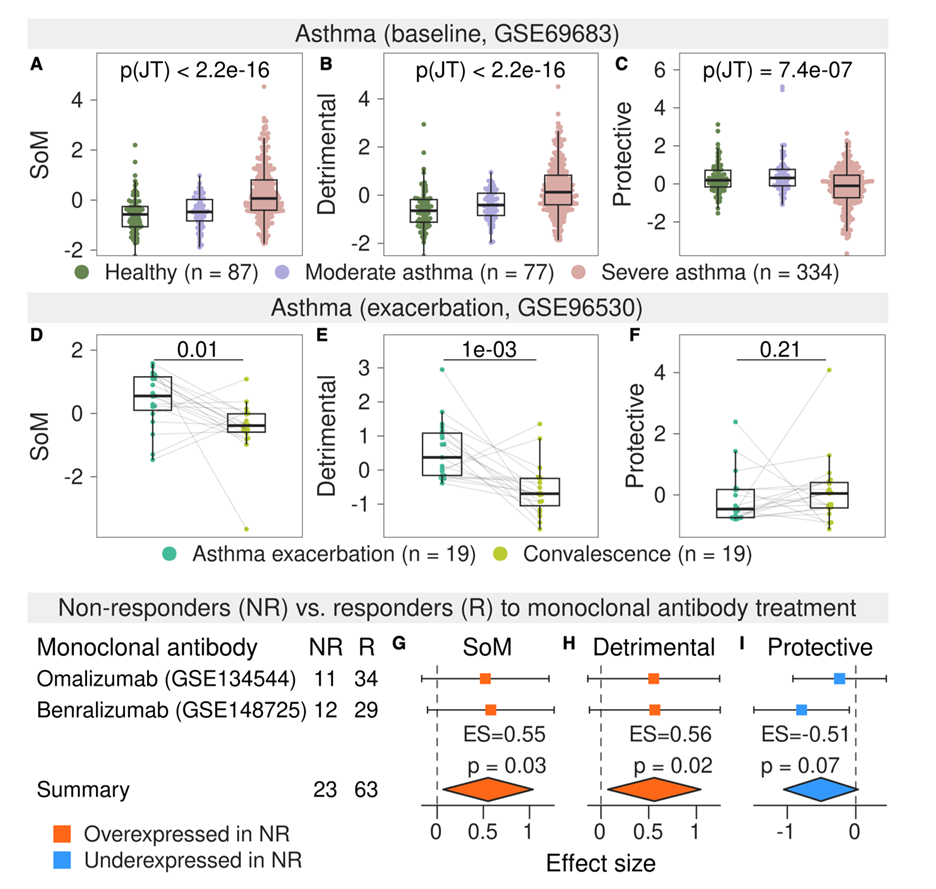
Figure 4. Quantitative indicators of immune dysregulation SoM are associated with disease severity in asthma patients and responses to mAb treatment.
The authors validated their findings using datasets from asthma patients with varying severity and found that the SoM score was significantly elevated in severe asthma patients. Additionally, by analyzing datasets from different disease stages (recovery and exacerbation), they observed that recovery patients had lower SoM scores, while exacerbation patients showed a trend of increased SoM scores. Notably, although monoclonal antibodies (mAb) are a key treatment for asthma, some patients exhibit poor responses to treatment (insensitivity). The study found that the SoM score can predict patients’ sensitivity to mAb treatment—an elevated SoM score indicates that patients are more likely to develop resistance to mAb treatment.
5. Detrimental Host Response Modules are Associated with Risk Factors for Severe Infections
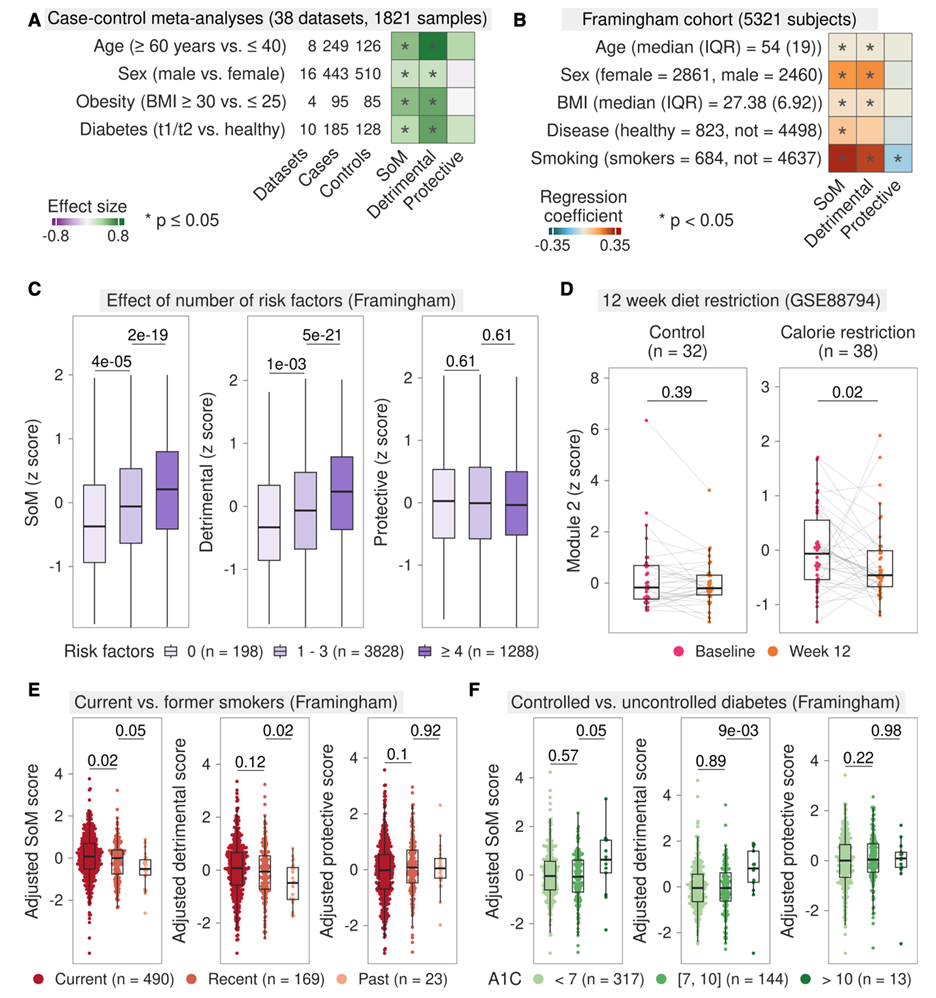
Figure 5. Quantitative scores of immune dysregulation SoM are elevated in patients with severe infections combined with risk factors. The authors integrated data from 38 datasets for analysis and validated the correlation between risk factors and SoM scores using the Framingham cohort dataset. The results indicated that both SoM scores and their detrimental module scores were positively correlated with risk factors, and the SoM score increased with the number of risk factors. More importantly, the study found that the SoM score could be improved by lifestyle changes (e.g., smoking cessation). The team grouped patients in the cohort who made lifestyle changes and those who did not (including dietary restrictions, smoking cessation, and blood sugar control) and observed a significant decrease in the SoM scores of those who made lifestyle changes.
6. Increased Immune Dysregulation is Associated with Higher All-Cause Mortality
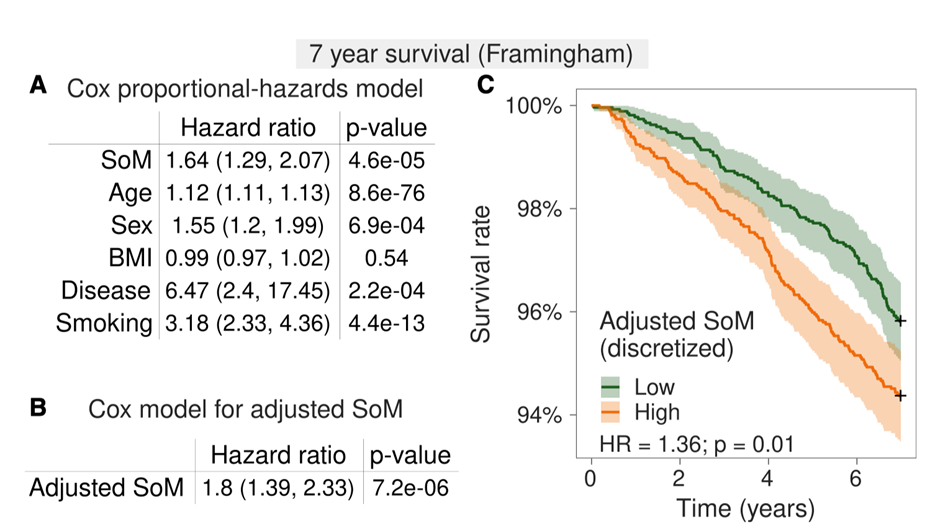 Figure 6. Survival Curves The authors utilized data from the Framingham cohort to explore the relationship between immune dysregulation scores (SoM score) and all-cause mortality. The study found that the SoM score is an independent predictor of all-cause mortality. Even after adjusting for confounding factors such as age, gender, BMI, disease status, and smoking history, the SoM score remained significantly positively correlated with all-cause mortality. Further survival analysis by grouping patients based on high and low SoM scores showed that patients in the high SoM score group had a significantly higher risk of all-cause mortality compared to the low score group. In summary, this study confirms that elevated SoM scores are significantly associated with increased risk of all-cause mortality.
Research Highlights
- SoM scores can predict the severity of bacterial infections and the response to hydrocortisone treatment;
- SoM scores are associated with the severity of asthma and risk factors for infections;
- Healthy lifestyles can modify SoM scores;
- SoM can independently predict patients’ all-cause mortality.
References:10.1016/j.immuni.2025.05.020. The original content represents the original translation and is for academic exchange only. If there is any infringement, please contact us for deletion. If there are any omissions in the literature interpretation or author biography, please contact the editor promptly, and we will make corrections as soon as possible. Thank you for your understanding!