In recent years, the robotics sector has shown vigorous growth. This year, the application of robots in industrial production, home services, and other fields has become increasingly widespread, with continuous technological iterations and upgrades.
In the future, with advancements in artificial intelligence, sensors, and other technologies, robots will become more intelligent and personalized, better adapting to complex environments and meeting diverse needs. Among these, solid-state LiDAR as a key core component will play an important role in driving a qualitative leap in the robotics industry.
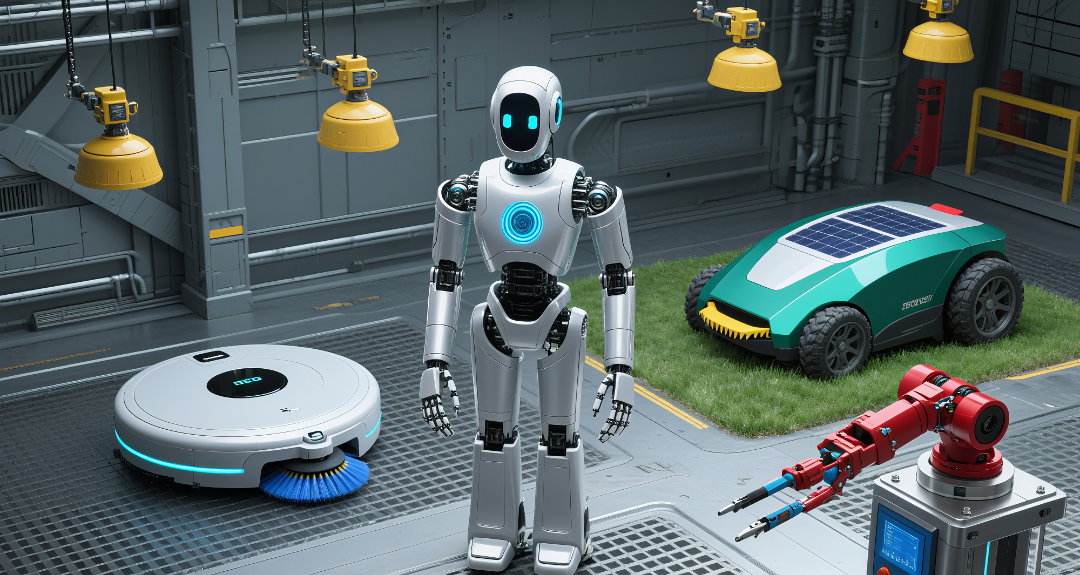 01Solid-State LiDAR:The Role of 3D Perception in Diverse Scenarios
Currently, robots are deeply integrated into industrial and everyday scenarios, with an unprecedented demand for precise spatial perception, which relies on robust 3D environmental perception capabilities.
🤖Consumer Robots
(such as vacuum cleaning robots, care robots, service robots, etc.)
For example, vacuum cleaning robots utilize solid-state LiDAR to efficiently avoid obstacles and navigate in complex home environments, accurately identifying furniture, walls, and low obstacles, constructing high-precision maps to ensure a complete and safe cleaning path..
🤖Industrial Robots
(such as welding, handling, assembly robots, etc.)
In high-precision operations such as welding, handling, and assembly, solid-state LiDAR can generate accurate 3D environmental maps, supporting path planning and positioning control, thereby enhancing operational efficiency and product consistency.
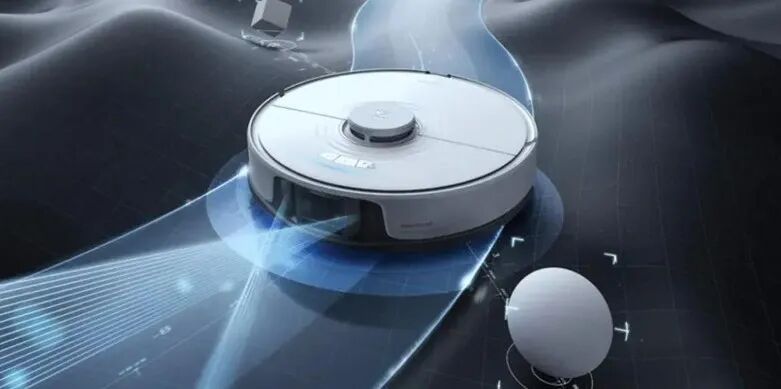
Cleaning robots use LiDAR to achieve navigation + obstacle avoidance functions.
These robots, with their diverse functions, rely on the seamless collaboration between the “upper body” and “lower body”:
Upper Body: Responsible for precision operations (grasping/assembly) → requires precise perception of object position, shape, and texture;
Lower Body: Responsible for movement, navigation, and obstacle avoidance → requires real-time perception of the environment and judgment of obstacle positions and distances.
Traditional mechanical rotating LiDAR is limited by size, power consumption, and reliability, making it difficult to meet the new robots’ demands for compact and flexible designs. In contrast, solid-state LiDAR, with its“miniaturization, low power consumption, high resolution, and high reliability” characteristics, is becoming a core support for the efficient collaboration of the “upper and lower bodies” of robots..
02
Lingming Photon ADS6401: A New Breakthrough in Consumer Robot Perception Technology
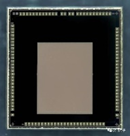
ADS6401
For consumer robots, Lingming Photon has launched the ADS6401 array solution, which, with its strong performance and high cost-effectiveness, has become a new market focus. Currently, this chip has entered mass production and is continuously being shipped in the robot terminal market.
Core Parameters: Balancing Precision and Scene Adaptability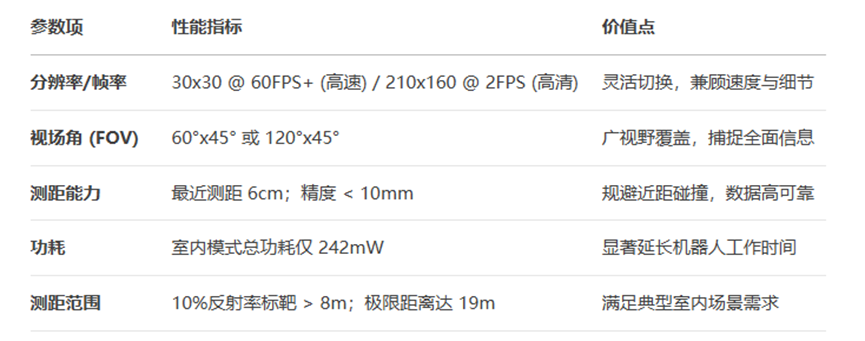
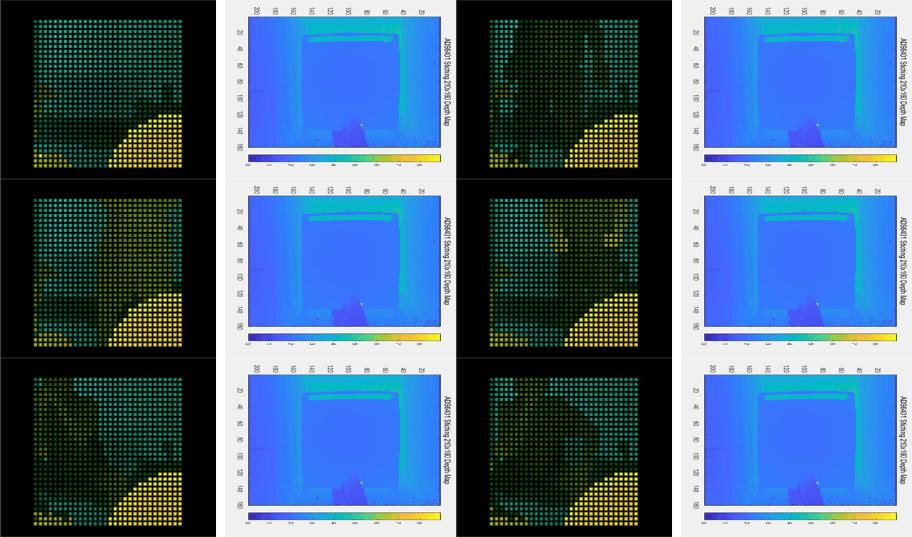
▲ 30×30 depth map & 210×160depth map
Technical Highlights: Addressing Industry Pain PointsDynamic ROI Switching
With multiple Tx solutions, it can freely combine between linear array, area array, and point array lasers, flexibly adjusting the exposure area for different scenarios, balancing long-distance SLAM positioning and short-distance obstacle avoidance. The zoom-in function in the image below demonstrates the dynamic ROI switching, where each frame’s opened SPAD and range can be freely designed.。
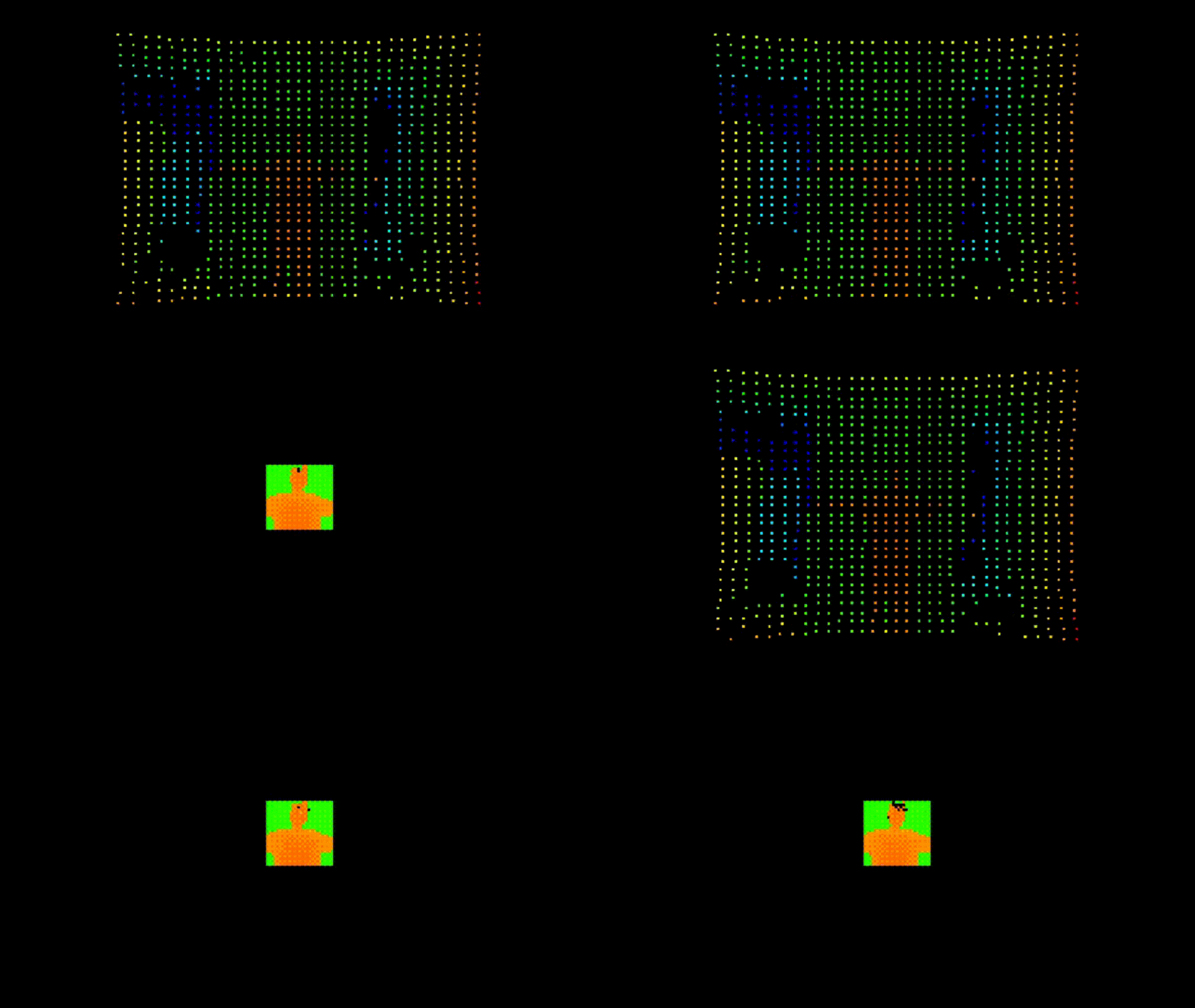
Frame by frame switching SPAD ROI
Ultra-Narrow TDC Bin Width
The ADS6401 TDC has a minimum bin width of 62.5ps, far exceeding industry standards(>400ps/bin), allowing for better differentiation between real signal peaks and false signal peaks introduced by multipath effects, making right angles more “straight” and ensuring no point loss on the ground, solving the multipath scenario challenges for robots.
The image below compares histograms of 125ps/bin and 250ps/bin at the corner of a white wall, clearly showing that at 125ps/bin, the two signal peaks from multipath interference are distinguishable, while at 250ps/bin, the two signal peaks merge together, making them indistinguishable.。
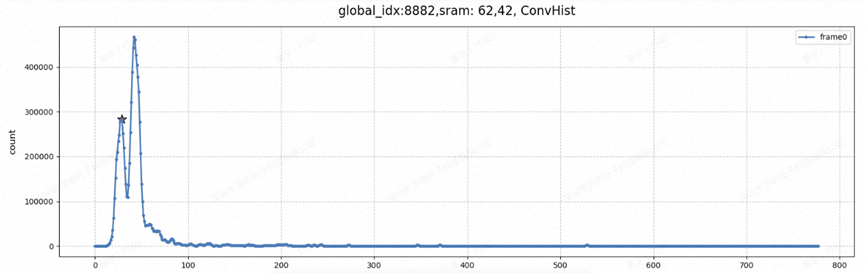
125ps/bin ★ is the real signal peak
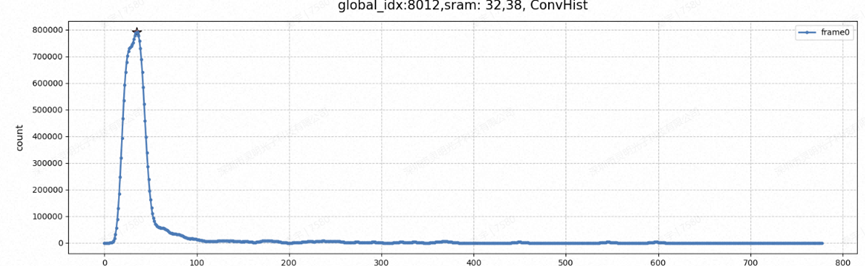
250ps/bin combines real and false signals together
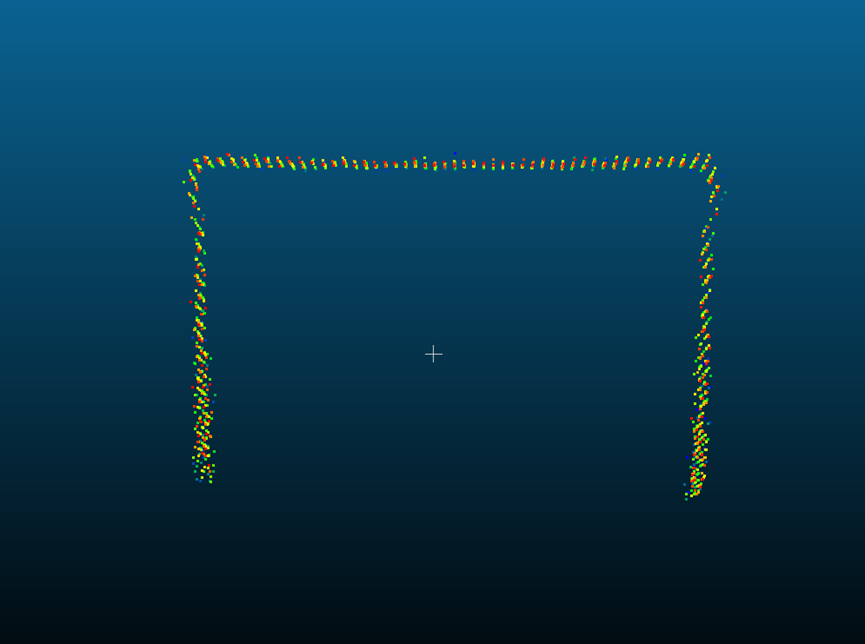
Point cloud effect after multipath interference removal at U-shaped wall
Solution Advantages: Redefining Consumer Robot Perception
Currently, commonly used vacuum cleaners often employ LDS single-line LiDAR combined with linear laser systems for mapping and obstacle avoidance. However, LDS is bulky, limiting product thickness and structural flexibility. Even with a lifting structure, it increases costs and reduces reliability. With the development of AI, the demand for top-mounted robotic arms is rising, and eliminating the top LDS will become a trend.
In contrast, Lingming Photon’s solid-state LiDAR array solution, using area array dToF technology, can achieve single Tx – area light source array solutions or dual Tx – area light source array (obstacle avoidance) + linear light source single line (SLAM) dual mode, with significant advantages:
-
Extreme Cost Reduction: Through full-link extreme cost control from chips, modules to computing power optimization, while ensuring high performance, it lowers the threshold and cost for consumer robots to adopt solid-state LiDAR solutions, significantly enhancing the market competitiveness and cost-effectiveness of terminal products.;
-
Wider FoV: Supports up to 120°x45°, effectively covering home spaces;
-
Fine Point Cloud:: Center 1°/pixel resolution, edge 1.5°/pixel, linear light source supports up to 210×N configurations;
-
Flexible Frame Rate:: 10–30FPS adaptive, meeting different task rhythms;
-
Strong Ranging Capability:: Lingming’s self-developed BSI SPAD architecture achieves high PDE, supporting 19m ranging, with excellent multipath interference suppression effects;
-
High Adaptability:: No LDS structural limitations, thinner, more stable, and more reliable.
Currently, this solution has been widely applied among various robot clients, covering cleaning, service, industrial, and other segmented fields, helping clients achieve more competitive product launches.
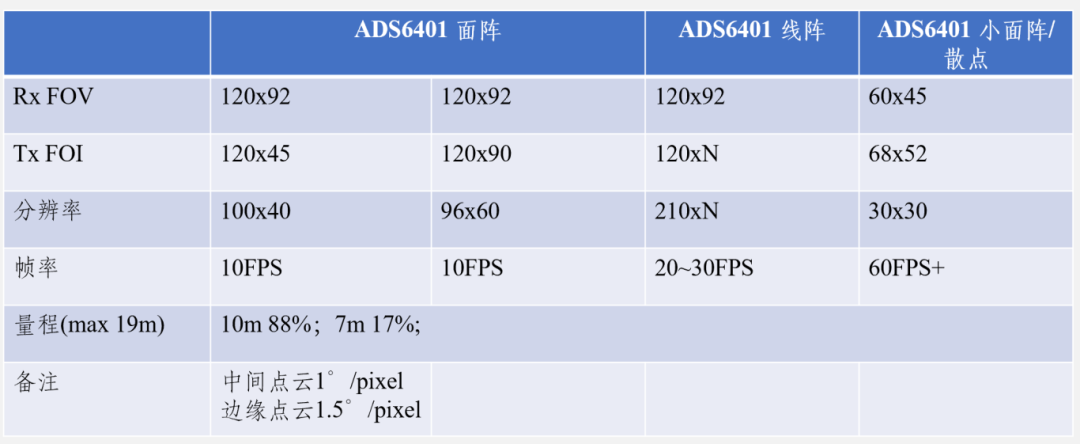 The image shows multiple reference solutions that can be customized based on application scenarios.
The robotics sector remains a hot direction in the technology field. With continuous technological advancements, robots will play an increasingly important role in more fields. Lingming Photon is committed to providing higher quality solid-state LiDAR solutions for the robotics industry through technological innovation and leading single-photon chips. We hope to enhance the convenience and quality of life for people with advanced technology and products, assisting robotics companies in developing smarter, more efficient, and user-centric products, and jointly promoting the prosperous development of the robotics industry.
