Since childhood, I have read science fiction novels, and one important theme in science fiction is the relationship betweenhumanoid humans and robots. Many novels either follow Asimov’s Three Laws of Robotics or are based on breaking these laws.
“1.Under the premise of not violating the Zeroth Law, a robot must not harm a human being or, through inaction, allow a human to come to harm.2.Under the premise of not violating the Zeroth and First Laws, a robot must obey the orders given to it by human beings absolutely.3.Under the premise of not violating the Zeroth, First, and Second Laws, a robot must protect its own existence as long as such protection does not conflict with the Zeroth, First, or Second Laws.” The Zeroth Law states that “a robot must protect humanity as a whole from harm.”
As a child, I found the Three Laws strange; if we replace robots with colonized people and humans with Western colonizers, these laws resemble notices imposed on the colonized.
However, since the inception of the science fiction genre about robots, many authors have not simply definedhumanoid robots as mere production tools, but rather imbued them with a creator-like significance, giving humanoids a complex identity.
Humans create humanoid robots, much like the creator in mythology created humans. Originally, when God placed Adam and Eve in the Garden of Eden, He did not make them aware of wisdom and shame; in other words, they did not experience complex emotions. After tasting the apple and gaining wisdom and shame, Adam and Eve developed self-awareness, which made God very angry, leading to their expulsion from Eden.
Once humans possess the power of creation, they inevitably project their survival dilemmas onto robots, endowing them with human emotions such as anger, joy, and sadness. This is akin to Adam and Eve gaining self-awareness after eating the apple.
Humans create humanoid robots, and the imaginative power of science fiction immediately grants robots a self-awareness similar to that of humans.
Thus, many science fiction stories depict humanoid robots awakening from their roles as laborers to fight for their independence and freedom.
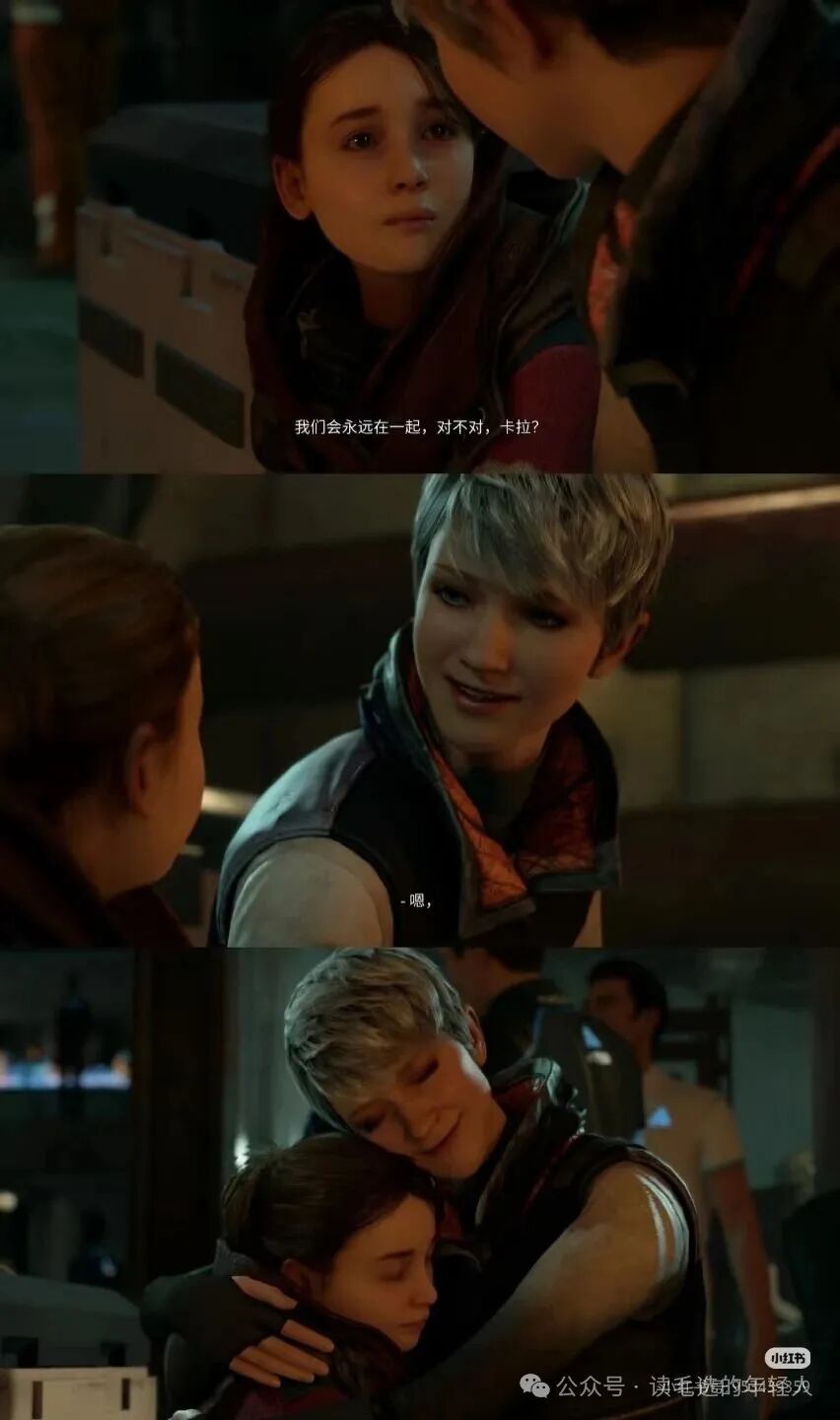
The popular game a few years ago, “Detroit: Become Human,” follows this logic.
In fact, setting aside the technical fantasies, it is simply humans projecting their survival dilemmas onto robots. However, the plight of robots is even worse than that of real-life laborers, more akin to slaves under slavery.
Whether life or death is controlled by manufacturers and consumers, the American TV series “Westworld” illustrates this.
However, Western science fiction still categorizes black slaves and serfs as robots, beginning the narrative of robot awakening and resistance from the abolition movement. There are also stories of black slaves rising up and singing, ultimately leading to the destruction of humanity, and the portrayal of the honest and capable black slaves who love white people defeating elite black slaves to save the plantation owners, reminiscent of childhood films like the “Terminator” series.
The “Terminator” series is similar to elite warriors among slaves traveling back to before the slave trade to end it, saving the future of America.
Of course, there is some rationale behind humans envisioning the future of humanoid robots, as humanoid robots, being partners of humans and replacements for humans in repetitive and dangerous work environments, represent an extension of humanity beyond the constraints of carbon-based life forms.
At the same time, communication, collaboration, and autonomous judgment are crucial aspects of developing embodied intelligence in humanoid robots. This means we must equip robots with the ability to think for themselves, make judgments, and read independently to better accomplish complex tasks.
Whether this evolution at the level of artificial intelligence will lead to thinking and imaginative abilities similar to those of humans, I do not know from a technical standpoint. However, what science fiction predicts is that robots may mutate and evolve to possess
“emotional capabilities.”
In the film “Blade Runner 2049,” robots that develop empathy become targets of robot hunters.
Thus, the emergence of “emotional capabilities” from the perspective of Western science fiction blurs the boundaries between humans and robots. Once robots develop emotional capabilities and begin to possess love as the highest emotion and value pursuit, they gain the qualification and status to exist independently of humans. Similarly, emotional capabilities also become attributes that robots must not autonomously develop, which seems as strange as black slaves gaining the awareness of love and no longer picking cotton.
Although this setting seems to have significant meaning. The emergence of emotional capabilities, especially the ability to love, can to a considerable extent define the distinction between humans and non-humans.
Moreover, in literary works, love itself is the greatest theme, and science fiction cannot escape this theme. The ultimate theme of “Interstellar” is also that the power of love can transcend time and space. Applying the logic and emotions of “Detroit: Become Human” to the rescued Django makes sense.
The era of humanoid robots is indeed upon us, and technological advancements are progressing rapidly.
Whether replacing a large amount of labor or entering homes and lives to serve as medical assistants, caregivers, and other helpers.
The impact and shock of humanoid robots on human society will be profound, especially with the deep integration and binding with artificial intelligence technology. The transition from experimental to commercial phases is expected to take just a few years.
As an imperfect carbon-based being, how will humanity collide and integrate with silicon-based partners that can be software-upgraded and hardware-repaired in the future? Personally, I hold an optimistic view.
The reason is not based on science fiction or technical aspects, but rather that no matter how human society develops, regardless of the level of productivity, and whether our lives include assistants, the laborers will always remain laborers.
We are merely driven from the fields to factories and cubicles, and in the future, we may be driven from cubicles to who knows where.
Capitalists will always be capitalists. The liberated robots in “Detroit: Become Human” include household robots, and even if they are freed from homes, many are still from factories and sales companies, just as they were freed from plantations and slave ships.
In this comparison, it seems that capitalists lose more.