
2025
Towards the Future Together
New Tian County, Yongzhou, Hunan
Review of Arduino Teaching

Background Review
In January 2025, eight students from Tsinghua University’s Electronics Department’s “Bridge of Electronics” practical team, full of enthusiasm, went to New Tian County, Yongzhou, Hunan, to bring a four-lecture special course centered on C language fundamentals and Arduino UNO programming to twenty students from the first year of middle school to the first year of high school. During the five-day teaching process, we not only imparted programming knowledge but also stimulated students’ interest in hardware programming through interactive teaching and comprehensive project design, helping them develop hands-on practical skills.
01
Course Design
In this practice, we made some adjustments to the previous “Towards the Future Together” course system based on Mind+ to allow students to better understand the structure of programs and the process of hardware development. We decided on a teaching plan based on the Arduino IDE. To ensure that students could understand and master the core foundational content of C language and Arduino programming in a short time, we carefully designed the course content, especially focusing on classroom interactivity and student participation, providing many hands-on practice examples. The first three lectures focused on basic knowledge of C language, while the second lecture introduced Arduino hardware programming. Each class was not only about knowledge transfer but also a process of interaction and exploration with students.
02
Course Content
01
Basic Knowledge of C Language
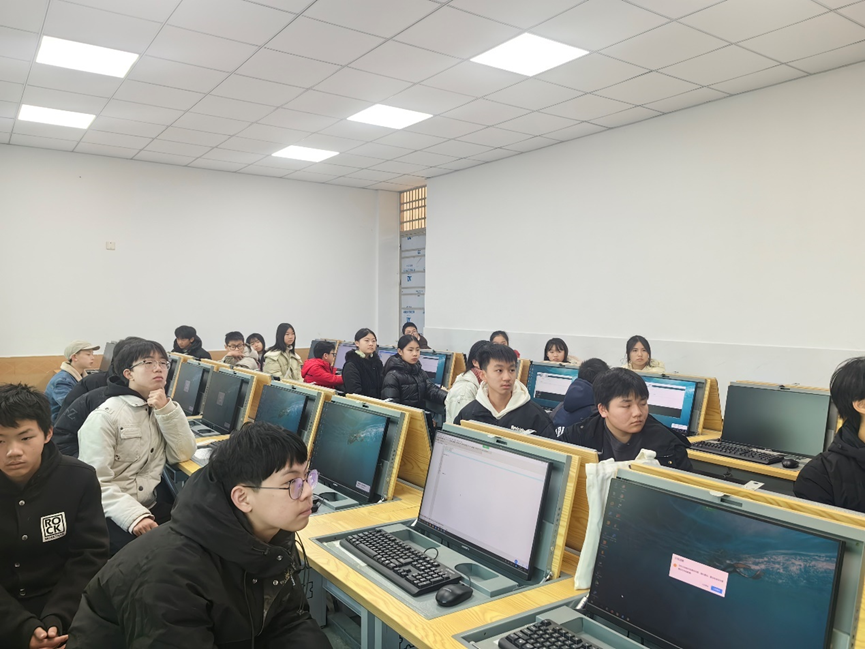
In the first lecture, we started with the basics of C language. We introduced the basic data types of C language (such as int, float, char, etc.), the composition of expressions, how to use operators for simple mathematical operations, logical judgments, and selection structures in program structure. To help students better understand the application of programs, we designed some simple programming exercises, allowing students to practice hands-on in class, and arranged for the explanation of exercises before the formal start of the second lecture.
02
Functions, Arrays, and Introduction to Arduino
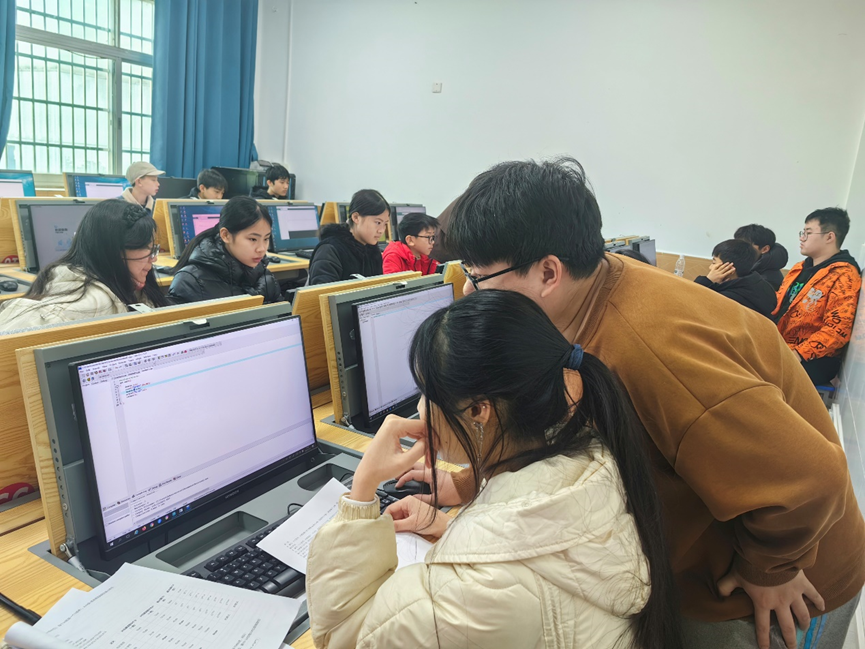
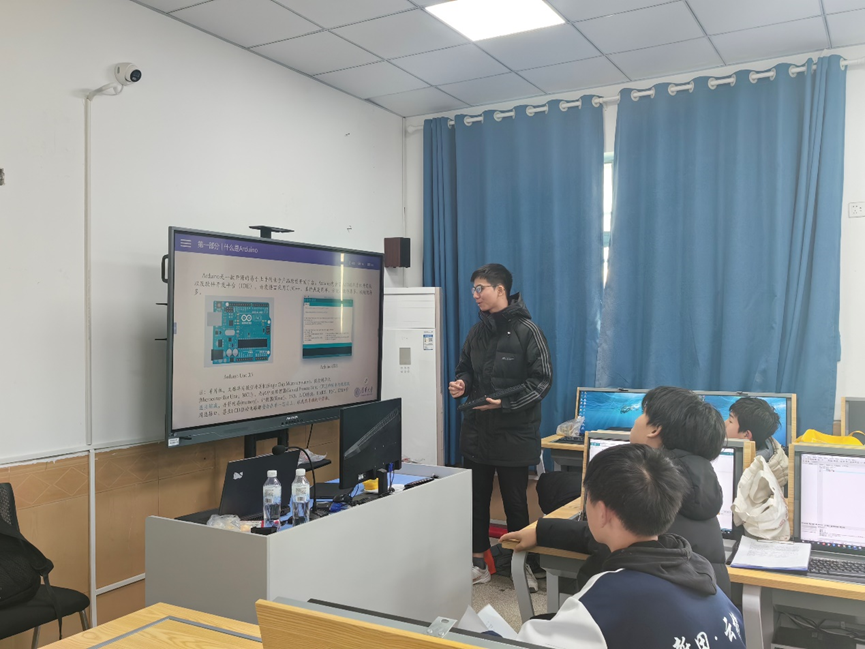
In the second class, we introduced more complex concepts—functions and arrays. We explained how to encapsulate code using functions to improve code reusability, and how to store and manipulate multiple data using arrays. In this lecture, we also introduced the Arduino development board and distributed the hardware modules that students would use. This familiarized students with the Arduino hardware platform, and through practical operations, they initially engaged with the Arduino development board’s programming environment.
03
Structures and Basic Arduino Experiments
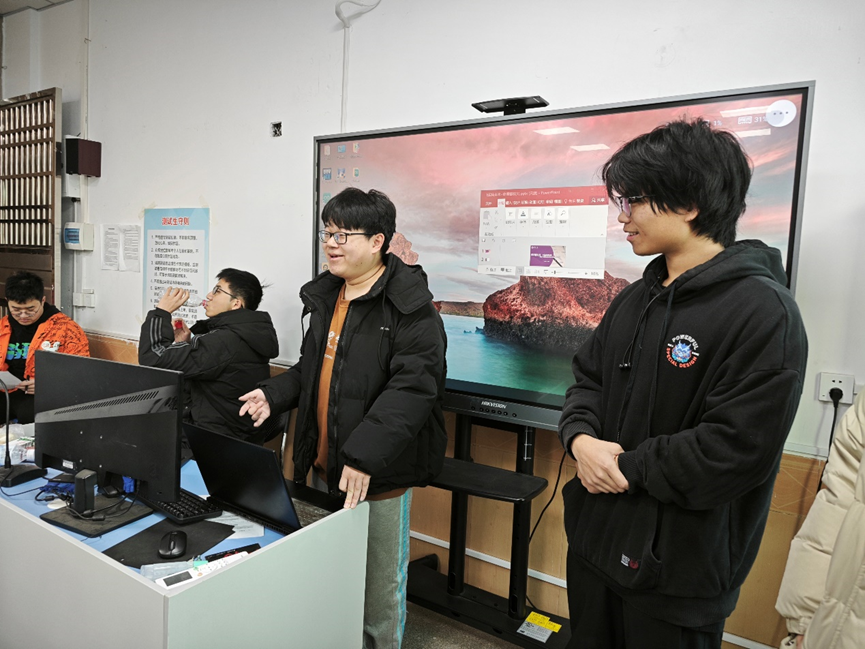
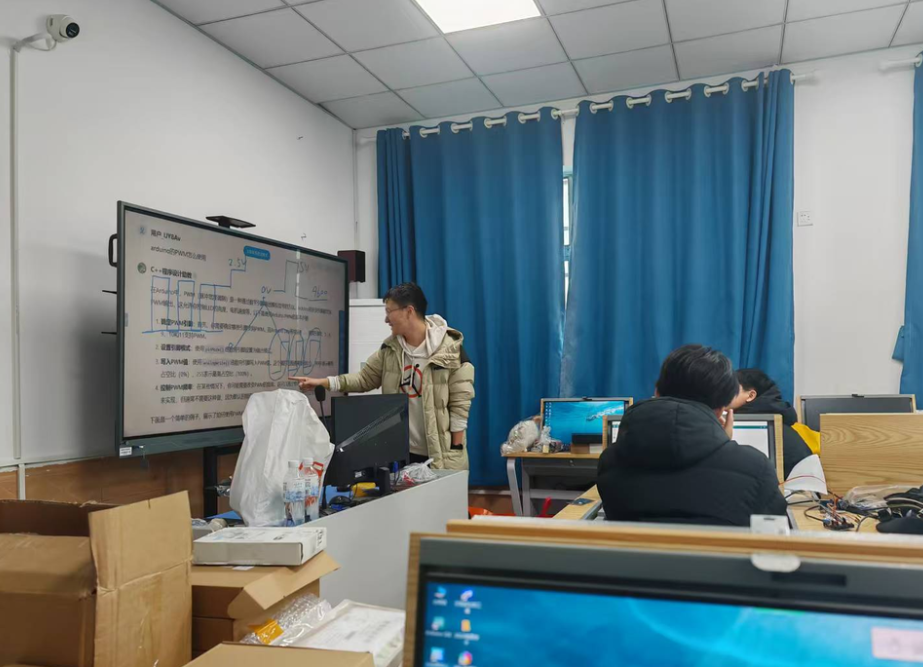
In the third lecture, we delved into the concept of structures in C language, teaching students how to organize different types of data together to form a composite data structure. Once students mastered the basic C language syntax, we continued to introduce Arduino programming, allowing students to complete an LED blinking project, which visually connected programming with the physical world.
04
Comprehensive Arduino Project
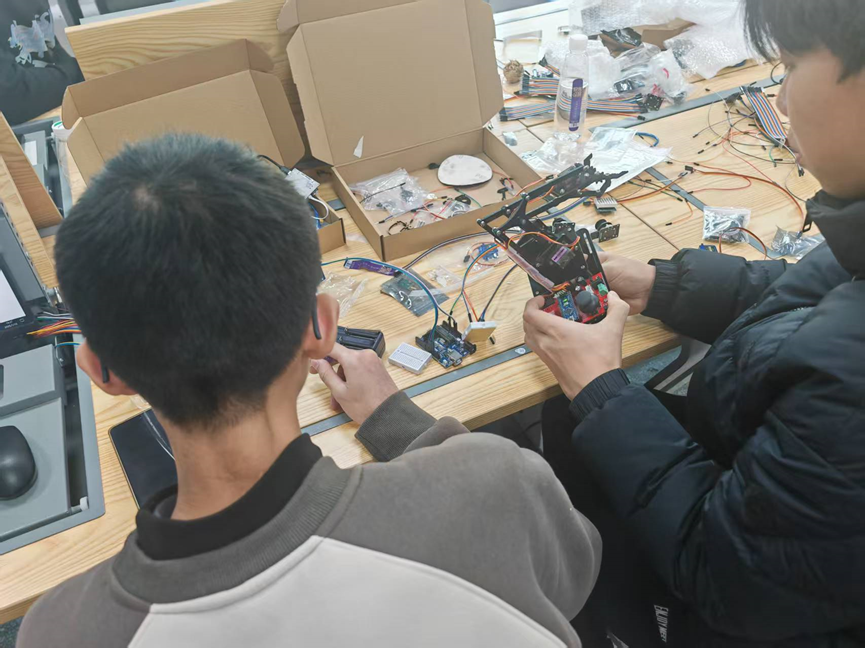
With the mastery of basic programming skills, in the fourth lecture, we began to enter Arduino hardware programming, focusing on how to use ultrasonic sensors for distance measurement and how to monitor joystick positions. Through these examples, students not only learned how to operate complex hardware modules but also experienced the fun of programming interacting with physical sensors. In this class, each student, with the help of teaching assistants, personally operated the Arduino UNO board to complete related projects, greatly enhancing their hands-on abilities and depth of understanding.
03
Innovations in the Course
We introduced various innovative methods during this teaching assistance process:
01
To enhance students’ learning efficiency, we introduced AI tools to assist teaching. Through programming language learning platforms and AI programming assistants, students could receive real-time feedback on programming errors and get instant help. This approach significantly reduced the learning difficulty, enabling students with no background to quickly complete hardware programming using AI tools, and allowing them to gain a deeper understanding of programming languages.
02
To deepen students’ grasp of knowledge, we divided students into small groups for collaborative learning. In each group, members not only had to complete programming tasks together but also needed to discuss and share ideas within the group to complete a comprehensive design project.
After several days of learning, we clearly felt students transitioning from initial confusion to proactive exploration, with their interest and enthusiasm continuously rising. Many students, after completing programming tasks, proactively offered their suggestions for project improvements and even helped other students solve problems. Especially in the Arduino hardware programming section, students were not just satisfied with completing assignments but also debugged hands-on, added their creativity, and designed more complex functions, truly achieving a dual effect of knowledge application and innovation.
04
Summary and Outlook
In this teaching assistance activity, we imparted the foundational knowledge of C language and Arduino programming, stimulating students’ strong interest in technology through interactive teaching. During this process, the interaction between teachers and students, collaboration among students, and the collision of creativity filled the entire classroom atmosphere with vitality and creativity. We believe that programming is not just a technical skill; it can also inspire students’ problem-solving abilities, innovative thinking, and teamwork spirit.
In the future, we will continue to strive, not only to impart knowledge in the classroom but also to encourage students to innovate continuously, bravely turning their ideas into reality, becoming a technological force for social progress.
<<< END >>>
Contribution by丨Electronics Department Volunteer Group
Reviewed by丨Liu Zhizhen, Wei Xiaowen
Edited by丨Lin Yang