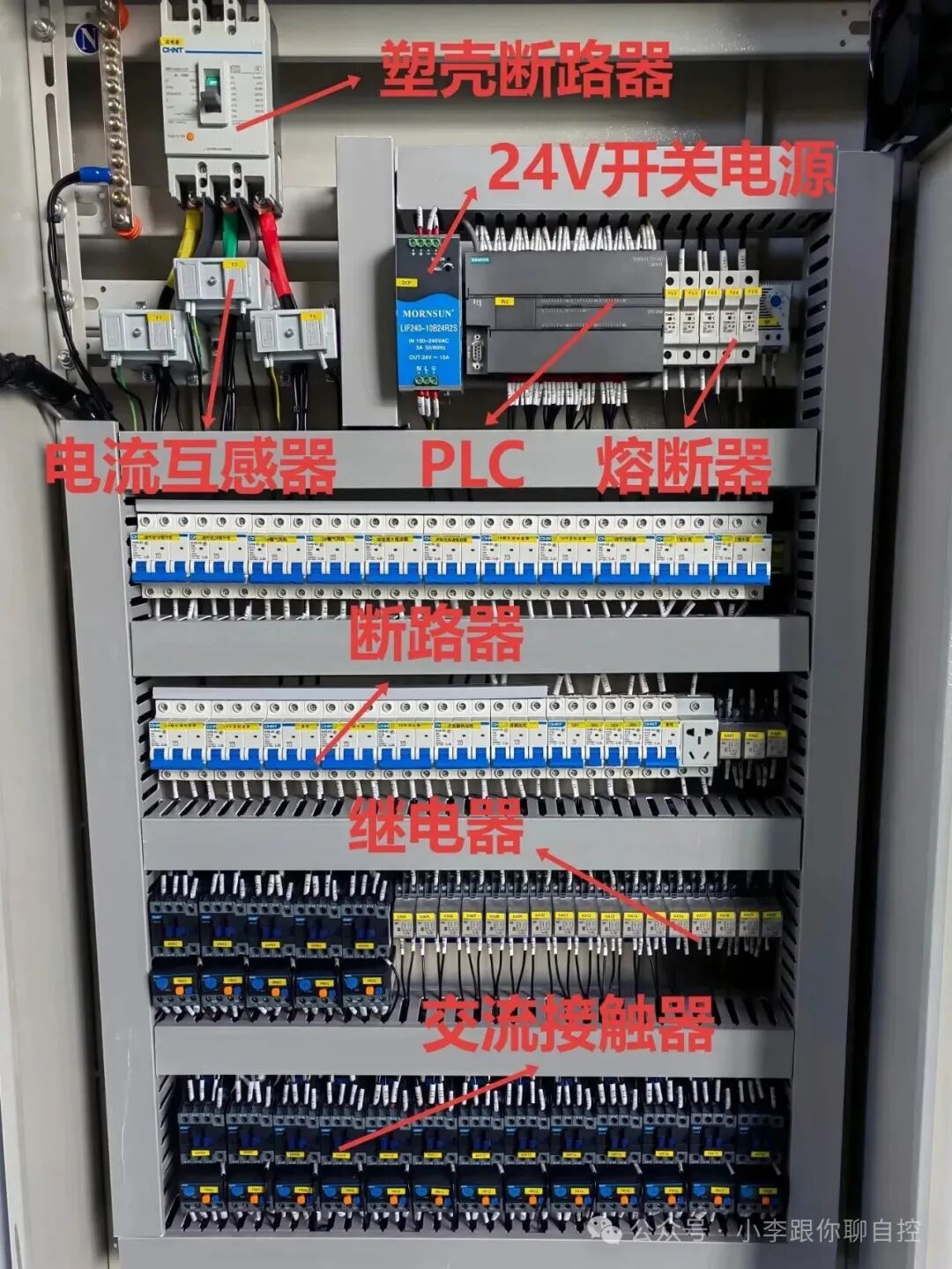
Revealing the Internal Structure of PLC Control Cabinets
The PLC control cabinet is the core device of industrial automation systems, integrating Programmable Logic Controllers (PLC), electrical components, and auxiliary equipment to achieve automated control of machinery or production processes.1. Basic Components1. PLC Main UnitCentral Processing Unit (CPU): Executes control programs, such as Siemens S7-1200, Mitsubishi FX series, etc.Digital/Analog I/O Modules: Connects sensors, buttons, actuators, and other field devices.Communication Module (optional): Supports protocols like PROFIBUS, Ethernet, Modbus, etc.2. Electrical ComponentsPower Supply Module: 24VDC or 220VAC power supply, may be equipped with UPS or voltage stabilizers.Circuit Breakers and Fuses: Overload and short-circuit protection.Relays/Contactors: Control high-power loads such as motors and valves.Signal Isolators: Prevent interference and ensure signal stability.3. Human-Machine Interface (HMI)Touch screens or button indicator panels for parameter settings and status monitoring.4. Auxiliary EquipmentCooling fans, air conditioning (for high-temperature environments).Lightning protection modules (for outdoor applications).Terminal blocks, cable trays, labels, etc.2. Typical Application ScenariosManufacturing: Assembly line control, assembly machinery.Energy Industry: Pump station, fan control.Building Automation: Elevators, air conditioning systems.Traffic Facilities: Traffic lights, tunnel ventilation.3. Common FaultsPower failure (check circuit breakers).Communication interruption (check cables or configurations).Module damage (replace spare parts).
Disclaimer: The content of this article is sourced from publicly available channels on the internet. If there is any infringement, please contact us for removal. This platform maintains neutrality regarding reprints, sharing, statements, and viewpoints, aiming only to convey more information and does not represent the platform’s endorsement of the viewpoints or responsibility for their authenticity. The copyright of this article belongs to the original author. If any political, factual, technical errors, or copyright issues are found, please contact us promptly for removal. Thank you for your support! 2025.09.05