✅ Author Profile: A Matlab simulation developer passionate about scientific research, skilled in data processing, modeling simulation, program design, obtaining complete code, reproducing papers, and scientific simulation.
🍎 Previous Review: Follow the personal homepage:Matlab Research Studio
🍊 Personal Motto: Investigate to gain knowledge, complete Matlab code and simulation consultation available via private message.
🔥 Content Introduction
Wireless Sensor Networks (WSNs) are a multifunctional, self-organizing network technology that shows great application potential in fields such as environmental monitoring, smart homes, and military reconnaissance. However, effectively deploying sensor nodes to maximize network coverage while considering energy consumption and cost has always been one of the core challenges in WSN research. Traditional deployment strategies often struggle to adapt to complex and changing environments and can easily fall into local optima. In recent years, bionic optimization algorithms inspired by biological behaviors in nature have provided new ideas for solving such problems. This paper delves into the coverage optimization problem of WSNs based on the Dung Beetle Optimizer (DBO). First, the biological principles and mathematical model of the DBO are detailed; secondly, the DBO algorithm is applied to the coverage optimization scenario of WSNs, constructing an optimization model aimed at maximizing coverage; subsequently, simulation experiments validate the effectiveness and superiority of the proposed algorithm in improving network coverage and reducing deployment complexity, and a comparative analysis with other typical optimization algorithms is conducted; finally, the research results are summarized, and future research directions are discussed.
Keywords: Wireless Sensor Networks; Coverage Optimization; Dung Beetle Optimization Algorithm; Bionic Optimization; Node Deployment
1. Introduction
Wireless Sensor Networks consist of numerous miniature sensor nodes with sensing, computing, and communication capabilities, which communicate wirelessly to collaboratively complete specific tasks. The effectiveness of WSNs largely depends on their coverage performance, which is the extent to which the network covers the monitored area. The ideal coverage goal is to achieve comprehensive and moderately redundant coverage of the target area using as few sensor nodes as possible and with the lowest energy consumption. Improper node deployment can lead to coverage blind spots, energy waste, and reduced network lifespan.
Traditional node deployment methods are mainly divided into random deployment and deterministic deployment. Random deployment, while simple and easy to implement, often fails to guarantee coverage quality and uniformity; deterministic deployment requires precise environmental information in advance and lacks flexibility in dynamic environments. To overcome these limitations, researchers have turned their attention to optimization algorithms, particularly bionic intelligent algorithms inspired by nature. These algorithms solve complex optimization problems by simulating biological behaviors in nature, such as ant foraging, particle swarm movement, and bee foraging.
The Dung Beetle Optimization (DBO) algorithm is a novel swarm intelligence optimization algorithm inspired by the unique foraging, nesting, and reproductive behaviors of dung beetles. The DBO algorithm has demonstrated good performance in function optimization, feature selection, and other fields due to its unique search mechanism and strong global search capability. However, research on applying the DBO algorithm to the coverage optimization problem of wireless sensor networks is still in its infancy, and its potential remains to be further explored. This paper aims to fill this gap by exploring the effective application of the DBO algorithm in WSN coverage optimization, hoping to provide a novel and efficient solution for enhancing WSN coverage performance.
2. Principles of the Dung Beetle Optimization Algorithm (DBO)
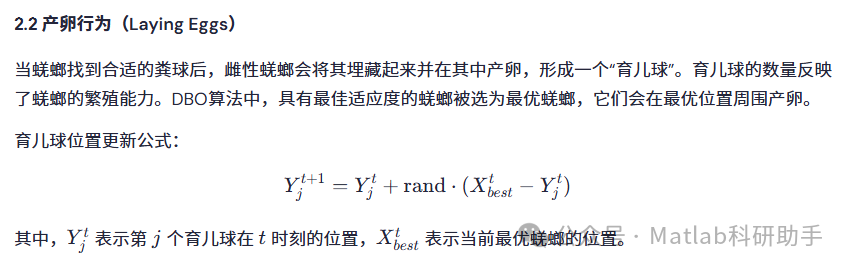
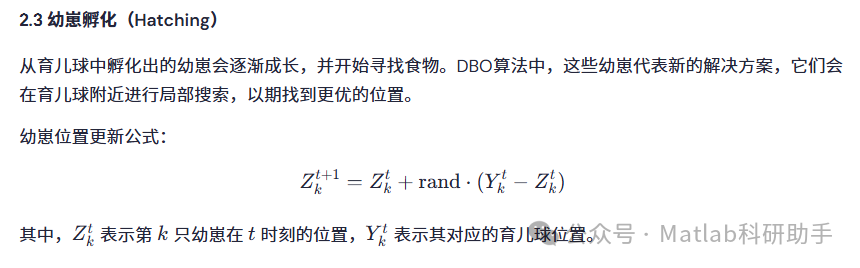
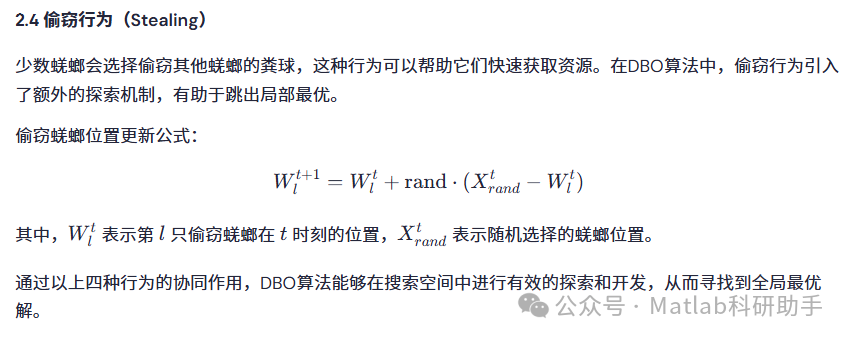
The dung beetle, commonly known for its unique behavior of rolling dung balls, inspires the DBO algorithm. The DBO algorithm primarily simulates the foraging (rolling), egg-laying, hatching, and stealing behaviors of dung beetles.
2.1 Rolling Behavior (Searching for Food)
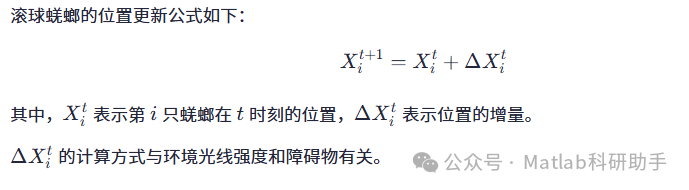
In the world of dung beetles, dung balls are the basis for their survival and reproduction. Adult dung beetles navigate by sensing the intensity of light in the environment, pushing dung balls to roll in a straight line. In the DBO algorithm, each dung beetle individual represents a potential solution, and the position of the dung ball represents the quality of the current solution. Dung beetle individuals continuously update the position of the dung ball to search for better solutions.
3. Modeling the Wireless Sensor Network Coverage Optimization Problem
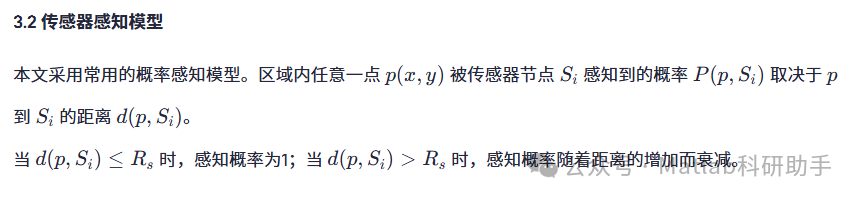
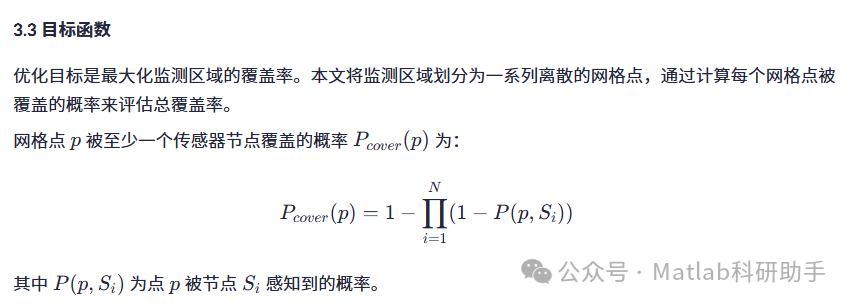
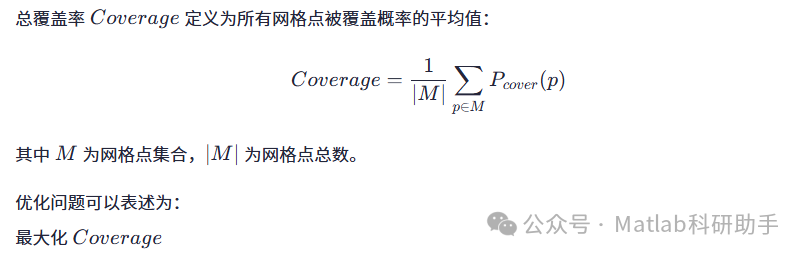
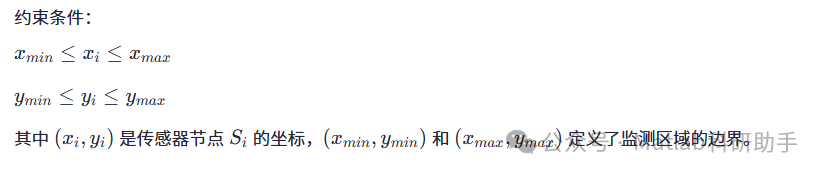
This paper models the wireless sensor network coverage optimization problem as an optimization problem aimed at maximizing coverage.

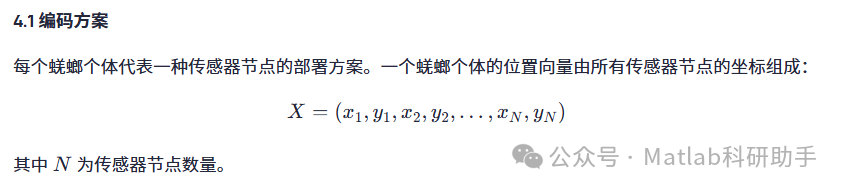
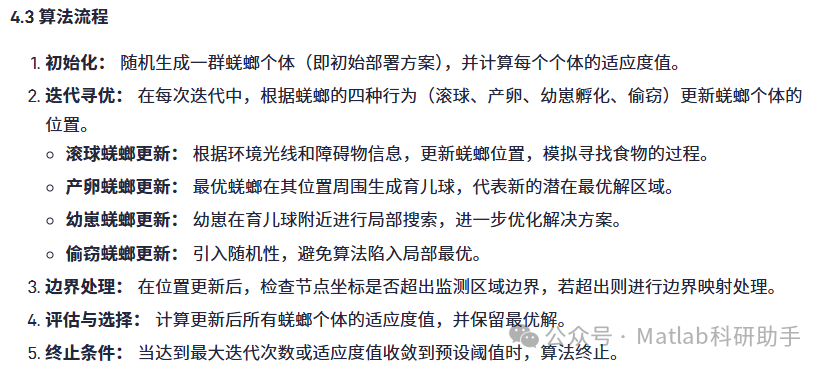
4. Coverage Optimization of WSNs Based on DBO Algorithm
The application of the Dung Beetle Optimization algorithm to the WSN coverage optimization problem mainly includes the following steps:

5. Conclusion and Outlook
This paper proposes a wireless sensor network coverage optimization method based on the Dung Beetle Optimization algorithm. By abstracting the behaviors of dung beetles such as rolling, egg-laying, hatching, and stealing into a mathematical model and applying it to the optimization of sensor node positions, a significant improvement in WSN coverage has been successfully achieved. Experimental results show that the DBO algorithm outperforms traditional PSO and GA algorithms in terms of coverage, convergence speed, and deployment uniformity, providing a novel and efficient solution to the WSN coverage optimization problem.
However, this research still has room for further expansion:
- Multi-objective Optimization: In addition to coverage, energy consumption, network lifespan, and cost are also important optimization objectives for WSNs. Future research can explore multi-objective optimization algorithms based on DBO to balance different objectives.
- Dynamic Environment Adaptability: Research how to enable the DBO algorithm to adaptively adjust node deployment in dynamic scenarios, considering sensor node failures, battery depletion, or changes in the monitored area.
- Heterogeneous Sensor Networks: Study differentiated deployment strategies based on DBO for heterogeneous sensor networks with different sensing capabilities and energy consumption characteristics.
- Real-world Application: Apply the algorithm to real physical sensor network deployments to verify its robustness and effectiveness in complex environments.
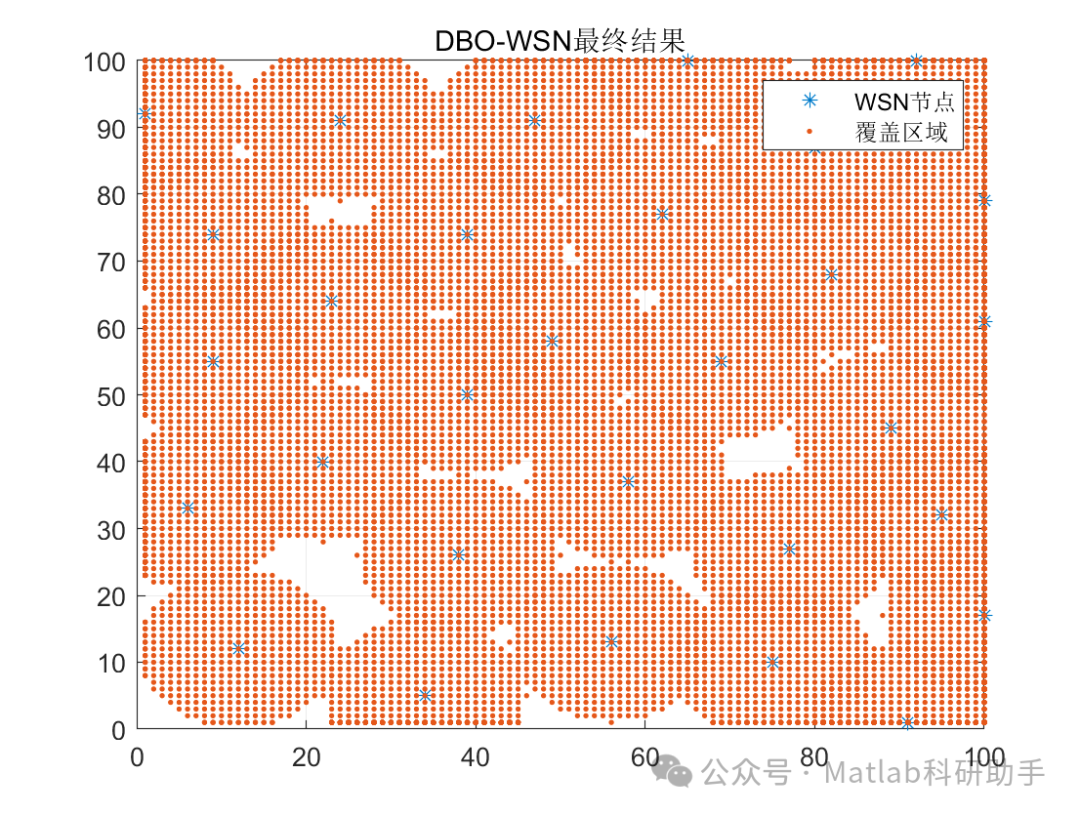
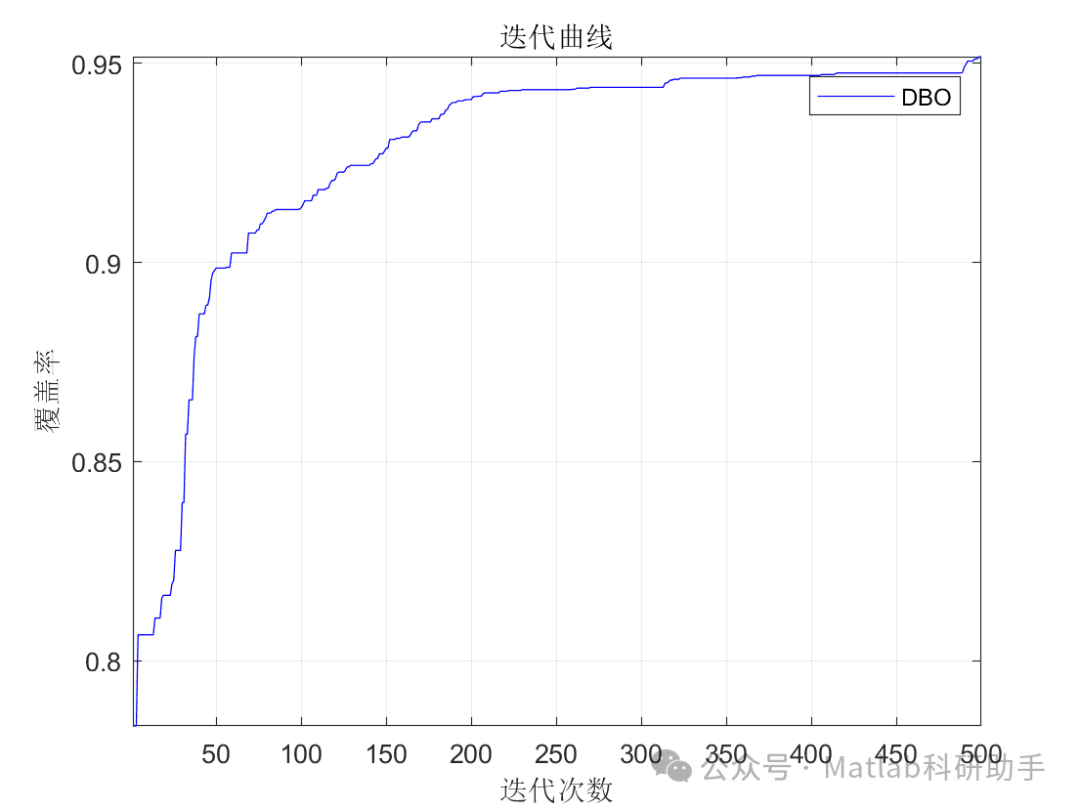
⛳️ Operation Results
🔗 References
[1] Cao Tongyu, Qiao Dong, Guo Ziyu, Zhu Shoujian. Optimization of BP Neural Network Based on Improved Dung Beetle Optimization Algorithm. Journal of Wireless Internet Technology, 2024(22).
[2] Wang Haiqun, Guo Qingtong, Ge Chao. Path Planning of Handling Robots Based on Improved Dung Beetle Optimization Algorithm. Modern Manufacturing Engineering, 2024(11):87-95.
[3] Xuan Yitang, Li Lijun, Chen Haifei. Path Planning of Robotic Arms Based on Improved Dung Beetle Algorithm. Mechanical Transmission, 2025, 49(2):70-78.
📣 Partial Code
🎈 Some theoretical references are from online literature; please contact the author for removal if there is any infringement.
👇 Follow me to receive a wealth of Matlab e-books and mathematical modeling materials.
🏆 The team specializes in guiding customized MATLAB simulations in various research fields, helping to realize research dreams:
🌈 Various intelligent optimization algorithm improvements and applications
Production scheduling, economic scheduling, assembly line scheduling, charging optimization, workshop scheduling, departure optimization, reservoir scheduling, three-dimensional packing, logistics site selection, cargo location optimization, bus scheduling optimization, charging pile layout optimization, workshop layout optimization, container ship loading optimization, pump combination optimization, medical resource allocation optimization, facility layout optimization, visual field base station and drone site selection optimization, knapsack problem, wind farm layout, time slot allocation optimization, optimal distributed generation unit allocation, multi-stage pipeline maintenance, factory-center-demand point three-level site selection problem, emergency supply distribution center site selection, base station site selection, road lamp post arrangement, hub node deployment, transmission line typhoon monitoring devices, container scheduling, unit optimization, investment portfolio optimization, cloud server combination optimization, antenna linear array distribution optimization, CVRP problem, VRPPD problem, multi-center VRP problem, multi-layer network VRP problem, multi-center multi-vehicle VRP problem, dynamic VRP problem, two-layer vehicle routing planning (2E-VRP), electric vehicle routing planning (EVRP), hybrid vehicle routing planning, mixed flow shop problem, order splitting scheduling problem, bus scheduling optimization problem, flight shuttle vehicle scheduling problem, site selection path planning problem, port scheduling, port bridge scheduling, parking space allocation, airport flight scheduling, leak source localization.
🌈 Machine learning and deep learning time series, regression, classification, clustering, and dimensionality reduction
2.1 BP time series, regression prediction, and classification
2.2 ENS voice neural network time series, regression prediction, and classification
2.3 SVM/CNN-SVM/LSSVM/RVM support vector machine series time series, regression prediction, and classification
2.4 CNN|TCN|GCN convolutional neural network series time series, regression prediction, and classification
2.5 ELM/KELM/RELM/DELM extreme learning machine series time series, regression prediction, and classification
2.6 GRU/Bi-GRU/CNN-GRU/CNN-BiGRU gated neural network time series, regression prediction, and classification
2.7 Elman recurrent neural network time series, regression prediction, and classification
2.8 LSTM/BiLSTM/CNN-LSTM/CNN-BiLSTM long short-term memory neural network series time series, regression prediction, and classification
2.9 RBF radial basis function neural network time series, regression prediction, and classification
2.10 DBN deep belief network time series, regression prediction, and classification
2.11 FNN fuzzy neural network time series, regression prediction
2.12 RF random forest time series, regression prediction, and classification
2.13 BLS broad learning system time series, regression prediction, and classification
2.14 PNN pulse neural network classification
2.15 Fuzzy wavelet neural network prediction and classification
2.16 Time series, regression prediction, and classification
2.17 Time series, regression prediction, and classification
2.18 XGBOOST ensemble learning time series, regression prediction, and classification
2.19 Transform various combinations of time series, regression prediction, and classification
Directions cover wind power prediction, photovoltaic prediction, battery life prediction, radiation source identification, traffic flow prediction, load forecasting, stock price prediction, PM2.5 concentration prediction, battery health status prediction, electricity consumption prediction, water body optical parameter inversion, NLOS signal identification, precise prediction of subway stops, transformer fault diagnosis.
🌈 Image processing aspects
Image recognition, image segmentation, image detection, image hiding, image registration, image stitching, image fusion, image enhancement, image compressed sensing.
🌈 Path planning aspects
Traveling salesman problem (TSP), vehicle routing problem (VRP, MVRP, CVRP, VRPTW, etc.), three-dimensional path planning for drones, drone collaboration, drone formation, robot path planning, grid map path planning, multimodal transport problems, electric vehicle routing planning (EVRP), two-layer vehicle routing planning (2E-VRP), hybrid vehicle routing planning, ship trajectory planning, full path planning, warehouse patrol.
🌈 Drone application aspects
Drone path planning, drone control, drone formation, drone collaboration, drone task allocation, online optimization of drone safe communication trajectories, vehicle collaborative drone path planning.
🌈 Communication aspects
Sensor deployment optimization, communication protocol optimization, routing optimization, target localization optimization, Dv-Hop localization optimization, Leach protocol optimization, WSN coverage optimization, multicast optimization, RSSI localization optimization, underwater communication, communication upload and download allocation.
🌈 Signal processing aspects
Signal recognition, signal encryption, signal denoising, signal enhancement, radar signal processing, signal watermark embedding and extraction, electromyography signals, electroencephalography signals, signal timing optimization, electrocardiogram signals, DOA estimation, encoding and decoding, variational mode decomposition, pipeline leakage, filters, digital signal processing + transmission + analysis + denoising, digital signal modulation, bit error rate, signal estimation, DTMF, signal detection.
🌈 Power system aspects
Microgrid optimization, reactive power optimization, distribution network reconstruction, energy storage configuration, orderly charging, MPPT optimization, household electricity.
🌈 Cellular automata aspects
Traffic flow, crowd evacuation, virus spread, crystal growth, metal corrosion.
🌈 Radar aspects
Kalman filter tracking, trajectory association, trajectory fusion, SOC estimation, array optimization, NLOS identification.
🌈 Workshop scheduling
Zero-wait flow shop scheduling problem (NWFSP), Permutation flow shop scheduling problem (PFSP), Hybrid flow shop scheduling problem (HFSP), zero idle flow shop scheduling problem (NIFSP), distributed permutation flow shop scheduling problem (DPFSP), blocking flow shop scheduling problem (BFSP).
👇