In automation equipment, valve islands are essential components that connect and integrate pneumatic applications into electromechanical systems (also known as electro-pneumatic integration). Early valve islands simply paralleled several solenoid valves to a pneumatic circuit, but each required separate electrical wiring for control; later developed multi-pin valve islands achieved a more compact spatial layout through a modular system structure, integrating the electrical connections of multiple solenoid valves into a single D-type connector via backplane slots.
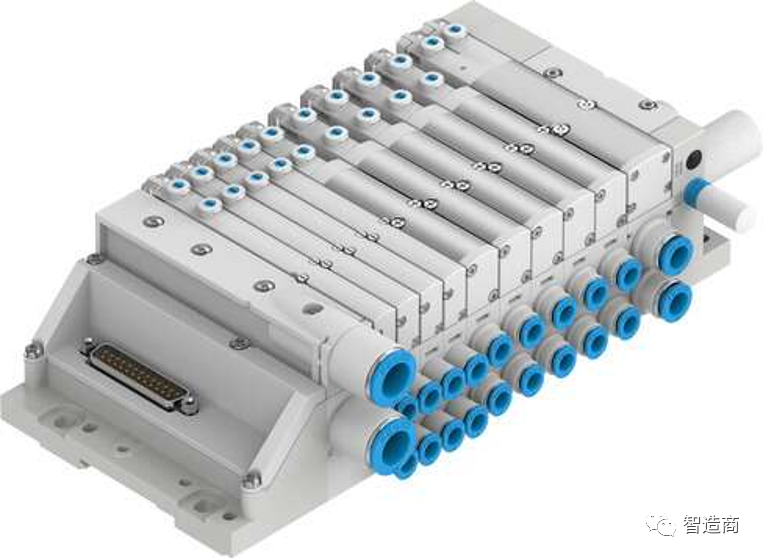
However, despite this, users must still connect the controller’s input/output ports to the cables from the valve island according to design requirements, and the workload increases as the complexity of the control circuit rises. To further simplify the electrical wiring of pneumatic products in automation equipment, it is necessary to use field bus technology.
This time, let’s talk about a new SV series remote valve island from Nanjing Dekweier.
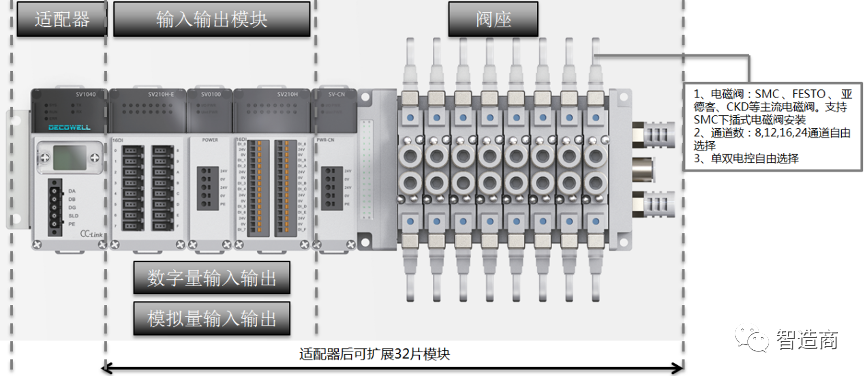
In terms of appearance, this SV series remote valve island adopts a modular structure with DIN35 rail + base bolt installation, and is generally divided into three parts: left, middle, and right:
-
The right part is the valve island, with the far right being the input and output ports for the gas circuit, the middle being the solenoid valve seat, and the left end being the 24 VDC power module connected to the front adapter;
-
The left part is a network bus adapter module, which integrates a status indicator light and a high-contrast display panel;
-
The middle section is the electric control input/output module, which integrates status indicator lights for each I/O point, with wiring using spring clamp or E-CON connectors for convenient and quick connections.
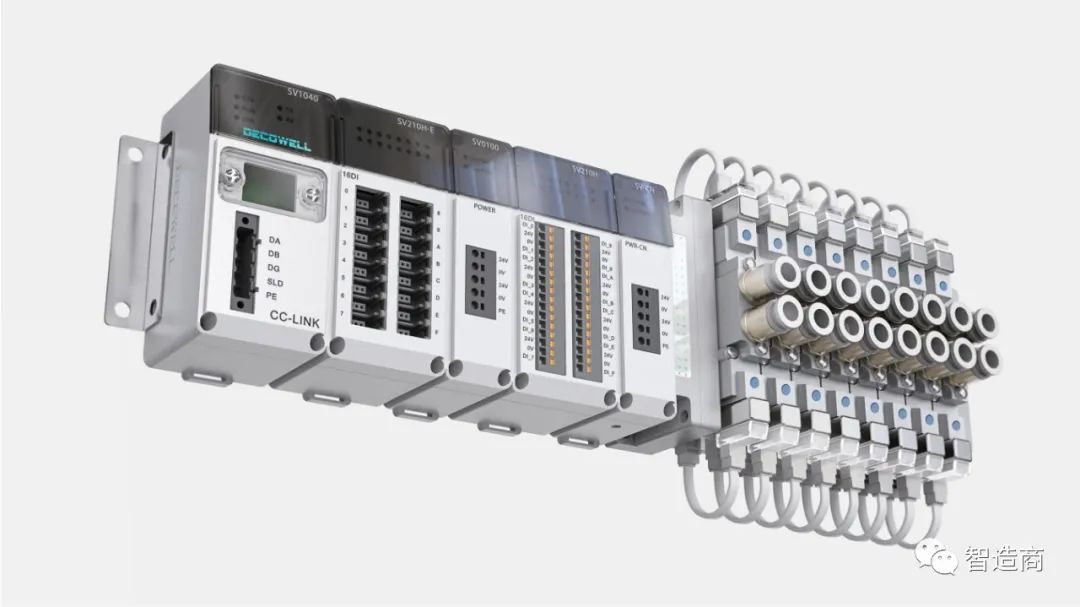
Next, let’s look at the available modules for each part of this valve island.
-
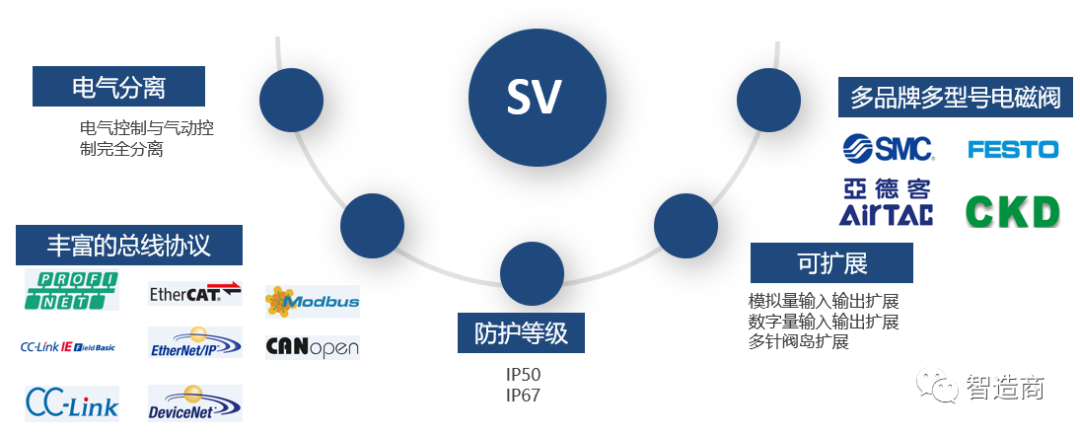
Valve seat part: This SV valve island can adapt to solenoid valves from multiple brands such as SMC, FESTO, AirTAC, CKD, etc., and also supports the installation of SMC’s plug-in solenoid valves;
-
I/O module part: Users can insert various I/O modules required for electrical control according to their needs, including digital input/output, analog input/output, etc.; the number of channels can be freely selected as 8, 12, 16, or 24; users can choose to use single or dual electric control modes;
-
Network adapter module: This series of valve islands offers various communication protocol options including CC-Link, CC-Link IE Field Basic, EtherCAT, PROFINET, Modbus, CANopen, EtherNet/IP, DeviceNet, etc.
⚠️ Regarding the number of modules, this SV valve island can expand to 32 modules, and there are no separate agreements on the total number of solenoid valves or I/O modules.
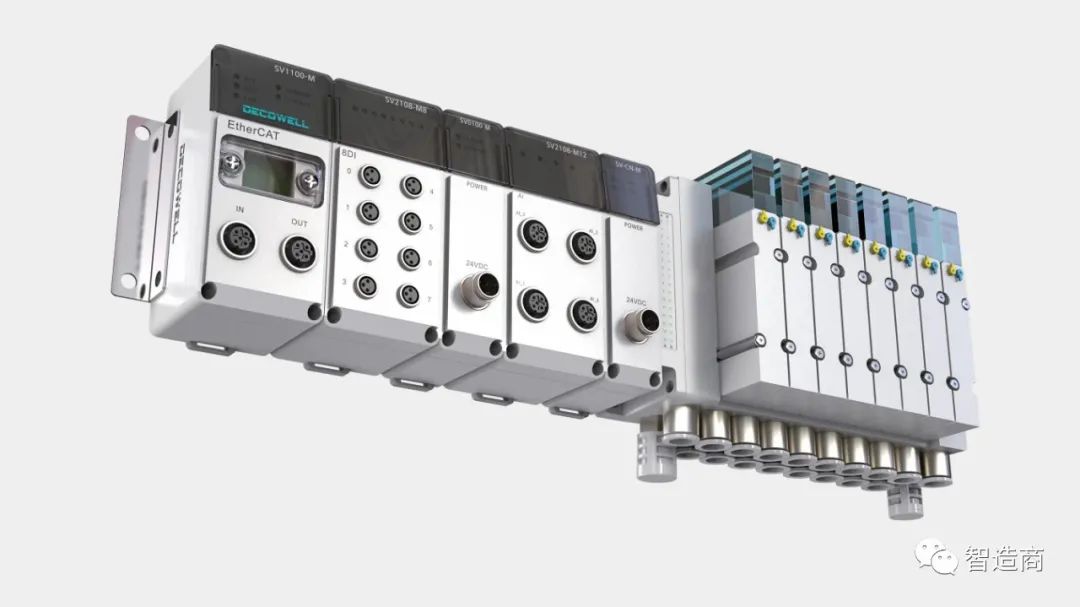
In terms of protection level, this product offers users options for IP67 and IP50, meeting application needs in different environments.
It is evident that the application of this SV valve island is quite flexible, allowing users to quickly integrate different brands of pneumatic components used on-site into various automation control systems through the network bus; at the same time, it can directly connect sensors and electrical actuators through its integrated electric control I/O module, eliminating the need for dedicated field I/O modules.
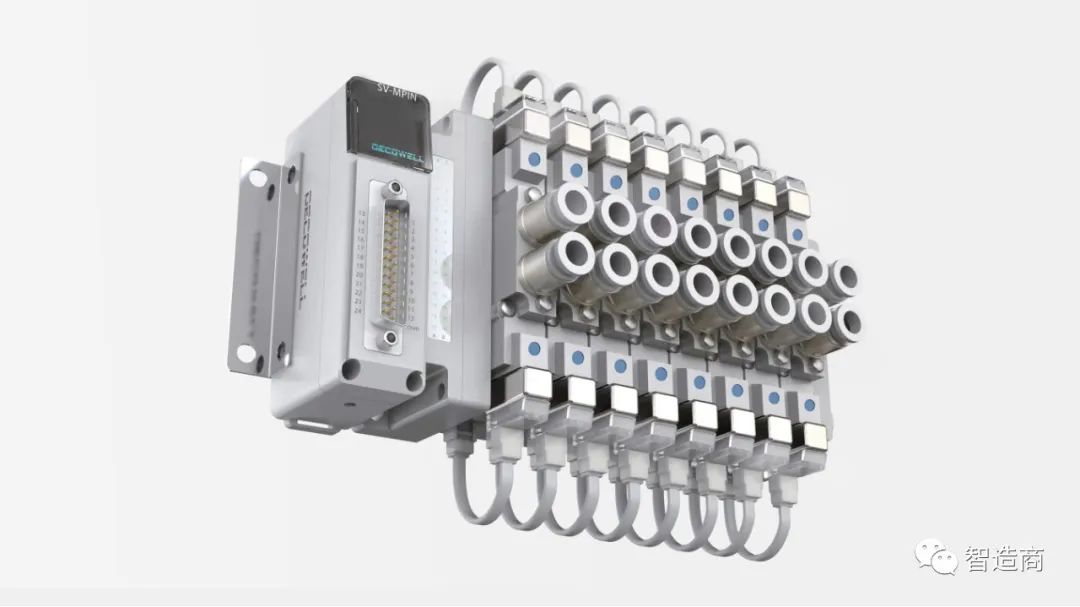
Moreover, this bus-type product also provides users with the option of multi-pin valve islands. (As shown below) Users can insert a D-type multi-pin expansion module in the middle I/O area and directly connect to the multi-pin valve island through prefabricated cables, thereby quickly expanding more solenoid valves at one bus station.
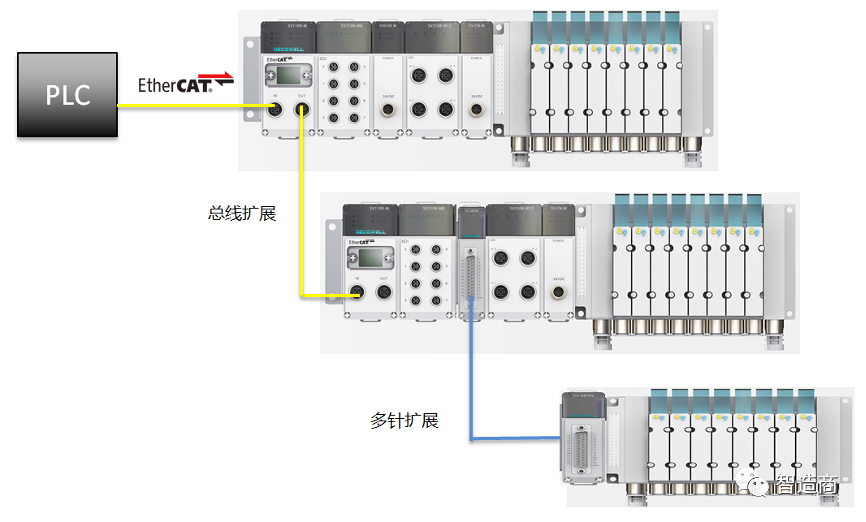
It can be said that the SV series remote valve island effectively achieves the modular separation of pneumatic control and electrical control at the hardware level by integrating industrial field bus technology into the valve island product, simplifying the installation and wiring of solenoid valves in automation systems. This not only helps to reduce the man-hours for the design, installation, integration, and debugging of electromechanical equipment but also saves labor and material costs for the subsequent operation, maintenance, and upkeep of the system.
It is reported that this SV series remote valve island product will officially go on sale in mid-January 2021.
Product information is referenced from: welllinkio.comThe above content reflects the personal views of the author, and any similarities are purely coincidental.If you have any questions, feel free to contact us through this public account at any time.Click “Read the original” to enter the public account menu and learn more about “Servo Matters”