With the continuous advancement of technology, images and videos play an increasingly important role in our lives. From smartphones, televisions, and computers to medical devices and automobiles, various smart devices require support from image and video transmission technologies. MIPI (Mobile Industry Processor Interface) interface technology is one of the mainstream technologies widely used to connect various smart devices, driving the further development and application of image and video technologies.
MIPI interface technology provides a reliable solution for achieving high-speed image and video transmission. It not only has high bandwidth, low power consumption, and high reliability for data transmission but also adopts standardized specifications and offers flexible connection methods. It supports mainstream image formats (such as RGB/YUV), making it the preferred interface IP for multimedia processing. This technology seamlessly connects mobile devices and other consumer electronics, providing them with interconnectivity and multimedia functionality.
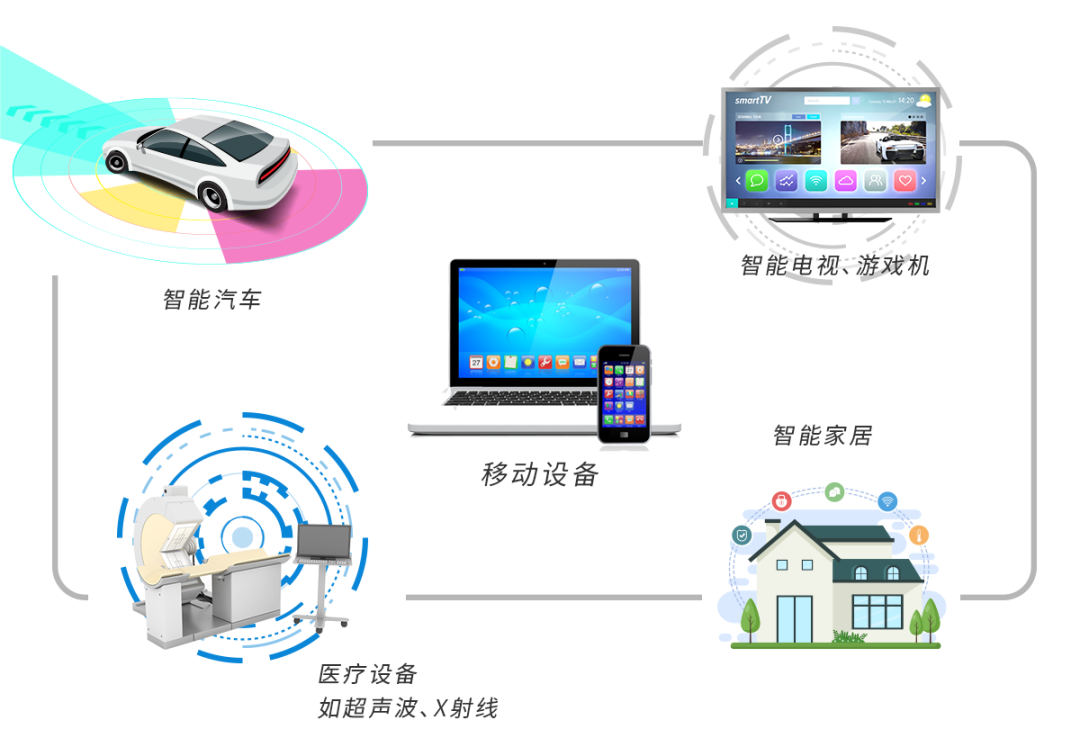
The application of MIPI interface technology in image and video transmission is becoming increasingly widespread. Whether in smartphones, tablets, or automotive and medical devices, they all use MIPI interface technology for data transmission.
For example, the screen display of smartphones and tablets is one of the features we frequently use. At the same time, multimedia functions such as photography and video recording have become an indispensable part of daily life. These functions rely on high-speed MIPI interface data transmission. The high-speed transmission and low power consumption technology of the MIPI interface significantly enhance the performance of smartphone photography, video recording, and screen display. For instance, it efficiently transmits image and video data captured by the camera to the screen, ensuring a high frame rate and high resolution for photography and video recording experiences while keeping the device’s power consumption within a reasonable range. This allows users to take high-quality photos and videos, capture precious moments, and enjoy smoother and more realistic video effects while extending battery life due to its low power consumption characteristics, further enhancing the user experience with their smartphones.
The application scenarios of MIPI interface technology are also continuously expanding, not limited to mobile devices. In the field of medical devices, imaging technologies such as ultrasound and X-ray also require high-speed and reliable data transmission technologies. MIPI interfaces can provide perfect solutions for these devices by efficiently transmitting ultrasound and X-ray imaging data, ensuring that medical professionals can accurately and quickly obtain and diagnose imaging results, providing critical support for medical diagnosis and treatment. Furthermore, MIPI interfaces are widely used in fields such as the Internet of Things, smart homes, smart monitoring, smart TVs, and smart cars. In IoT devices, MIPI interfaces can transmit data collected by sensors to the cloud for processing through high-speed transmission, enabling intelligent monitoring and control. In smart homes, cameras and displays utilize MIPI interfaces to achieve high-definition video transmission and display. In smart monitoring systems, surveillance cameras can transmit video data in real-time through MIPI interfaces, providing high-quality monitoring images. Smart TVs connect various external devices, such as game consoles and audio equipment, through MIPI interfaces to facilitate multimedia content transmission and playback. Various sensors, in-car displays, and cameras in smart cars also rely on MIPI interfaces to achieve in-car information display and driving assistance functions.
The working principle of MIPI interface technology is based on serial data transmission, featuring high-speed transmission, low power consumption, small size, high reliability, and flexibility.
It utilizes high-speed differential transmission technology to achieve high-speed, reliable, and low-power data transmission through multiple data channels and clock signals. Compared to traditional parallel interface technologies, MIPI interface technology is smaller in size, meeting the design requirements of miniaturized devices. Additionally, by providing higher resistance to interference and noise, MIPI interface technology can achieve more reliable data transmission. It also offers flexibility to meet different application scenarios and various device connection needs.
With the development of a digital society, the widespread application of images and videos in mobile devices and embedded systems has made achieving faster image and video transmission an important issue. To address this issue, we can approach it from the following three aspects: increasing data transmission rates, optimizing data transmission quality, and using higher-level MIPI interface protocol technologies.
To increase data transmission rates, we can focus on two aspects: increasing the bandwidth of the interface and increasing the signal transmission rate. Increasing the bandwidth of the interface can be achieved by increasing the number of data lines or using high-speed differential transmission technology to support greater data throughput on the same surface width. Increasing the signal transmission rate can be accomplished by adopting higher signal rates, such as increasing the amount of data transmitted per clock cycle, raising the clock frequency to increase the number of clock cycles transmitted per second, and reducing signal latency. Additionally, techniques such as time-division multiplexing and multi-channel transmission can be employed to enhance data transmission rates. By comprehensively applying these methods, we can effectively increase data transmission rates.
Optimizing data transmission quality refers to improving transmission quality while ensuring stable and reliable data transmission, reducing transmission delays and error rates. Interface protocols equipped with data compression, data verification, and data retransmission technologies can be used to optimize overall data transmission. Furthermore, different transmission protocols, such as D-PHY and C-PHY, can be selected based on different application scenarios or devices to enhance data transmission efficiency and stability.
 |
Share electronic-related technical articles, news, and communication meetings Subtle progress every day Gathering electronic technology |