As the heart of power supply in electronic devices, Power Management Integrated Circuits (PMICs) typically undertake responsibilities such as management, control, transformation, distribution, and detection of electrical energy within electronic systems to ensure stable operation and efficient energy consumption management. They are an indispensable type of chip in modern electronic products. According to a report by Mordor Intelligence, the global PMIC market size is expected to reach $54.2 billion in 2024, projected to grow to $70.8 billion by 2029.
Functionally, PMICs can be categorized into several types, including AC-DC converters, DC-DC converters, charging management chips, charging protection chips, wireless charging chips, and driver chips. These chips not only provide basic power management functions but also integrate advanced features such as overload protection, overvoltage protection, and sequence startup.
Thanks to the continuous evolution and breakthroughs in related technologies, it is now possible to integrate DC-DC conversion, battery charging, voltage regulation, power selection, power sequencing, and a range of other functions onto a single PMIC chip, meeting the needs of most modern electronic devices.
The Rapid Growth of “Driving Forces”
The proliferation of the Internet of Things (IoT) and wearable devices, along with advancements in consumer electronics, are widely regarded as the two key trends driving the complexity and market growth of PMICs. On one hand, as the number of connected devices continues to rise, the demand for efficient and compact power management solutions is increasing, making PMICs essential for ensuring reliable power supply and extending battery life for these devices. On the other hand, consumer devices such as smartphones, tablets, and laptops require more powerful and energy-efficient components, with PMICs crucial for managing their power, ensuring optimal performance, and prolonging battery life.
Driven by these industry trends, the integration and miniaturization of PMICs have been steadily improving in recent years. As mentioned earlier, with electronic devices becoming more compact, the popularity of smaller, more efficient power management solutions is growing. Chip manufacturers are continuously integrating multiple power management functions into a single chip to reduce overall footprint and enhance performance. This trend is particularly evident in smartphones, wearable devices, and IoT applications, where space is at a premium.
Advancements in semiconductor process technology are also driving the development of more efficient and powerful PMICs. The transition from traditional silicon-based processes to advanced materials such as Gallium Nitride (GaN) and Silicon Carbide (SiC) has achieved higher efficiency and better thermal performance. These materials allow for higher switching frequencies, reducing the size of passive components and improving overall power density.
Simultaneously, the emergence of some new niche industries has expanded the application fields of PMICs. For example, energy harvesting, which is becoming increasingly popular in IoT and wearable applications, involves PMICs designed specifically for energy harvesting that can capture energy from environmental sources such as light, heat, and vibration, converting it into usable electrical energy. This trend is driven by the demand for sustainable and self-powered devices, reducing reliance on batteries and extending the operational lifespan of electronic systems.
Wireless Power Transfer (WPT) is another excellent example. As a convenient and efficient way to charge electronic devices, WPT is becoming increasingly popular, with some PMICs being developed to support various WPT technologies, including inductive coupling, resonant coupling, and capacitive coupling. This trend is driven by the proliferation of wireless charging solutions for smartphones, wearable devices, and other portable gadgets, providing users with a seamless and cable-free charging experience.
Finally, we must mention Artificial Intelligence (AI) and Machine Learning (ML). Like other technologies, AI/ML is also being integrated into PMICs within complex systems such as data centers, automobiles, and smart devices to optimize power management. These technologies enable adaptive power management, allowing PMICs to dynamically adjust power output based on real-time conditions and usage patterns, significantly improving energy efficiency and extending battery life.
How to Unlock Excellent PMIC Design?
Clearly, this is not an easy task, especially designing PMICs that reflect all the aforementioned trends and meet all market demands, which poses a significant challenge. From the perspective of Electronic Design Automation (EDA) vendors, accelerating PMIC design requires innovation in three main areas: efficiency, reliability, and time-to-market (TTM).
Improving Efficiency
Inefficient designs increase chip area, power consumption, and temperature, while reducing operating frequency and reliability. Providing a high-performance, high-capacity simulation and design environment can handle large designs while maintaining leading performance.
Enhancing Reliability
High voltage and current levels can lead to device breakdown, thermal issues, and timing problems. Therefore, comprehensive device aging, thermal analysis, and timing analysis supporting simulation of large complex designs are particularly important.
Shortening Time-to-Market
Larger, more complex designs increase design time and schedules, delaying product launches. Designers hope to automatically highlight issues such as electromigration (EM), IR drop, and heating in a process-driven environment.
Innovative Ideas from Synopsys
Here, the “innovative ideas” refer to a product matrix composed of several solutions, each with its unique competitiveness, which can aggregate into a magical end-to-end solution when integrated together.
For example, Synopsys’ PrimeSim SPICE is a GPU-accelerated Spice simulator capable of handling large designs with complex parasitic parameters while maintaining Spice accuracy, making it ideal for power management applications with long transient times, rapid voltage changes, and high currents.
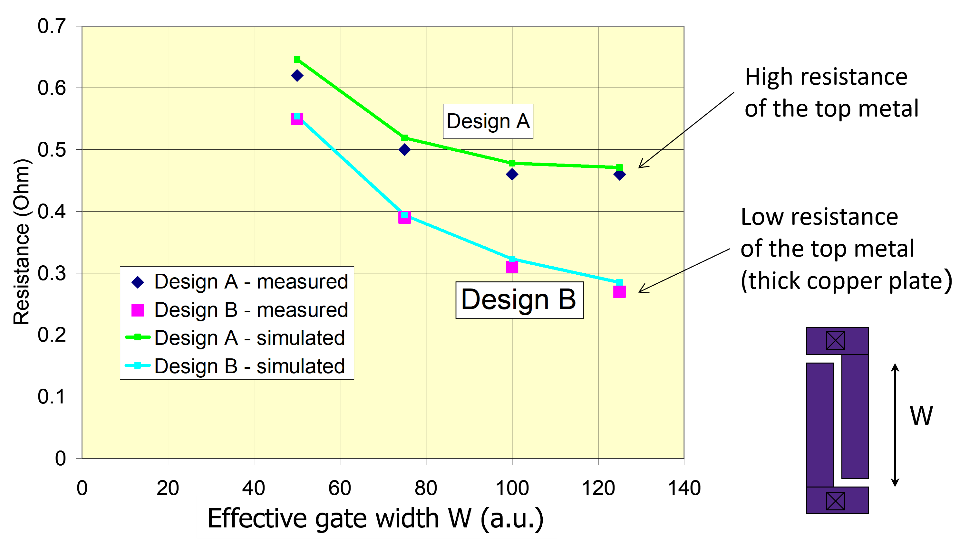
From years of practical experience, another key issue that PMIC designers are very concerned about is how to accurately characterize and optimize the resistance of the leakage source channel in power devices, known as on-resistance (Rdson). To this end, Synopsys has launched an advanced solution specifically for metal interconnect extraction and analysis in PMICs—the Power Device Workbench.
It not only supports arbitrarily complex, multi-connected interconnect structures but also identifies all resistance factors contributing to Rdson, including metal, wire bonding, contact points, and vias, simulating current flow and voltage distribution. To help designers gain insights into the physical characteristics and operating principles of device interconnects, the Power Device Workbench can visually display current density and voltage distribution.
Moreover, considering that after actual wafer processing, simulation results must closely match measured results to achieve optimal design, the Power Device Workbench has optimized the layout for metals, vias, and pads, with its rigorous and efficient field solver capable of yielding precise mathematical solutions.
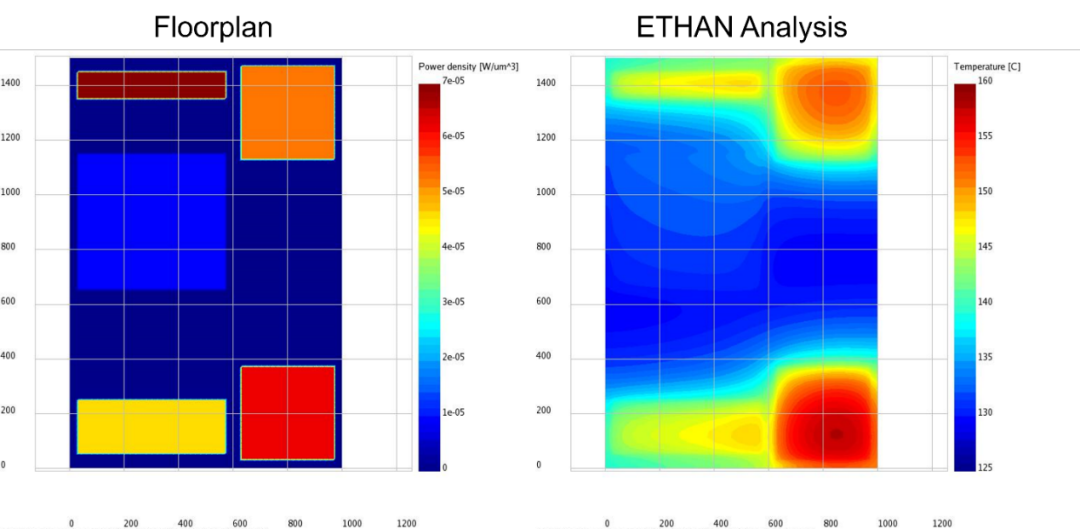
ETHAN (Electro-Thermal Analysis) is a thermal simulator for PMICs. It combines 3D, static, and transient geometries with R3D and a thermal engine, utilizing detailed thermal meshes. ETHAN is designed to be user-friendly, easily integrated into various simulation environments, including existing layouts, technology, and rule files. With intuitive commands, users can build 3D structures layer by layer, simplifying the description of PMIC packaging, while various text reports and graphical visualizations (such as thermal maps) help designers understand analysis results.
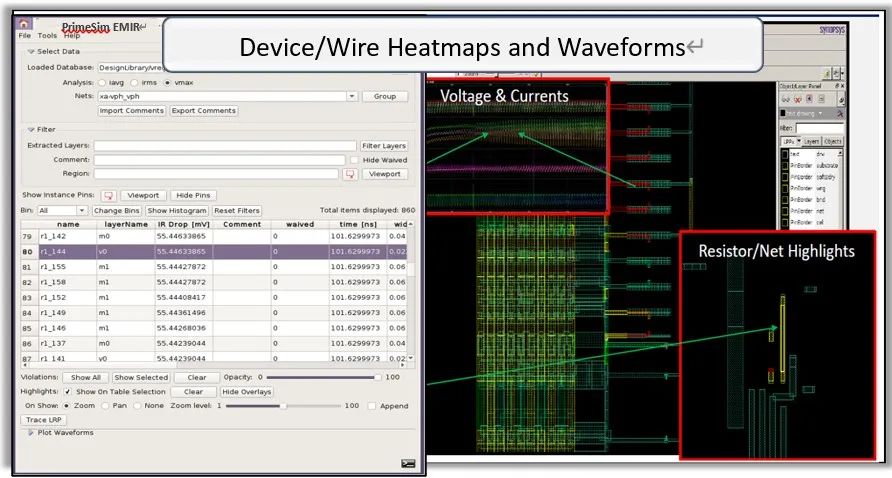
PrimeSim EMIR solution integrates reliability analysis techniques that are production-proven and certified by foundries, covering electromigration and IR drop analysis. Integration with the PrimeWave design environment allows users to set analysis options, run simulations and EMIR analyses, and review violations for targeted evaluation and debugging. This environment enables users to overlay analysis results on design layouts and check network resistances from pads to pins and from pads to internal instance pins.
“Linking” the Design Ecosystem
It is essential to emphasize that merely ensuring excellent performance among multiple tools and smooth interactions is only part of the work. Without close collaboration with foundries to develop optimized design and verification processes using precise Process Development Kits (PDKs), it is challenging to label a PMIC chip as excellent.
Synopsys’ close collaboration with industry leaders in high-voltage process technology, such as United Microelectronics Corporation (UMC), can be considered a benchmark in the industry. UMC provides advanced technologies such as Bipolar-CMOS-DMOS (BCD), with voltage ratings ranging from 5V to 200V, covering various power-related applications, making it well-suited for PMIC implementation. Not only that, UMC offers user-friendly PDKs, design guidelines, example layouts, and foundational digital IP support. Synopsys collaborates with UMC to develop PDKs for all of UMC’s high-voltage (HV) and BCD technology nodes.
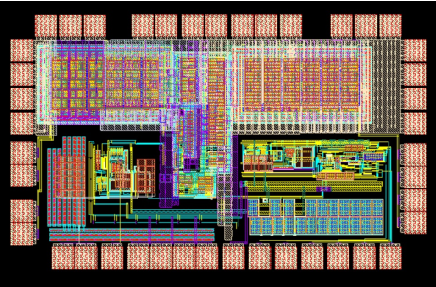
Additionally, Synopsys and UMC work closely with academia in this technology field. For instance, the Indian Institute of Technology Kharagpur (IIT Kharagpur) has designed several cutting-edge PMIC projects using Synopsys’ Analog and Mixed-Signal (AMS) design flow along with UMC’s technology. The following image shows the design architecture of one such DC-DC converter.
Furthermore, the team at the Indian Institute of Technology has developed training labs for silicon implementation processes based on PMIC designs built using UMC’s 180nm technology and Synopsys’ custom design and AMS tools for both parties’ clients.
Conclusion
Overall, Synopsys’ custom design flow offers unique advantages to power electronics designers, while the close collaboration with UMC ensures that clients have a seamless experience in the most challenging PMIC development projects. So, in a future where AI and new energy flourish, what unimaginable new skills will PMICs unlock, completely transforming the energy management model of electronic devices? Let’s wait and see.