PCB Network News

What Is Ion Contamination In Electronic Product Manufacturing?
According to long-term quality control data statistics in the electronic manufacturing industry, approximately 50% to 70% of quality defects during the entire production process are caused by ion contamination of the products. As early as the 1970s, the electronic manufacturing industry established the “ROSE – Resistance of Solvent Extraction Method” detection standard specifically for metal and ion contamination.
Cleaning operations are currently the only effective way to remove ion contamination from products. Therefore, from semiconductor chip manufacturing and packaging to the subsequent PCB/PCBA packaging stages, almost every processing step is immediately followed by a cleaning operation.
For example, the number of cleaning steps accounts for the largest proportion of the chip manufacturing process, representing more than 30% of all chip manufacturing steps. With the advancement of semiconductor manufacturing technology nodes, the number and importance of cleaning steps will continue to increase. As the semiconductor chip process technology nodes advance to 28nm, 14nm, and even more advanced levels, the process flow becomes longer and more complex, resulting in a decrease in production line yield.
One reason for this phenomenon is that advanced processes are more sensitive to impurity contaminants, making efficient cleaning of small-sized contaminants more difficult. The solution primarily involves increasing the number of cleaning steps and adopting more efficient water-based cleaning technologies. Each wafer requires over 200 cleaning steps throughout the manufacturing process, making wafer cleaning increasingly complex, important, and challenging.
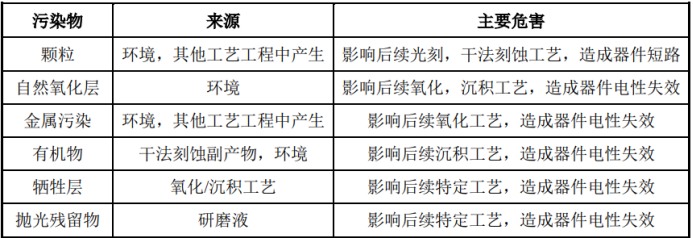
In fact, to ensure product yield and performance, various contaminants on the surface must be controlled within the process requirements during electronic product manufacturing. In addition to conducting all manufacturing processes in a strictly controlled purification environment, it is also necessary to assess whether the surface characteristics of the product meet the requirements of each step before performing each process. Currently, as chip technology nodes continue to improve from 55nm, 40nm, 28nm to 14nm, 7nm and below, the control requirements for surface contaminants of electronic products are becoming increasingly stringent, necessitating a cleaning step before functional processing.
Based on the cleaning medium, cleaning technologies can be divided into wet cleaning and dry cleaning. Wet cleaning refers to the use of liquids such as solutions, acids, bases, surfactants, water, and their mixtures to achieve chemical reactions or interfacial reactions between the product’s surface impurities and the cleaning agents through wetting, emulsification, penetration, dissolution, and chemical reactions, thereby dissolving surface contaminants, organic substances, metals, and their ionic contaminants, generating soluble substances, gases, or directly detaching to obtain products that meet cleanliness requirements.
In the post-Moore era, the manufacturing technology’s requirements for environmental atmosphere are becoming increasingly stringent. Solvent-based cleaning technologies that pollute specialty electronic gases and electronic chemicals are rapidly being phased out, while water-based cleaning technologies that are more compatible with the natural environment have become the industry mainstream.
In the quality control process of producing all electronic circuit products, the greatest fear is that ion contamination alters the electrical performance of the product, resulting in a decline in overall product performance and reliability, leading to increased rework or direct scrapping of products. For instance, in the production processes of chips and batteries, fatal defects such as leakage, short circuits, and capacitance drift can occur due to ion contamination. Therefore, water-based cleaning technology for ion contaminants is an essential part of all cleaning operations.
What Are the Dangers of Ion Contamination?
In the electronic manufacturing industry, contaminants are substances that can degrade performance, being various surface deposits or impurities that are absorbed or adsorbed by surfaces.
These contaminants primarily reduce the yield of electronic products in the manufacturing process: electronic products made in a contaminated environment can cause various issues. Contamination can alter the dimensions of electronic products, change surface cleanliness, and create dented surfaces, among other problems.
Moreover, a more serious issue is the missed detection of small problems during the process. Unwanted chemicals in process steps may change the dimensions or material quality of electronic products.
Most concerning is the impact of contamination on the reliability of electronic products. Small doses of contaminants may enter the interior of electronic products during the manufacturing process without being detected by conventional electronic product testing. However, these contaminants can move within the electronic product and eventually settle in electrically sensitive areas, leading to product failure. This failure mode has become a primary concern in the automotive, aerospace, and defense industries.
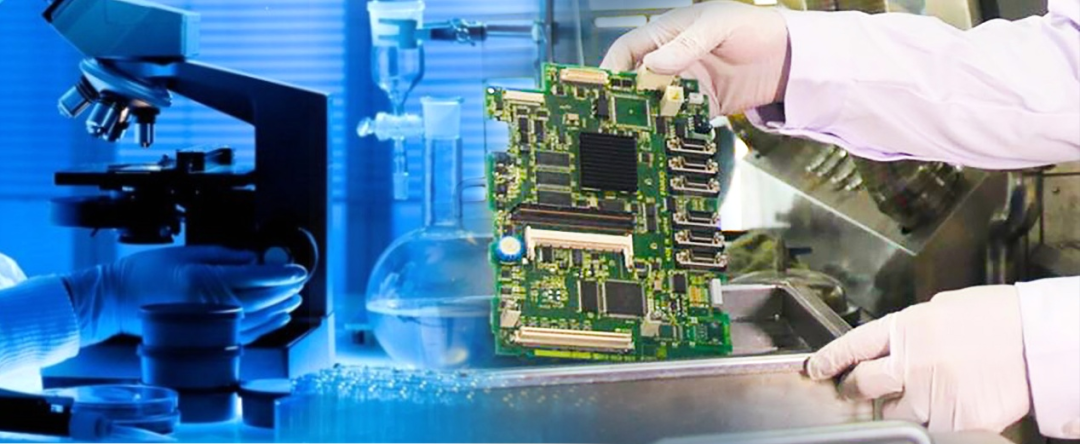
Contaminants exist in the environment mainly in ionic and non-ionic forms. Ionic contamination sources primarily come from process contamination such as PCB etching, coating, doping, oxidation, and solder mask layers, as well as contact contamination from component packaging materials, solder paste, flux, equipment oil, fingerprints, and environmental dust, manifesting as various organic or inorganic acids and salts. Therefore, strict control of polar ionic contaminants is necessary during the manufacturing process.
Ionic contaminant molecules have eccentric electron distributions and are prone to moisture absorption. Under the influence of carbon dioxide in the air, they generate positive and negative ions, leading to product corrosion, decreasing surface insulation resistance, and under the presence of an electric field, electro migration can occur, producing dendritic crystallization, resulting in leakage and short circuits. The low surface energy of polar contaminants can also allow them to penetrate solder mask layers and grow dendrites beneath the product’s surface. Additionally, some polar contaminants may also be non-ionic, and under bias voltage, high temperatures, or other stresses, various negatively charged molecules may align themselves to form current.
In the PCB/PCBA production process, almost all metal elements involved in product manufacturing will release various metal particles and metal compounds, forming cations such as ammonium, calcium, lithium, magnesium, potassium, and sodium. Additionally, a large amount of “acidic ions,” such as chloride, bromide, weak organic acid ions, sulfate ions, and flux, remain as various acidic anions. These contaminants composed of cations and anions are all classified as polar contaminants.
Excessive metal ions in metal particles and cations can easily lead to reduced insulation of electronic components, capacitance drift, and electrical signal interference, even causing direct short circuits in electronic circuits. Furthermore, highly reactive metal particles and metal cations can also displace some less reactive noble metals in conductive materials of electronic circuits, leading to a decline in electronic circuit performance.
Among the negative ions in contaminants, such as chloride ions mainly come from HASL solder masks, sweat, tap water, and soldering flux residues (high in active or mildly active rosin solder masks, low in resin-based or rosin-based water-soluble fluxes and no-clean fluxes), chloride ions can form ionic electrode potentials when combined with moisture, leading to leakage, corrosion, and ionization of metallic substances.
In the PCB and PCBA processes, the content of chloride ions is influenced by the PCB material. The material conditions of the PCB (including its insulating substrate and attached metals) determine the allowable content of chloride ions during the assembly process. Ceramic composite substrates or other materials formed on refractory substances, such as lead, are more sensitive to the presence of chloride ions compared to organic substrates like epoxy glass cloth substrates, due to the surface integration distribution reaching the microscopic level. Regarding surface metal layers, nickel/gold surfaces are much cleaner than lead/tin surfaces.
In contrast, bromide ions have less impact than chloride ions, as they are added as flame retardants in epoxy glass cloth and remain in solder inks, character inks, and certain bromine-based active materials in solder masks. The amount of bromine is related to the porosity of the substrate or the assembly layer, so the condition of the substrate or assembly layer reflects the level of bromine content. The number of high-temperature cleaning cycles also affects bromine content, and the impact of bromides is related to the PCB manufacturing process, especially the cleaning of solder masks before soldering assembly.
Sulfate ions function similarly to chloride and bromide ions, with sulfates originating from many processes in manufacturing, including various kraft paper, plastic materials, and acids used in etching. Often, sulfate ions come from tap water used in rinsing or cleaning.
Medium-chain sulfonic acids are often used in many plating processes and can sometimes be used as substitutes for active agents in some HASL solder masks. If not adequately neutralized or cleaned, their corrosive effects can be many times greater than those of chlorides.
Cleanliness Requirements
Electronic manufacturers face challenges in determining the cleanliness levels required for reliable hardware production. The question of “how clean is clean enough” presents more challenges for increasingly narrow wires and circuits. Acceptable cleanliness in one area of the electronics industry (for example, after SMT wave soldering of a toy) may be unacceptable in another semiconductor area (such as flip-chip packaging).
Many process experts may not have a thorough understanding of cleanliness, and challenges remain regarding long-term reliability issues related to residues or determining how much the residue impacts the functionality of the hardware.
Factors to consider include:
(1)End-use environment (aerospace, military, medical, automotive, information technology, etc.)
(2)Product design/service life (90 days, 3 years, 20 years, 50 years, warranty + 1 day)
(3)Involved technologies (high frequency, high impedance, power supply)
(4)Failure phenomena corresponding to the defined end product levels (e.g., mobile phones, heart rate monitors).
Cleaning Effectiveness Assessed by Cleanliness Indicators
(1)Cleanliness Level Standards
According to the relevant regulations of the People’s Republic of China military standard SJ20896-2003, electronic product cleanliness is classified into three levels based on reliability and performance requirements, as listed in the table.
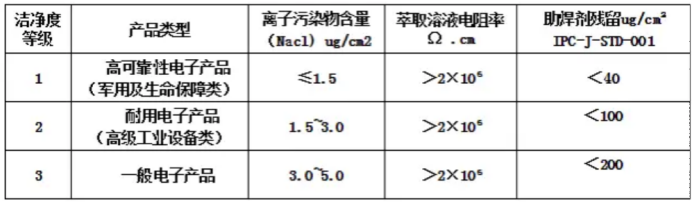
In practice, eliminating contamination is almost impossible; a compromise is to determine the acceptable and unacceptable levels of contamination for products. In the PCB and PCBA industries, according to IPC-TM-650 standard, the flux residue level is specified to be <40ug/cm2, and the ionic contamination level should be ≤1.5 (NaCl) ug/cm2, with extraction resistivity >2×10⁶Ω.cm. Additionally, with the miniaturization of PCBA, it is almost certain that this level is still too high to meet the actual performance requirements of products; current common ionic contamination requirements are approximately ≤0.2 (NaCl) ug/cm2.
Key Considerations for Cleaning
In the PCB and PCBA industries, key considerations for cleaning include the following (which also include cleaning of PCB/PCBA semiconductor components):
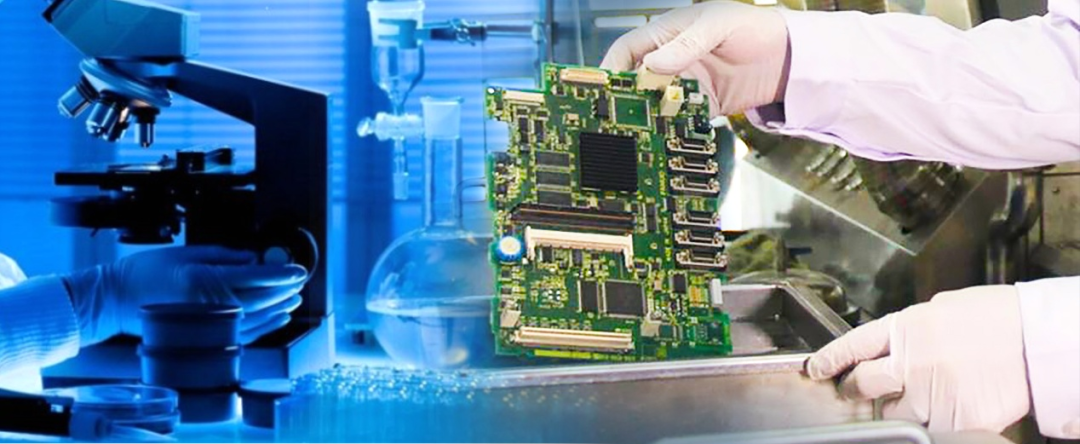
1. Detection and analysis of residues after soldering/cleaning is an important part of the component cleaning process. The factors affecting the effectiveness of the assembly circuit board cleaning process are shown in the diagram below.
2. Geometric shape of components
3. Height of component supports and their impact on cleaning
4. Enclosed liquids
5. Component issues and residues
6. Contaminants from components
7. Component degradation
8. Other key considerations for component cleaning
9. Surface wetting
10. Surface tension and capillary forces
11. Comparison of filled and unfilled gaps
12. Variability of flux residues
13. Effectiveness of cleaning agents
Advantages of Water-Based Cleaning Technologies
Cleaning Principles of Water-Based Cleaning Agents
Water-based cleaning agents are cleaning agents that dissolve in water and can be diluted with water. The cleaning principle relies on the properties of wetting, emulsification, dispersion, penetration, and dissolution contained in its surfactants, emulsifiers, and penetrants to perform powerful cleaning on the surface of workpieces. For PCBA and semiconductor electronic components without bottom terminal devices, spray-type water-based cleaning agents can be used; for PCBA with bottom terminal devices, water-based cleaning equipment incorporating soaking, ultrasonic vibration, air stirring, and flow (jet) technologies should be used for cleaning.
Emulsified water-based cleaning technology utilizes organic solvents in the cleaning agent to wet and expand contaminant residues, and through the penetration effect of surfactants in the cleaning agent, along with the scrubbing (impact) effect of the cleaning agent, forms numerous small cracks in the residual film of contaminants such as flux; then, through the continuous scrubbing (impact), loosening, and penetration effects of the cleaning agent (machine), the cracks in the residual film become more numerous and deeper. When the cracks reach the product surface, the cleaning agent’s further scrubbing (impact), loosening, and penetration will develop along the bottom of the small residual film, ultimately stripping away the contaminants.
Advantages of Water-Based Cleaning Agents
In the aforementioned “cleaning” process, the organic solvents and surfactants in the cleaning agent, as well as pH (acidity and alkalinity) regulators, are the true “cleaning agents”; while water serves merely as a carrier for the dynamic action of the cleaning agents on flux residues; water temperature acts as an accelerator for cleaning efficiency.
For instance, Guangzhou Zhengpu Chemical Co., Ltd. (hereinafter referred to as Zhengpu Company) water-based cleaning agents possess the following advantages:
(1)Strong decontamination capability with excellent material compatibility.
(2)Non-flammable and non-explosive, safe to use, and environmentally friendly. Water-based cleaning agents have no flash point and will not burn or explode.
(3)Water-based cleaning agents do not cause ozone layer depletion or harm the physical and mental health of operators due to the evaporation of organic solvents, unlike ODS solvents such as trichloroethylene, trichloroethane, and fluorocarbons.
Zhengpu Company is a professional enterprise engaged in water-based cleaning agent products and water-based cleaning solutions. Its independently developed water-based cleaning agents not only effectively clean various foreign contaminants from product surfaces but also remove various particulates on product surfaces, preventing products from continuing to adsorb various particulates from the environment in subsequent operations and preventing secondary contamination.
Water-based cleaning agents are an effective alternative to solvent-based cleaning; their application range is extensive. The ZP-380 produced by Zhengpu Company can be used in conjunction with ultrasonic cleaning and other automated online cleaning processes, making it simple and convenient. It has good safety and reliability, with a long service life of the cleaning solution.
ZP-380 Ion Contamination Water-Based Cleaning Agent, Professional for PCB/PCBA, Military, Aerospace Markets
ZP-380 Ion Contamination Water-Based Cleaning Agent is specially developed to address the issue of excessive ion contamination on printed circuit boards and semiconductor packaging, specifically designed to remove residual ion contaminants from product surfaces. It is suitable for lead-free/tin-lead spray tin and electroplating processes, effectively removing corrosive acidic ions such as chloride, bromide, weak organic acid ions, and sulfate ions from printed circuit boards and semiconductor chips during processing, as well as cation contaminants like ammonium, calcium, lithium, magnesium, potassium, and sodium. It is particularly effective at removing flux residues, which are the hardest to clean on HASL boards, showing significant results post-cleaning. It can also effectively eliminate fingerprints, oils, and other contaminants left by cleaning personnel, meeting the lower ion contamination requirements of printed circuit board products.
ZP-380 ultrasonic cleaning agent is specifically designed for water-based ultrasonic cleaning equipment. This cleaning agent is composed of water-soluble solvents, special saponifiers, and corrosion inhibitors. ZP-380 can effectively remove residues of various mainstream solder pastes, such as AIM, Alpha/Cookson, Heraeus, Kester, Qualitek, Senju, and Umicore. ZP-380 provides excellent compatibility with most substrates and materials used in electronic packaging cleaning applications, does not harm the ozone layer, and its material components are carefully selected to meet global applications and environmental standards. ZP-380 is supported by the world’s most advanced cleaning technology, capable of solving the industry’s most difficult cleaning challenges, making it the preferred high-efficiency cleaning agent for PCB/PCBA, military, and aerospace markets.
Market Prospects for Water-Based Cleaning Agents
Currently, China is gradually phasing out hydrogen chlorofluorocarbons (HCFCs) in accordance with the Montreal Protocol on Substances that Deplete the Ozone Layer. As the phase-out of HCFCs enters a critical stage, various industries and regions urgently need guidance on alternatives to ensure the industry’s and country’s continued compliance, with the promotion of water-based cleaning agents being a top priority.
Industrial cleaning agents have rapidly developed over the past few decades, evolving from traditional solvent-based cleaning agents to diversified markets of water-based cleaning agents and hydrocarbon cleaning agents, with cleaning technologies becoming increasingly diverse. With the worsening global environment, developing new types of environmentally friendly, pollution-free, and low-cost green cleaning technologies has become an inevitable trend and competitive condition for the cleaning industry, and the demand for environmentally friendly cleaning agents is accelerating growth. Currently, due to the environmentally friendly, non-toxic, and neutral characteristics of water-based cleaning agents, they have gradually become a trend in the industrial cleaning field.
Evolution of Industrial Cleaning Agents
|
Time |
Evolution |
Disadvantages |
|
1950s |
Traditional solvent cleaning agents based on gasoline, kerosene, and diesel were widely used in the cleaning industry. |
These traditional solvent cleaning agents are highly toxic, posing significant health risks to workers and damaging the environment. |
|
1960s |
A large number of water-based cleaning agents began to emerge in the market. |
Water-based cleaning agents have limited ability to remove certain oily stains and consume a significant amount of water, leading to water resource waste. |
|
1970s-1980s |
Due to their strong decontamination capability and recyclability, chlorinated solvents began to be widely used in the cleaning industry. |
Chlorinated solvents deplete the ozone layer, creating ozone holes, and many countries have imposed restrictions on their use and production. |
|
Early 21st century |
Water-based cleaning agents have become the ideal cleaning agents of the new generation due to their excellent oil removal capabilities, neutrality, low toxicity, low harm, safety for humans, recyclability, and high environmental efficiency. |
Today’s water-based cleaning technologies are closely related to electronic product manufacturing activities and have become an integral part of the production process. Cleaning does not provide the final product but is a partial procedure, process, or auxiliary activity in many industrial production processes, yet the quality of cleaning determines the performance and quality of the final product, especially in today’s high-tech industries, where the role of water-based cleaning agents and their cleaning processes is particularly prominent and increasingly recognized by the industry.

Especially with the worsening global environment, developing new environmentally friendly, pollution-free green cleaning technologies has become an inevitable trend and competitive condition for the cleaning industry, and demand for environmentally friendly cleaning agents is accelerating growth. Currently, the environmentally friendly characteristics of water-based cleaning agents have gradually become a trend in the industrial cleaning field.
Industry consulting firm IHS Markit states that the global cleaning agent market was valued at $44.2 billion at factory prices in 2017, and it is predicted that from 2017 to 2022, this market will grow steadily at an average annual growth rate of 3.5%.
Rapid Development of the Chinese Market
North America remains the largest consumer market for cleaning agents, while China has surpassed Western Europe to become the second-largest consumer market for cleaning agents in the world, with a total consumption value of $7.2 billion in 2017, accounting for 16.3% of the global market. Looking ahead, the Chinese market is expected to continue growing at a very attractive annual rate of 8.2% over the next five years, with the industrial sector accounting for the largest share of demand.
IHS Markit indicates that the tightening of regulations and the continuous enhancement of public health and hygiene awareness are driving the good development potential of the water-based cleaning agent market. Under the influence of these positive factors, there is increasing attention to the development and use of more environmentally friendly cleaning products, and the market demand for green solutions will continue to expand.
Zhengpu Company is a major drafting unit of the “People’s Republic of China Electronic Manufacturing Water-Based Cleaning Agent Industry Standard” and possesses the world’s most advanced cleaning technology support, capable of addressing the industry’s most challenging cleaning problems. For many years, Zhengpu’s independently developed ultra-precise environmentally friendly water-based cleaning agents have not only provided the green and environmentally friendly production processes required by the industry but have also shown significant advantages in improving product yield and upgrading automation technology, promoting the industry’s transition to green manufacturing.
Source: Authorized publication by Guangzhou Zhengpu Chemical Co., Ltd., copyright belongs to the original author.