In the promotion and application of Bluetooth modules, we often encounter issues related to product certification, and customers or friends frequently inquire about this aspect. We at Weilin Communication have long served numerous industry clients with high standards, placing great emphasis and investment in certification. Our own module product certifications consistently maintain broad coverage and high standards to better serve our customers.
Generally speaking, a complete electronic product must meet certification requirements to be legally sold and used in a country or region. Certification involves a wide range of aspects, including types, technologies, costs, policies and regulations, standards, processes, and more. The details are extremely broad and intricate. Due to space limitations, I won’t delve too deeply into details and precision. Instead, I will provide a simple introduction to the basic concepts, processes, and use of typical certifications related to Bluetooth modules, hoping to help everyone understand and utilize Bluetooth modules in product design.
The typical Bluetooth-related product certifications we usually encounter can be divided into the following categories:
- Certification by the Bluetooth Special Interest Group (SIG). If your product has Bluetooth functionality and displays the Bluetooth logo on its exterior, it must pass a certification called BQB.
- Certifications required by various countries or regions for electronic or wireless products, such as SRRC in China, FCC in the USA, IC in Canada, CE in the EU, and KCC in South Korea. If related products are sold or used in these countries or regions, they must comply with the relevant regulatory certifications.
- Other safety or environmental certifications. Some countries and regions have safety or environmental requirements for end products that go beyond just wireless or electronic safety, also covering other aspects of the complete device, such as CCC in China, UL in North America, and RoHS/REACH in the EU.
1. Bluetooth SIG BQB Certification Only after passing SIG testing and certification in compliance with Bluetooth standards can a product be marketed as a Bluetooth product. Additionally, the BLUETOOTH and Bluetooth logos are registered trademarks of SIG, and products must be certified by SIG to be authorized to use these logos and identifiers; otherwise, there may be legal risks, especially for markets overseas.
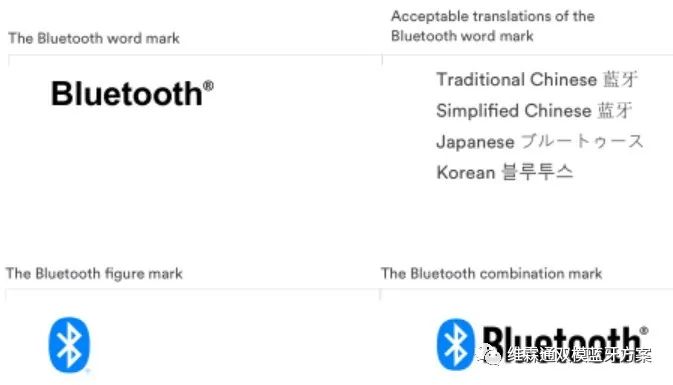
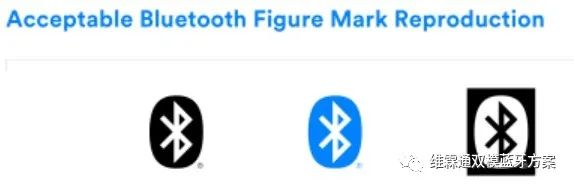
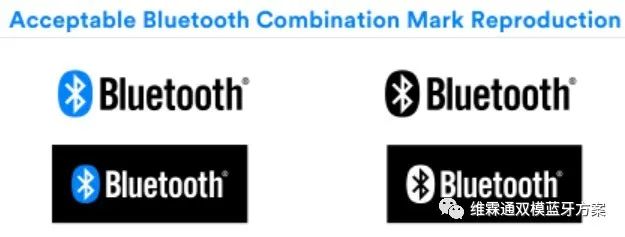
Bluetooth certification varies based on product type, and the classification is quite complex. Simply put, a complete system Bluetooth module or a terminal product with Bluetooth can generally be certified as an ‘End Product’. Bluetooth can also be broken down into subsystems such as controller/host/profile/component or component types. We will focus on the commonly used ‘End Product’ type certification for modules. The Bluetooth module’s certification requirements are defined based on the software and hardware functionalities of the product, such as Bluetooth standard versions 4.2 or 5.0. Typically, based on existing chip subsystem certifications, only RF (Radio Frequency) and protocol (Profile) testing of the module is required. The module sample is submitted to a SIG-recognized certification laboratory for testing. Once the module passes the tests, a formal test report is issued, indicating that the product meets the required testing standards. Having a test report only proves that the module’s technology meets the standards. If the terminal product is designed for market sale using this Bluetooth module, it still needs to apply for a legal identity (DID – Declaration ID). Strictly speaking, all terminal products supporting Bluetooth require a DID to indicate that they are based on a certified Bluetooth solution (since 2020, terminal products are required to purchase their own DID and cannot be listed for free). Bluetooth modules, typically considered components, are not strictly required to have a DID, but for the convenience of the customer certification process and considerations for product branding and longevity, we generally apply for a DID for Bluetooth modules. By submitting the test report and paying the DID application fee, the Bluetooth module will be assigned a DID (along with a module certification QDID, which can be referenced by terminal products), which can be verified on the Bluetooth SIG website. As shown below:

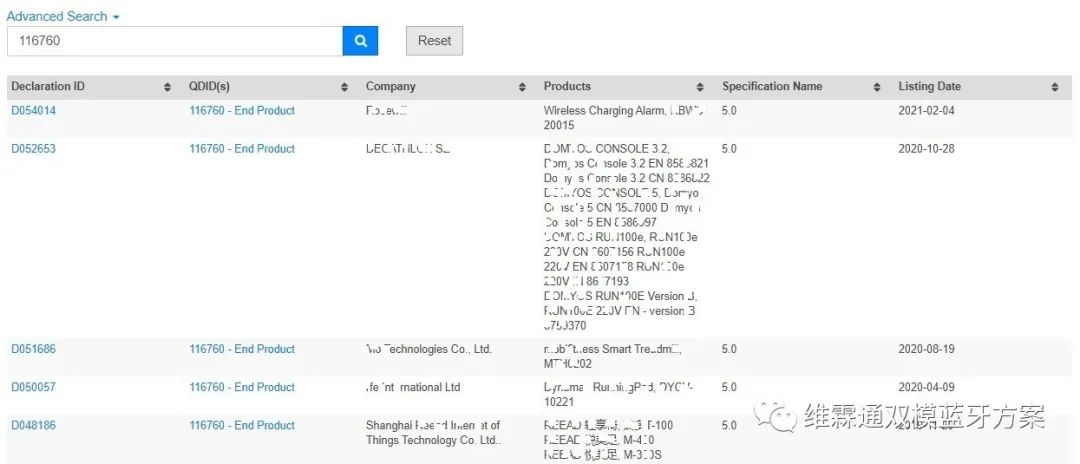
For terminal products designed based on this Bluetooth module, there are typically three approaches: first, they can reference our Bluetooth module’s test report or QDID to apply for their product’s DID (which can be used to list a series of products using the same Bluetooth solution under the same DID), without needing to retest, just paying the standard DID fee and service fee. Generally, using QDID is more convenient and faster, while referencing the test report may incur some additional service fees, and there is a risk of the test report becoming outdated due to standard updates. Second, they can retest and then apply for a DID. Some brand clients, considering overall product quality or branding, may choose to retest to obtain their own test report before applying for a DID, for which we provide certification technical support. Third, they can directly list their product under the Bluetooth module manufacturer’s DID, which is not strictly compliant, as it means that the product model is listed on the SIG website but not under their company, posing potential recognition or legal risks for the brand or its clients. We generally do not recommend this approach. The example below illustrates some client terminal products referencing our module QDID 116760 to apply for their product DID:
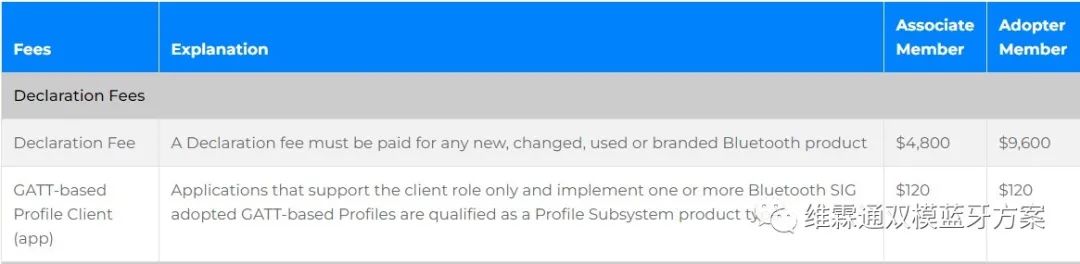
In terms of time and cost, the fee for purchasing a DID is standard and publicly available, with different fees for members and non-members (member fee is $4800/non-member is $9600, and the general annual fee for members is $9000). If there are many Bluetooth certified products, applying for membership can be more cost-effective. The product testing fees for RF and Bluetooth protocols are approximately 20,000 RMB, depending on the testing protocol requirements, and dual-mode Bluetooth testing tends to be more expensive due to additional content. Additionally, applying for a DID usually incurs service fees from certification laboratories and qualified certifying experts, generally a few thousand yuan. The time frame is usually 2-4 weeks, depending on the certification laboratory’s schedule and communication with technical support. Overall, using an already certified module solution can save considerable costs and time in product design, including savings in testing communication and application process investments and time costs.
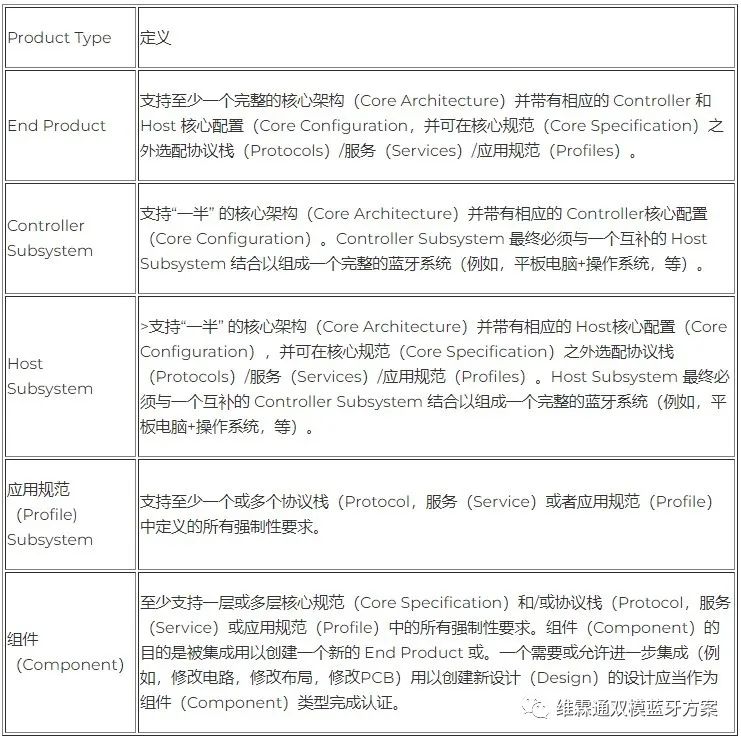
As mentioned earlier, Bluetooth product certifications have different product classifications. Generally, module types will choose the ‘End Product’ type. If products are designed based on Bluetooth chips, clients need to design terminal products based on the selected chip, and they can reference the subsystem certification from the chip manufacturer (subsystems have QDID), requiring only additional testing, typically for RF and software components. However, changes in the product PCB design may necessitate retesting for certification, whereas choosing a module eliminates the need for retesting, which is one of the key benefits of selecting a module. Some Bluetooth chip manufacturers also certify their chips as ‘End Products’ and apply for DID, allowing client terminal products to directly reference the chip DID to apply for their own product DID, bypassing the complete system RF and protocol testing. This falls into a somewhat gray area, as chip certifications typically do not encompass the complete design of peripherals and antennas, which poses risks. The types of Bluetooth product certifications can be referenced in the table below, with terminal products or Bluetooth modules generally adopting Bluetooth SoC solutions, making ‘End Product’ types most suitable. Other types are generally used for chip manufacturers or non-SoC modules (such as only RF transceivers) or vendors focusing solely on protocol or application software:
2. Major countries or regions’ regulatory certification requirements for electronic or communication products and typical certifications related to Bluetooth modules include SRRC/FCC/CE/IC/KCC, etc. In principle, these certifications primarily target terminal products or devices. For communication modules as components, there are generally no mandatory requirements. However, if the module has related certifications, it can reference the module certification to save time or costs for product testing and certification. There are strict regulations regarding which types of products can directly adopt existing module certifications, and the module’s certification generally has distinctions between completeness (non-restrictive) and incompleteness (restrictive), which is quite complex. Below, I will briefly describe:1. SRRC Certification by the China Radio Management CommitteeSRRC is a mandatory certification requirement by the China Radio Management Committee. All radio component products sold and used within China must obtain radio model approval certification. The SRRC model approval primarily targets equipment-type products rather than module-type products. However, to facilitate the approval of some equipment-type products, module-type products are allowed to independently conduct SRRC model approval for reference when applying for SRRC approval for equipment-type products. Nevertheless, SRRC has strict regulations regarding this reference, as outlined in the “List of Information Technology Devices and Household Appliances with Non-Independent Operating Wireless Transmission Modules”. Only the devices listed in the catalog can directly use the complete SRRC model approval ID of the module without needing additional independent applications.
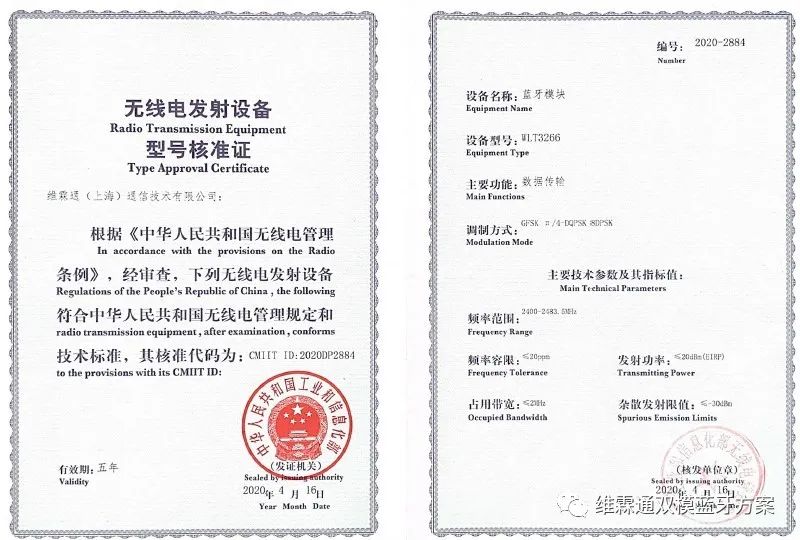
Here, the complete module refers to two different types of certifications: complete and restrictive. A complete module is defined by clear specifications, such as having a shield and antenna, and our modules are generally certified as complete to facilitate client terminal device referencing. Restrictive modules cannot directly reference the SRRC ID and can only reduce some testing.In summary, for devices listed in the catalog, using a module certified as complete, and strictly adhering to the licensing constraints of the complete module, there is no need to conduct SRRC model approval; they can directly use the SRRC ID of the complete module. For devices not included in the catalog or using restrictive SRRC certified modules, independent SRRC model approval is still required to obtain an independent SRRC ID. However, during the approval testing process, the module’s model approval test report can be referenced to appropriately reduce some testing items.In terms of time and costs: The SRRC model approval does not incur fees from the certification agency, but certification laboratories may charge pre-test fees and service fees to assist clients with the application process. Testing time typically ranges from 2 to 4 weeks, depending on the certification laboratory’s schedule and the efficiency of technical support and communication. 2. FCC (USA)/CE (EU)/IC (Canada)/TELEC (Japan)/KCC (Korea) Certifications
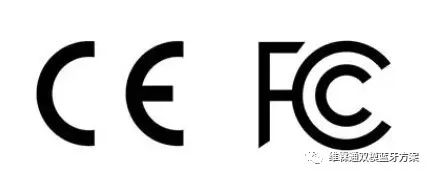
These certifications are conceptually similar to SRRC, covering a wide range of product types or testing categories, and are primarily aimed at terminal products and devices. For Bluetooth modules as components, they are only part of the regulatory requirements. Therefore, Bluetooth module certifications cannot fully replace terminal product certifications but can reduce the RF testing related to Bluetooth in the overall product certification process.FCC is a certification requirement in the USA. According to the Federal Communications Regulations, all electronic products entering the USA must submit a certification report to the FCC. The report includes performance indicators such as RF output power, modulation characteristics, occupied bandwidth, stray emissions from antenna ports, stray radiation field strength, frequency stability, and spectral characteristics. FCC regulations generally specify limits and testing requirements for each performance indicator. For Bluetooth modules, FCC testing typically follows the specifications outlined in Part 15 concerning computer devices and wireless communications.Bluetooth module FCC certification is also divided into non-restrictive (Full approve) and restrictive (limited approve) modules. Non-restrictive modules have specific requirements, including shielding. Once a non-restrictive module is certified, any terminal product only needs to perform partial whole machine-related EMC testing to reference the module’s FCC ID. For restrictive modules, terminal products must undergo complete retesting. Clients unable to meet non-restrictive requirements may request suppliers to conduct non-restrictive testing, although this does not actually reduce the certification testing for the final product.In the EU market, the “CE” mark is a mandatory certification mark. Regardless of whether products are produced by EU companies or from other countries, products must bear the “CE” mark to circulate freely in the EU market. This is a legal requirement imposed by the EU on products. CE certification is broader, and for electronic or wireless communication products, CE-RED includes Health/Safety/EMC/Radio testing. IC and other regions, such as Japan’s TELEC certification, are conceptually similar to FCC/CE.Overall, for these certifications, module manufacturers typically conduct non-restrictive certifications as long as they meet the non-restrictive requirements, which can save some testing for the final products of clients. Conducting restrictive testing is generally not very meaningful. In terms of costs, FCC/CE/IC/TELEC certification fees generally range from a few thousand RMB, and most domestic certification laboratories can provide these services. The time frame is typically around 2-4 weeks.KCC is the Korean Communications Commission’s electromagnetic compatibility requirements for information products and regulates the certification of wireless transmission and communication products. The products involved include electrical communication equipment, wireless RF products, information technology devices, etc. The testing items mainly include RF and electromagnetic compatibility (EMC). KCC certification is more complicated than the previous certifications, as any certified product, whether a module or a complete device, must be sent to designated institutions in Korea for testing. Domestic certification laboratories can provide some pre-testing and application services to avoid the extra costs associated with back-and-forth shipping to Korea in case of testing issues. The overall KCC certification for modules is also quite high, with module certification fees around 20,000 to 30,000 RMB, and the entire process typically takes at least two months.
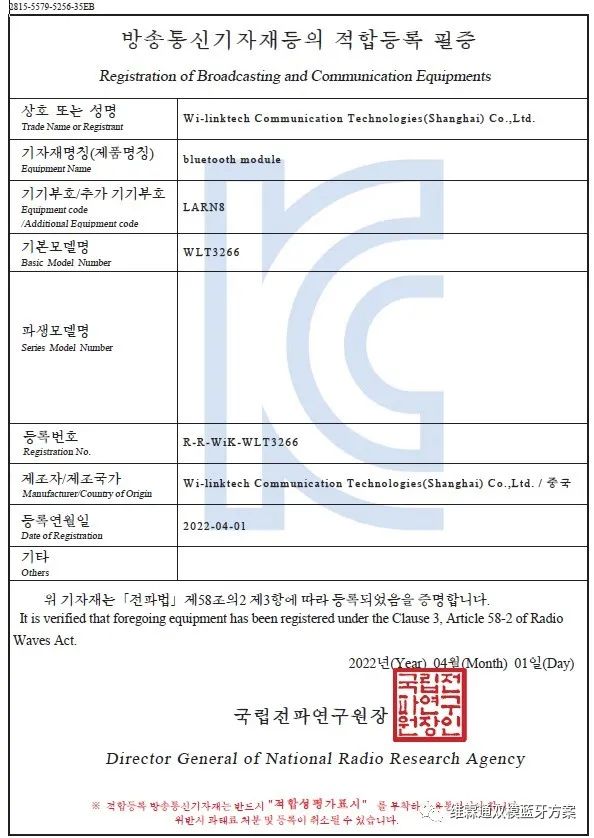
3. Other safety, quality, or environmental certifications, such as 3C in China, UL (North America), RoHS/REACH (EU), etc. The 3C certification is a product qualification evaluation system implemented by China to protect consumer safety and national security, and to strengthen product quality management according to laws and regulations. UL is a standard for safety in North America, while the EU’s RoHS and REACH focus on hazardous substances and chemical substances certification requirements. Other countries and regions also have similar requirements, primarily targeting client terminal products. Bluetooth modules generally do not seek these certifications. However, for environmentally friendly materials, relevant material reports can be provided for clients to use for reporting or related testing and certification.Summary of Bluetooth Module Certification:Overall, if module manufacturers have obtained these certifications, it can save clients various degrees of certification and communication time and costs for their products, especially BQB and KCC certifications, which significantly shorten the time to market for product certification. Most industry brand clients also regard these certifications as basic thresholds for suppliers, ensuring that the products provided by suppliers meet basic software and hardware standards and quality or safety recognition. Additionally, regulatory agencies are becoming increasingly strict regarding product certification spot checks, including the increasingly stringent management of SRRC in China. For products exported overseas, such as those sold on Amazon and other online platforms, BQB/FCC certifications are essential threshold requirements that terminal manufacturers must take seriously to avoid related legal risks.Our company has long focused on providing high-quality and reliable wireless connectivity products for industry clients, striving to meet customer certification requirements to the greatest extent possible. Our mainstream Bluetooth modules have basically passed Bluetooth standard BT5.0 BQB certification, as well as the latest SRRC/FCC/CE/IC certifications, with some targeted modules also having received KCC certification to meet market requirements in Korea. This is also the foundation for our high standards for our products. Utilizing our certified modules greatly aids clients in enhancing their brand and ensuring a reliable and convenient supply chain. We also have long-term partnerships with high-quality certification laboratories to assist clients with various testing and certification applications, accelerating the certification process for clients’ products. If you have any questions or inquiries, please feel free to contact us!
————————————————————-
Weilin Communication (Shanghai) Technology Co., Ltd. was established in 2011 and has been focusing on short-range wireless communication technology solutions for the Internet of Things. The company’s R&D is located in the Zhangjiang Hi-Tech Park in Pudong, Shanghai, and the Xinfeng High-Tech Development Zone in Qixia District, Nanjing. The company possesses independent intellectual property rights for Bluetooth dual-mode protocol stacks, specializing in providing globally leading dual-mode Bluetooth, BLE, WiFi, and AI voice device solutions, as well as proprietary communication chips, communication modules, communication boards, communication protocol software, mobile apps, and cloud computing services. The company primarily serves medium to large clients in various industries, including industrial IoT, automotive, medical and fitness, financial payment and security, high-end consumer electronics, professional instruments, and office equipment. Over the past five years, the company has shipped to over 60 leading brands across various global industries, covering regions such as China, the USA, Europe, South Korea, and Japan, along with over 200 closely cooperating domestic and foreign medium to large clients. The company adheres to a people-oriented, integrity, responsibility, and innovation philosophy, striving to become a high-tech company with talent and technology as core competitive advantages, continuously innovating and developing, emphasizing sustainable win-win cooperation with clients, and deeply customizing wireless connectivity technology with client industry applications to provide long-term reliable wireless connectivity technology support for medium to large clients in the era of the Internet of Things.
If you have any feedback or questions, please feel free to contact us for communication!
Company website: http://www.wi-linktech.com
Company email: [email protected]