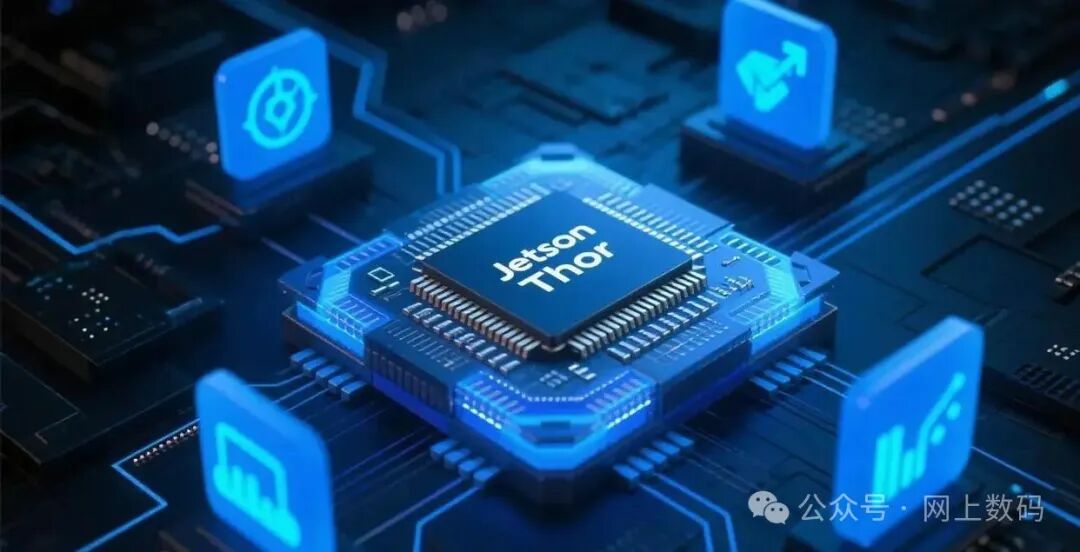
How much do you think it costs to teach a robot to avoid obstacles? NVIDIA’s answer today is: the price of a cup of coffee. On August 25, 2025, this chip giant dropped a bombshell—the “new brain” Jetson Thor, designed specifically for robots.
It enables robots to react instantly, dodging flying balls, stabilizing tipping cups, and even “thinking” about how to put a slice of bread into a toaster. The cost of the computing module that supports this humanoid reaction capability has dropped to below $3 in bulk purchases.
There is a big question behind this: no matter how smart previous AI was, it was like a “digital ghost” living on a screen. It could write poetry, paint, and discuss philosophy, but ask it to reach for a cup of water?
It would be immediately confused. Because it doesn’t understand that water spills, glass breaks, and the surface of a cup is slippery. It lives in data but cannot perceive gravity, feel friction, or comprehend the physical common sense that even a three-year-old understands: “pushing a block will cause it to fall.”
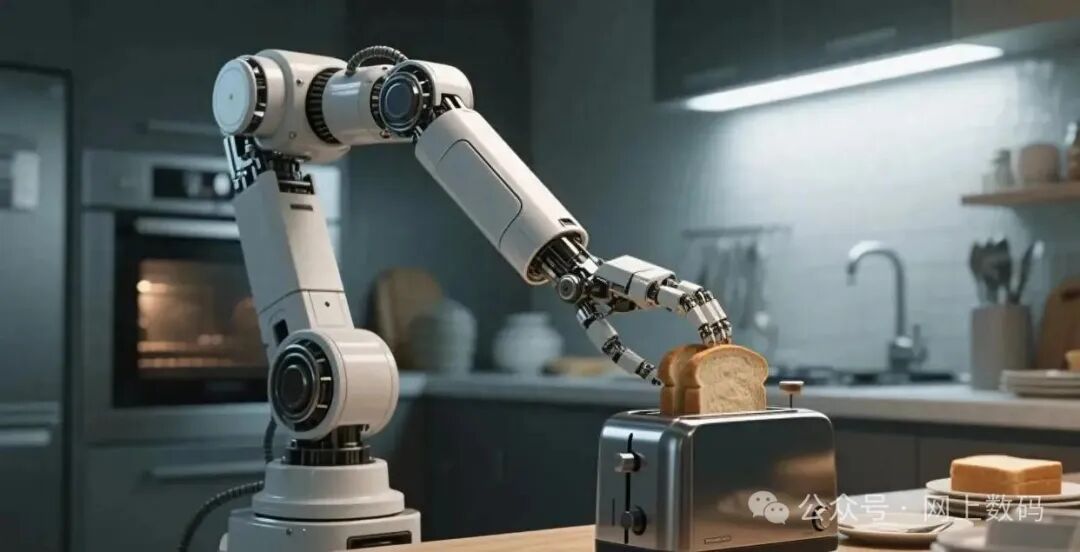
Jensen Huang calls this leap a “Physical AI” revolution. This is not a minor upgrade; it allows AI to truly grow limbs and step into reality. In his words, it is “from generating text to generating actions.”
The core of achieving all this is the Jetson Thor released today. Compared to the previous generation robot chip Orin, Thor is astonishingly powerful: its computing capability has increased nearly tenfold, while energy consumption has decreased by 65%, and the amount of sensor data it can process per second has surged tenfold.
Why is such strong computing power necessary? Because the real physical world is too complex. When a robot is simultaneously “seeing” more than a dozen moving objects, “hearing” environmental noise, “feeling” the pressure and friction in its palm, it must decide how to reach out and how much force to use within 0.1 seconds.
This kind of real-time multimodal data processing cannot function without super strong computing power.Even more impressive is its “dual system” design, which directly mimics the decision-making mechanism of the human brain. One is called “System 1,” which handles lightning-fast reactions—just like you instinctively pull your hand back from hot water;
The other is called “System 2,” responsible for deep strategy—like when you are cooking pasta, stir-frying, and answering the phone at the same time, while still managing the order of tasks without making mistakes.
For example, if a robot sees a puddle on the ground, System 1 makes it immediately slow down to avoid slipping; at the same time, System 2 activates, calculating a detour route and assessing task priorities: should it continue delivering documents? Or should it first find a cloth to wipe it dry? The two systems switch seamlessly, allowing the robot to react quickly and accurately.
However, training such “physical intelligence” has been stuck on a deadlock: where to find so much real data? You can’t just let robots smash a hundred thousand cups to learn grip strength, right? NVIDIA’s solution is clever—let robots “dream and practice” in a virtual world.
They brought out the Omniverse simulation platform, essentially creating a “digital parallel universe” for robots. Here, the gravity coefficient can be adjusted, friction can be modified, and even the angle at which a cup falls can be set to countless combinations.
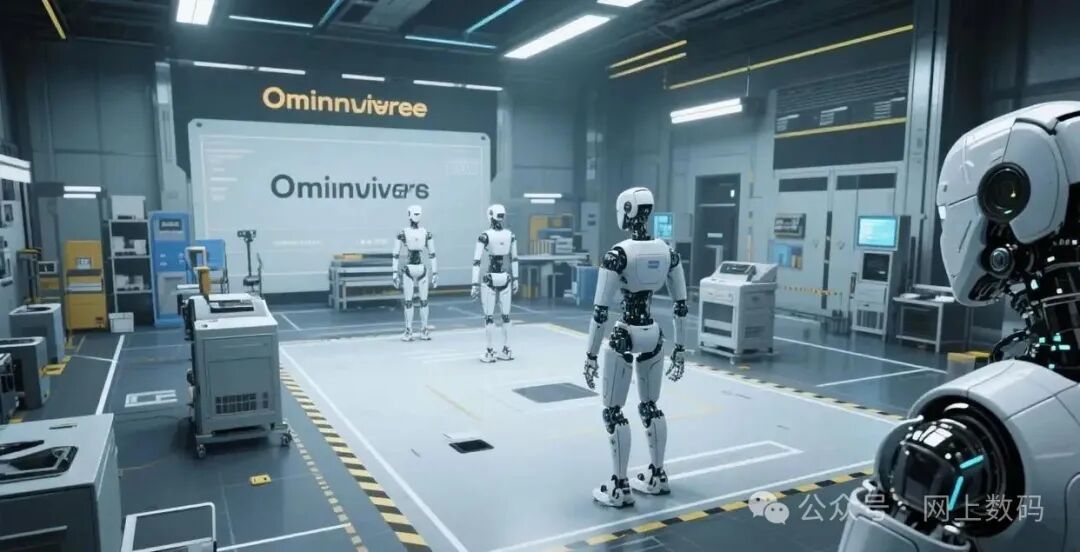
Tesla’s Optimus humanoid robot is practicing intensely in this “dreamland,” achieving a 50-fold increase in motion precision; while previously, cool stunts like backflips from Boston Dynamics took years to debug, now they can be completed in just a few days.
Even more amazing is the “GR00T-Dreams” training method: by feeding the system a photo of an ordinary room, it can automatically generate a video—demonstrating how to tidy up toys and set the table in that environment. The robot directly “watches the video to learn the operation,” saving the need for real practice.
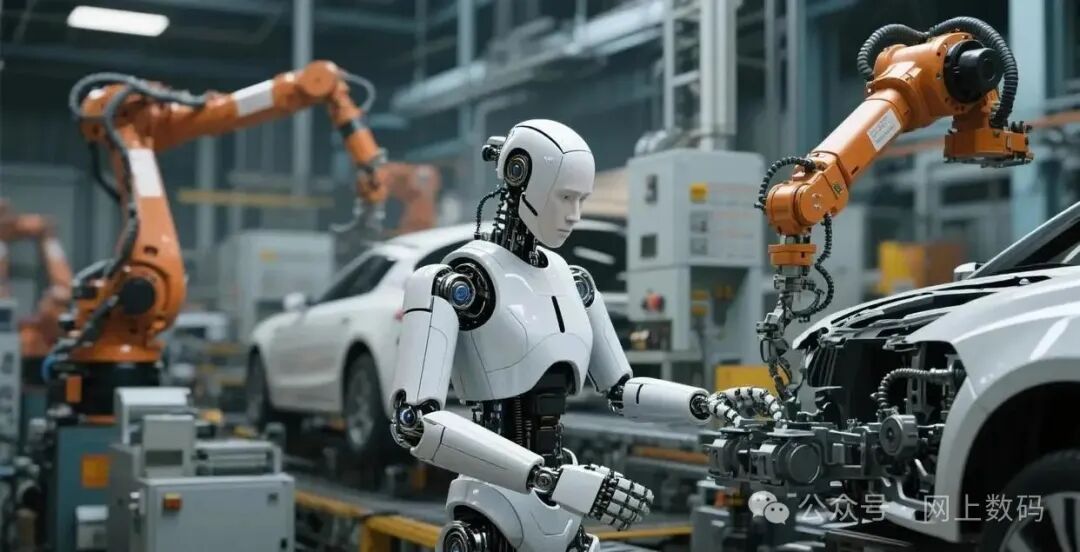
By mid-2025, Physical AI is already making waves in real scenarios. In the workshop of Fulin Precision, the Zhiyuan robot has taken over the assembly of precision parts, requiring no human intervention throughout the process;
UBTECH’s robots are even more aggressive, completely taking over the entire automotive assembly line, effectively cutting labor costs by 40%. The medical field is also being disrupted.
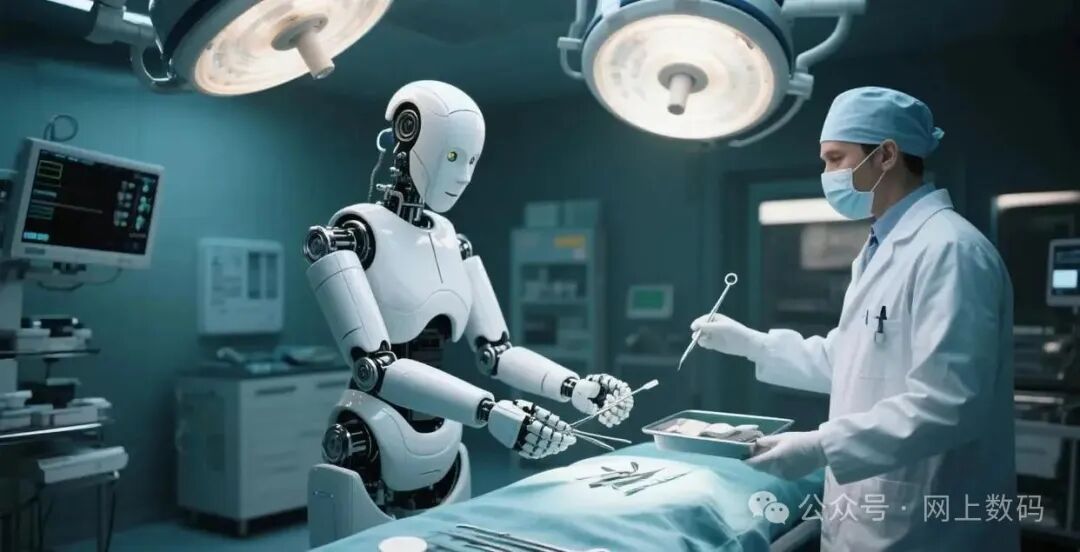
The Da Vinci surgical robot, powered by Physical AI, has reduced surgical blood loss by 40%; Japan’s nursing robots can steadily assist the elderly in turning over and help with buttoning, filling a gap of fifty thousand nursing staff.
Even in Amazon warehouses, Physical AI is surging beneath the surface. Sorting robots, which used to be clumsy like flipping through a book with boxing gloves, are now fast and accurate, improving overall efficiency by 20%.
Chinese companies are charging ahead especially aggressively. Yushu Technology’s humanoid robot can compete in boxing matches, using NVIDIA chips to predict opponents’ movements in real-time; Fourier’s GR-3 robot has fingers so dexterous it can pick up an egg;
The most aggressive is Zhiyuan, which has open-sourced its robot operating system “Lingqu OS,” along with a million lines of real robotic arm motion data.
Of course, the doubts have not stopped. When robots start making autonomous decisions, if something goes wrong, who can explain what it was thinking? This “black box anxiety” has engineers scratching their heads.
There are also sensor bottlenecks. Current machine vision is close to human eyes, but tactile feedback still feels like “touching things with thick gloves”—you can hold something, but can’t distinguish between tofu and playdough.
Even more painful is the impact on reality. On manufacturing assembly lines, every time a Physical AI robot is added, it means at least two basic jobs disappear. As technology races ahead, no one can guarantee that all ordinary people will be able to catch up.
The “physical” in Physical AI is shattering the boundaries between the virtual and the real. As machines’ hands begin to understand gravity, and steel joints learn to feel friction, the logic of how the world operates seems to be getting rewritten.
Disclaimer: The above content is based on information from online leaks combined with my personal views, for reference and analysis only. Please refer to the official information for specifics. Configuration information may have iterations or errors, so please view leaked content rationally.