In high-end HiFi decoders, the digital-to-analog converter (DAC) chip is undoubtedly the “heart”. It determines how cold binary code is transformed into beautiful sound waves.
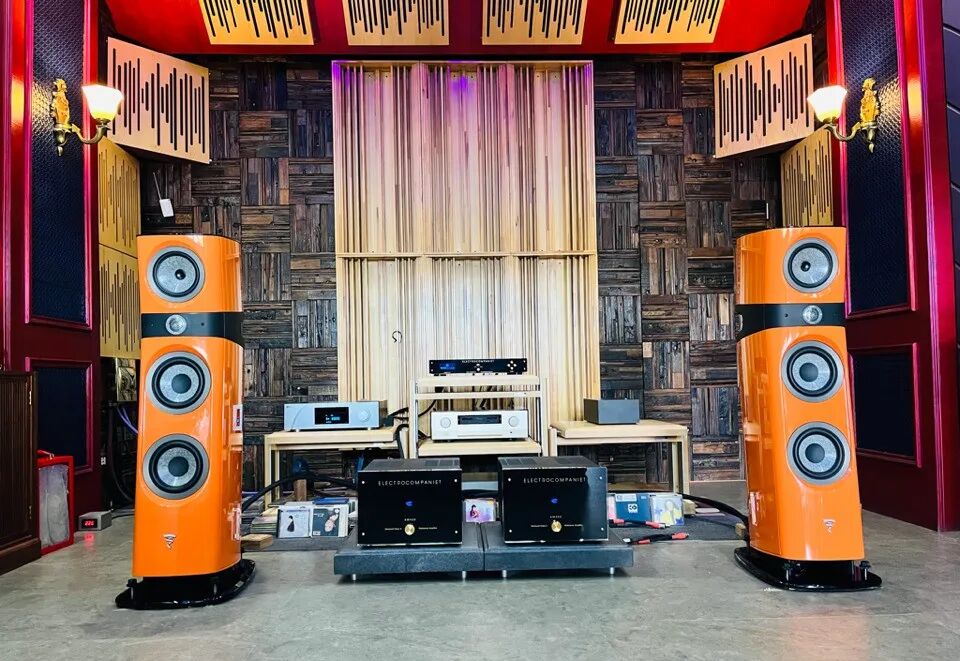
Currently, the competition between Japan’s Asahi Kasei (AKM) and America’s ESS Technology has been ongoing for nearly a decade, with each having its unique advantages.
This is far from a simple model comparison; it is a profound philosophical debate about technology: is it about pursuing extreme measurement metrics, or returning to the pleasure of human auditory perception?
This article will analyze the grievances between these two chip giants from the perspective of core technical architecture, measurement metrics, and the dialectical relationship with subjective listening experience.
Core Technical Architecture: Diverging Philosophical Concepts
AKM: Velvet Sound — An Art Serving Listening Experience
AKM’s technological path is built around its iconic “Velvet Sound” concept.
The core challenge is to address a fundamental issue inherent in traditional Delta-Sigma DACs: Quantization Distortion.
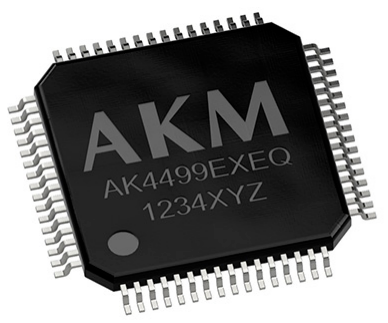
● Multi-Bit Architecture: AKM insists on using a multi-bit Delta-Sigma architecture in its high-end chips (such as AK4499). Compared to the Unit Element architecture, the multi-bit structure theoretically produces lower inherent quantization noise and better linearity. The challenge lies in requiring extremely high component matching accuracy, where AKM demonstrates its profound craftsmanship.
● Oversampling Rate Multiplier: This is a unique skill of AKM. It allows for further multiplying the oversampling rate through digital processing above the initial sampling rate. For example, it can elevate a 44.1kHz signal to an astonishing 705.6kHz or higher (8x/16x). The ultra-high oversampling rate can push quantization noise into higher frequency bands, making the design of analog low-pass filters extremely simple, effectively avoiding phase distortion and group delay issues, thus achieving an extremely smooth frequency response.
● Sound Color Adjustment: AKM chips come with digital filter options and a “Sound Color” mode, allowing users and manufacturers to choose between different attenuation modes such as “Crisp” and “Slow” by fine-tuning the frequency response curve, providing a touch of personalized tuning space.
AKM’s technical goal is very clear: it does not merely pursue peak paper data but aims to eliminate unpleasant distortions through technical means, ultimately serving a subjective listening experience that is “soft” and “smooth” like velvet.
ESS Technology: HyperStream II & Jitter Eliminator — Born for Metrics
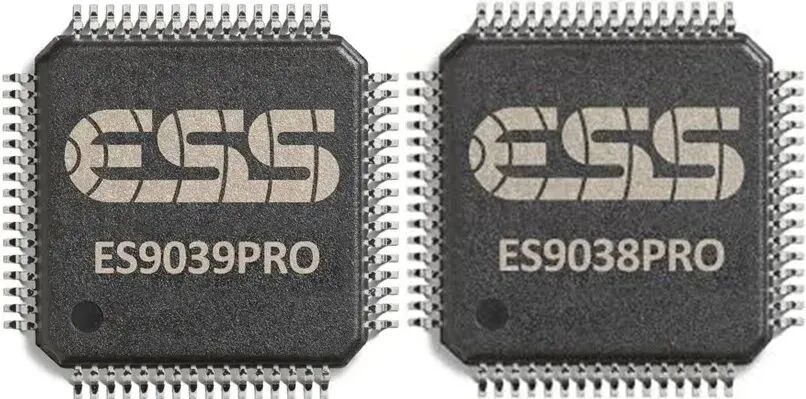
ESS follows an extreme path of “technological conquest”. Its Sabre ES9039PRO/ES9038PRO series chips have long dominated various measurement data lists, earning the title of “metric monsters”.
● HyperStream II Architecture: This is ESS’s core patent. It is a DAC architecture based on Unit Element, but through a dynamic element matching (DEM) technology based on Σ-Δ modulators, it achieves astonishing linearity and extremely low distortion. The working frequency of the HyperStream modulator is far higher than traditional designs, effectively shaping noise beyond the audible range, thus achieving nearly terrifying dynamic range (DNR) and signal-to-noise ratio (SNR) metrics.
● 32-bit Timing Jitter Eliminator: This is another major weapon of ESS. Traditional DACs are extremely sensitive to input clock jitter; even minor timing errors can translate into audible distortion. The built-in hardware Jitter Eliminator circuit in ESS can asynchronously re-clock input signals, greatly reducing dependence on the quality of the front-end clock. This means that even using an ordinary computer as a transport, ESS DAC can produce extremely dark and clean sound.
● THD Compensator: The chip integrates compensation algorithms that can further optimize total harmonic distortion (THD).
ESS’s technical logic is purely scientific rationality: through revolutionary architecture, it suppresses all measurable distortions and noise to the lowest limits, theoretically achieving “perfect” signal restoration.
Performance Metrics Comparison: The Objective Game of Data
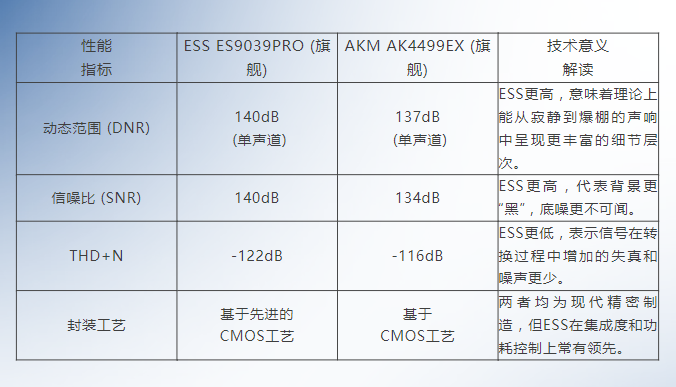
From laboratory data, ESS chips usually hold a clear advantage.
It must be emphasized: Chip metrics ≠ Overall performance. The above data represents the chip’s ultimate potential under ideal laboratory conditions. The final performance of the entire unit heavily depends on PCB layout, power design, clock system, and the choice and tuning of the analog output stage (Op-Amp). A poorly designed circuit board can completely waste the potential of a top-tier chip.
Subjective Listening Experience: The Ultimate Dialectic of Science and Art
This is the focal point of the debate and the area where the “chip theory” is most easily misled.
AKM’s “Velvet” Sound: Its sound characteristics are a direct reflection of its technical philosophy. The multi-bit architecture and ultra-high oversampling rate bring a more natural harmonic structure, resulting in:
● Warm and Delicate: The midrange is rich in emotion, and vocal performance is highly infectious.
● Smooth High Frequencies: The extension is natural and not harsh, making long listening sessions less fatiguing.
● Loose Analog: The sound has a good atmospheric quality, reminiscent of the analog charm of vinyl records or open-reel tape machines.
● Areas of Expertise: Music genres that emphasize melody and emotional expression, such as vocals, jazz, blues, and classical chamber music.
ESS’s “Super Resolution” Sound: Its sound is a direct result of HyperStream and Jitter Eliminator technologies:
● Extreme Detail: The resolution is extremely high, capable of uncovering the faintest details in recordings.
● Powerful Dynamics: Instantaneous response is fast, with strong impact, making orchestral and electronic music incredibly powerful.
● Jet Black Background: Thanks to excellent jitter resistance, the sound floor is very clean, with clear and sharp imaging.
● Potential Risks: If manufacturers do not calibrate properly, its high-resolution characteristics can easily lead to a “digital flavor”, with a cold and hard sound, and even produce “ESS glare”, which can be overly stimulating and fatiguing in the high-frequency range.
Conclusion and Purchasing Guide: How to Make an Informed Choice?
● Abandon the “Chip-Only Theory”: Do not judge a DAC’s quality solely based on the chip model! Circuit design, power supply, and analog output sections are the key determinants of final sound quality and tone. An excellent brand can produce a warm and pleasant sound using ESS chips (like Chord), and vice versa.
● Choose Based on Listening Preferences: If you pursue musicality and warmth, and primarily listen to vocals and classical music, a DAC using AKM chips (from brands like Marantz, Teac, etc.) may be a safer choice.
If you are an extreme seeker of resolution and dynamics, prefer a monitoring style, and mainly listen to large orchestral and electronic music, then a DAC using ESS chips (from brands like Topping, SMSL, Benchmark, etc.) will better satisfy your desire for “quality”.
● Trust Your Ears: Data and technical analysis are only references. The final decision must be based on personal listening experiences. In different system combinations, the performance of the same chip can vary greatly. Your ears are the ultimate and only judge in this “nuclear war”.
In summary
This showdown between AKM and ESS has no absolute winner. It precisely reflects the ultimate charm of the audio field: between precise scientific measurement and subjective artistic perception, there exists a vast and fascinating gray area that requires continuous exploration and balance.
The best purchasing advice for buyers is: do not make decisions based solely on chip models, but rather choose based on the actual evaluation and listening experience of the entire DAC device, or ideally, listen in person. The chip determines the foundation and potential of the sound, but the final flavor (tuning) is determined by the brand manufacturer.
Related Materials:
“How to Choose Speakers? 5 Key Points to Avoid Pitfalls When Buying Speakers Online”
“Do Not Buy Such Speakers!”
“A Very Extreme… But Can Learn to Choose Speakers at Lightning Speed”
“Tips and Precautions for Buying Speakers Online”
“Can You Buy Second-Hand Speakers, Projectors, and Amplifiers? A Deep Dive into the Tricks of the Trade”
“How Deep is the Home Theater Water? A Deep Dive into Merchant Traps”“Common Pitfalls for Home Theater Newbies, Have You Encountered Them?”“The Tricks of Amplifier and Speaker Manufacturers That Deceive People”
“Home Theater Pitfall Series Guide”
“From Beginner to Expert in Home Theater”
Disclaimer: Reprinted from Zhongda Audio, this article does not represent the views of Home Theater Network or verify the authenticity of its content. Some images and texts are sourced from the internet; if there are copyright issues, please contact us immediately to modify or delete related articles to protect your rights!