News
DefenseTechnology News
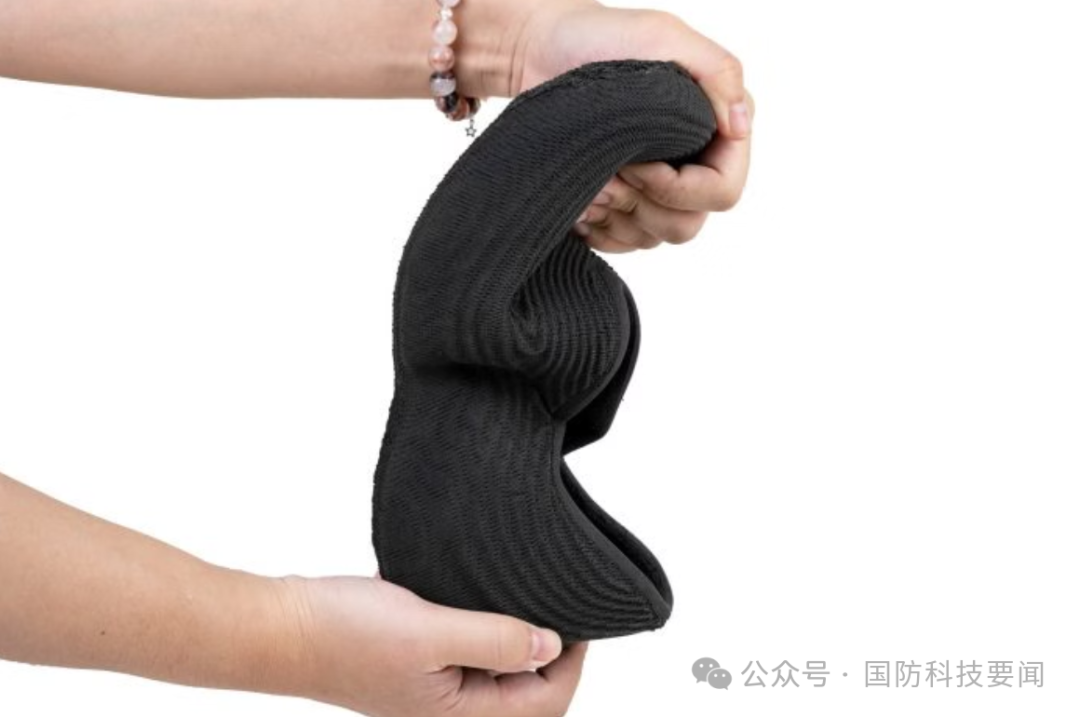
[According to a report from the UK-based Voxel News on August 25]The U.S. company Misria Technology has developed a flexible 3D printing filament that allows for precise adjustments of hardness and weight during the Fused Deposition Modeling (FDM) process. This material is primarily based on polyamide 12 (nylon) as the main chain structure, and through a condensation reaction with thermoplastic elastomer segments in a high-temperature vacuum environment, it forms a hard-soft block copolymer that combines high mechanical strength with excellent resilience. During the 3D printing process, a proprietary active foaming technology is employed, which allows for the formation of controllable bubbles simply by adjusting the printing temperature (235–270°C), achieving precise control over the density and mechanical properties of the components. The component density can be as low as 0.55 grams per cubic centimeter, resulting in a weight reduction of up to 50% compared to the unfoamed state; the Shore hardness can be adjusted on demand within the range of 70–95A, and the rebound rate can be stably maintained at 60% across different foaming levels. Additionally, this material exhibits good fatigue resistance, impact resistance, and chemical resistance; it supports high-speed FDM printing modes, with stable extrusion and good nozzle anti-clogging properties; printed components can be used directly without post-processing.
Author: Wang Ruya North Technology Information Research Institute

If you find this interesting, please click to see more↓↓↓