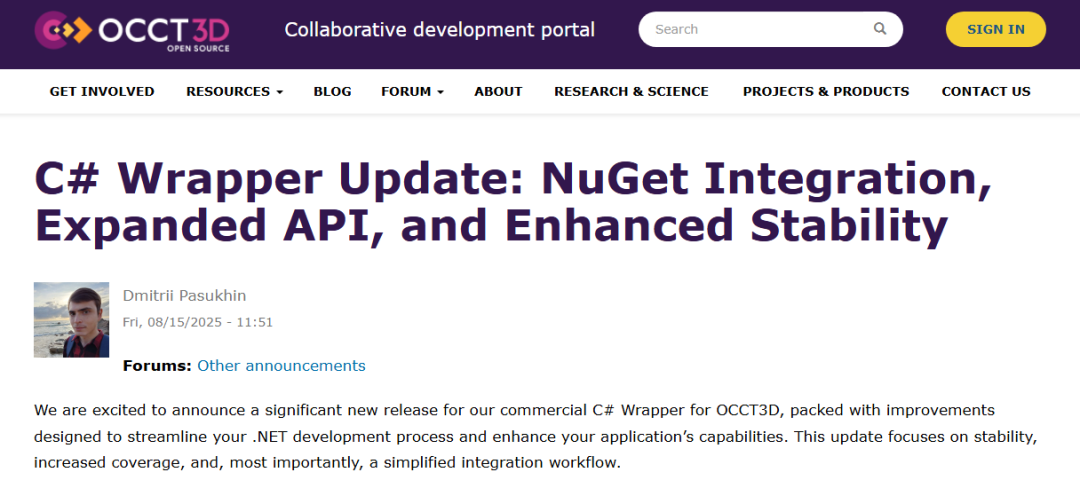
 (Image source: OpenCascade official website)On August 15, the open-source 3D geometric modeling library OpenCascade announced a significant update for .NET, with its commercial module C# Wrapper supporting seamless NuGet integration and .NET API support for visualization and data exchange modules. For more details, see: Stop struggling with C++, OpenCascade .NET major update!Since its inception in 2008, the Python version of OpenCascade, PythonOCC, has developed over 17 years. .NET and Python serve as important ecological supplements to OpenCascade C++,playing a crucial role inlowering development barriers, expanding the audience, and promoting OCCT technology.
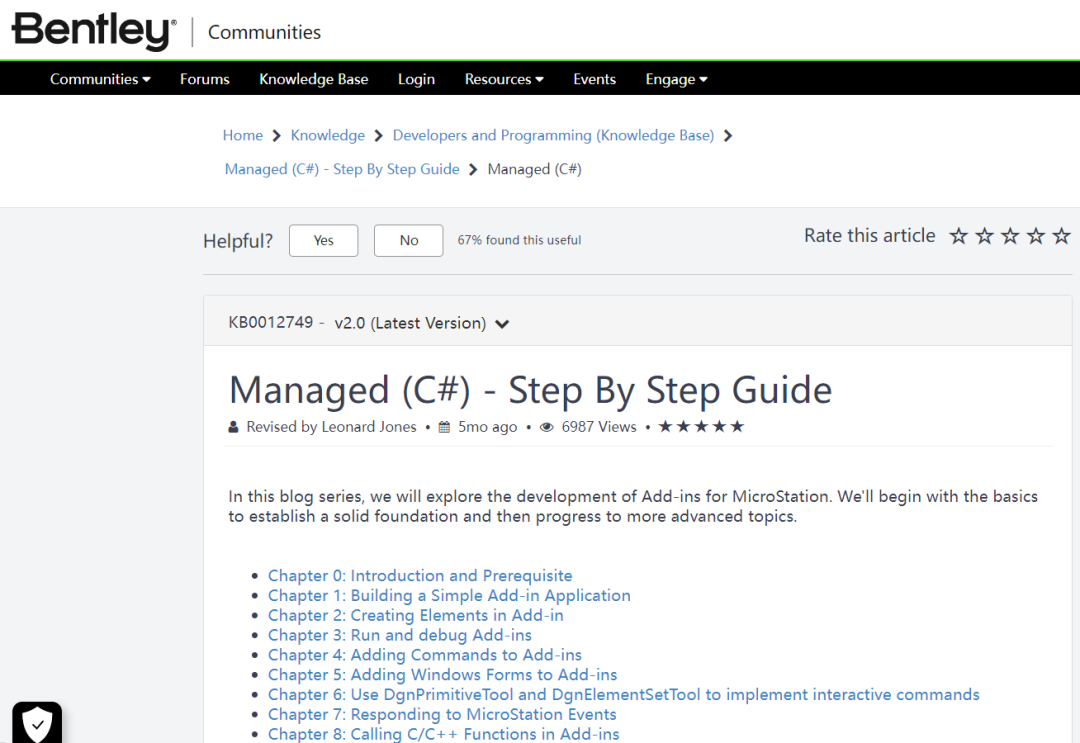
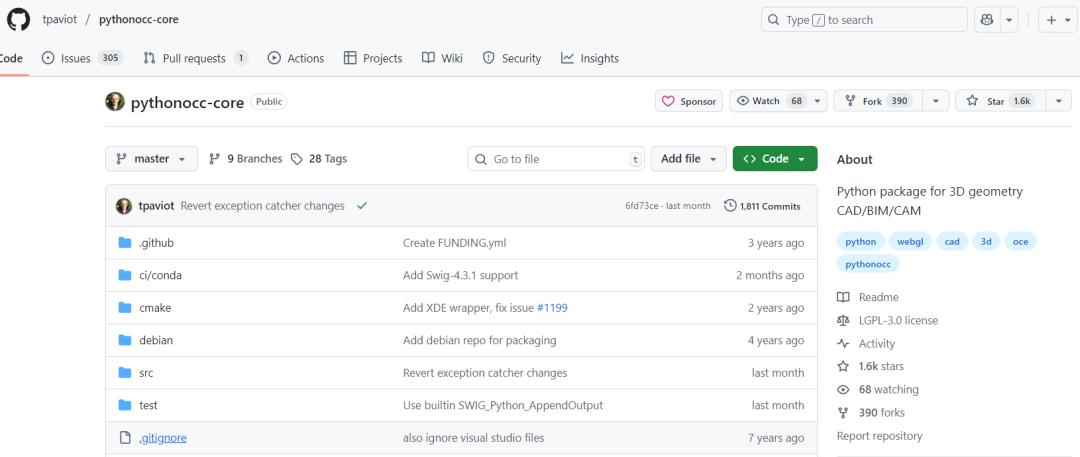 (Image source: Github PythonOCC)In addition to open-source geometric engines, most advanced foreign platforms provide .NET and Python APIs, allowing ecosystem users to quickly implement functions based on their business needs using high-level languages.
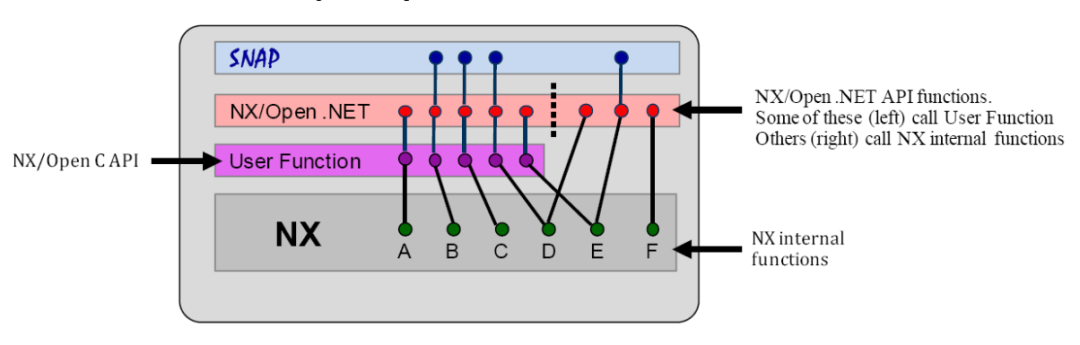 (Image source: UG NXOpen API)No company’s R&D team can foresee all specific needs across all industries and companies, only by releasing APIs to users can the product business scope be better expanded.Traditional industrial software is mostly written in C/C++, for the vast number of developers, C/C++ remains the most challenging programming language. Even with the addition of smart pointers, it cannot guarantee that all developers avoid memory leak issues, while high-level languages such as .NET and Python shift the focus from language development to business development, preventing users from spending too much energy on memory management; at the same time, the rich ecosystem libraries provide extensive options for .NET and Python.
 (Image source: Bentley System Communities)
In recent years’ TIOBE programming language rankings, .NET and Python remain among the top 5 hot languages, demonstrating their popularity and depth of market application.
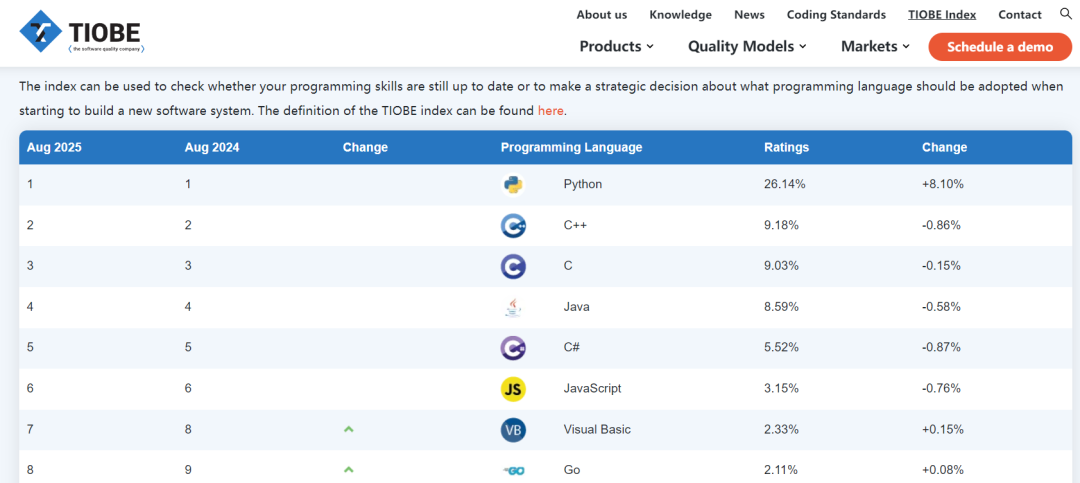
(Image source: TIOBE official website)
In the current development of industrial software API ecosystems, Autodesk is a typical example. From the early AutoCAD’s AutoLISP language, it gradually supported .NET API and expanded .NET API capabilities to other product lines, such as: Revit, Civil3D, Navisworks, Maya, 3DMax, etc.; while the Python API supports Revit, Fusion360, Maya, 3DMax, APS, etc.
Autodesk provides core platforms and APIs, attracting developers, partners, and customers to conduct secondary development based on the platform, creating a vast array of solutions that exceed Autodesk’s own imagination and development capabilities, which in turn enhances platform attractiveness, locks in users, and forms a moat.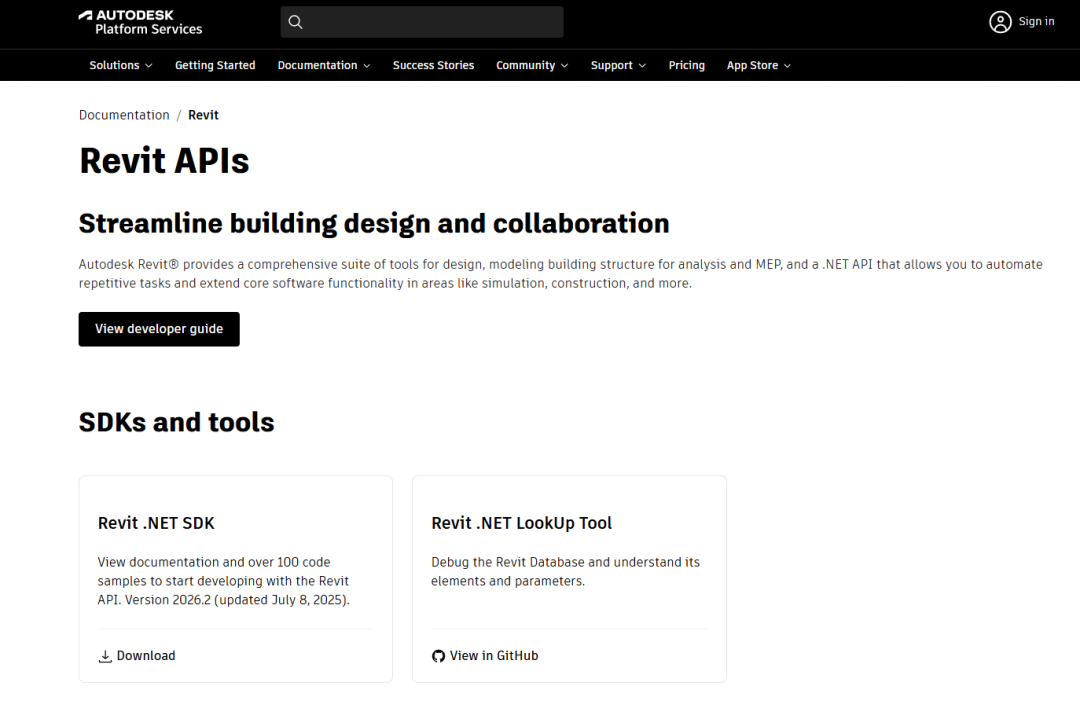
(Image source: Autodesk APS official website)
Glodon is the fourth largest building information digital enterprise in the world, following Autodesk, Trimble, and Bentley. Keeping pace with advanced ecological concepts abroad, Glodon also provides rich API capabilities, covering: C++, .NET, Python, and Javascript.
Currently, Glodon’s design platform GDMP, with years of technical accumulation and support systems, has been successfully applied in the products and solutions of benchmark customers across multiple industries, empowering sectors such as construction, municipal, shipbuilding, land transportation, electricity, and water conservancy, helping customers achieve business success.
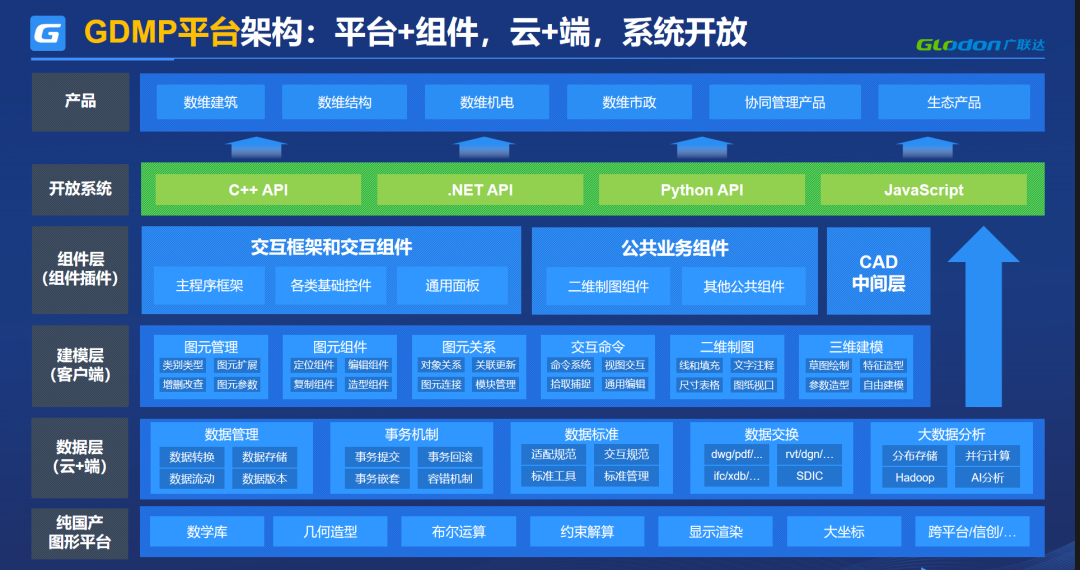
(Image source: Glodon GDMP platform))
The East China Survey and Design Institute of China Electric Power Construction Group Co., Ltd. (referred to as “East China Institute”) has world-class engineering digital business capabilities. Its engineering digital solutions cover three major platforms: engineering 3D digital design, integrated management of engineering design and construction, and full lifecycle management of engineering, achieving full professional coverage and full-process management of engineering 3D digital design and application, serving as a model for the successful transition of China’s engineering design industry from 2D CAD to 3D digital collaborative design and application.
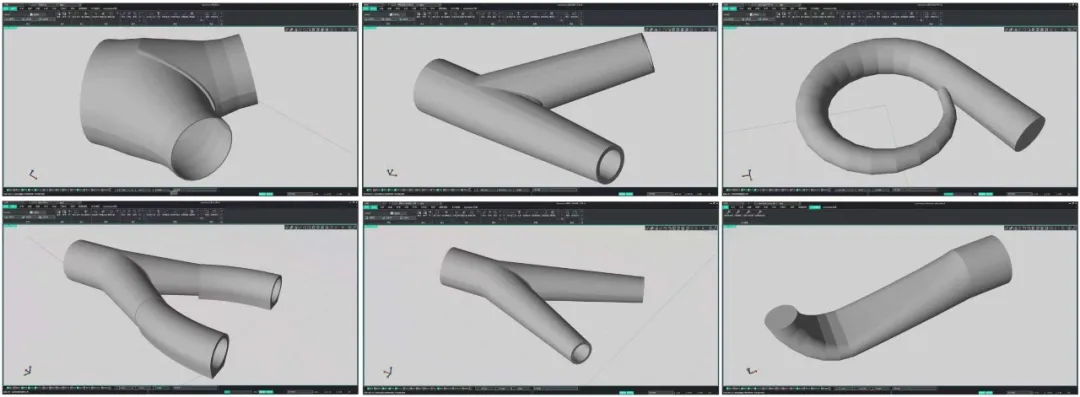
(East China Institute CyberStation v1.0.
Image source: Glodon GDMP official website))
In recent years, with the increasing importance of domestic industrial software, the need to prevent “stuck neck” problems and to build and use domestic 3D digital infrastructure platforms has become urgent. The East China Institute, through detailed industry research and careful study, decided to collaborate with Glodon to carry out the digital migration of the domestic 3D design platform. Based on Glodon’s design platform GDMP’s geometric capabilities, it replaces the original foreign kernel of the CyberStation platform to achieve the goal of domestic BIM in key areas. GDMP provides geometric modeling, mesh modeling, hybrid computation, constraint solving, and other underlying engine components, as well as efficient and easy-to-use .NET secondary development interfaces, successfully helping CyberStation v1.0 achieve domestic kernel replacement, and CyberStation v1.0 has obtained the “Excellent” certification for independently developed BIM software from the TüV Rheinland laboratory.
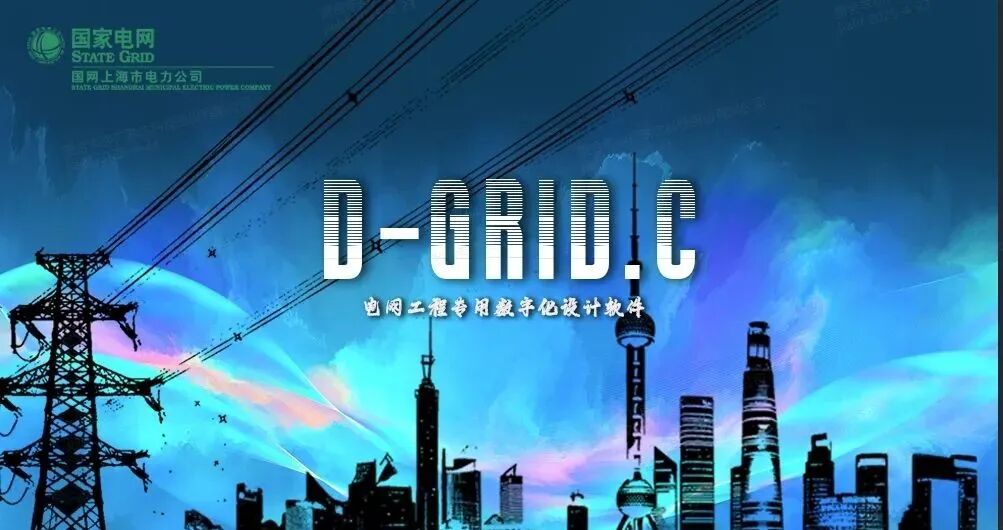
(Image source: State Grid Shanghai Electric Power Company))
To implement the requirements of the State Grid and Shanghai Company, State Grid Shanghai Electric Power Design Co., Ltd. (referred to as “State Grid Electric Design”) plans to achieve full-process 3D visualization design and information integration of transmission and transformation projects through the integrated application of 3D modeling technology and digital collaborative design technology, achieving digital management of the entire lifecycle of grid facilities (including buildings, equipment, and installation materials), constructing a digital model of grid facilities that spans planning, design, construction, and operation processes, unifying the depth of digital modeling, handover rules, data specifications, etc. State Grid Electric Design has established an overall goal for digital transformation based on its strategic positioning and is solving transformation challenges through technological innovation and the development of digital design tools.
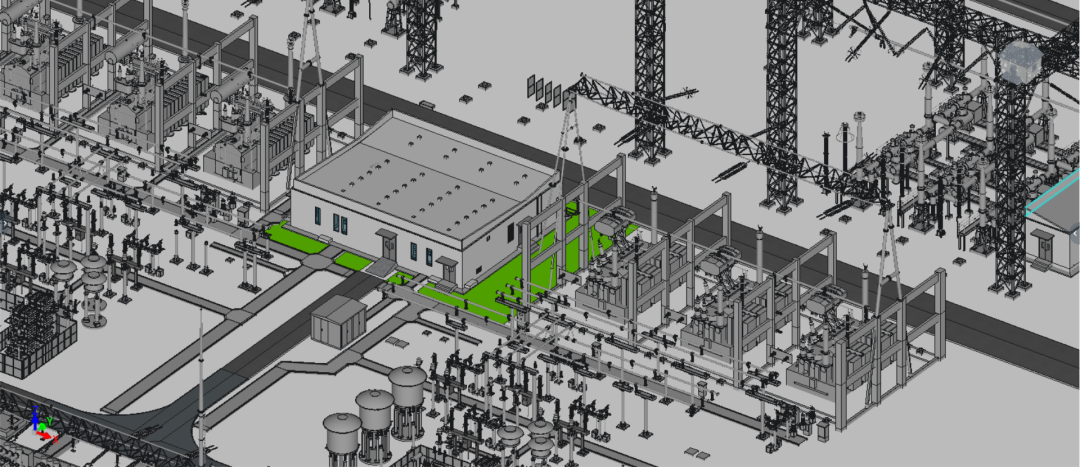
(Image source: Glodon GDMP official website))
Since 2022, the State Grid has conducted in-depth cooperation with Glodon, during which the research results of the IFC-GRID standard have been deepened, providing the State Grid with a platform solution that can integrate into the international IFC delivery standards, and based on the GDMP .NET API, the State Grid’s self-developed product D-Grid digital design software for grid engineering has been migrated to the Glodon GDMP platform, through interface customization, capability expansion, version optimization, etc., enabling the D-Grid functionality to be applied on the domestic platform and forming a digital model that meets the IFC-GRID standard.

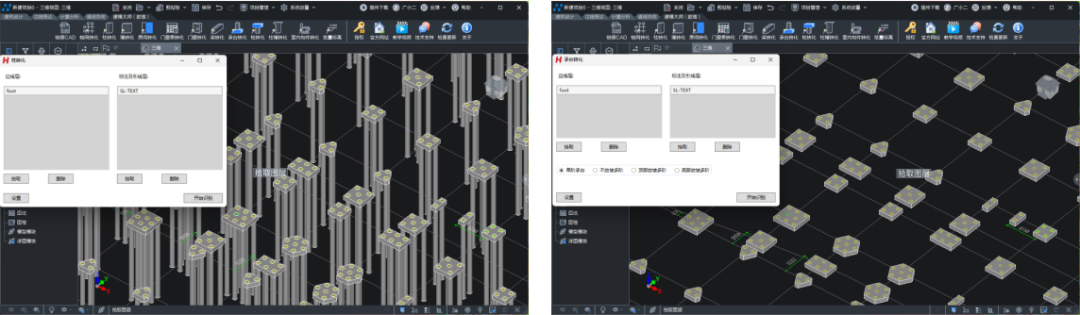
(Image source: Hongwa Technology official website))
Shanghai Hongwa Information Technology Co., Ltd. (referred to as Hongwa Technology) was established in 2015 and is a national high-tech enterprise, a “specialized, refined, distinctive, and innovative” enterprise in Shanghai, and a dual-software certified enterprise, focusing on the development of building information modeling (BIM) software for the engineering construction industry. The company centers on “BIM + Internet” and empowers the industry’s digital transformation through 3D graphic algorithms and intelligent programs. Its product matrix, including Collaboration Master, Family Library Master, Modeling Master, MaxiBIM, and Reporting Master, has formed a comprehensive BIM solution covering the entire lifecycle.
Hongwa Technology successfully migrated its Modeling Master product into Glodon’s 3D design products based on the Glodon 3D Building .NET API. It achieves intelligent creation of axis network elevations, intelligent generation of basic components, and intelligent construction of beam-column structures, transforming building components throughout the entire process.
In addition to the aforementioned core capabilities empowered to ecosystem customers through the .NET API, GDMP also applies .NET & Python APIs to Glodon’s 3D product line.
(Demo of RhinoInside Guangzhou Tower based on GDMP .NET API)
(Video source: Glodon AECOS platform GDMP team)
The modeling assistant developed based on Glodon’s 3D Mechanical .NET API has built-in model creation rules, can intelligently recognize CAD drawings, is precise and efficient, and quickly generates 3D mechanical models, significantly improving the efficiency of creating mechanical BIM models. Hundreds of components can be transformed in seconds. The model’s connectivity is good, and its match with the original drawing is high. The types and quantities of components in the model deviate little from the original CAD drawings. The built-in model creation rules meet on-site requirements, and the functions are professional, comprehensive, and in-depth: supporting the recognition and transformation of water pipes, air ducts, sprinklers, cable trays, air outlets, air valves, water valves, HVAC equipment, drainage equipment, and electrical equipment. Recognize layers, set rules, and transform with one click. Seamlessly integrated with Glodon’s 3D Mechanical products, facilitating subsequent design and collaboration.
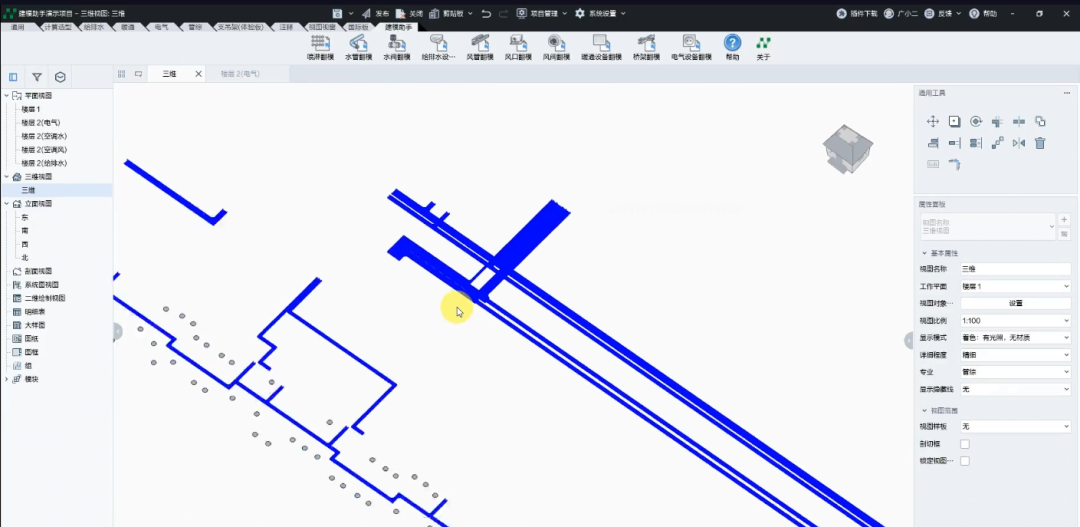
(Image source: Glodon 3D Mechanical Transformation Assistant))
Based on the Glodon 3D Building .NET API, the AI assistant developed targets thosetime-consuming, error-prone, and tedious “small troubles” in daily design, deeply understands architectural logic (such as space, components, attributes), and acts like a knowledgeable assistant, accurately executing user intentions. It helps reclaim valuable time from mechanical operations, allowing users to focus more on scheme refinement and design itself.
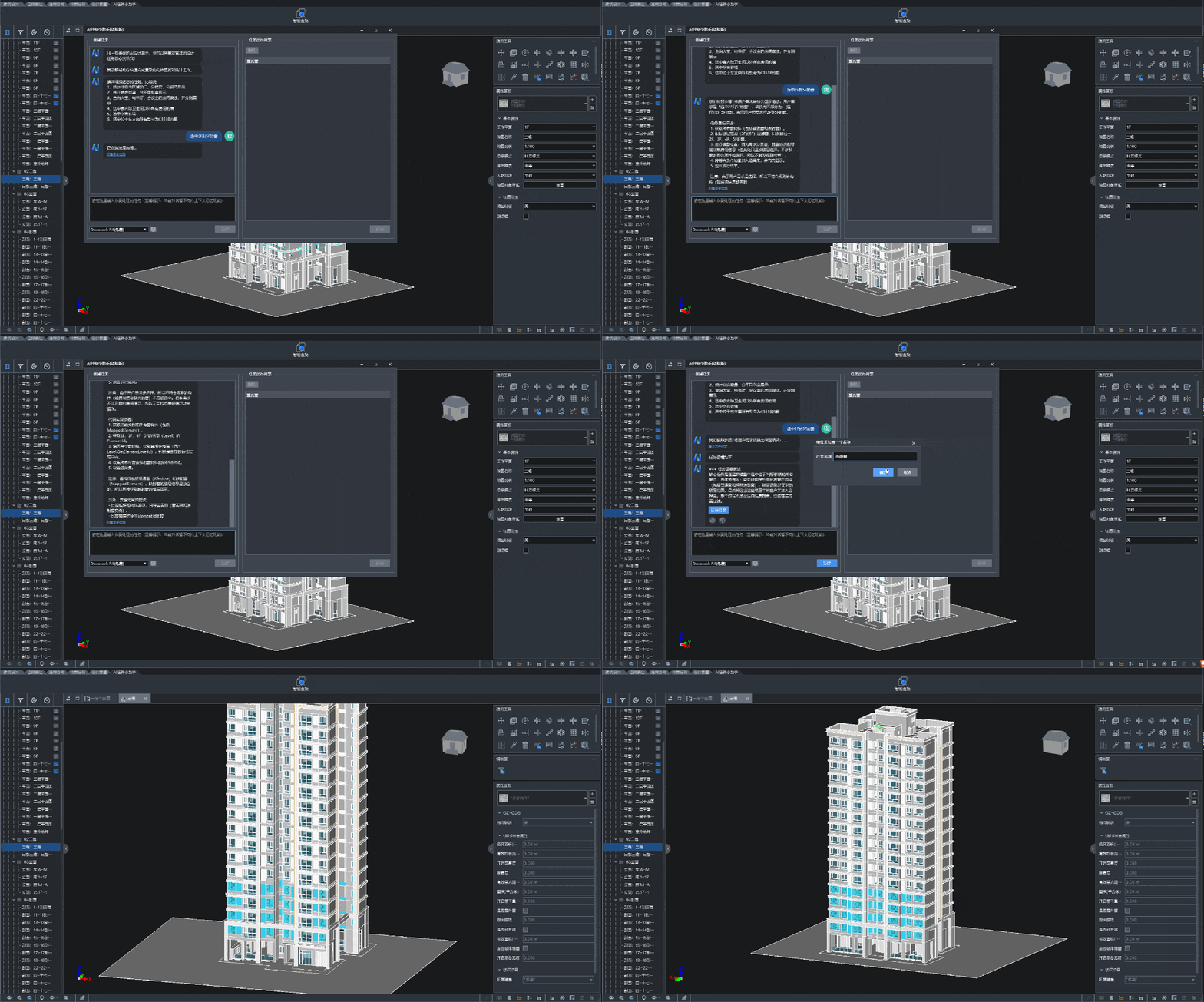
(Image source: Glodon 3D Building AI Assistant))
With just a single command, complex tasks can be completed in seconds:
1. Count the doors in non-enclosed areas, displayed by floor and number
2. Count the number of wards, displayed by different departments
3. Query the room specifications for the lobby, elevator hall, and conference room, and display them separately
4. Select all walls in the enclosed area except for the bathroom
5. Select all brick walls
6. Select all windows of model C1518 located on the east facade
…..
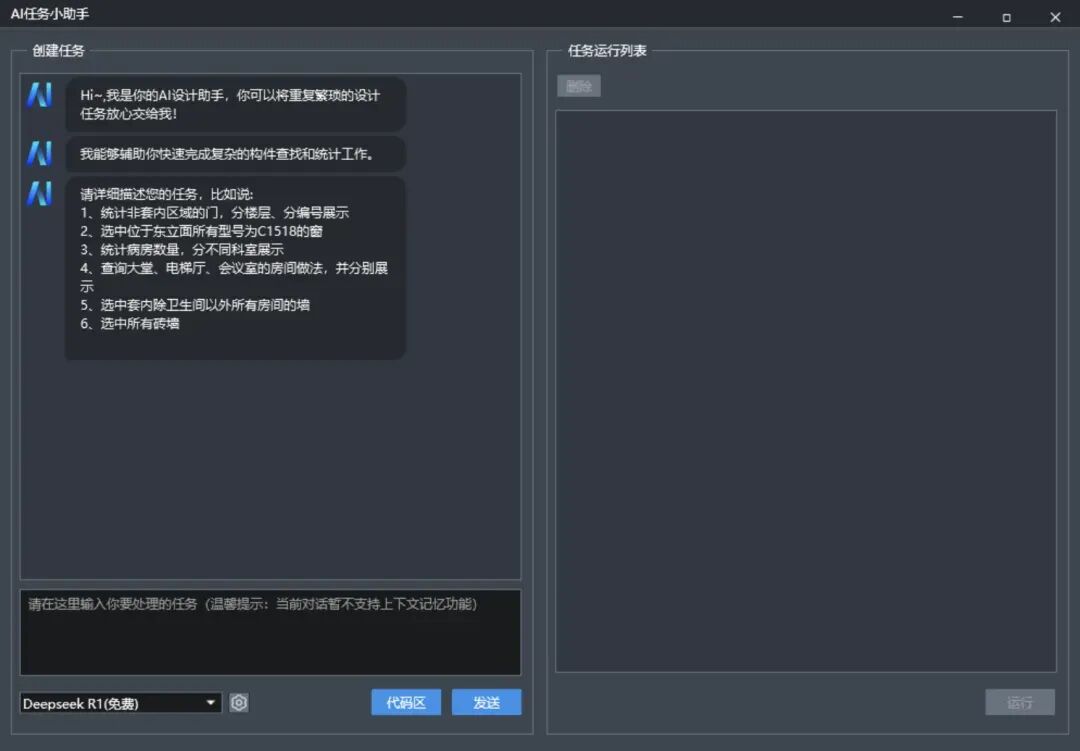
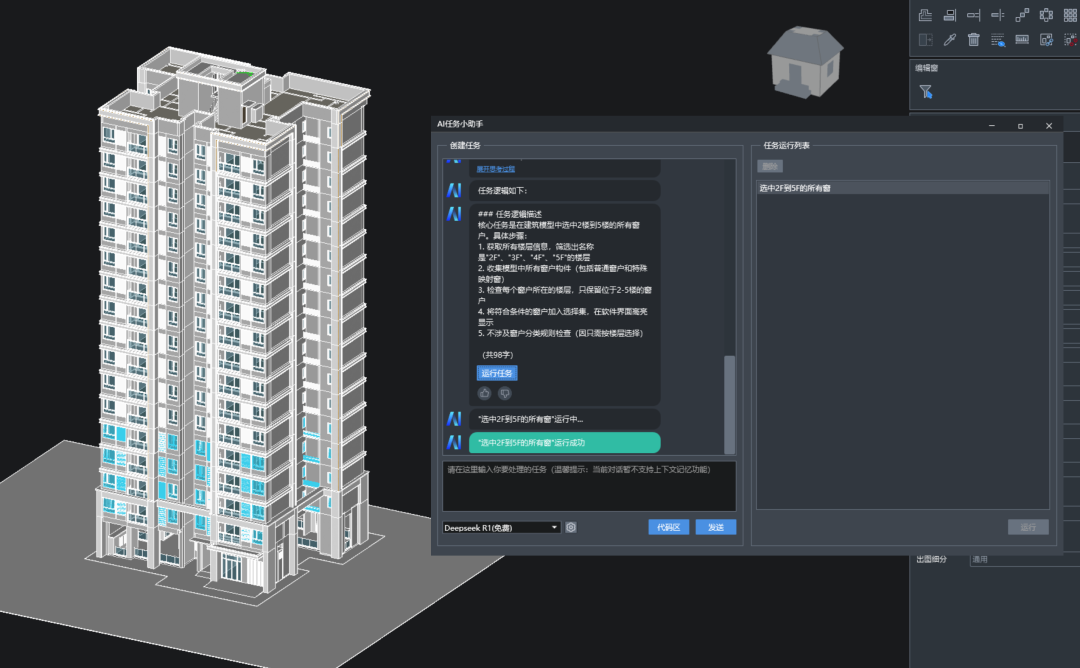
(Image source: Glodon 3D Building AI Assistant))
If the evolution of industrial software is a long journey, then .NET and Python are the best ecological partners accompanying its progress. .NET is the heavy sword that cuts through thorns, powerful and pioneering; Python is the versatile Swiss Army knife, agile and clever, solving countless problems. With a solid left arm and a flexible right arm, the two work in harmony, together painting a new picture of industrial development that coexists with efficiency and intelligence, reliability and innovation. Embracing this “golden combination” is to embrace the infinite possibilities of the next decade in the industrial field.
Author of the public account: Liang YuqingWorks at Glodon Technology Co., Ltd. Design PlatformGlodon Design Modeling Platform