Click on the “Mushroom Cloud Creation” above to follow us!
★ Introduction ★
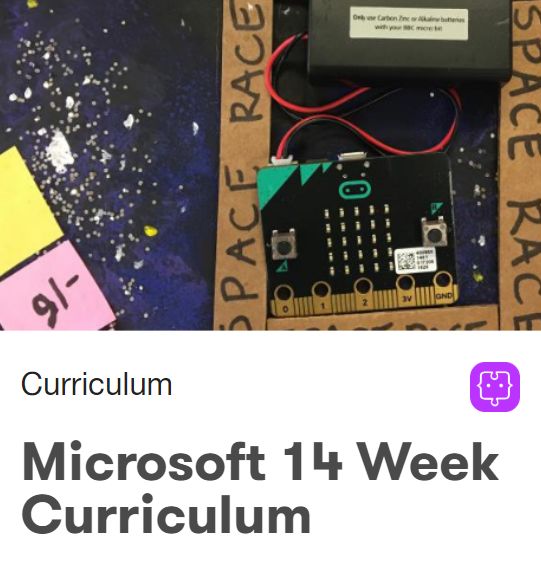
When I received the Micro:bit board, I felt it was a piece of hardware that could unleash students’ creativity. I also had ideas to design some courses around this hardware, until I saw the “Microsoft 14 Week Curriculum” published on the Micro:bit official website, which made me feel that the gap between me and designing meaningful courses was very far. I once used this curriculum to conduct an experimental teaching session and gained many insights, especially after practicing PBL teaching for a while. I want to take the opportunity of the winter vacation to find some kids and conduct another teaching practice that integrates PBL. I hope to share this with all teachers who are currently practicing Micro:bit teaching, so we can collaboratively study this curriculum and design our own courses based on our teaching realities.
Everyone is welcome to follow us and provide your thoughts and suggestions.
Notes
|
1 |
Course official website: https://makecode.microbit.org/courses/csintro |
|
2 |
The course lasts for 14 weeks, with one lesson per week, where students learn and communicate in class and improve their projects after class. This is a very good arrangement. However, this winter camp lasts only five days, and I hope to complete lessons 1-5. I can only cover one week’s content in one day, which is a bit helpless. |
|
3 |
Thanks to the Mushroom Cloud Maker Space for providing a fantastic teaching environment. Thanks to Teacher Wang, who volunteered to help me share course information. |
“
About Course Teaching
1. There are pre-learning materials before class;
2. Each lesson includes a small project, using a simplified PBL teaching method;
3. The last lesson of the first phase (Lesson 6) is a small project, which I hope to have the kids complete at home after the five-day course ends;
4. Usually, a small project cannot be completed in class and needs to be finished after class, which may take some time from the second lesson, but it is necessary.
5. The course duration is about 3.5 hours. Ideally: project kickoff activity (about 30 minutes), knowledge and skills learning (as much as possible in 30 minutes), project implementation phase (about 2 hours), presentation sharing and evaluation.
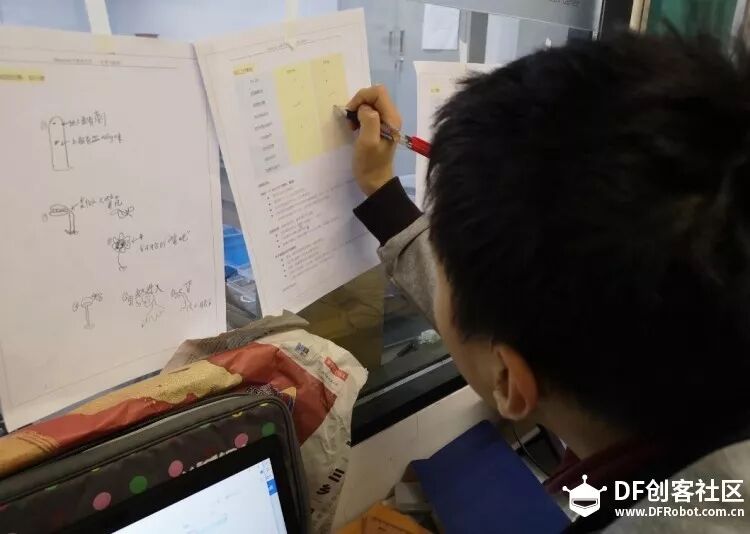
(Updating my project board, reminding and checking progress at all times is an important part of PBL project management)
“
Day 1 Learning Reflections
The biggest reflection on the first day:Learning and thinking.
We have many ways to learn knowledge and skills, and many teachers encourage children to seek out this knowledge and skills, teaching them how to “fish”.
But have we taught students how to think?
In the first lesson, there are many methods to explore that can inspire students’ thinking about projects and creativity. In practice, we can focus on: teaching students how to think.
 1
1
Design Thinking Activities
There are many articles on design thinking that everyone can learn and understand.
The opening is a project kickoff activity using design thinking:Pair up, with one as the client and the other as the manufacturer. Through interviews, understand the needs and complete the design of a pet based on the client’s needs.
After 5 minutes of mutual interviews, the children already have a lot of client needs information. However, what follows is an extremely important task: abstraction. Summarizing this information to deduce what kind of pet the client wants and why.
I have seen many unrealistic student projects, and I have heard some teachers mention that the projects children do are just for fun, as long as they are happy. These views are based on the reality that children are disconnected from reality, and many project designs come from mere thoughts, fundamentally because they have not learned to think.
Creativity comes from a deep analysis of real-life problems, abstracting based on real information to form concepts, which is the first step. The questions asked during student interviews are not many, and there is ample time. I remind the children to design more questions to gather more information. Only by facing real clients and obtaining as much firsthand information as possible can you accurately understand the client’s needs, which is the crucial first step in creating a “pet that they need”.
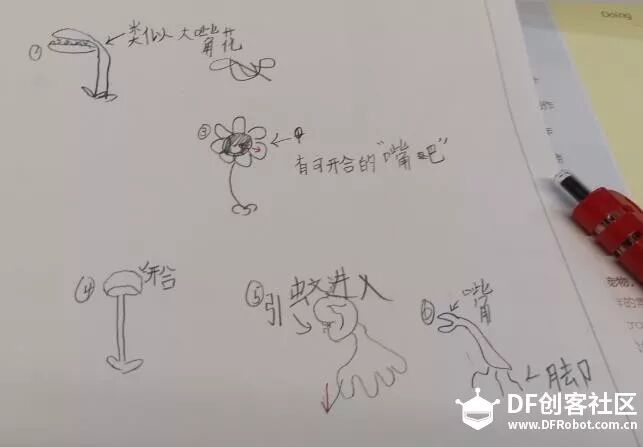
(A project based on client needs: an intelligent biological mosquito trap)
2
Deep Thinking Questions
What is a pet? A cat? A dog? Why not a bug? Why not a plant? Why can’t it be an alien? A robot can also be a pet; this is a species that has never existed on Earth. What kind of habitat will your manufactured pet have? Can the pet you create perceive and react to the outside world?
When designing the course, we can give children some goals, which can be mandatory requirements, for example: how do you design a micro:bit installation location that can provide protection; how do you design a power switch location that is convenient for turning the power on and off.
We can also design some questions that provoke deep thinking in children as creative goals:
For example, regarding giving pets a habitat. This requires them to think about the relationship between organisms and their environment, and whether there are logical issues. For instance, if this is a creature that survives in a hot area, then its habitat might be a tropical rainforest or a savanna. If it adapts to living in darkness, will its eyes degenerate, or will certain parts evolve into ultrasonic radar? If time allows, these deep topics should be explored to spark a discussion.
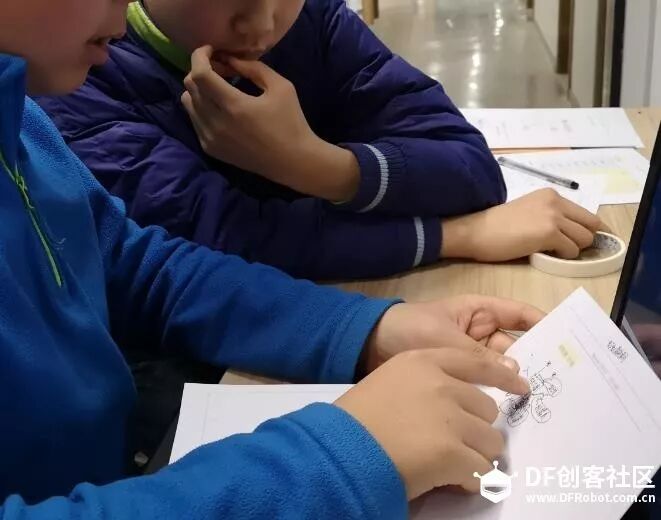
(Confirming needs)
3
Brain Trust Meeting
(I really like this term; before the course started, I saw a tweet from Geek Park: Pixar’s founder: Before innovation, you need to re-understand failure, which mentioned a speech by Pixar co-founder and president Catmull at the Geek Park Innovation Conference, where he introduced the Braintrust culture at Pixar.)
Before this, I designed many focused discussion sessions, such as brainstorming, project phase presentations, program explanations, and final project presentations, reflections. These focused discussion sessions emphasize: equal dialogue, mutual listening, the collision of thoughts and ideas, and mutual recognition.
PBL empowers students with autonomy, allowing them to experience a meaningful learning process and have the opportunity to master knowledge and skills. The foundation of this is a trusting and caring atmosphere. Learning in such an environment is more likely to enable students to perform at their best.
Thus, I replaced all these discussion formats with a single meeting: the Brain Trust Meeting; (not considered piracy or infringement, right?)
I hope for such discussions
—— All children selflessly share their opinions and views;
I hope for such discussions
—— All children can listen attentively to others’ opinions and views;
I hope for such discussions
—— Everyone is in an equal state, and the teacher can quietly step back;
I hope for such discussions
—— Will inspire a child’s creative spark;
I hope for such discussions
—— Will help a child through a difficult phase of the project;
I hope even more — that a child will initiate such a meeting.
The first day ends, looking forward to everyone’s feedback and suggestions! Let’s make maker education more meaningful.
The attachment is the learning sheet designed for the first lesson, using a project manual format as a learning sheet, which is not very mature. I hope everyone can provide better suggestions.The project manual is based on the design by Teacher Wang (Mu Mu Cheng Lin).
——————— End of Text ———————
The purpose of education is to cultivate students’ collaboration skills, communication skills, critical thinking, and creativity, with creativity being the core. Mushroom Cloud Maker Education, as one of the few one-stop maker education service providers in China, aims to cultivate children’s creativity.
To better connect the knowledge students learn in class with the real world, Mushroom Cloud will guide schools in planning, establishing, and operating their own maker spaces. Based on different age groups of students, distinctions have been made in design and layout.
Elementary school maker spaces focus on fun,
emphasizing interactive scenarios;
Middle school maker spaces focus on practicality,
emphasizing learning scenarios;
High school maker spaces focus on technology,
emphasizing application scenarios;
In terms of content, Mushroom Cloud collaborates with top maker teachers in China to compile a series of textbooks suitable for domestic maker education. It also has a complete maker education curriculum system, including course content and teaching aids, course training, and technical Q&A. Similarly, distinctions will be made in course classification and design based on different age groups of students.
Elementary school focuses on gamification and experiential learning, primarily based on “learning through play”.
Middle school guides students to engage in inquiry-based learning through hands-on experiences, promoting “learning through doing”.
High school learning is based on problems and design, requiring teachers to create relevant real-life scenarios for students to “learn through thinking”.
Recommended Reading:
Mushroom Cloud Maker Education conveys the maker spirit to schools for migrant children
About Scratch 3.0 and creativity cultivation
Space mining? Dyson sphere? I actually understood it!
Graphical programming Mind+ multi-threading function module evaluation
Mushroom Cloud Maker Education officially launches Mind+ programming software
Winner List】Mini-PBL teaching practice based on micro:bit – Summary of DF Maker Teacher Online Sharing Session
What distinguishes capable people from us in their thinking patterns when encountering problems? How to change thinking patterns?
Boson for micro:bit creation particle kit awarded five-star teaching resource award by UK TEACH PRIMARY magazine
Winner List|Who won the 33rd National Youth Science and Technology Innovation Competition DF Creative Star Special Award?
DFRobot partners with Chunhe to continue public welfare
Leading public welfare efforts, Mushroom Cloud supports the Huang Yicong Foundation to bring maker education to remote areas
Maker education value upgrade: college independent admissions can earn extra points
Click to read the original text and obtain the project manual