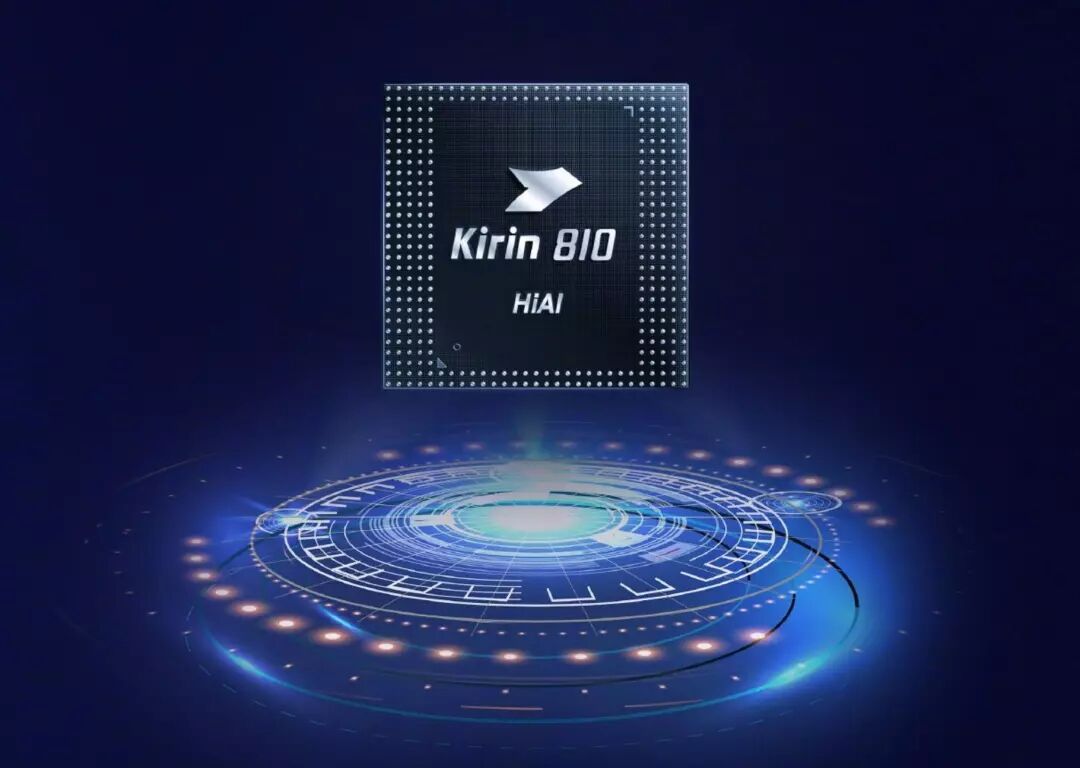
The Kirin 810, Huawei’s second mobile chip built on a 7nm process, was released on June 21 alongside the Huawei nova5 series, garnering attention comparable to flagship smartphones.
The reason for this is due to the positioning of the Kirin 810 and its performance.It is used in Huawei’s mid-range and upper mid-range products and boasts performance that rivals competitors and even older flagship chips, receiving the title of “Mid-range God U” from the benchmarking software AnTuTu.
So, why is the performance of the Kirin 810 so strong?What kind of capabilities can it unleash?Join Xiao Lei (WeChat: leitech) to explore.
//////////
Advanced Core Architecture Powered by 7nm
Although it is not a top-tier flagship chip, the Kirin 810 does not compromise on design: the CPU features two Cortex-A76 big cores with a frequency of 2.27GHz and six Cortex-A55 small cores with a frequency of 1.88GHz in an octa-core architecture, combined with Huawei’s own AI scheduling technology. Coupled with the advantages of the 7nm process, the Kirin 810 is expected to achieve a satisfactory balance between performance and battery life.
For the GPU, the Kirin 810 is equipped with a custom Mali G52 6-core graphics core, with a frequency of 820MHz. Huawei also stated that through software optimizations like Kirin Gaming+, it can achieve GPU load optimization and 60 frames per second in high-definition gaming. In other words, the Kirin 810 can also excel in gaming.
Having said that, let’s look at the objective performance metrics.According to the official AnTuTu benchmark scores, the Kirin 810 scored a total of 237437 points, with a UX score of 56398, MEM at 14888, GPU reaching 73380, and CPU at 92771.
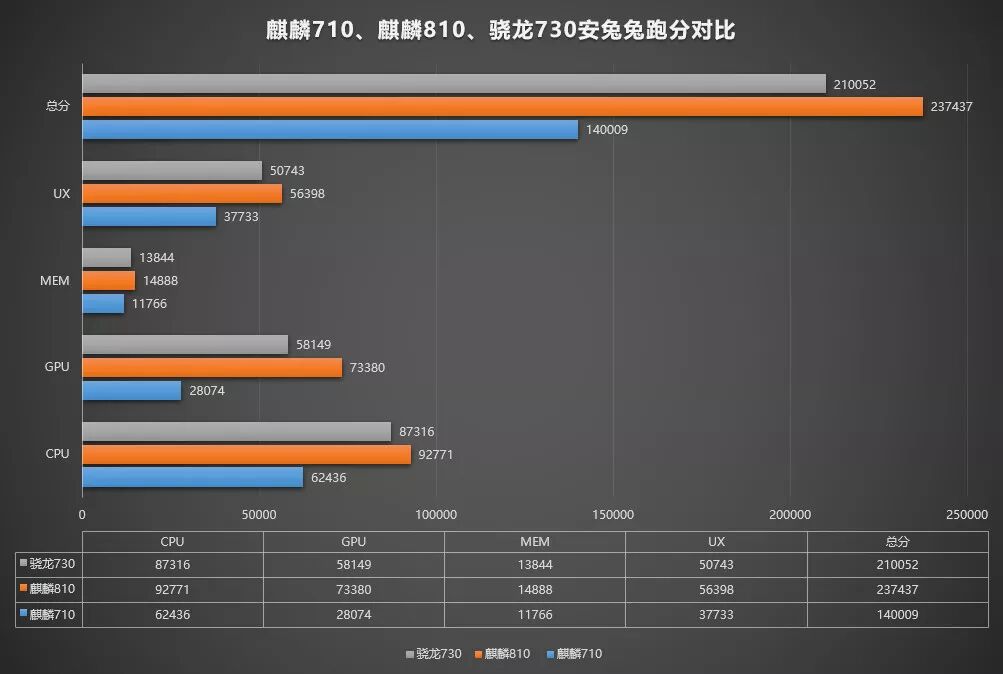
Image from AnTuTu
What does this score mean? Not only does it represent a leap of nearly 100,000 points compared to Huawei’s previous mid-range chip, the Kirin 710, but it also surpasses Qualcomm’s latest mid-range chip, the Snapdragon 730, reaching a level comparable to Huawei’s previous flagship chip, the Kirin 970, and the Snapdragon 835.
The relatively objective benchmark scores reflect the true situation: in terms of performance, the Kirin 810 is relatively stronger among its peers. If Huawei’s mid-range smartphones start using the Kirin 810 in the near future, they will have a performance advantage in the smartphone market.
//////////
AI Popularization May Lie Here
As technology matures, AI-related applications are beginning to enter our lives, and the use of AI in smartphones has attracted attention from many manufacturers. To enable smartphones to perform calculations more efficiently, NPU (Neural Processing Unit) designed for AI has become a new highlight in mobile chips in recent years.
Previously, Huawei’s flagship chips, the Kirin 970 and Kirin 980, used NPUs from Cambricon, thus achieving impressive AI computing capabilities. With the Kirin 810, Huawei’s self-developed Da Vinci architecture NPU—Ascend D100 Lite has finally arrived, and it has shown impressive performance right from the start.
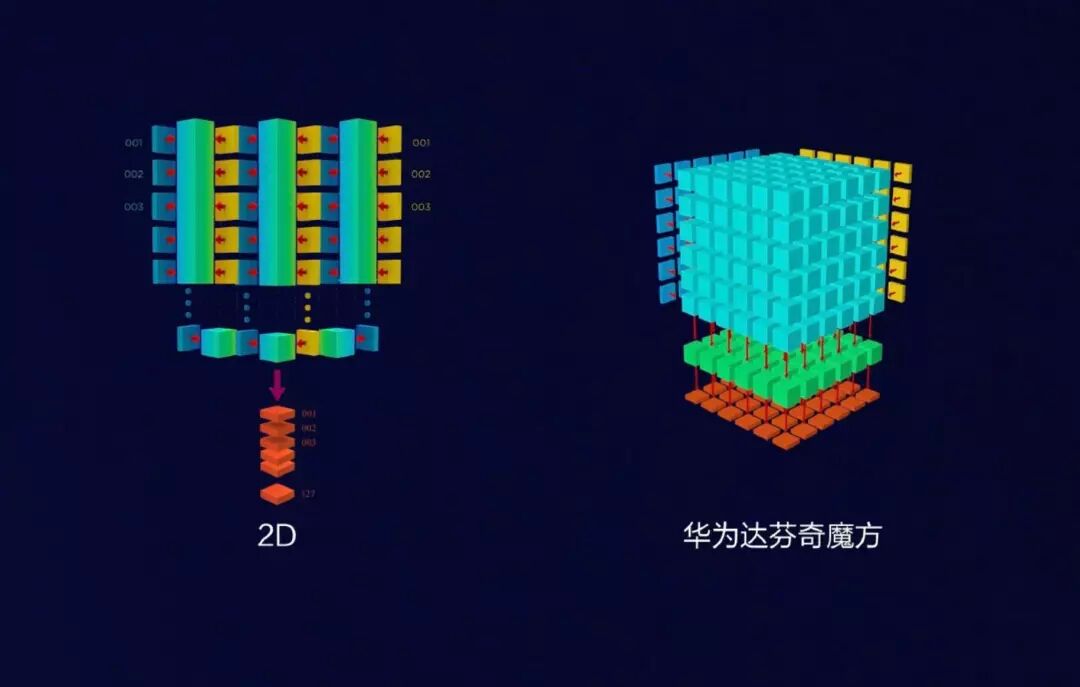
Unlike the current mainstream two-dimensional computing methods, Huawei has incorporated a 3D Cube computing engine into the Da Vinci architecture, with over 240 operators, and has its own intermediate operator format supporting Tensor, Vector, and Scalar general performance. As a result, the Kirin 810 has leading performance in FP16 precision and INT8 quantization precision tasks.
According to data from the AI Benchmark ranking by ETH Zurich, the Kirin 810 achieved the highest score of 17635 in the 16-bit floating-point project, far exceeding the second-place Kirin 980’s score of 10750. The Kirin 810 also surpassed the Snapdragon 855 with a total score of 33863, while the latter scored 27410, making it not only the leader among mid-range chips, but also one of the strongest AI computing chips in the Android ecosystem.
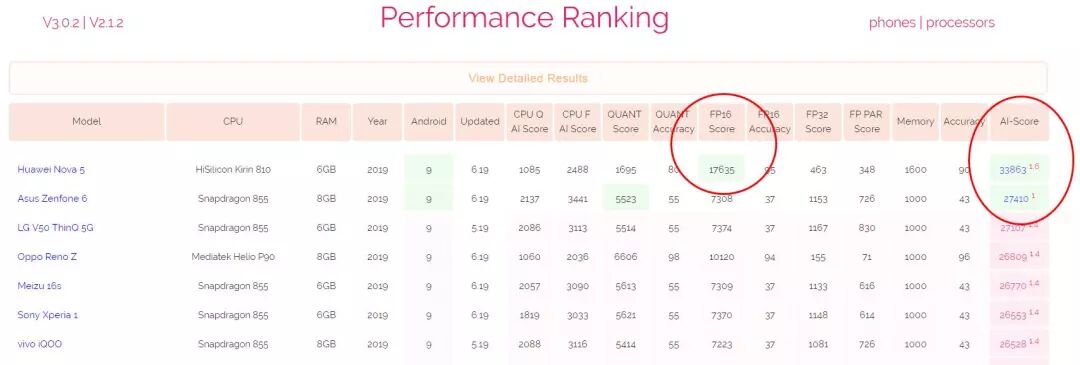
Huawei is betting on artificial intelligence in mobile chips, bringing impressive self-developed NPUs. This is expected to further enhance AI computing capabilities in the new flagship chips to be released in the second half of this year, and may also lead to the popularization of artificial intelligence. Based on Huawei’s past product line planning, the Kirin 810 may become the main chip used in Huawei’s mid-range smartphones in the future.
//////////
Outperforming Snapdragon 730, Leading the Mid-Range Competition
Even among enthusiasts, flagship smartphones are the most dazzling products, but in reality, some consumers do not need a flagship. Compared to the top performance of the same era, they focus more on the user experience regarding heat generation, power consumption, and other aspects. These are real needs that are not tasks that only flagship products can accomplish.
Since the demand exists, and there are gaps in market positioning and pricing, chip manufacturers have started to explore, leading to the emergence of mid-range chips. Huawei has introduced the Kirin 810, while Qualcomm’s new product this year is the Snapdragon 730. This mid-range mobile chip was released in April this year and is already used in the Samsung Galaxy A80 and Redmi K20.
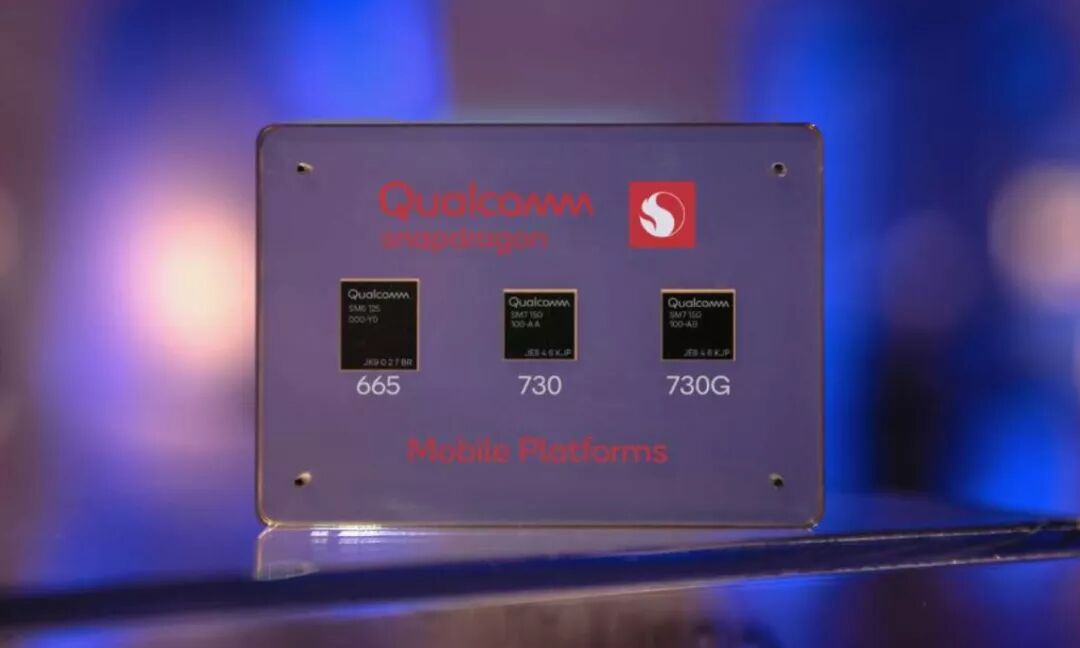
In terms of CPU architecture, the Snapdragon 730 is similar to the Kirin 810, consisting of two Kryo 740 big cores modified from Cortex-A76 and six Kryo 740 small cores modified from Cortex-A55. However, the Snapdragon 730 is slightly disadvantaged in process technology: it uses Samsung’s 8nm LPP process, not the current flagship chip’s 7nm.
Benefiting from the advanced 7nm process and optimized big-little core scheduling, the Kirin 810 can achieve over 10% higher scores than the Snapdragon 730 in GeekBench’s single-core and multi-core comparisons. As for GPU performance, in off-screen tests like the T-Rex and Manhattan at 1080P resolution, the Kirin 810 scored 44% and 15% higher than the Snapdragon 730, respectively.
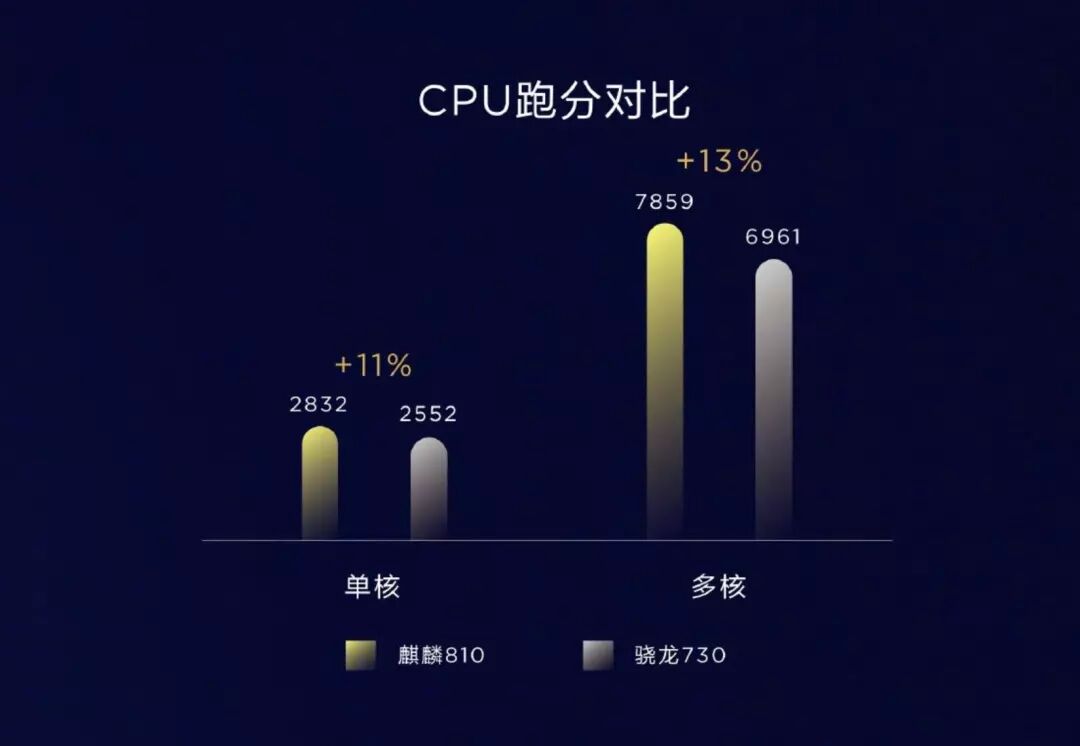
The conclusion is clear: in relatively objective benchmark scores, the Kirin 810 has already overshadowed the Snapdragon 730. Want to see Qualcomm’s counterattack? At least we will have to wait a year and a half for the next generation of mid-range Snapdragon chips to be released. In the meantime, Huawei and Honor’s mid-range smartphones using the Kirin 810 will have significantly stronger performance.
Moreover, the emergence of the Kirin 810 allows Huawei to genuinely have its own mid-range smartphone products. Whether in terms of actual performance, or the improved IVP+IPS in photography, and dual SIM dual VoLTE online experiences, these mid-range smartphones can find accurate and appropriate market positioning.
//////////
Bright Future for Kirin 810
As Huawei’s second mobile chip built on a 7nm process and equipped with a self-developed NPU, the quality of the Kirin 810 is impressive, exceeding our expectations for mid-range mobile chips.
Thanks to the performance of this chip, Huawei and Honor’s related models are expected to gain significant advantages in market competition, making us marvel at the exciting competition and continuous progress among smartphone manufacturers.
With the Kirin 810, Huawei and HiSilicon Semiconductor are expected to deliver even more surprising performances in the future. Counting down, there are still three months until the annual Mate series chip release, and we might just get a bigger surprise then.
END
This afternoon, OPPO officially launched its透视全景屏 technology at MWC, primarily combining an under-screen camera module, a high-transparency screen, and OPPO’s optimized algorithms to ensure normal display while enabling front-facing selfies and other functions.
It is foreseeable that as the under-screen camera solution matures, a complete front screen design can be easily achieved without the need for a pop-up module. On June 28, we will also provide a comprehensive interpretation and analysis of OPPO’s under-screen camera technology, so stay tuned!
Open the ZEALER mini-program to watch this episode ↓ ↓ ↓
* Users of the 100,000-person evaluation club can join the QQ group: 631042704
(Please provide your account UID when joining the group)
Non-members can join the ZEALER community official group: 414894623