
This article is adapted from ZEALER, WeChat ID: zealertech
For Huawei, the largest smartphone manufacturer in China, the past two years have seen it thrive in the smartphone market, but various subsequent events have cast a shadow over the entire company.
At the end of 2018, Meng Wanzhou, the daughter of Huawei’s founder Ren Zhengfei and the company’s vice chairman and CFO, was reported to have been arrested and prosecuted in Canada at the request of the U.S. government for allegedly violating U.S. sanctions against Iran.
On May 16, 2019, U.S. President Trump signed an executive order declaring a national emergency, allowing the U.S. to prohibit companies owned or controlled by “foreign entities” from providing telecommunications equipment and services. Subsequently, the U.S. Department of Commerce announced that Huawei and its 70 affiliated companies would be added to the export control entity list, ordering U.S. companies not to sell products and technologies to Huawei without approval.
On July 14, 2020, the UK government officially announced a ban on Huawei’s participation in the local 5G network construction. UK Minister of State Oliver Dowden stated that telecommunications operators would not be able to purchase Huawei’s 5G equipment starting at the end of 2020 and required telecom companies to remove all Huawei 5G equipment by 2027.
On July 16, 2020, TSMC announced that, due to the U.S. government’s ban on Huawei, it had not accepted any orders from Huawei since May 15, and if the U.S. government’s sanctions against Huawei did not change, the company would stop supplying Huawei after September 14, including Huawei’s subsidiary HiSilicon.
For Huawei, this can be considered the heaviest blow to date. Without TSMC’s foundry services, Huawei’s most crucial component in its smartphones—the Kirin SoC—would quickly fall behind Qualcomm, Samsung, and MediaTek’s flagship SoCs, leaving Huawei phones in an awkward situation of being without chips.
From the initial K3V2 to the revamped Kirin 925, from establishing a high-end position with Kirin 950 to dominating the 5G market with Kirin 990 5G, HiSilicon’s Kirin chips have witnessed Huawei’s step-by-step rise in the smartphone market, enduring hardships to see today’s rainbow.
However, with the implementation of the ban on September 15, the Kirin 9000, which powers the Mate 40 Pro, may become the swan song of the flagship Kirin SoC. While we lament this, let us revisit the development of HiSilicon’s mobile processors over the past decade.
HiSilicon K3V1 – The First Attempt
Founded in October 2004, HiSilicon Semiconductor Co., Ltd. was formerly Huawei’s Integrated Circuit Design Center. As a company engaged in the external sales of chips, it would strive to avoid mentioning Huawei in market promotions, highlighting the “HiSilicon” brand instead.
Many international semiconductor giants have unique chip naming conventions. Intel uses names of geographical locations, streets, rivers, and mountains around its design teams as product or project codes, such as Coppermine, Willamette, and Nehalem. AMD’s server platform processors are named after Formula 1 racing tracks, such as Barcelona, Shanghai, and Suzuka.
HiSilicon, on the other hand, prefers to name its products after China’s snow-capped mountains. Before launching the K3 series, HiSilicon had already released or developed several products named after well-known Chinese snow-capped mountains, such as Moiri, Balong, and Gongga.

The “K3” is also named after a high mountain, specifically Broad Peak, which is the third highest peak among the five main peaks of the Karakoram mountain range from west to east. It is also the twelfth highest peak in the world, standing at 8,051 meters.
Although this name carries the expectations of HiSilicon and its parent company Huawei, the K3V1, as the first generation of self-developed mobile chips, had a tumultuous fate.
The K3V1 adopted a 180nm process that was already outdated compared to other processors’ 65nm/55nm/45nm processes, and it also chose Windows Mobile as its operating system—an OS that was later declared dead.
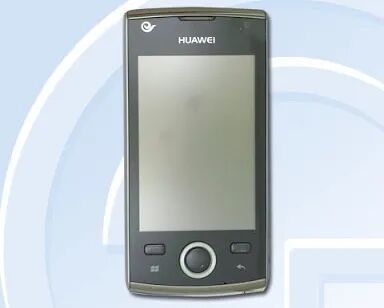
At that time, Huawei was busy customizing phones for other operators and had no way to promote HiSilicon chips on a large scale in its own phones. Only a few Huawei phones were fortunate enough to use this processor, such as the Huawei C8300, which still supported the now obsolete Windows Mobile system.
Due to low shipment volumes, the initial K3 chip aimed to provide a low-cost solution for smartphones, positioned between high-end smartphones and low-end feature phones, but this market was already dominated by strong competitors like MediaTek and Spreadtrum. The product’s competitiveness was weak, and Huawei’s internal outlook was not optimistic. Coupled with various sales strategy missteps, HiSilicon’s first mobile processor, K3V1, quickly faced failure.
K3V2 – The First Flagship Fails
For Huawei, the failure of K3V1 was intolerable. After learning from the lessons, Huawei invested more funds into HiSilicon, hoping it could become the biggest support for its mobile business.
After a long two years of development, the K3V2 processor was officially launched in August 2012, changing the previous low-end volume strategy. This processor aimed to compete with contemporaneous Android flagships, and Huawei and HiSilicon had high hopes for it.
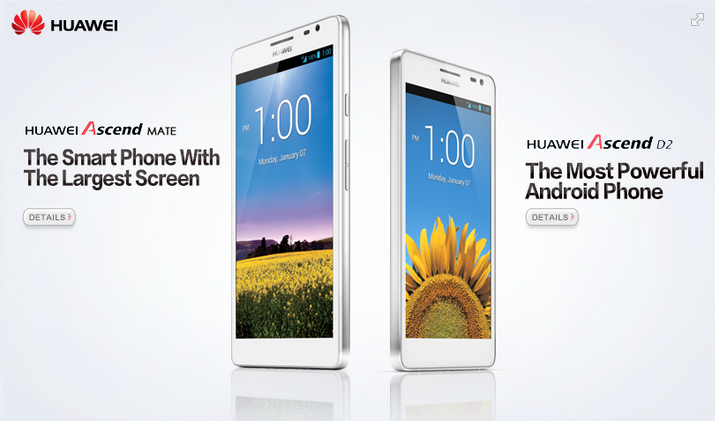
Phones equipped with K3V2 included the flagship Huawei Ascend D2, Huawei Honor 2, Huawei Ascend P6, Huawei Ascend P2, and Huawei Mate 1, with the highest-end D2 and Mate 1 targeting HTC One and Samsung Galaxy S. Ambitious Huawei aimed to reverse the decline in its mobile business over the past few years and capture the still-developing Chinese smartphone market.
Let’s take a look at the specifications of this processor. The HiSilicon K3V2 was claimed to be the smallest quad-core A9 architecture processor in the industry in 2012. It featured four A9 cores with a frequency of 1.5GHz and embedded what was claimed to be the industry’s strongest embedded GPU, using TSMC’s 40nm process, with a chip area of 12mm x 12mm, making it the second quad-core A9 processor after NVIDIA’s Tegra 3.
While the specifications sound decent on paper, the process technology was again lagging behind contemporaneous flagship processors, as Samsung and Qualcomm had already adopted 28nm processes. Just in terms of process technology, K3V2 was already significantly behind, leading to poor heat control.
Moreover, K3V2 recklessly adopted Vivante’s GC4000 in pursuit of GPU power, which performed poorly in compatibility, similar to Tegra 3, where either games could not run at all or the actual performance was mediocre.
Heat and compatibility became K3V2’s fatal weaknesses, causing its reputation to plummet in the initial consumer market, and even the later P6, which used an optimized K3V2E, could not remedy the situation.
Kirin 910 and 920
—— Reversing Reputation, Stabilizing the Market
For Huawei and HiSilicon, since the K3 series’ reputation had plummeted, it was better to start anew with a completely new series to change consumer perceptions of domestic processors. The mythical creature in Chinese mythology, the Kirin, became the name of this new series, symbolically competing with Qualcomm’s Snapdragon.
After more than a year of hard research and development, the Kirin 910 SoC was launched, still using a quad-core Cortex-A9 architecture, but with an increased frequency of 1.6GHz, not much change. The more significant change was the adoption of a 28nm HPM process, and the GPU was upgraded from the previous GC4000 to Mali 450 MP4, effectively solving the previous generation’s overheating and GPU compatibility issues. Although overall performance still could not match contemporaneous Samsung and Qualcomm flagships, it was undoubtedly on the right path.
Additionally, the Kirin 910 integrated the self-developed Balong 710 baseband for the first time, making it a true mobile SoC. Only a few companies could achieve this, and even Samsung did not launch an integrated baseband SoC until years later. It is undeniable that without Huawei’s continuous investment in previous years and HiSilicon’s deep cultivation in the chip field, the Kirin 910 would not have been able to achieve this milestone.
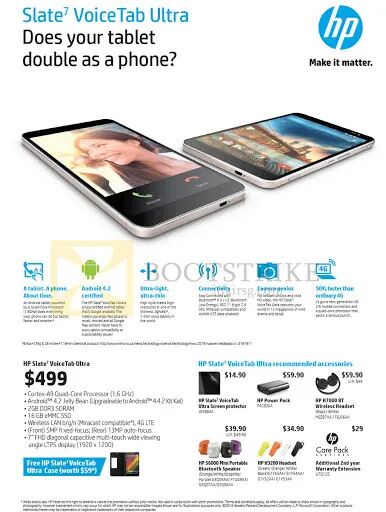
The Kirin 910 series was not only used in Huawei Mate2, Huawei P7, and Honor 3C smartphones but also in the HP Slate 7 VoiceTab Ultra tablet.
The Huawei P7, equipped with the Kirin 910T, sold 6 million units within 10 months at a price of over 2000 yuan, significantly surpassing the P6’s 4 million units, with the Kirin 910T contributing significantly to this success.
The subsequent Kirin 920 series continued the success of the 910, adopting a 4+4 big.LITTLE architecture with 4 A15 big cores at 1.7GHz and 4 A7 little cores at 1.3GHz, paired with a Mali-T628MP4 GPU, still using TSMC’s 28nm HPM process.
With the Kirin 920, HiSilicon introduced the new Balong 720 integrated baseband, the first integrated baseband supporting LTE Cat.6 standards, even ahead of the industry leader Qualcomm at the time. The Kirin 925 increased the big core frequency from 1.7GHz to 1.8GHz and integrated an “i3” co-processor. The Kirin 928 further increased the big core frequency to 2.0GHz.
Notably, the Mate 7, equipped with the Kirin 925, achieved remarkable success in the high-end flagship market, with total sales reaching 7 million units, thanks to the combination of a large screen, large battery, and domestic processor, allowing Huawei phones to firmly establish themselves in the high-end market for the first time.
Kirin 930 to 960
—— Steady Progress to Major Advances
The Kirin 930 series, released in March 2015, adopted an 8-core Cortex-A53 architecture, with a Mali-T628 MP4 GPU, manufactured using TSMC’s 28nm process, still integrating the Balong 720 baseband. Initially, it was criticized for being too conservative, merely a standard upgrade without many highlights.
However, this conservatism allowed HiSilicon’s Kirin to avoid two major pitfalls: ARM’s latest Cortex-A57 microarchitecture and TSMC’s 20nm process, with Qualcomm 810, Apple A8, and MediaTek Helio X20 being victims of these issues. Fortunately, Huawei did not blindly pursue specifications and only made a half-generation upgrade, resulting in a reasonably good reputation as a mid-to-high-end processor.
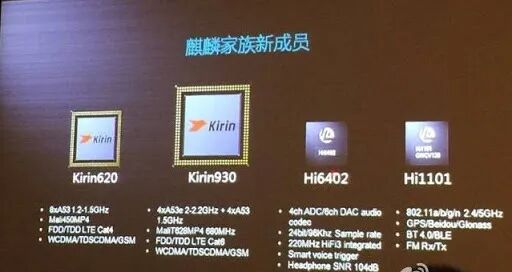
The real highlight came with the Kirin 950 released in November 2015, which was the first to use TSMC’s 16nm process, first to adopt ARM’s A72 + A53 architecture, and first to integrate a self-developed ISP. These three firsts finally allowed the Kirin processor to catch up with contemporaneous flagships, even leading Qualcomm’s Snapdragon 820 released in the first half of 2016 by a small margin, marking a significant leap forward.
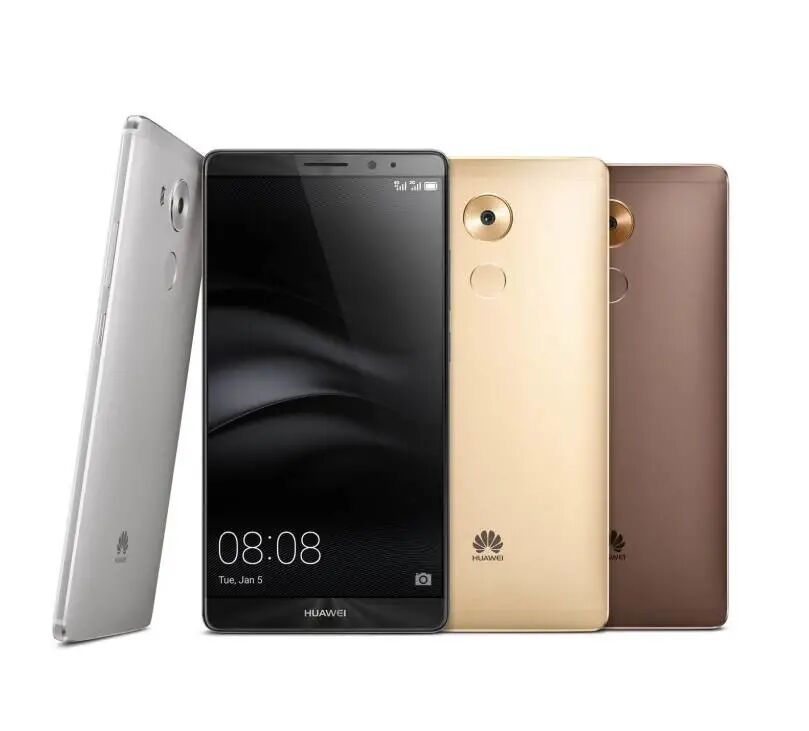
This leap was also reflected in sales, with the Mate 8 achieving sales of 7 million units, and the P9 series, equipped with the upgraded Kirin 955, even surpassing 10 million units, allowing Huawei to firmly establish itself in the high-end market.
The Kirin 960 further addressed shortcomings from the previous generation, being the first Kirin processor to support UFS 2.1 storage, and further enhancing CPU and GPU performance by adopting ARM’s latest A73 architecture and Mali-G71 MP8 GPU, while also supporting Vulkan API, resulting in improved daily operation and gaming performance.
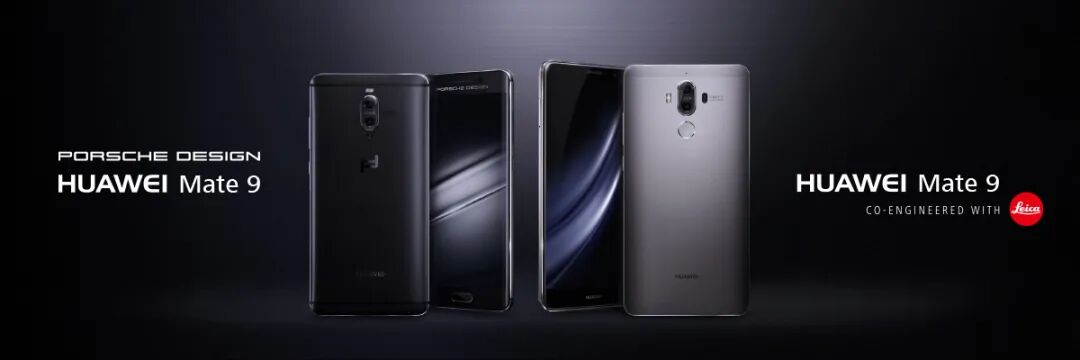
The Kirin 960 also brought about the success of Huawei phones, with multiple models including the Huawei Mate 9 series, Huawei P10 series, Honor 9, and Honor V9 setting new sales records.
Kirin 970 and Kirin 980
—— Dominating the High-End Market
For Huawei and HiSilicon, relying on the successes of the 950 and 960 generations, the Kirin had successfully established itself in the high-end market. The next step was to think about how to innovate and break through, how to give Kirin more unique selling points that other processor manufacturers did not possess.
The Kirin 970 emerged from this contemplation, becoming the world’s first SoC with an integrated independent NPU (Neural Processing Unit). This independently integrated NPU can effectively share the pressure of the CPU and GPU, and due to the adoption of a 10nm process, the Kirin 970 significantly improved energy efficiency compared to the 960. Coupled with GPU Turbo technology, the Kirin 970 finally gained recognition, addressing the long-criticized GPU shortcomings.
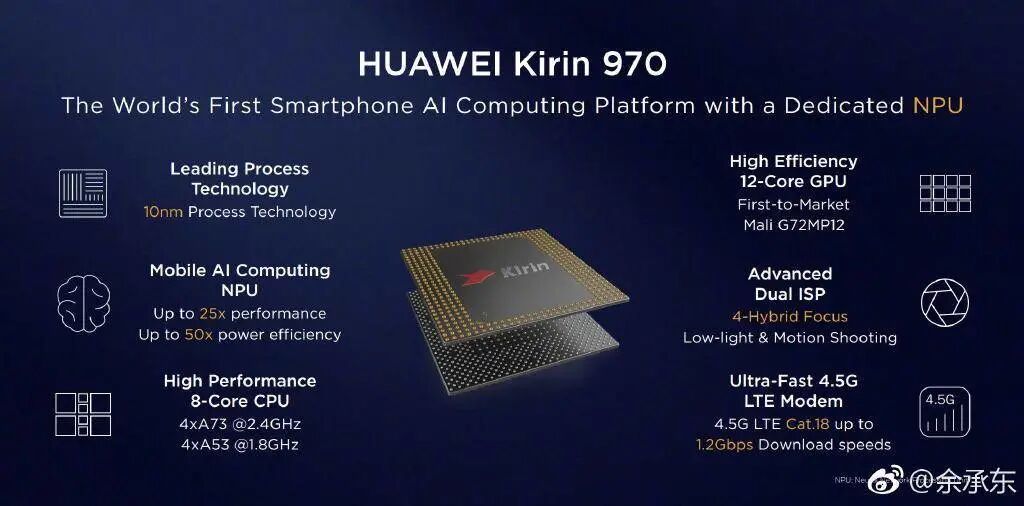
The Kirin 980, released in September 2018, was the first to adopt TSMC’s 7nm process, surpassing both Apple and Qualcomm, pushing Huawei’s high-end chips to another peak.
Smartphones equipped with these two flagship processors include Huawei’s Mate 10 series, P20 series, Mate 20 series, and P30 series, each achieving impressive results that pushed Huawei’s high-end phone prices to five to six thousand yuan, a price point previously only accessible to Samsung and Apple.
With these two generations, Huawei, relying on Kirin processors, not only dominated the domestic market but also made significant inroads into the international market, capturing a considerable share from foreign smartphone manufacturers.
Kirin 990 and Kirin 9000
—— Facing Sanctions, Likely the Swan Song
It may have been overlooked earlier, but the Balong baseband, which complements the Kirin, has played a significant role in Huawei’s impressive achievements in the era of full-network 4G. Although slightly inferior to Qualcomm, Balong has been sufficient to leave manufacturers like Samsung and Intel far behind.
As we entered the 5G era, Balong became the focus of global attention. The Kirin 990 5G not only adopted the new 7nm EUV TSMC process for the first time but also integrated the Balong 5000 5G baseband, achieving a balance between power consumption and performance just as the 5G era was about to arrive, with the Mate 30 Pro equipped with it becoming the undisputed king of smartphones.
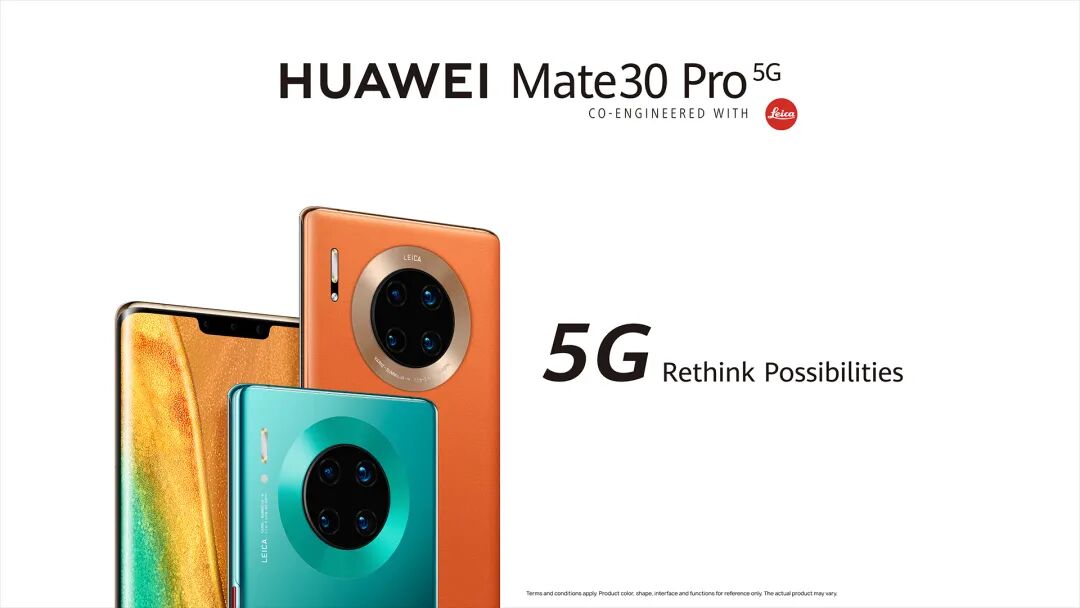
Unfortunately, fate did not favor Huawei. Following a ban from the U.S. Department of Commerce, Huawei’s most important foundry partner, TSMC, could no longer manufacture any chips for HiSilicon after September, effectively cutting off Huawei’s ability to continue updating and iterating its flagship processors.
After September, the rumored Kirin 9000, which was supposed to adopt TSMC’s 5nm process, may very well become a swan song. Huawei’s consumer business CEO Yu Chengdong lamented, “China’s semiconductor technology and manufacturing capabilities have not yet caught up.”
He also reflected on the arduous journey of Huawei’s self-developed chips over the past decade: “(We) went from being severely behind to relatively behind, to somewhat behind, to gradually catching up, to leading, and now being banned. (Huawei) has gone through this process, investing a tremendous amount in R&D and experiencing a difficult journey, but unfortunately, in the capital-intensive semiconductor manufacturing field, Huawei has not participated; we only design chips.”
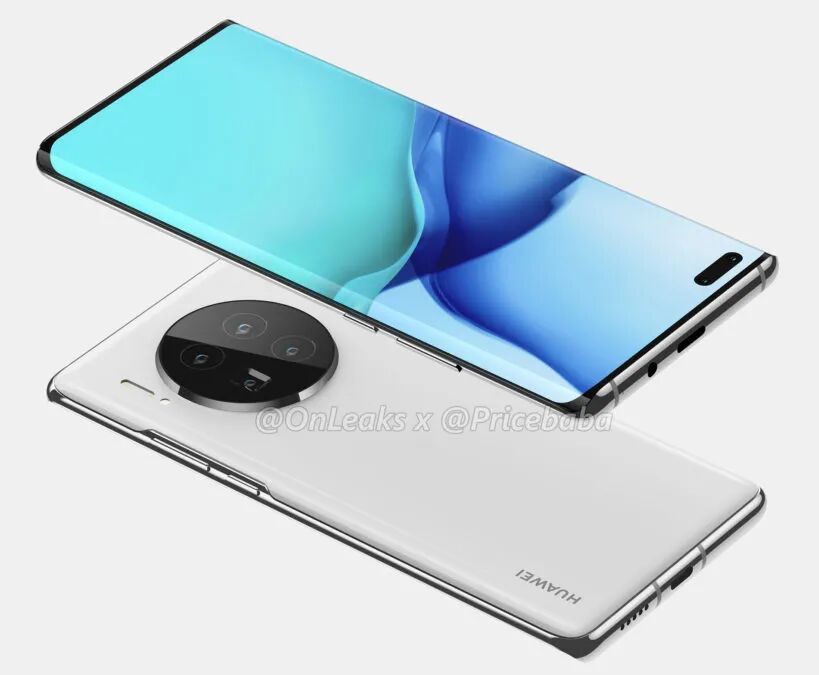
Of course, this ban does not directly kill Huawei’s smartphone business. There are still many alternative options worldwide, such as MediaTek, which has already taken on Huawei’s order for 120 million chips, and the possibility of reconciliation with old rivals Samsung and Qualcomm.
However, these manufacturers are not HiSilicon, and Huawei will have to leave a significant portion of its profits with these companies. The most direct feedback may be that Huawei and Honor phones will continue to increase in price, potentially leading to a decline in sales. As for HiSilicon, it may turn to the server field due to the lack of processor orders, and the hard-earned technology may only be shelved.
This is indeed a great regret. From K3V1 to Kirin 990 5G, this path, which has seen light after much hardship, has been suddenly engulfed by darkness.
However, not all is despair. There is hope in the company SMIC, which is currently producing mid-range chips like the Kirin 710A using a 14nm process. SMIC is also continuously improving the production capacity of 28nm/14nm processes and striving to provide Huawei with more 14nm chips.
Given time, if SMIC can overcome the challenges of 7nm and 5nm based on its existing foundation, surpassing TSMC and Samsung, and catching up with Intel is not an unrealistic dream.
But that may take another decade, and who can make up for the time lost by the Kirin processors?
Exceptional Value Products
Limited Hot Sale
………
☟☟☟ Click to read the original text for more great products~