
On July 18, 2025, the AIRS 2025 Youth AI Maker Summer Camp successfully concluded. The five-day intensive study program included thematic lectures, experimental operations, group projects, and various other formats,guiding participants to gain a deeper understanding of the fundamentals and practical applications of artificial intelligence and robotics, enhancing their understanding of engineering problems and hands-on problem-solving skills.
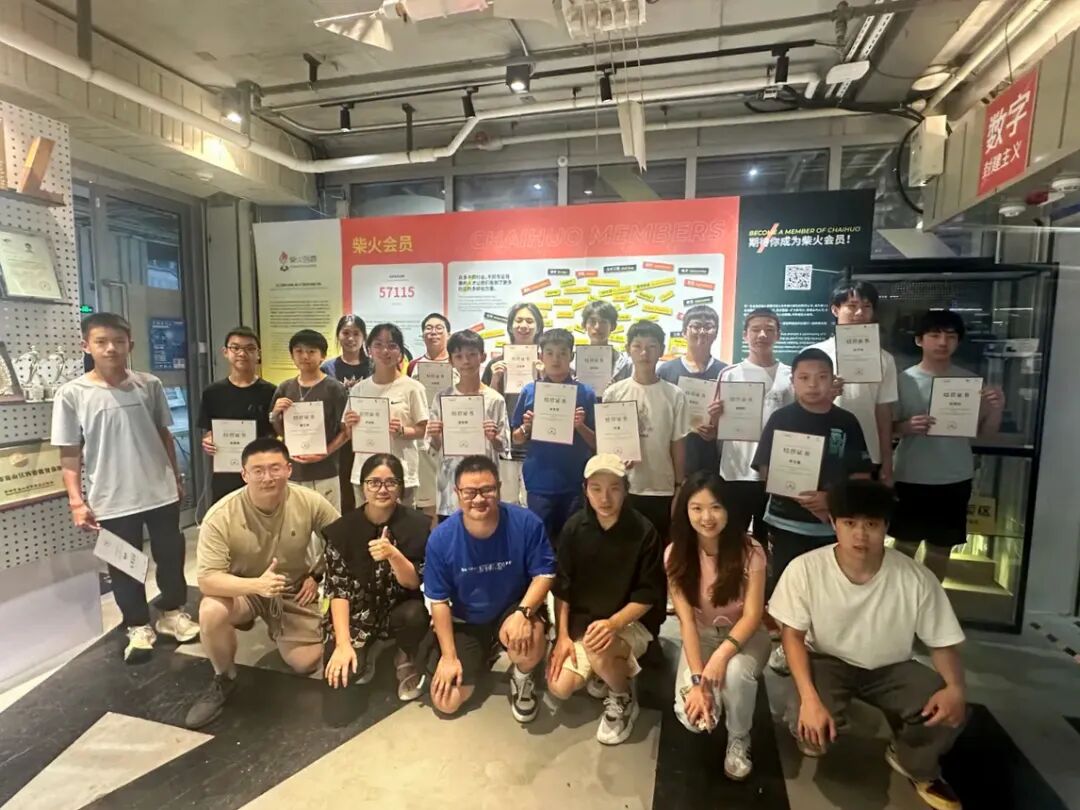
Group photo of the AIRS 2025 Youth AI Maker Summer Camp
About the AIRS 2025 Youth AI Maker Summer Camp
The “Maker” culture transforms creativity into reality through practice, and the booming artificial intelligence technology has ushered in a new wave of development for maker culture and spirit, making maker education a popular field focused on cultivating interdisciplinary thinking and engineering literacy in the AI era.
Against this backdrop, the AIRS Academy launched the 2025 Youth AI Maker Summer Camp, which helps participants build systematicfive core competencies through the path of“Technical Cognition – Practical Operation – Innovative Expression” in real-world problems.
Technical Literacy
Through hands-on operations with programming languages, open-source hardware (such as Arduino), and AI tool platforms, participants learn basic hardware operations, artificial intelligence knowledge, algorithm principles, and their applications in real scenarios.
Engineering Thinking Ability
From “how to do it” to “why to do it,” participants learn to break down requirements, build solutions, and validate iterations during the problem-solving process.
Innovation Ability
Real-world problems often have no standard answers; students need to exercise creative design while implementing technology, proposing differentiated solutions, and completing innovative practices from “0 to 1.”
Interdisciplinary Comprehensive Literacy
The projects integrate content from multiple disciplines such as mathematics, computer science, design, and art, promoting students’ understanding of how technology serves society and solves real-world problems from different disciplinary perspectives.
Self-Learning and Collaboration Ability
The camp encourages students to explore independently, actively seek resources, and learn communication, division of labor, and teamwork in project collaboration.
During the summer camp, participants gathered together, exchanging help and making progress through diverse learning tasks and project practices. Let us review their learning process and practical achievements,and step into this summer study filled with “exploration and growth!”
01
Opening Ceremony
After a brief opening ceremony and introductory lecture, to help participants get to know each other quickly and establish a team atmosphere, a fun and engagingice-breaking activity was organized on-site. Through interactive games, participants quickly broke the ice,initiating the first step of collaboration and communication.
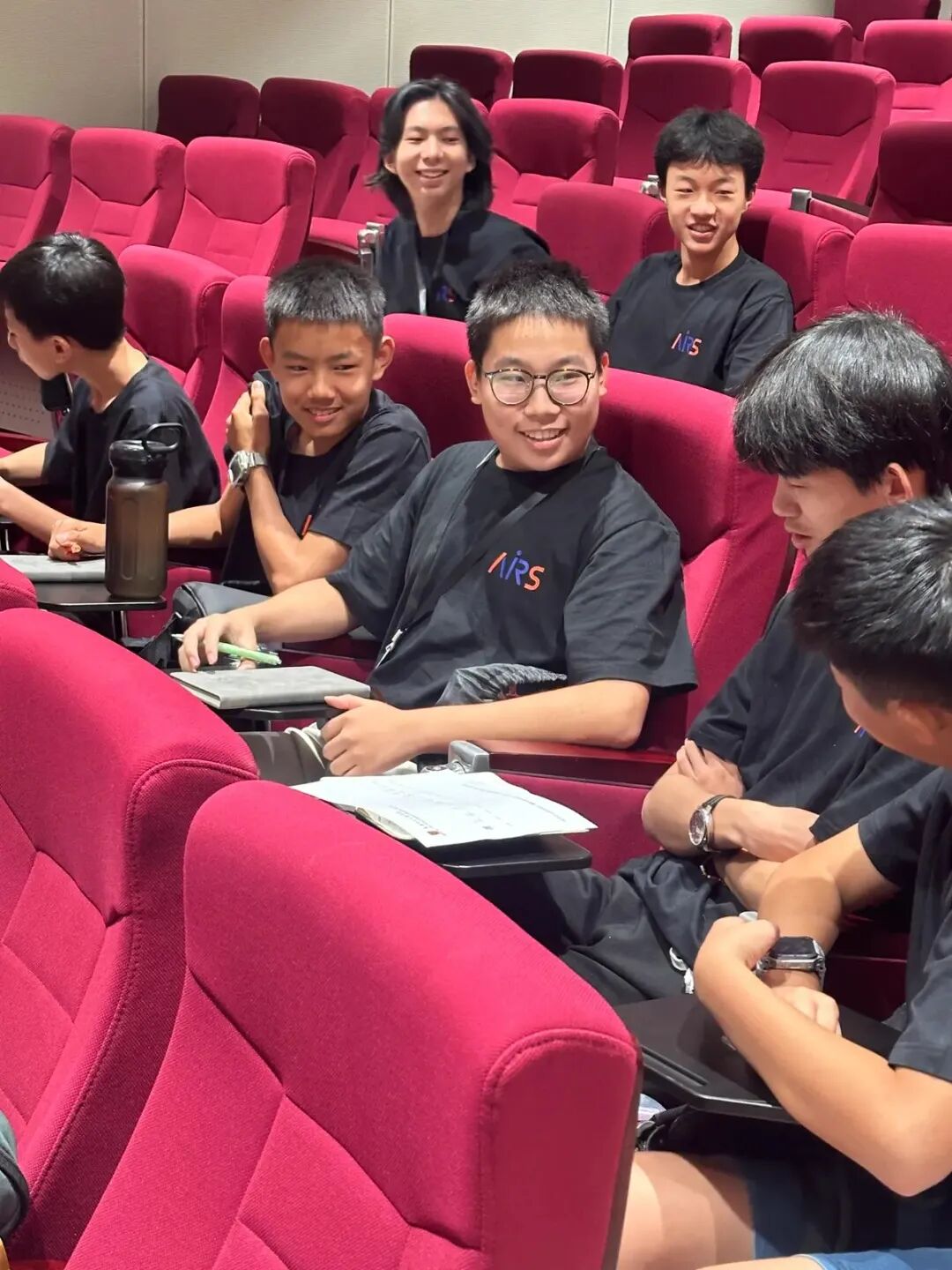
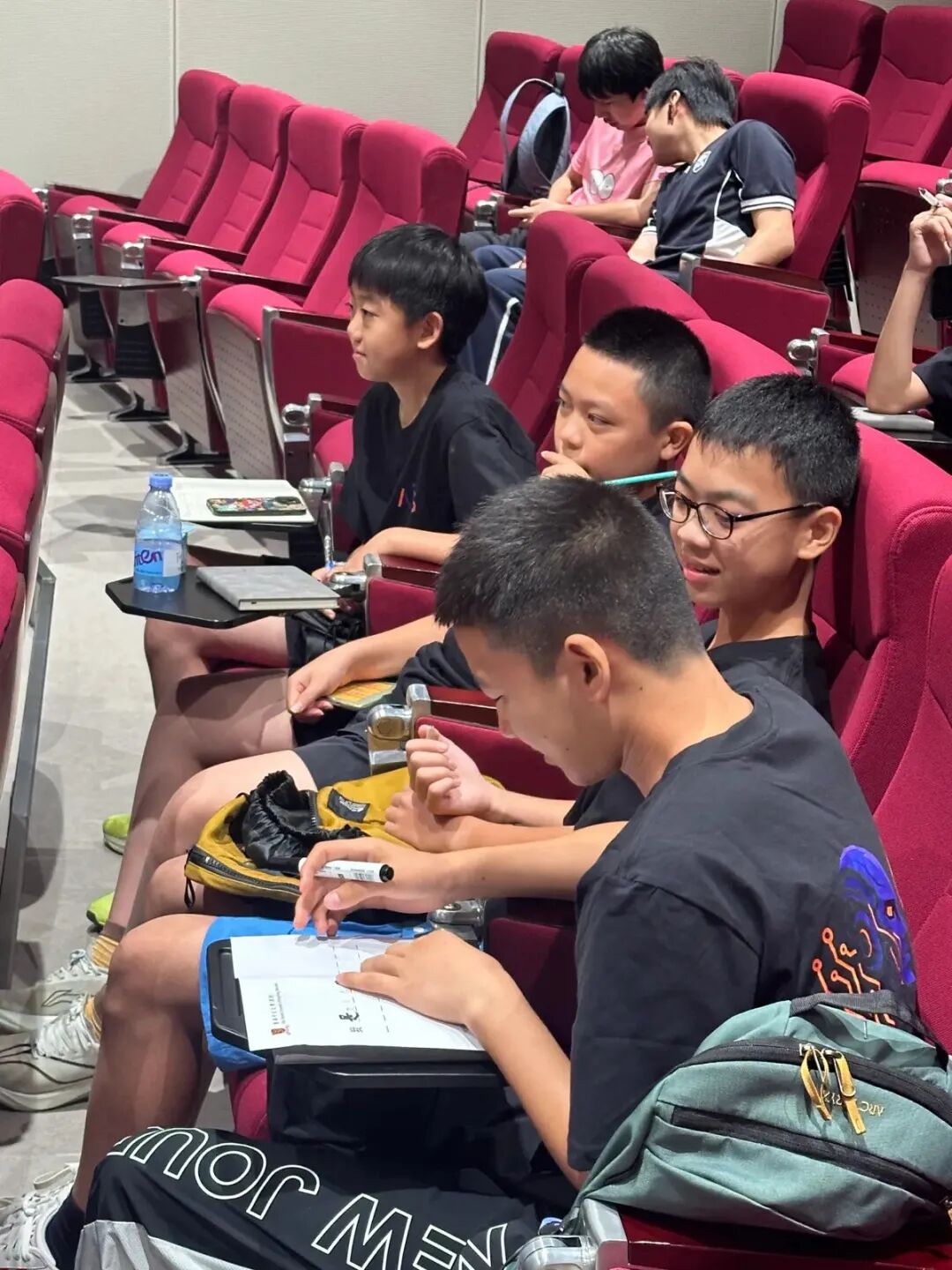
Participants actively engaged in ice-breaking games
02
Camp Curriculum
The curriculum design of this summer camp revolves around“Basic Cognition – Group Design – Results Presentation and Discussion” in three stages, constructing a complete learning path from knowledge input to project output, helping participants gradually establish technical understanding and practical abilities in the fields of artificial intelligence and robotics.
✦
About TinyML
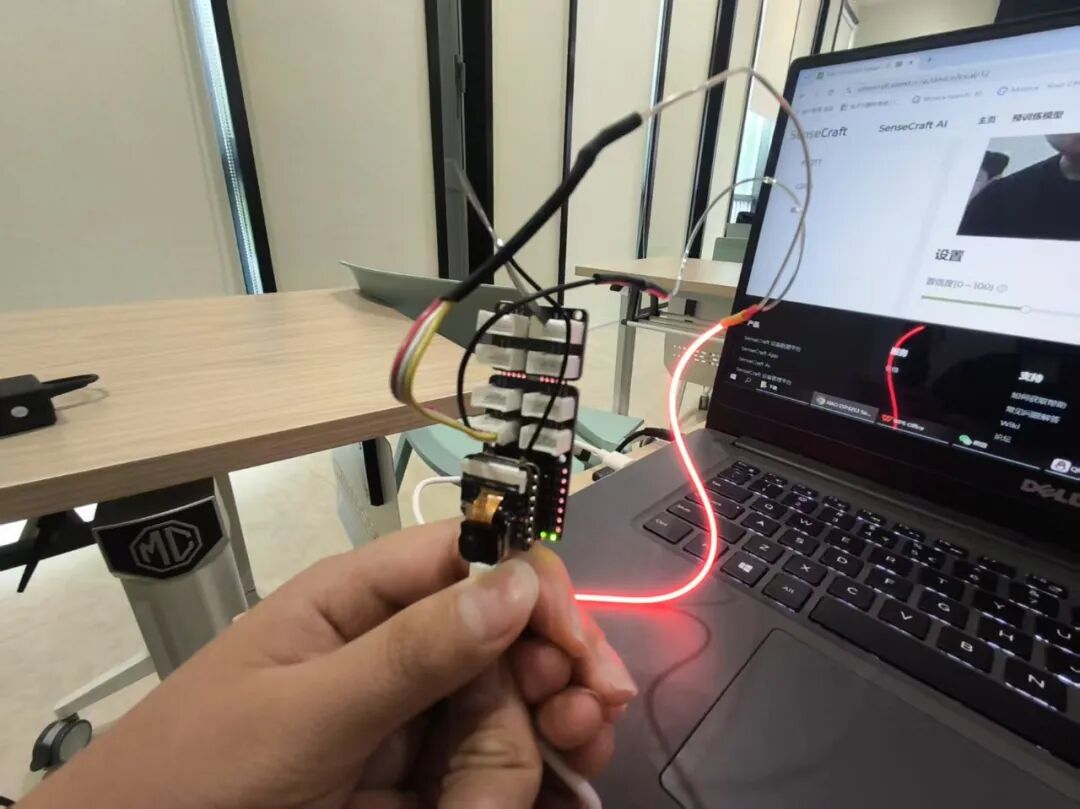
TinyML (Tiny Machine Learning) is a form of machine learning application designed specifically for low-power, small hardware devices such as microcontrollers. It achieves edge intelligence applications by running lightweight AI models on local devices.
Unlike traditional cloud-based AI, TinyML emphasizeslocal processing and real-time response, featuring extremely low power consumption (below 1 milliwatt) and support for miniaturized devices (KB-level memory), enabling independent data processing and intelligent decision-making in environments without network connectivity. Its advantages includelow latency, privacy protection, and offline operation, as well as low deployment costs, making it widely used in smart homes, wearable devices, environmental monitoring, and other scenarios.The emergence of TinyML has shifted artificial intelligence from “high-computing platforms” to “terminal micro-devices,” embedding intelligent computing into every detail of life.
In the micro machine learning workshop, the instructor first systematically taught students the basic principles of TinyML, divided into five main stages, gradually guiding students from theoretical learning to project practice.
Main Stages
1. TinyML Concepts and Applications
2. Toolchain and Platform Introduction
3. Hands-on Practice
4. TinyML Solution Design
5. Results Presentation and Discussion
The goal is to help each participant master the basic concepts and application value of TinyML,grasp rapid deployment methods for AI models, and thus be able to independently complete basic AI project development, establishing a mindset for AI application innovation.
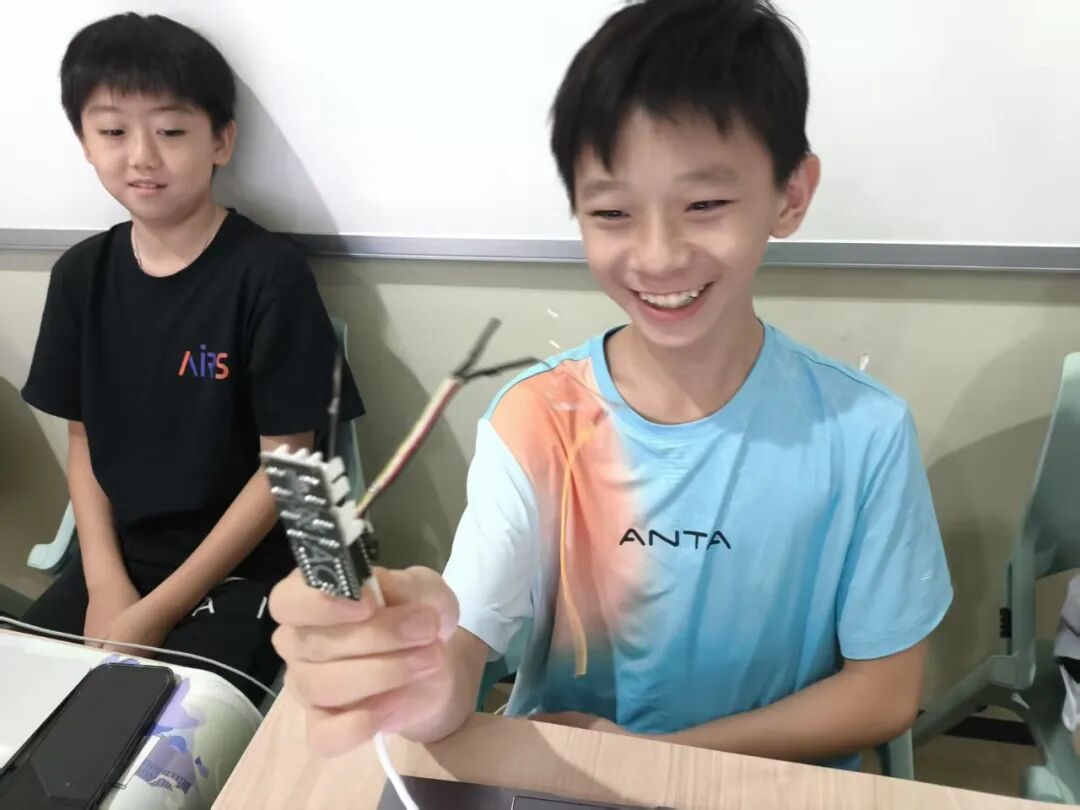
Group Design and Collaboration
During the five-day camp activities,the open-source hardware project course was undoubtedly one of the most popular contents. The course adopted group collaboration, encouraging students to explore and create around real application scenarios, which not onlystrengthened the application ability of technical knowledge but also improved communication and collaboration efficiency.
✦
About Arduino
Arduino is a convenient, flexible, and easy-to-use open-source electronic prototyping platform that includes hardware (various models of Arduino boards) and software (Arduino IDE), and is also a globally popular open-source hardware. The simple development approach of Arduino allows developers to focus more on creativity and implementation, completing their project development faster, significantly reducing learning costs and shortening development cycles.
Due to its various advantages, more and more professional hardware developers have started using Arduino to develop their projects and products; many universities have also launched Arduino-related courses in automation, software courses, and even art majors.
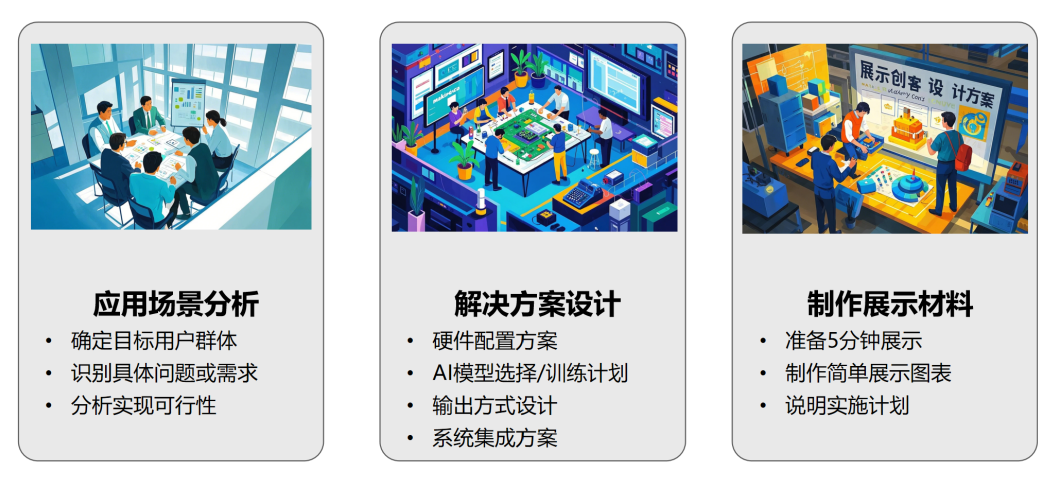
The project tasks are divided into three stages:
● Application Scenario Analysis: Participants identify target users and specific needs based on real problems and assess the feasibility of technical implementation;
● Solution Design: Groups brainstorm solutions around hardware configuration, AI model selection, output methods, and system integration;
● Material Preparation for Presentation: Students prepare group presentations, creating demonstration materials and explanatory content.
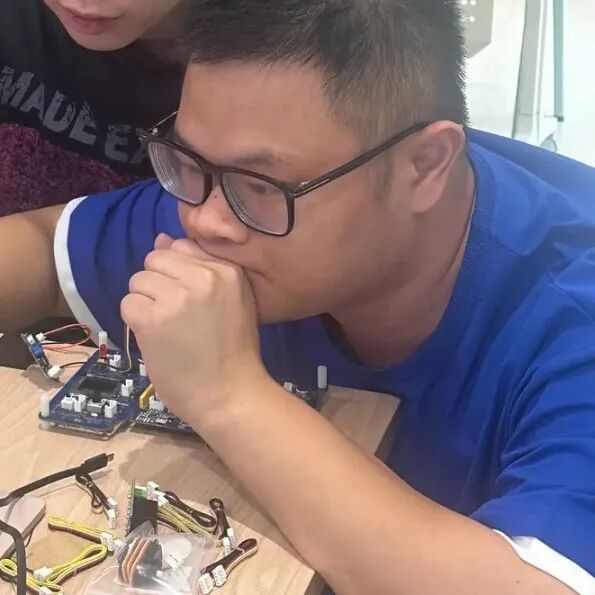
Participants actively engaged in class, showing strong interest and high involvement. Group members closely collaborated, discussing every functional design and connection detail. Through repeated attempts and adjustments, they gradually mastered the method of combining software and hardware, and alsolearned how to listen, express, and solve problems in collaboration.
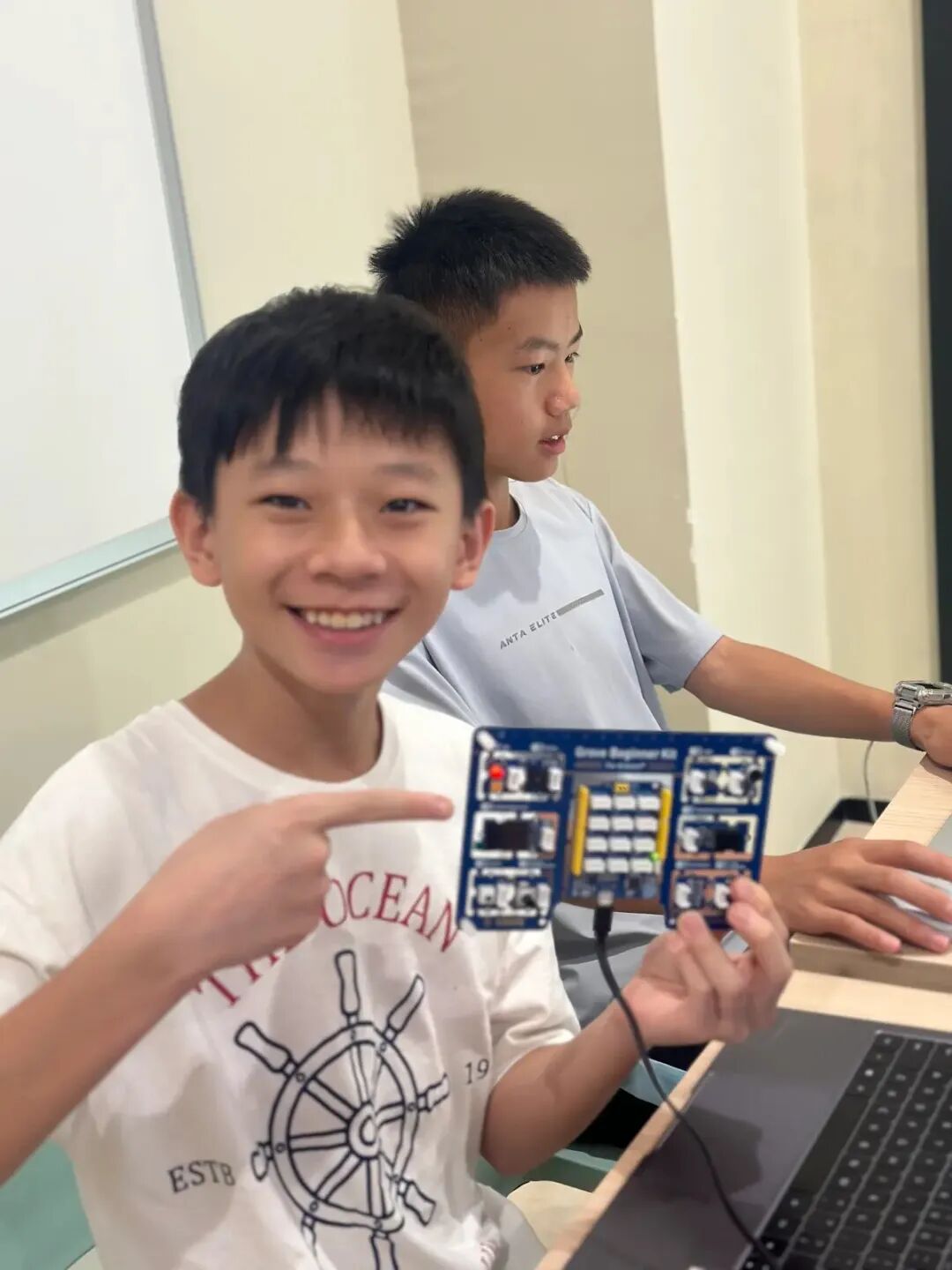
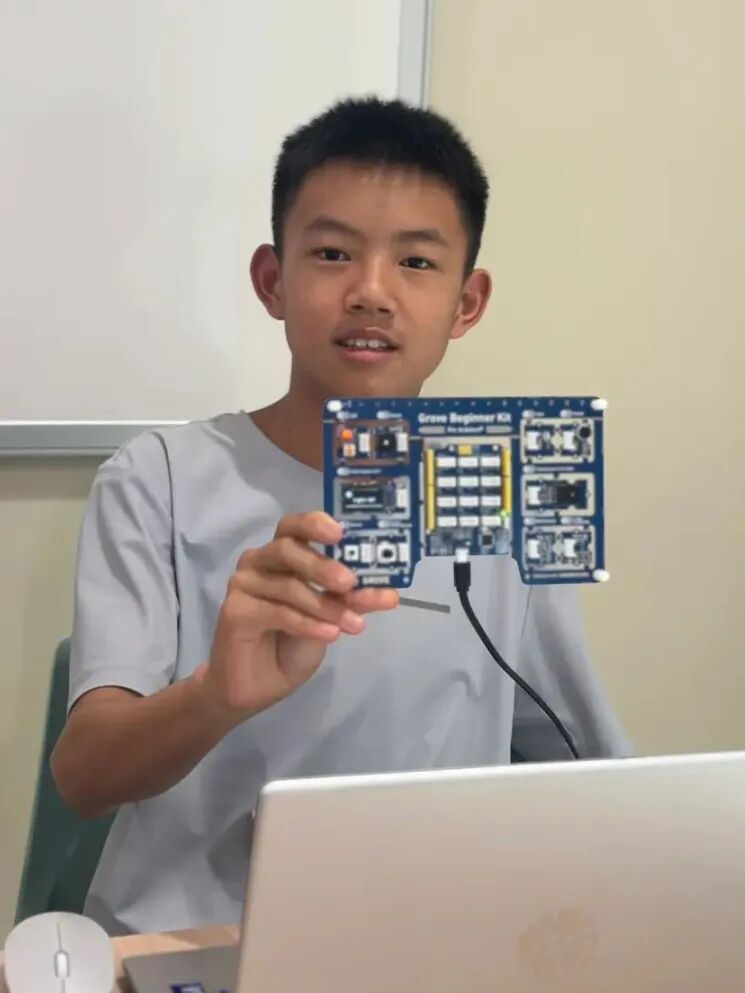
During the practice, there were moments of challenges, but it was through hands-on attempts that everyone gradually found their rhythm and established a sense of understanding and achievement in the project.
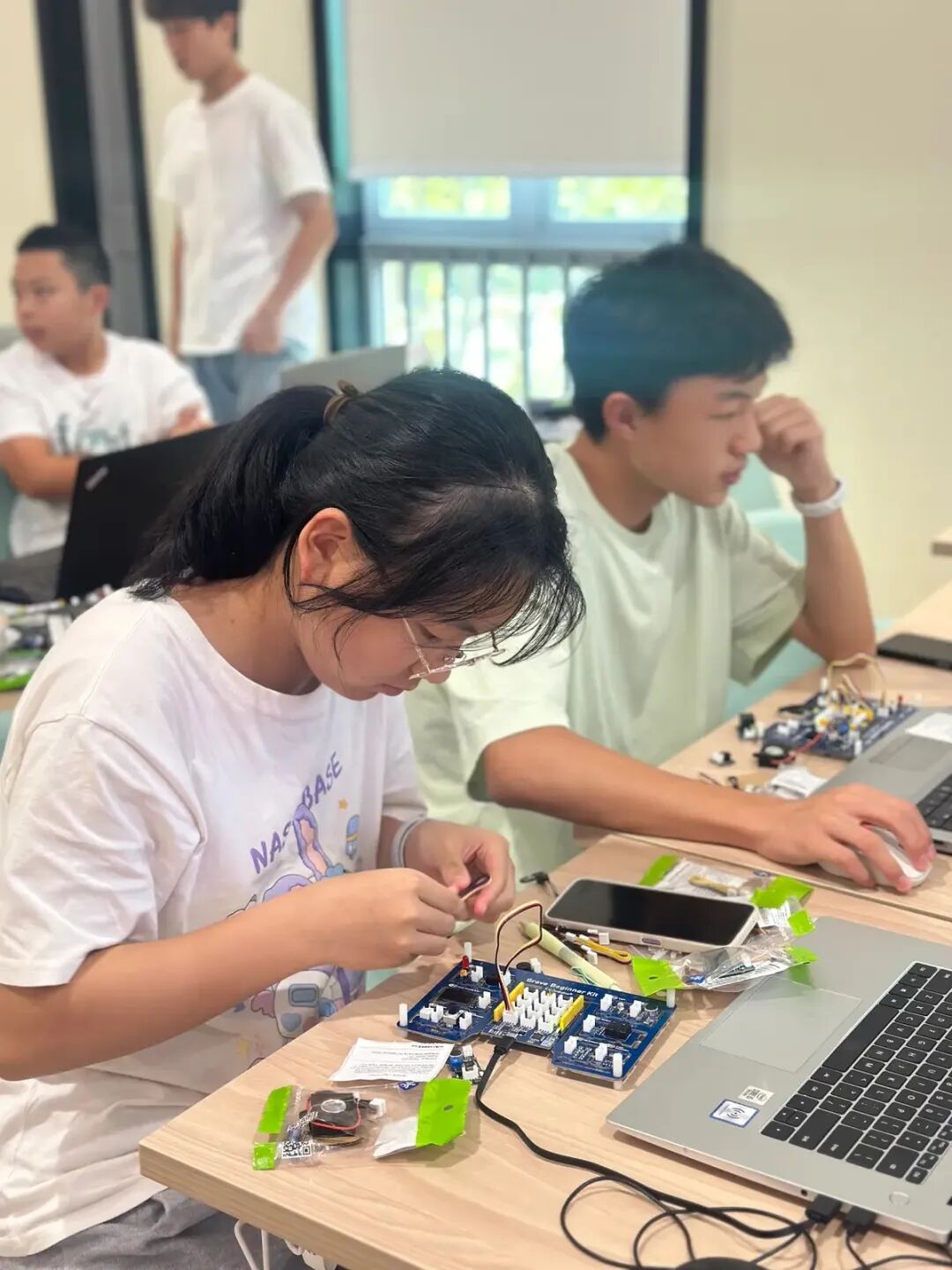
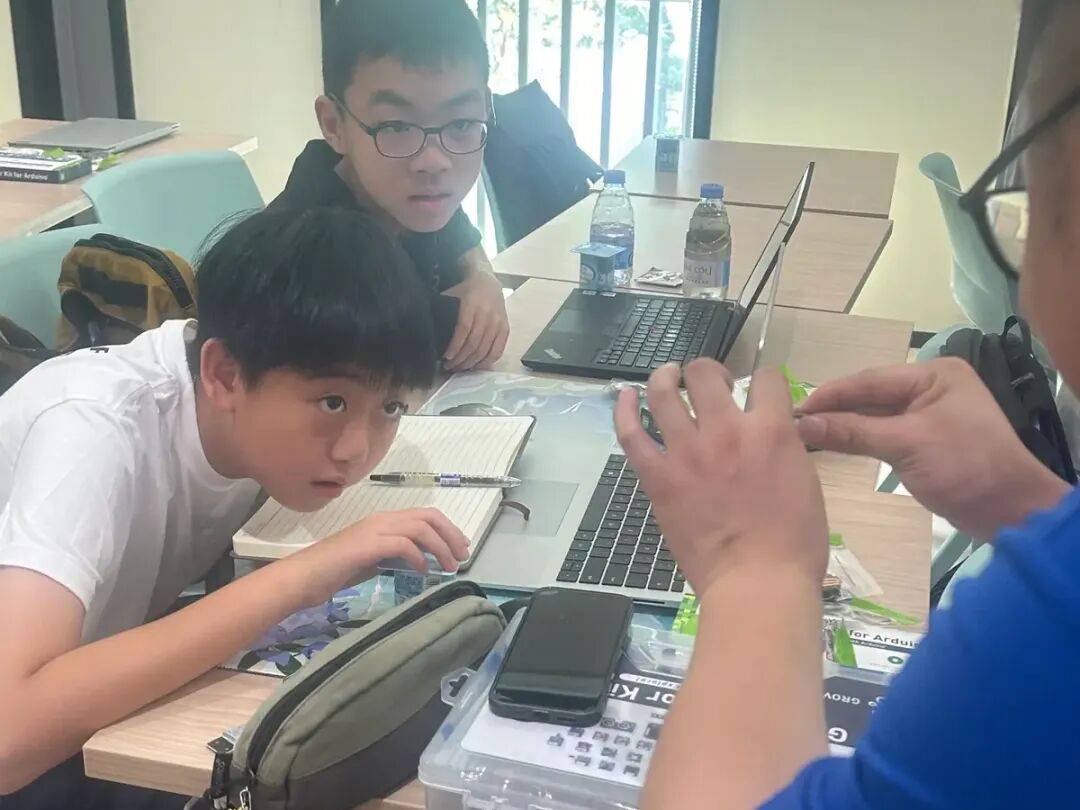
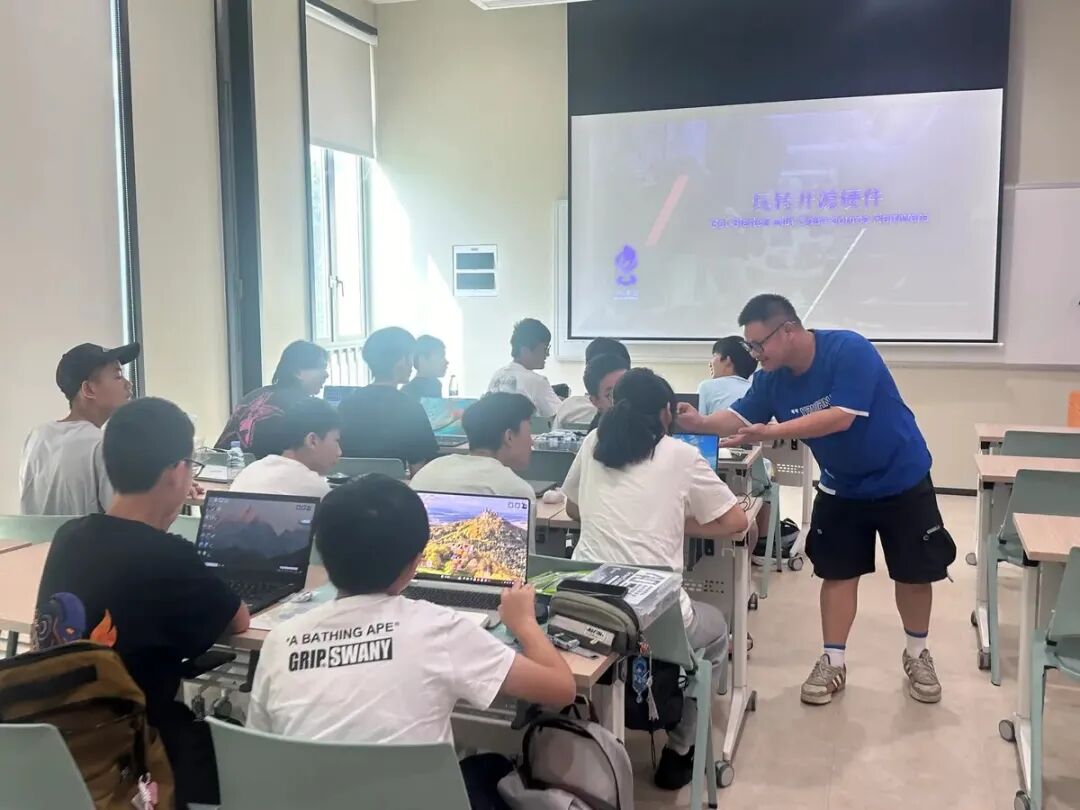
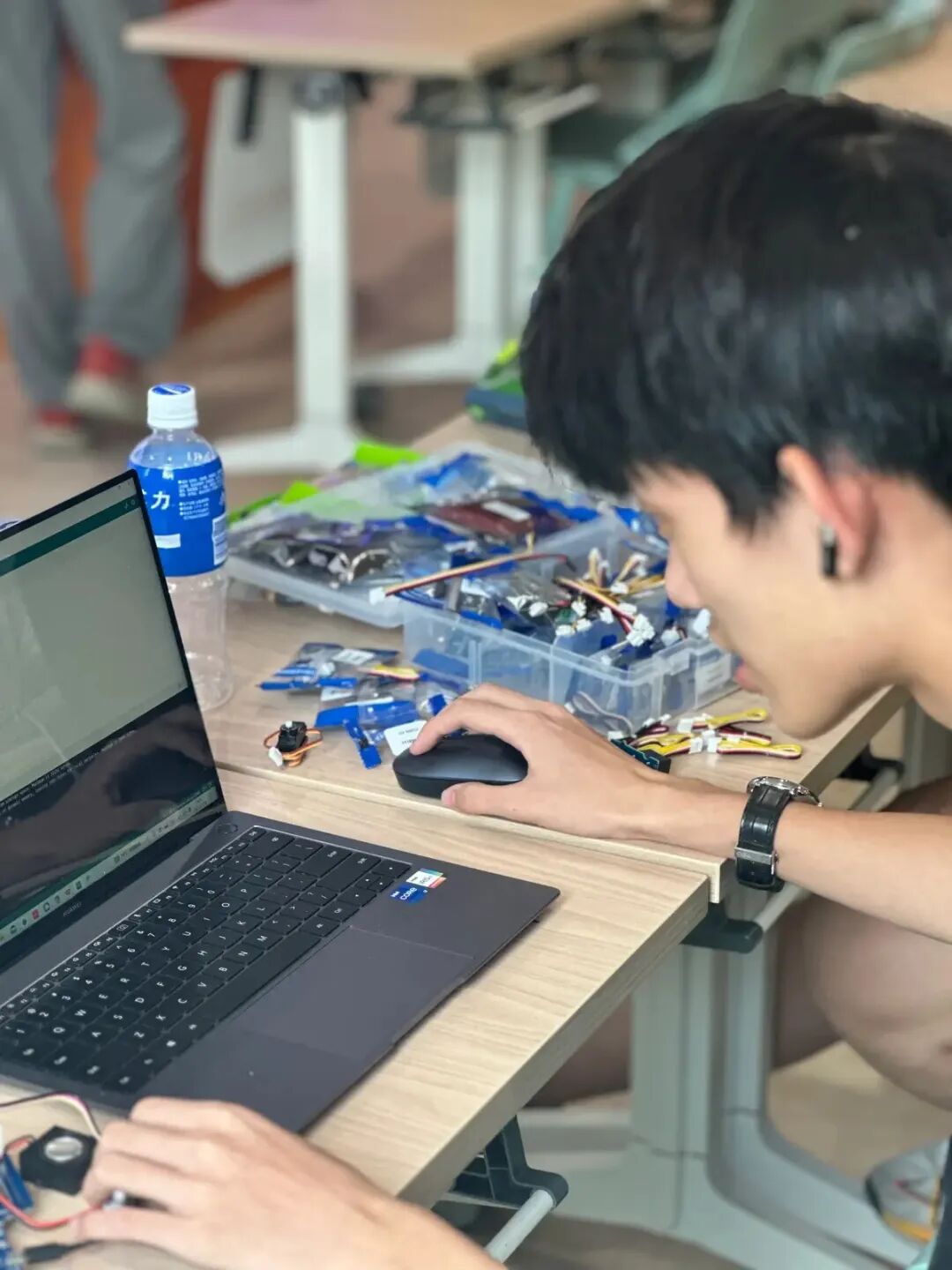
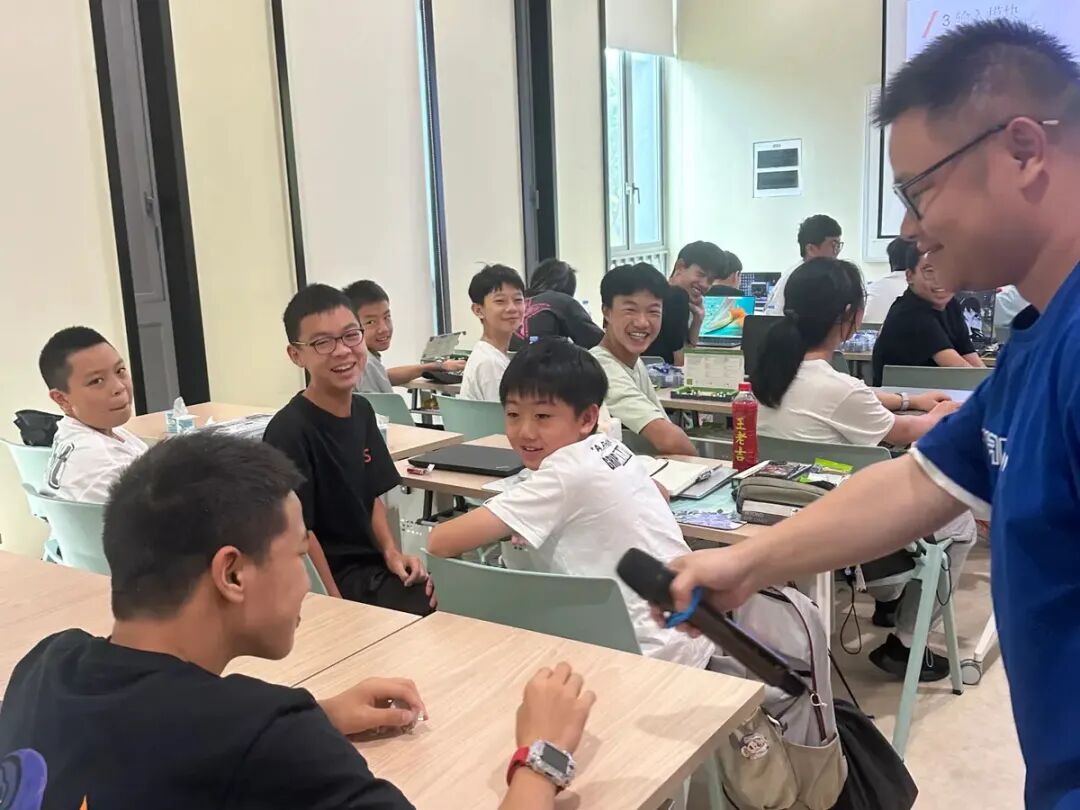
Participants were fully engaged in the open-source hardware project course
Showcase of participants’ open-source hardware project products
At theChaihuo Maker Space, participants learned about the basic principles and operational processes of 3D printing and laser cutting up close. Through on-site demonstrations and explanations, students gained a more intuitive understanding of digital manufacturing and initially learned about the application methods of maker tools.
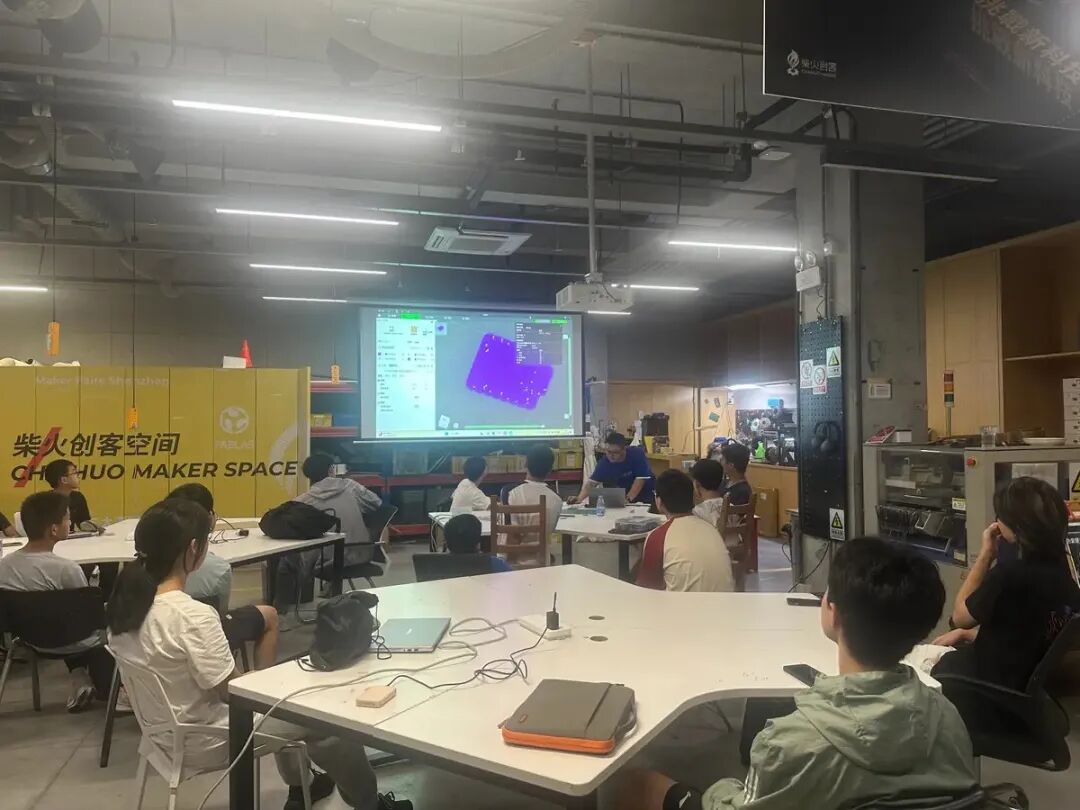
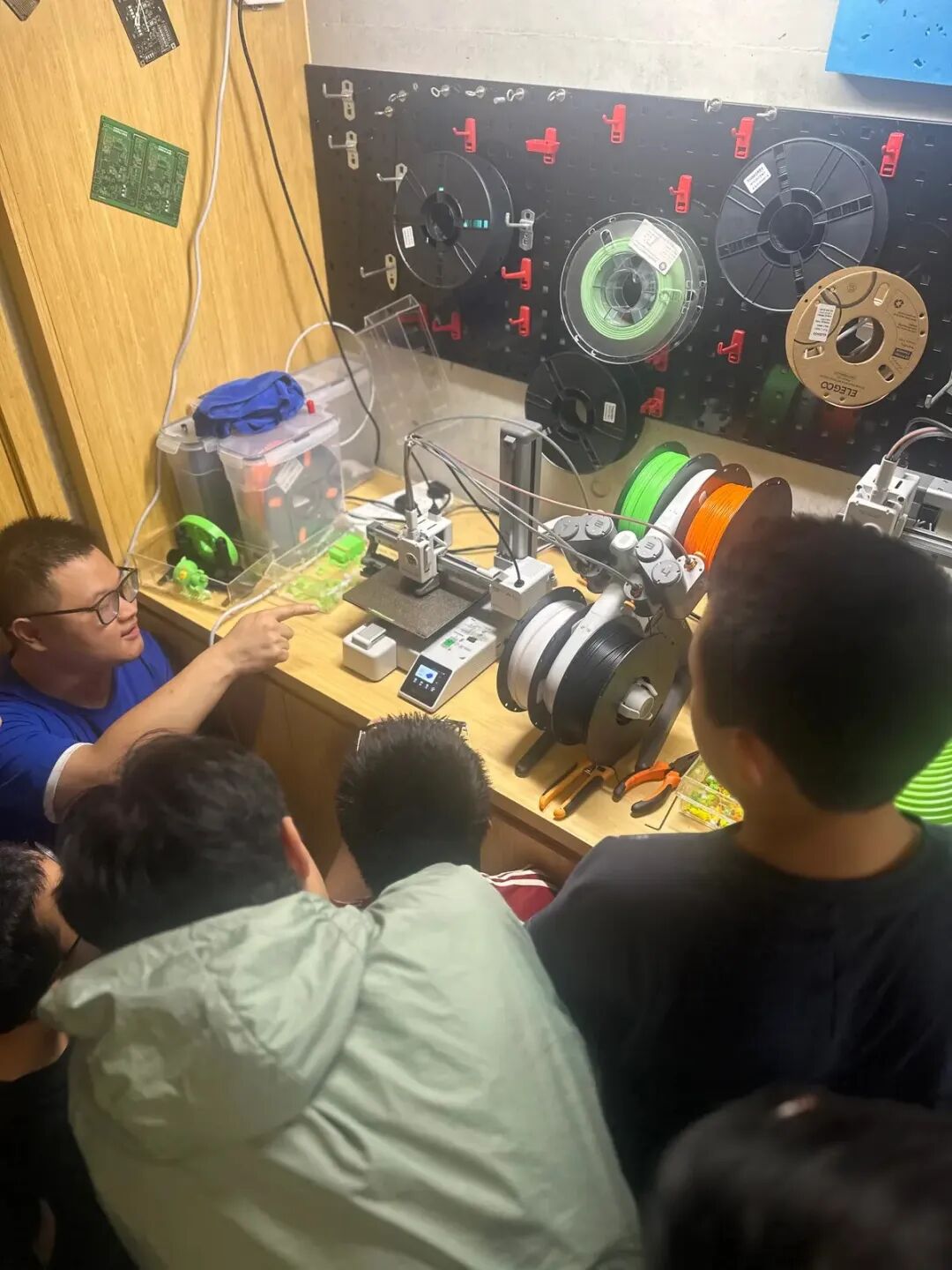
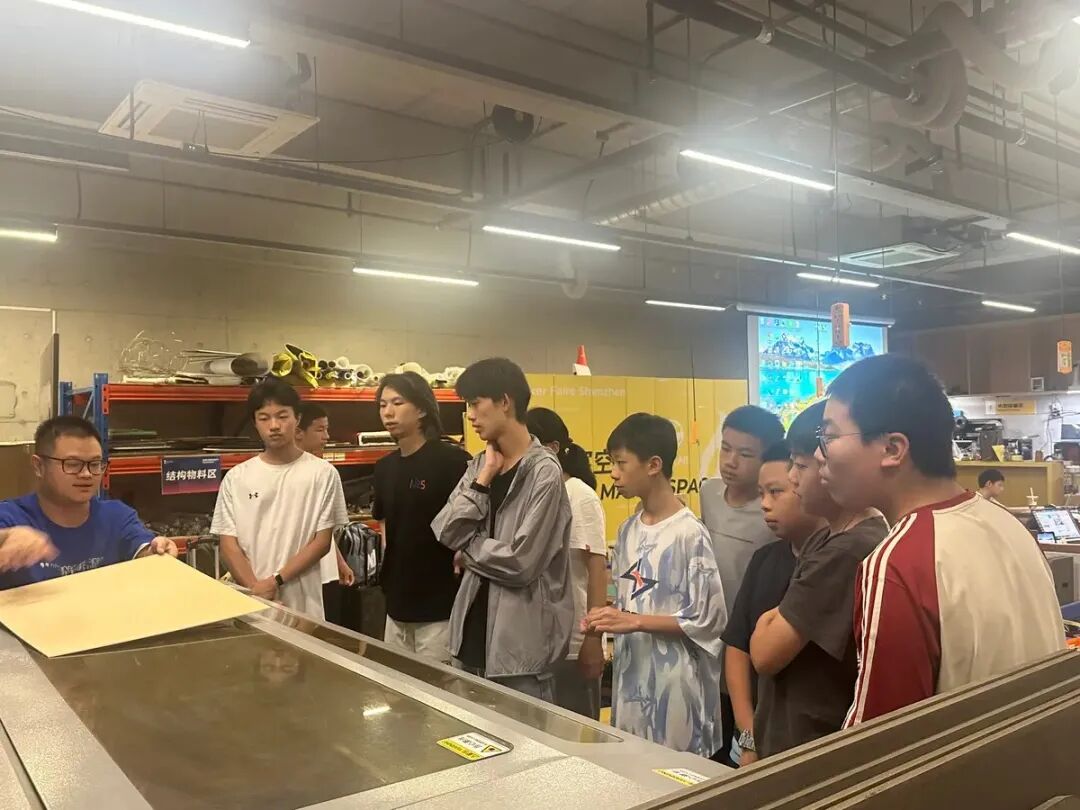
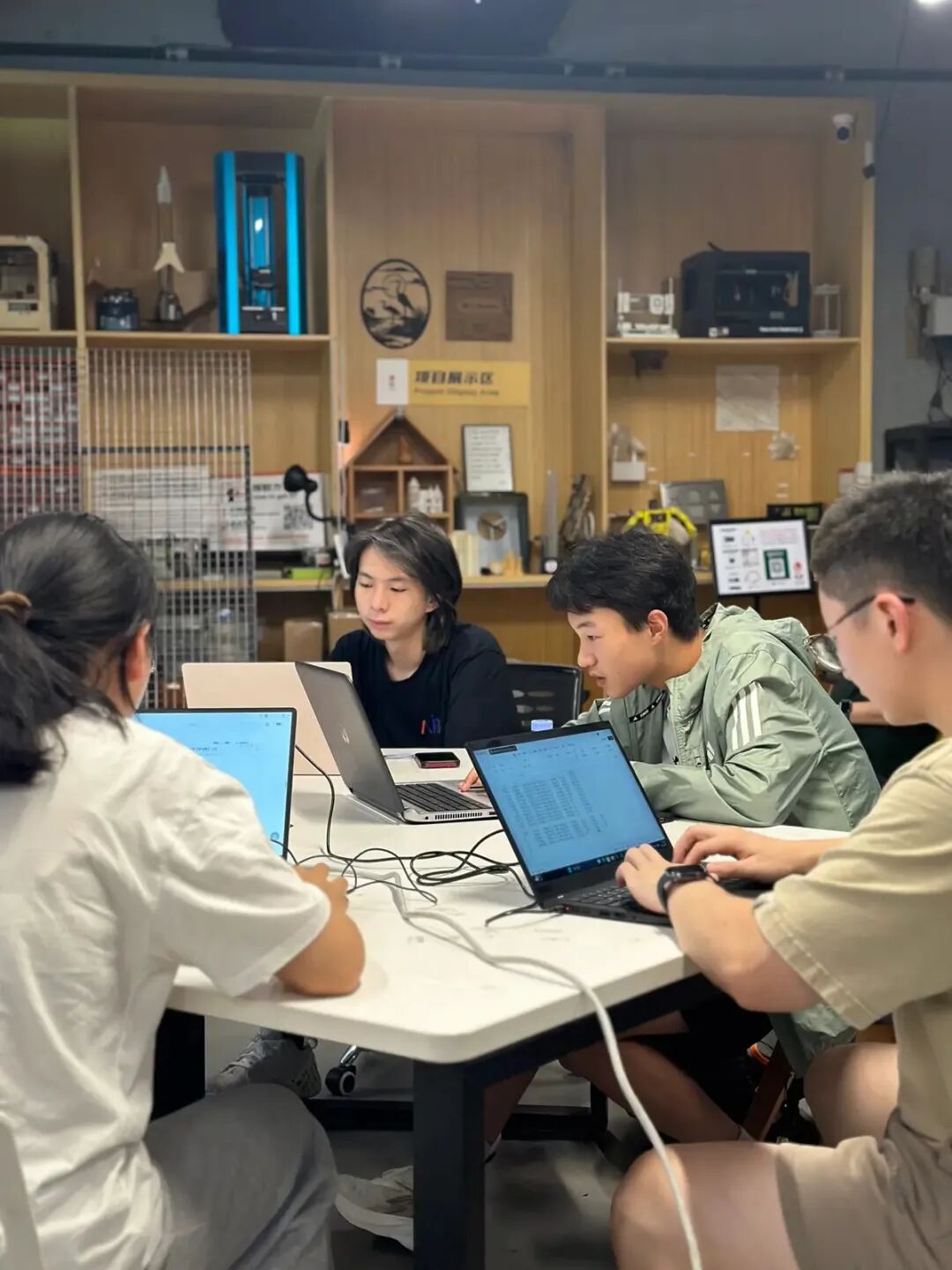
Participants visited and attended classes at the Shenzhen Chaihuo Maker Space
Subsequently, students experienced laser cutting and 3D printing technology under the guidance of their instructors, completing their creative works.
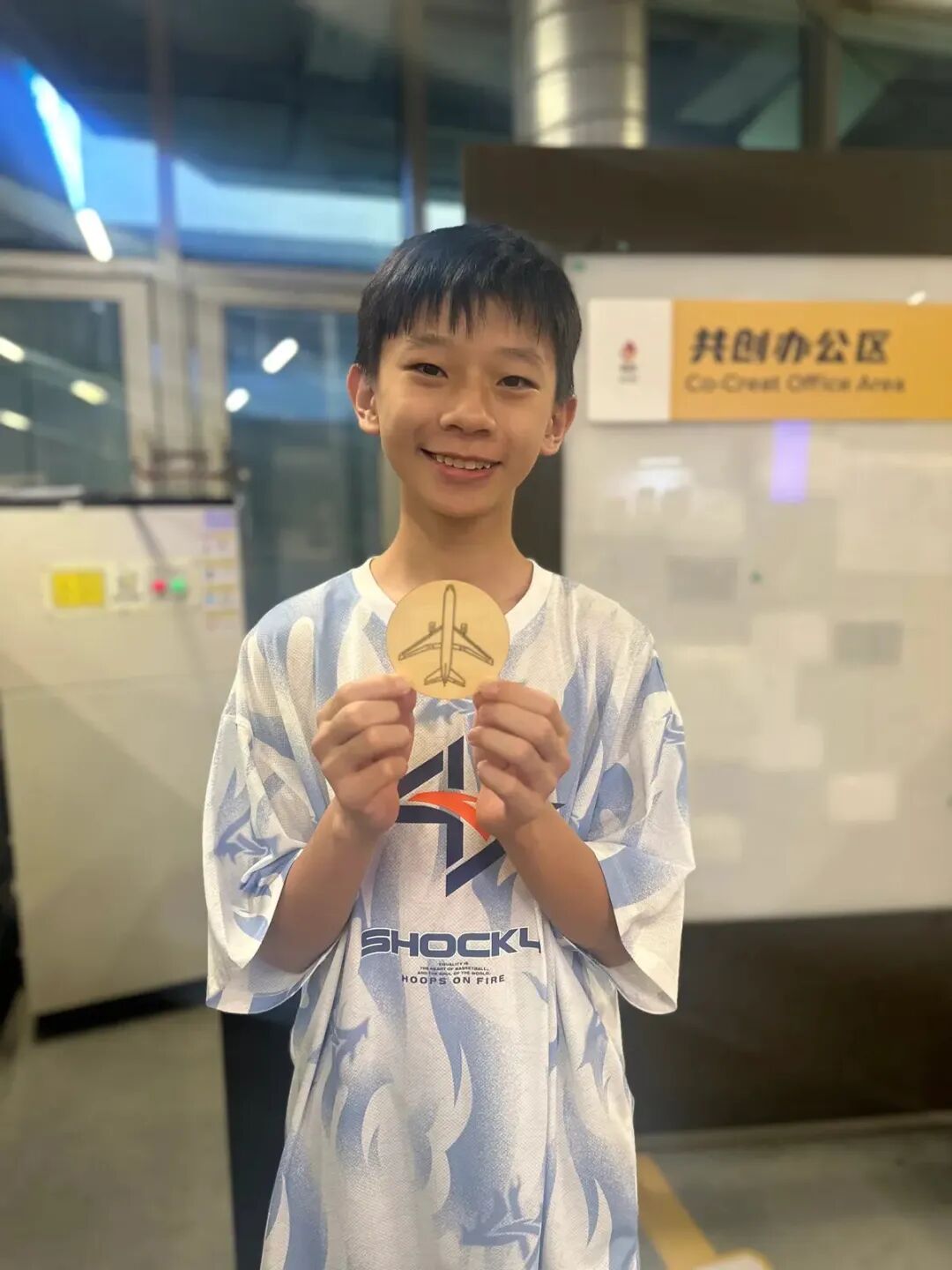
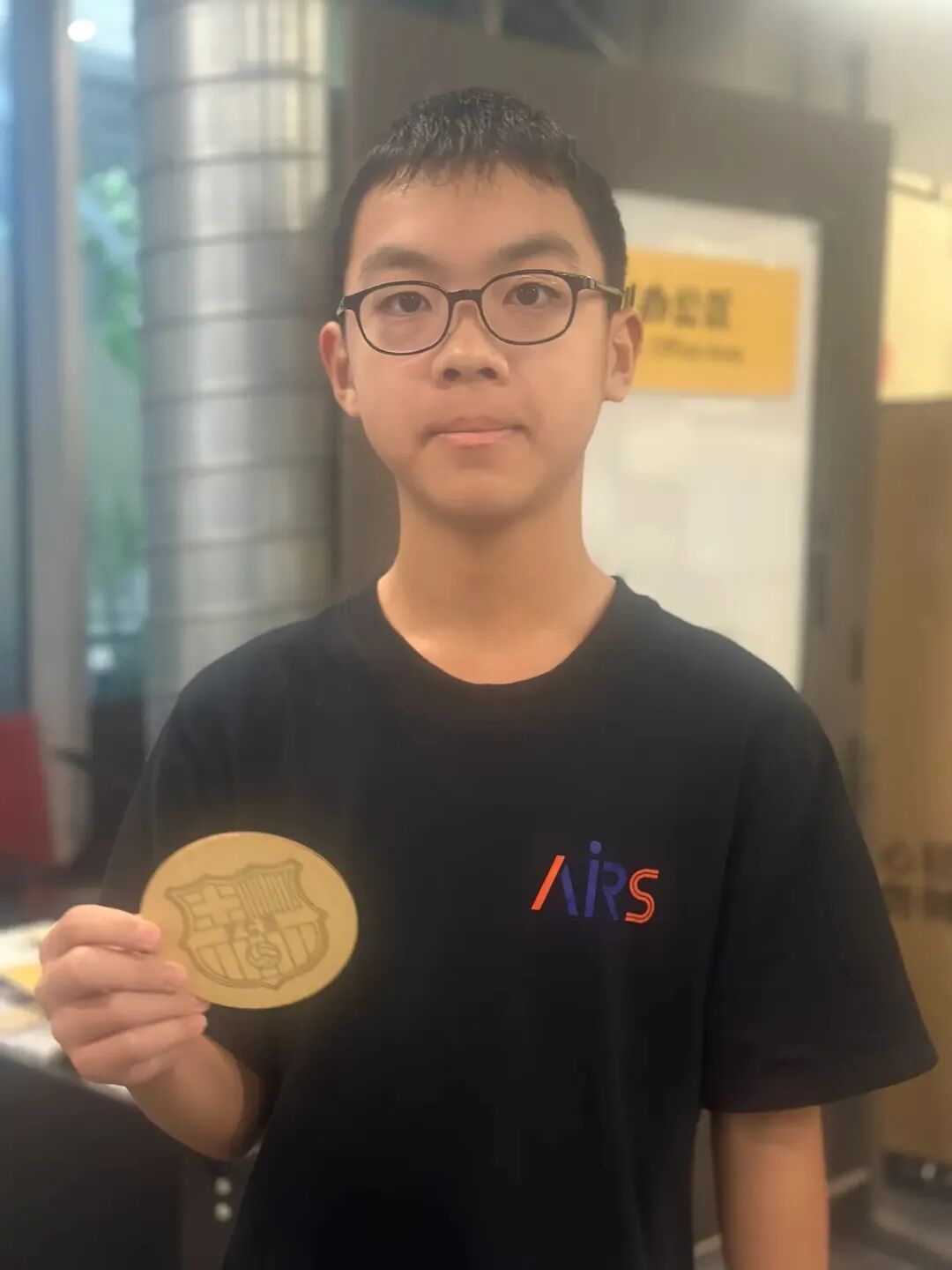
Students’ first attempts at laser cutting products
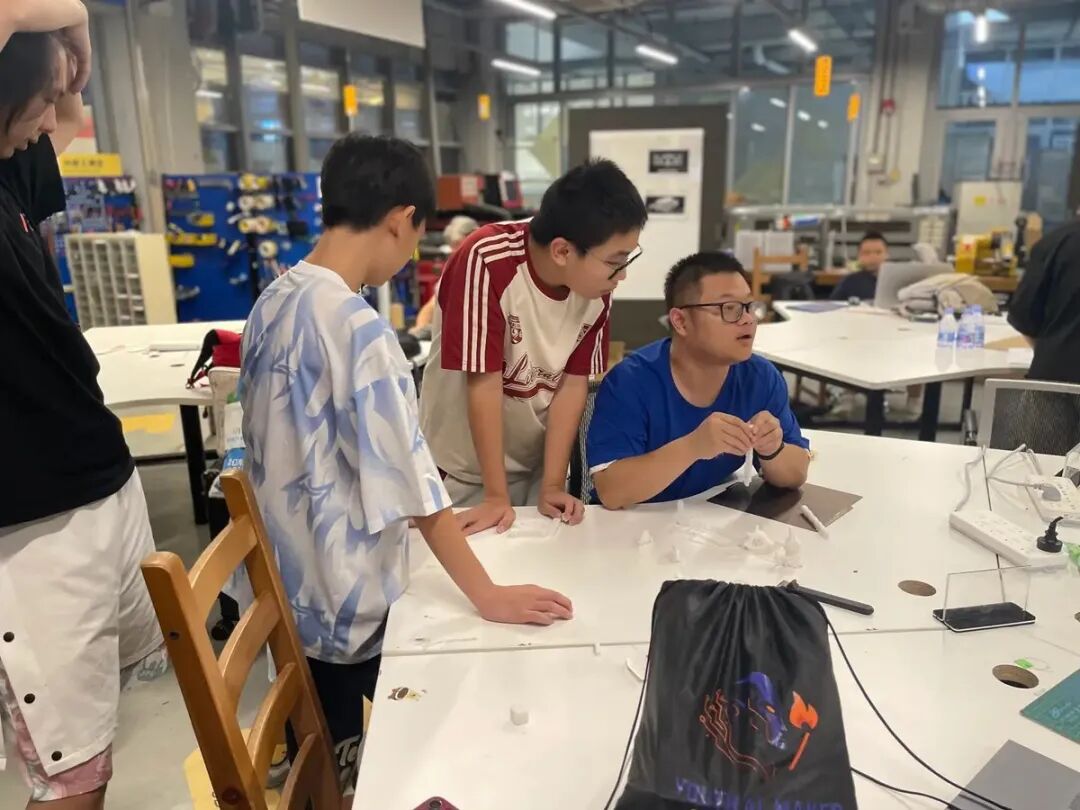
Participants tried 3D printing technology
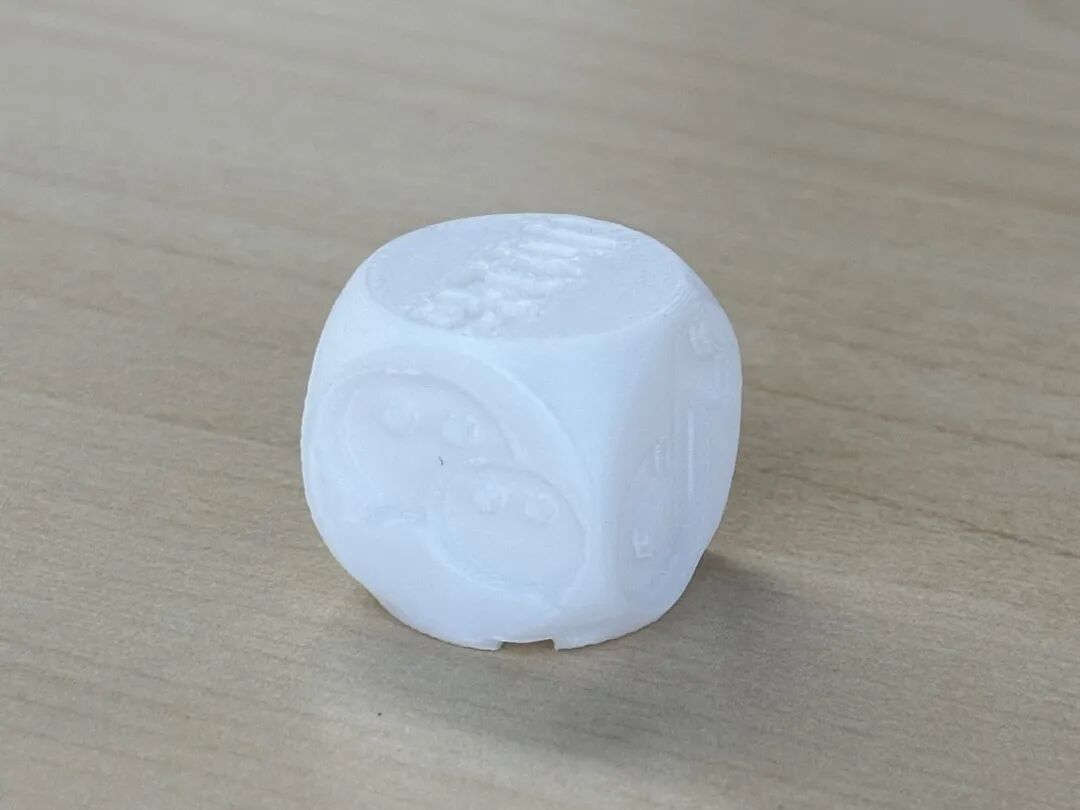
Participants 3D printed a die, with each face printed with logos from various media platforms (the top shows “Xiaohongshu,” the left shows “WeChat,” and the right shows “Douyin”)
Report Presentation and Discussion
In the final report presentation, each participant carefully summarized their project experiences and gained new insights through mutual observation.
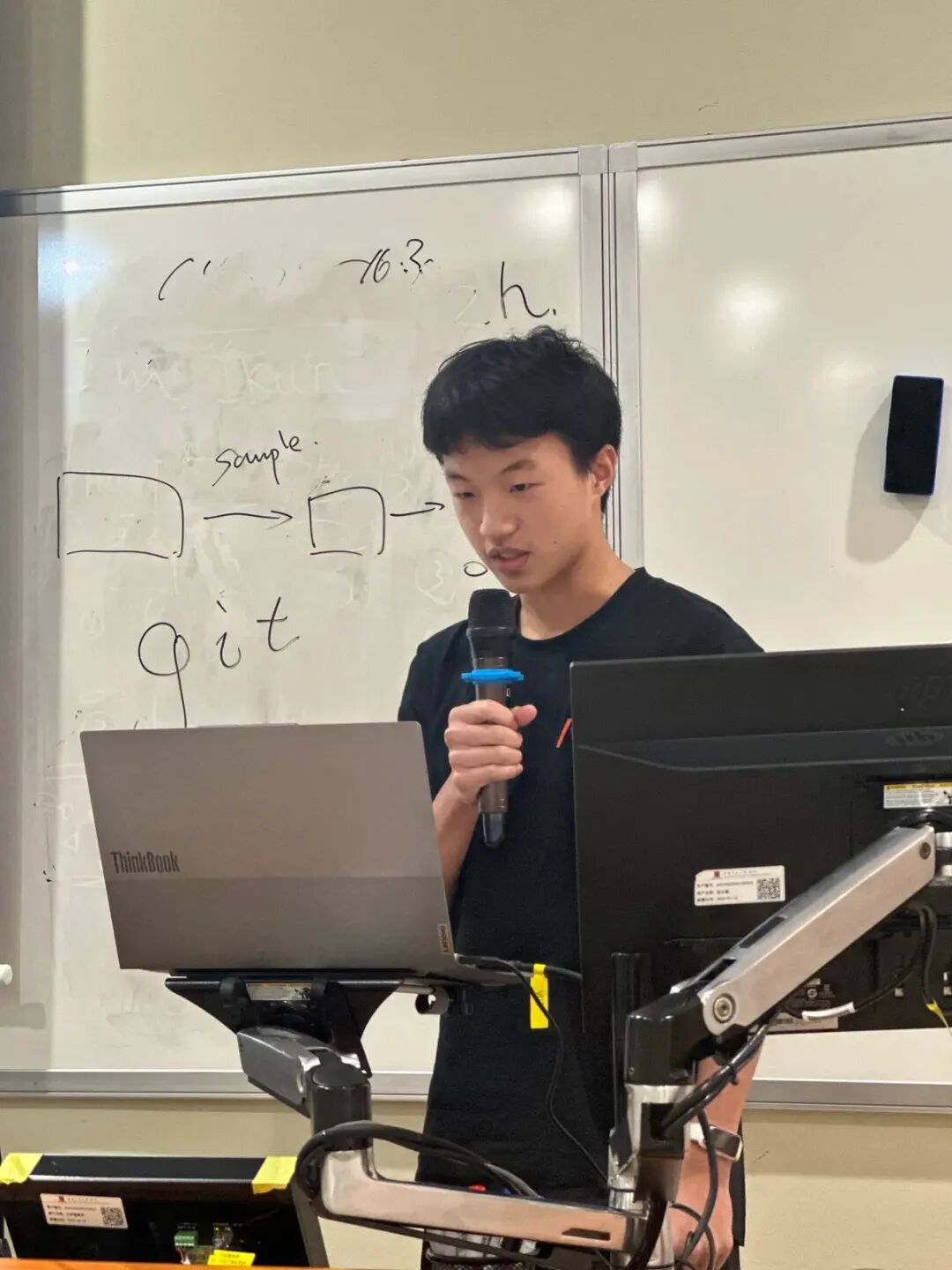
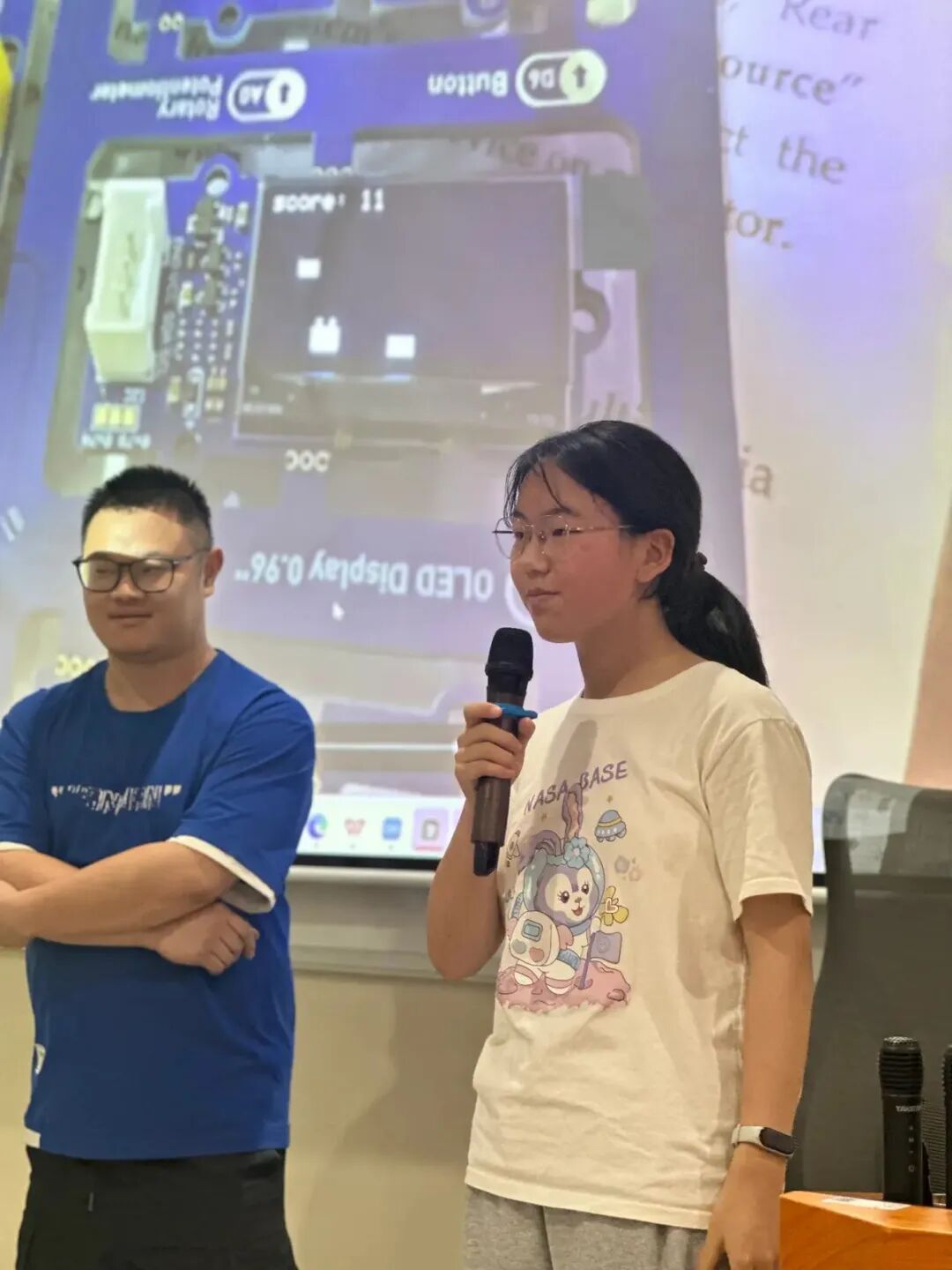
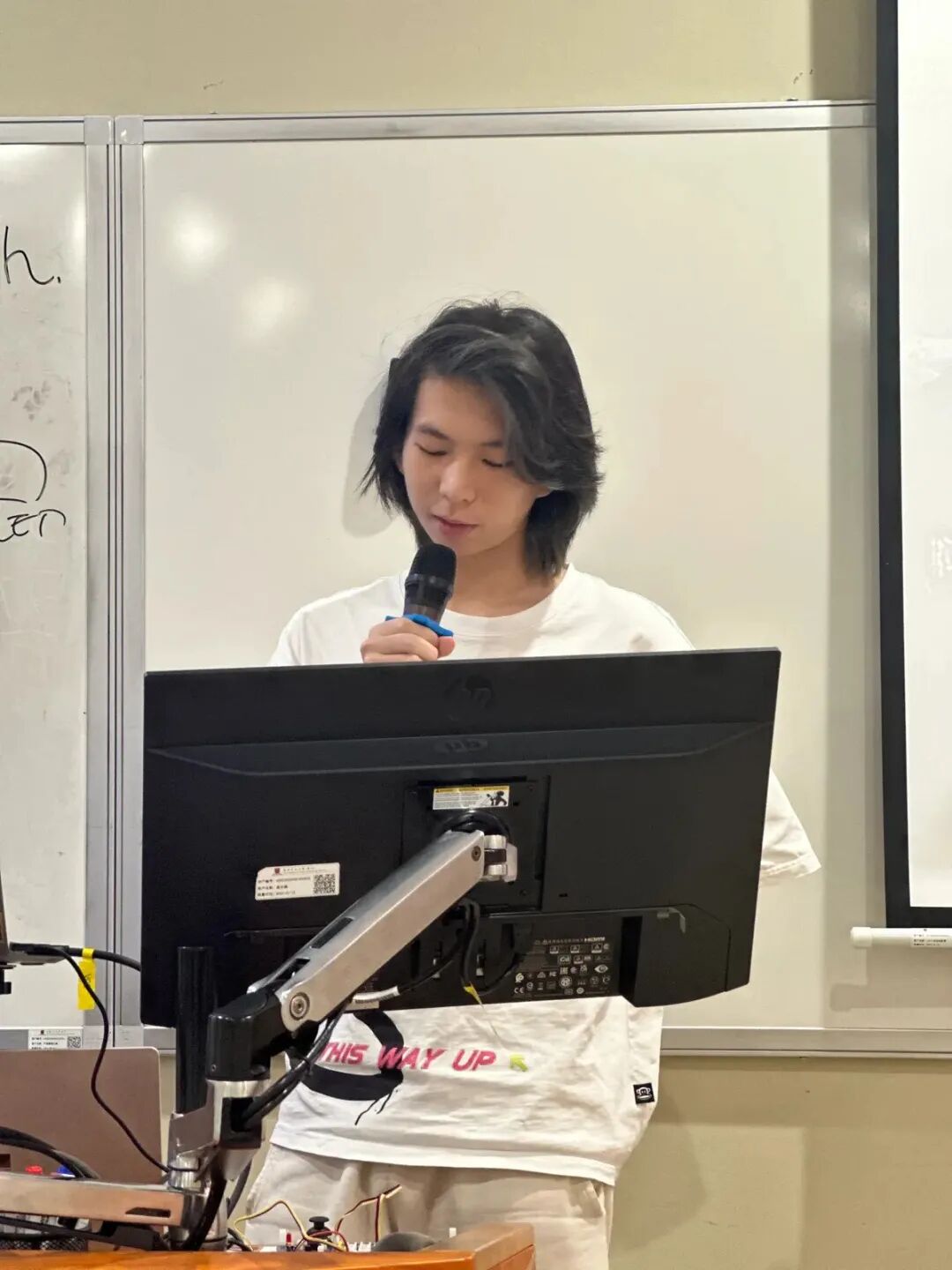
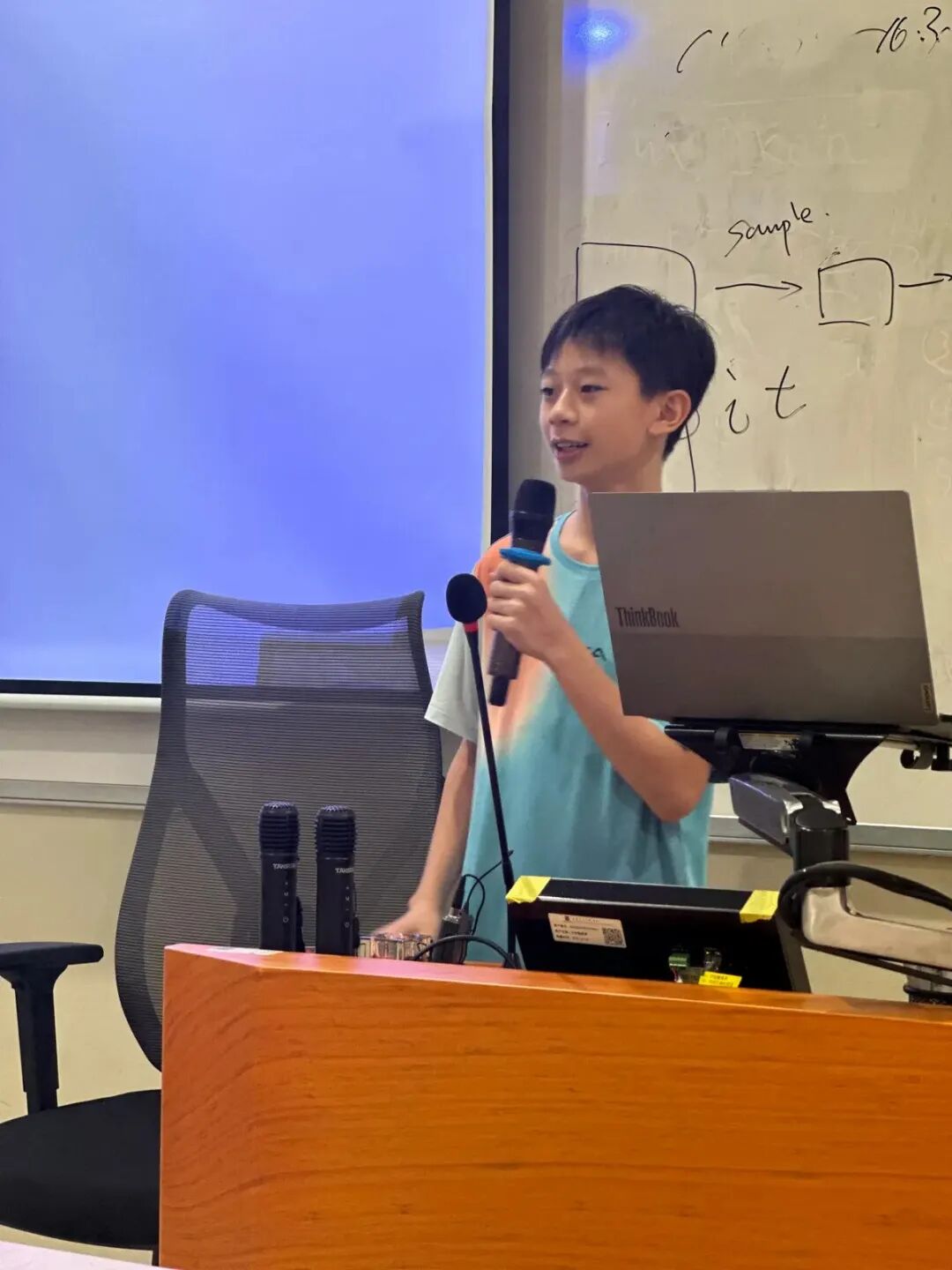
Group representatives presented their results


Student Wang
In the open-source hardware project class, I created a “Obstacle Avoidance” game, inspired by the open-source handheld device mentioned by the teacher, based on the Nintendo GameBoy. I used an OLED screen, buttons, and a joystick to create a score-keeping game.Next, I want to continue improving it; Teacher Lion also supports me, saying that as long as I optimize the program, he can help me make a shell for the game console.I am also very grateful to Teacher Lion.
Besides the technical gains, I feel that the entire summer camp has given me a new understanding of AI. For example, we can now use AI to assist in learning programming; I can ask it how to use Python, which makes it feel easier to get started. I am also more confident in continuing to learn and improve my skills.
More importantly, this is a true “project-based learning” experience. I used to think I couldn’t create anything, but now even a simple little project gives me a sense of achievement, making me feel capable. This feeling of “small success” is fantastic.
Student Jiang
In this open-source hardware practical course, I attempted to create a snake game using the built-in buttons, LED screen, and joystick, also incorporating AI tools to assist in the design. Although the program currently doesn’t run, and the snake can’t turn yet, I am already thinking about how to modify it. I might ask the teacher for help again; some issues might be due to my old computer, haha.
After these few days, I feel that this summer camp experience is quite good. Compared to some previous summer camps I attended, which were mostly superficial and felt like tourism without substantial gains,this one really allowed me to create something, and this project is my own design that I can take home. I plan to continue improving it after I return. This feeling of “creating something” is very meaningful.
Maker Lecture Sharing
Additionally, the project team specially invited a pioneer in the maker movement and a practitioner in the field of smart glasses from Silicon Valley,Mr. Jason Gui Jiahxun, to give a lecture that integrates cutting-edge technology with real entrepreneurial experiences.
Mr. Gui has been deeply involved in the smart glasses field for12 years. In 2016, he developed the smart glasses product Vue, which launched on the crowdfunding platform Kickstarter, attractingover 10,000 supporters and raisingover $2.2 million. Currently, the product’s annual sales have exceeded 100,000 units, sold in over 100 countries worldwide.
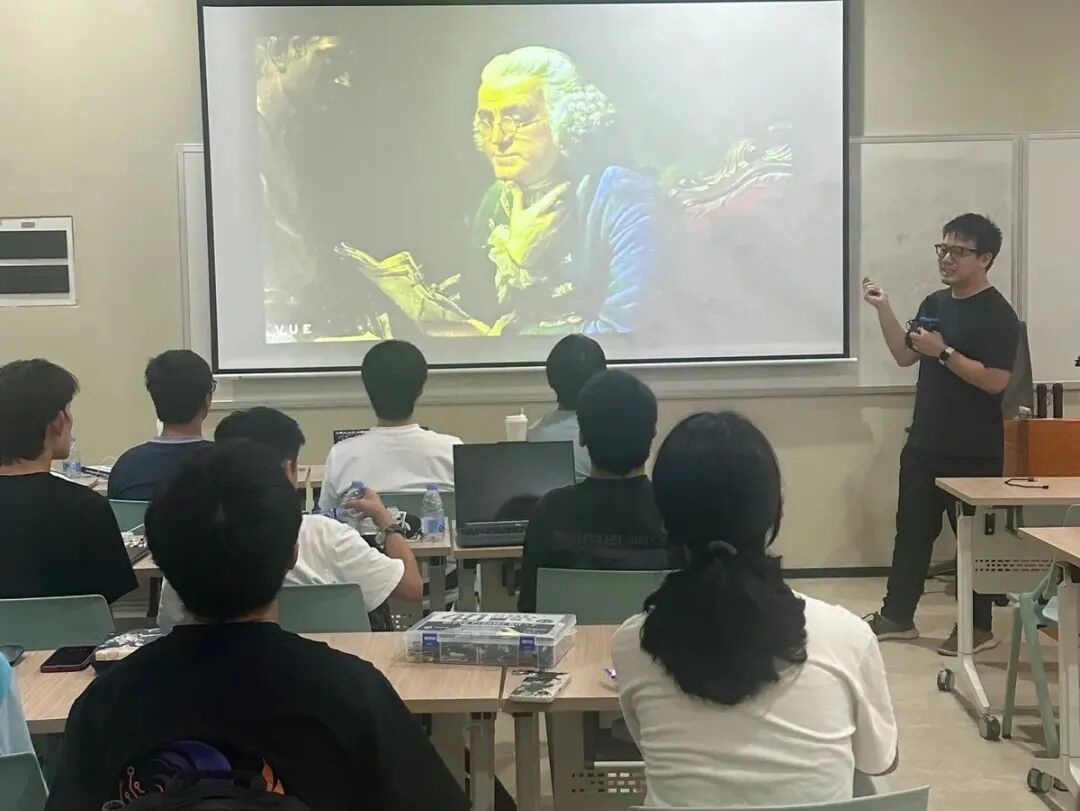
Mr. Gui explained the Vue smart glasses to the students
During the lecture, as the developer of Vue smart glasses, Mr. Gui combined his over ten years of practical experience in the smart glasses field to discuss with students“How technology responds to real needs”, and through the new project Captify aimed at the hearing-impaired,guided students to think about the integration path of AI innovation and social value.
During the demonstration, Mr. Gui presented the physical smart glasses, inviting students to try them on and experience the product’s form and interaction design. During the experience, students noticed that the frames of the smart glasses are thicker than ordinary glasses. In response, Mr. Gui explained that this is due to the integration of multiple key hardware modules inside the glasses, such as sensors, batteries, and chips. However, with technological advancements, the devices will continue to iterate and optimize, moving towards a lighter and more user-friendly design.
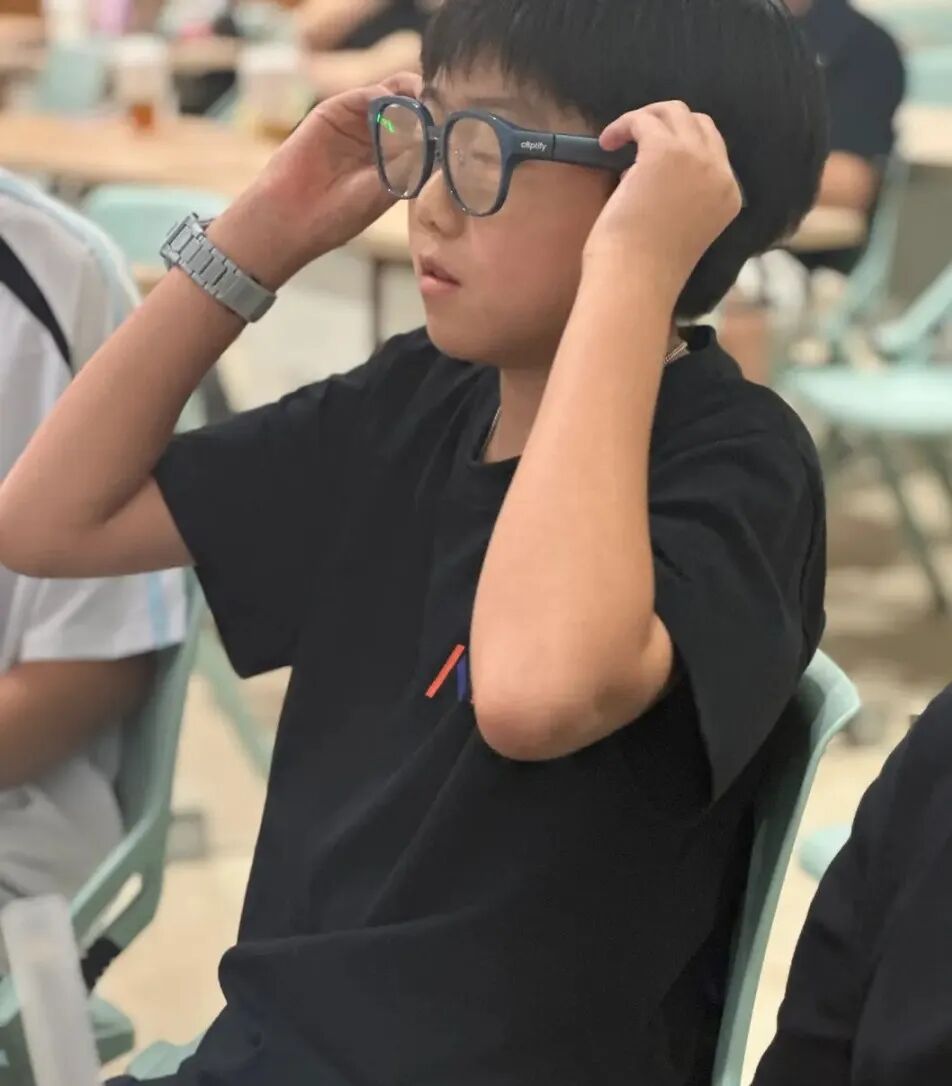
Participants experienced trying on the smart glasses
This lecture not only broadened students’ understanding of smart hardware but also stimulated their in-depth thinking about the concept of“Technology for Humanity”. Faced with real products and real needs, technology is no longer an abstract knowledge point but a tool that can be constructed, experienced, and ultimately has social impact.
03
Field Trip Activities
On the second day of the camp, participants visited the Shenzhen Chaihuo Maker Space, Youai Zhihui Robot Technology Co., Ltd., and the AIRS laboratory and technology-art joint exhibition hall for exchange activities.
During the visit to theAIRS laboratory located in Longgang, participants gained in-depth knowledge of several cutting-edge robotics research projects and practical application cases. From micro-nano robots and bridge inspection robots to heterogeneous robotic systems with multi-machine collaboration capabilities, these forward-looking research directions opened up broader cognitive perspectives on robotics technology for students.
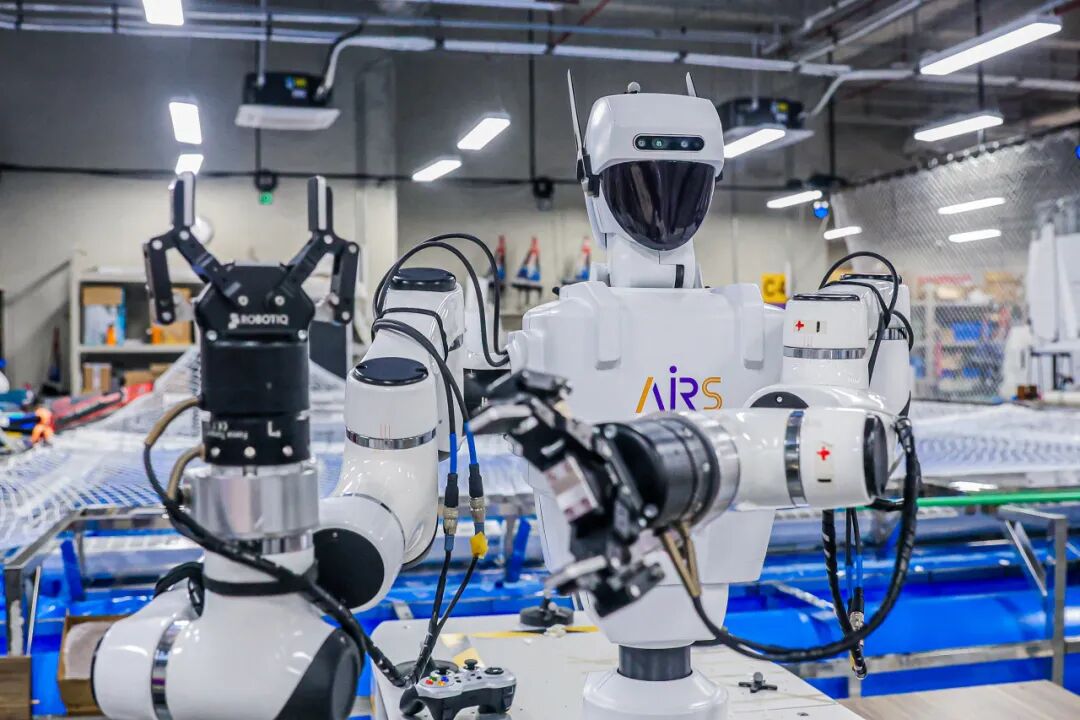
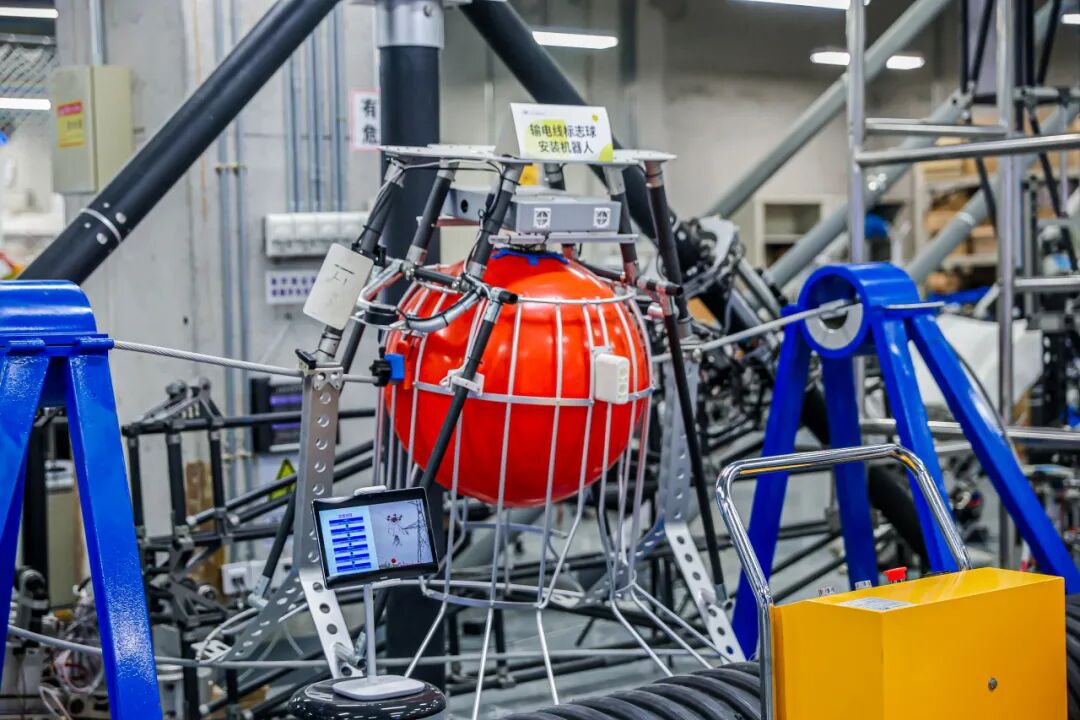
AIRS laboratory display (partial)
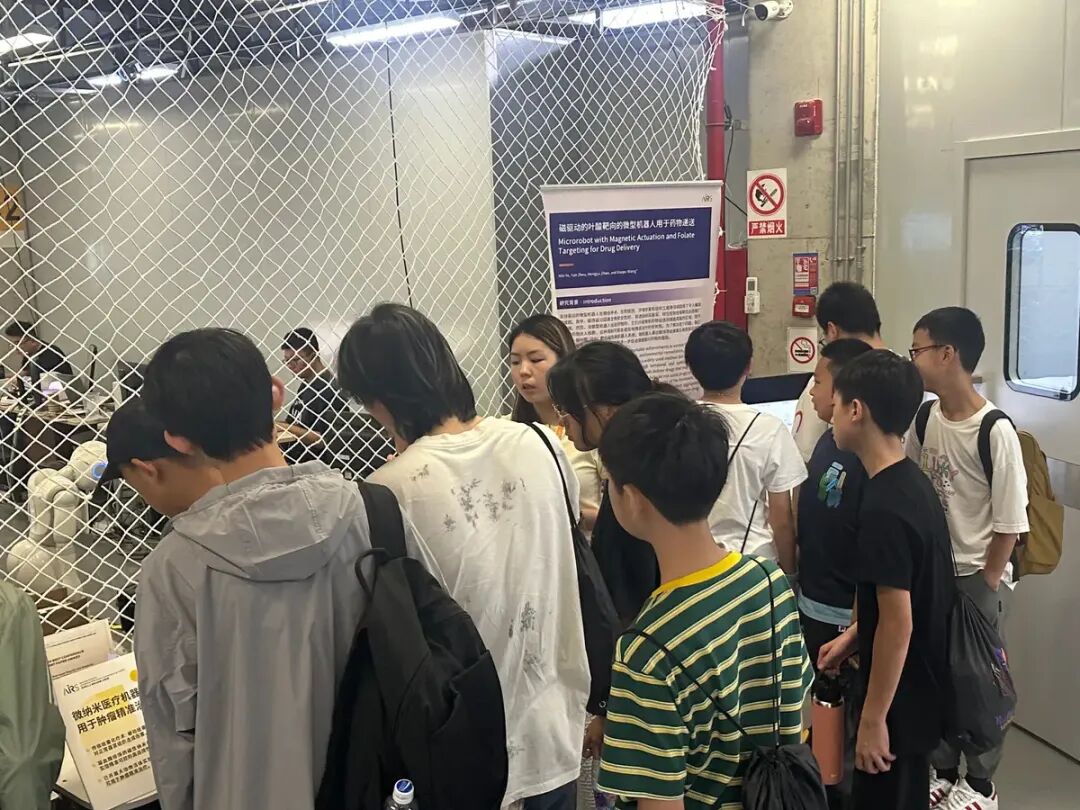
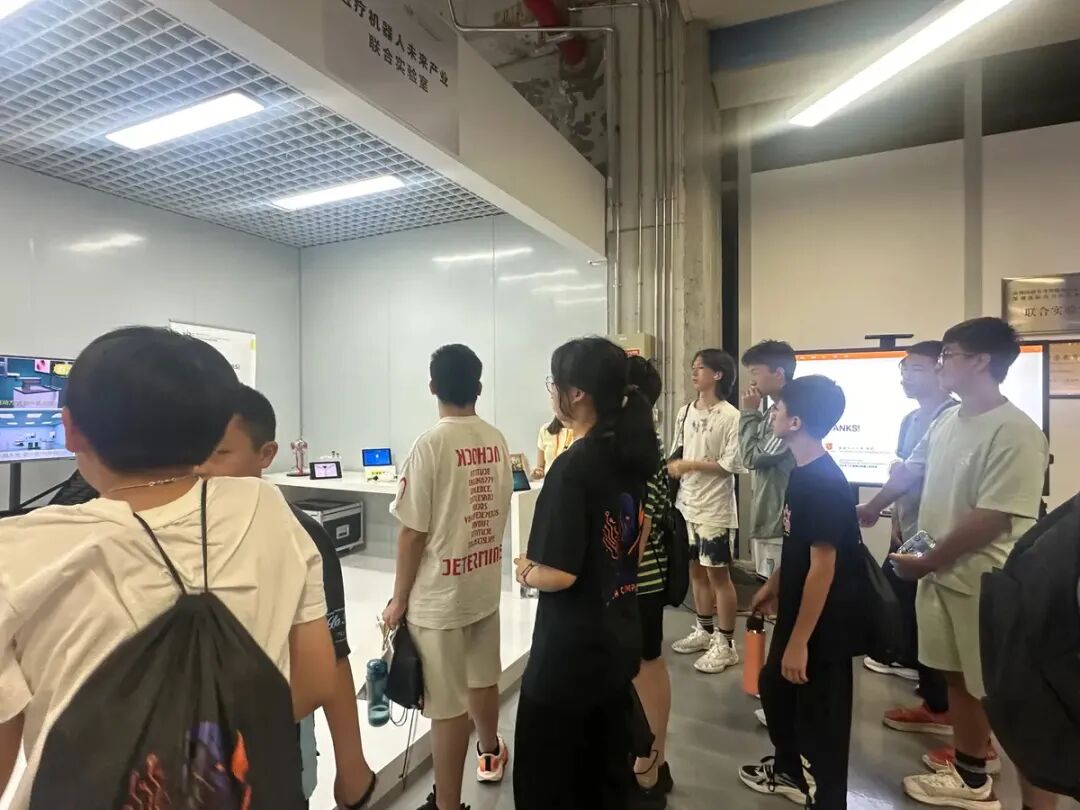
Participants visited the AIRS laboratory under the guidance of the instructor
AIRS Technology-Art Joint Exhibition Hall was also open to participants during this summer camp. The interactive installations and diverse exhibits displayed in the hall not only showcased the cross-border integration of artificial intelligence and robotics in the field of art but also encouraged students to understand the relationship between technology and creativity from a broader perspective, stimulating their imagination about future technology.
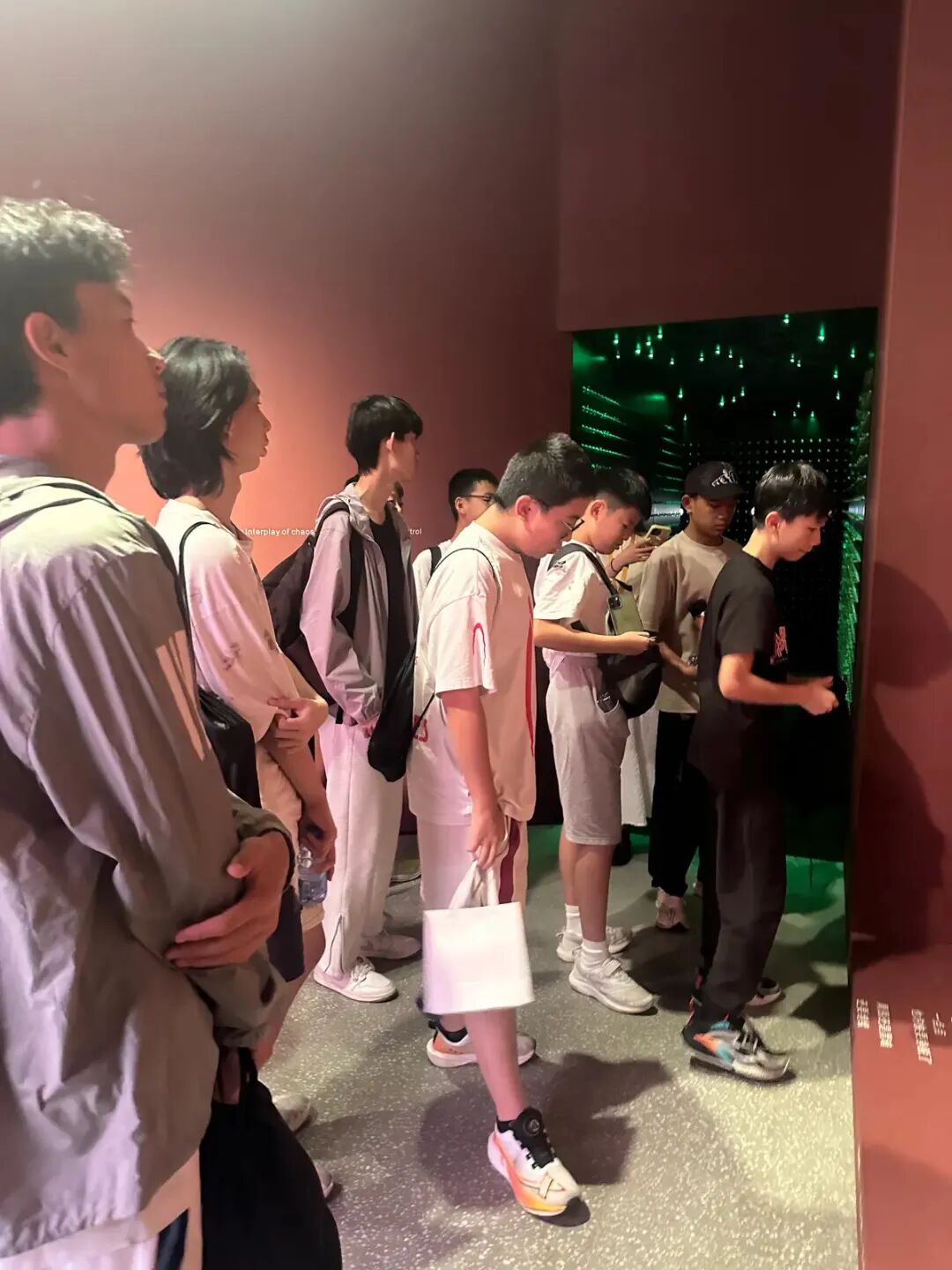
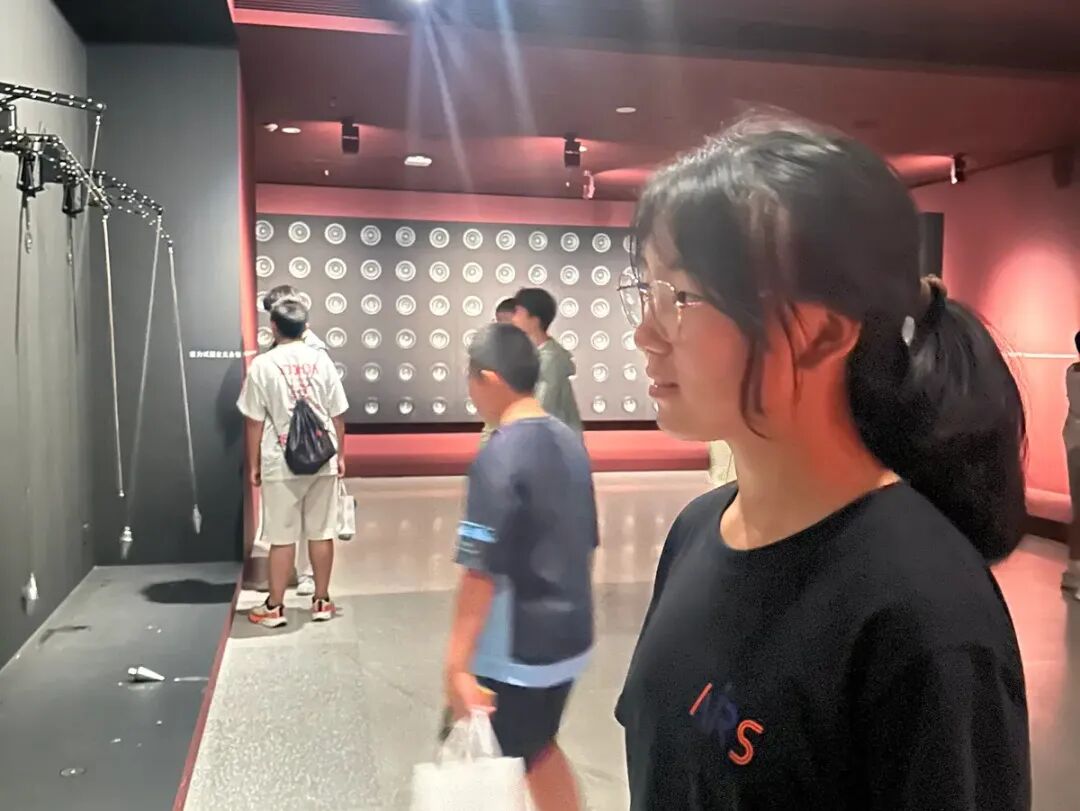
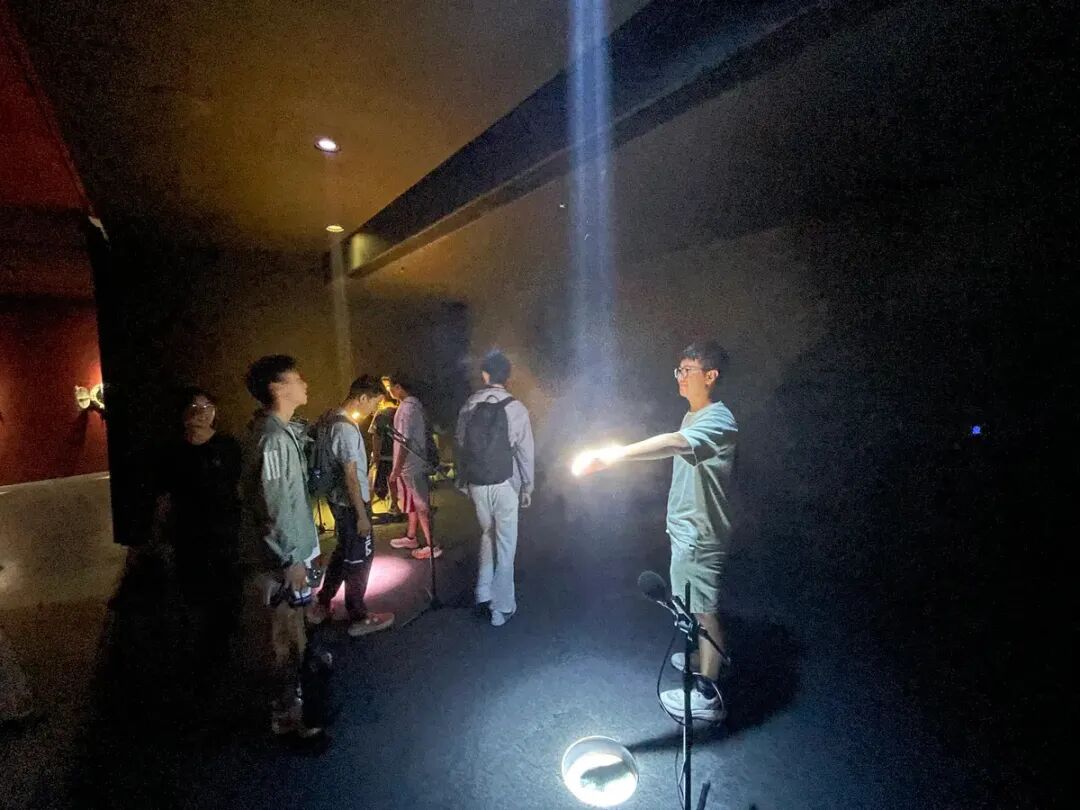
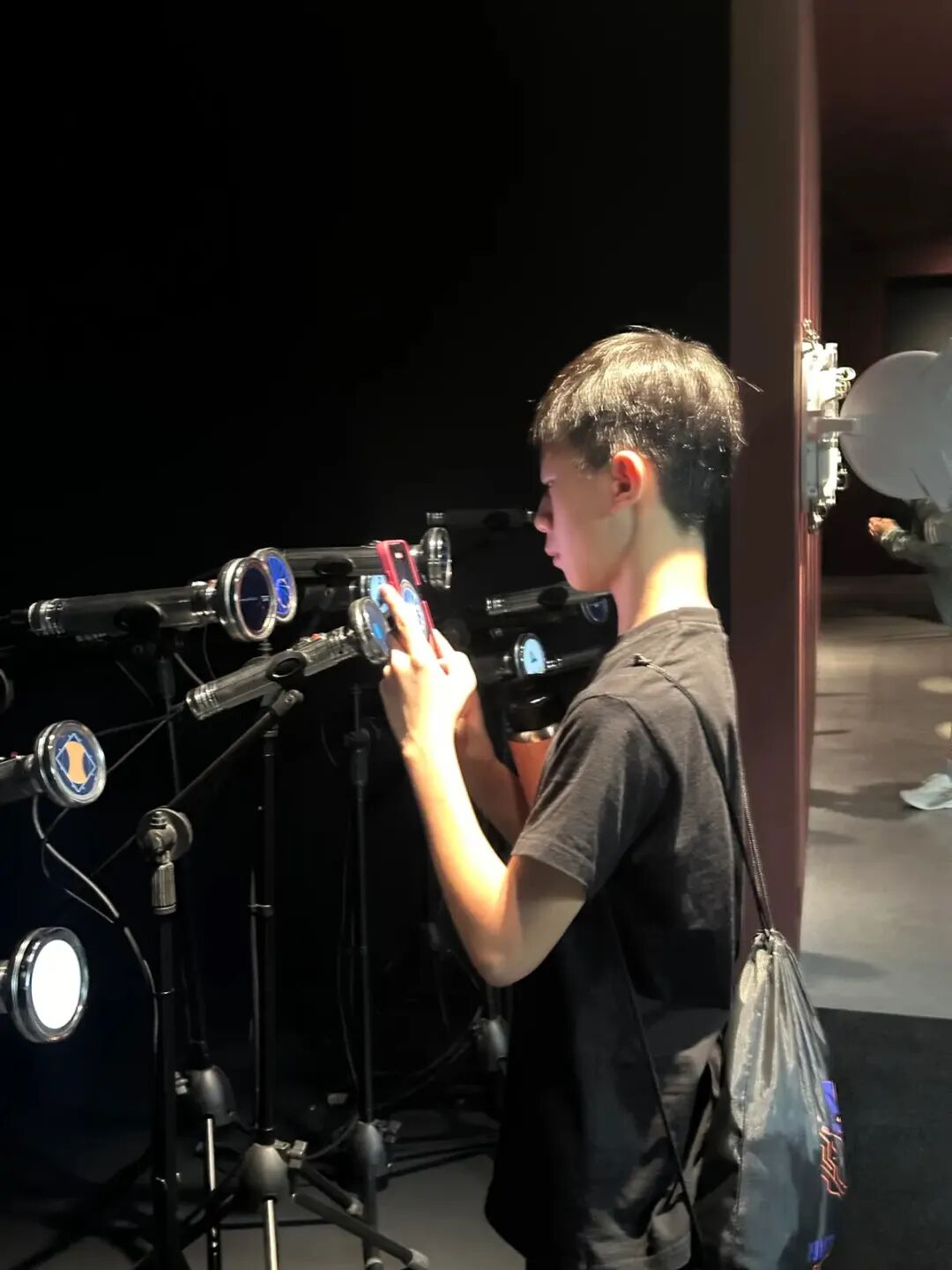
Participants interacted with the exhibition items
As an important base for technological innovation, Shenzhen has a solid foundation in the artificial intelligence and robotics industry, which also provides rich corporate visit resources for the study program. Participants visitedYouai Zhihui Robot Technology Co., Ltd., gaining in-depth knowledge of the company’s research and development achievements and application layout in the robotics field.
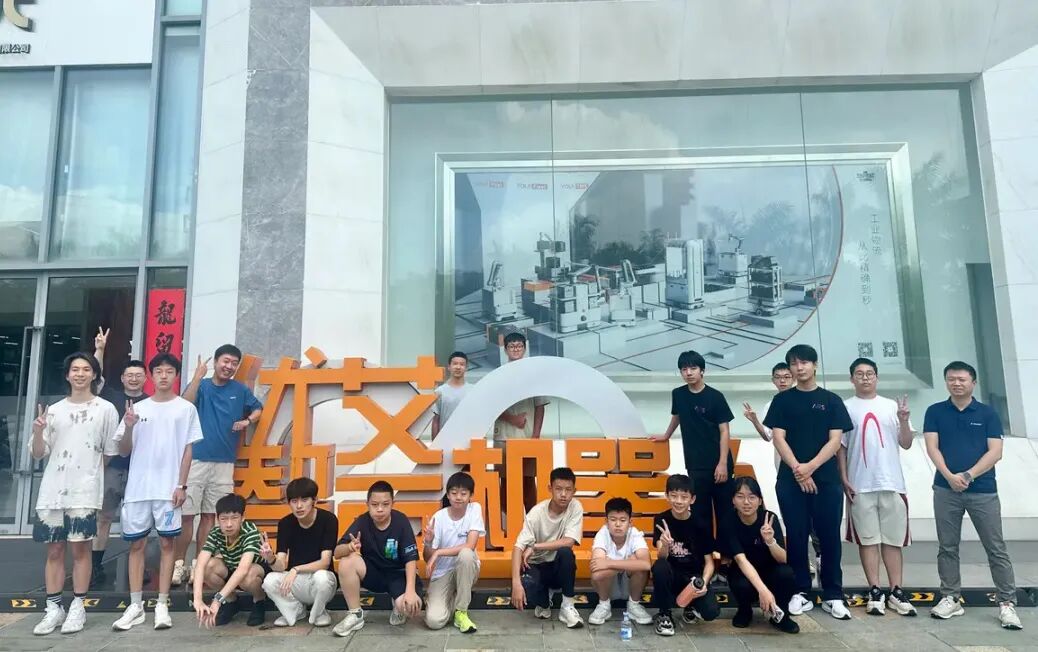
Group photo during the visit to Youai Zhihui Robot Technology Co., Ltd.
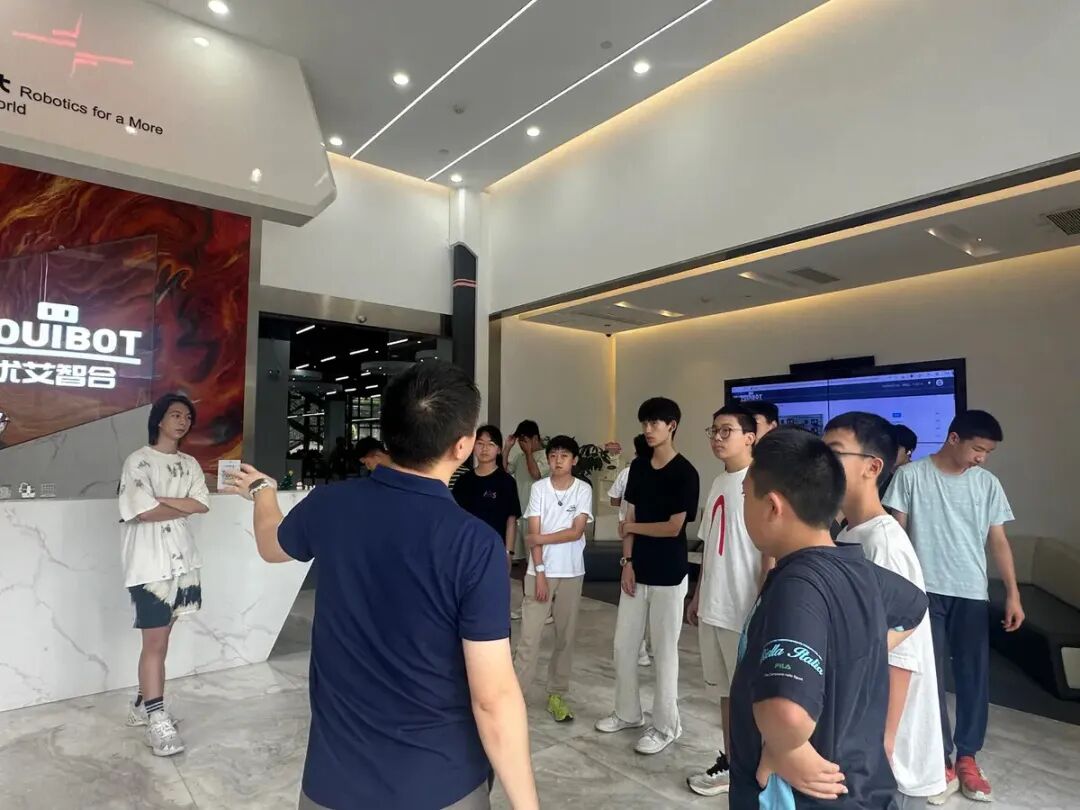
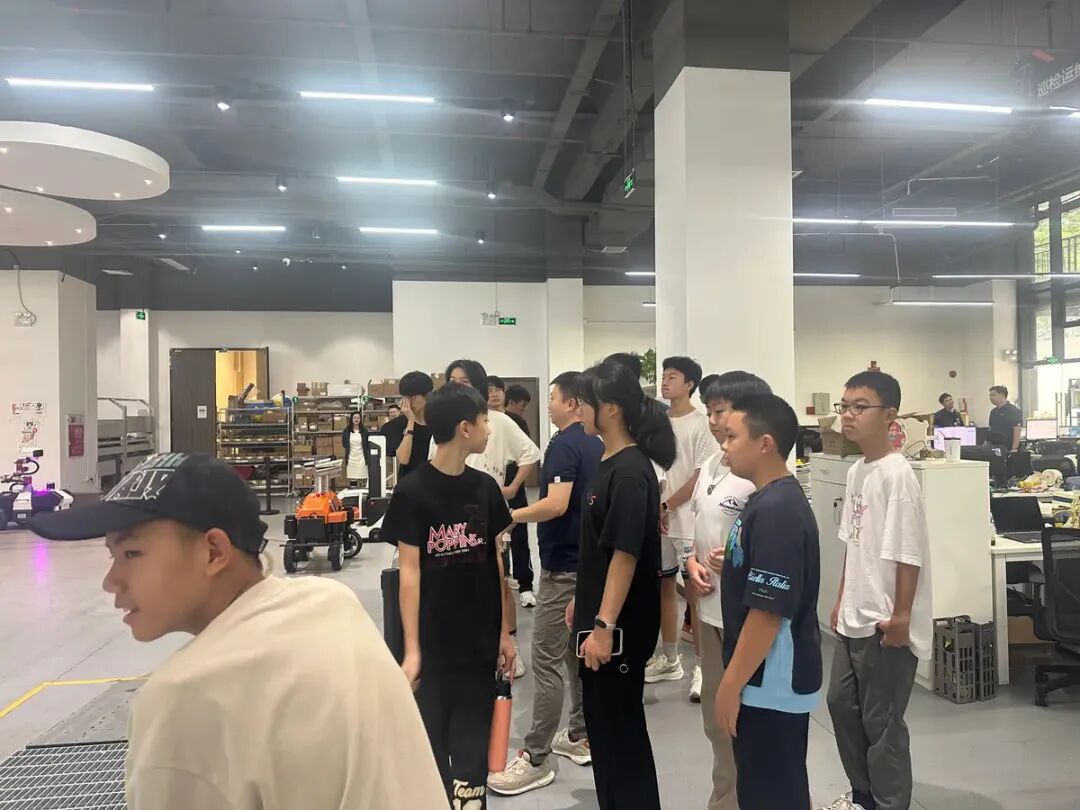
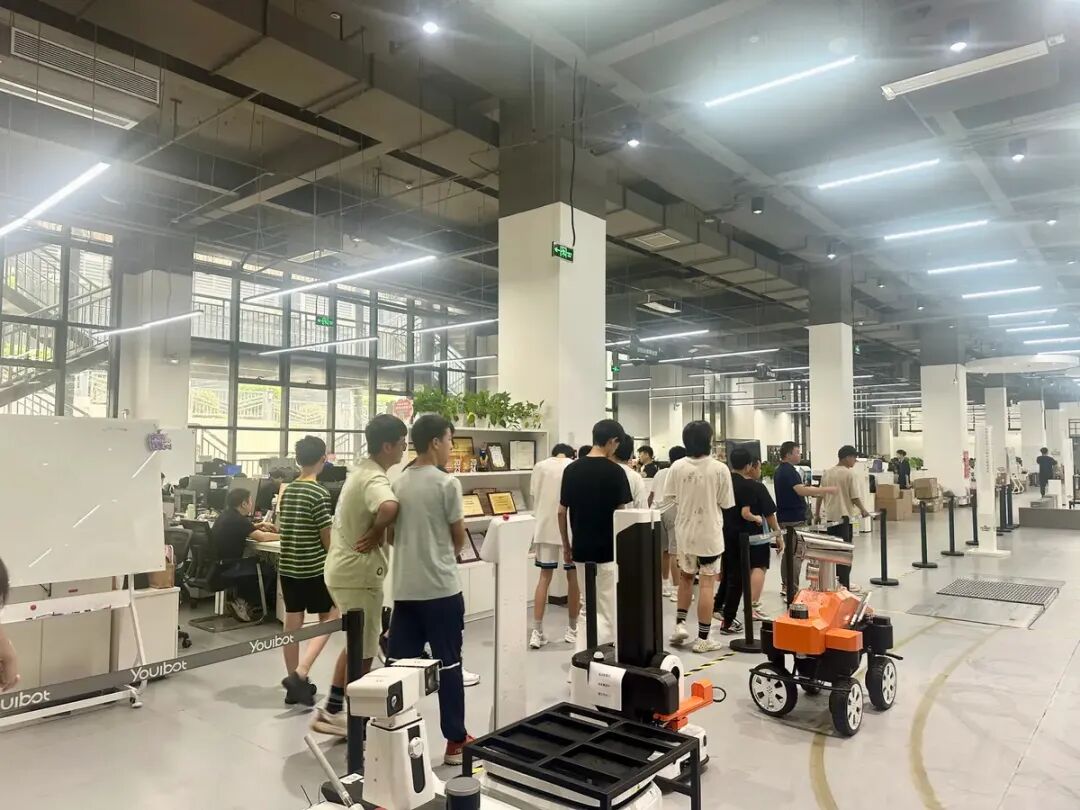
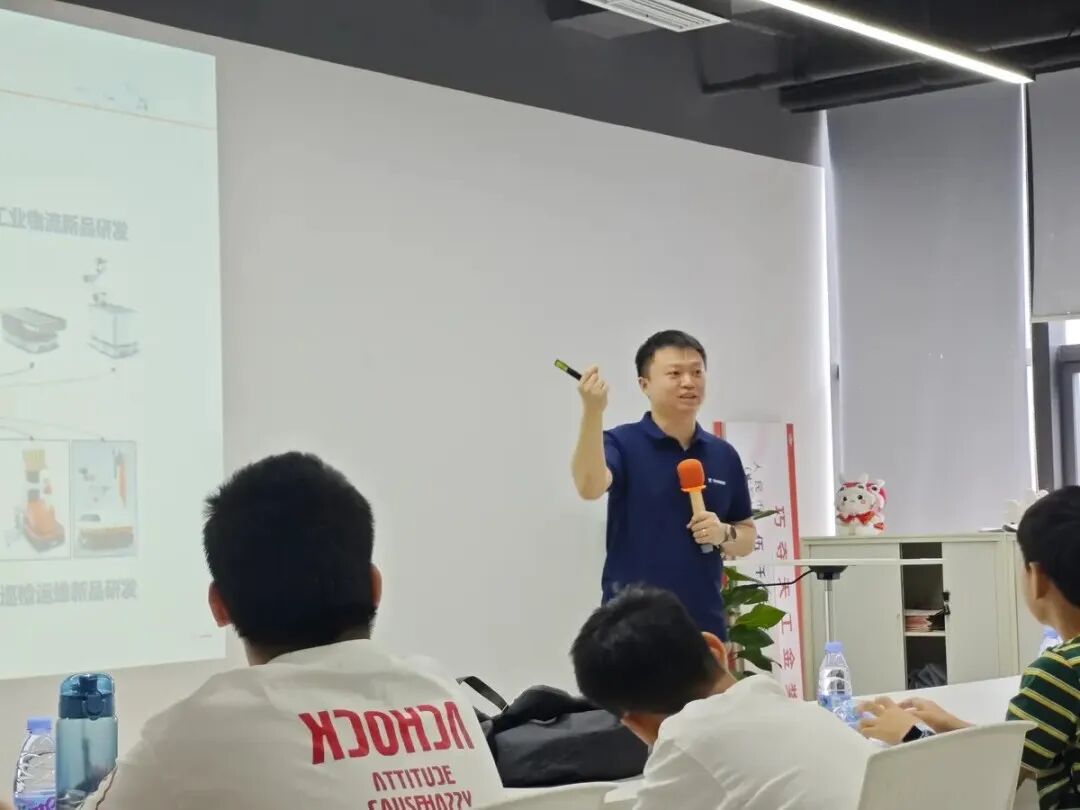
Participants were fully engaged in the open-source hardware project course
04
Participant Feedback
After a compact and fulfilling five-day course and practice, many participants expressed that they gained a more intuitive understanding of artificial intelligence and robotics, and had new thoughts about their future learning directions.
To gain deeper insights into the students’ real gains and feelings, we conducted brief interviews with some participants to hear their feelings and growth.

Student Sun
I think the entire summer camp experience was very good. We not only learned AI and programming knowledge but also hands-on made Arduino projects, expressing creativity to create our own works. There was also a movie that left a deep impression on me, telling the story of how students face challenges and persist in completing tasks. It made me feel that as long as I persist and work hard, there is no problem that cannot be solved, and it reminds meto dare to try, seize opportunities, and not be afraid of difficulties in the future.
Student Cai
I found this summer camp particularly interesting and learned a lot of practical knowledge. We were exposed to many software tools, such as Arduino and Cursor, which allow us to write code and upload it to hardware for execution. I learned how to use Python or C++ to control hardware to achieve the functions I wanted,which felt really rewarding and made me more interested in programming and robotics.I hope the next camp can be longer!
Student Zhou
Cai and I are roommates, and we feel very connected. During the summer camp, I found the most interesting part was when we created a “timed bomb” project, which was of course simulated, using a buzzer on the hardware controlled by code to beep every second, similar to an alarm sound. We also collaborated on editing some small programs, using AI to assist in programming, and then checking and modifying bugs ourselves. Additionally, we learned how to connect various parts of the hardware to make it work.I found the entire process particularly fun.
Student Luo

Participating in this summer camp activity was great. It broadened my horizons and gave me a deeper understanding and learning of AI and hardware, mastering some new knowledge and skills.The biggest gain was finding an entry point of interest; before coming here, I didn’t know much about open-source hardware and had a vague idea that I needed to learn and understand technology. However, after coming here, I found that I am quite interested in hardware, especially the servo.
When discussing the performance of this group of students, the teacher expressed full affirmation and appreciation:
This group of students overall possesses a certain foundational ability, and their understanding of technology and practical performance exceeded expectations. In project design, some students demonstrated good creativity and hands-on ability, and their works also had many surprising highlights.
—— Teacher Lion
Not just these few students, every participant has left precious memories during this journey.We look forward to meeting again in the future and hope more technology-loving partners will join us to embark on a new exploration journey together!
Follow us to explore innovative education in the AI era
Editor & Layout: Song Mengwei Interview & Photography: Pan Mengting Review & Proofreading: Ou Huijing