
Essential Books for Mastering PLC
(Download eBook link)
 PLC is an industrial microcomputer. When it malfunctions, the first step is to determine whether the issue lies with the PLC itself or the peripheral devices. If the PLC has a problem, the ERR light will often illuminate, or a red light will flash. The normal state is indicated by a green RUN light. If such issues occur within the PLC, the probability of successful repair is low.Some PLCs maintain data through an internal battery. When the battery voltage drops below a certain threshold, a battery alarm indicator will light up, indicating that the battery needs to be replaced. This replacement must be done while the PLC is powered on. If the battery is completely dead or if the replacement is done without power, it can lead to RAM data loss, necessitating a refresh of the program and data. Therefore, regular maintenance of the PLC should include backing up programs and data; otherwise, critical moments may arise when reprogramming and debugging are the only options left.
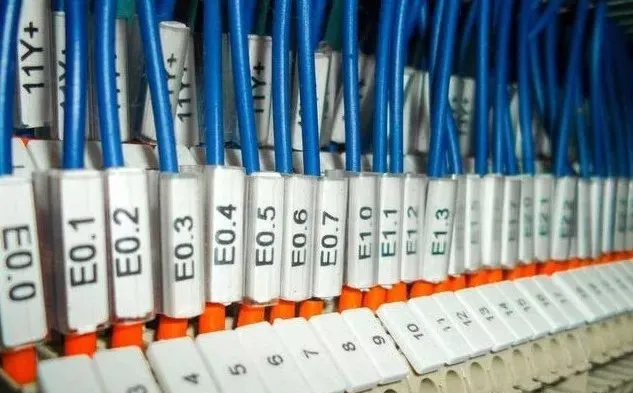 Power supply failures also account for a significant portion of PLC malfunctions. The PLC typically operates on 220V AC, although some models use 24V or 12V inputs. Inside, there are chips that require 5VDC or 3.3VDC, necessitating a switching power supply step-down circuit. Such circuits can fail in harsh conditions with high temperatures or dust due to high current. If the PLC’s indicator lights are off, it usually indicates a failure in the switching power supply. Repairing a faulty switching power supply is not particularly difficult for someone with basic electronic repair skills, as components like control chips (e.g., 384X) or switching transistors are commonly the culprits, and replacing them typically resolves the issue.If the red light is flashing rapidly or the ERR light is on, it often indicates a motherboard failure or program loss. Reprogramming may help, but if it doesn’t, the repair value is minimal. At most, one might replace the watchdog IC and reset circuit or the crystal oscillator of the chip. If the problem persists, it is advisable to abandon the unit, as the integration level is too high for effective repair, and the motherboard is not particularly expensive, offering little value in repair.Faulty output points are also a common issue with PLCs, especially those with relay outputs. In scenarios with frequent switching actions, relays can easily fail. The typical lifespan of a relay is about 100,000 cycles, and they may fail after 3-5 years of use. This issue is usually easy to detect, as the output indicator lights up, but using a multimeter to check for open or closed contacts can confirm the problem. Replacing the relay with a similar domestic model is generally straightforward. If a transistor fails, it is often due to high voltage input, which can damage both input and output, necessitating the replacement of optocouplers and some amplification transistor circuits.If the issue is peripheral, one can analyze the input-output logic based on the circuit diagram, considering the overall operation of the device. It is also possible to isolate certain input-output interlocks for separate testing to identify the problem. If a PLC program is available, it simplifies the process, as PLCs have online diagnostic functions that allow for individual execution to check the status of corresponding output points, helping to locate the fault.The most challenging issues are often systemic, especially when problems arise in circuits that have been previously repaired. One year, the large swing ride at Changlong experienced issues. Their equipment department had the PLC program, the control computer program, and complete circuit diagrams, and they could perform online diagnostics of various states. However, the ride would automatically trip at a certain logic point, cutting power without any alarms or prompts. They struggled for a long time to identify the problem and consulted many people, but no one could find the fault. When I went to help, everything seemed normal in the control room, as others had checked all the obvious points. I personally climbed to a control box over ten meters high, where some relays were located. After reviewing their diagrams and the operational logic, I suspected the issue was within this box. I had them operate the ride several times, and each time it would trip at a specific relay position, but this relay was just a standard DC relay.I tried disconnecting the relay coil wire and had them operate it again. The equipment ran for a while without tripping, leading me to conclude that the relay was faulty. Upon inspection, I found that the flyback diode of the relay was connected in reverse. This caused the relay coil to be energized, effectively applying 12V DC directly to the diode, creating a short circuit that tripped the power supply and caused the entire system to shut down. Reversing the diode fixed the issue, likely due to incorrect wiring during a previous inspection.Thus, such peripheral PLC faults may not trigger any alarms, and everything may appear normal, yet the system operates abnormally. These faults are the hardest to troubleshoot, especially after multiple inspections and repairs. Simply reviewing diagrams and programs will not reveal the problem; one must be present on-site to catch the details.Netizen “e音魂不散”: In my years of work, I have found that the most prone to failure are the relay-type output points. Typically, the output points burn out and stick together. In such cases, I usually replace a spare point when available. If not, I replace the entire module. If no modules are available, the PLC itself must be replaced. Program issues are easier to handle, as backups are always available. If it’s a hardware issue, we cannot repair it; we can only replace it with new components.
Essential Books for Mastering PLC
(Download eBook link)
(This article is a network reprint, and the copyright belongs to the original author. If any video, image, or text used in this article involves copyright issues, please inform us immediately, and we will correct or delete the relevant content upon confirmation! No individual or organization bears any legal responsibility.)