Today’s Recommended Article
The author of today’s recommended article isExperts Liu Gang, Lu Zhou, Zhou Bin, Hu Jinhui, Qin Peng, and Qin Zhichao from China Electronics Technology Group Corporation Electronic Science Research Institute.This excerpt is from the paper “Development Ideas of Space-Based IoT,” published in Journal of China Electronics Technology Group Corporation, Volume 10, Issue 6. Let’s start learning with the editor!
0 Introduction
According to the definition by the International Telecommunication Union, the Internet of Things (IoT) is a network that solves the interconnection among objects, people and objects, and people. The space-based IoT is centered on and based on space communication networks, integrating services such as space-based navigation and remote sensing, providing a comprehensive information system for unobstructed interaction among objects, people and objects, and people.
Given the characteristics of space-based information systems, space-based IoT has many unique advantages compared to traditional IoT:
1) The communication network covers a wide area and can achieve global coverage, with sensor deployment almost unrestricted by space.
2) It is hardly affected by weather or climate, working all day and night.
3) The system has strong disaster resistance and can still operate normally in emergency situations such as natural disasters and sudden events.
Since the concept of IoT was proposed in 1999, a complete concept has been formed, and the IoT applications relying on terrestrial networks have gradually matured. However, in some fields of data collection over large areas, across regions, and in harsh environments, due to spatial and environmental limitations, terrestrial IoT is powerless, leading to a mismatch between service capability and demand. These fields include:
1) Monitoring and management of resources such as oceans, forests, and minerals
2) Monitoring and forecasting of disasters in areas such as forests, mountains, rivers, and oceans
3) Marine monitoring and management in deep sea and far sea, including offshore buoys and life-saving at sea
4) Monitoring and management of traffic, logistics, oil pipelines, and power grids
5) Tracking and monitoring of rare animals in the wild
6) Coordinated control of military drones, missiles, ships, and vehicles
Utilizing the advantages of space-based information networks, through space-based IoT payloads and terminal devices, connecting sensors in complex environments to the space-based IoT and achieving cross-regional transmission of IoT information is an effective way to address the shortcomings of current terrestrial IoT. With the continuous development of integrated information network technology in our country, the application prospects of space-based IoT are full of potential.
1 Current Development Status
Currently, there is no relevant literature at home and abroad that explicitly proposes the concept of space-based IoT. However, data collection, monitoring, and control based on space information systems have developed quite maturely in some fields, and these applications essentially belong to the category of space-based IoT. Notable examples include the Orbcomm system and Argos system abroad, as well as remote monitoring of power transmission and transformation facilities based on the Beidou system in China, and military satellite data links.
1.1 Orbcomm System
The “Orbital Communication” (ORBCOMM) system is a global data communication satellite system owned by ORB-COMM in the United States. The ORB-COMM system is a commercial low-Earth orbit satellite constellation specifically designed for bidirectional short data transmission, which was put into use in 1997. It is operated in partnership by ORB-COMM and Teleglobe in Canada. The constellation consists of 36 satellites, with an orbital height of 825 km and a single satellite weight of 43 kg. The ground segment of Orbcomm includes a network control center and a number of gateway stations. The entire Orbcomm system is managed by a network control center responsible for operation management. The main task of the gateway stations is to provide message processing and manage users within a certain service area. Orbcomm system user terminals use relatively low-cost VHF electronic devices, which have simple antenna designs, are compact in structure, flexible in installation, and have low power consumption that can be powered by long-life batteries.
Using the Orbcomm satellite system, users can conduct applications including remote data collection, system monitoring, tracking and positioning of vehicles, ships, and mobile facilities, transmission of short message texts, and sending and receiving emails. The applications of the ORBCOMM system involve multiple industrial fields, such as transportation, oil and gas fields, water conservancy, environmental protection, fishing vessels, and fire alarm systems.
1.2 ARGO System
The “Advanced Research and Global Observation Satellite” (Argos) system is jointly established by France and the United States. This system uses low-Earth orbit satellites to transmit various environmental monitoring data and to locate the carriers of measuring instruments, providing a good communication means for hydrological and meteorological monitoring instruments in high-latitude areas.
The ARGO global ocean real-time observation program deploys a satellite-tracked profile drifting buoy every 300 km in the global ocean, totaling 3000, forming a large ARGO global ocean real-time observation network. The ARGO program is a typical space-based IoT system that interconnects people, platforms, and sensors using space-based information networks, capable of rapidly, accurately, and broadly collecting global ocean temperature and salinity profile data from 0~2000 meters, helping to better understand large-scale real-time ocean changes, improving the accuracy of climate and ocean forecasting, and effectively defending against increasingly severe climate and ocean disasters (such as hurricanes, typhoons, tornadoes, ice storms, floods, and droughts, as well as storm surges and red tides) that threaten humanity.
The applications of the Argos system are very extensive, including climate change monitoring, ocean and meteorological monitoring, biodiversity protection, water resource monitoring, and marine resource management and protection.
1.3 Beidou IoT Application
In China, a pilot application of a remote monitoring system for power transmission and transformation facilities based on satellite IoT is being conducted at the Yulin Substation of the Guangxi Power Grid. At the substation site, monitoring terminals include main transformer monitoring terminals, bus monitoring terminals, circuit breaker monitoring terminals, etc. These monitoring terminals will use satellite access machines, satellite small stations, wireless data transmission modules, etc., to form a bidirectional communication line with Beidou satellites. Located in Nanning, the Guangxi Power Grid Equipment Monitoring and Evaluation Center can send commands such as data collection cycles, monitoring device reboot, monitoring device self-check, time synchronization, and calibration to monitoring terminals through satellite channels. On the other hand, it can also receive monitoring data sent from the monitoring terminals, judging the health status of the monitored power transmission and transformation facilities through longitudinal analysis and horizontal comparison. Through the application of the Beidou IoT at the Yulin Station, the operation and maintenance efficiency of the station’s power transmission and transformation facilities has been effectively improved, reducing operation and maintenance costs and increasing the reliability of power supply, saving and increasing income by over 5 million yuan annually. Therefore, the remote monitoring system for power transmission and transformation facilities based on space-based IoT has very high economic benefits and promotion prospects.
1.4 Satellite Data Link
In addition to civilian applications, the space-based IoT also has significant application value in the military, with the most typical application being the satellite data link. It supports direct links between space-based and air-based sensor networks, command and control systems, intelligence processing centers, and weapon platforms over a wide area according to a unified message format and communication protocol, thus effectively reducing information processing links and improving system application timeliness.
Currently, there are three main satellite data links being researched or equipped internationally: the Royal Navy’s Satellite Tactical Data Link (STDL) in the UK, the US Navy’s Satellite Tactical Data Information Link J (S-TADIL J), and the US Air Force’s JTIDS extension (JRE).Satellite data links are now widely used in large-scale, beyond-line-of-sight command and control, real-time battlefield intelligence acquisition, wide-area situational sharing, multi-service tactical-level collaboration, interconnecting multiple heterogeneous data link networks across regions, and global rapid precision strikes.
2 Application Classification
As can be seen from the above, the application fields of space-based IoT are very broad, and there are significant differences in the number of users, data size, and real-time requirements across different application fields. These differences pose challenges to the design of space-based IoT. Based on the characteristic differences of these data information, suitable application objects for space-based IoT can be divided into several major categories:
1) Data Collection: Divided into two subcategories:
a) Parameter Collection: For example, monitoring sensors deployed on transport vehicles, oil pipelines, power transmission lines, buoys, and virgin forests. The data in this category mainly consists of fixed-format parameter information, with small data volumes, typically at the bit level. Therefore, the requirements for transmission bandwidth and transmission rate are not high, and the hardware requirements are not high, making it easy to miniaturize terminals, suitable for large-scale deployment, with a relatively large number of users. In terms of real-time performance, a storage-forwarding mechanism is generally used, and it does not require the stringent requirements of real-time voice communication; the collection intervals vary from a few minutes to several hours depending on different applications. Low-Earth orbit satellite access can be used, with user link rates designed at the Kbps level, and feeder link rates of tens of Kbps can meet the requirements, such as the orbcomm system.b) Image/Video Collection: For example, unmanned reconnaissance aircraft, missile-mounted reconnaissance equipment, and aerial devices. The data generated by this type of application mainly consists of images and videos, with larger data volumes, generating data from tens of KB to hundreds of MB per unit time, such as the Global Hawk unmanned reconnaissance aircraft in the US generating data at the level of hundreds of MB per second. Moreover, under certain specific tasks, there are relatively high real-time requirements, such as real-time command for unmanned aerial vehicle tactical strikes. This type of application generally uses broadband satellite access, and the designed transmission rate needs to reach tens or even hundreds of MB/s. This type of application places high demands on the transmission performance of space-based information systems.
2) Data Broadcasting: Wide area, wide/narrowband information. The main objects include various sensor nodes, control nodes, combat units, emergency information, weather information, traffic conditions, etc.Broadcast data types are diverse, ranging from small instruction parameters to large volumes of high-definition video that can be achieved through satellite broadcasting. Under certain applications, there are certain real-time requirements, such as live television broadcasts and the issuance of operational orders in the theater. The design of satellite systems is mainly based on high-orbit broadband, with higher hardware configurations on satellites and larger antenna arrays. The types of ground terminals vary widely based on business needs, with various sizes. The broadcasting application is currently relatively mature, and no further analysis is provided here, but it is crucial for the overall construction of space-based IoT, being an indispensable business component and means.
3) Control: Data rates are low, real-time performance is high, channels are dedicated, and high reliability is guaranteed.The main objects include vehicles, aircraft, ships, missiles, drones, unmanned vehicles, and near-space flying vehicles. The information transmitted in this type of application mainly consists of control commands and real-time statuses, such as guiding commands for airborne operations in military use, command control of unmanned equipment, reports, and requests. Civilians mainly involve issuing commands for beyond-line-of-sight unmanned machines or guard combat operations, such as controlling unattended power stations in the wild and extraterrestrial environment detectors. Since the transmitted data mainly consists of control-type information, the data volume is small, and Kbps level or even bps level communication links can meet the rate requirements. However, since control commands are crucial and have low fault tolerance, this application has very high requirements for the security and reliability of information transmission. When designing the system, special consideration must be given to security, confidentiality, anti-interference, and error correction in coding and decoding. Additionally, since the status of control targets may change in real-time, this type of application has very high real-time requirements.
By classifying the application objects of space-based IoT, targeted architectural designs for space-based IoT can be carried out. For example, for data collection applications, due to the large number of users and small information volume, corresponding terminal devices can easily adopt miniaturized designs, utilizing low-Earth orbit data collection constellations to meet the needs of such users well; for data broadcasting users, who are widely distributed and have basically consistent information needs, high-orbit broadcasting is more suitable; for control applications, where real-time requirements are high, connections should be established through low-Earth orbit communication systems, and fixed channels should be established to ensure real-time transmission of information and commands.
3 System Architecture
Based on the characteristics of space-based information networks and referring to the system architecture of IoT, the architecture of space-based IoT is designed as follows. It mainly includes three levels: perception layer, network layer, and application layer, with standard specifications and network information security running through all three layers.
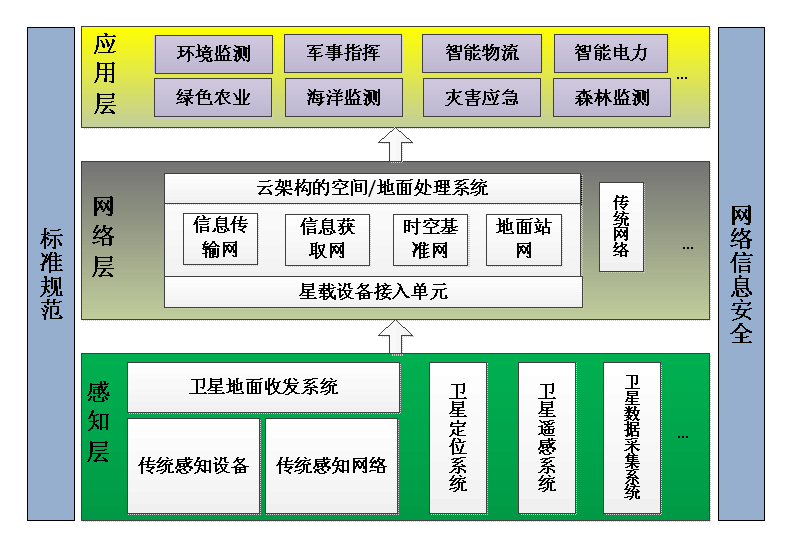 Figure 1 Space-Based IoT System Architecture
The perception layer is mainly used to collect and locate events and data occurring in the physical world, including various physical quantities, identifiers, images, audio, video, etc. This layer consists of two main parts: One is the access of traditional terrestrial IoT sensing information into space-based IoT, achieved by adding satellite ground transceiver systems to interconnect terrestrial local sensor networks with space networks, establishing a space-ground link to realize space-based IoT. The second is the access of space sensing information into space-based IoT, such as satellite remote sensing, satellite positioning, and satellite data collection systems. The sensing data from these satellites can directly enter the space-based IoT system, providing information services through corresponding processing, such as extracting features of terrain, landform, geology, spatial environment, and ground targets, disaster area, disaster degree, etc., from satellite remote sensing images, combining satellite positioning, and integrating the collected data with data from ground sensor devices at the application layer to obtain more accurate and thorough ground information.
The network layer mainly consists of access units, space transmission networks, and cloud architecture space/ground processing platforms, responsible for transmitting and processing the information obtained from the perception layer.The access unit is mainly the satellite IoT payload device, which serves as the gateway for space-based IoT. The transmission network includes information acquisition networks, information transmission networks, time-space reference networks, and ground station networks. The information acquisition network mainly refers to the network composed of satellite remote sensing systems and small satellite collection constellations; the information transmission network includes the high-orbit backbone communication network, low-orbit mobile communication network, and inter-satellite network links between high and low orbits; the time-space reference network is composed of satellite navigation and positioning systems; the ground station network refers to the satellite system ground network composed of satellite ground receiving stations, processing centers, and control centers.
These four components interconnect to form the transmission network of space-based IoT. Future IoT services will be built on integrated foundational (cloud) facilities, and space-based IoT is no exception. The data generated, analyzed, and managed by IoT will be massive, requiring scalable massive computing resources to support it, and cloud computing can provide elastic, infinitely scalable, and cost-effective computing and storage services to meet IoT needs. With the future development of space-based information systems and the enhancement of space payload capabilities, leveraging space resources to build space cloud platforms and achieving efficient utilization of space computing and storage resources will become an important trend in the future development of space-based IoT. The technology of introducing cloud computing to build ground data processing cloud platforms is already relatively mature, and will not be elaborated here.
The application layer is the interface between space-based IoT and users, combining with industry needs to realize intelligent applications of IoT, such as smart logistics, smart military, environmental monitoring, smart power, etc.
Standard specifications are the guarantee for the construction of space-based IoT. The applications of IoT in various industries and fields form a super-large network of multiple devices, multiple networks, and multiple applications, interconnected and integrated. To achieve interconnection and sharing of information across the entire network, all interfaces, protocols, identifiers, information exchanges, and operational mechanisms must be guided by unified standard specifications. On the one hand, there must be network interface and protocol standards that enable interconnection and information sharing between space information networks and IoT; on the other hand, there must be standards for data, information, sensors, and their management that support the operation of space-based IoT networks and provide service data in the respective industry or field.
In addition to the above content, since space-based IoT is achieved through space information networks for M2M intelligent connections, the network and information security issues of space-based IoT are another important guarantee running through all three layers.
4 Functional Composition
Based on the distribution characteristics and advantages of GEO, MEO, and LEO satellite systems in space-based information networks, combined with the development of domestic and foreign space-based IoT systems, through reasonable planning and layout, breakthrough key technologies such as space cloud computing, inter-satellite networking, laser communication, data collection, and miniaturized terminals, a general architecture of space-based IoT that meets the needs of various industries and fields is established.
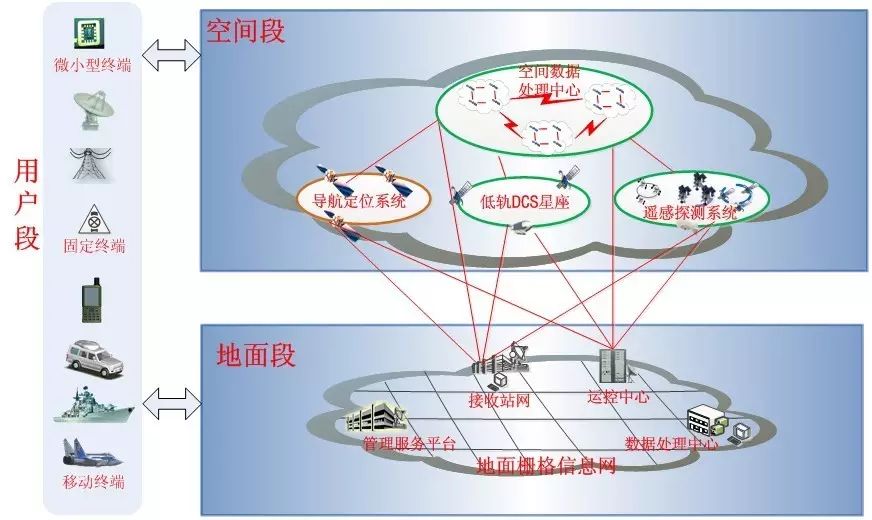 Figure 2 Space-Based IoT Composition Architecture
The architecture of space-based IoT includes ground segments, space segments, and user ends. The main components of each segment are as follows:
1) Space Segment: Space communication systems (including high-orbit communication systems, low-orbit DCS systems), navigation and positioning systems, remote sensing detection systems, and virtual space information processing centers.
2) Ground Segment: Management service platforms, data processing centers, receiving station networks, and operation control centers
3) User End: Micro-sized terminals, fixed terminals, and mobile terminals
4.1 Space Segment
The space segment of space-based IoT fully utilizes the wide area coverage of high-orbit satellites, the low latency and high gain of low-orbit satellites, and the wide area perception of remote sensing satellites, as well as the precise positioning of navigation satellites, forming interconnectivity through space communication, navigation, and remote sensing satellite systems from high, medium, and low orbits. By utilizing space resource virtualization technology, a cloud platform for space processing is built, achieving space information processing, which will greatly increase data utilization.
The space communication system is the core of space-based IoT, mainly including high-orbit communication systems and low-orbit DCS constellations. High-orbit communication systems are mainly aimed at data broadcasting applications, which can fully utilize satellite channels to achieve wide-area information distribution, such as meteorological information, sudden disaster information, battlefield commands, etc. High-orbit satellites are deployed in large numbers with high capacity and high-performance synchronous orbits, establishing inter-satellite laser links to achieve high-speed relay transmission of large data collection applications; based on high-orbit synchronous orbit satellites, a cloud architecture space information processing center is built through spatial networking and virtualization technology. The space information processing center is the future trend of space-based information networks. Currently, IoT has increasingly stringent real-time requirements. Establishing processing centers in space will allow sensor information, such as remote sensing image information, to be analyzed and processed directly in space, extracting key intelligence, which is of great significance for improving information real-time performance, increasing data utilization efficiency, reducing data transmission volume, and lowering satellite channel occupancy. The low-orbit DCS constellation mainly targets data collection and control applications, such as monitoring oceans, forests, and minerals, as well as military command control and weapon coordination. Satellite remote sensing uses sensing devices on satellites to conduct high-resolution monitoring of monitored areas and specific facilities. Satellite remote sensing data can serve as very important auxiliary data for decision-making in intelligent IoT, playing a crucial role in certain applications, such as logistics and emergency situations.
Satellite navigation systems can be extensively applied in fields such as transportation and logistics, with advantages such as high precision, wide coverage, all-weather, and all-time availability, effectively providing reliable location, distance, time, and other information for the operation and maintenance of logistics vehicles and power transmission facilities.
4.2 Ground Segment
The ground segment mainly consists of management service platforms, data processing centers, operation control centers, and receiving station networks, completing remote measurement and control of system satellites, business data transmission and reception, terminal access control, channel resource management, and management and monitoring of system devices, as well as processing, distributing, and storing original data from terminals, providing various basic services and some value-added services to users. Ground application systems also introduce cloud computing technology, building cloud platforms to provide services to users through ground grid information networks.
4.3 User End
User terminals are the interface for users requesting services from space-based IoT. The terminals of space-based IoT roughly include two types: one type has satellite communication capabilities, containing sensors and control functions, and can independently connect to space-based IoT for operation. The other type is a ground transceiver system that connects traditional sensor data from the surrounding area through the Internet or other ground networks to access space-based IoT. This is suitable for sensor networks or IoT terminals that do not have satellite communication capabilities. In terms of specific product types, they can be divided into micro-sized terminals, such as those for monitoring fish, birds, and wildlife; fixed terminals, such as ocean buoys, power monitoring devices, oil pipeline monitoring devices, automatic weather stations, etc.; and mobile terminals, such as handheld terminals, vehicle-mounted terminals, and ship-mounted and aircraft-mounted terminals.
5 Application Models
This article designs corresponding application models based on the application needs of different characteristic objects of space-based IoT.
5.1 Collection Applications
Collection applications are generally used for monitoring in fields such as forests, minerals, oceans, agriculture, and electricity. When applying, various monitoring information is obtained from ground sensors, and the environmental monitoring information is sent to the low-orbit DCS satellite constellation by data collection terminals. Generally, monitoring information is sent to the ground gateway station through DCS satellite constellations, sent to the data processing center for parsing and processing (remote sensing information can directly enter through the space-based network for processing at the processing center), and then the data is sent to the user’s monitoring center through the ground network; in special modes (such as ground network issues), monitoring data can be processed directly at the space data processing center and then sent directly to the user’s monitoring center via satellite network. Figure 3 shows the working model of space-based IoT in collection applications.
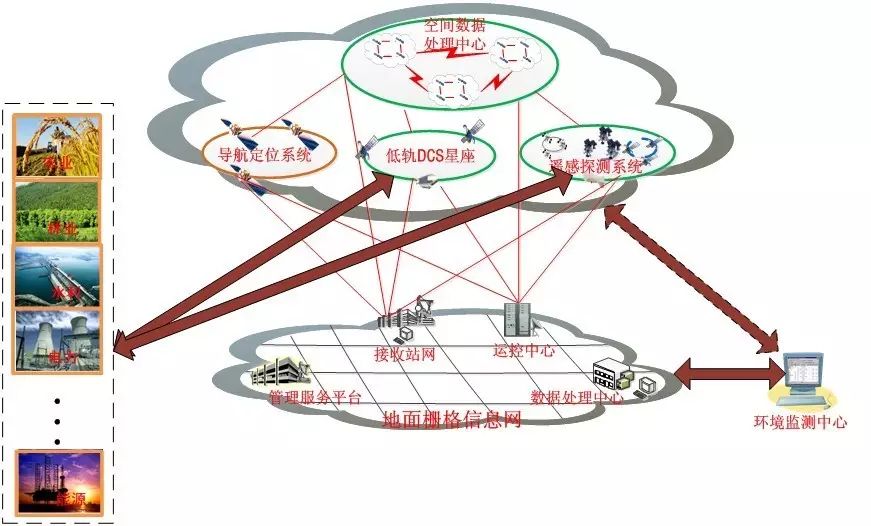 Figure 3 Working Model of Space-Based IoT in Collection Applications
5.2 Control Applications
Control applications are generally used in military fields. When establishing a mission, the command control center can access space-based IoT through both ground and space networks. Through the management service platform, network resources are configured, and fixed communication channels are established to ensure uninterrupted links for real-time monitoring and control of aircraft, missiles, vehicles, etc. For control with high real-time requirements, low-orbit control links are generally established to reduce network latency.
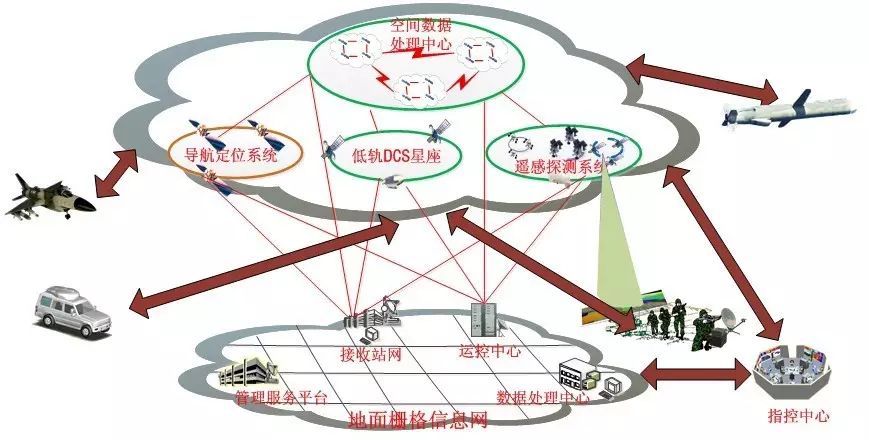 Figure 4 Working Model of Space-Based IoT in Control Applications
5.3 Broadcasting Applications
Broadcasting applications are generally used for information broadcasting and distribution over large areas, such as the wide-area distribution of information on natural disasters like earthquakes, floods, and meteorological information, as well as issuing operational orders across remote battlefields. In disaster monitoring modes, a timed sending mode is generally adopted, sending monitoring information at fixed times each day, and when sensor data collection exceeds the warning threshold, the collection terminal enters emergency mode and immediately sends information (such as earthquakes, floods, fires, etc.) directly to ground users through space-based IoT.
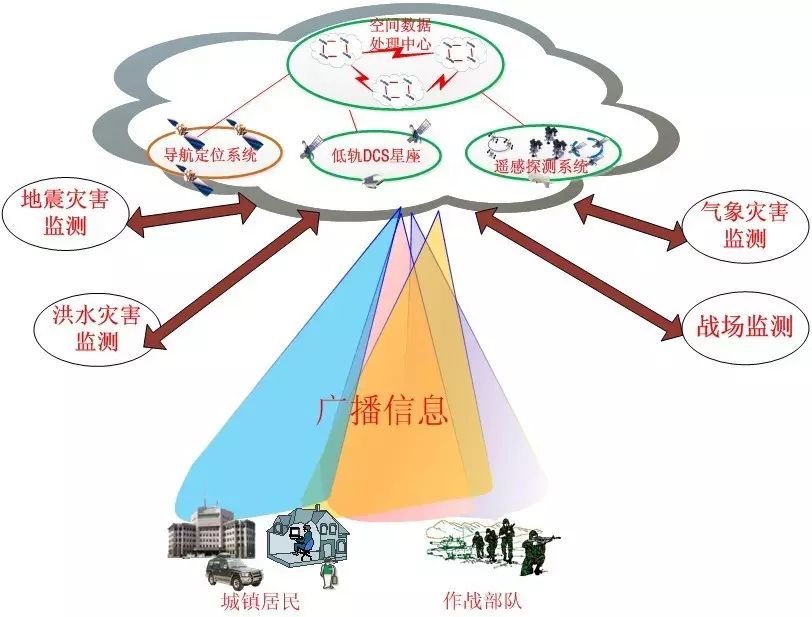 Figure 5 Working Model of Space-Based IoT in Broadcasting Applications
Conclusion
Space-based IoT is an important part of IoT and also an extension of IoT. It expands the coverage of IoT and effectively enhances the overall economy and reliability of IoT. It can be widely applied in national defense construction, national security, emergency support, transportation logistics, agriculture, forestry, and other fields. With the improvement and implementation of integrated information networks in our country, space-based IoT will greatly promote the development and upgrading of the satellite industry.
-
Journal of China Electronics Technology Group Corporation welcomes submissions from experts and scholars! Submission link http://kjpl.cbpt.cnki.net
-
Phone: 010-68893411
-
Email: [email protected]
Series Collection: Quality Original Reading
Research on the Synthesis and Properties of BZN Composite Ceramics
Analysis of Alignment Offset in Optical Interconnect Modules under Temperature Load
Academic: Research on Space Information Cloud Service Platform System for Military-Civilian Integration
Good Book | A rare textbook on military-civilian integration research, not to be missed
Overview of E2 Series Carrier-Based Early Warning Aircraft
Academic: Business-Aware Traffic Classification Technology for Integrated Space-Earth Information Networks
Academic: Research on Space Information Cloud Service Platform System for Military-Civilian Integration
Call for Papers: Journal of China Electronics Technology Group Corporation sincerely invites submissions
Haze is a disease that needs treatment, and I have the cure.
VR technology: Risks hidden behind huge opportunities?
Is cyber governance a bit difficult?
Serial Eleven: Overall Configuration Design of Early Warning Aircraft (Seven)
New Perspectives: Understanding the US Defense Technology Innovation System through Data (Three)
New Perspectives: Understanding the US Defense Technology Innovation System through Data (Two)
New Perspectives: Understanding the US Defense Innovation System through Data (One)
New Perspectives: Overview of the National Innovation System
New Perspectives: Discussing Future Strategic Frontier Technologies