When you order takeout on your phone, the backend delivery system dispatches riders in real-time. When you enter a smart classroom, the air conditioning and lighting automatically adjust to the most comfortable state. When a new energy vehicle is driving on the road, sensors transmit the vehicle and road conditions back to the cloud in real-time.
All of this relies on a key term—the Internet of Things (IoT), and the IoT Engineering Major is designed to cultivate individuals who can turn ‘ubiquitous connectivity’ into reality.
The ‘Trio’ of Sensors, Communication, and Computing
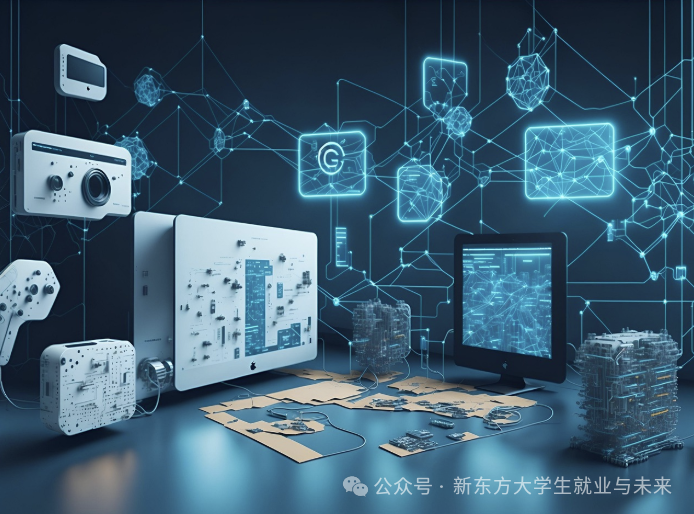
IoT engineering is not a singular field of communication or computer science; it is an interdisciplinary composite that combineselectronic information, communication engineering, computer science, and control technology.
01
To engage in the IoT engineering major, one must first have a solid foundation inadvanced mathematics, linear algebra, C programming, analog electronics, and digital circuit courses.
02
On this foundation,the principles of sensors, embedded systems, wireless communication technology, IoT protocols (such as NB-IoT, LoRa), and database systems are core competencies.
03
Furthermore, one can learn aboutcloud computing and big data, artificial intelligence, edge computing, intelligent control, and blockchain and IoT security to expand their capabilities.
University students should also focus onsmart home design experiments, sensor network construction, and IoT application development in collaboration with enterprises as practical content.
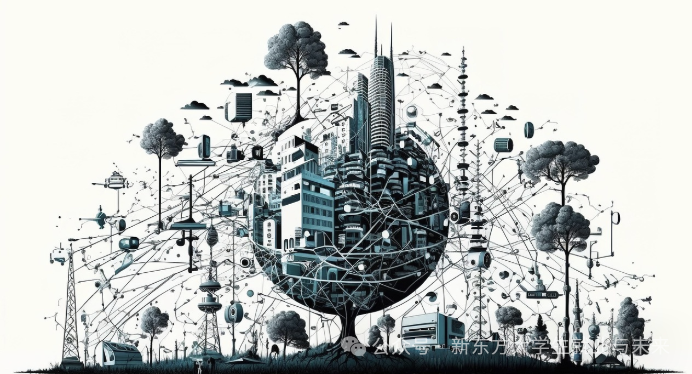
Compared to computer science, it emphasizes hardware and perception; compared to electronic information, it highlights data and platforms. In the laboratory, you may need to connect multiple sensors to a development board, allowing them to send data to a server, and then create a small program that can display environmental information in real-time on a mobile phone.
In short, the IoT engineering program cultivates engineers who can connect ‘devices-network-platform-application’.
From Smart Cities to Intelligent Manufacturing
The application scenarios of IoT are virtually everywhere. Industry demand is mainly concentrated in the following directions:
01
Smart Cities
Intelligent traffic systems, smart streetlights, and smart environmental monitoring. For example, traffic lights at intersections can automatically adjust based on traffic flow.
02
Intelligent Manufacturing (Industrial Internet)
Factory equipment is connected in real-time for predictive maintenance, avoiding downtime losses. This requires industrial sensors, edge computing nodes, and platform architects.
03
Smart Logistics
Warehouse robots, intelligent sorting systems, and cold chain monitoring; logistics systems of companies like SF Express, JD.com, and Meituan are using IoT technology to enhance efficiency.
04
Smart Homes
Smart speakers, connected appliances, and security systems; companies from Huawei, Xiaomi to Midea and Haier are investing heavily in the IoT sector.
05
Healthcare and Agriculture
Remote monitoring devices, smart wearables, and smart agricultural monitoring make healthcare more precise and agriculture more efficient.
Popular positions include:IoT system development engineer, embedded software development engineer, communication protocol engineer, smart hardware product manager, and IoT platform architect.
At the same time, this field requires high cross-disciplinary capabilities; those who can code, debug hardware, and understand some network protocols are the most sought after.
The Internet of Things is not an industry but a network that covers all industries; how far you can go depends on which scenario you can integrate into.
Deep Technology or Towards Integration?
The career development paths after graduating from the IoT engineering program generally fall into three routes:
Technical Deepening: Enter IoT companies or IT company R&D departments to deeply studysensor technology, embedded systems, communication protocols, or cloud platform architecture, and grow into technical experts or system architects.
Application Expansion: Implement projects insmart cities, intelligent manufacturing, smart homes, etc., where you may be a solution engineer or an industry application manager, understanding both technical implementation and scenario application.
Cross-Disciplinary Integration: The integration of IoT with AI, big data, and blockchain is becoming increasingly close; those who can cross over into‘IoT + AI’, ‘IoT + Manufacturing’, ‘IoT + Healthcare’ will become more valuable composite talents.
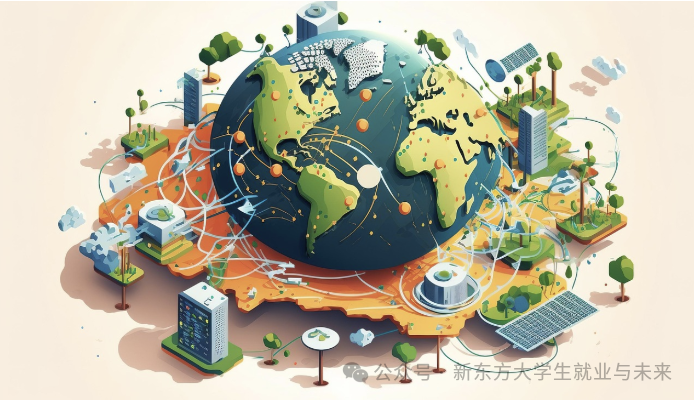
The future trend is clear: the Internet of Things will no longer just be ‘ubiquitous connectivity’ but ‘intelligent connectivity’. Those who can transform data into intelligent decisions will stand out in their careers.
The IoT major is not the end; it is your ticket to more industry stages.
Conclusion:
The charm of IoT engineering lies in its combination of underlying technology and application scenarios. It can penetrate into smart cities, intelligent manufacturing, healthcare, agriculture, transportation… In the digital age, the real core competitiveness is to make everything ‘speak’ and connect with each other.
Click to read more professional insights:
An Analysis of Low Altitude Technology and Engineering Major: Is the Low Altitude Economy on the Verge of Explosion?
An Analysis of Digital Media Technology Major: Is It Really the ‘Universal Card’ for Career Crossovers?
A Detailed Analysis of Software Engineering Major: Building the Digital World with Code
A Comprehensive Analysis of Intelligent Manufacturing Engineering Major: Come and See the Future ‘Cyber Factory’?
A Comprehensive Analysis of New Energy Science and Engineering Major: Can It Catch the ‘Carbon Neutrality Express’?