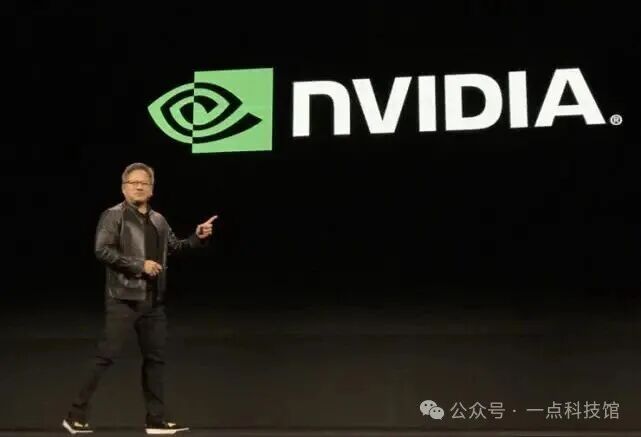
Due to chip security issues, AI chip giant NVIDIA is caught in a whirlpool of doubts. Despite NVIDIA publicly asserting twice that its chips have no backdoors, there have been numerous precedents of security concerns from the U.S. regarding chip safety. According to the U.S. “Chip Security Act,” exported chips must be embedded with features such as “tracking, remote shutdown, and data return,” which undoubtedly turns chips into potential “digital weapons.”

In peacetime, the U.S. can use this to monitor the operation of foreign computing networks and AI critical infrastructure data in real-time. Once a conflict breaks out, it can instantly incapacitate foreign AI critical infrastructure. From a technical perspective, chips are the “nerve center” of computing systems and the foundation for the safe and stable operation of critical infrastructure. If a chip has vulnerabilities or backdoors, attackers can remotely incapacitate the computing system through hardware instructions, disrupt computational logic, or use the chip’s built-in data return function to transmit sensitive user data to specific recipients abroad, achieving remote monitoring and data theft. The H20 chip, as a “special supply” chip launched by NVIDIA specifically for the Chinese market, is mainly used in AI computing and data centers, which involve a large amount of sensitive data. Most of its design details are highly confidential, with core modules such as GPU computing units, on-chip management engines, and memory controllers all encapsulated within the SoC. The key drivers and firmware also have closed-source characteristics, greatly increasing the difficulty of detecting chip-level backdoors, making effective reverse verification nearly impossible in a short time.
If the chip indeed has a hardware backdoor, attackers could not only steal model parameters and training data but also compromise the integrity of training results, and even remotely manipulate task processes, ultimately leading to a loss of system-level security, which poses a significant threat to national information security. Recently, some experts from mainland China suggested that if NVIDIA wants to continue shipping H20 chips to the mainland, it should sign legally binding agreements with the mainland and deposit 15% of its sales revenue from AI chips to China in a designated location as a security guarantee. This idea actually originated from the U.S., which previously required NVIDIA and AMD to pay 15% of their sales revenue from AI chips to China in exchange for export licenses. It must be said that this proposal is quite good, as it would hold NVIDIA accountable for chip security. If security issues arise with the chips, the deposit could be deducted, which would encourage NVIDIA to prioritize security in chip research, development, and production. However, from a broader perspective, this incident also serves as a wake-up call for the development of China’s artificial intelligence industry. Long-term reliance on foreign chips, especially those from companies like NVIDIA that are heavily influenced by U.S. government policies, undoubtedly brings many uncertainties and security risks to industrial development.
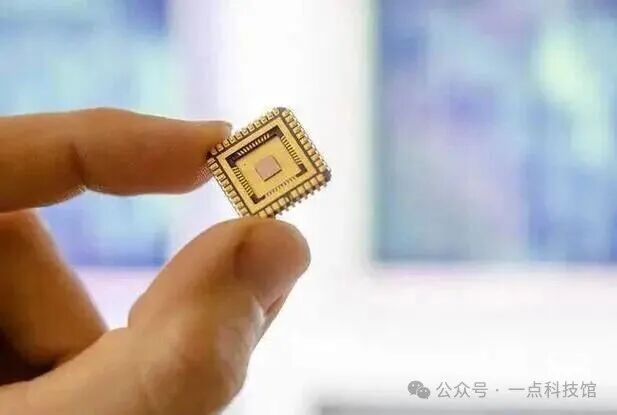
Therefore, we should accelerate the pace of independent research and development of AI chips and strive to build a self-controllable chip industry ecosystem. Currently, several companies in China are researching and developing AI chips, and it is believed that it will not be long before domestic AI chips replace NVIDIA’s AI chips. Returning to the NVIDIA chip incident itself, regardless of the final outcome, China should take control into its own hands. On one hand, we should continuously strengthen the safety inspection and supervision of imported chips, establish a comprehensive evaluation and review mechanism, and hold chip manufacturers with security risks strictly accountable. On the other hand, we must unwaveringly increase investment in AI chip research and development, cultivate local enterprises, attract and train professional talent, and strive to achieve self-controllable AI chips as soon as possible, breaking free from dependence on foreign technology.