On July 9, GlobalFoundries, the world’s third-largest foundry, announced that it will officially acquire MIPS, a processor IP company with over 40 years of history.
The transaction is subject to customary closing conditions, including regulatory approvals, and is expected to be completed in the second half of 2025. After completion, MIPS will operate as an independent business unit under GlobalFoundries, continuing to serve customers across various technology sectors.
For many in the industry, MIPS is not a stranger. It originated in the 1980s, starting with the RISC architecture, developed under the leadership of Stanford professor John Hennessy, and is one of the earliest RISC chips in the world. It was also the processor provider for the original Sony PlayStation.
Image source: Tom’s Hardware
Since then, MIPS has changed hands several times. It was acquired by Silicon Graphics Inc (SGI) in 1992, spun off in 1998; sold to UK IP company Imagination Technologies (which provided graphics IP for several gaming consoles) in 2013; transferred to Tallwood Ventures through a deal related to Chinese capital in 2017, and then taken over by Wave Computing in 2018.
In 2020, MIPS re-emerged after bankruptcy restructuring, shifting focus to RISC-V architecture development and returning under the MIPS name. Now, this company has officially chosen to land under the GlobalFoundries umbrella.
Why is GlobalFoundries acquiring a RISC-V IP company?
This relates to GlobalFoundries’ strategic positioning.
Although GlobalFoundries was originally spun off from AMD, it chose a different path from TSMC and Samsung after becoming independent: focusing not on advanced process nodes but on mature processes and differentiated services.
It is more concerned with customer scenario adaptation, power area optimization, and supply chain stability, rather than shrinking transistor sizes by a few nanometers. GlobalFoundries’ logic is: instead of competing on process, it is better to compete on system integration capabilities.
The acquisition of MIPS is an extension of GlobalFoundries’ “manufacturing + IP + software” integrated strategy.

Image source: AFP
MIPS has recently focused on RISC-V processor IP development, especially in application scenarios such as edge AI and real-time computing, launching a complete Atlas series of products that cover everything from general-purpose processors to AI acceleration cores, along with visual development tools like Atlas Explorer, which facilitate customers in balancing performance, power consumption, and area, thus achieving a leftward shift in design cycles.
GlobalFoundries, on the other hand, holds multiple manufacturing bases worldwide, providing mature process nodes of 40nm, 22nm, and even 12nm. The combination of the two allows customers to obtain an end-to-end solution from IP to manufacturing to packaging deployment.
This is relatively rare in the current landscape where TSMC primarily focuses on “foundry” and ARM’s ecosystem emphasizes “IP licensing”.
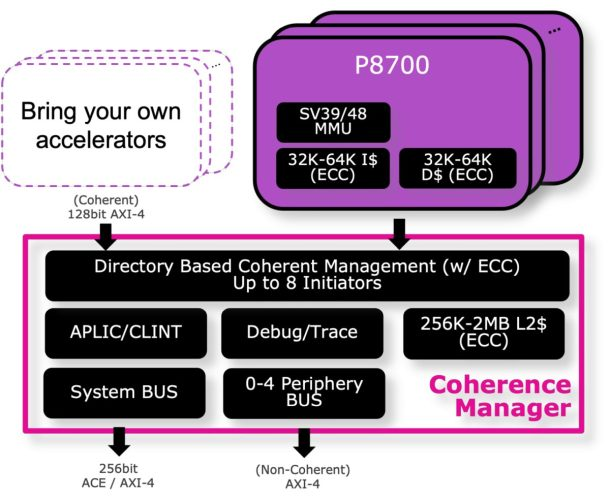
MIPS P8700 Series RISC-V processor
Will it compete with customers?
There are concerns that after GlobalFoundries acquires MIPS, it may create a competitive relationship with its own customers, especially those chip design companies that wish to independently develop RISC-V cores.
In response, GlobalFoundries has made it clear: MIPS will continue to operate as an independent brand, will not pressure customers regarding IP choices, nor will it bind sales. The focus of this acquisition is to provide a “mature and stable” solution path for industry customers in automotive, industrial control, and robotics, which emphasize reliability, customization, and safety.
For MIPS, this is both a risk aversion and an opportunity.
Although RISC-V has gained significant attention in recent years, many startups have faced difficulties due to financing issues. There are concerns about whether IP vendors can provide long-term support and stable delivery.
MIPS CEO Sameer Wasson stated in a statement: “After joining GlobalFoundries, we can finally focus on technology without worrying about whether the company will still be here tomorrow.”
With GlobalFoundries’ manufacturing resources and global customer network, MIPS’ previously accumulated vertical applications in motor control, automotive electronics, and robotic systems now have greater room for development.

Image source: semiwiki
In the past, the IP market was mainly dominated by x86 and Arm, where customers either purchased cores or developed them in-house. The open instruction set concept of RISC-V has broken this closed model, giving rise to a number of emerging IP development companies.
Now that GlobalFoundries has directly acquired an IP vendor, it sends a clear signal: manufacturers are no longer just foundry players but are actively transforming into “ecosystem providers”.
This trend may continue: IP companies will seek to bundle with foundries, and foundries will invest in IP, software, and even packaging, building a full-chain service.
Source: GlobalFoundries, Tom’s Hardware
、
*The content of this article is for sharing and discussion only and does not represent our endorsement or agreement. Some images and text materials are sourced from the internet,If there is any infringement, pleasecontact us for removal.!
End
__
Selected Articles
_
-
Is a semiconductor IPO wave coming? 15 chip companies rush to go public
-
Chip workers’ astonishing annual salary revealed: average of 1.06 million for ordinary employees!
-
US lifts EDA supply ban, three giants resume business with China!
-
Breaking news, a 19-year-old packaging factory goes bankrupt!
-
By 2030, mainland China may become the world’s largest chip production site, with a talent gap of one million globally
“Looking”、“Like”