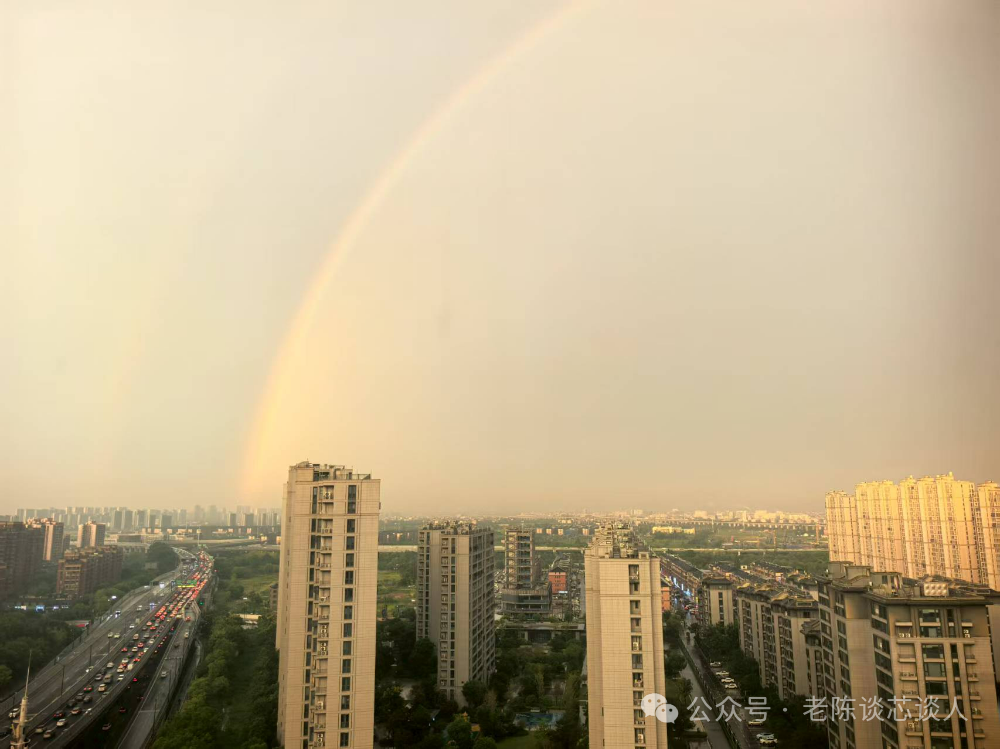
 Yesterday, I met a great expert who spoke eloquently about the history of RISC-V development in China. The conversation lingered in my mind, reminding me of the time when Chen was selling ARM chips. In less than ten years, domestic general-purpose ARM chips have transitioned from industry breakthroughs to being as common as cabbages. Outside the tea house, a long rainbow hung in the sky; does the rainbow after the rain signify something from above? Surely, those who see the rainbow are blessed with good luck! This year marks either the year of challenging ARM or the year of the collapse of domestic RISC-V foundations.The history of RISC-V in China can be traced back to Motorola. In 2002, Motorola exited China and donated the M*core instruction set to the Chinese government. That year, Zhejiang University, Suzhou Guoxin, and Hangzhou Zhongtian established a collaborative research and development consortium to implement the product development and industrialization of M*Core. By 2005, they completed the C300 and CK500 CPU series, with core levels comparable to ARM7 and ARM9.Development of RISC MicroprocessorsOrigins
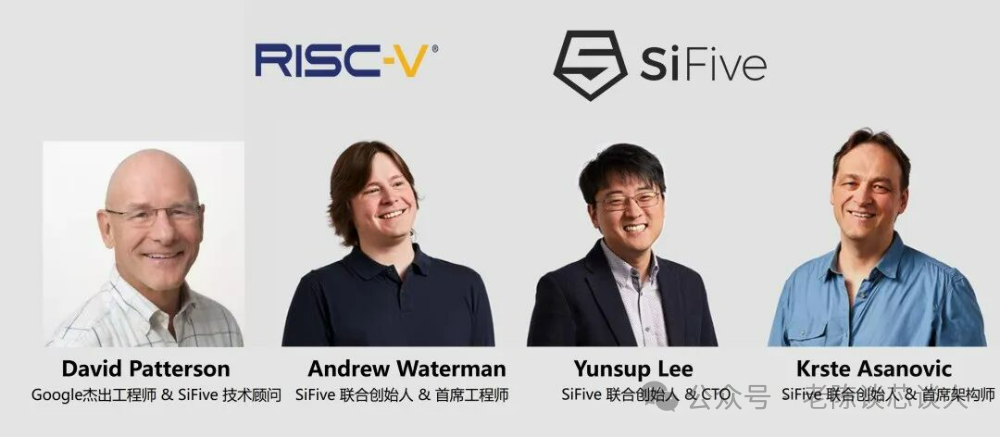 Back in 2010, at the Par Lab of the University of California, Berkeley, a professor and two graduate students (the three core members shown on the right) began preparing an innovative project, with the primary task of selecting a suitable computer architecture.After a thorough comparison of the mainstream instruction sets at the time, including ARM, MIPS, SPARC, and x86, the team found that these architectures not only had high complexity but also came with numerous legal entanglements regarding intellectual property rights. Notably, obtaining licenses for the x86 architecture was quite challenging, while the licensing fees for ARM architecture were prohibitively expensive.In light of these challenges, the team decisively decided in May 2010 to independently develop a new, open-source instruction set, which marked the birth of RISC-V. Leveraging four generations of design experience and a solid technical foundation in RISC architecture, the research team completed the development of the RISC-V instruction set in just three months, showcasing their efficient R&D capabilities and deep technical accumulation. By 2015, the RISC-V instruction set had gained significant recognition in academia. To further promote its vigorous development in both technology and business, the founders adopted a dual approach:Development History of Suzhou Guoxin CPU
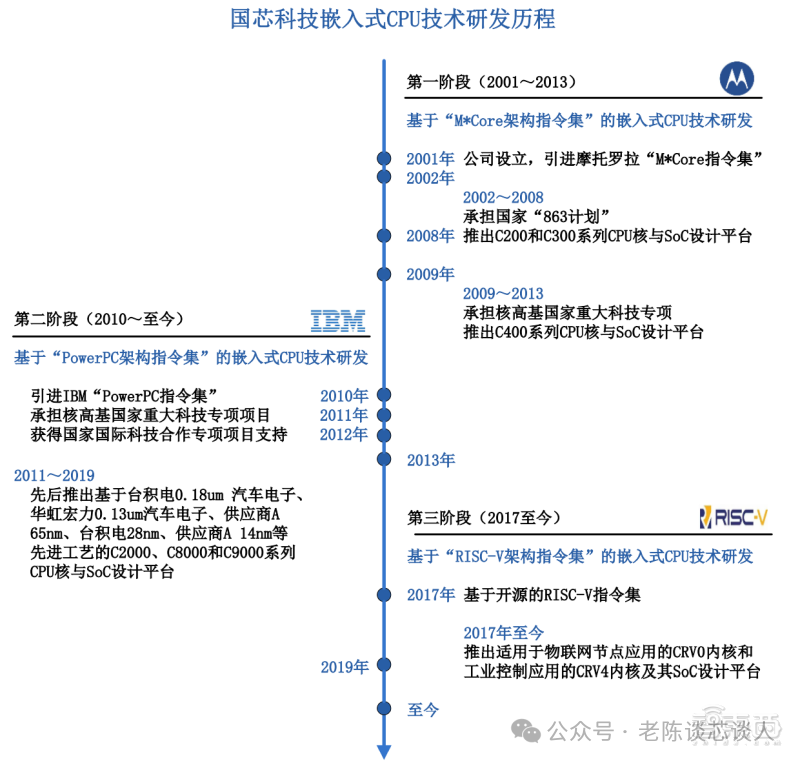 Guoxin evolved from M*Core to C*Core, obtaining IBM PowerPC licensing in 2010 and developing based on the RISC-V architecture instruction set in 2017. Guoxin operates with IP licensing, chip design services, and chip products, currently standing as a CPU company with a market value of over 10 billion.Development History of Pingtouge (Zhongtian Micro) CPU
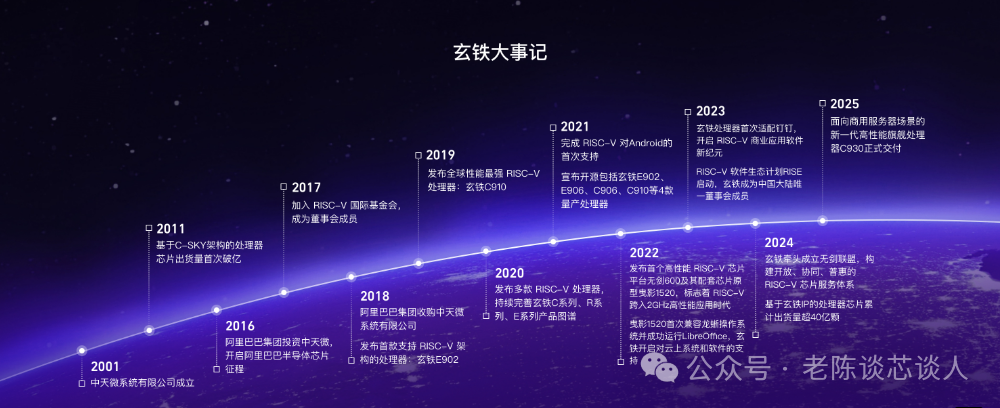 For nearly a decade, Chen has learned about RISC-V core chips from specialized chips, gradually penetrating the general-purpose MCU chip market, slowly encroaching on the ARM camp. From the Pingtouge ecosystem website, we learn about Allwinner D1, Lian Sheng De W806, Aipute APT32S003, Dayu Semiconductor, Huazhen VB590, Silan Micro SC5654, and China Electronics Huada CIU9872B, etc. As of 2024, Pingtouge has licensed over 4 billion IPs.Development History of Xilinx Technology CPU
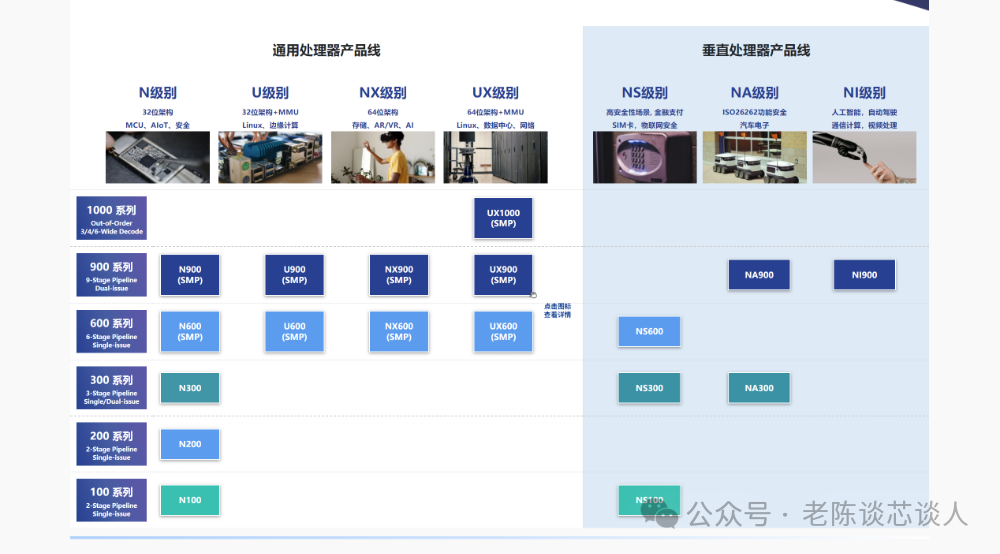 On the evening of August 28, 2025, Xilinx announced that the company is planning to acquire shares of Xilinx Technology (Shanghai) Co., Ltd. through a share issuance and cash payment, raising matching funds. Xilinx’s acquisition of Xilinx Technology fills the gap in the RISC-V IP licensing landscape, making it the largest chip IP supplier and service provider in China.Chen knows Xilinx Technology due to Beijing Zhaoyi, the first RISC-V general-purpose MCU GD32VF103, a strong joint product, and the WIFI6 chip core also originates from Xilinx.Xilinx Technology was established in 2018 and has focused on the RISC-V CPU IP and corresponding platform solutions, representing a leading domestic enterprise in the RISC-V field. It has developed four general-purpose CPU IP product lines: N/U, NX/UX, and three specialized CPU IP product lines: NS, NA, NI. Among them:N/U (supports SV32 MMU) is a 32-bit architecture mainly used for edge computing, low power, and IoT scenarios;NX/UX (supports SV39 and SV48 MMU) is a 64-bit architecture mainly used for high-performance applications in data centers, network security, and storage;NS (Security) is aimed at high-security scenarios such as payments;NA (Automotive) is focused on functional safety in automotive electronics;NI (Intelligence) is aimed at high-performance computing scenarios such as AI.Currently, over 300 domestic and international officially authorized customers are using Xilinx Technology’s RISC-V CPU IP, covering multiple fields such as AI, automotive electronics, 5G communication, network security, storage, industrial control, MCU, and IoT.Global Market Share (2024)The RISC-V CPU market is in a rapid growth phase, with overall shares still significantly lower than x86 and ARM, but a leading pattern has already formed. The global market shares are approximately as follows (2024):SiFive: 15.3%, an American company and one of the initiators of the RISC-V ecosystemAndes (Andes Technology): around 12%, a Taiwanese company supporting the RVA23 specificationXilinx Technology: over 10%, acquired by Xilinx, leading in automotive/AI scenariosStarFive: around 8%, a Chinese company and partner in the Alibaba Pingtouge ecosystemCortus, Codasip: <5%, small to medium-sized IP vendors in EuropeIn summary, SiFive and Andes dominate global IP licensing, while Xilinx + Alibaba Pingtouge represents the rise of China, with the Asia-Pacific market becoming the main battleground for the RISC-V ecosystem.ConclusionThe Tao Te Ching states: “All things bear the negative and embrace the positive,Combining the two to achieve harmony.”ARM cores dominate the market, SoftBank’s acquisition of ARM aims for an IPO, and ARM is gradually moving towards monopoly. RISC-V is open-source, and as one rises, the other falls; the spark of RISC-V can ignite a prairie fire. General-purpose ARM chips have already dropped to 30 cents, and domestic MCUs are severely homogenized, with every MCU manufacturer losing money. Once a supply chain risk erupts, terminal products will inevitably face a chip shortage crisis like in 2021. Core differences lead to product performance disparities; RISC-V cores offer high clock speeds, high computing power, large RAM, and large flash, providing a comprehensive range of functionalities. Why does Chen say this year is a pivotal year? RISC-V tools have become widespread, public acceptance is increasing year by year, and simulation IP is maturing in product refinement, surrounding cities from the countryside; the establishment of New China in 1949 is just ahead.Where is the crisis? If IP licensing is flour, then CPU is bread; high IP licensing fees limit RISC-V promotion, while low fees restrict new IP launches. Currently, Xilinx and Pingtouge are the two mainstream players in China, with Xilinx marrying into Xilinx, focusing on design services. Will this lead to a loss of fair pricing in licensing? Pingtouge belongs to Alibaba, and Alibaba *** does not comment, does not comment!Is this year truly the year of RISC-V challenging ARM? Or is it the year of the collapse of domestic RISC-V foundations? Chen does not know, Chen does not know, Chen does not know!Beidou Satellite System Signals for Electric Vehicle DisplaysElectric Scooter Displays 320*240 Chips Are Really Not Worth MuchA-shares Surge to 3900! Can Chips Increase Prices Without Internal Competition?Beidou Satellite Navigation Science PopularizationJiangsu and Zhejiang Still Lack a “Beijing Diwen” Serial Port Screen Module Factory
Chen has established a group chat for like-minded individuals to connect; it is valid for seven days. If it expires, please message Chen! Due to group chat size limitations, add Chen on WeChat, and then you will be invited to the main group.