


Think Tank Highlights #GlobalDefenseDynamics #USMilitaryUpdates #RussianMilitaryUpdates #TaiwanUpdates #AvailableInWeChatStore
#SouthKorea #Raytheon #Japan #ElectronicWarfare #NortheastAsiaMilitaryDynamics #Drones
Global Defense Dynamics (191))
Author: Ziwen Source: Military Eagle Dynamics
Table of Contents
01
Russia to Increase Deployment of Tornado-S Multiple Launch Rocket Systems and 2S7M Malka Howitzers in Ukraine
02
Raytheon and MBDA to Jointly Manufacture Patriot Missiles in Germany
03
Russian Military Deploys New ISDM “Zemledeliye” Mine Laying System in Ukraine
04
Japan Plans to Increase Defense Budget by 50% in Five Years
05
Ukrainian Soldiers Capture the Most Modern BRM-1K 2021 Reconnaissance Vehicle from Russian Forces
06
Israel’s Iron Fist APS Successfully Completes Interception Tests
07
iMUGS Alliance Demonstrates Use of Autonomous Ground Systems in Defense Missions
08
Russia to Use New Uninterceptable Hypersonic Missiles in Ukraine

01
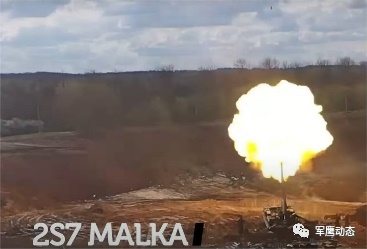
 Russia to Increase Deployment of Tornado-S Multiple Launch Rocket Systems and 2S7M Malka Howitzers in UkraineAccording to a report by Army Recognition on December 1, 2022, Russian Defense Minister General Sergey Shoigu announced the increase of the latest generation MLRS (Multiple Launch Rocket System) Tornado-S deployment in Ukraine, capable of launching guided rockets with a maximum range of 120 km, and the 2S7M Malka, considered the most powerful self-propelled artillery in the world. These two artillery systems will be used for counter-battery warfare against the Ukrainian Armed Forces within Ukraine.
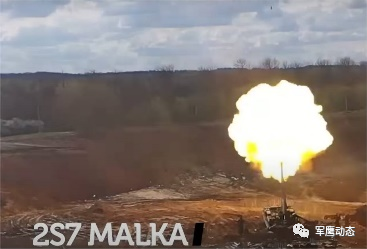 The 2S7M Malka manufactured in Russia is considered the most powerful self-propelled howitzer in the world. (Image: Russian Ministry of Defense)Due to the recent victories of the Ukrainian army and the use of modern artillery systems by the Ukrainian Armed Forces, including self-propelled howitzers donated by allies such as the German PzH 2000, French CAESAR, and Polish Krab, as well as the M142 HIMARS rocket artillery provided by the United States, the Russian military must deploy their latest artillery systems, such as the Tornado-S MLRS and the 2S7M Malka (Malka) 203mm self-propelled howitzer to counter these weapons, which will be a key factor in destroying Ukrainian artillery firepower.The 2S7M Malka is an improved version of the Russian-made 2S7 Pion, considered the most powerful self-propelled howitzer in the world. The howitzer is based on a tracked chassis and is equipped with a 2A44 203mm cannon.The 2S7M “Malka” is designed to destroy enemy strategic targets in tactical depth defense. The artillery has a firing rate of up to 2.5 rounds per minute and a range of approximately 50 km. The howitzer can fire standard ammunition as well as nuclear artillery shells. The 203mm RD5-1 nuclear shell has a yield equivalent to 2000 tons of TNT.The Russian defense industry will also develop precision-guided munitions for the Malka system. The new precision munitions are based on various technologies to improve shooting accuracy using radio ballistic and satellite navigation systems.To enhance the accuracy of artillery fire, the Russian army now uses Orlan-10 drones to perform reconnaissance missions and transmit real-time images and data about targets.
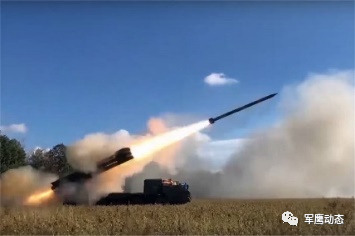 The Tornado-S is the latest generation of Russian-made rocket launch systems, capable of launching guided rockets with a maximum range of 120mm. (Image: Russian Ministry of Defense)The Tornado-S is Russia’s latest generation 300mm multiple launch rocket system (MLRS), which, like the US M142 HIMARS, can launch guided rockets, but with a maximum range of 120 km, while HIMARS can launch rockets within a range of 70 km.The US HIMARS can launch MGM-140 ATACMS (Army Tactical Missile System) with ranges from 128 to 300 km, but this type of missile has not yet been delivered to Ukraine.The Tornado-S can launch both guided and unguided rockets, including guided rockets 9M544 and 9M549 and unguided rockets 9M555K, 9M55K1, 9M55F, 9M55S, 9M55K6, 9M525, 9M528, 9M529, 9M531, and 9M533.The 9M544 is a guided rocket with a caliber of 300mm, using the SN398 strapdown inertial navigation system combined with Glonass satellite navigation and positioning devices. Compared to unguided rockets, this rocket has doubled launch accuracy and tripled hit accuracy, equipped with a high-explosive fragmentation warhead capable of striking concentrated areas of personnel, armored and soft targets, artillery batteries, command posts, and ammunition depots. The 9M549 guided rocket is equipped with HE-FRAG (high-explosive fragmentation) munitions.
Translated by Ziwen from Army Recognition on December 4, 2022
02
Raytheon and MBDA to Jointly Manufacture Patriot Missiles in Germany
According to a report by European Security and Defense on December 1, 2022, the war in Ukraine and Russia’s large-scale missile attacks on the country’s civilian infrastructure have profoundly demonstrated the importance of effective air defense.
However, to make it work, there must be a sufficient number of intercept missiles to maintain defensive capabilities in long-range strike operations and avoid saturating the defense system with attacks.
The Patriot is the most common long-range air defense system in the Western world, and its users are clearly learning this lesson and weighing the issue of purchasing more missiles.
To meet the growing demand in the coming years, Patriot manufacturers Raytheon Missiles and Defense hope to expand their production capacity by collaborating with the German missile manufacturer MBDA Germany.
Jürgen Koneczny, Managing Director of the 50:50 joint venture COMLOG between MBDA, based in Schrobenhausen, Bavaria, and Raytheon, explained in an interview that both companies have developed a “strategic roadmap” for producing Patriot missiles in Germany, and COMLOG can establish the necessary production capacity.
Koneczny stated that the joint venture has already begun to maintain, repair, and modernize the Patriot PAC-2 series missiles used in Europe, adding that “for this, other partners can be included in the strategic roadmap, including MBDA’s subsidiary Bayern Chemie and TDW. Bayern Chemie is one of the leading companies for rocket propulsion systems and warheads TDW.”

Douglas B. Stevenson, Director of International Demand and Capability at Raytheon Missiles and Defense. Image: Raytheon
Douglas B. Stevenson, Director of International Demand and Capability at Raytheon Missiles and Defense, pointed out that COMLOG provides “an excellent starting point” for quickly establishing new production facilities. According to him, this will involve the final assembly of the PAC-2 series GEM-T variant (also known as MIM-104E).
Stevenson stated, “Therefore, for us, this will be a new production base. This will be a new international expansion for the GEM-T and PATRIOT systems, as we will be doing all final assembly of missiles for European partners in Europe. We believe this is possible with COMLOG’s existing infrastructure and capabilities, licenses, supply chain, and skilled workforce.”
The US government is also familiar with COMLOG’s capabilities and experience, Stevenson stated: “We expect them to fully support our proposal.” He added, “This project is a reasonable way to meet the growing demand in Europe, and with the German project, we will double the global production rate of GEM-T missiles.”
Stevenson believes the goal is not to replace US capacity but to expand capacity elsewhere to increase output for the international community. This is not entirely new, as the Patriot missile engines have been assembled in Germany for some time in the 1990s. However, production stopped after all orders were completed.
If the project can be successfully implemented, Raytheon manager Stevenson will transfer the production of missile engines to Bayern Chemie located in Aschaffenburg. He explained: “This will be an update of the capabilities and capacities that Bayern Chemie already possesses.” Raytheon will further commission MBDA’s subsidiary to produce the entire propulsion section.
Stevenson stated, “This means that an important subcomponent of the missile will be manufactured in Germany.” Stevenson estimates that it will take three to four years to complete the entire manufacturing process and establish the supply structure for rocket engines. Additionally, TDW may manufacture the warheads.

Jürgen Koneczny, CEO of COMLOG. Image: COMLOG
For Koneczny, finding the right personnel is a challenging process. He said, “We will utilize the qualification certification time to bring the right people on board before the timeline for production begins.”
According to the strategic roadmap of Raytheon and MBDA, these contracts will be handled by the NATO Support and Procurement Agency (NSPA), which has so far managed the maintenance of the Patriot missile series through this agency. European countries will then procure their GEM-T missiles through this agency. Koneczny stated that Germany could act as the prime contractor through the European Shield Initiative (ESSI) launched in Berlin.
So far, 14 NATO allies plus Finland signed a letter of intent to develop the ESSI initiative on October 13, 2022. The initiative aims to strengthen NATO’s air defense in Europe by jointly purchasing air defense equipment and missiles from European countries, establishing a European air defense and missile defense system.
The German Ministry of Defense envisions that partner countries will jointly procure, use, and maintain the necessary systems, thereby saving costs and creating synergies. According to the German Ministry of Defense, ESSI signatories intend to jointly purchase additional guided missiles for the IRIS-T SLM air defense system or the Patriot air defense system developed in Germany.
Germany, as the main customer, may need to ensure a sufficient quantity of missile procurement to make the investment in the new production line in Bavaria worthwhile. After all, the project must ultimately also achieve a commercial return.
Observers believe that the minimum required output may be in the triple digits. Given that the German government wants Germany to play a leading role in air defense in Europe, this idea is not entirely far-fetched.
Even during the Cold War, the Bundeswehr focused on air defense. At that time, the air force had 36 Patriot batteries, as well as the same number of HAWK batteries and about a dozen Roland units. This impressive product mix has been reduced to only 12 Patriot batteries.
It is reported that the PAC-2 missile stock in the air force’s ammunition depot is also limited to a few hundred. The PAC-2 (MIM-104C) variant is relatively outdated by modern standards, having been in service since 1990, thus requiring upgrades. New members of the European Patriot Club, such as Sweden or Switzerland, will receive the PAC-2 GEM-T variant.
Koneczny explained that so far, Germany has only ordered a limited number of PAC-2 missiles, upgrading them to the PAC-2 GEM-T configuration.
It is also worth noting that while the PAC-2 GEM-T is the latest variant of the PAC-2/GEM series missiles, according to the US Army’s lower project office, it is not a particularly new missile design, having been equipped with the first units as early as 2002.
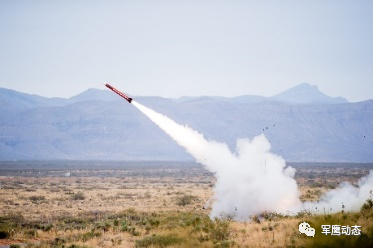
MBDA tests the Patriot system in Freinhausen. Image: MBDA Germany
Raytheon stated that compared to the baseline PAC-2, the GEM-T missile has better capabilities against tactical ballistic missiles, cruise missiles, or aircraft, which can complement the short-range PAC-3 missiles manufactured by Lockheed Martin.
A GEM-T missile. Image: MBDA
If the strategic roadmap of Raytheon and MBDA aligns with the interests of European Patriot users and is implemented, its advantages will be evident: part of the added value will remain in Europe. At the same time, Germany will create manufacturing capabilities and expertise, which will reduce dependence on foreign sources to some extent and enhance industrial resilience.
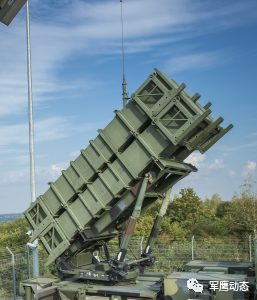
Patriot system of MBDA in Freinhausen. Image: MBDA
The currently active PAC-2 missiles in Germany are rapidly approaching the end of their service life, expected around 2030, thus requiring replacement before then. Insiders in the German Ministry of Defense stated that according to current plans, the German Air Force intends to operate the Patriot system until 2048.
Therefore, to achieve this lifespan goal, it is necessary to procure replacement missiles, as well as possibly other replacement components such as new radars.
Raytheon has developed the LTAMDS to replace the old AN/MPQ-53 and AN/MPQ-65 radars, which may be necessary to maintain the effectiveness of the German Patriot system until 2048. Stevenson stated that both the PAC-2 GEM-T and PAC-3 MSE missiles are compatible with LTAMDS.
Looking ahead, new Patriot users may emerge in Europe. For example, Slovakia has transferred its surface-to-air missiles to Ukraine and is currently protected by other NATO partners such as Germany.
Before Germany makes a production decision, political and military leaders must develop specific procurement plans. It is clear that ground-based air defense is not the only high-priority project for the Bundeswehr. However, with the launch of ESSI, Berlin has generated certain expectations among signatory countries.
Additionally, the ammunition shortage issue within the Bundeswehr has now reached the public, as evidenced by recent reports from the Chancellor’s “Ammunition Summit.” This has put further pressure on German leadership to seek solutions.
Translated by Ziwen from European Security and Defense on December 5, 2022
03
Russian Military Deploys New ISDM “Zemledeliye” Mine Laying System in UkraineAccording to a report by Army Recognition on December 12, 2022, citing a video posted on Twitter by “ZOKA @200_zoka” on December 11, 2022, the new Russian ISDM Zemledeliye mine laying system based on a truck chassis is now fully operational and deployed by the Russian military in Ukraine. The Russian military has used the ISDM Zemledeliye mine laying system near Zaporizhia in southeastern Ukraine. (Image: Twitter account “ZOKA @200_zoka”)According to information released by the Twitter account “ZOKA @200_zoka”, the Russian military is using the ISDM Zemledeliye mine laying system to lay mines near the Dnipro River in southeastern Zaporizhia.The ISDM Zemledeliye is a mine laying system launcher based on a Kamaz 6560 8×8 military truck chassis, with a crew compartment at the front and two racks of 25 122mm tube launchers capable of firing anti-tank or anti-personnel mines.The ISDM “Zemledeliye” can launch mines covering an area equivalent to several football fields within minutes. The system uses 122mm caliber rocket launchers equipped with anti-tank or fragmentation mine warheads, with a range of 5-15 km.The entire ISDM “Zemledeliye” system includes a transport vehicle carrying 50 122mm rockets, loaded with deployable anti-personnel or anti-tank mines, and a loading vehicle equipped with a crane at the rear. Both the launcher and the loading vehicle are integrated into the Kamaz-6560 8×8 truck, equipped with an armored cabin.The ISDM “Zemledeliye” system’s launch truck is equipped with satellite navigation, a computer, and a weather station, allowing operators to make adjustments and consider the impact of weather on missile flight. For self-defense, the truck is also equipped with three smoke grenade launchers on each side of the control cabin located behind the crew compartment.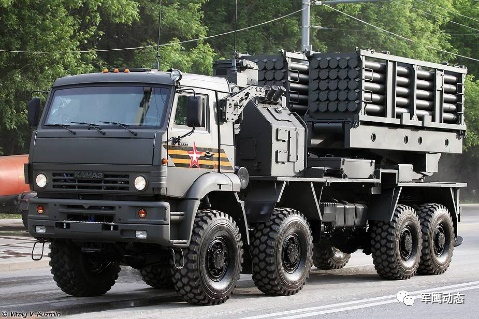
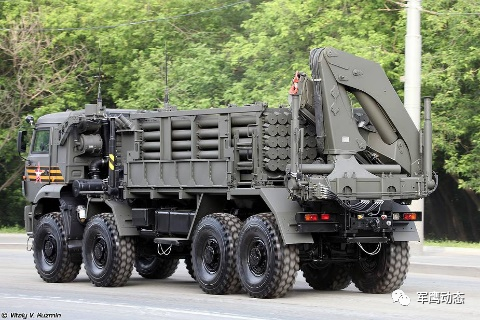 ISDM Zemledeliye mine laying system launcher. The loading vehicle of the mine laying system is equipped with a crane at the rear. (Image: Vitaly Kuzmin)
Translated by Ziwen from Army Recognition on December 13, 2022
04
Japan Plans to Increase Defense Budget by 50% in Five Years
According to Japanese media reports, on December 12, during the opening ceremony of “Rising Thunder 2021” held at the Yajima Training Center, soldiers from Japan’s 32nd Infantry Regiment of the Ground Self-Defense Force (left) and US troops from the 7th Infantry Division (right) salute the Japanese and US flags.
According to Jakub Wozniak, Japanese Prime Minister Fumio Kishida has requested the Finance Minister and Defense Minister to increase defense spending by more than 50% over the next five years, reaching approximately 43 trillion yen (316 billion USD) or about 8.6 trillion yen (63.3 billion USD) per year.
The current five-year plan will end in April 2023, during which defense spending is approximately 25.5 trillion yen (188 billion USD); the budget for 2022 is 5.4 trillion yen (396 million USD).

On December 1, 2021, during the opening ceremony of “Rising Thunder 2021” held at the Yakima Training Center, soldiers from Japan’s 32nd Infantry Regiment (left) and the US Army’s 7th Infantry Division (right) salute the Japanese and US flags. (Image: US Army Dean Johnson)
Jakub Wozniak commented that if implemented, this increase would bring Japan’s defense spending slightly below NATO’s 2% GDP spending standard. The new figure of 43 trillion yen is a compromise reached between the Ministry of Defense and the Ministry of Finance. The Ministry of Defense sought 48 trillion yen (353 billion USD), while the Ministry of Finance requested a moderate increase to around 35 trillion yen (256 billion USD).
Prime Minister Fumio Kishida made headlines earlier this year by announcing that Japan has the right to preemptively strike enemy bases as a last resort, and earlier this month, there were reports that Japan plans to significantly strengthen ground forces on the Ryukyu Islands and southwestern islands.
Tensions with North Korea have reignited discussions about the status of the Self-Defense Forces and their relationship with Japanese society. Since 2010, the Japanese Self-Defense Forces have shifted their focus from countering Russia to countering the People’s Republic of China, and since February 2024, following Russia’s invasion of Ukraine, the Japanese Self-Defense Forces also consider the Russian Federation a major threat; strengthening military cooperation with Australia, India, Taiwan, South Korea, Singapore, the UK, and the US; and acquiring new equipment and hardware.
On May 5, 2022, Japan and the UK signed a defense partnership agreement to deepen military relations to counter “authoritarian and coercive forces” in Europe and the Asia-Pacific region. Since Russia’s invasion of Ukraine in February 2022, military coordination between China and Russia has been increasing, leading to increased military activities around Japan.
On October 22, 2022, Japan and Australia signed a new bilateral security agreement, including military, intelligence, and cybersecurity cooperation. This is an upgrade of the 2007 Joint Declaration on Security Cooperation. This is Japan’s first treaty with a country other than the United States.
Translated by Ziwen from Army Recognition on December 13, 2022
05
Ukrainian Soldiers Capture the Most Modern BRM-1K 2021 Reconnaissance Vehicle from Russian Forces
According to a report by Army Recognition on December 12, 2022, citing a video posted on the social network Telegram on December 9, 2022, Ukrainian soldiers captured a BRM-1K 2021 model, which is the most modern reconnaissance tracked armored vehicle in service with the Russian army.
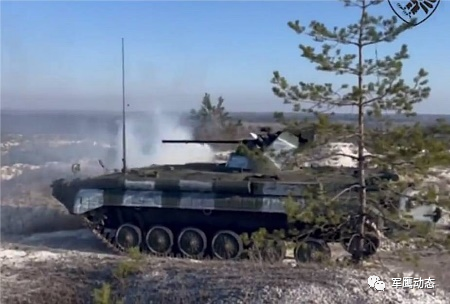
Ukrainian soldiers captured a BRM-1K from the Russian army, which is the most modern reconnaissance tracked armored vehicle currently used by the Ukrainian army. (Image: Telegram)
The BRM-1K is a reconnaissance tracked armored vehicle based on the BMP-1 infantry fighting vehicle (IFV) tracked chassis. The vehicle is typically used by a reconnaissance company of a motorized rifle regiment or tank regiment, with three vehicles assigned to a motorized rifle reconnaissance battalion or tank division.
The first model of the BRM-1K has a layout similar to the BMP-1 IFV but is equipped with a two-man turret, armed with a 73mm 2A28 gun, a 7.62mm PKT coaxial machine gun, and six 81mm smoke grenade launchers. The rear of the turret is equipped with a PSNR-5 (1RL133), NATO codename “High Mike,” a battlefield surveillance radar.
The radar has a maximum range of 10 km, and other equipment carried by the vehicle includes a DKRM-1 (1D8) laser rangefinder, an ARRS-1 positioning device, an IMP mine detector, and a 1PN33B night vision binocular. The vehicle is also equipped with navigation devices including TNA-1, IG11N gyroscopic compass, and 1T25 measuring device.
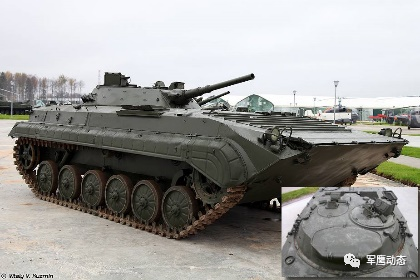
The first model of the BRM-1K has a two-man turret, with the PSNR-5 (1RL133), NATO codename “High Mike” battlefield surveillance radar installed at the rear. (Image: Vitaly Kuzmin)
During the 2021 edition, a new version of the BRM-1K was unveiled at a military-technical forum held near Moscow, which has the same name but is based on the BMP-1AM, a modernized version of the BMP-1, but equipped with a new remote-controlled weapon station armed with a 2A72 30mm automatic cannon and a PKT 7.62mm coaxial turret, which is also installed on the BTR-82A, an 8×8 IFV manufactured in Russia.
The BRM-1K 2021 model is now equipped with a 1L111M-1 J-band surveillance radar, capable of detecting moving personnel and combat vehicles on the battlefield at a maximum distance of about 10 km. The radar is installed at the rear of the turret.
The BRM-1K 2021 model is also equipped with a communication system, including R-168-100kb, R-168-25u2, and R-168 UPS-2 radios. Onboard equipment also includes a fire control system TKN-4GA-01 combined with a day-night sighting system.
The BRM-1K 2021 model has a crew of five and a combat weight of 14.2 tons. The vehicle’s hull protection can withstand small-caliber weapons and shell fragments. It is powered by a UTD-20S1 6-cylinder 4-stroke V-type water-cooled diesel engine with a power of 300 horsepower. It can operate at a maximum road speed of 65 km/h and has a maximum cruising range of 550 km.
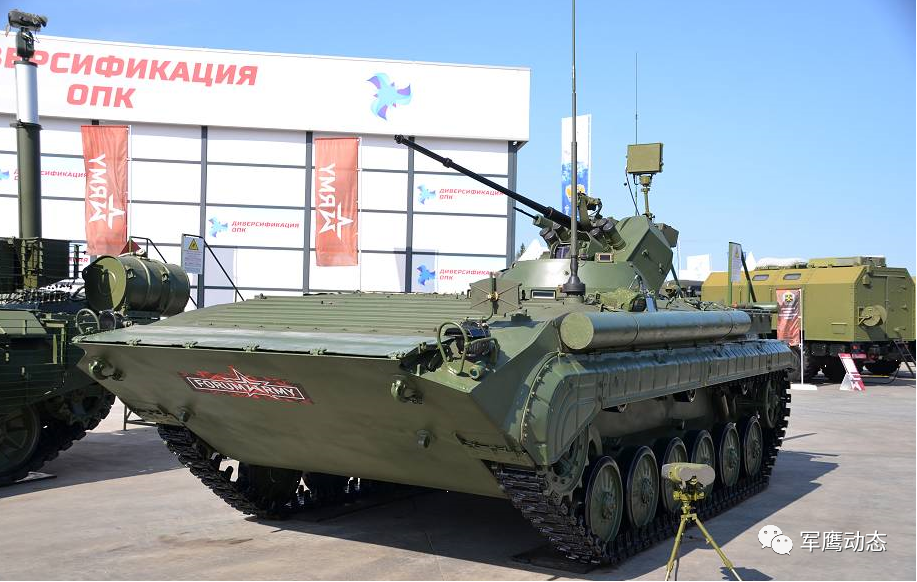
The BRM-1K 2021 model is based on the BMP-1AM tracked armored IFV, equipped with a 1L111M-1 J-band surveillance radar. (Image: Army Recognition)
Translated by Ziwen from Army Recognition on December 13, 2022
06
Israel’s Iron Fist APS Successfully Completes Interception Tests
According to a report by Army Recognition on December 13, 2022, the Israel Defense Forces and Elbit Systems announced that the “Iron Fist” active protection system has successfully completed a series of interception tests in challenging scenarios. The next steps include completing the development process for two IDF vehicles: the Eitan APC and the armored Caterpillar D9 bulldozer.
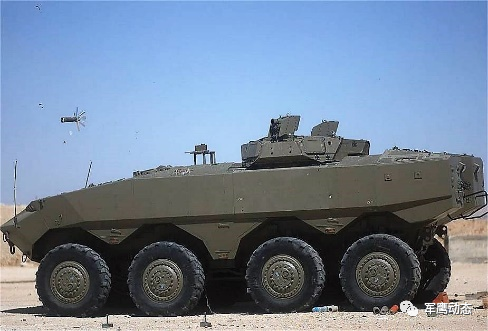
Eitan APC. The two components of the Iron Fist APS can be seen on the turret. Left side launches interceptors (Image: IDF/IMI)
The “Iron Fist” is a hard-kill active protection system (APS) designed by Israel Military Industries (IMI) with a modular design that can adapt to a range of platforms from light multipurpose vehicles to heavy armored vehicles. IMI unveiled the concept in 2006 and entered testing with the Israel Defense Forces in mid-2007.
The system has successfully been tested against various threats, including rocket-propelled grenades, anti-tank missiles, and high-explosive anti-tank (HEAT) munitions and kinetic penetrators launched from tanks.
It detects incoming threats through a fixed active electronically scanned array radar sensor developed by RADA Electronic Industries and an optional passive infrared detector developed by Elbit’s Elisra subsidiary. When a threat is imminent, it launches an explosive interceptor.
The interceptor explodes very close to the threat, destroying or deflecting the threat and destabilizing it by detonating the warhead. For this purpose, only the explosive effect of the explosive is used. The interceptor’s casing is made of combustible material, so it creates minimal shrapnel during the explosion, helping to minimize collateral damage.
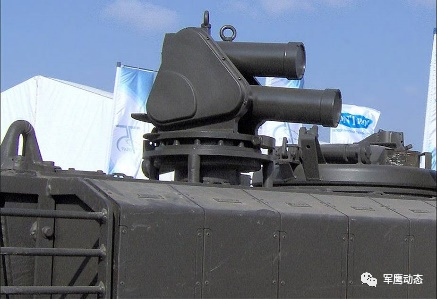
Iron Fist Active Protection System (Image: Wikimedia/IDF/IMI)
The procurement of the Iron Fist active protection system was approved in June 2009. The system will be installed on several units of the Namer armored personnel carrier. In November 2010, the Israeli Ministry of Defense announced the cessation of funding for the development of this system. In May 2011, the system intercepted kinetic penetrators and Metis anti-tank missiles during a test in the United States.
In early 2013, the Ministry of Defense tested IMI’s Iron Fist and Rafael Advanced Defense Systems’ Trophy during a bidding process for the selection of a second-generation APS for IDF vehicles. Both systems were then first-generation standards. Both systems received funding simultaneously until 2010, when the Ministry of Defense suspended funding for Iron Fist and began limited procurement of Trophy APS.
In 2012, the Ministry of Defense attempted to merge the two systems, utilizing the interceptors of Iron Fist and the Elta radar and C3 system of Trophy. IMI refused to cooperate as Rafael would be the prime contractor, rather than the two companies being equal partners. After the trials in 2013, the second-generation APS may be completed in a few years. IMI also attempted to promote Iron Fist internationally.
In December 2014, it was revealed that Rafael, Israel Aerospace Industries, and IMI had agreed to jointly develop the next generation of vehicle active defense systems based on the combination of Rafael/IAI’s Trophy and IMI’s Iron Fist. Rafael will act as the prime contractor, system developer, and integrator, while IAI and IMI will serve as subcontractors providing radar and interceptors, respectively.
Unlike Trophy’s interception method, IMI’s interceptor is based on anti-missile missiles. During Operation Protective Edge in mid-2014, Trophy successfully intercepted dozens of anti-tank missiles and rockets without casualties or false alarms, leading to a significant increase in interest in vehicle APS. The Ministry of Defense urged both companies to cooperate and combine their systems.
In June 2016, the US Army chose to test the “Iron Fist Light” configuration to protect its light and medium armored vehicles as part of the Modular Active Protection System (MAPS) project. The decision to test Iron Fist was primarily due to the system’s lightweight design.
In December 2018, the Army revealed that it would install Iron Fist on M2 Bradley infantry fighting vehicles in one armored brigade; an armored brigade consists of over 138 Bradley vehicles. Difficulties in powering the system and interception failures delayed integration, but these issues have been resolved.
In December 2016, BAE Systems received a contract from the Netherlands to test Iron Fist on their CV9035 infantry fighting vehicles. The procurement decision was made in January 2021. Through the midlife update program, this system will be provided to all Dutch systems.
In May 2019, the US Army and the UK Ministry of Defense announced plans to test the “Iron Fist Light Decoupled” (IF-LD) active protection system (APS).
In August 2019, Elbit Systems won a contract from IMoD to install the Iron Fist active protection system on the IDF’s new Eitan APC and the IDF’s armored Caterpillar D9 bulldozer.
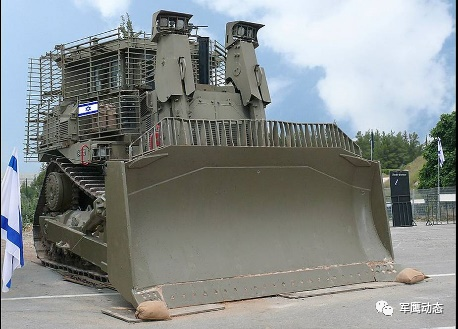
Israeli armored Caterpillar D9. (Image: Wikipedia/Zachi Evenor)
Translated by Ziwen from Army Recognition on December 14, 2022
07
iMUGS Alliance Demonstrates Use of Autonomous Ground Systems in Defense Missions
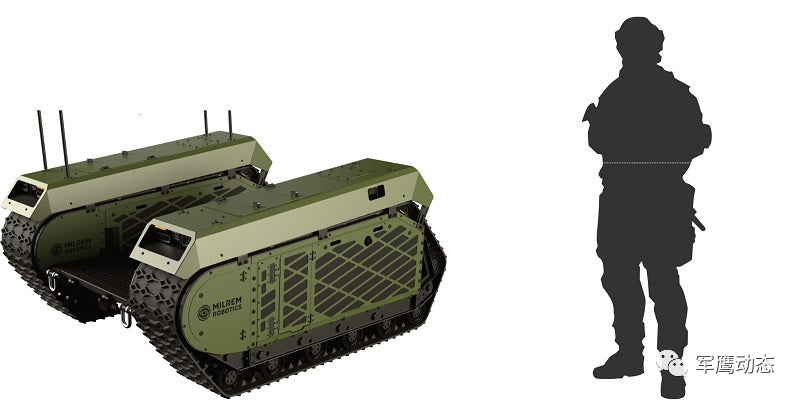
During the demonstration validation process, the French armed forces used Milrem Robotics’ THeMIS unmanned ground vehicles. Image: Milrem Robotics/Wikimedia Commons.
According to Army Technology on December 14, 2022, the Integrated Modular Unmanned Ground System (iMUGS) alliance led by European developer Milrem Robotics has demonstrated the use of unmanned systems in defense tasks performed by manned units.
The event took place in Versailles, France, led by Safran Group and Nexter, supported by consortium members.
iMUGS members include project coordinator Milrem Robotics, Bittium, Diehl Defence, Nexter Systems, Safran Electronics and Defense, Krauss-Maffei Wegmann, Latvijas Mobilais Telefons (LMT), Sol.One, Talgen Cybersecurity, dotOcean, GMV Aerospace and Defence, the Royal Military Academy of Belgium, and Insta Advance.
During the demonstration validation, the French armed forces used three THeMIS unmanned ground vehicles from Milrem Robotics, equipped with payloads capable of performing autonomous mission planning, resupply and casualty evacuation, intelligence, surveillance, and reconnaissance (ISR), and cyber threat response.
Kuldar Väärsi, CEO of the iMUGS alliance and Milrem Robotics, stated: “Unmanned systems increase the combat distance with the enemy and provide soldiers with means to collect more and more accurate information about their operational area than humans can gather due to various sensors and effectors.”
Väärsi added: “Autonomous unmanned equipment is a game changer for armed forces as it allows soldiers to be allocated to more important tasks.” This event was the fifth of six demonstrations to showcase the progress of the iMUGS project.
So far, four demonstrations have been conducted in Estonia, Latvia, Finland, and Belgium, with the final demonstration scheduled for December in Germany.
The iMUGS project has a budget of 32.6 million euros, primarily aimed at developing European standard unmanned ground systems and building a modular and scalable architecture for unmanned and manned hybrid systems.
During the demonstration, unmanned ground vehicles were equipped with laser warning systems from Saab Grintek, electro-optical systems from Escribano Mechanical Engineering, software-defined radios from Bittium, and PEARL acoustic detection systems from Metravib Defence.
Diehl Defence, Milrem Robotics, Nexter, and Safran developed the autonomous tracking, waypoint navigation, and obstacle detection and avoidance capabilities of the unmanned ground vehicles.
Additionally, the Observational Tracking Electro-Optical System (OTEOS) provides ISR capabilities, Talgen provides cyber threat response, and Belgian companies dotOcean and Insta provide global and local clustering capabilities.
The “Boxer” armored personnel carrier (APC) from Krauss-Maffei Wegmann features command and control (C2) and tactical C2ISR provided by GMV and Sol One. The APC also has a C2 mission module and a static command center.
Translated by Ziwen from Army Technology on December 23, 2022
08
Russia to Use New Uninterceptable Hypersonic Missiles in Ukraine
According to information released by the Russian Ministry of Defense on December 23, 2022, the Russian Armed Forces have used new hypersonic missiles for the first time in combat operations in Ukraine, including the “Kinzhal” air-to-ground missile and the 3M22 “Zircon” ship-launched hypersonic cruise missile, which cannot be detected or intercepted by Ukrainian air defense systems.
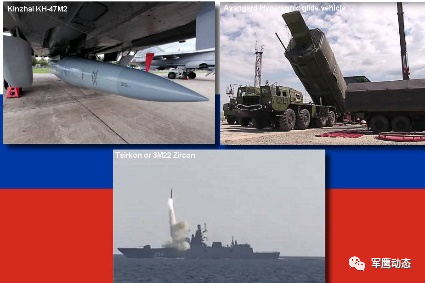
Russia has used hypersonic missiles for the first time in Ukraine, including the Kinzhal air-to-ground missile and the 3M22 Zircon ship-launched hypersonic cruise missile.
Valery Gerasimov, First Deputy Minister of Defense and Chief of the General Staff of Russia, stated that the Kinzhal KH-47M2 hypersonic missile system used in combat in Ukraine has proven to be highly efficient and flawless against the air defense systems deployed in Ukraine.
Some countries are developing hypersonic weapons that fly at speeds of at least 5 Mach (five times the speed of sound). Hypersonic weapons mainly fall into two categories: hypersonic glide vehicles and hypersonic cruise missiles.
A hypersonic glide vehicle (HGV) is a warhead for ballistic missiles that can maneuver and glide at hypersonic speeds. It is used on ballistic missiles to significantly alter their trajectory. Conventional ballistic missiles follow predictable ballistic trajectories, making them easy to intercept by the latest anti-ballistic missile (ABM) systems. HGVs make them unpredictable, allowing them to evade air defense systems.
HGVs are launched from rockets before gliding to their targets, while hypersonic cruise missiles are powered by high-speed air-breathing engines or “scramjet engines” after acquiring their targets. Scramjet engines are an improved version of ramjet engines, where combustion occurs in supersonic airflow.
Unlike ballistic missiles, hypersonic weapons do not follow ballistic trajectories and can maneuver during their flight to the target. Due to their speed, maneuverability, and low-altitude flight, hypersonic missiles can evade detection and modern air defense systems.
Since the 1980s, Russia has been researching hypersonic weapon technology to counter the deployment of missile defense systems by the US in the US and Europe, and Russia has accelerated its efforts in this area following the US withdrawal from the Anti-Ballistic Missile Treaty in 2001.
Russia has developed three hypersonic weapons, including Avangard, 3M22 Zircon, and Kh-47M2 Kinzhal.
 Overview of the Russian Avangard hypersonic glide vehicle
The Avangard is a hypersonic glide vehicle (HGV) that can be integrated into RS-18B/UR-100UTTKh SS-19, R-36M2, and RS-28 Sarmat intercontinental ballistic missiles. Using HGVs, it can provide effective unlimited range.
The Avangard is equipped with onboard countermeasures and is reported to carry a nuclear warhead. It has successfully been tested twice in 2016 and once in December 2018, reportedly reaching speeds of up to 20 Mach.
According to Russian sources, the Avangard hypersonic glide vehicle can fly through dense atmospheres at speeds of up to 27 Mach (about 32,000 km/h), executing directional and altitude maneuvers, and overcoming any missile defense.
The high speed of the Avangard may give it better target penetration characteristics than lighter subsonic cruise missiles. The Avangard weighs about 2000 kg, flies at speeds of 20-27 Mach, and has kinetic energy equivalent to 17.5 tons of TNT.
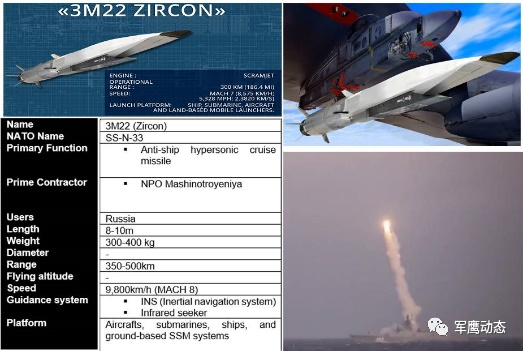
Technical Specifications of the Russian Zircon or 3M22 Zircon Ship-Launched Hypersonic Cruise Missile
The Zircon or 3M22 Zircon is a ship-launched hypersonic cruise missile capable of flying at speeds of 6 to 8 Mach. It is reported that the missile can strike ground and naval targets.
The Zircon has a low-altitude range of 135-270 nautical miles (250-500 km) and a semi-ballistic range of 400 nautical miles (740 km). The missile’s average range is about 400-450 km. According to Russian media, the maximum range is 540 nautical miles (1000 km). Some internet sources even claim that the missile’s range can reach 1000-2000 km, depending on the type of target.
The Zircon hypersonic missile is equipped with a warhead weighing 300 to 400 kg, carrying HE (high explosive) or a 20 kt nuclear payload.
On December 23, 2022, Russian Defense Minister Sergey Shoigu announced the first delivery of Zircon hypersonic missiles to the Russian Navy. Sergey Shoigu stated that the Admiral Gorshkov frigate, equipped with the top-tier Zircon sea-launched hypersonic missile system, has completed final preparations before carrying out missions in the world’s oceans.
Russian military sources stated that the mobile launchers for the Zircon hypersonic missiles can launch “Bastion” coastal complexes, as well as supersonic missiles launched from surface and underwater carriers. It can destroy both naval and ground targets.
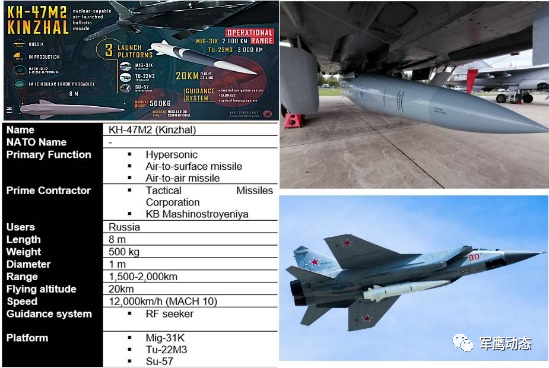 Technical Data of the Russian Kinzhal KH-47M2 Air-Launched Hypersonic Ballistic Missile
The Kinzhal KH-47M2 is a maneuverable air-launched hypersonic ballistic missile, improved from the Iskander missile. It is reported that Russia launched the Kinzhal missile from a MiG-31 interceptor aircraft in Ukraine and plans to deploy the missile on Su-34 long-range attack fighters and Tu-22M3 strategic bombers.
The Kinzhal missile system equipped with hypersonic maneuvering missiles was used for the first time in military operations in Ukraine. The missile was used to destroy a large underground missile and aircraft munitions depot of the Ukrainian Armed Forces in the Delyatin settlement in western Ukraine, which had previously served as a storage facility for Soviet nuclear weapons.
The high speed of the Kinzhal gives it better target penetration characteristics than lighter, slower cruise missiles. With advanced maneuverability, high precision, and hypersonic speed, some sources refer to it as a “carrier killer,” as it is reportedly capable of incapacitating a 100,000-ton supercarrier, potentially sinking it in a single strike with a mass of 2000 kg at a speed of 12 Mach. The Kinzhal missile has kinetic energy exceeding 16.9 kJ, equivalent to 4000 kg of TNT.
On April 27, 2022, Russia announced the development of a new hypersonic missile code-named “Gremlin.” The missile will be smaller than the Kinzhal. Its carrier will be the Tu-22M3 strategic bomber, Su-57, Su-30SM, and Su-35S fighters. The Su-57 can carry the Gremlin internally.
Translated by Ziwen from Army Recognition on December 24, 2022