 【Pinned Star】【Experience a Complete and Happy Educational Life】【Guarding New Education, Guarding Truth, Goodness, and Beauty】
Galaxy Experimental Primary School:
A New Educational Ecosystem Under AI Starlight
Original|Ren Wei, Zhu Xueqing, et al.
Source|New Educators, Zhi Dao
This issue edited by|Guarding New Education
AI courses teach children to create beauty with code, smart classrooms protect children’s individual growth, project-based learning cultivates children’s practical abilities, and the star evaluation system illuminates children’s unique values—these applications of technology all point to one core: people.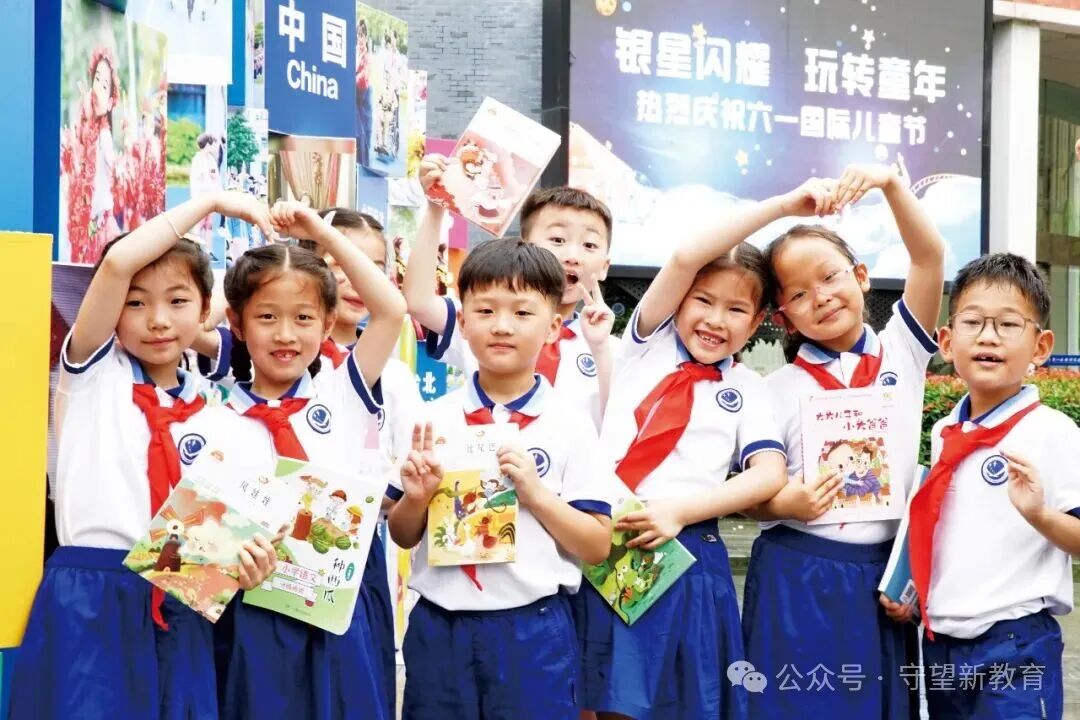
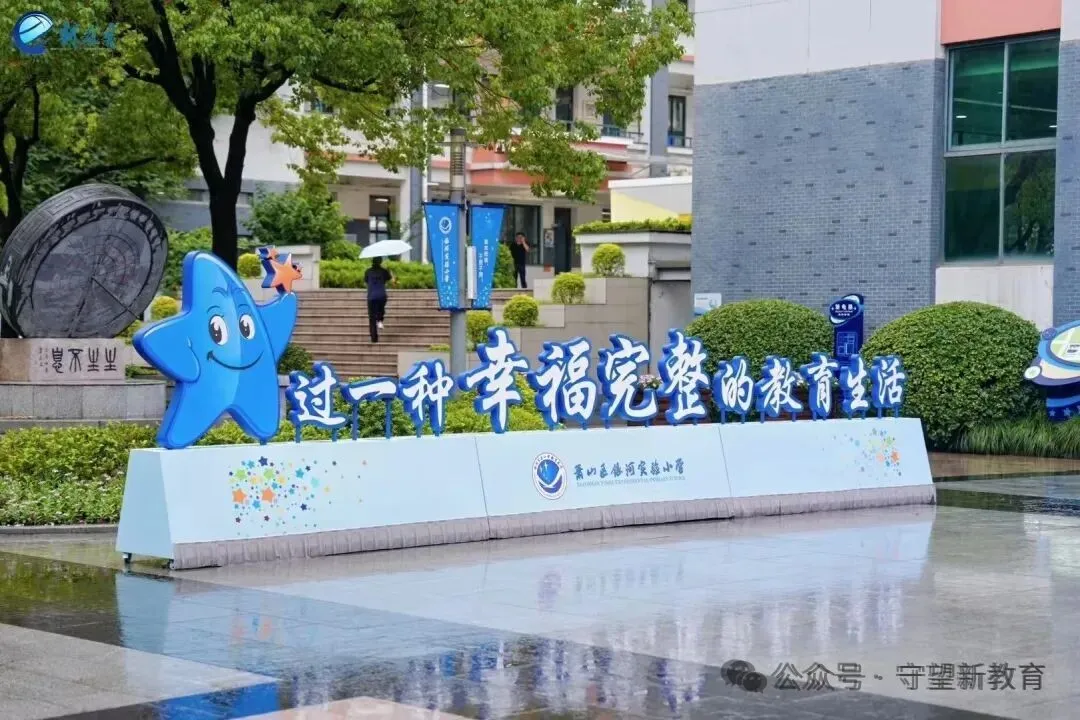
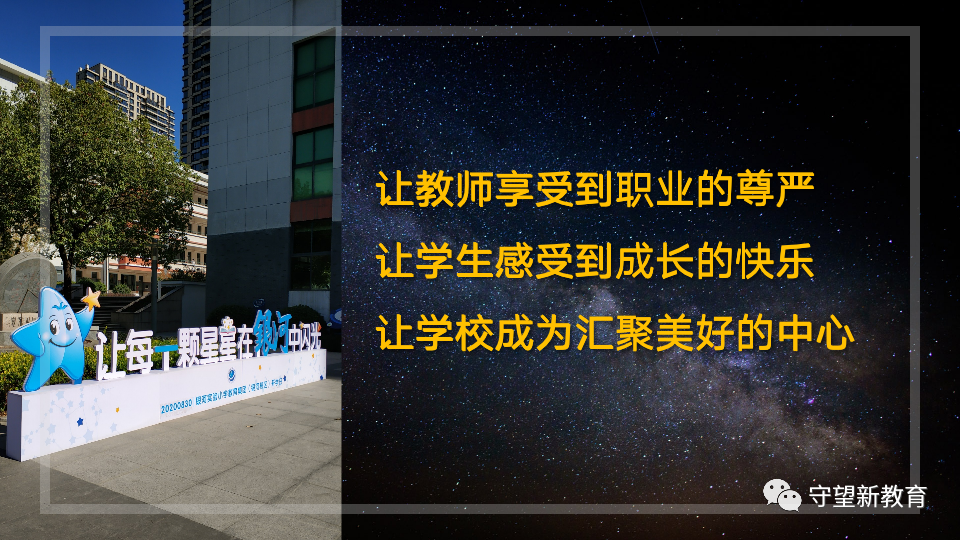
Zhejiang Province Science Education Experimental School—Galaxy Experimental Primary School adheres to the educational philosophy of “Let every star shine in the galaxy” and insists on the technical route of “empowering education with technology,” building a new educational ecosystem that deeply integrates AI and education, exploring a new path for nurturing in the intelligent era.
The school has created a one-stop AI course matrix that forms a comprehensive cultivation system for scientific and technological literacy across all educational stages; established a smart classroom platform that deeply integrates into the five stages of classroom teaching to achieve a closed-loop optimization of “teaching and evaluation”; explored project-based learning empowered by intelligent tracking to develop higher-order abilities; and created a star evaluation system for multi-dimensional data collection to visualize the growth process.
Galaxy Experimental Primary School proves through practice: when intelligent technology organically integrates with education, technology becomes the spark that lights up the stars of life, and education gains the power to illuminate the future.
Ye Qing: In the AI era, a slower education is more called for—opening schools towards the future
Zhu Xueqing: Let every star shine in the galaxy
1
AI Courses: Technology Enlightenment Illuminating Thinking Stars
In the campus of Galaxy Experimental Primary School, the seeds of technology are quietly sprouting. The school’s AI courses adhere to a dual-track approach of layered teaching and intelligent environments: by offering a variety of scientific and technological experimental courses, the warmth of technology stimulates students’ exploratory interests, and through the AI laboratory, students experience cutting-edge intelligent technologies, transforming intelligent technology from a tool into the enlightening starlight of students’ thinking.
(1) Layered Courses: Stimulating Interest with the Warmth of Technology
Every noon, while other children enjoy their leisurely time after meals, members of the robotics club hasten towards the robotics classroom. At the beginning of the semester, the school club purchased a batch of new equipment, and the members are eager to start their interactive journey with their “new partners.” The robots built with LEGO kits are flexibly following lines, turning, and grabbing blocks, all thanks to the programs coded by the children on their tablets.
In the artificial intelligence class, teachers design layered learning content based on students’ ages and cognitive levels. Lower-grade members start by familiarizing themselves with simple sensors, connecting hardware, and attempting to use visual programming to realize their ideas, such as making LED lights brighten and dim with sound volume and issuing voice commands to gradually adjust the fan speed. At the moment their ideas come to life, the children widen their eyes in amazement at the wonders of technology. Meanwhile, higher-grade members are no longer satisfied with achieving individual functions; they delve into the comprehensive applications of artificial intelligence. In class, they use development boards like Arduino and Robotbit to connect various sensors, simulating a real smart home system to build a smart villa model. Some groups create a facial recognition entry detection system, while others build a new air purification system that can monitor indoor air quality in real-time and automatically purify it. Through the collaborative process of building and modifying their projects, the children’s communication, collaboration, and practical innovation abilities are enhanced.
Starting from the 2022 academic year, the school has added many technology-related experimental courses to its club and after-school programs, including robotics courses, AI magician courses, virtual experiment courses, and various AI courses, greatly stimulating children’s enthusiasm for scientific and technological innovation.
(2) Intelligent Environments: Bringing Future Technologies into the Classroom
This year, Hangzhou’s “Six Little Dragons” high-tech enterprises have stood out nationally, injecting new vitality into local economic development. To allow students to access the most cutting-edge technologies, the school applied to build an AI laboratory, introducing advanced experimental kits and rich programming learning resources.
In the laboratory, students can conduct deeper research and exploration of voice, facial, and other intelligent recognition technologies.
During the promotion of campus waste sorting activities, club members conceived the idea of developing a waste recognition mini-game using image recognition technology to help classmates master waste sorting more quickly. Utilizing break time, they collected a large number of photos of waste generated during breaks, forming a database of common waste images through machine learning functions to achieve accurate waste classification. During the realization of this idea, they encountered challenges such as low image recognition rates and inaccurate algorithm data, but with the help of guiding teachers and professional equipment resources, they continuously tried and improved, ultimately successfully completing the waste classification system.
Currently, this system is not only fully applied on campus but has also attracted the attention of surrounding communities, contributing a small part to promoting community waste sorting efforts.
From the fun enlightenment in lower grades to innovative practices in higher grades, from club courses to laboratory explorations, the AI courses at Galaxy Experimental Primary School flow like a river of stars, allowing every child to find their own constellation. Here, there is a stage for “gifted children” and a technological feast that “everyone can participate in.” When children learn to solve problems with code and convey warmth through technology in these courses, technology is no longer a cold tool but the starlight that nourishes the soul.
Digital intelligence reshapes the future of education—2025 New Education Experimental Seminar “Xiaoshan Declaration”
Seeing the essence of education in the “Rivers, Lakes, and Seas”—In-depth report: The cultural strength of “Shangxue Xiaoshan”
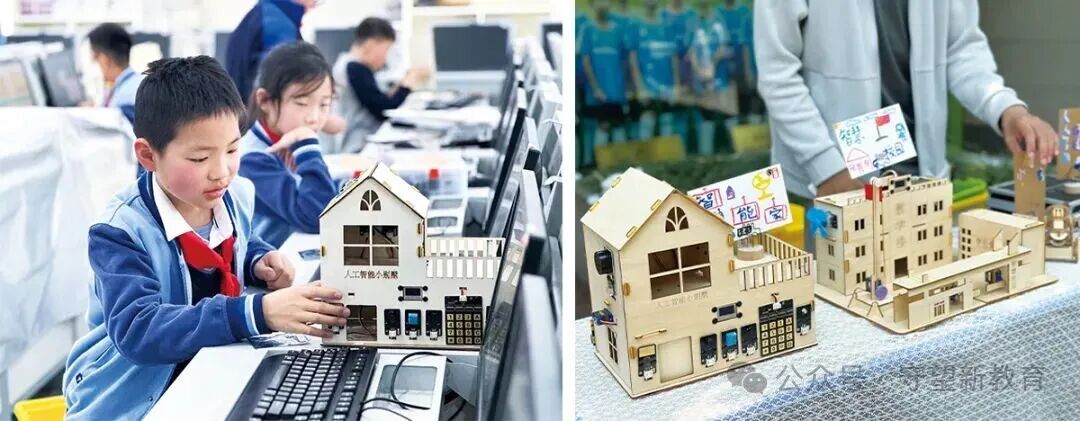
Simulating a real smart home system, building a smart villa model
2
Smart Classrooms: Precision Teaching Achieving Quality Improvement and Reduced Burden
“Teaching according to aptitude, step by step” is the educational ideal we have always pursued. However, teachers are often constrained by limited energy and cannot attend to every student. Now, artificial intelligence injects new vitality into education and teaching, making personalized instruction possible with the support of intelligent technology, whether in classroom teaching or homework grading.
(1) Precision Teaching: Seeing Every Child’s Knowledge Galaxy
In the past, classroom teaching was like a communal meal. Teachers found it difficult to accurately grasp each student’s learning situation, so they could only assign uniform homework, often leaving “hungry” students feeling unsatisfied and “overloaded” students gasping for breath.
With the support of the district’s teacher development center and technology center, the school became one of the first experimental schools for precision teaching systems. By leveraging the three core functions of “real-time analysis of learning conditions, intelligent resource push, and precise process guidance,” it reshapes the five stages of classroom teaching, achieving innovative changes in teaching models.
Math teacher Ni has a deep understanding of this. Relying on the smart homework system, after students complete their preview tasks before class, the system automatically collects answer data and conducts real-time analysis of learning conditions from multiple dimensions, generating a visual “knowledge map.” In class, teachers conduct targeted teaching based on the pre-class learning condition analysis results provided by the smart homework system. When explaining key knowledge points, teachers push real-time practice exercises through the system, and students complete them and upload them to the homework machine for scanning. The system can quickly determine correctness and, through real-time analysis of learning conditions, accurately locate students’ misunderstandings in knowledge comprehension, truly achieving personalized instruction.
(2) AI Composition: Hearing Every Child’s Unique Voice
Composition teaching is a key and challenging aspect of language teaching.
In the past, teachers often spent a lot of time and energy grading compositions, making it difficult to provide detailed feedback for every student, and the feedback was often not very targeted. Now, the AI composition grading system can quickly analyze the problems in students’ compositions, such as awkward sentences and limited vocabulary usage, and provide students with more suitable and vivid words and expressions through the client.
Class 407 was one of the first classes to trial the AI composition platform. After students returned home, they received targeted prompts to revise their compositions, and after a semester, the overall writing level of the class improved significantly. For teachers, the smart composition system also lightened their workload. Through the platform, they can view the overall situation of students’ compositions in the class, effectively conduct corresponding explanations in class, and use the individual issues identified by the system as resources for individual tutoring, making composition teaching more efficient.
The precision teaching system makes personalized cultivation more accurate, while the AI composition platform makes knowledge transfer warmer. In the classrooms of Galaxy Experimental Primary School, AI is not a cold grading machine but a “translator” that understands students. When technology begins to focus on each child’s knowledge blind spots and listens to each soul’s unique voice, education truly returns to the essence of “people.” Here, there is no production line of “standardized parts,” only “customized” growth plans, allowing every child to shine uniquely on their own track.
3
Learning Method Reform: Project Tracking Achieving Higher-Order Development
We have always believed that no matter how rich the curriculum is, if it does not involve changes in learning styles, the effectiveness of nurturing will be greatly reduced. Thus, a transformation concerning learning styles is quietly taking place on campus, gradually gaining momentum and illuminating the growth path of children.
During a flag-raising ceremony, science teacher Chen posed a thought-provoking question: “As the school continues to expand, parking at the school gate has become a major issue. Despite having supervising teachers and parent patrol teams, we still cannot solve the parking problem at the school gate. How can we design an intelligent parking system?” The children’s eyes lit up instantly, and they began to whisper and discuss, which is a vivid scene of project-based learning at Galaxy Experimental Primary School.
(1) Project-Based Learning: Letting Knowledge Take Wing in Practice
Project-based learning uses real projects as a link, transforming fragmented knowledge into a “toolbox” for solving problems, allowing learning to move from books to vibrant practice. It breaks the one-way transmission of traditional classrooms, guiding learners to truly understand the application scenarios and value of knowledge through the design, execution, and reflection of projects.
Since 2019, the school has embarked on the exploration of project-based learning, with the “Future City: Parking System” project becoming the starting point of this exploration.
In this project activity, students are no longer limited to textbook knowledge; they act like little engineers, delving into nearby parking lots to measure parking data and count the number of cars being picked up and dropped off. The math statistics skills learned in class are perfectly applied to display the usage frequency of parking spaces around the campus, while their art drawing skills are used to create parking system planning diagrams, and the maker skills learned in clubs are utilized to build their projects. During the project activities, the boundaries between subjects are broken, and the knowledge learned is no longer isolated but intermingled to solve real problems.
In 2022, the school further expanded the application of project-based learning, and the “Welcome to the Asian Games” project-based learning was launched enthusiastically. Each class represents an Asian country, and students conduct project exploration activities from multiple angles regarding the customs and specialties of each country, carefully designing entrance ceremony costumes and planning formation movements. Throughout the practical exploration process, students not only enhance their understanding of various Asian countries but also ignite their love for their hometown and country.
In 2023, the “Star Cultivation Garden” on campus became a new base for project-based learning. Students noticed that the low survival rate of crops was closely related to irrigation issues, so they initiated the “Star Cultivation Garden Irrigation System” project activity. They researched the water requirements of different crops and tested the soil’s water retention capacity, greatly exercising their innovative thinking and practical abilities through repeated experiments and improvements.
From the initial micro-projects based on subject orientation to interdisciplinary projects that integrate subjects, and then to super projects that break subject boundaries, the school has successfully achieved a transformation in teaching methods through top-level design of project-based learning.
(2) Intelligent Tracking: Making Abilities Clearly Visible in Iteration
As project-based learning continues to deepen, how to scientifically and comprehensively evaluate students’ performance in these projects and STEAM learning has become a new topic for the school.
At this time, the introduction of the project tracking system provides a new opportunity for the transformation of learning methods. Guiding teachers evaluate students’ learning processes and outcomes from multiple dimensions based on the process data uploaded by students in the tracking system. This not only helps teachers understand students’ knowledge application abilities but also allows them to focus on students’ abilities in teamwork, innovative thinking, and problem-solving.
In the “Star Cultivation Garden Irrigation System” project, students in Class 604 applied their knowledge to design an irrigation plan that utilizes the school’s drainage system to recycle wastewater. However, they encountered some technical challenges during the actual implementation. The teacher affirmed the superiority of their design through the intelligent tracking system and provided them with intelligent learning resources and usage guidance for the technical issues. Through continuous dialogue with the intelligent system, they found inspiration to solve the problems and ultimately succeeded. The feedback from the intelligent tracking system allows students to clearly understand their strengths and weaknesses, enabling targeted learning and improvement.
This transformation in learning styles not only brings a new learning experience to over 2,000 students but also leads to a change in teaching perspectives among teachers at Galaxy Experimental Primary School: teachers are no longer just knowledge transmitters but become guides and organizers in students’ learning, encouraging students to dare to question and innovate in project-based learning and STEAM practices, building a broad platform for learning and doing.
Project-based learning transforms students from knowledge recipients into problem solvers, while the intelligent tracking system makes growth from vague feelings into clear trajectories. At Galaxy Experimental Primary School, learning is not a tedious accumulation of knowledge but an adventure full of challenges and surprises. When children learn to collaborate across disciplines and solve real problems with technology in projects, and when they see their growth and transformation with the help of intelligent systems, learning gains a warm life, and growth takes on a visible form.
Zhu Xueqing: Build Every Classroom into a Library
Zhu Xueqing: Illustrated “New Education in the Galaxy” (Twelve Lectures) — Let’s go, let’s find good education
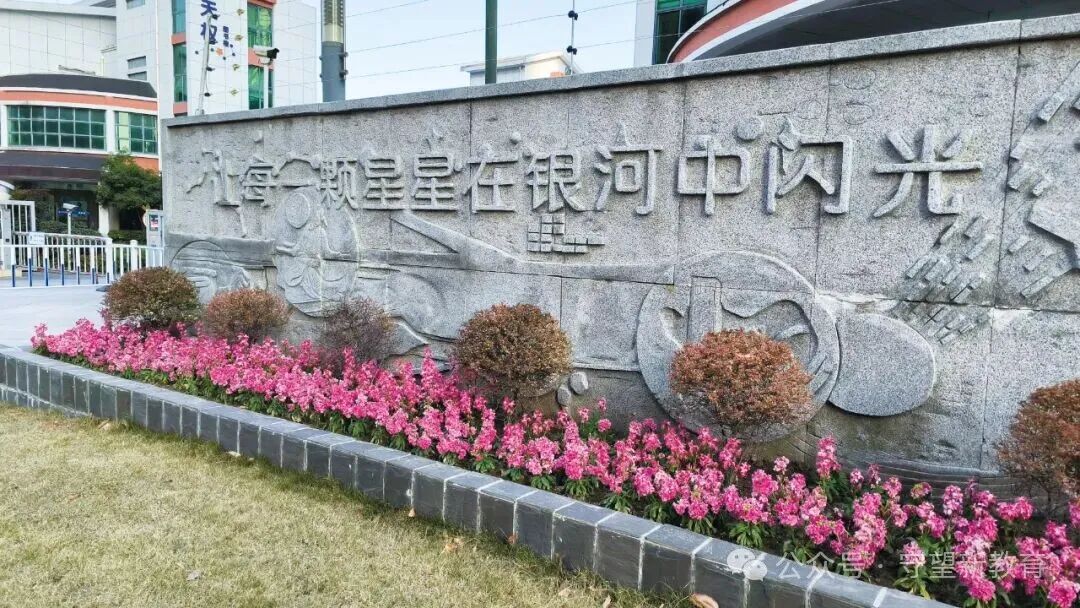
The educational philosophy of Galaxy Experimental Primary School
4
Star Evaluation System: Multi-Dimensional Construction of the Competency Development Engine
Since the establishment of the school, we have always adhered to the belief that having more measurement tools leads to more good students, continuously exploring ways to evaluate students’ comprehensive qualities. In 2004, the school implemented comprehensive evaluation through all-subject comments, in 2006, the school explored saving physical archives to document students’ growth, and in 2007, the school began using electronic archives to record students’ growth trajectories. However, it is undeniable that with the development of the times, the original evaluation methods have inevitably shown many shortcomings: heavy tasks for homeroom teachers, lack of home-school collaboration, and weak guidance of evaluation results, etc. Therefore, the school began to explore the path of technology-enabled evaluation.
(1) Star Evaluation System: Weaving a Multi-Dimensional Growth Coordinate System
In Hangzhou, the smart city brain and smart transportation have become deeply ingrained. Therefore, after fully considering the opinions of subject teachers and grade group leaders, the school decided to place the pivot of student comprehensive evaluation reform on AI-enabled evaluation and formed the Star Evaluation Platform through research, discussion, and refinement.
The platform is set up with nine major badges pointing to five basic dimensions of “morality, intelligence, physical fitness, aesthetics, and labor,” each dimension having detailed primary and secondary indicators, guiding each student to establish growth goals. In the academic achievement badge, the evaluation indicators not only focus on academic performance but also include learning attitudes, innovative spirit, problem-solving abilities, and six secondary indicators.
This means that even if a child’s exam scores are not top-notch, if they demonstrate a positive participation attitude and a spirit of innovation during the learning process, they can still light up their academic development badge.
On the parents’ mobile end, students can upload materials such as “the assignment I am most satisfied with this semester” and “the work I am most proud of” through photos, recordings, and videos. Subject teachers and student leaders can provide feedback based on the class rules and regulations, and the data is synchronized in real-time to the students’ accounts, accumulating in the students’ behavioral attitude habit radar chart database. Parents can upload five major competency materials in various forms such as text, images, audio, and video, which, after being reviewed and approved by homeroom teachers or subject teachers, are automatically included in the students’ digital archive, with the system automatically achieving vertical and horizontal comparisons, displaying the students’ competency improvement curves in a digital portrait format on parents’ mobile ends.
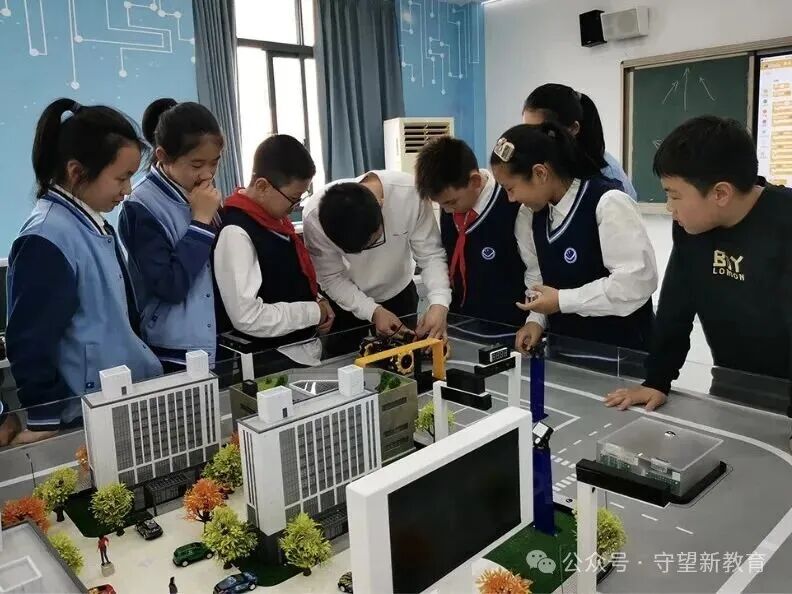
Students learning to simulate unmanned driving
(2) Home-School Synchronization: Activating the Internal Drive for Individual Growth
The application of the Star Evaluation Platform has allowed a large number of talented children to stand out.
Little Min was a girl who once felt inferior due to her math grades. During the music final performance in the second grade, she received praise from the music teacher for her drum performance and earned a “special interest” badge in the Star Evaluation System, which made her fall in love with percussion instruments. By the sixth grade, she had completed all domestic drum grading projects and became a campus music sensation during the “Little Bridge” music concert.
The application of the Star Evaluation Platform has also built a smooth bridge for home-school communication.
Parents can understand their children’s performance in various dimensions at school in real-time through the mobile end. Little Yuan’s father was surprised to see on his phone screen that his son’s score in the “running” dimension exceeded 90% of his peers. “I used to only focus on academic performance, but I didn’t realize he had such talent in running.” The school football team also discovered Little Yuan’s talent through the platform, and after discussing with the parents, they allowed him to join the football team, and now he is a key player on the school football team.
At Galaxy, there are no limits on the number of honors awarded, including various honors such as “Three Good Students,” and they are automatically generated. Through the evaluation requirements published on the Star Evaluation, children can apply for honors based on their determined goals, and at the end of the term, they can see on their parents’ mobile phones whether they have received honors.
The Star Evaluation Platform acts like a magnifying glass, clearly presenting every child’s strengths, ensuring they are not overlooked on their growth journey due to a single evaluation standard.
The Star Evaluation System breaks the shackles of single evaluation, discovering each child’s shining points from a multi-dimensional perspective, and the home-school collaboration mechanism transforms education from a solitary battle into a joint effort. In the smiling faces of children, we feel the positive changes brought by the Star Evaluation Platform. Because they know that every effort and every shining point can be seen.
Evaluation is not a cold score but a warm narrative of growth; it is not a tool for elimination and selection but a spark that lights up life. When every child can see their value in evaluation, education truly realizes the beautiful vision of “everyone shining.”
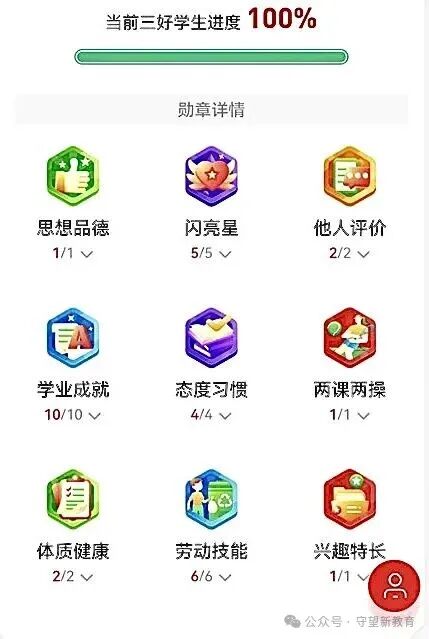
Star Evaluation—Nine Major Badges Illuminate
5
People Above Technology, Seeing the Stars and Sea of Education
As dusk falls, the data in the Galaxy Experimental Primary School’s brain backend continues to update.
But we know that behind those pulsating numbers are vibrant life trajectories. AI courses teach children to create beauty with code, smart classrooms protect children’s individual growth, project-based learning cultivates children’s practical abilities, and the star evaluation system illuminates children’s unique values. These applications of technology all point to one core: people. Technology can grade homework but cannot convey the care of teachers; it can analyze data but cannot sense students’ emotions; it can track growth but cannot nurture the warmth of the soul.
At Galaxy Experimental Primary School, we firmly believe: AI is not the protagonist of education but the assistant of teachers; it is not the mold of growth but the spark that lights up the starlight. When technology truly serves the growth of people, and educators always stand above technology to guard the essence of education, we can hold onto the stars and sea of education amidst the waves of technology.
This article is a research result of the 2024 Zhejiang Province Education Science Planning Project “Galaxy Laboratory: Constructing and Innovating Teaching Spaces for Enhancing Scientific and Technological Literacy in Primary Education” (2024SC001).
Lu Zhiwen: Let Life Return to the Main Stage of Education—Create a Good School Beyond Education, Be a Good Education Beyond School
Lin Zhongling: Believe in the Power of Stories—Let’s go, let’s do good education
【Guarding New Education】, guarding truth, goodness, and beauty! 【Pinned Star】 Experience a complete and happy educational life!
China Education News: What has the “New Education Experiment” brought to teachers?—Providing teachers with a clear growth path, making teachers’ growth visible!
“The Nobel Prize of Education”—Why are Zhu Yongxin and the New Education Experiment?
How to Create a Book Fragrant Campus?—Without a campus filled with the fragrance of books, there is no truly meaningful school.
Cheng Jieming: From Zhu Yongxin’s “New Education”—Creating a complete and happy educational life
Zhu Yongxin: The “Long March” of the New Education Experiment, Writing Papers on the Land of the Motherland
Understand and Join the Latest Guidelines of New Education|China Tao Xingzhi Research Association New Education Branch: Notice on Developing Group Members and Individual Members
Share beauty, salute originality! 【Guarding New Education】, guarding truth, goodness, and beauty! Let’s meet in truth and beauty, 【Guarding New Education】!“The Catcher in the Rye” has a word, guarding. Education is not about managing or not managing; between managing and not managing, there is a word called “guarding.”—Chen DongqiangRenew daily, daily renew, and renew again. Daily renewal is called great virtue. Only by striving can one renew daily.道在日新。Virtue is precious in daily renewal. Always new, self-renewing, and completely new.Daily renewal is endless, like the dawn.——Daily Renewal CollectionBelieve in seeds, believe in time. Plant seeds, day by day, year by year; guard the years, quietly wait for the flowers to bloom.——Chen Dongqiang
【Guarding New Education】,guarding truth, goodness, and beauty! Helping teachers and studentsexperience a complete and happy educational life. 【Guarding New Education】: Listening to the educational wisdom of masters, sharing the educational insights of wise people, gathering the educational creativity of the fields, and supporting the educational dreams of fellow travelers. 【Guarding New Education】: Presenting the beauty of humanity, helping others achieve beauty.
New Education Experiment,is an educational experiment that starts from the professional development of teachers, aiming to help members of the new education community experience a complete and happy educational life through ten actions: creating a book fragrant campus, co-writing essays with teachers and students, listening to outside voices, cultivating excellent speaking skills, building ideal classrooms, constructing digital communities, promoting monthly events, creating perfect classrooms, developing excellent courses, and collaborating with families.
Where is the newness of new education?For me, when some ideas are gradually forgotten and then brought up again, it is new; when some ideas are only spoken by people and now acted upon, it is new; when some ideas move from vague to clear, from poor to rich, it is new; when some ideas are inherited, promoted, and innovated from the old context to the new context, it is new.