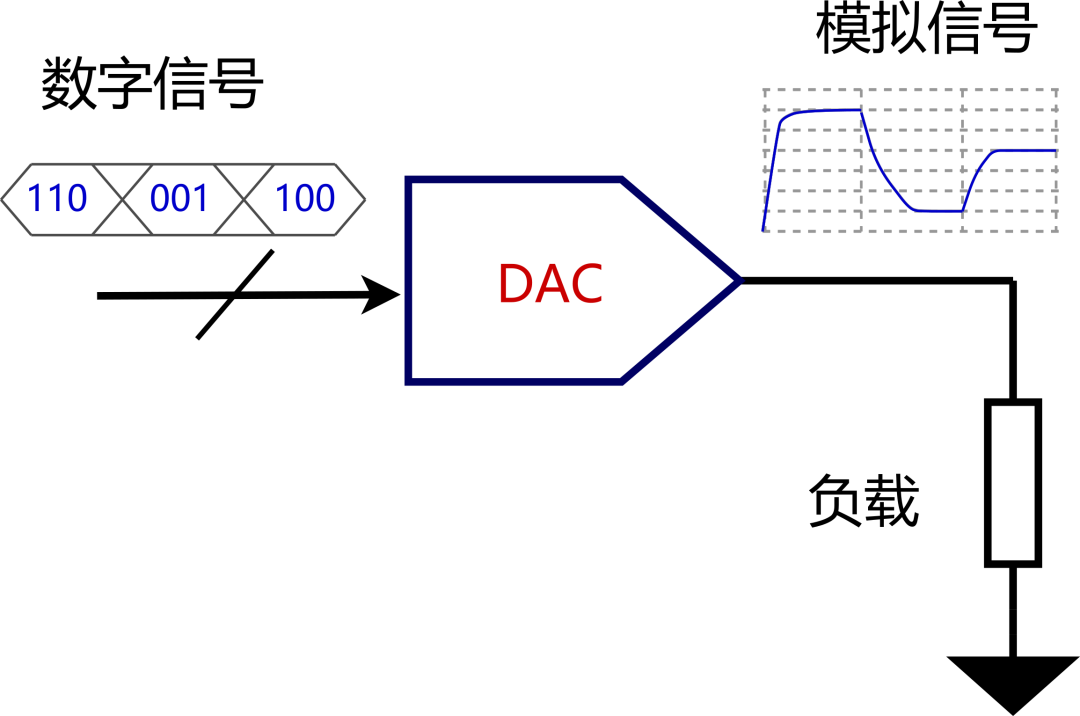
What is a DAC?
When we want to convert digital signals into analog signals, we need a Digital-to-Analog Converter, also known as a DAC. A DAC is a circuit chip that converts digital signals into analog signals. It is an essential component in modern electronic devices, widely used in digital audio equipment, control systems, instrumentation, and other fields.
Basic Chip DAC Video
1
Principles and Classification of DAC Chips:
The principle of a DAC chip is to convert digital signals into analog signals such as voltage or current. The digital signal is first processed by a processor and then input into the digital input port of the DAC chip. The converter inside the DAC chip converts the digital signal into an analog signal, which is then amplified and filtered by an amplifier and output filter, ultimately resulting in an analog signal.
DAC chips can be classified in many ways. Based on the output type, DAC chips can be divided into voltage-type (Voltage DAC) and current-type (Current DAC).
Based on the type of digital input, DAC chips can be classified into parallel and serial types.
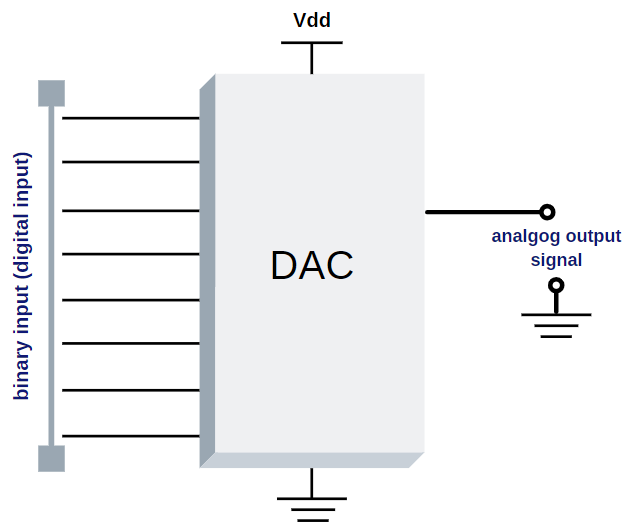
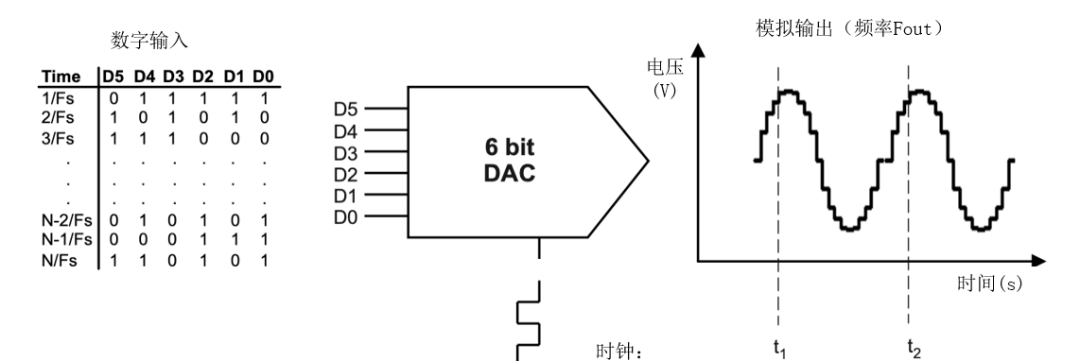
(The above two images are parallel)
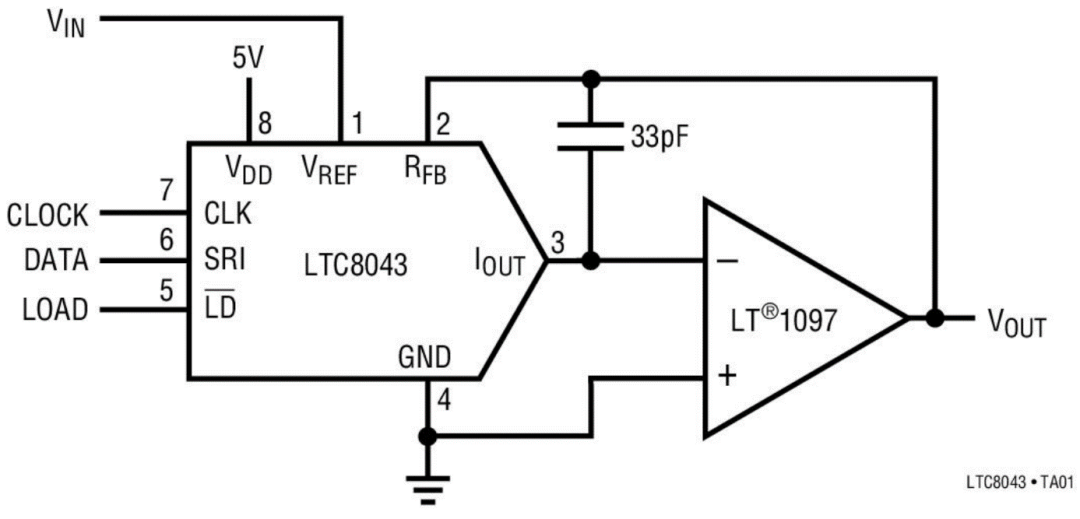
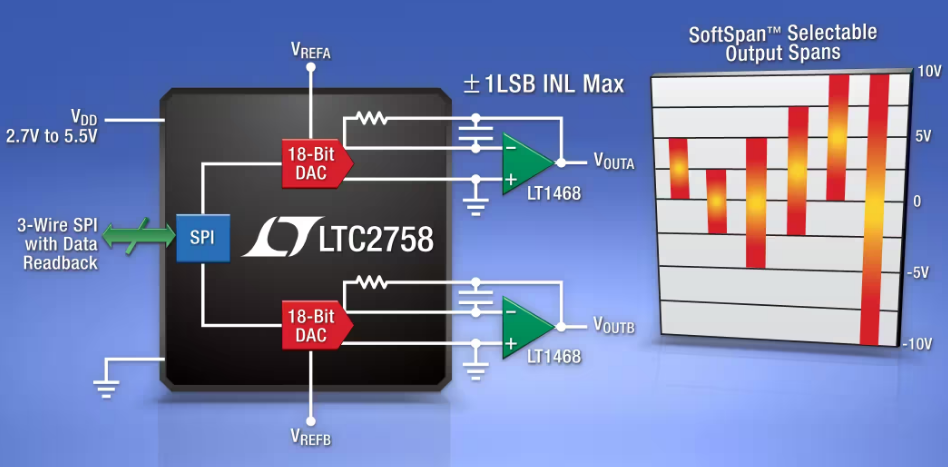
(The above two images are serial)
2
Key Performance Parameters of DACs:
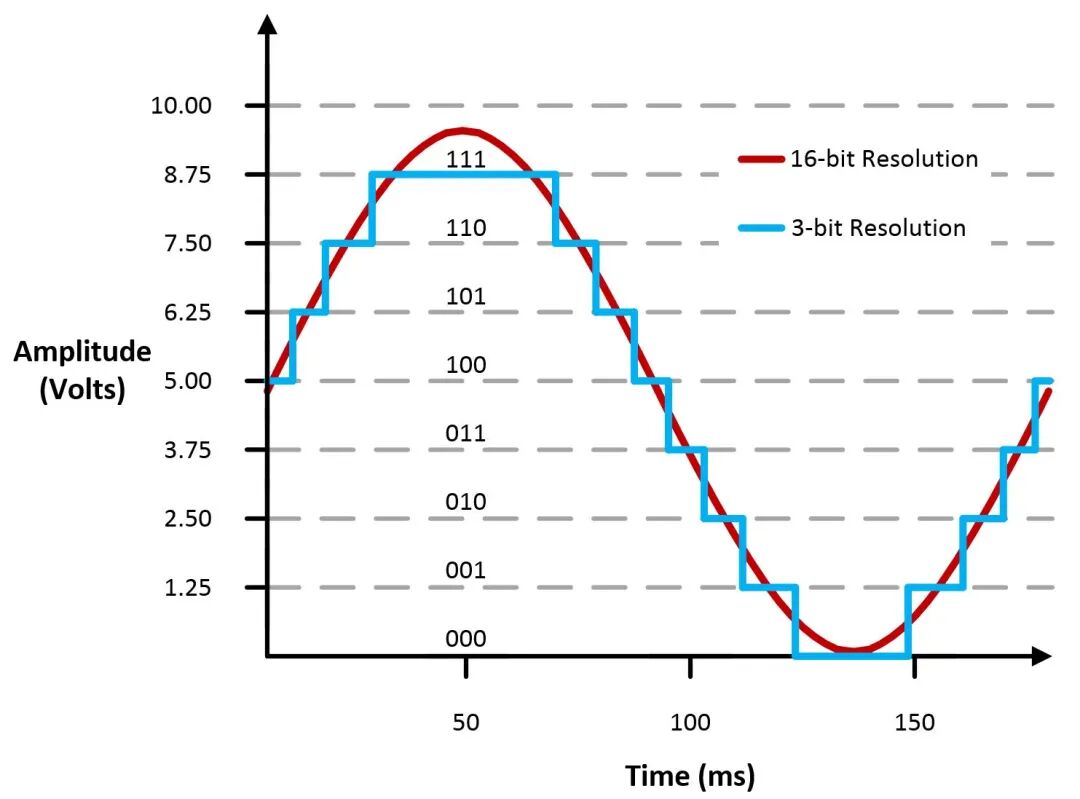
1. Resolution: Resolution refers to the minimum difference between the digital input value and the analog output value of the DAC chip.
2. Sampling Rate: The sampling rate refers to the rate at which the DAC chip samples the input digital signal, usually expressed in samples per second (SPS).
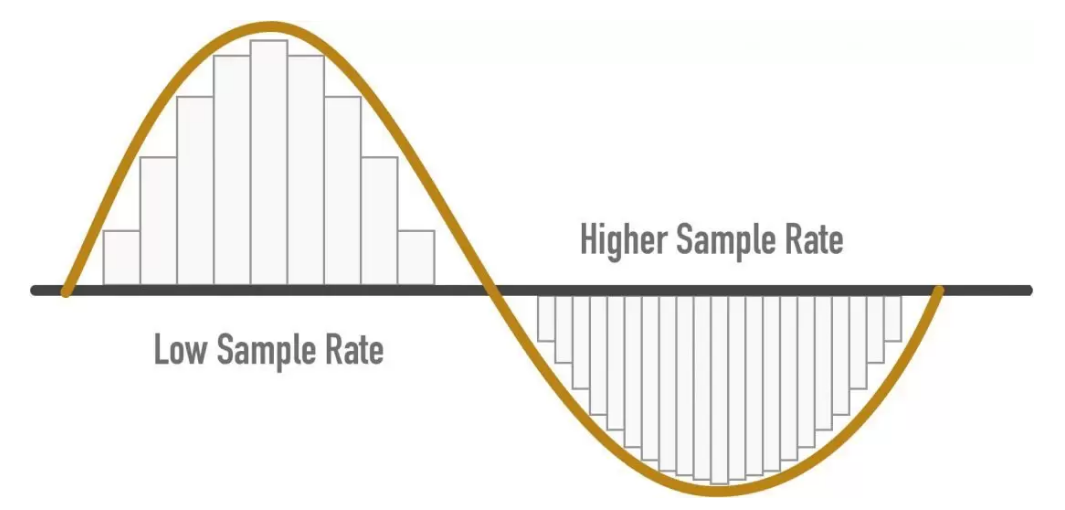
(The above image shows the sampling rate)
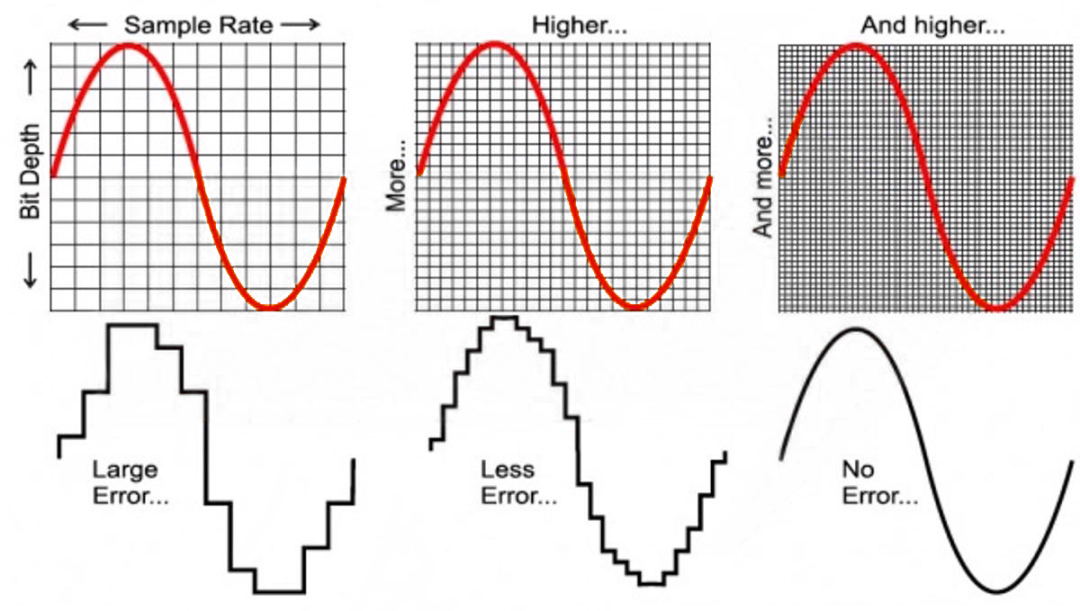
(The above image shows sampling rate and resolution)
3. Voltage Output Range: The voltage output range of a DAC chip is usually fixed and can be either single-supply output or dual-supply output. The single-supply output range is typically from 0V to Vref, while the dual-supply output range is usually ±Vref/2 or ±Vref.
The voltage output range and resolution of a DAC chip determine the accuracy and range of the converted analog signal, while the sampling rate determines the output speed and driving capability of the DAC chip. Developers need to consider various parameters and characteristics when selecting a DAC chip and choose the appropriate one based on their application requirements.
3
Applications of DAC Chips:
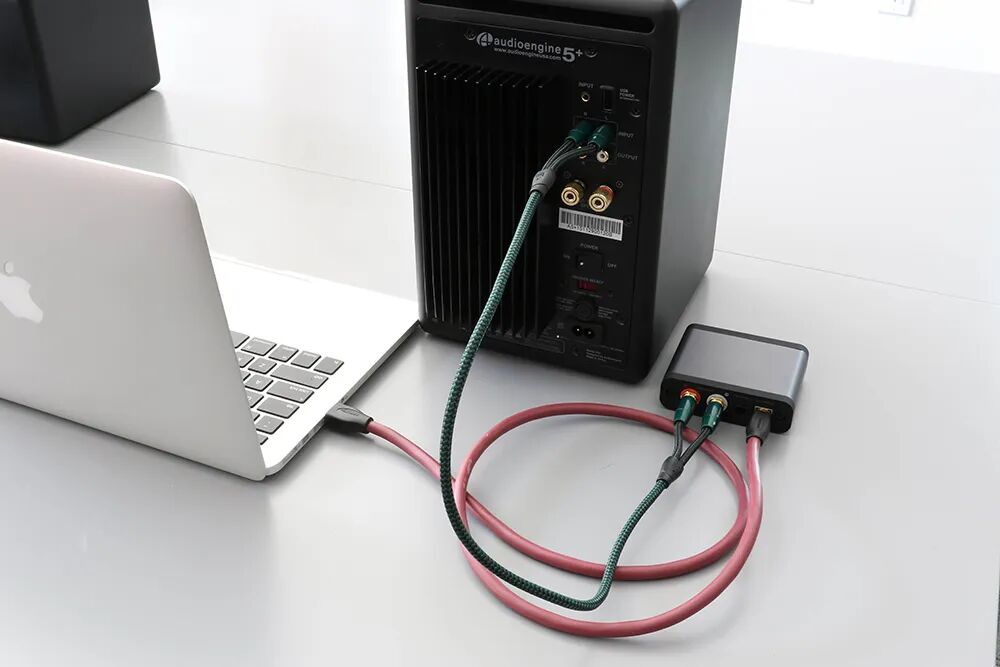
1. In audio processors, DACs can convert digital audio signals into analog audio signals for output to speakers, headphones, and other audio devices.
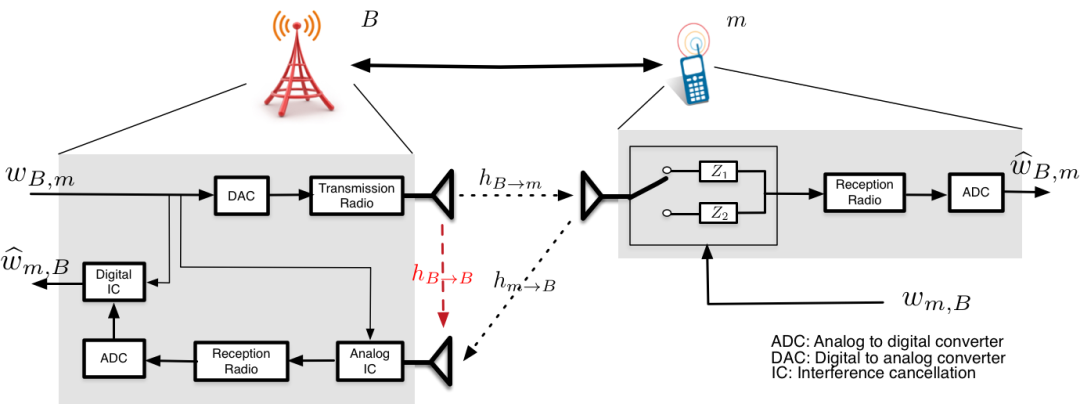
2. In radio communication, DAC chips can convert digitally modulated signals into analog signals, which are then amplified and transmitted.
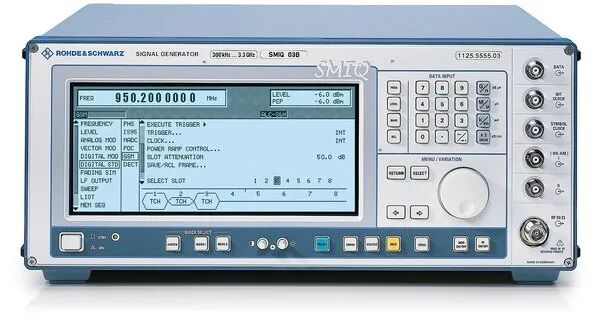
3. The testing instrument field is also an important application area for DACs, including signal generators, digital oscilloscopes, spectrum analyzers, etc. In these applications, DACs are used to generate test signals, achieving high precision and stability in test results.
4. DACs are also widely used in medical devices, mainly in medical imaging, electrocardiograms, ultrasound, etc. High-quality DACs can achieve precise signal conversion and processing, providing more accurate and reliable diagnostic results.
4
Design Experience:
From a learning perspective, the type of DAC suitable for beginners is the R-2R DAC. This is because this type of DAC has a simple structure, is easy to understand and implement, and is relatively easy to purchase for experimental use.
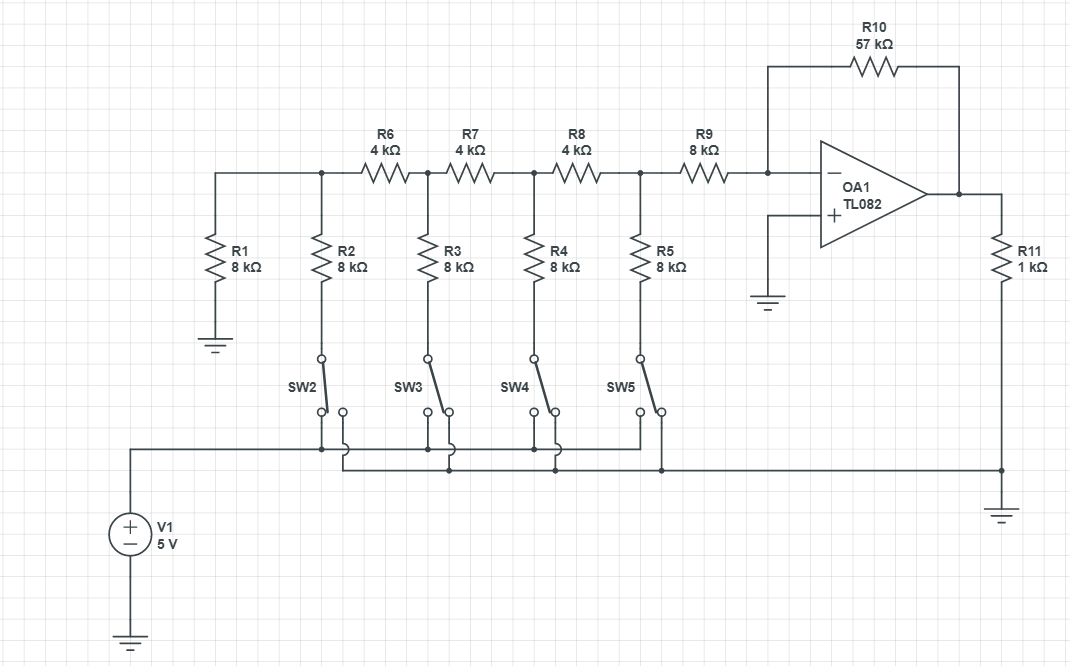
The R-2R DAC structure consists of several resistors and switches. When the switches control the resistors, it can convert binary numbers into corresponding analog voltage outputs. The R-2R DAC structure is simple and can be implemented with just a resistor and the IO of an FPGA or microcontroller, while also having high conversion accuracy, making it a commonly used DAC structure.
Open the circuit simulation tool from the electronic forest, CircuitJS, and select the R-2R DAC in the example circuit to open the example.
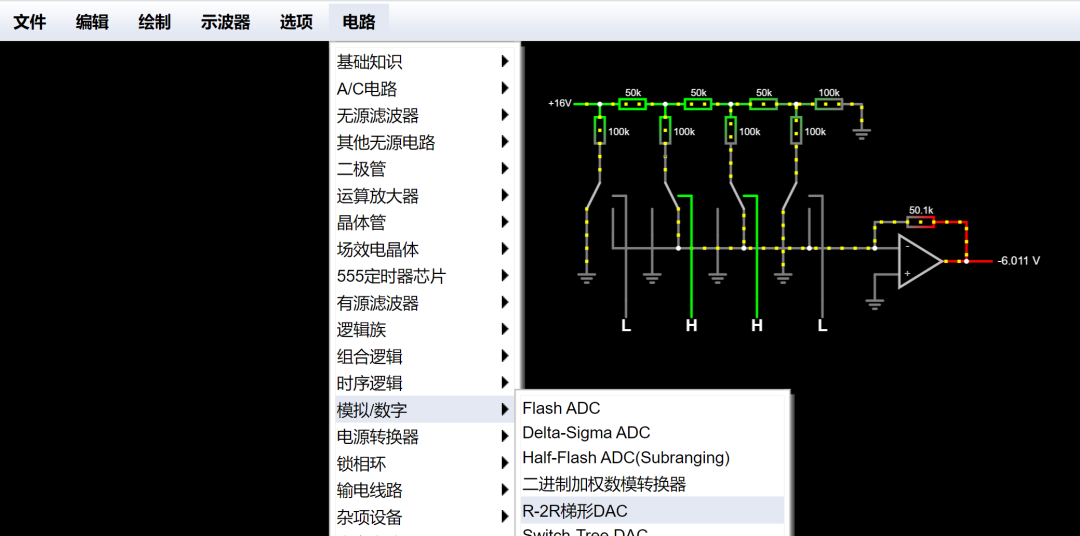
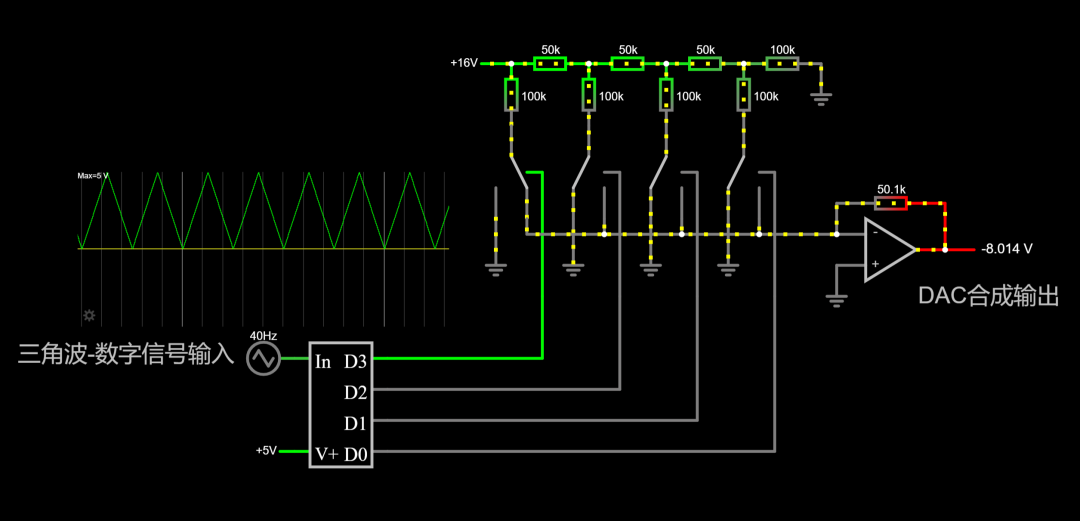
Next, modify this circuit by using a built-in ADC to convert a triangular wave into a 4-bit digital signal input, at which point the output will be a stepped voltage signal (the stepped nature is due to the DAC’s resolution being only 4 bits), and the output is still negative voltage. The circuit still requires a series of switches to complete the output.
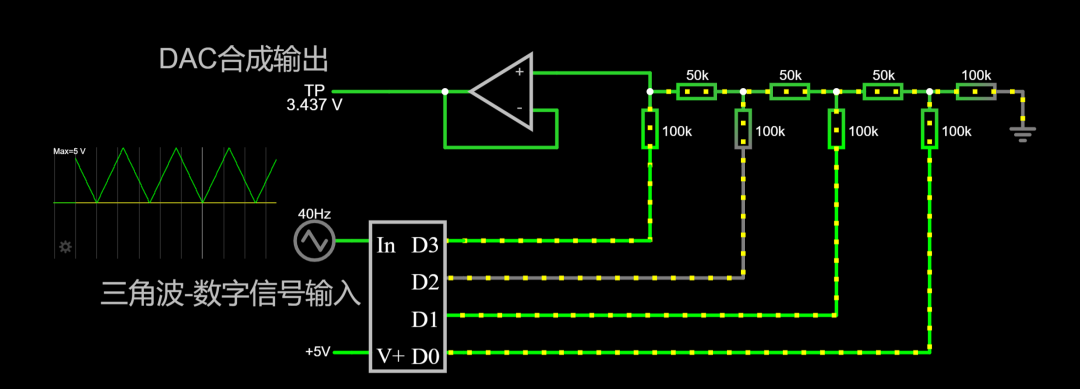
By making further modifications to the circuit, a DAC that directly uses microcontroller IO to synthesize a positive voltage output can be created.
5
Selection or Pros and Cons:
In practical engineering applications, engineers need to consider multiple factors when selecting a DAC, including:
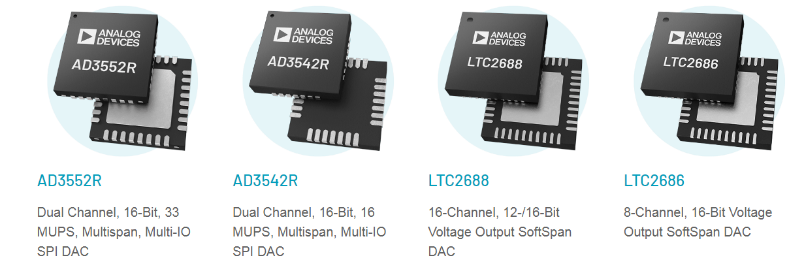
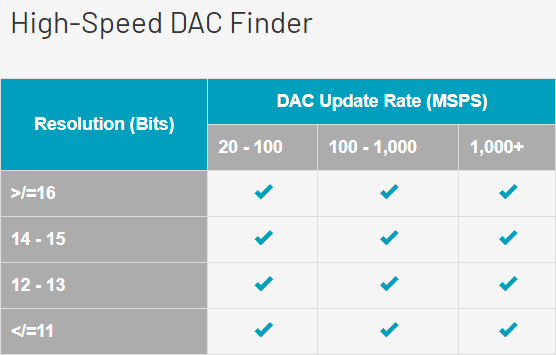
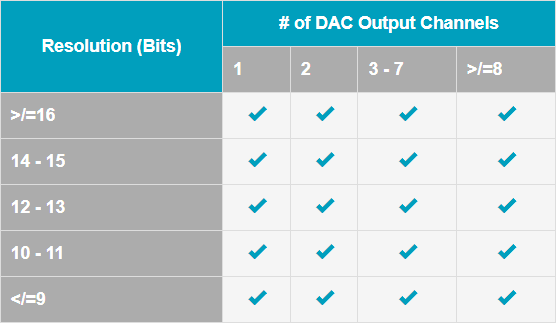
1. Resolution: This refers to the number of different voltage values it can output, generally expressed in bits. The higher the resolution, the more precise the output voltage values. Of course, DACs with higher resolution are generally more expensive.
2. Conversion Speed: The conversion speed of a DAC refers to the time it takes to output a complete digital-to-analog conversion. The faster the conversion speed, the higher the update frequency of the output analog signal. In applications requiring high-speed signal conversion, a DAC with a faster conversion speed needs to be selected.
3. Integration Level: The integration level of a DAC refers to how many modules or functions it integrates internally, such as reference voltage sources, voltage regulators, etc. DACs with higher integration levels can simplify circuit design, reduce the number of external components and space, and lower costs.
4. Power Consumption and Cost: The power consumption of a DAC affects the overall system’s power consumption and temperature. Engineers also need to select a suitable DAC based on application requirements and budget constraints to achieve the best cost-performance ratio.
In summary, DACs have a wide range of applications across various fields, with significant market demand and potential. The DAC market is continuously evolving and innovating, with manufacturers constantly launching new products to meet market demands. Currently, major analog device manufacturers are developing and innovating to produce high-performance, low-power, and compact DAC products to respond to the ever-changing market needs.
In the next article, we will unlock the interesting applications of DACs through a fun little experiment. Stay tuned!
If you want to design your own DAC module, feel free to join the Hard Grain’s Make Blocks event, where you can simply draw a PCB in two hours and win a reward of 100 yuan!

Click “Read the original text” for the complete content~