Before purchasing an oscilloscope, it is essential to understand your product and determine what type of equipment you need based on the objects you intend to test. It’s not necessarily true that the more advanced the equipment, the better the product will be.
Previously, some netizens summarized 10 suggestions, which I personally think are quite good. They are as follows:
1. How much bandwidth do you need?
2. How many channels do you need?
3. What is your required sampling rate?
4. How much storage depth do you need?
5. What display features do you need?
6. What triggering features do you need?
7. What is the best way to detect signals?
8. What archiving and connectivity features do you need?
9. How do you analyze waveforms?
10. The last but equally important question: Demonstration, demonstration, or demonstration!
Regarding bandwidth and sampling rate, these directly affect the types of signals that can be tested. Based on the requirement of 3 to 5 times the signal bandwidth, testing a 10Gbps Ethernet requires an oscilloscope with at least 20G bandwidth and a sampling rate of 50Ga/s to meet testing requirements.
For oscilloscope channels, the standard configuration is now typically four channels. However, some devices, due to design reasons, cannot use two adjacent channels simultaneously at high bandwidth, as the adjacent channels share bandwidth, resulting in effective bandwidth being lower than the nominal value.
Storage depth is related to sampling rate; the larger the storage depth, the more signals the oscilloscope can capture on each screen, which also involves how much and how fast the sampling occurs.
As for display and triggering functions, they are fairly standard, with not much variation.
Additionally, the demonstration aspect is very important. Not only should the vendor demonstrate, but you should also continuously demonstrate to identify areas you don’t understand and ask the vendor questions. At this point, vendors typically answer all your questions, for reasons you can understand.
In fact, I believe there are a few more issues that need to be understood.
The first is the issue of testing software packages. The oscilloscopes that vendors demonstrate and allow you to trial are usually unlimited in bandwidth, with all software licenses open. If you think the oscilloscope you purchase will also have this, you are making a big mistake. Be sure to clarify these issues to avoid being left in the dark after the purchase.
The second is the issue of after-sales service and warranty. The higher-end the oscilloscope, the more you need to clarify this. Some unscrupulous vendors often manipulate this aspect, offering you a standard warranty contract at the price of a gold guarantee warranty. The price difference can be significant.
The third is service. Buying equipment nowadays is essentially buying service. After all, the usage of equipment is quite similar across different brands; it’s just a matter of which brand offers better service.
Personally, I think domestic manufacturers are quite good in terms of service. However, in the high-end oscilloscope segment, domestic manufacturers still do not meet the requirements. I hope that one day we can use high-end domestic oscilloscopes.
Of course, there are other aspects that I have not thought of for the time being.
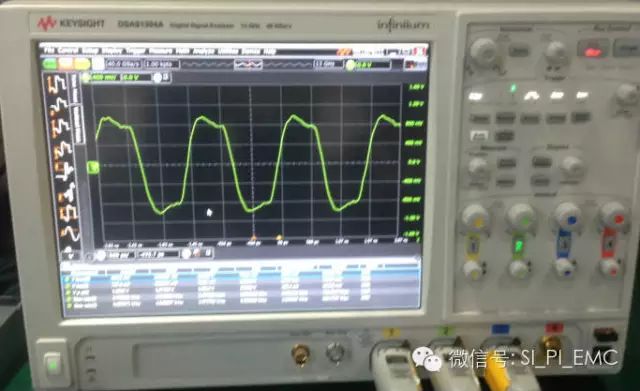
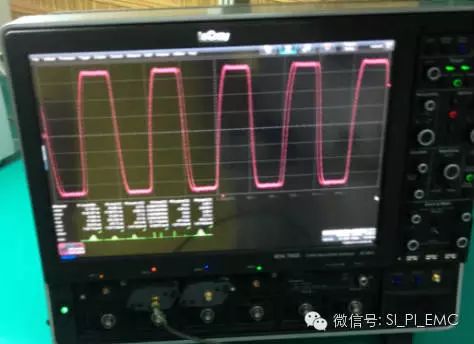
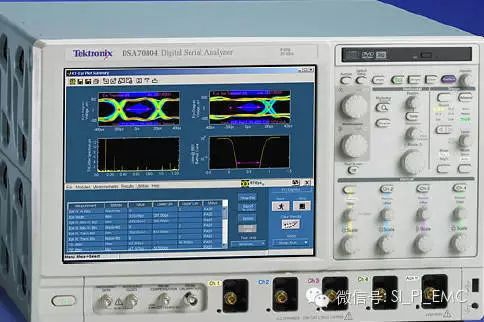
Below are a few high-end oscilloscopes, though this is only a part of the oscilloscopes.
The significance of low background noise in oscilloscopes for high-speed eye diagram testing
[The Beauty of Analog] The History of Analog Oscilloscopes
Summary of Oscilloscope Knowledge
Seven Common Errors to Avoid When Measuring with an Oscilloscope
Fundamentals for Hardware Engineers (1) — Using and Understanding Oscilloscopes
S-Parameters to TDR (Impedance) — Network Analyzer ‘Transforms’ into Sampling Oscilloscope
Fundamentals of Hardware (3) — Oscilloscope Probes