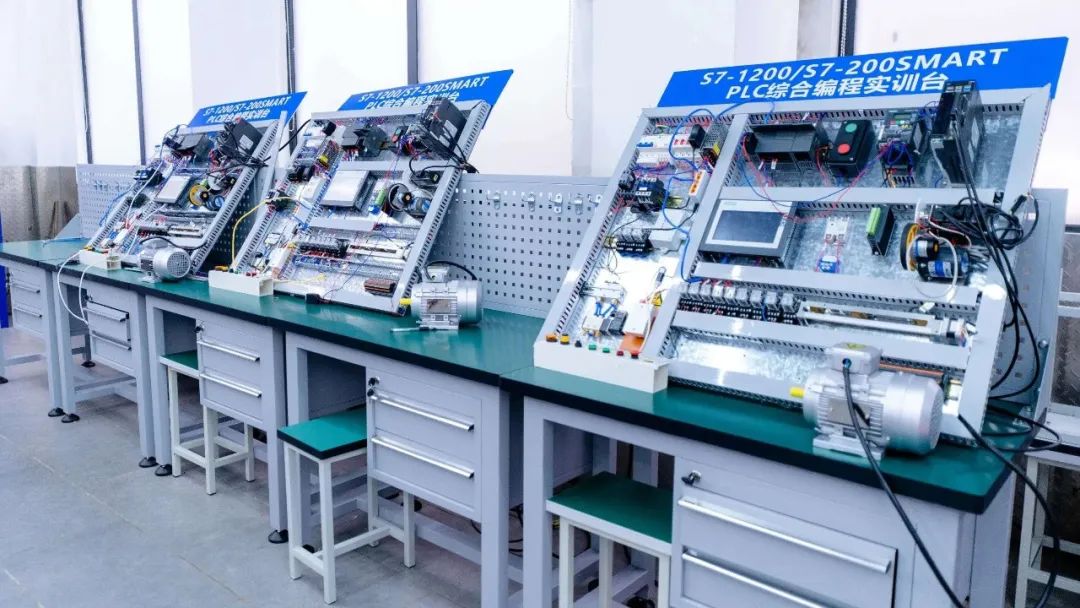
Hello everyone, I am Da Yi! Today we will talk about the application of Digital Signal Processing (DSP) in microcontrollers and PLCs.
What is Digital Signal Processing?
In modern industrial automation systems, we often encounter analog signals from sensors, such as temperature, pressure, light, etc. In order for a microcontroller (MCU) or PLC to recognize and process these signals, we need to convert them into digital signals. This requires the help of an Analog-to-Digital Converter (ADC).
Conversely, if we want to control analog actuators, such as adjustable motors, valves, etc., we need to convert the digital signals back into analog quantities, which requires a Digital-to-Analog Converter (DAC). Therefore, digital signal processing involves the collection, processing, and output of analog quantities in microcontrollers or PLCs.
DSP in Microcontrollers
Microcontrollers typically come with one or more ADC modules, which allow us to read the analog values from sensors. For example, if we use a temperature sensor to detect the ambient temperature, the MCU’s ADC can digitize the analog temperature value and store it in a specific register, after which we can process this data.
If we need to control analog outputs, the MCU may also integrate a DAC module, which outputs analog voltage or current signals. Of course, if the MCU lacks a DAC, we can simulate analog outputs using PWM.
Some high-end microcontrollers even include hardware DSP units, which can accelerate the processing of large amounts of digital signal calculations. Overall, microcontrollers play an important role in data collection and control in DSP applications.
DSP in PLCs
In PLCs, we use input/output (I/O) points to connect sensors and actuators. Digital I/O can easily read and write switch quantities, while analog I/O modules are equivalent to the ADC and DAC in microcontrollers, used for collecting and controlling analog quantities.
With analog I/O, PLCs can process analog signals from sensors such as pressure transmitters and flow meters. Through ladder diagram programming or function block instructions, we can perform calculations, comparisons, filtering, and other processing on these digitalized analog data.
Finally, through the analog output terminal, PLCs can control programmable valves, inverters, and other analog actuators. Therefore, PLCs also play a crucial role in the digital signal processing of industrial automation systems.
Practical Experience Sharing
In practical applications, we often encounter various digital signal processing needs:
- Using a microcontroller to accurately control a servo motor to a specific position requires capturing and calculating the pulse signals from the encoder.
- PLC controls a centrifuge, requiring averaging filtering of the analog signals from the speed sensor to maintain a constant speed.
- Microcontroller reads the analog signal from a microphone, using algorithms to recognize voice commands, enabling voice control.
- PLC monitors the current, power, and other parameters of a motor in real-time, providing timely alerts to prevent overload and faults.
Therefore, it is crucial to utilize the digital signal processing capabilities of microcontrollers or PLCs effectively. We must fully understand the hardware resources, choose appropriate algorithms and programming methods, and pay attention to issues such as processing accuracy and real-time performance. In short, mastering the tips of DSP can greatly enhance the flexibility and intelligence of the system.
Common Problems and Solutions
- Digital signal processing severely consumes MCU resources.
High-end MCUs mostly integrate DSP hardware units, which can significantly accelerate DSP calculations; PLCs typically use software algorithms for DSP processing, which may introduce considerable delays, necessitating careful task scheduling and programming design.
- Digital signals exhibit quantization noise.
By configuring appropriate ADC/DAC resolution and sampling rates in hardware and using digital filtering algorithms in software, quantization errors can be effectively reduced.
- Slow conversion of multiple analog signal acquisitions.
Multiplexing analog input channels can lead to poor synchronization; high-end microcontrollers/PLCs use parallel ADCs to greatly increase acquisition speed; software using DMA can reduce frequent CPU intervention.
- System interference causes digital signal distortion.
To avoid interference, proper wiring is essential; using shielded cables and filtering circuits can help; adjusting the ADC sampling clock can prevent noise coupling, and strategies such as signal redundancy coding can enhance anti-interference capabilities.
- DSP algorithm implementation is complex.
During algorithm implementation, attention must be paid to data formats and storage issues; using hardware peripherals (such as DMA) can improve efficiency; designing modular and reusable algorithm code facilitates maintenance and portability.
Conclusion
I believe that through the above explanation, you now have a basic understanding of the applications of microcontrollers and PLCs in digital signal processing. Digital signal processing is key to achieving more intelligent control; mastering the tips of DSP can add more ‘intelligent’ elements to our automation systems. The above content is just a glimpse; in future articles, I will continue to delve into some commonly used DSP algorithms and practical application cases to elevate your DSP programming skills!
Practical Exercise Suggestions
- Use a microcontroller/PLC to read the analog value of a photoresistor and control the brightness of an LED through PWM or analog output.
- Design a simple digital filtering algorithm to filter the incoming analog data.
- Try analyzing and capturing encoder pulse signals to calculate the motor’s speed and direction.