For more in-depth information and reports on the sensor industry, and to learn about sensor technology, sensor testing technology, IoT sensor technology, and other sensor knowledge, please follow the Sensor Expert WeChat public account and set it as a star to view past content.
On summer nights, mobile phone screens automatically reduce frequency due to overheating; in winter, smart heaters adjust power in real-time based on room temperature; when spacecraft traverse extreme low temperatures, sensors ensure the fuel pipeline temperature remains constant… Behind these scenarios lies a key technology—digital temperature sensors. They are not only the “translators” of temperature but also the “nerve endings” of modern smart devices. From thermocouples in the 19th century to quantum temperature measurement technology in the 21st century, this seemingly ordinary sensing capability is reshaping humanity’s control over temperature with astonishing precision.
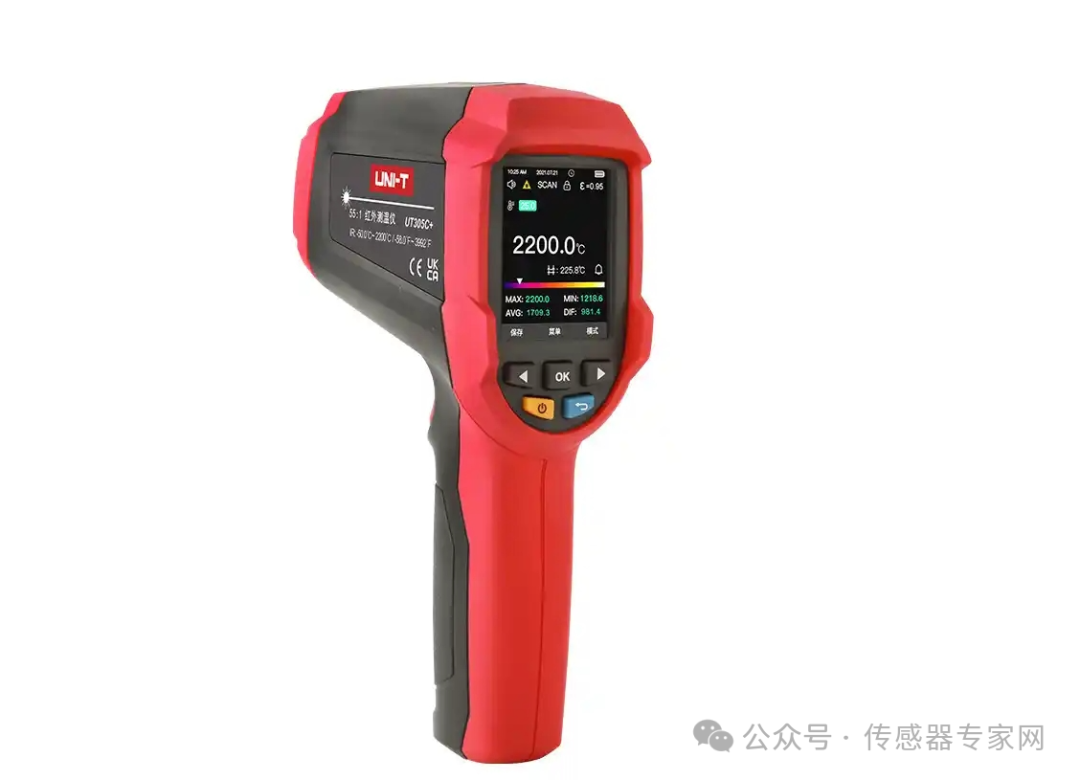
How is Temperature “Digitized”?
The core secret of digital temperature sensors lies in the microscopic world of semiconductor materials and physical effects. NTC thermistors (Negative Temperature Coefficient) capture subtle fluctuations in environmental heat through the exponential decrease in resistance value of manganese-copper alloy as temperature rises; PTC thermistors (Positive Temperature Coefficient) experience a sudden increase in resistance when exceeding a critical temperature, acting as a “temperature fuse” for circuit overcurrent protection. The more heat-resistant K-type thermocouples, made of nickel-chromium and nickel-aluminum alloys, generate electromotive force from the temperature difference at the contact points of the two metals, allowing stable operation in extreme ranges from -200°C to +1300°C.
The signal conversion stage is the essence of digitization. Taking the MAX31855 thermocouple module as an example: when a 0.04μV temperature signal is converted into a digital value by a 16-bit ADC (Analog-to-Digital Converter), the cold junction compensation algorithm corrects the reference junction error, ultimately outputting data with an accuracy of ±0.25°C via the SPI protocol. More advanced Bosch SHT series sensors can even complete multi-point self-calibration instantly upon power-up, controlling long-term drift to within 0.01°C per year. This technological breakthrough has made digital temperature sensors a necessity in demanding scenarios such as medical and aerospace applications.
From Steel Furnaces to Human Blood Vessels: The “Cross-Border Conquest” of Temperature Sensing
Next to a 1600°C furnace in a steel mill, K-type thermocouples monitor molten steel temperature at a sampling rate of 10 times per second, with fluctuations of less than 1°C directly affecting the strength of tens of thousands of tons of steel; in semiconductor wafer cleaning workshops, groups of DS18B20 sensors lock the temperature of ultra-pure water within ±0.05°C of the set value, preventing deformation of nano-scale circuits due to temperature differences. Behind these industrial-grade applications is the hardcore strength of digital sensors against vibration, dust, and electromagnetic interference.
As technology permeates daily life, temperature sensing becomes “silent and unobtrusive”. In the battery compartment of the Samsung Galaxy S23, a three-channel digital sensor monitors charge and discharge temperatures in real-time, using AI algorithms to predict overheating risks, reducing the probability of explosion accidents by 90%; the Huawei Watch GT 5 integrates PPG optical sensors with temperature detection, inferring core body temperature from wrist skin temperature with an error of only ±0.3°C; in smart refrigerators, distributed DS18B20 sensors create temperature field models across multiple compartments, ensuring that salmon and red wine are always kept in optimal storage conditions.
The medical health field showcases the “miracles of life” through temperature sensing. The rectal probe of a neonatal monitor safeguards the temperature balance of premature infants with an accuracy of ±0.1°C; the miniaturized sensor array of surgical robots can provide real-time feedback on the temperature at instrument contact points during heart bypass surgery, preventing tissue burns; portable nucleic acid testing devices track PCR reaction temperature curves with a response speed of 0.1 seconds, enhancing detection sensitivity by three orders of magnitude.
In the journey of human exploration of the unknown, digital temperature sensors play the role of “extreme challengers”. The RTD (Resistance Temperature Detector) of NASA’s Perseverance rover, with a platinum coil structure, can still output stable data at -125°C; titanium alloy-encased sensors in deep-sea probes break through the 100MPa water pressure limit, mapping geothermal profiles at the bottom of the Mariana Trench; fiber Bragg grating sensors in nuclear power plants analyze temperature distribution in radiation zones through shifts in light wavelength, safeguarding reactor safety.
The Future is Here: The “Quantum Leap” of Temperature Sensing
As traditional technologies approach physical limits, a new round of technological revolution has quietly begun. Google combines Tensor Processing Units (TPUs) with temperature prediction models, using deep learning on chip thermal inertia to provide a 10-second early warning of overheating risks, reducing the energy consumption of computing systems by 18%; flexible electronic tattoos, designed with serpentine circuits, achieve continuous core body temperature monitoring on human skin for 72 hours, with an error of less than 0.3°C; LoRaWAN wireless sensor networks are being deployed in cold chain logistics, with sensors in pharmaceutical transport boxes uploading temperature data every 30 seconds, triggering blockchain documentation and insurance claims for any anomalies.
The most astonishing breakthroughs come from the quantum world. Quantum thermometers based on nitrogen-vacancy (NV) color centers in diamonds achieve precision at the nanometer scale of 10⁻⁹ K (Kelvin) by measuring the sensitivity of electron spin states to temperature. This technology not only reveals local hotspots in chips but may also unlock the unresolved mysteries of high-temperature superconductivity. At CERN’s Large Hadron Collider, niobium-titanium alloy sensors on superconducting magnets maintain an operating environment close to absolute zero with an accuracy of 0.001K, aiding humanity in capturing traces of the Higgs boson.
Conclusion: Temperature, Measuring the Scale of Civilization
From the discovery of fire by early humans to digital temperature control, humanity’s mastery over temperature is essentially a history of civilization evolution. When the Mars rover transmits the first extraterrestrial temperature data, and quantum sensors touch the edge of absolute zero, we suddenly realize that the miniature sensors hidden in mobile phones, refrigerators, and surgical instruments are not only the crystallization of technology but also the “miniature sentinels” expanding humanity’s perceptual frontiers. They tell the temperature stories from the torrents of steel to the rhythms of life in the language of digits. Have you ever wondered what the next field to be redefined will be when temperature sensing breaks through physical limits? The answer may be hidden in the smart device you hold at this moment.
Or engage in discussions in China’s largest sensor community: the Sensor Exchange Circle.
What are your thoughts on this article? Feel free to leave a comment and share!
Share and click to see, passing on the dynamics of the Chinese sensor industry to more people!
Starred content = content you care about, according to the WeChat public account recommendation principle, if you do not set the Sensor Expert WeChat public account homepage as a star, you will not be able to receive the latest information in the sensor industry in a timely manner!
Disclaimer:Reproducing this article is for the purpose of conveying more information. If there are any errors in source attribution or infringement of your legal rights, please contact us, and we will promptly correct or delete it. Thank you.
If you have any submission or interview requests, please email:[email protected].Recommended Reading:
- China’s Sensors Depend on You! Summary of Sensor Research Information from 30 Top Universities
- Finally Understood, Modern Warfare is All About Sensors
- China’s Chip Tycoon Actually Comes from Sensors
- Woke Up to Find That Chinese Companies Can No Longer Design Sensors?!