Hello everyone!
Friends who are new to marathons may have heard phrases like: “This event is A1 certified, it’s worth registering!” or “This event is only C class, not worth signing up for.” It can be quite confusing, thinking, isn’t it just running a marathon? Why are there so many classifications?
Today, let’s discuss the classification of marathon events and why one should only register for A1 events.
1. What is the Marathon Event Classification Certification?
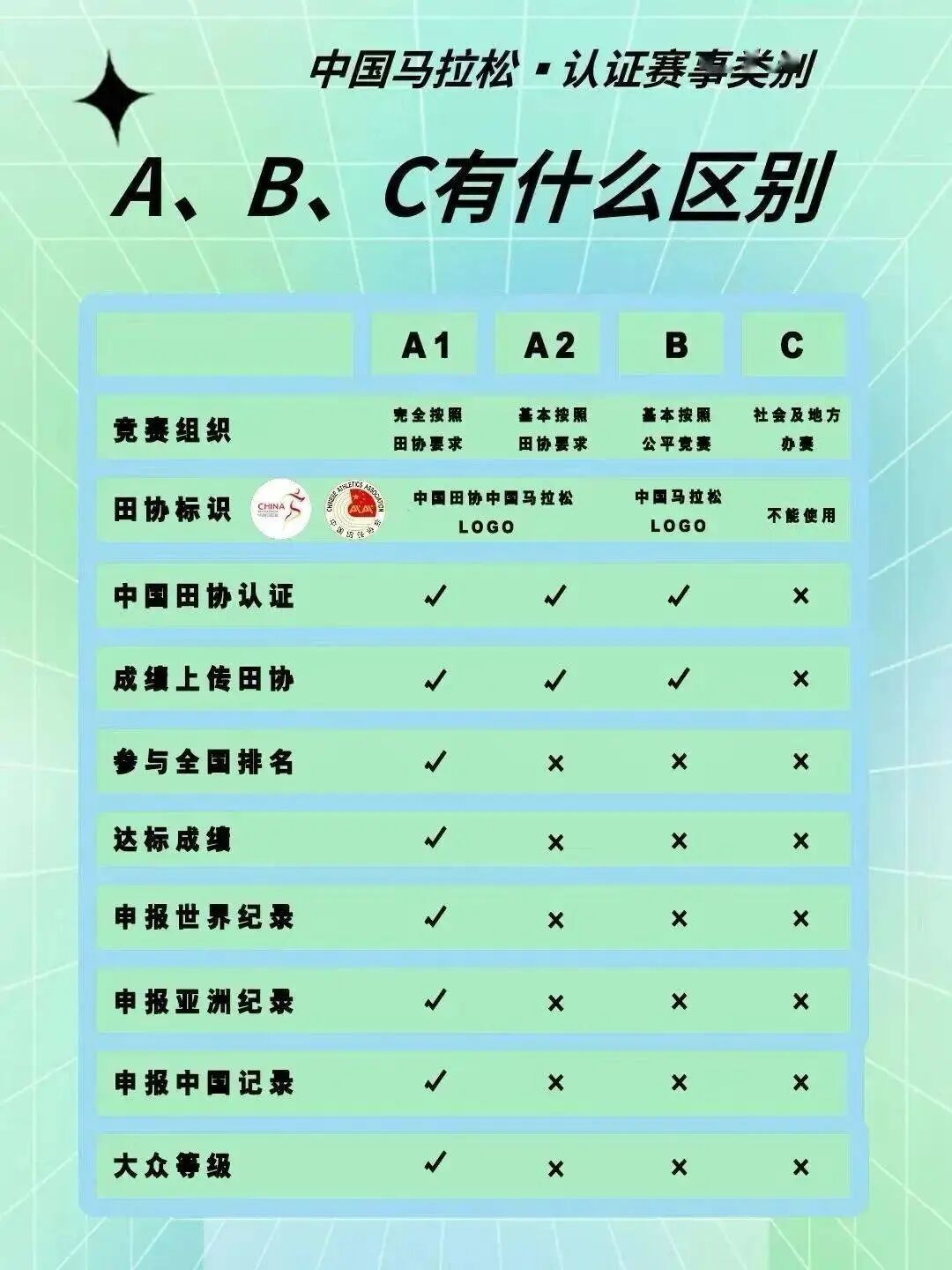
This classification system is established by the Chinese Athletics Association, categorizing domestic marathon events into three levels: A, B, and C, with A further divided into A1 and A2.
In simple terms, this classification certification informs runners about the organizational level, safety assurance, and service quality of the event. A higher classification indicates that various aspects of the event are more professional and well-organized.
A-class events must meet high standards in all aspects. For example, route measurement, aid station setup, medical support, and traffic control must be impeccable and comply with the requirements of the Athletics Association. B-class events are relatively less strict, but both are certified by the Athletics Association.
C-class events are usually smaller-scale competitions organized locally. However, C-class does not mean they are inferior; many unique and interesting niche events are worth participating in. For instance, some themed events with local cultural characteristics may not have a high classification but offer a unique experience that is also worth attending.
Why do runners pursue A1 certification?
The most important aspect of an A1 certified event for runners is that their race results are recognized by the Athletics Association.
For example, if an athlete sets a national record in a C-class event, unfortunately, the Athletics Association will not recognize it.
For the general runner, achieving a result in an A1 event can serve as a qualification certification for other races; some events allow direct entry based on results, and this result must be achieved in an A1 event.
Additionally, if you achieve the corresponding results in an A1 event, you can apply for a certification for that level.
 What do some events mean when they claim to be branded events, gold standard, or platinum standard events? This is another classification system established by the International Association of Athletics Federations for marathon events, which we will discuss in the next issue.
-EOF-
About the Author: Programmer, running enthusiast, add me on WeChat to join the running group, note “running friend,”I have developed a running assistant app, welcome to try it out.Running Assistant