Overview
On August 21, Chinese AI company DeepSeek quietly released its new large model DeepSeek-V3.1, which for the first time adopts a domestically developed precision standard called “UE8M0 FP8,” specifically tailored for the next generation of autonomous chips. This move not only marks the realization of “soft and hard synergy” in Chinese AI but also heralds the official arrival of the era of deep adaptation between models and chips.
1. What is FP8? How can it “revive” domestic chips?
FP8 (8-bit floating point) is not a new concept, but DeepSeek is the first to apply it in a domestic context:
Traditional Dilemma: NVIDIA GPUs use FP16/FP32 precision, and directly adopting these standards in domestic chips leads to a decrease in precision and a halving of efficiency.
UE8M0 FP8 Breakthrough: Through the design of “unsigned + long exponent,” the dynamic range is expanded by 32 times, perfectly matching the high activation value scenarios of Chinese large models. The same chip can handle more tasks, reducing enterprise deployment costs by 20%-30%.
Measured Effects: Under the same tasks, memory usage is reduced by 50%, and computation speed is increased by 3 times, allowing domestic chips to finally “run full” 100 billion parameter models. Data transmission energy consumption is only 1/4 of traditional FP16, enabling mobile phones and computers to easily run large models with hundreds of billions of parameters.
This means: DeepSeek has specifically tailored FP8 technology for domestic chips such as Huawei Ascend, Cambricon, and Horizon, filling the gap in precision and efficiency for domestic chips, enabling Chinese AI to achieve world-class performance.
Industry Significance: DeepSeek’s FP8 technology breaks NVIDIA’s monopoly in the AI chip field, providing a “technology + ecosystem” breakthrough path for the Chinese AI industry. Domestic chip manufacturers can compete on the computing power track with international giants without relying on high-end imported graphics cards.
2. V3.1 is not just a “precision upgrade” but an evolution of the intelligent agent
In addition to chip adaptation, V3.1 has achieved leaps in three major dimensions:
Hybrid Inference Architecture—One Model, Two “Brains”
Reasoning Mode: Chain-depth analysis, suitable for code debugging and mathematical proofs.
Chat Mode: Quick response dialogue, suitable for daily Q&A. Users can switch with one click, improving task response efficiency by 50% and reducing output length by 20%-50%.
128K Context: Feeding an entire “Dream of the Red Chamber” directly into the model
Text processing length has doubled to 128K tokens (about 300,000 words), capable of parsing an entire novel or 10 hours of meeting records.
In the “needle in a haystack” test, the accuracy of locating within 128K exceeded 98%, and the long document understanding ability surpassed GPT-4.
Agent Capability: From “chatting” to “working”
Code repair capability (SWE test) improved by 40%, costing only $1.01/task, less than 1/60 of Claude 4.
Multi-step search planning: autonomously deconstructing complex problems, filtering evidence, and integrating answers, with the accuracy of difficult subject questions improved by 30% compared to previous generations.
3. Chip Industry Chain: Who Benefits at the “Nuclear Explosion Point”?
The release of DeepSeek V3.1 has directly driven a collective explosion in the domestic chip sector.
Core Logic:
Accelerated Domestic Substitution: FP8 technology allows domestic chips to approach international levels in training and inference performance, combined with policy support (such as the “domestic closed-loop” policy), chip manufacturers’ market share is expected to increase rapidly.
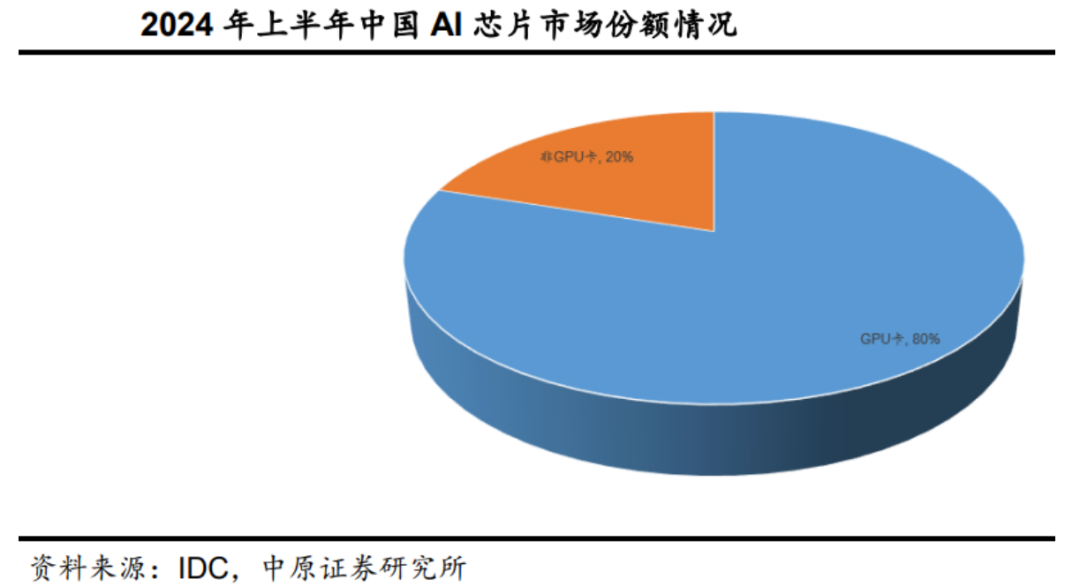
Surge in Market Demand: Events such as China Mobile’s 1.7 billion yuan AI server procurement and the doubling of demand for foldable phone chips further increase the demand for chip production capacity.
Storage Chip Dividend: AI large models have extremely high requirements for storage bandwidth and capacity, and storage chips (such as the PCIe Gen4 controller from InnoGrit) will become the core beneficiaries of the computing power industry chain.
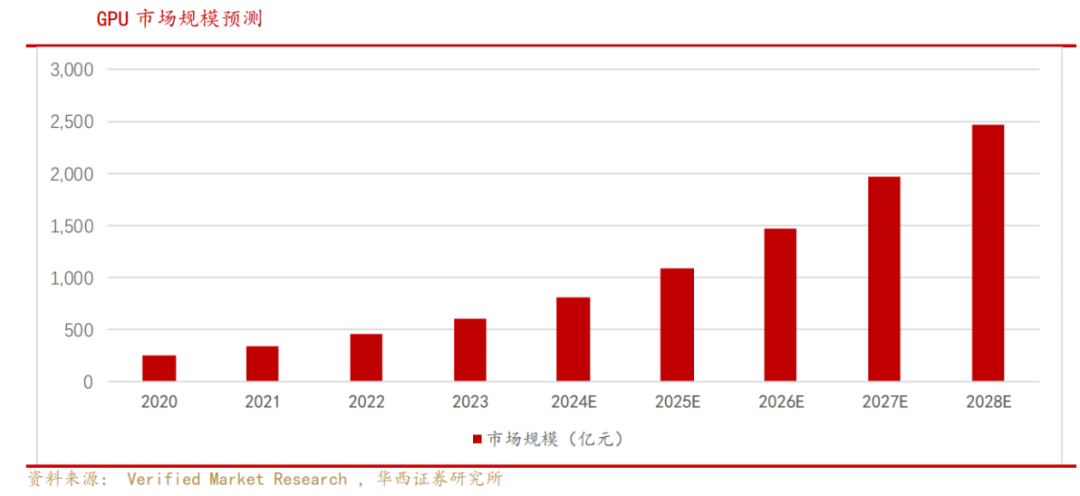
FP8 technology reconstructs the competitive logic of domestic AI chips:
Cambricon, Siyuan 590 supports FP8, with a 40% increase in computing density
Moore Threads, the first native FP8 GPU
Zhuhai Chip, self-developed “Moment” TPU supports FP8
Storage Chips
GigaDevice (603986) High bandwidth DRAM chips have been used in AI servers, with a threefold increase in single machine capacity.
Xingsen Technology (002436) ABF substrate yield exceeds 95%, a “hidden champion” that accounts for 70% of chip costs.
4. Storage Chips: The Overlooked “Computing Power Lever”
As model precision drops from FP32 to FP8, the efficiency of the storage subsystem becomes the new bottleneck:
Data Throughput Surge: FP8 computing units require matching higher memory bandwidth, or they will be “starved”.
Storage chip upgrades are imminent: DDR5 → HBM → CXL becomes the evolution path.
Beneficiary Analysis:
GigaDevice (603986): Domestic DRAM leader, high bandwidth GD5F series adapts to FP8 servers; collaborates with Loongson 3C6000 to support memory pooling technology.
Lanqi Technology (688008): The only domestic CXL memory controller, solving the key “memory wall” issue; long context inference relies on high-speed cache, and performance improvement is directly linked to orders.
Beijing Junzheng (300223): Embedded AI vision chips integrate ISP + storage, reducing edge-side inference costs by 50%.
5. Focus on “Technology-Scenario” Closed-loop Enterprises
Based on implementation progress, closely observe the following three types of targets:
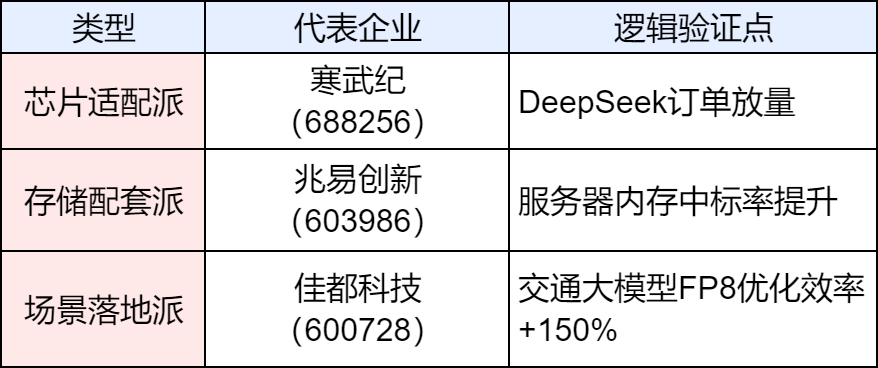
Conclusion
Risk Warning: Some concept stocks have seen excessive short-term gains (e.g., Cambricon +40% this month), be cautious of delays in technology implementation and escalations in international regulations.
In conclusion: The ecological closed loop represents a “breakthrough moment” for Chinese AI.
As DeepSeek reconstructs the precision standard with UE8M0 FP8, as Cambricon and Moore Threads’ chips fully utilize 100 billion parameters, and as GigaDevice’s storage chips bridge the “memory wall”—a flywheel of “model defining hardware, hardware feeding back the ecosystem” has already begun to turn. This revolution initiated by software is compelling domestic chips to evolve from “usable” to “user-friendly”.
The competition between AI in China and the US has, for the first time, reached the same starting line at the underlying architecture level.
As a Loongson engineer said:“We are no longer chasing the tail lights of NVIDIA, but lighting up our own lighthouse.”
Data Source: The data in this article comes from DeepSeek’s official announcement, Wind, Caixin, and Securities Star (as of August 21, 2025).
Disclaimer: This article is edited and organized by investment advisors: Jiao Xiaoying A0710625030040; Gao Zhichao A0710624120009. All information and materials in this article are sourced from public market news, and the content is for reference only and does not constitute investment advice for the mentioned securities. Independent investment decisions must be made, and the risks of investment decisions based on this are borne by the investor; the market has risks, and investment must be cautious.