
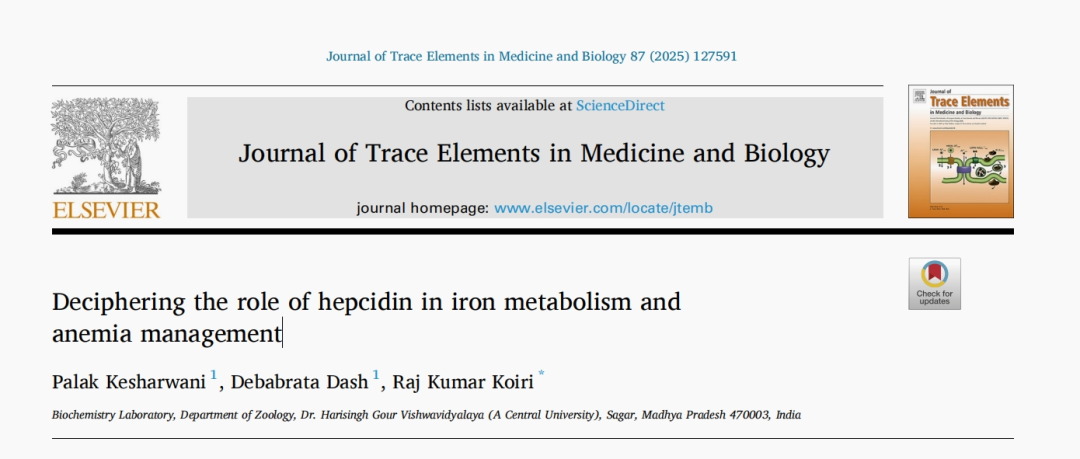
Published Journal: Journal of Trace Elements in Medicine and Biology
Literature Title:Deciphering the role of hepcidin in iron metabolism and anemia management.
Research Methods

This article is a review in which the authors comprehensively analyze and summarize the role of hepcidin in iron metabolism, various diseases related to anemia, and the research progress of hepcidin as a therapeutic target through extensive literature review.
Research Results
1. Hepcidin and Iron Metabolism: Hepcidin is mainly produced by hepatocytes and regulates iron absorption and release by binding to iron transporter proteins (FPN). Its expression is regulated by various factors such as hypoxia, erythropoiesis, growth factors, etc., mainly activated through BMP/SMAD and IL6/STAT signaling pathways.
2. Types of Anemia Associated with Hepcidin
-
Iron-Refractory Iron Deficiency Anemia (IRIDA): Caused by mutations in the TMPRSS6 gene, leading to abnormally elevated hepcidin levels, hindering iron absorption, and poor response to oral iron therapy.
-
Inflammatory Anemia: Triggered by inflammatory responses, pro-inflammatory cytokines upregulate hepcidin expression through the IL6/STAT signaling pathway, reducing iron absorption and utilization, with treatment primarily targeting the underlying disease.
-
Adenoma-Associated Anemia: Associated with Glycogen Storage Disease Type 1a (GSD1a), adenoma tissues promote hepcidin expression, leading to anemia, which can be rapidly alleviated by adenoma resection.
-
Hereditary Hemochromatosis: Caused by mutations in the hepcidin-iron transporter axis, leading to excessive iron absorption and overload, with genetic testing aiding in diagnosis; phlebotomy is the main treatment method.
-
β-Thalassemia: Due to a deficiency of the β-globin chain of hemoglobin, leading to anemia and iron overload; transfusions can improve anemia but affect hepcidin levels; current main treatment methods include transfusions and iron chelation therapy.
-
Congenital Erythropoietic Anemia (CDAs): Patients have iron metabolism disorders and abnormal erythropoiesis; in CDA type II patients, elevated ERFE and GDF15 levels inhibit hepcidin, leading to iron overload; treatments include iron chelation therapy and splenectomy.
3. The Relationship between the Liver, Kidneys, Brain, and Anemia and the Role of Hepcidin: Liver diseases can affect the synthesis of hepcidin and other iron metabolism-related proteins, leading to anemia; in kidney diseases, erythropoietin decreases, and hepcidin increases, causing anemia; abnormal iron metabolism in the brain is associated with neurodegenerative diseases and cognitive impairment, and hepcidin is crucial for maintaining brain iron homeostasis.
4. Progress in Hepcidin-Targeted Therapy: As a key regulatory factor in iron metabolism, hepcidin can be used for the diagnosis and treatment of various diseases. Several hepcidin mimetics, inducers, and inhibitors have been developed, with some drugs showing positive results in clinical trials, but further research is needed to clarify their therapeutic potential.
Research Conclusions
Hepcidin plays a central role in regulating iron metabolism balance and is closely related to the occurrence and development of various anemias, serving as a biomarker and potential target for the diagnosis and treatment of multiple anemias. Although current hepcidin-based treatment methods show certain prospects, challenges remain, and further research is needed to fully realize their therapeutic potential.
References:
Kesharwani P, Dash D, Koiri RK. Deciphering the role of hepcidin in iron metabolism and anemia management. J Trace Elem Med Biol. 2025 Jan 8;87:127591. doi: 10.1016/j.jtemb.2025.127591. Epub ahead of print. PMID: 39813816.
Previous Recommendations
Guideline Consensus | Management of Anemia in Gastrointestinal Diseases: Position Paper from the Gastroenterology Committee of the European Society of Pediatric Gastroenterology, Hepatology, and Nutrition
2025-02-10
Guideline Consensus | Chinese Expert Consensus on Self-Management for Patients with Renal Anemia (2024 Edition)
2025-02-07
Literature Express | Management of Anemia in Postoperative Colorectal Cancer Patients: A Qualitative Focus Group Study
2025-02-05



Scan the QR code for more exciting content
New Perspectives on Anemia


Your every read/share/like/view is our motivation to move forward; your every submission and feedback is our greatest support!
Statement: The content provided by this public account is for communication and learning purposes only and does not involve commercial profit. If there are copyright issues, please contact the site administrator for changes or deletions.
Without permission, please do not reprint. If you need to reprint, please send an email to “[email protected]”