

This article explains the DAC3283 from TI, detailing its operation via SPI, along with comprehensive Verilog code and testbench.
The DAC registers: There are a total of 32 registers, each with detailed configuration manuals available.
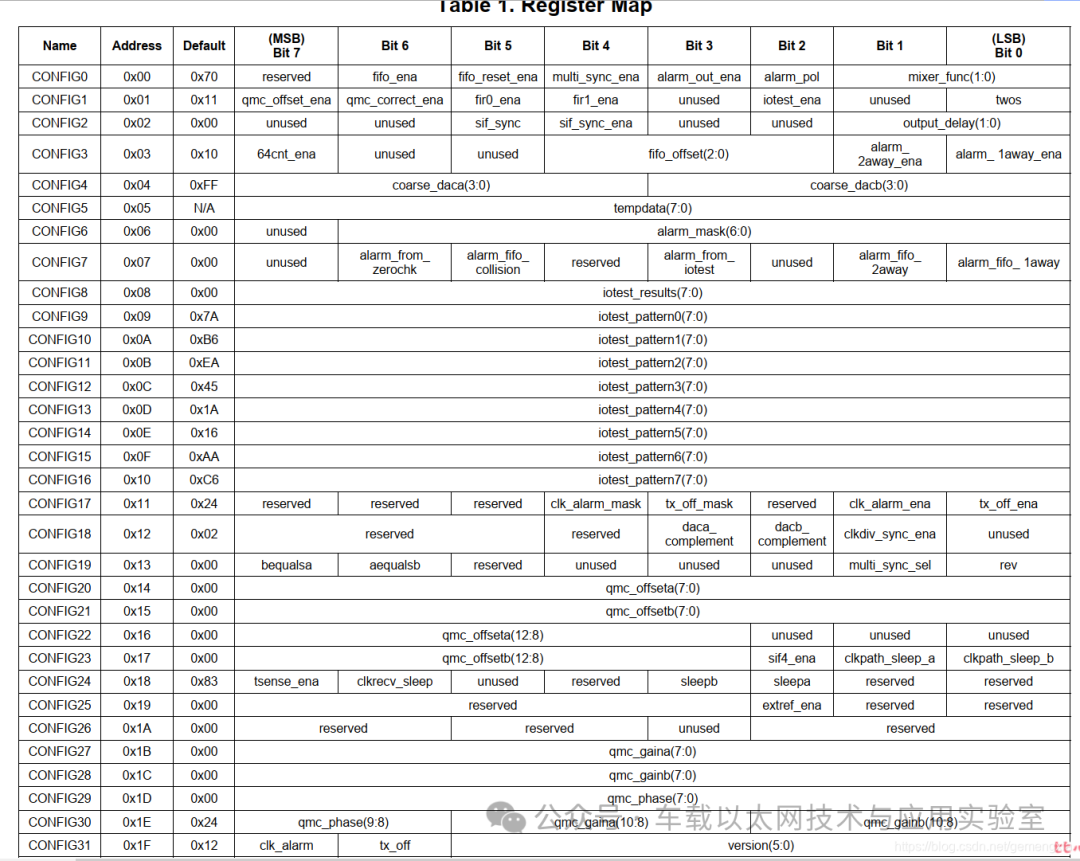
Each register can accept 5 bytes of data, with the usage of the first byte detailed in Table 2, including read/write control, and the usage of the remaining 4 bytes, register addresses, etc.
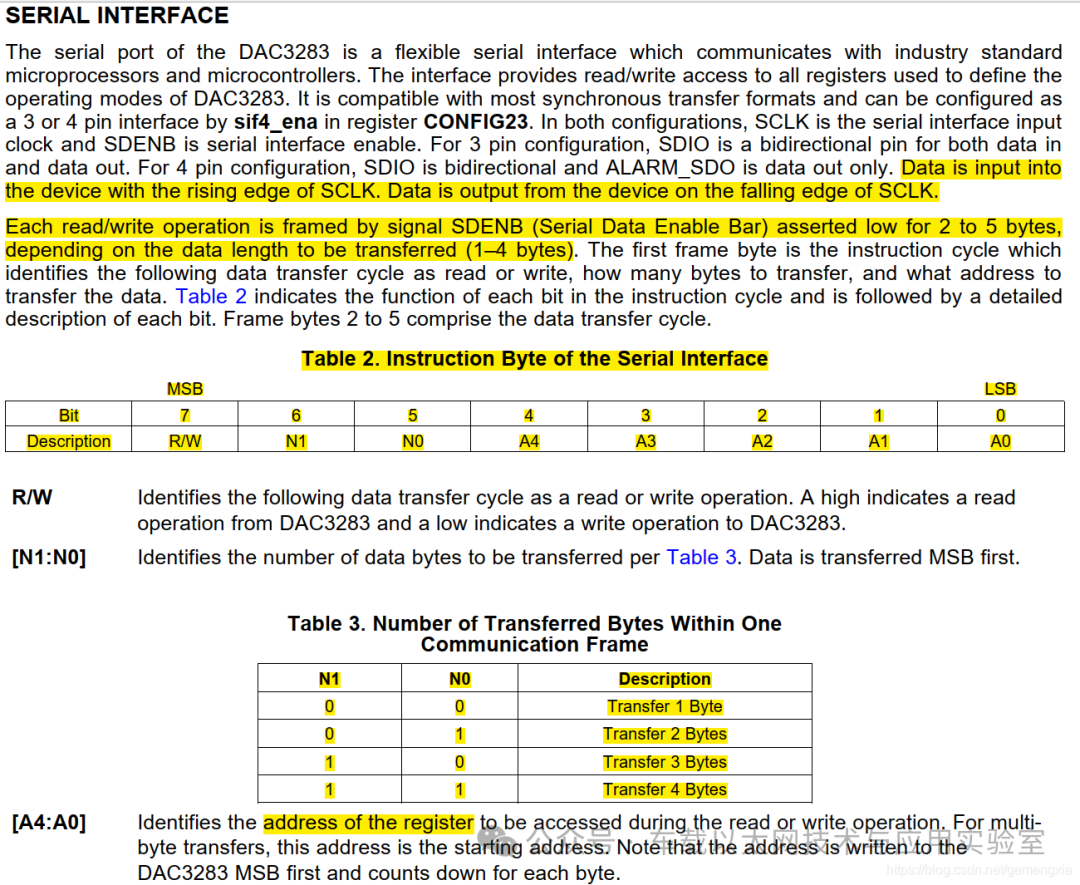
The read/write timing is shown in the figure below: In the write timing of Figure 32, the default is [N1:N0]=00, indicating that only 1 byte of data is transmitted. SDENB is the chip select signal, and SDIO is the bidirectional interface. This diagram analyzes the three-wire mode, with the only difference in the four-wire mode being that SDI and SDO are used to represent write and read data, respectively.
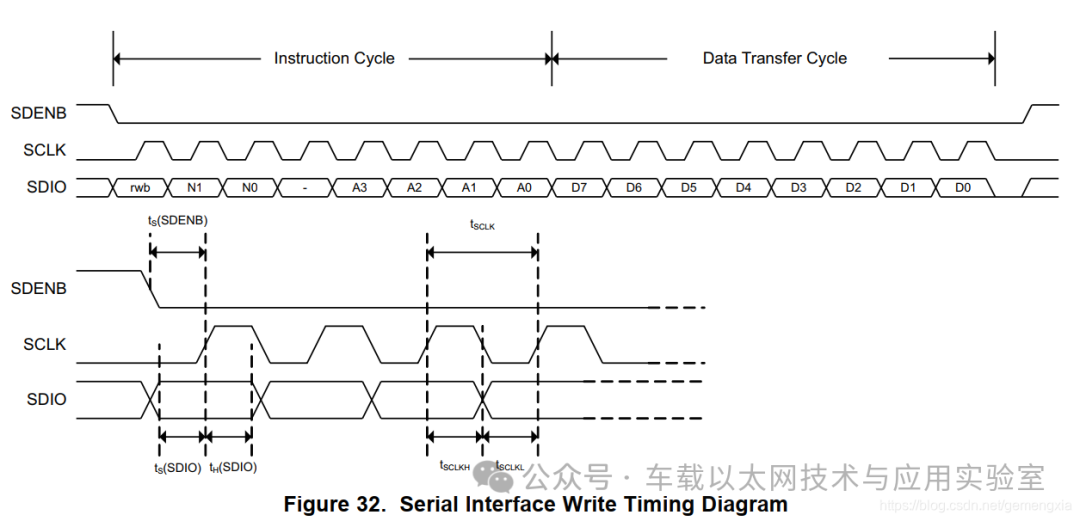
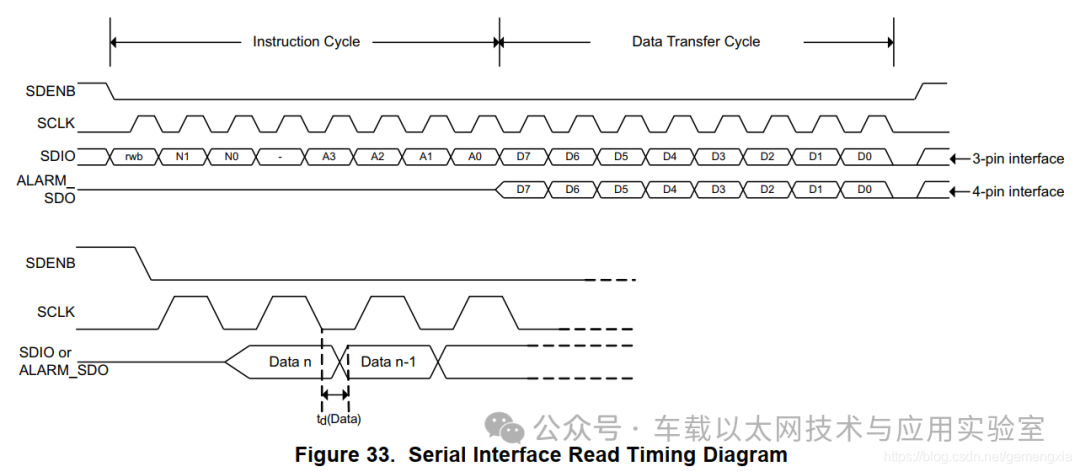
Detailed setup process:
a. First, clarify that the SDIO data center corresponds to the rising edge of SCLK, and data is read on the falling edge of the clock. Therefore, when generating SCLK data, the clock needs to be phase-shifted by 180 degrees. This maximizes the setup and hold time, yielding the best results.
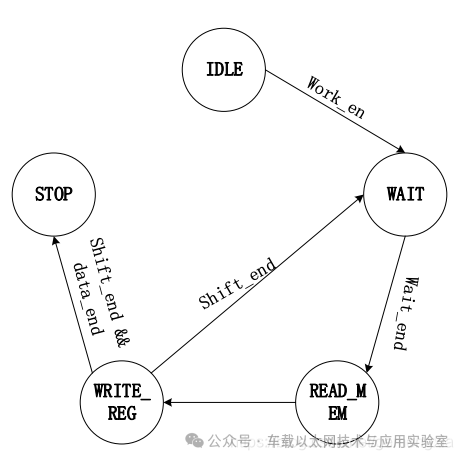
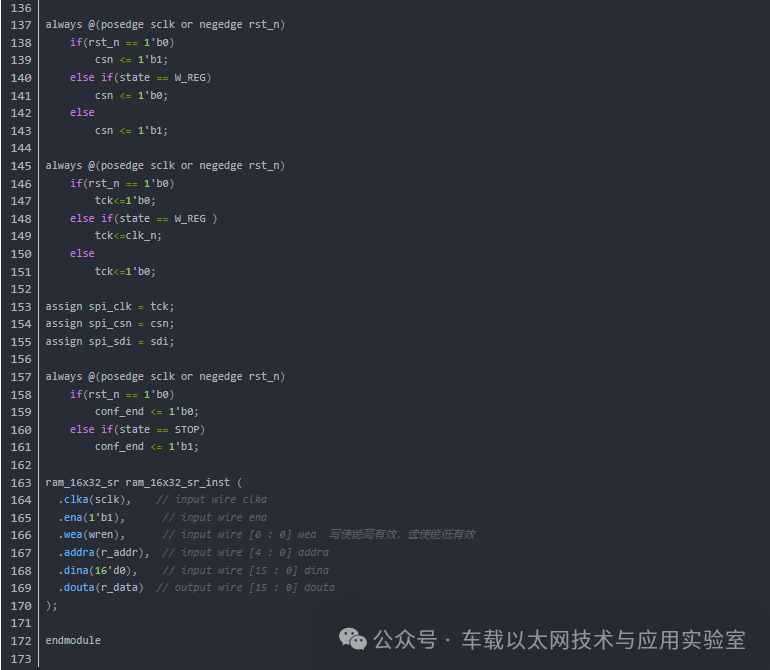
b. Establish a state machine to determine the state transitions of SPI. Upon power-up, it is in the IDLE state, with the WAIT state used to separate the waiting time between two commands. READ_MEM reads the status information from ROM, and WRITE_REG writes the read information into the DAC chip. Once all 32 registers are configured, it transitions to the STOP state.
Verilog code is as follows:
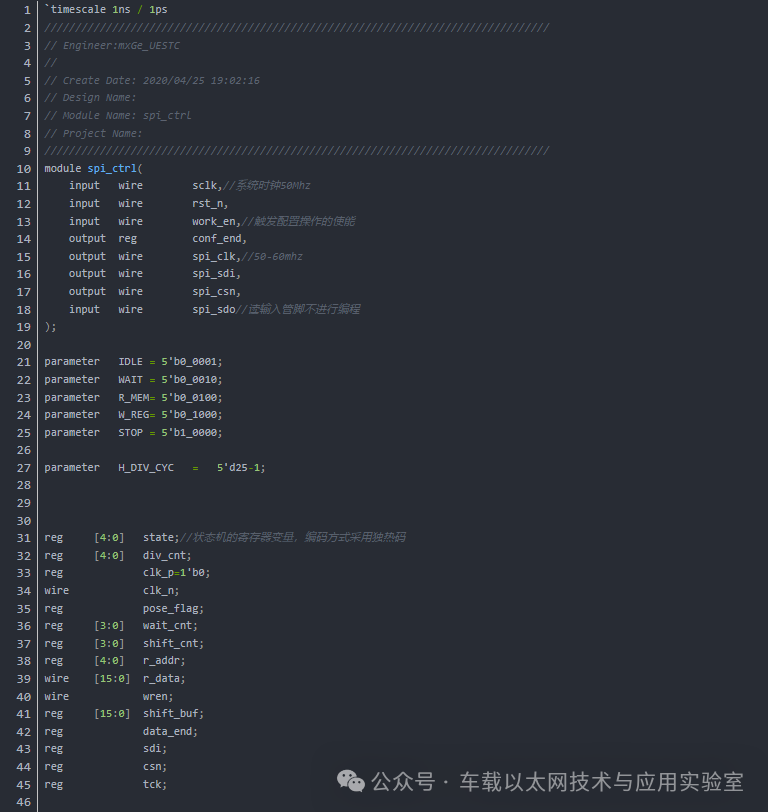
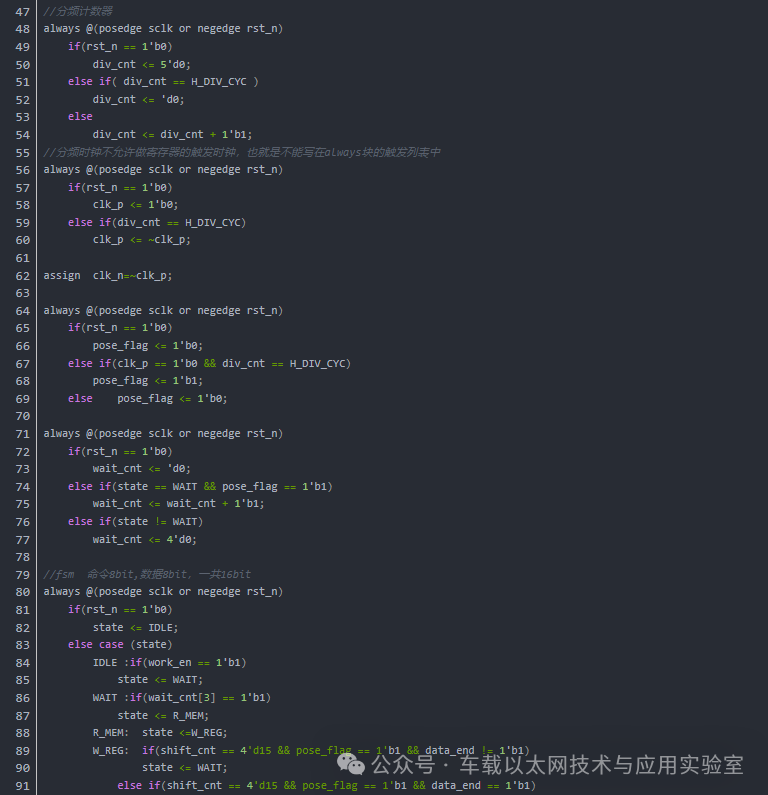
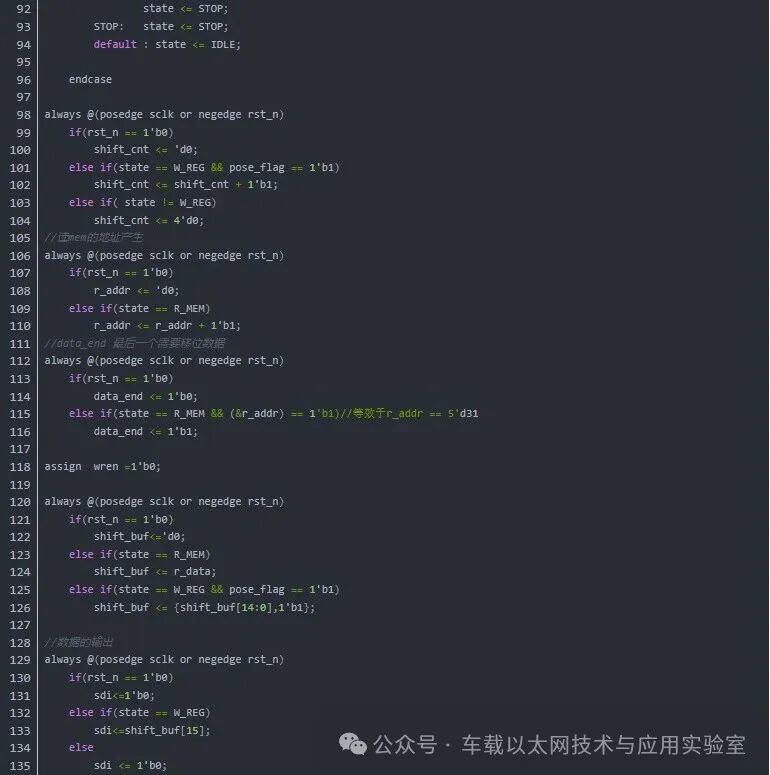
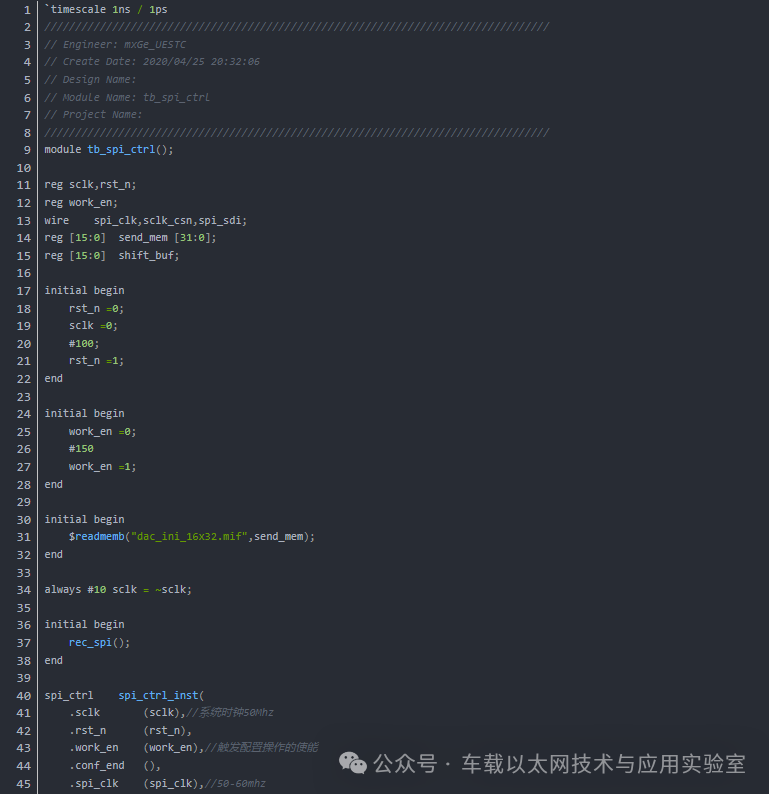
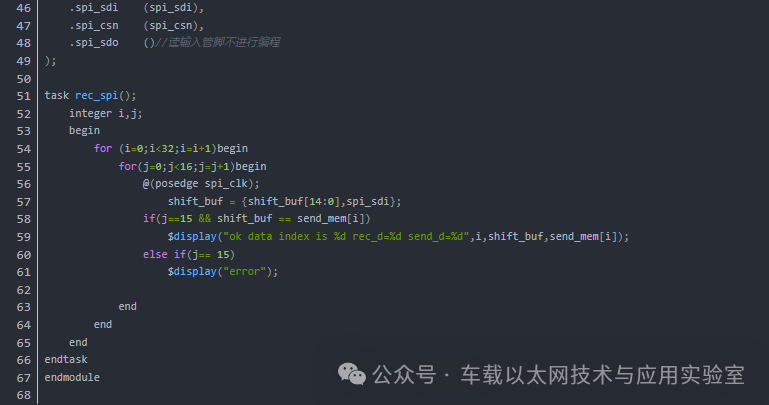
testbench

Disclaimer: We respect originality and emphasize sharing; the text and images are copyrighted by the original authors. The purpose of reprinting is to share more information and does not represent the position of this account. If your rights are infringed, please contact us promptly, and we will delete it immediately. Thank you!
Original link:
https://blog.csdn.net/gemengxia/article/details/108223997