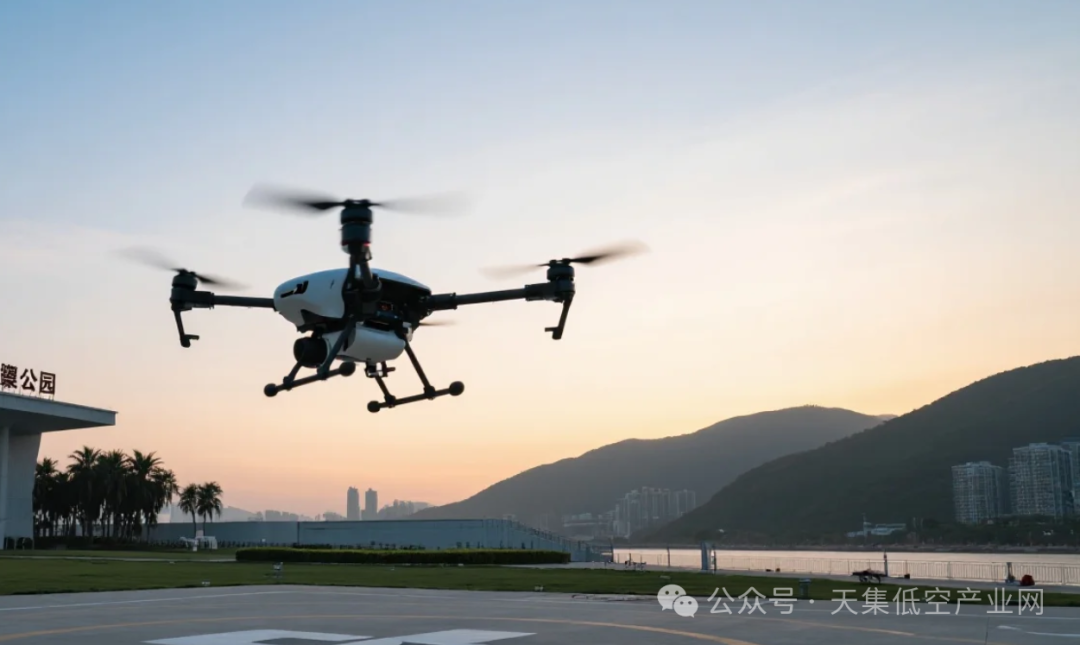
According to the “2024 China Low-altitude Logistics Development Report”, it is predicted that by 2025, the low-altitude logistics market in China will reach 120 to 150 billion yuan, and by 2035, it will exceed 450 billion yuan. Low-altitude logistics is reshaping industrial forms, commercial efficiency, government capabilities, and cultural tourism experiences through networking.
Industrial Upgrade: From Point-to-Point Transport to Cluster Collaboration
In the Shenzhen Shuibei Jewelry Industry Cluster, low-altitude logistics networking has become the core engine for upgrading the industrial chain. In January 2024, the Luohu District government launched the first low-altitude transport route for gold and jewelry, reducing the transport time from the production base to the trading market from the traditional 3 hours by land to just 15 minutes. More groundbreaking is the collaboration between Xiaohau Live and DJI in September, which achieved a fivefold increase in the efficiency of the entire process from order initiation to delivery through the “order in the live broadcast room – drone delivery” model, creating a new business format of “jewelry takeout”. The underlying logic of this transformation is that low-altitude networking weaves together dispersed production bases, storage centers, and trading markets into an aerial logistics network, enhancing material turnover efficiency within the industrial cluster by over 40% through dense route settings and intelligent scheduling systems.
The “High-Quality Development Action Plan for Low-altitude Economy” in Guangxi reveals deeper industrial value: relying on low-altitude logistics networking to create a low-altitude economic industrial park that integrates “R&D design – production manufacturing – test flight inspection”, promoting the formation of a complete industrial chain. In the rare metal R&D base in Hechi City, drones regularly transport samples from the laboratory to the testing center, and with real-time data transmission via 5G-A communication, the R&D cycle is shortened by 25%. This “low-altitude economic zone” model is being promoted nationwide, with drone R&D teams from Beijing and Shenzhen achieving same-day round-trip testing of core components through intercity low-altitude logistics, accelerating technological iteration.
Technical assurance is key to industrial networking. The redundant backup operating system and emergency parachute function of the DJI FLYCART 30 keep the single-machine failure rate below 0.3%, and combined with a secure pick-up mechanism, perfectly addresses the safety pain points of transporting high-value goods. When a drone swarm forms a dynamic network at low altitude, the industrial cluster gains unprecedented flexibility and risk resistance.
Commercial Innovation: Dual Breakthroughs in Instant Delivery and Cross-Domain Circulation
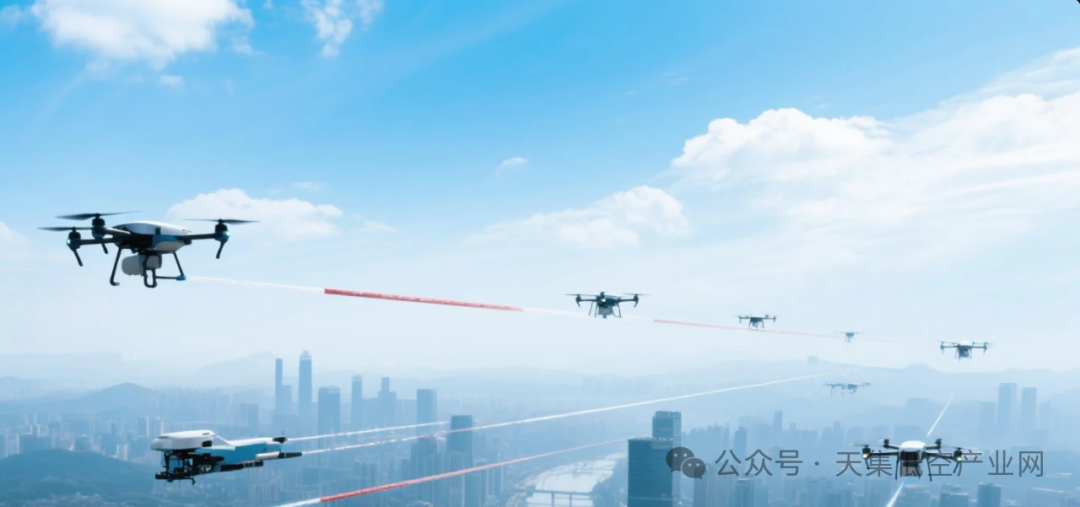
The low-altitude logistics networking in the commercial sector is showing a dual-driven pattern of “urban last-mile instant delivery + cross-regional channel networking”. In Banan, Chongqing, JD Logistics has established four regular low-altitude routes, creating an aerial delivery network covering a radius of 16.8 kilometers, achieving an average of over a thousand urgent deliveries per day during the “618” shopping festival, compressing the traditional 30-minute land transport to just 10 minutes. This “warehouse-to-station” low-altitude express model has improved the turnover efficiency of high-value goods by 70%. During the 2024 Double 11 shopping festival, the JDX-20 “Jingque” drone piloted in Nanjing set a record of delivering an average of 10,000 orders per day, with the average order value increasing by 40% compared to traditional delivery.
The breakthrough in cross-regional logistics is even more disruptive. In June 2025, SF Express launched the country’s first “trunk – branch – last mile” cross-province low-altitude logistics route, using a relay mode of “general aviation aircraft + drones”, shortening the transport time of honey peaches from Guiyang to Chengdu by 8 hours and increasing the delivery rate by 20%. In the north, the low-altitude route from Qingdao to Beijing for cherries achieved a direct delivery time of 6.5 hours, reducing the fresh goods damage rate from the traditional 15% to 3%. These cases validate the network effect of low-altitude networking: when trunk aviation and branch drones connect, the logistics radius is no longer limited by terrain, and the practice of transporting Hainan lychees via low-altitude routes in 2 hours is reshaping the circulation pattern of agricultural products.
Technological innovation continues to expand commercial boundaries. The integrated network based on 5G-A enables real-time monitoring of low-altitude aircraft with an accuracy of 10 meters, tripling the scheduling efficiency of urban low-altitude logistics. JD has built a three-tier network of “trunk – branch – terminal”, dynamically optimizing routes through intelligent algorithms, resulting in a 40% reduction in marginal costs per flight for drones piloted in Binzhou, Shandong. This balance of cost and efficiency allows low-altitude logistics to transition from high-end pilots to mass consumer scenarios.
Government Services: Enhanced Efficiency in Emergency Response and Public Services
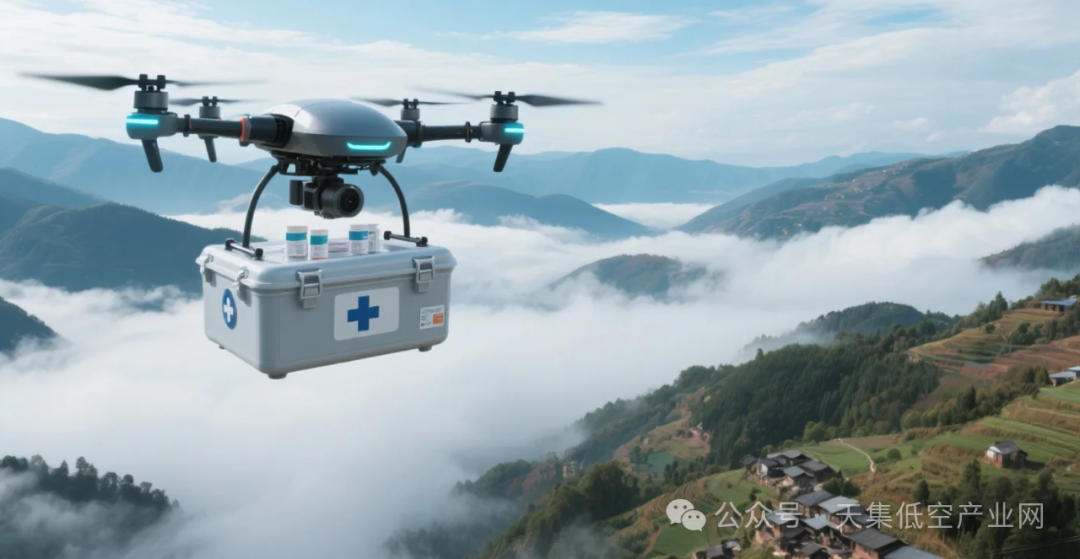
The low-altitude logistics networking in government scenarios is reconstructing the spatiotemporal boundaries of public services. The Guangxi plan clearly incorporates low-altitude applications into the government budget, building a unified scheduling aviation emergency rescue system through joint procurement. In Liangshan Prefecture, Sichuan, the drone medical delivery network has reduced the delivery time of medicines to remote mountainous areas from 48 hours to just 2 hours. During the 2023 floods in Henan, JD drones completed over 3,000 emergency material deliveries, demonstrating the irreplaceability of low-altitude networking in disaster relief.
The networking applications in firefighting and inspection fields are becoming more mature. Drones equipped with thermal imaging cameras can form an aerial monitoring network covering 100 square kilometers, combined with ground stations using 5G-A communication to achieve real-time identification and localization of fire hazards. In agricultural and forestry protection, the drone pest control network promoted in Guangxi has reduced pesticide usage by 20% and increased operational efficiency by five times, with a single drone capable of monitoring 500 acres of rice fields daily.
Standardization construction accelerates the implementation of government networking. The introduction of standards such as “Technical Requirements for eVTOL Takeoff and Landing Sites” has standardized the construction standards for low-altitude infrastructure. The airworthiness public service platform built in Nanning and Hezhou provides full-process support for government drones, from inspection and certification to flight approval, reducing emergency response preparation time from 2 hours to 30 minutes. When low-altitude logistics deeply integrates with government services, the efficiency of public resource allocation achieves a qualitative leap.

Cultural Tourism Integration: Aerial Economy of Scene Innovation and Traffic Conversion
The low-altitude logistics networking in cultural tourism scenarios is creating a composite value of “transportation + experience”. Guangxi is planning to build standardized low-altitude tourism experimental zones based on karst landforms and coastal resources, developing “small and beautiful” consumption scenarios such as aerial sightseeing and aerial photography. In Xi’an’s Datang Ever Bright City, drone team performances have become standard cultural tourism projects, while an upgraded version combining logistics functions is being tested—cultural products purchased by tourists can be directly delivered to the scenic area exit by small drones, achieving a seamless experience of “receiving goods immediately after the tour”.
The networking operation of low-altitude sightseeing enhances the carrying capacity of cultural tourism services. The “low-altitude shuttle line” pilot in Zhangjiajie can transport 80 tourists back and forth between scattered scenic spots every hour through the coordinated scheduling of five drones, alleviating ground traffic pressure and creating an additional consumption of 150 yuan per person. The “aerial viewing platform” project being tested in Guilin combines drone logistics with sightseeing, where the specialty food tasted by tourists on the high-altitude platform is delivered instantly by low-altitude cold chain drones.
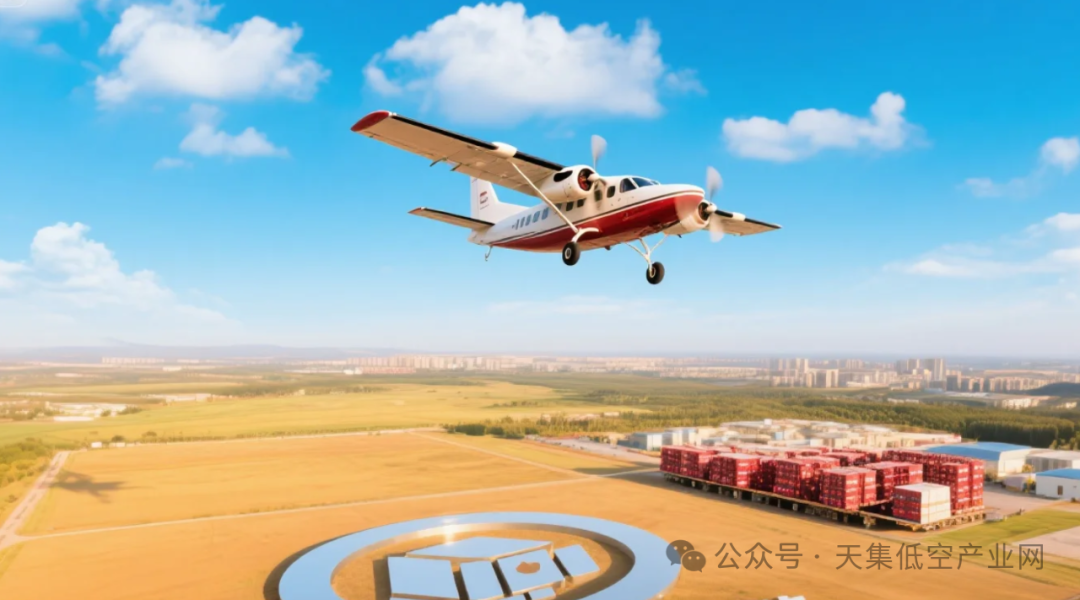
Technology Empowers Upgraded Cultural Tourism Experiences. The drone swarm control technology based on the Beidou data link can achieve precise coordination of over 500 aircraft, creating immersive aerial performances. The cherry transport route opened by SF in Qingdao has simultaneously developed a “low-altitude logistics study tour”, allowing tourists to track the entire process of fresh produce from picking to air transport, enhancing the repurchase rate of cultural tourism projects by 35% with this “transparent supply chain” experience. As low-altitude networks connect scenic spots, merchants, and tourists, the boundaries of the cultural tourism economy are continuously expanding.
From the intelligent turnover of industrial clusters to the instant response of urban life, from the life-saving speed of emergency rescue to the scene innovation of cultural tourism experiences, low-altitude logistics networking is reshaping the operational logic of the economy and society in the form of an “aerial highway network”. The “2024 China Low-altitude Logistics Development Report” shows that China has formed a low-altitude logistics pilot network covering 30 provinces. With the improvement of eVTOL airworthiness standards and the maturity of 5G-A sensing technology, a trillion-level low-altitude economic market is accelerating its formation. For enterprises, grasping the rule of “networking equals value” and finding entry points in route collaboration, technology adaptation, and scene innovation is essential to seize the high ground of the low-altitude economy. As drones and general aviation aircraft weave a network in the low-altitude airspace of smart cities, we are ushering in a new era of spatial efficiency revolution.
Data Source References:
[1] China Wealth Network “Low-altitude Economy Leads Transformation: Xiaohau Live Collaborates with DJI to Create a New Era of Jewelry Delivery” (2024.9)
[2] National Development and Reform Commission Training Center “Guangxi Low-altitude Economy High-Quality Development Action Plan (2024-2026)” (2024.10)
[3] CSDN Blog “JD Low-altitude Economy Layout Overview” (2025.7)
[4] Securities Times “Low-altitude Economy Enters the Digital Age! The 9th World Drone Conference Highlights ‘Application Breakthrough'” (2025.5)
[5] Xinhua News “Look! The Carrier Aircraft Delivers ‘Aerial Express’ in Shenzhen” (2024.10)
[6] China Civil Aviation Network “Exploring the Digital Low-altitude New Infrastructure of eVTOL” (2024.9)
[7] Xinhua News Chongqing Channel “4 Regular Drone Routes Enhance ‘Aerial Couriers’ Efficient Delivery of Urgent Items” (2025.6)
[8] SF Express “SF Continues to Expand Low-altitude Economy, Supporting the Launch of the Country’s First ‘Trunk – Branch – Last Mile’ Cross-Province Low-altitude Logistics Route” (2025.1)
Disclaimer: We respect originality and emphasize sharing. Some materials in this article are sourced from publicly available data and resources, and the copyright belongs to the original authors. If your rights are infringed, please contact us promptly, and we will delete it immediately (the above is for reference and learning exchange only, not for investment advice).
Recommended SelectionsMining the Billion-Dollar Blue Ocean: Analyzing Three Major Profit Models of the Low-altitude EconomyLow-altitude Economy Wealth Creation Guide: Practical Strategies for Ordinary People to Seize the Trillion-Dollar OpportunityDevelopment Planning and Organizational Structure System Solutions for Low-altitude Economy CompaniesLow-altitude Economy: Why is the Country Fully Layouting This Strategic New Track?Overall Operation Plan for Drone Training Institutions and Schools to Collaborate in Training Pilots
Low-altitude Entrepreneurship Pitfall Guide: Policy Red Lines, Capital Chains, and Supply Chain Life-and-Death Situations
Overall Operation Service Plan for Youth Drone Research and Study
Overall Operation Plan for Drone Training Institutions and Schools to Collaborate in Training Pilots
Exploring the Innovative Ecosystem of the Low-altitude Economy, Who are the Leaders?
Low-altitude Entrepreneurship Pitfall Guide: Policy Red Lines, Capital Chains, and Supply Chain Life-and-Death Situations
Low-altitude Economy Policy Dividend Release: How Enterprises Can Accurately Connect with the Trillion-Level New Track
2025 Low-altitude Economy 50 Innovative Directions! These 10 Tracks Will Give Birth to Unicorns
Low-altitude Economy Written into Government Work Report! These Three Policy Signals Must Be Grasped in 2025
Building a Low-altitude Economy Business Model from 0 to 1: These Steps Must Not Be Mistaken—The Triad of Policy, Technology, and Scene Innovation
Shanghai Plans to Set Up a 10 Billion Low-altitude Industry Fund, Financing Amounts to Break 3 Billion in 2025! These Four Tracks are the Most Attractive
Night Flight Compliance Guide: How Enterprises Can Apply for Special Airspace Qualifications
Policy Application Guide: 6 Types of Special Funds Support That Low-altitude Economy Enterprises Must Compete For. Missing One Policy May Mean Losing an Industry Competition.
Low-altitude Economy Explosion Creates 10 Major Golden Professions: From Flight Service Dispatcher to Airspace Planner