
“Quality management in injection molding production is a systematic project that spans the entire value chain from raw material supplier management, incoming inspection, production process control, product inspection to after-sales feedback.”
Written by | Banble Consulting
Image | AI Generated
The quality of automotive components is the lifeline of enterprises, especially for automotive injection molded parts; however, the correct statement should be that quality is the lifeline of all enterprises. The requirements for quality from OEMs are becoming increasingly stringent, making the improvement of quality management levels a core issue for injection molding companies. This article will analyze the key points and improvement paths of automotive injection molding quality management from three dimensions: current situation analysis, successful case practices, and core management elements.
1. Current Challenges and Pain Points in Automotive Injection Molding Quality Management
The quality performance of automotive injection molded parts is uneven, facing three core challenges:
Raw Material Volatility Risk: Frequent fluctuations in raw material prices may lead some companies to purchase unstable quality materials to control costs. For example, plastic pellets that are damp or do not meet specifications can directly result in defects such as insufficient strength, surface shrinkage, or pitting in injection molded parts, severely affecting product reliability and appearance.
Process Parameter Control Difficulties: Controlling key parameters such as temperature, pressure, and time during the injection molding process is challenging. Excessively high temperatures can lead to plastic degradation and a sharp decline in performance; insufficient pressure can cause internal voids, weakening product strength; deviations in time can affect filling and cooling effects. Minor fluctuations in these parameters can directly reflect in product defects.
Lack of Mold Maintenance and Management: Molds are the core of injection molding production, and long-term use inevitably leads to wear, deformation, or cooling system blockages. Without systematic management, it is easy to cause product size deviations and poor appearance (such as flash and burrs). Especially for automotive interior parts, which have high appearance requirements, poor mold management is often the main reason for customer complaints and returns.
2. Case Study: The Quality Transformation Journey from Crisis to Revival
We once provided in-depth guidance to an automotive injection molding company facing a severe quality crisis. At that time, the company’s customer complaint rate was high, and it was losing orders severely. Through systematic improvements, a significant transformation was achieved:
Strict Control at the Source: Standardization of Raw Material Admission
The company previously had a formal approach to incoming inspection of raw materials, leading to problematic materials entering the production line. We assisted in establishing strict raw material inspection standards, clarifying inspection items (such as melt index, moisture content, color), methods (ASTM/ISO standards), criteria, and sampling rules. At the same time, we trained inspection personnel in professional equipment operation and judgment capabilities to ensure reliable raw material quality, eliminating batch defects from the source.
Stabilizing the Process: Monitoring and Standardizing Process Parameters
Workshop operations relied heavily on worker experience, leading to significant randomness in parameter adjustments. We introduced a real-time monitoring system for key process parameters (temperature, pressure, injection/holding speed, time) with data visualization. Process engineers optimized and solidified parameters based on data analysis. Although there was initial resistance, once employees saw a significant improvement in first-pass yield (from 70% to over 90%), increased orders, and higher revenue, their enthusiasm was fully mobilized.
Refined Management: Lifecycle Maintenance of Molds
To address chaotic mold management, we assisted in establishing an electronic mold archive system to record key information such as mold storage, usage history, maintenance history, and wear status. We developed a preventive maintenance plan (PM) for regular inspections, cleaning, and maintenance, akin to a “regular health checkup.” This transformed passive repairs (fixing when broken) into proactive prevention, effectively extending mold life and significantly improving product size stability and appearance quality.
Results: Systematic transformation led to a qualitative leap: customer complaints significantly decreased, the company went from nearly losing core customers to gaining recognition for quality improvement, and successfully expanded to new customers, revitalizing the enterprise.
3. Core Elements and Professional Strategies for Automotive Injection Molding Quality Management
To build a robust quality management system, the following professional elements are indispensable:
Clear and Quantifiable Quality Standards:
Appearance Standards: Must define quantifiable acceptance limits and inspection methods for glossiness, color difference (ΔE value), and surface defects (scratches, weld lines, shrink marks, etc.). For example, for color difference issues, a professional spectrophotometer can be introduced to establish strict incoming color matching, process monitoring, and finished product inspection standards.
Performance Standards: Set clear target values, specification limits, and testing methods (based on national standards/industry standards/company standards) for key physical and mechanical properties (such as tensile strength, flexural strength, impact strength). Through mandatory batch sampling or online testing, potential issues such as brittleness caused by material formulation problems can be detected in a timely manner.
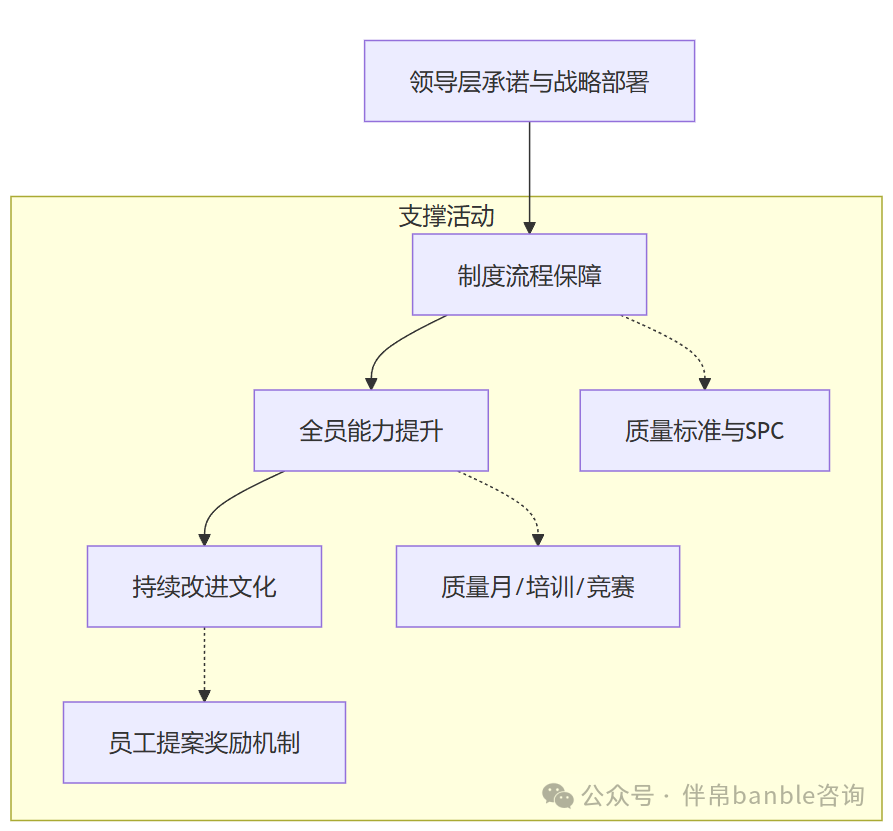
Data-Based Statistical Process Control (SPC):
Applying SPC (Statistical Process Control) tools is key to enhancing process stability. By collecting and monitoring real-time data on key quality characteristics (such as critical dimensions, weight) and process parameters, statistical analysis is performed using control charts (such as Xbar-R charts). Abnormal fluctuations can be detected in a timely manner, root causes traced (equipment? molds? materials? environment?), and corrective actions taken. Practice shows that effective application of SPC can significantly reduce dimensional fluctuations and lower defect rates (the case company’s yield rate improved by nearly 20%), greatly reducing waste losses.
Continuous Improvement (Kaizen) and Full Participation:
Establish a mechanism that encourages all employees to report quality issues and improvement suggestions, supported by a tiered incentive system. For example, if a frontline operator discovers that improper fixation of the heating ring leads to frequent failures affecting quality and proposes an effective improvement plan, they should receive timely material and spiritual rewards after successful implementation. This can effectively stimulate employee enthusiasm for quality improvement, creating a virtuous cycle.
Deeply Rooted Quality Culture Construction:
By regularly holding activities such as “Quality Month” (e.g., promotional boards, special lectures, knowledge competitions, sharing of excellent experiences, visits to benchmark enterprises), the quality awareness of all employees is continuously strengthened. The goal is to change the perception that “quality is produced, not inspected” into a consensus, making every employee a guardian of quality. The case company successfully reversed the old notion that “quality is only the responsibility of the quality inspection department” through such activities, forming a proactive quality culture atmosphere of discovering problems and responding quickly.
Quality management in automotive injection production is a systematic project that spans the entire value chain from raw material supplier management, incoming inspection, production process control (process, equipment, molds), product inspection to after-sales feedback. Enterprises must establish and strictly implement clear standards, fully utilize tools like SPC to achieve process stability, stimulate full participation in continuous improvement, and cultivate a deep quality culture. Only in this way can they win customer trust and achieve sustainable development in fierce market competition. Continuous learning of advanced industry methods (such as automated testing, deepening the application of MES systems) and keeping up with technological development trends are the keys to maintaining quality competitiveness.