

New Industrial Ideas: Planetary True Work

Humanoid robots are one of the most promising and potential industries in today’s technological field. With continuous advancements in technology and the rapid development of artificial intelligence, humanoid robots are set to become a new track for future industries and a new engine for economic growth, profoundly transforming human production and lifestyle, and reshaping the global industrial development pattern.
This article details the definition, classification, development history, industrial chain, related policies, representative companies, and market prospects of humanoid robots. To understand humanoid robots, reading this article is sufficient!
Definition
Humanoid robots are a type of bionic robot, resembling the shape and size of the human body. They can mimic human movements, expressions, interactions, and actions, possessing a certain degree of cognitive and decision-making intelligence. Humanoid robots are built on a multidisciplinary foundation, integrating advanced technologies such as artificial intelligence, high-end manufacturing, and new materials to achieve anthropomorphic functions. They are expected to become disruptive products following computers, smartphones, and new energy vehicles, profoundly transforming human production and lifestyle. They are also an important indicator of a country’s high-tech strength and development level.
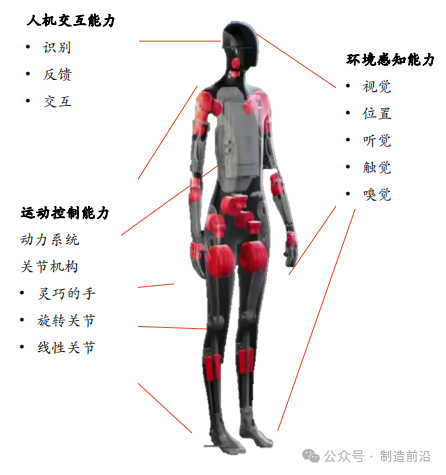
Compared to other robots, humanoid robots have higher comprehensive requirements for intelligent perception, motion control, intelligent decision-making, and human-robot interaction, which specifically include:
1. Intelligent Perception: Needs to be equipped with various sensors to perceive unstructured scenes and respond accordingly to different situations.
2. Motion Control: Requires humanoid robots to possess high precision and sensitivity, good stability, and balance control capabilities, accurately mimicking human actions such as walking, running, and grasping, while responding in real-time to various sensor inputs and environmental changes.
3. Intelligent Decision-Making: Can autonomously make optimal decisions based on information such as environment, tasks, and goals using artificial intelligence technology, achieving functions like autonomous navigation, task execution, and human-robot interaction, which require efficient algorithms and strong computational power to process large amounts of information and data.
4. Human-Robot Interaction: Needs to recognize and process natural language so that robots can understand user commands, questions, or instructions. It requires emotional recognition technology to identify user emotional states and provide a more humanized interaction experience. Additionally, it has high requirements for gesture and action recognition, and multimodal interaction.
Classification
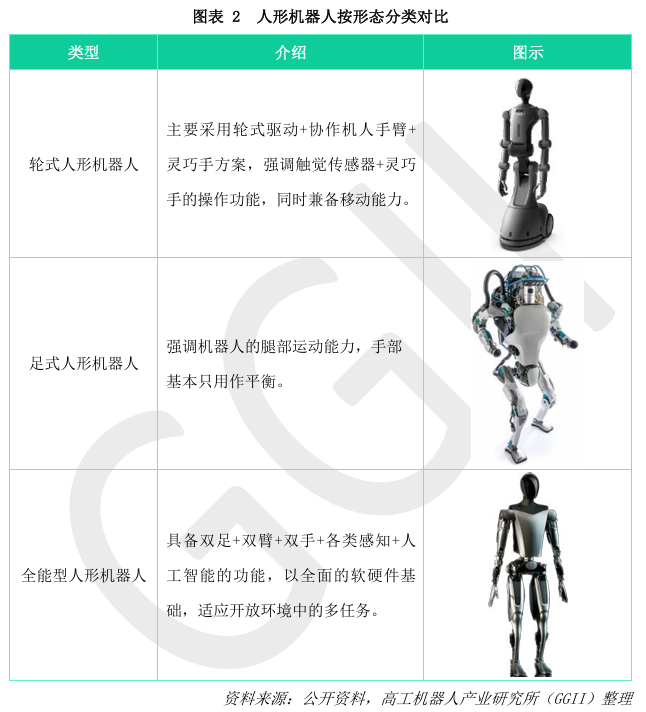
Based on the form of humanoid robots, they can be classified into wheeled humanoid robots, legged humanoid robots, and versatile humanoid robots. The introduction of various types of humanoid robot products is as follows:
Development History
From Leonardo da Vinci’s first humanoid robot manuscript in the 15th century to WABOT-1, the world’s first humanoid robot developed by Waseda University in 1973, and the exploration of the industrialization and commercialization of humanoid robots triggered by Tesla’s Optimus, the humanoid robot industry has transitioned from its conceptual stage to the early stages of industrialization.
The concept of humanoid robots emerged earlier overseas, primarily driven by technology, while domestically, the focus has been on application breakthroughs. With the continued accumulation and breakthroughs in advanced technologies such as artificial intelligence, high-end manufacturing, and new materials in China, 2023 marks the concentrated outbreak period for domestic humanoid robots, with numerous manufacturers launching their humanoid robot products and attempting applications in services, automotive, and other scenarios, gradually exploring commercial landing.
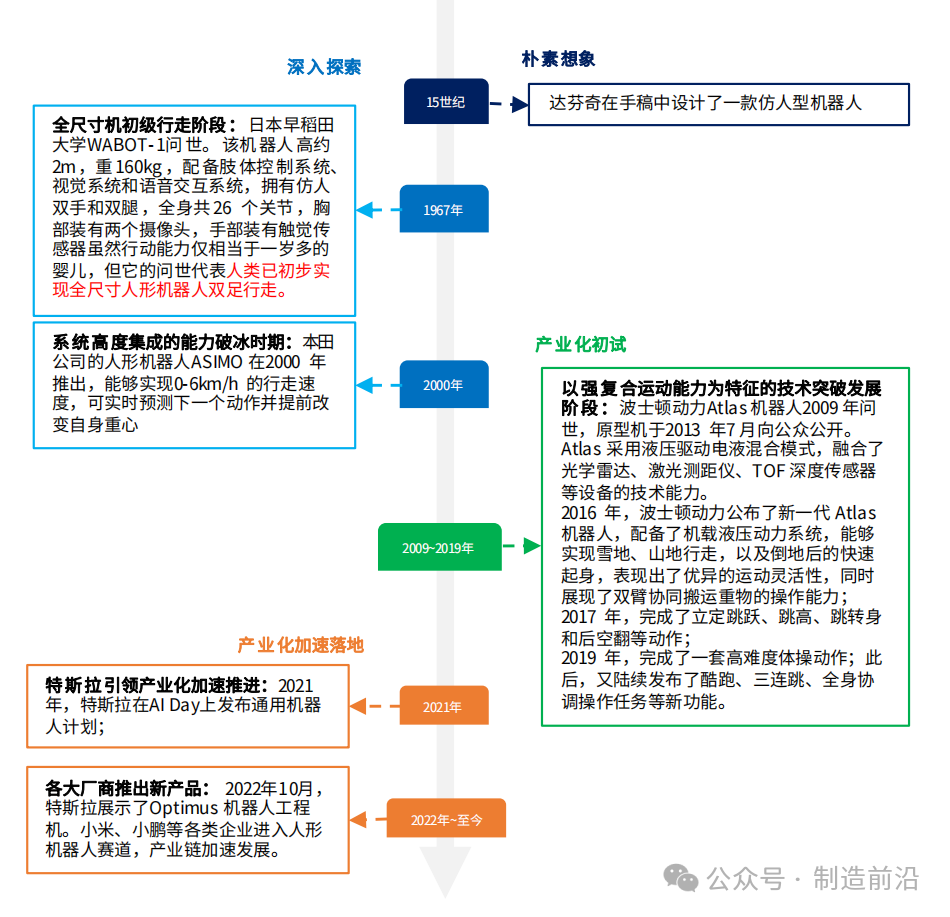
Image / Development History of Humanoid Robots
Related Policies
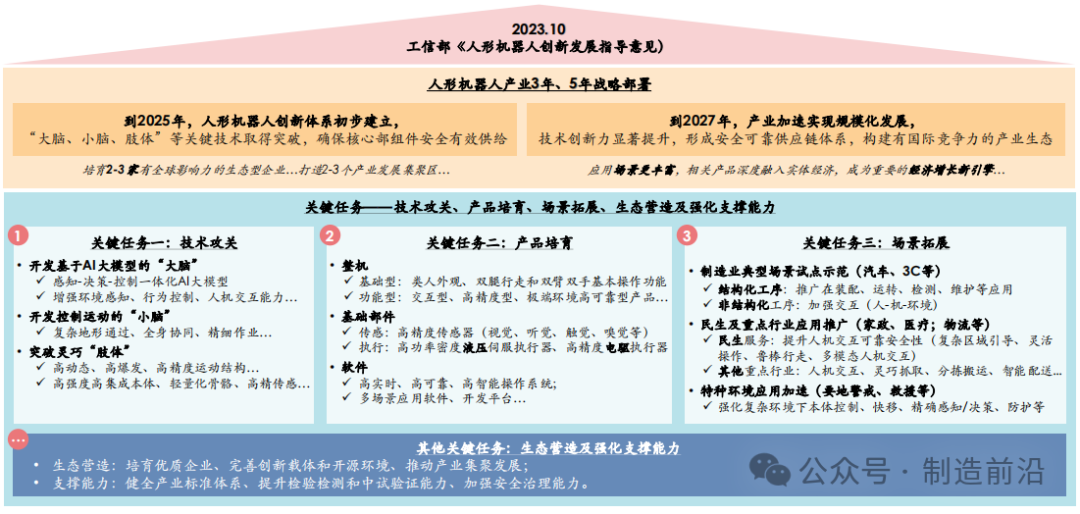
Currently, the national level, led by the Ministry of Industry and Information Technology, has clarified the strategic goals for the market development of the humanoid robot industry, aiming for mass production of complete products by 2025 and scaled development of the industry by 2027, deeply integrating into the real economy and promoting the large-scale landing of humanoid robot products.
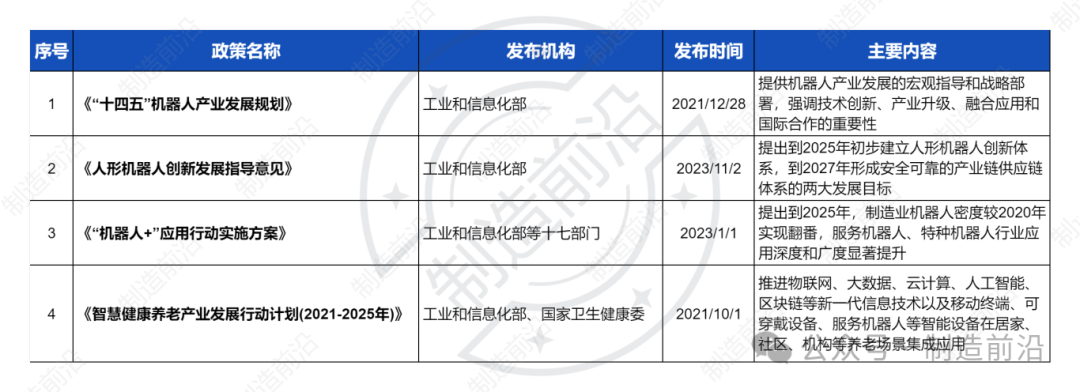
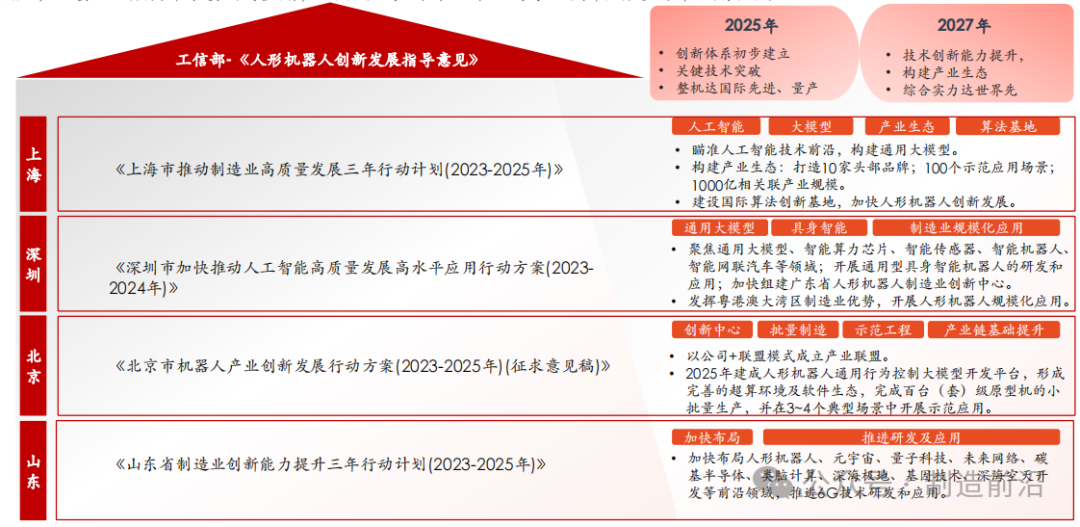
Local governments in Beijing, Shanghai, Shenzhen, and other places are actively following up, successively introducing related policies for the development of humanoid robots, formulating development paths and corresponding guarantee measures to promote the innovative development of humanoid robot industries, achieving industrial clustering, and seizing the opportunities for the industrialization of humanoid robots.
Industrial Chain Analysis
The humanoid robot industrial chain mainly consists of upstream components, midstream humanoid robot bodies, and downstream terminal applications. Currently, due to the lack of large-scale commercial landing of humanoid robots in downstream terminal application fields, and the insufficient verification of the application of some core components in the humanoid robot field, the supply chain for humanoid robots in China is still under continuous construction. As the innovation system for humanoid robots gradually establishes, with continuous breakthroughs in critical technologies such as “brain, cerebellum, limbs,” China is expected to gradually form an efficient and reliable humanoid robot industrial chain and supply chain system.
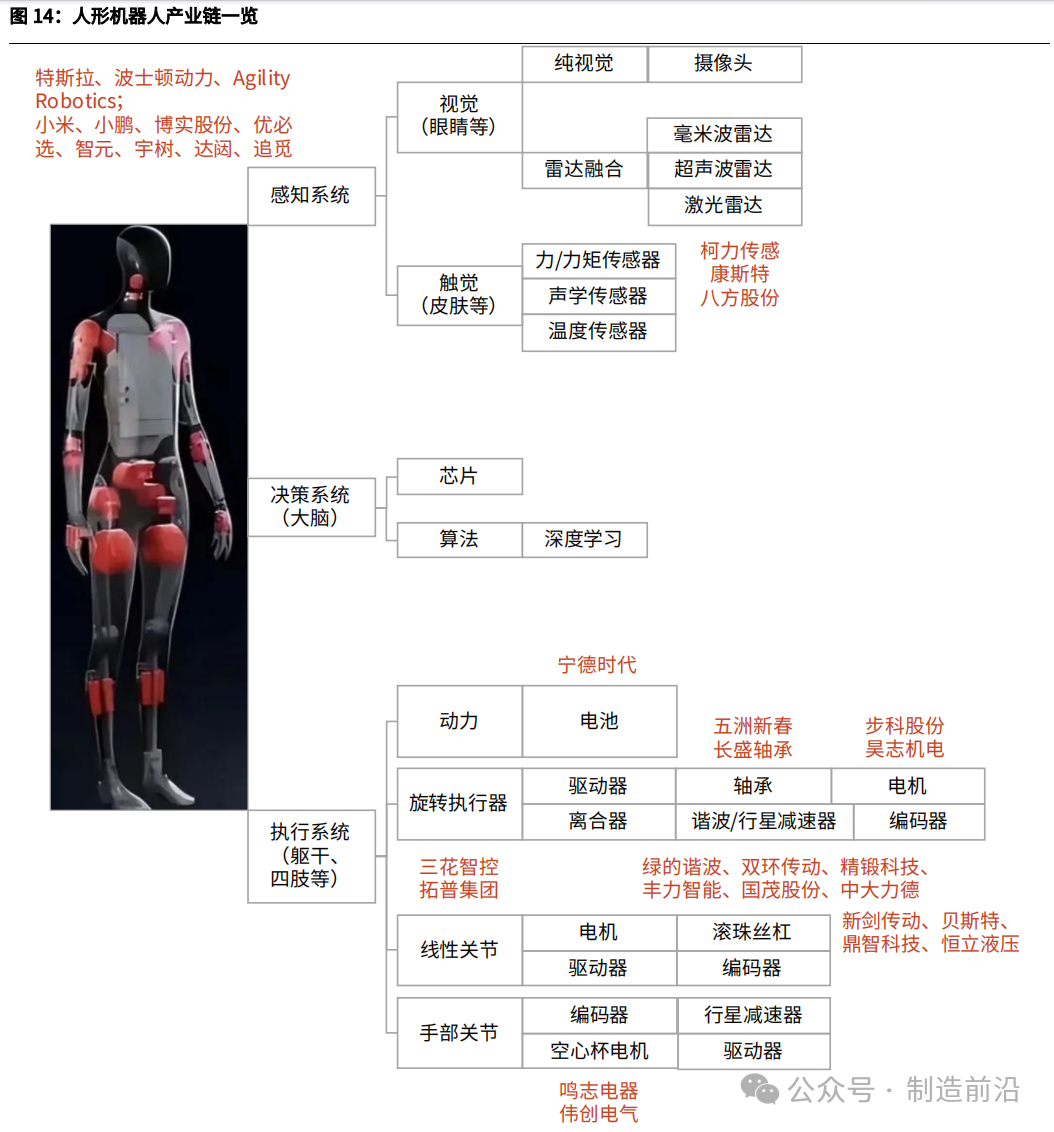
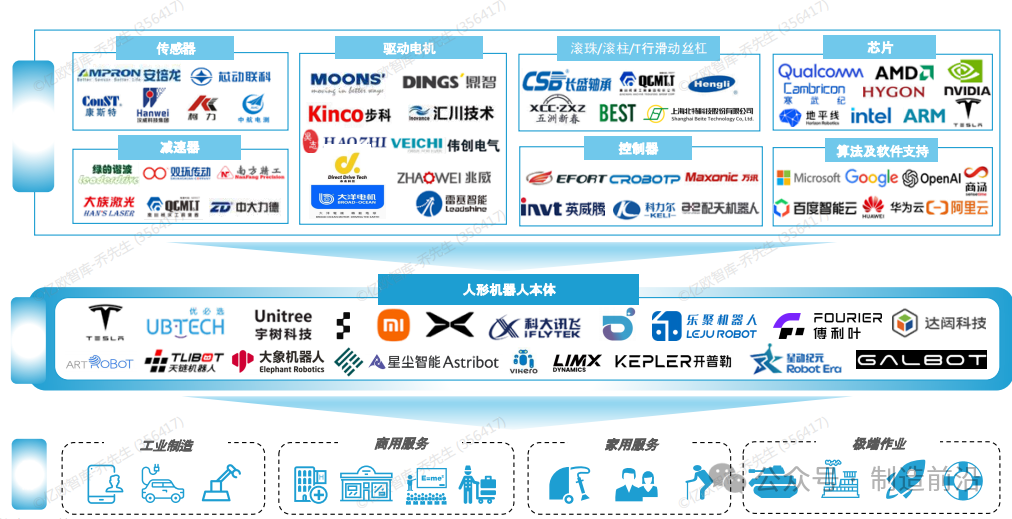
Image / Humanoid Robot Industrial Chain Map
01 Upstream Core Component Analysis
The upstream of humanoid robots includes hardware parts such as reducers, motors, screws, controllers, sensors, and software system parts. In the entire industrial chain, from a long-term perspective, the most valuable part is in the software, meaning those who can independently develop or master core technologies such as motion control and artificial intelligence algorithms will control the “brain” of humanoid robots, potentially leading the development direction and pace of humanoid robots on a technical level. Currently, the parts with high value and large incremental space are mainly the core components such as sensors, reducers, motors, and screws.
1. Reducer: The reducer plays a role in reducing the motor speed and increasing the output torque in humanoid robots, which is crucial for improving the torque output and motion accuracy of robot joints. Reducers allow motors to operate at high speeds while ensuring the smoothness and precision of joint movements. The main applications include RV reducers, harmonic reducers, and planetary reducers.
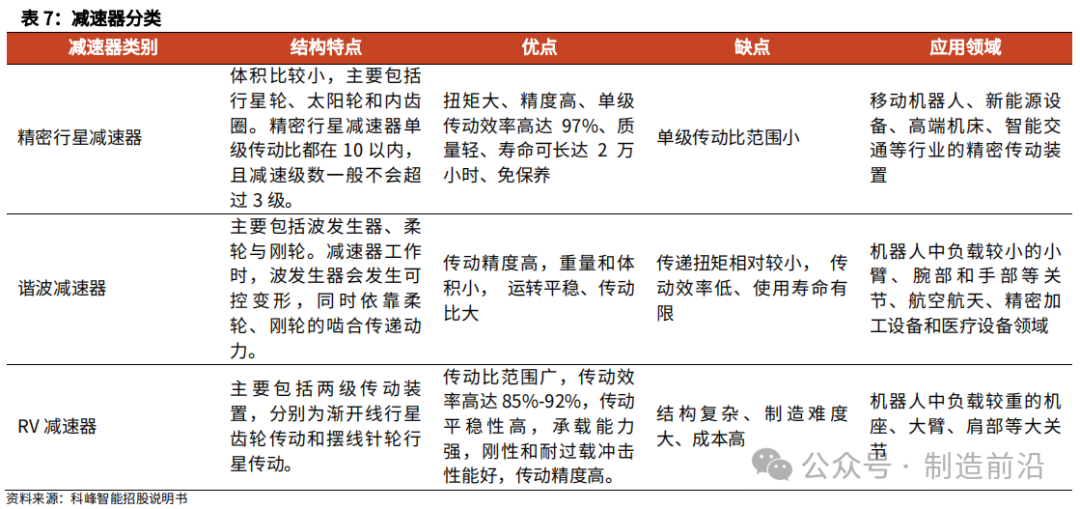
Domestic harmonic reducers have preliminarily reached the international mainstream level in terms of performance and reliability, with obvious replacement. Due to the complex structure and technical processes of RV reducer products, core technologies have not been fully mastered, and domestic RV reducers still lag behind advanced foreign levels. Domestic planetary reducers mainly focus on mid-to-low-end application fields, while foreign manufacturers still occupy a major market share in the high-end precision planetary reducer sector.
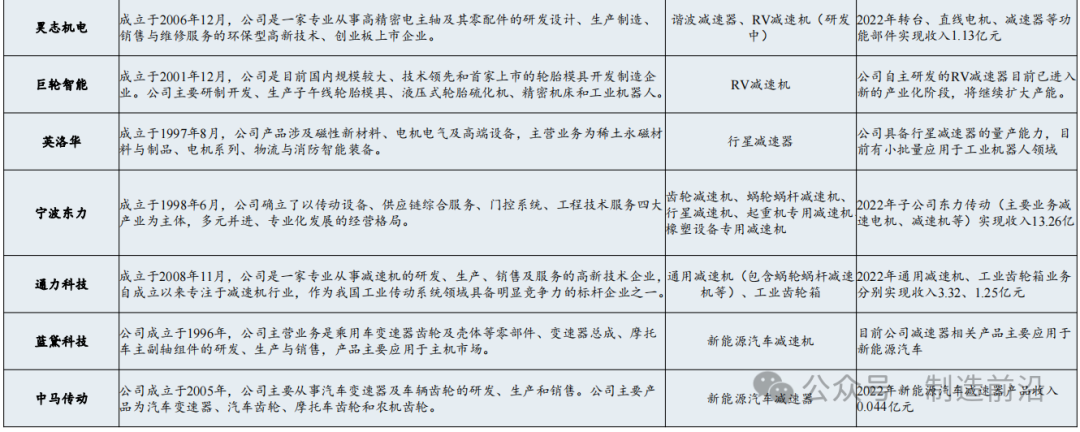
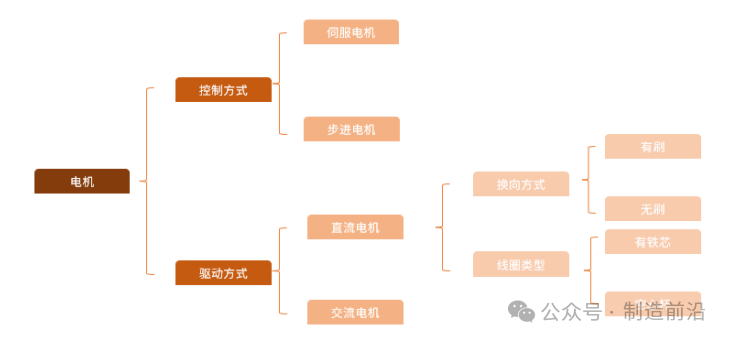
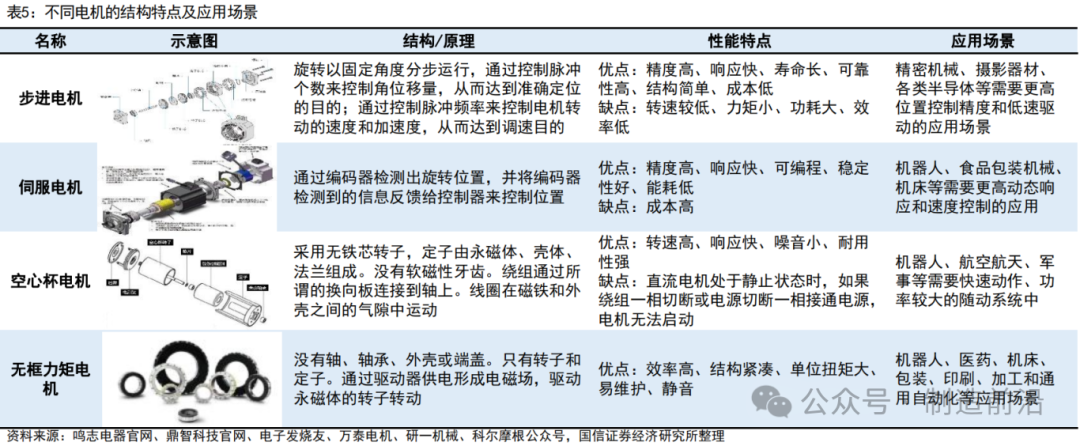
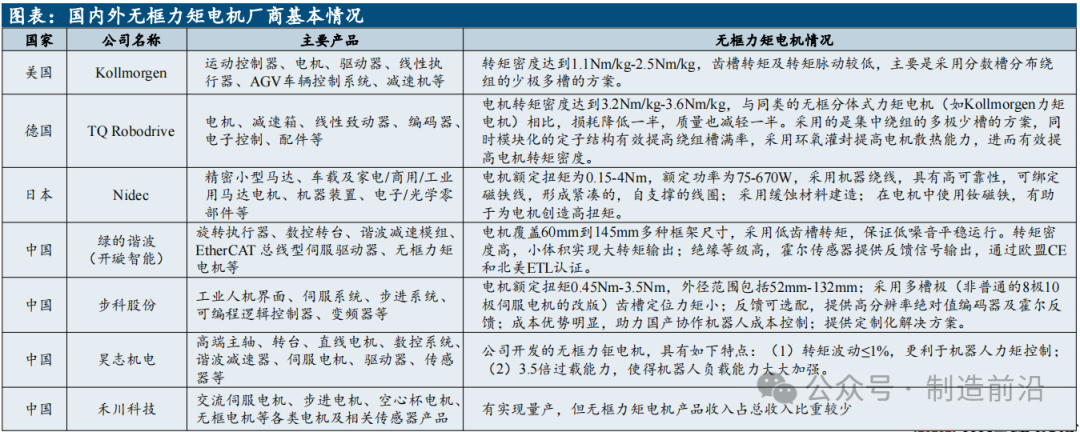
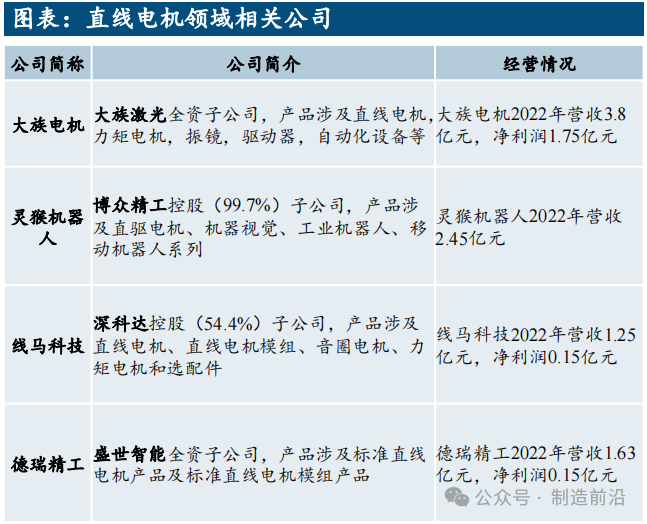
Image source: Guosen Securities
2. Motor: Provides power for humanoid robots, enabling the joints and actuators of the robots to move. The performance of the motor directly affects the movement speed, accuracy, stability, and efficiency of humanoid robots.
Image source: Guosen Securities
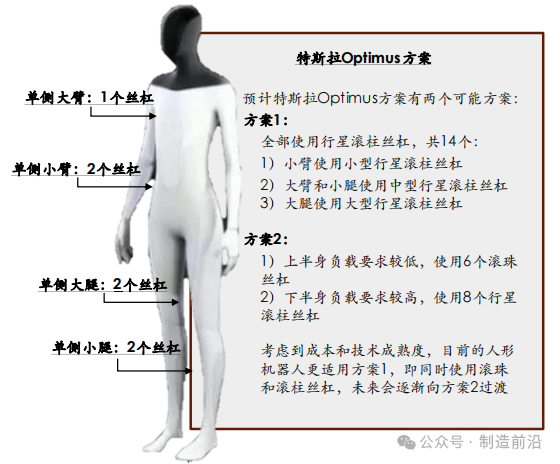
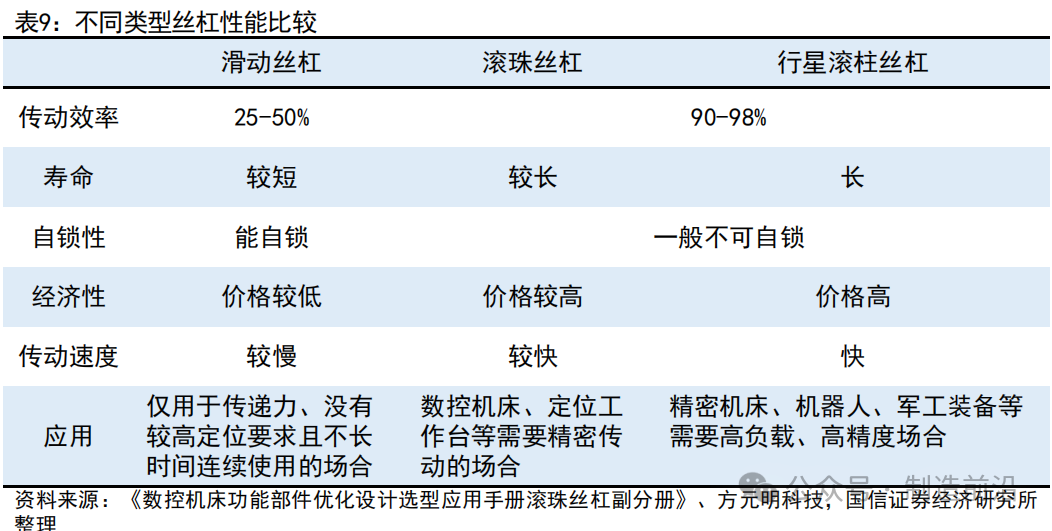
3. Screw: Converts the rotational motion of the motor into linear motion, including trapezoidal screws, ball screws, and planetary rolling screws. The application of screws in humanoid robots mainly includes dexterous hands, linear actuators, etc., which require precise linear motion to achieve fine operations and controls.
4. Controller: The controller is the “brain” of the humanoid robot, responsible for motion control and behavioral decision-making. It includes computers, control chips, and communication modules, usually independently developed by the main body integration manufacturers. The quality of the controller can reflect the core competitiveness of the manufacturer to some extent, as it carries many core software algorithms that are the core competitiveness of the product.
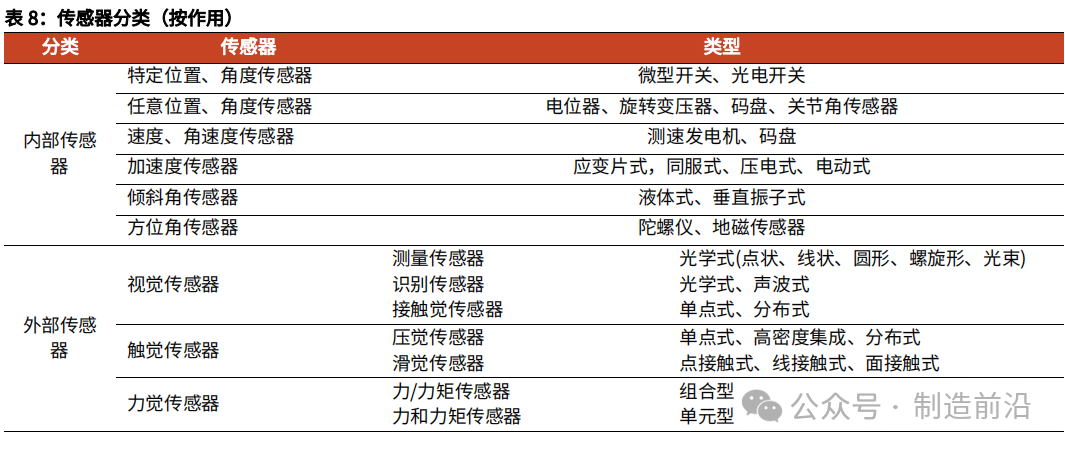
5. Sensor: Sensors are key components for humanoid robots to perceive the external environment, enabling robots to understand and respond to the physical world around them. Sensors provide real-time feedback for control and execution, bridging software control and hardware components, and are crucial for achieving embodied intelligence.
The most commonly used sensors in humanoid robots are torque sensors. According to their function, sensors can generally be divided into internal sensors (body sensors) that mainly measure the internal system state of the robot, and external sensors (environment detection sensors) installed on mechanical hands or mobile robots that measure the external environment around the robot. According to the detection method, sensors can be classified into optical, mechanical, ultrasonic, resistive, semiconductor, capacitive, and pressure sensors. The Tesla Optimus robot includes 40 torque sensors and 3 visual sensors, with sensors accounting for as much as 19% of the total value.
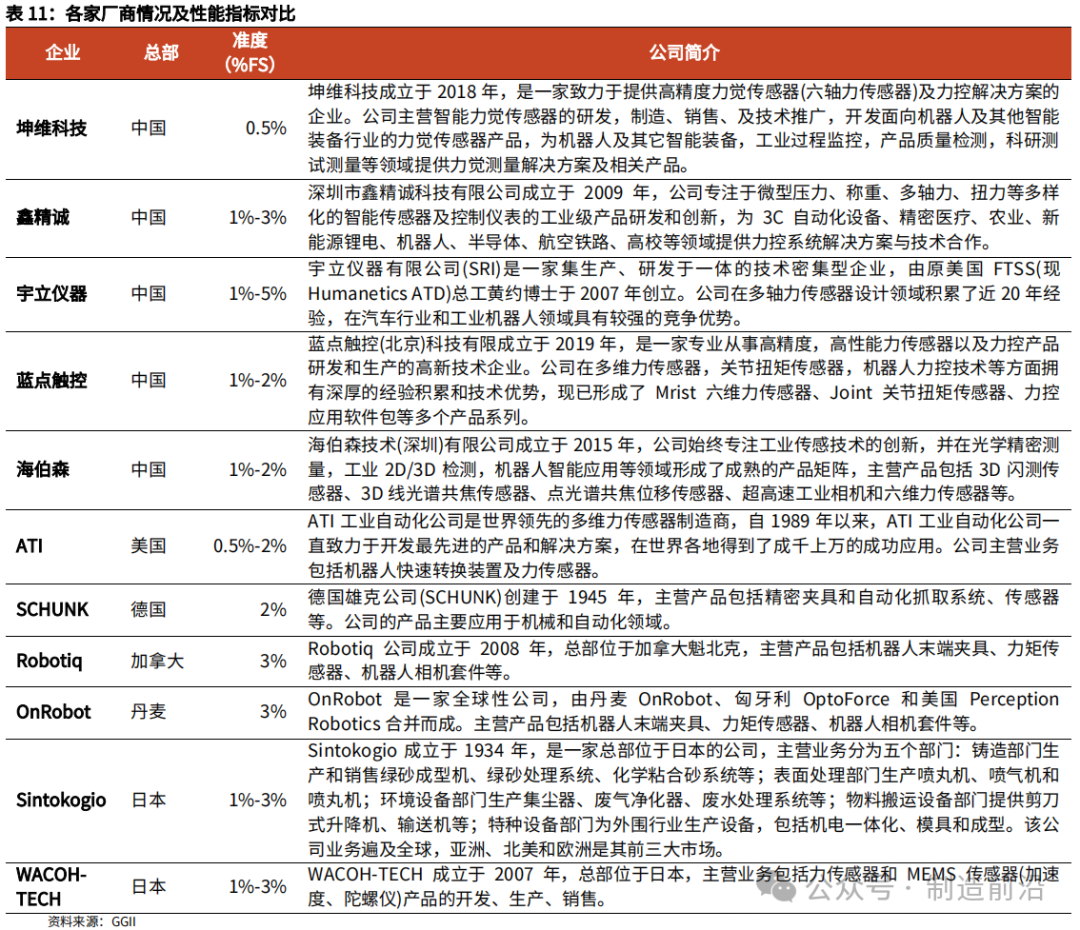
Foreign companies have a first-mover advantage, while Chinese companies are accelerating their catch-up. Benefiting from the catalysis of market demand for robots, the number of entrants in China’s six-dimensional force/torque sensor market has increased year by year in recent years. Domestic companies such as Weike Technology, Xinjingcheng, Yuli Instruments, and Landot Touch have entered this field, occupying a place in applications such as robotics, automotive, and 3C. Overseas companies such as ATI and SCHUNK, as global leaders, have accumulated years of experience and still maintain a significant leading advantage.
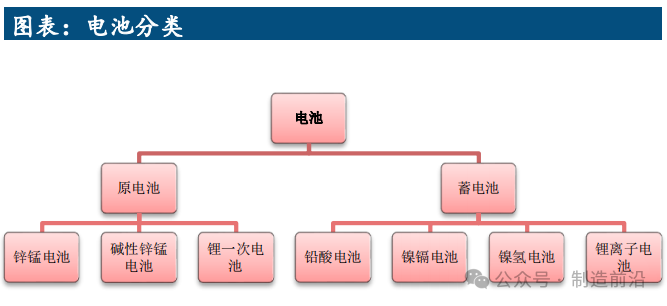
6. Power Battery: The power battery is a key component that provides the energy required for humanoid robots, directly affecting the performance, endurance, safety, and cost of the robots. The performance of the power battery determines the running time, work efficiency, and overall performance of the robots. With the development of battery technology, especially the progress of lithium battery technology, the energy density, cycle life, and safety of power batteries are continuously improving. In the future, with the application of new materials and new technologies, such as solid-state batteries, the performance of power batteries is expected to further improve, providing humanoid robots with longer endurance and higher safety.
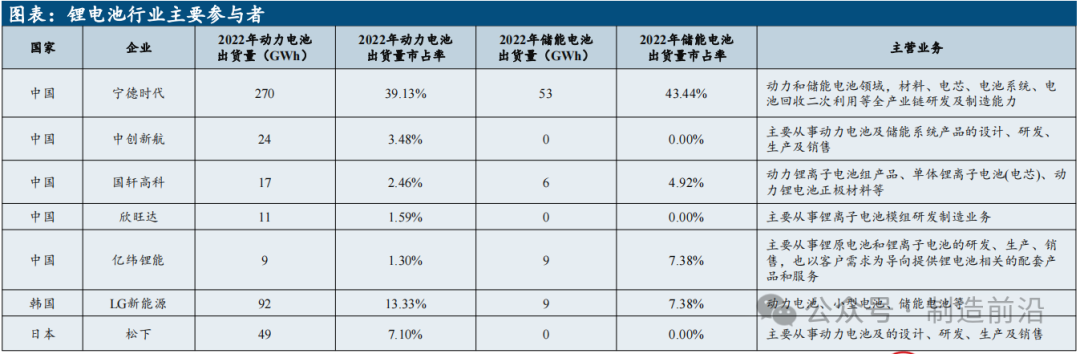
CATL has a high market share, and domestic manufacturers have become the main force in the global lithium battery market. According to SNE data, globally, based on the shipment volume of various battery manufacturers, CATL, LG Energy, BYD, Panasonic, and Samsung SDI occupy the top five positions.
7. Actuator: Also known as the executor, it is a key component for humanoid robot movement, responsible for converting electrical energy into mechanical energy, driving the joints and limbs of the robot to move. It typically consists of motors, reducers, encoders, servo drives, and control software, and is a key part affecting the hardware cost and motion performance of robots.
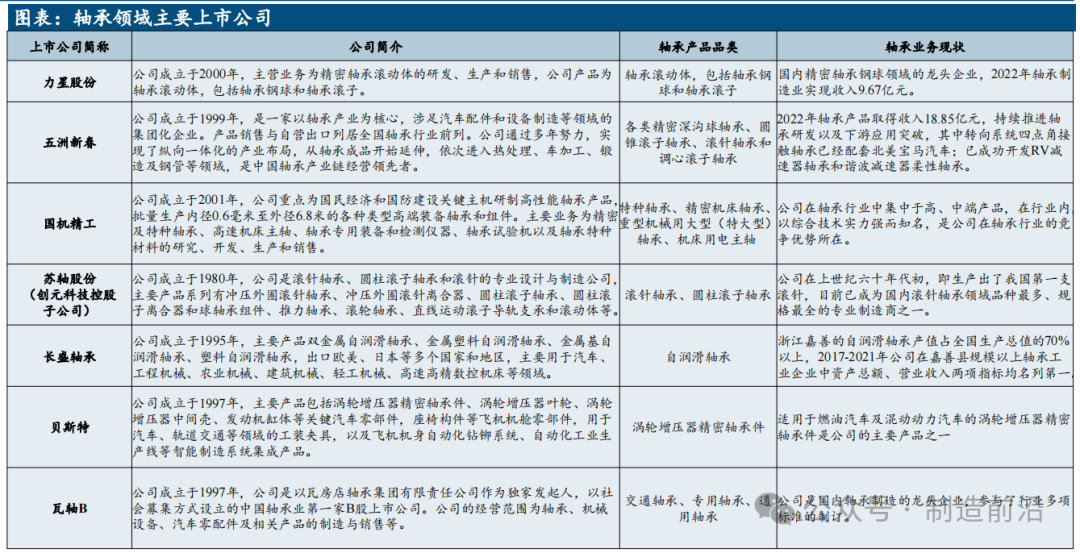
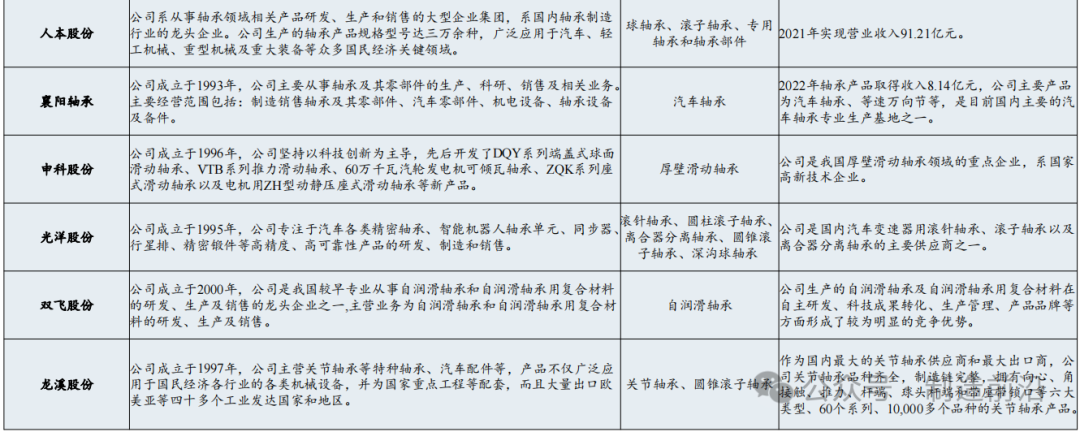
8. Bearing: Precision rolling bearings are key components of the robot execution system, playing an important role in the load capacity, rotational accuracy, operational smoothness, and repeat positioning accuracy of robot reducers. Precision bearings are characterized by lightweight, high precision, good rotational accuracy, and reliability, meeting the stringent performance requirements of robot precision reducers. Robot bearings are generally installed in limited spaces, requiring them to be small in size and lightweight, which is the lightweight requirement. However, at the same time, the performance of robots requiring high load capacity, high rotational accuracy, high operational smoothness, high positioning speed, high repeat positioning accuracy, long lifespan, and high reliability requires supporting robot bearings to possess high load capacity, high precision, high rigidity, low friction torque, long lifespan, and high reliability.
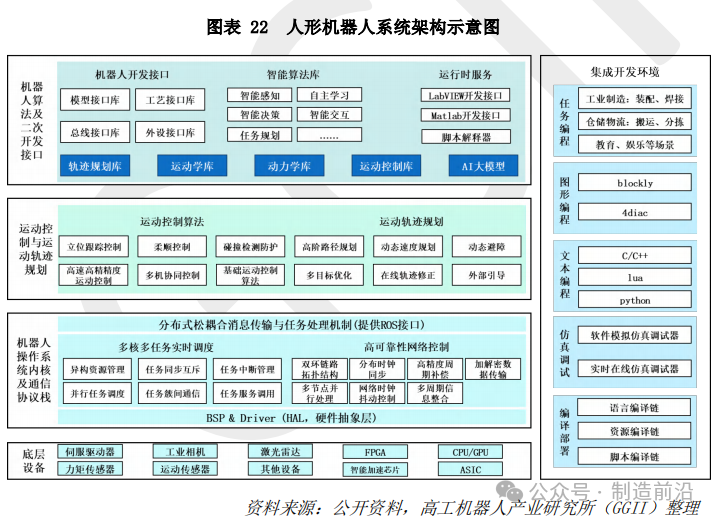
9. Software Algorithm: The humanoid robot software is mainly applied in two parts: one is the “brain” of the humanoid robot based on artificial intelligence large models, mainly reflected in environmental perception, behavior control, and human-robot interaction; the other is the “cerebellum” that controls the movement of humanoid robots, mainly reflected in its motion control algorithms and network control system architecture. From building the algorithm library to constructing the motion control system operating system down to the underlying devices, the system architecture of humanoid robots is as follows:
02 Midstream Humanoid Robot Body Development Analysis
The design, manufacturing, and integration of humanoid robot bodies are the core links of the industrial chain and are key to the industrialization and commercialization of humanoid robots. Currently, the humanoid robot body industry is in the early stages of industrial development; there is a consensus on the strategic significance of humanoid robot bodies, but the path for large-scale commercialization has not yet truly been realized. The humanoid robot body industry is still in the exploratory stage, with various humanoid robot solutions continuously iterating and innovating from component selection, software system development, body design to scene focus. The “0-1” inflection point of the humanoid robot industry is expected to arrive ahead of schedule.
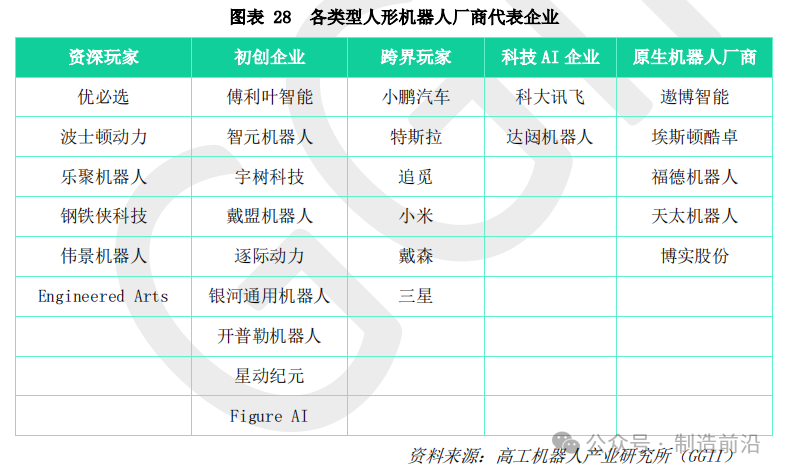
Currently, market players in the humanoid robot body sector can be roughly classified into four categories based on their original attributes: professional robot companies, new energy vehicle companies, internet companies, and research institutes and incubation enterprises. Representative companies of each type of humanoid robot are as follows:
03 Downstream Application Scenario Analysis
Based on application scenarios, humanoid robots can be divided into medical humanoid robots, military humanoid robots, educational humanoid robots, entertainment humanoid robots, service humanoid robots, industrial humanoid robots, and general humanoid robots. Each type is introduced as follows:
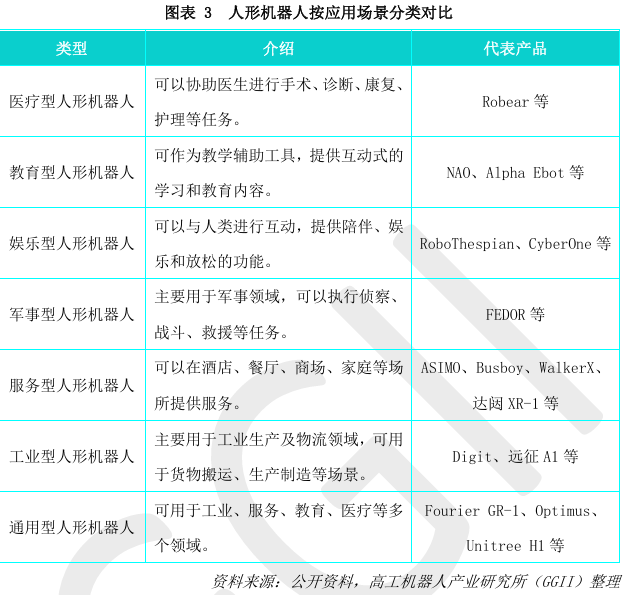
Image source: GaoGong Robotics
1. Industrial Manufacturing Scenario
– Demand: Human-robot collaboration for more flexible and dexterous operations in production environments, while feeding back to the factory’s intelligent production line transformation.
– Scenario: Automotive manufacturing is the primary landing scenario, with quality inspection and component assembly as clear demand scenarios. The factory environment is relatively controllable and has high standardization, which helps humanoid robots better train their coordination control abilities and optimize algorithms.
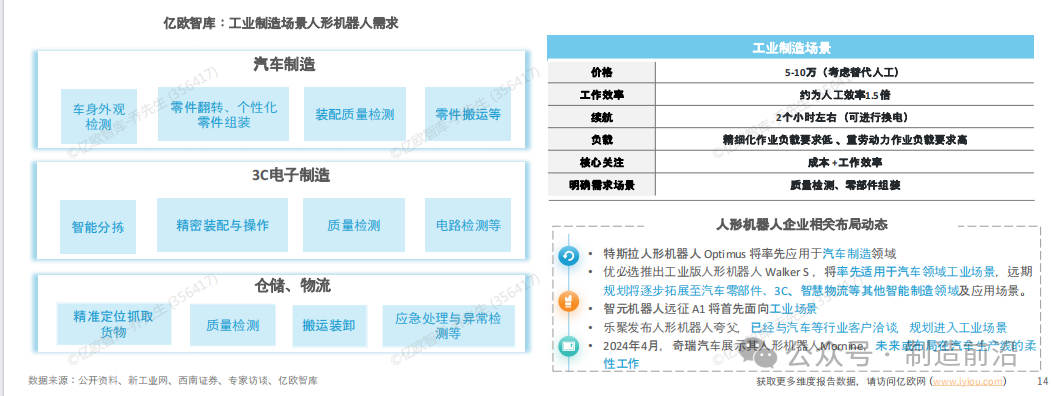
Image source: EEO Intelligence
2. Extreme/ Special Operation Scenarios
– Demand: Replace human labor in dangerous or harsh environments to perform tasks, such as search and rescue, bomb disposal, disaster response, etc.
– Scenario: Energy and petrochemical, disaster rescue, underwater/space, military operations, etc. Technologies related to humanoid robots, such as coordination control, intelligent analysis, and high-strength materials, are improved.
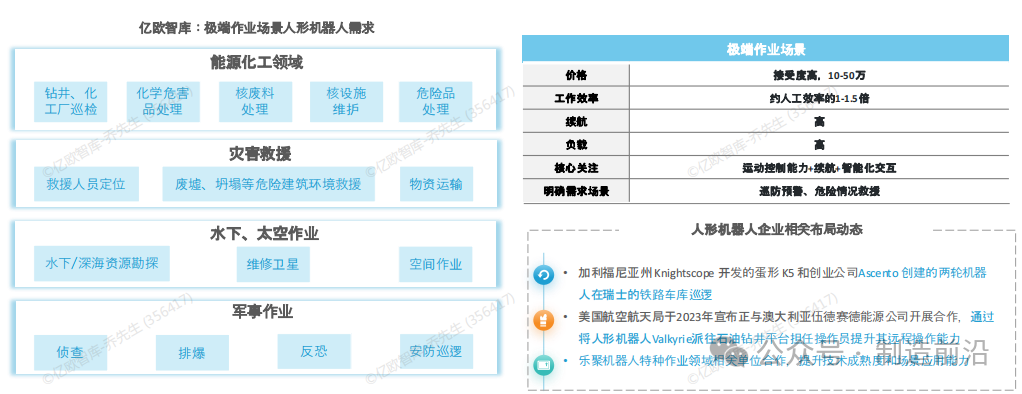
Image source: EEO Intelligence
3. Commercial and Home Service Scenarios
– Commercial Services:
– Demand: Human-robot interaction, consultation, guidance, reception, entertainment, education, etc.
– Scenario: Retail fast-moving consumer goods, hotel tourism, educational services, etc. Some sub-segment applications, such as exhibition explanations and scientific research education, have landed, while other scenario applications still need development.
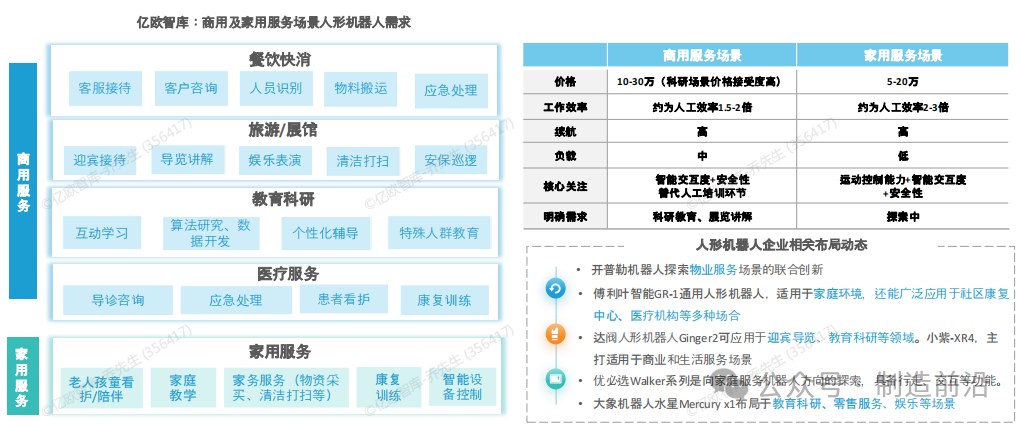
Image source: EEO Intelligence
– Home Services:
– Demand: All-round family butler, undertaking tasks such as companionship, household management, and education.
– Scenario: Family companionship, household services, health, etc. The overall interactivity and flexibility of humanoid robots have greatly improved, emotional analysis is more aligned with family scenarios, adapting to various non-standard scenarios, and social acceptance has significantly increased.
Most Chinese enterprises believe that the manufacturing industry can truly realize the commercialization of humanoid robots first. The automotive manufacturing scenario is expected to land first, with quality inspection and component assembly as clear demand scenarios. Ultimately achieving family service application scenarios.
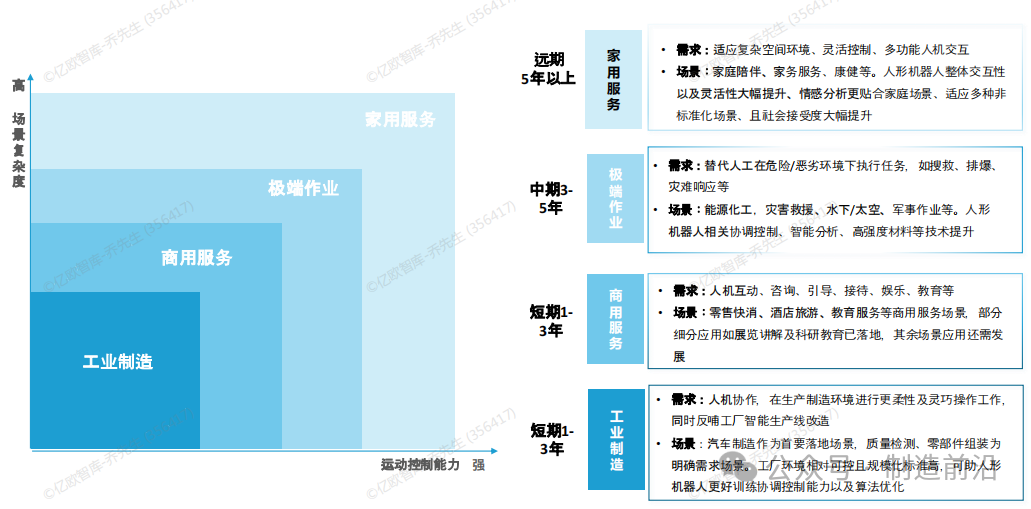
Image source: EEO Intelligence
Mainstream Manufacturers
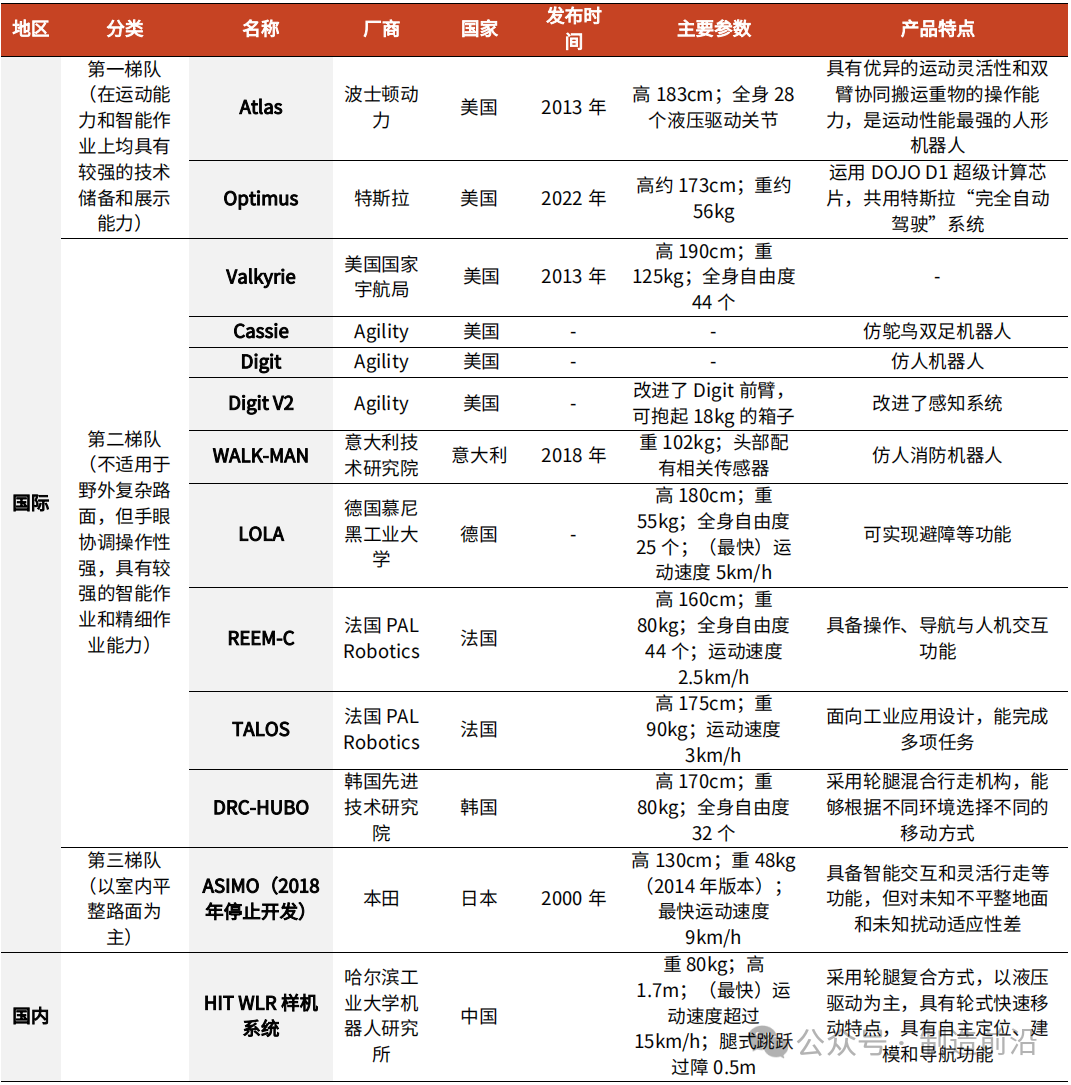
Overview of Major Robots Domestically and Internationally
1X Technologies
1X Technologies, formerly known as llalodi Robotics, was founded in 2014 and is a Norwegian company focused on developing highly flexible and scalable humanoid robots. The flagship product of 1X Technologies is EVE, a robot with two arms, two eyes, and a four-wheeled chassis, capable of performing various tasks in different environments, such as patrolling, monitoring, and handling. Currently, 1X Technologies is also developing a bipedal robot named NEO, which is expected to have a higher level of intelligence, featuring autonomous learning and AI navigation, and is anticipated to start taking reservations by the end of 2023.
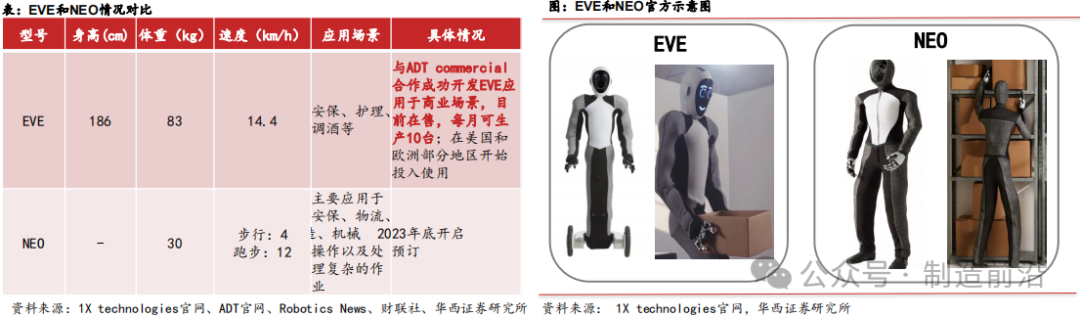
Image source: Huaxi Securities
Tesla
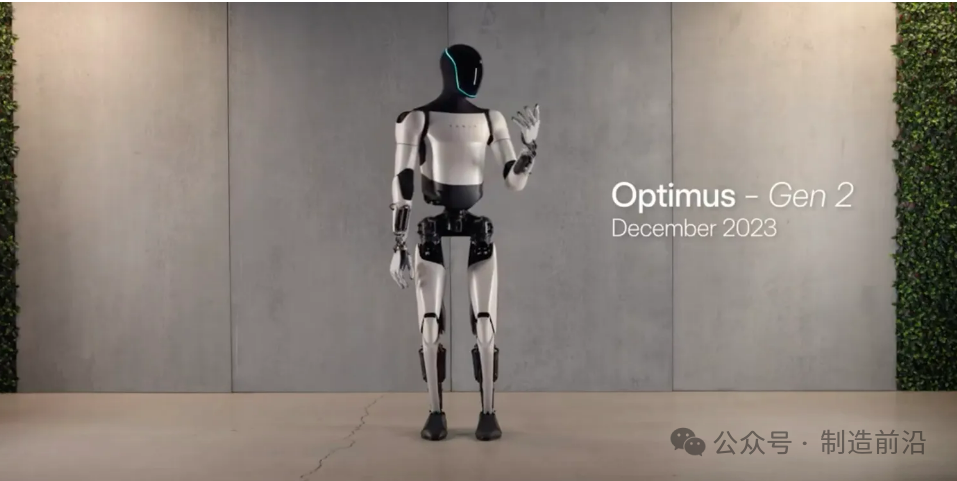
In 2021, Musk first announced Tesla’s humanoid robot (Tesla Bot) plan, codenamed “Optimus,” at the first Tesla AI Day. The prototype was unveiled in 2022, and Tesla’s strong entry accelerated domestic companies’ involvement. In 2023, Tesla released a demonstration video of Optimus Gen2, showcasing enhanced motion capabilities, balance, and perception abilities, able to perform actions like picking up an egg with two fingers. The application of fingertip tactile sensors and foot force sensors became core highlights. The Tesla humanoid robot is currently undergoing practical testing and optimization at Tesla’s automotive factory, and Musk stated in the Q4 2023 earnings call that humanoid robots will be partially delivered by 2025, continuously promoting commercialization.
Boston Dynamics
Boston Dynamics was founded in 1992 and is an American engineering and robotics design company spun off from MIT, previously serving the U.S. military. The company was acquired by Google, Softbank, and Hyundai Motors in 2013, 2017, and 2021, respectively. The commercialization of the robotic dog Spot has begun to show results, with Spot being sold for $74,500 in 2020, marking the start of initial commercialization attempts. Over 1,000 units of Spot have been sold to 35 countries, mainly applied in manufacturing, power and utilities, mining, and oil and gas sectors. The bipedal robot Atlas is a leading representative of high-dynamic robots, first unveiled in 2013, and has rapidly developed its functionalities. By 2017, Atlas could learn to jump between stairs and perform backflips; by 2018, Atlas learned to run and could jump over obstacles while running; by 2019, Atlas mastered “gymnastics” techniques, able to perform continuous jumps, rolls, and handstands; in 2023, Atlas demonstrated its hand flexibility (able to grasp and throw) in the latest video.
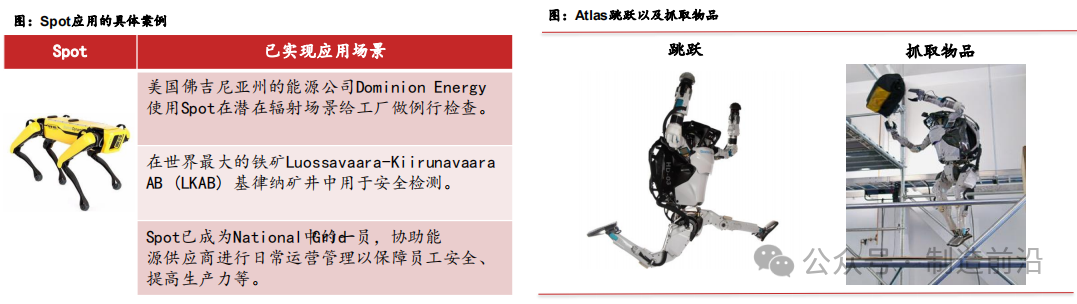
Image source: Huaxi Securities
Agility Robotics
Agility Robotics was founded in 2015 and focuses on manufacturing walking robots. Its current business focus is on unloading trucks, handling boxes, and managing shelves in warehouse operations. In 2016, Agility Robotics released a dynamic walking robot named Cassie, capable of traversing rugged terrain and overcoming obstacles; in 2019, it launched the bipedal robot Digit. In 2020, Ford received the first two Digit robots off the production line.
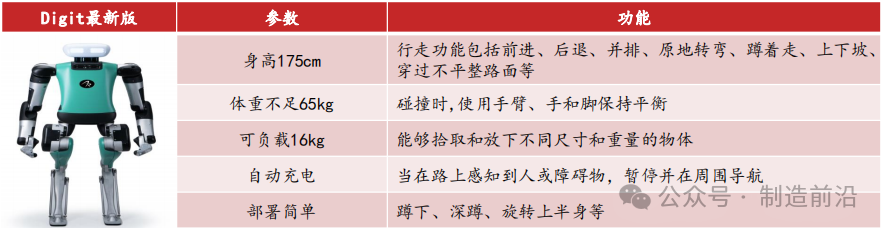
Source: Agility Robotics official website, Huaxi Securities Research Institute
Xiaomi
Xiaomi launched the robot “Iron Big,” which is currently too costly to mass-produce. In August 2022, Xiaomi released its first full-size humanoid bionic robot, CyberOne. CyberOne is 177 cm tall, weighs 52 kg, and has 21 degrees of freedom. It is equipped with the Mi-Sense visual spatial system module, achieving depth information accuracy of 1% within 8 meters; it can recognize 85 types of environmental semantics and 6 categories of 45 human emotions. Lei Jun stated that Iron Big still requires a long time to learn and improve, with the current cost of one robot reaching 600,000 to 700,000, making mass production unfeasible.
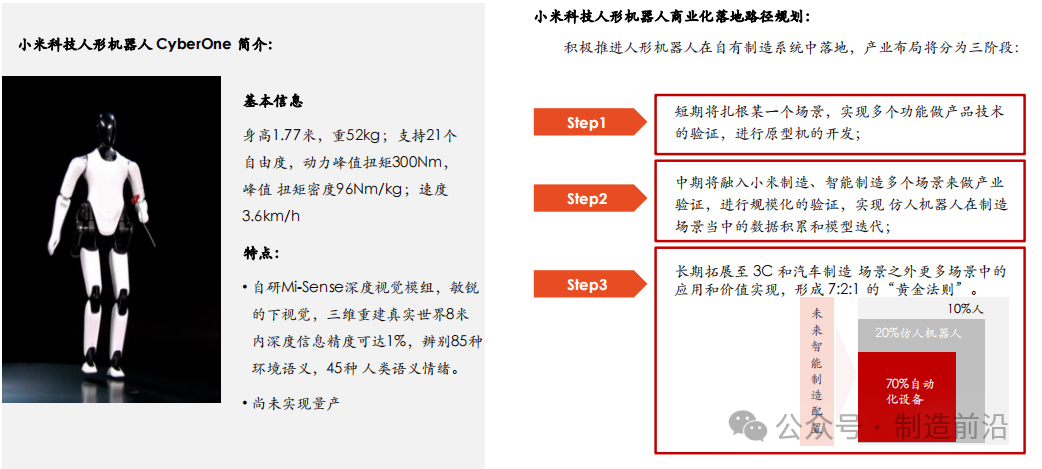
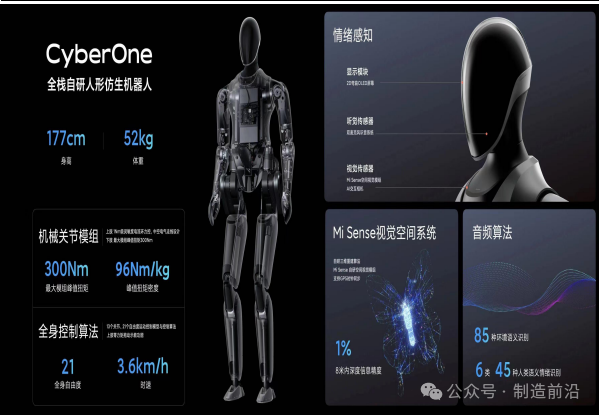
UBTECH
UBTECH Technology’s humanoid robot products have undergone four iterations in five years. In 2016, UBTECH released the prototype of a bipedal humanoid service robot, and in 2021, it launched the latest humanoid service robot product, Walker X. Walker X is 130 cm tall, weighs 63 kg, and has 41 degrees of freedom, capable of achieving stable and fast walking on complex terrains, with multi-modal emotional interactive capabilities. UBTECH’s CTO, Xiong Youjun, stated that Walker is advancing towards commercial application as planned, with the ultimate goal of entering homes.
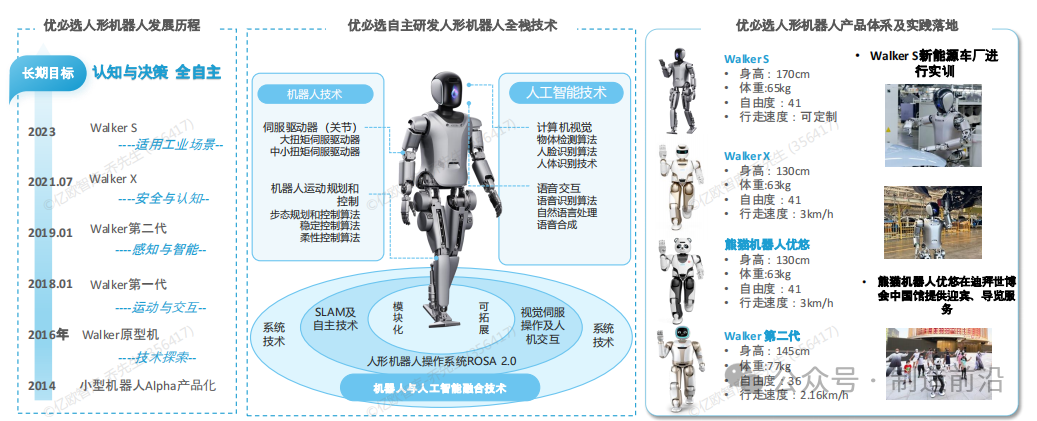
Image source: EEO Intelligence
Fourier
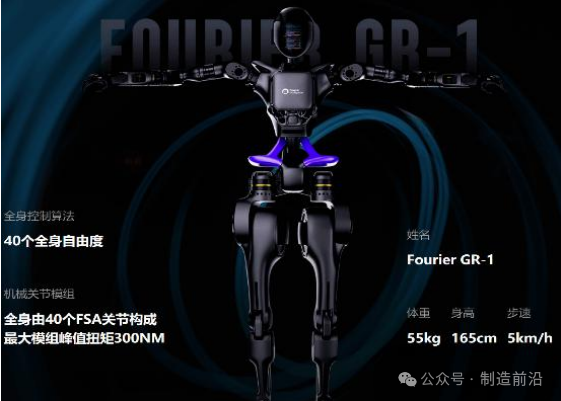
Fourier is a leading rehabilitation robot enterprise in China. Fourier has launched the first general-purpose humanoid robot GR-1, which will be mass-produced by the end of 2023. On July 6, Fourier Intelligence released the first general-purpose humanoid robot GR-1 at the 2023 World Artificial Intelligence Conference. GR-1 is 165 cm tall, weighs 55 kg, and has 40 degrees of freedom. The founder of Fourier, Gu Jie, stated that GR-1 will officially be mass-produced and sold by the end of 2023.
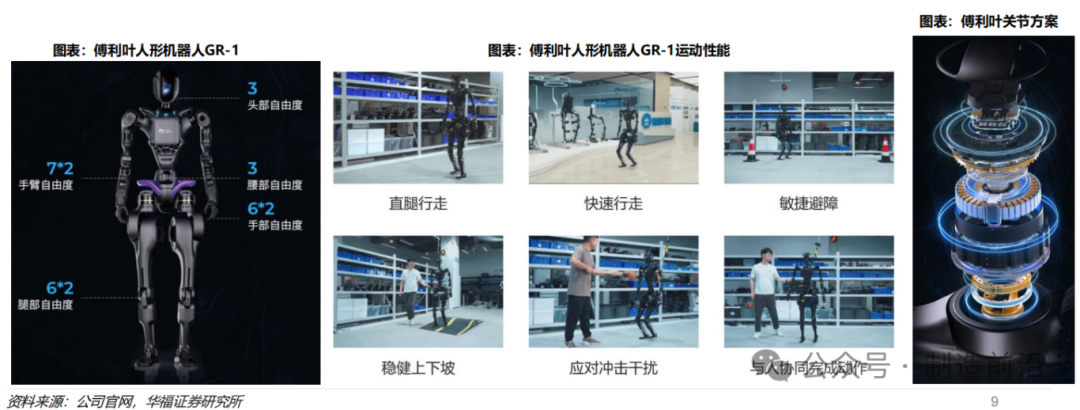
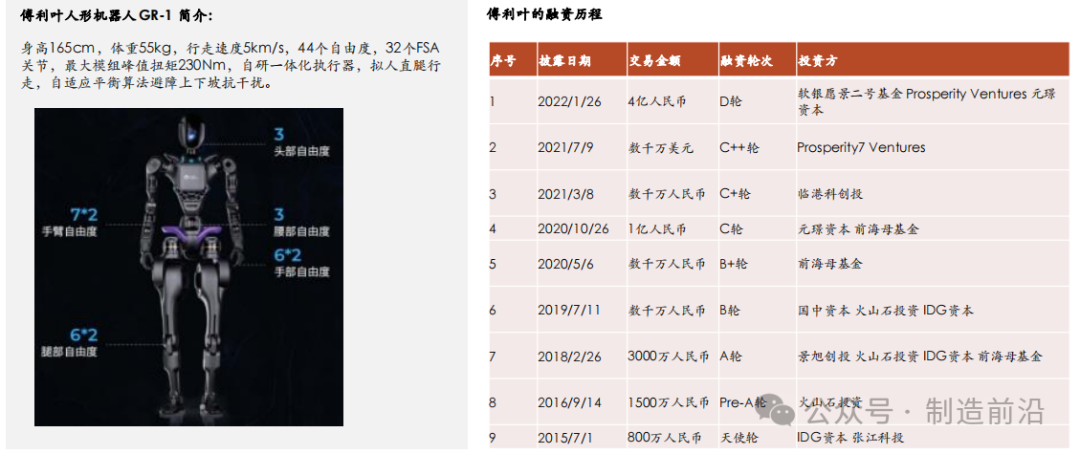
Image source: EEO Intelligence
ZhiYuan
ZhiYuan Robotics (Agibot) was established in February 2023 in the Lingang New Area, with the mission to “create unlimited productivity with intelligent machines.” It is an innovative enterprise dedicated to the integration of AI and robotics, aiming to create world-class leading embodied intelligent robot products and application ecosystems. The founding team includes several industry veterans, including “Zhihui Jun” Peng Zhihui.
On August 18, 2023, ZhiYuan released the Expedition A1 humanoid robot. Standing 170 cm tall and weighing 55 kg, with a walking speed of 7 km/h, it is equipped with 49 various actuators, including harmonic integrated joints, planetary servos, linear actuators, and hollow cup motors, with a load capacity of 80 kg and a maximum single-arm load of 5 kg. It is equipped with RGBD cameras, laser radars, IMUs, and microphone arrays, possessing multi-modal perception, few-shot learning, task closure, and strong human-robot interaction capabilities. The future cost target is to keep it below 200,000 yuan.
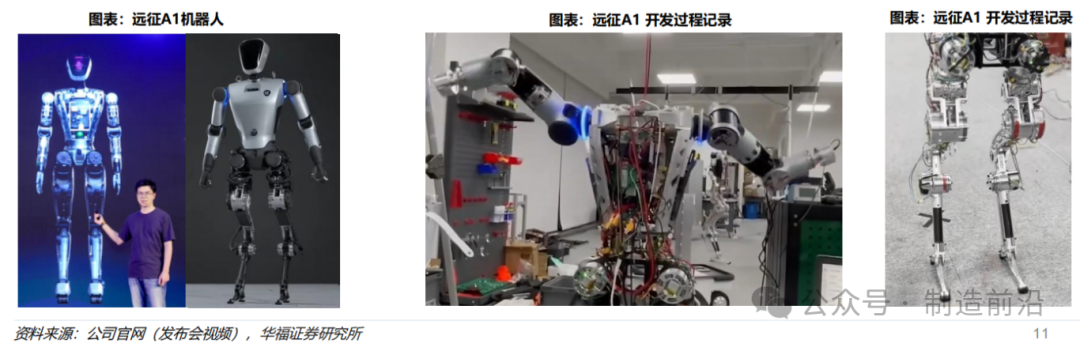
Image source: Huafu Securities
Elephant Robotics
As a pioneer in wheeled humanoid robots, Elephant Robotics’ first wheeled humanoid robot, Mercury X1, has achieved mass production, completing hundreds of orders. In the future, two models of wheeled humanoid robots, X323, will be launched, featuring flexible mechanical structures, powerful machine performance, and more convenient intelligent deployment and development methods, bringing about a new change through a stable and efficient wheeled design combined with mature dual-arm and visual applications.
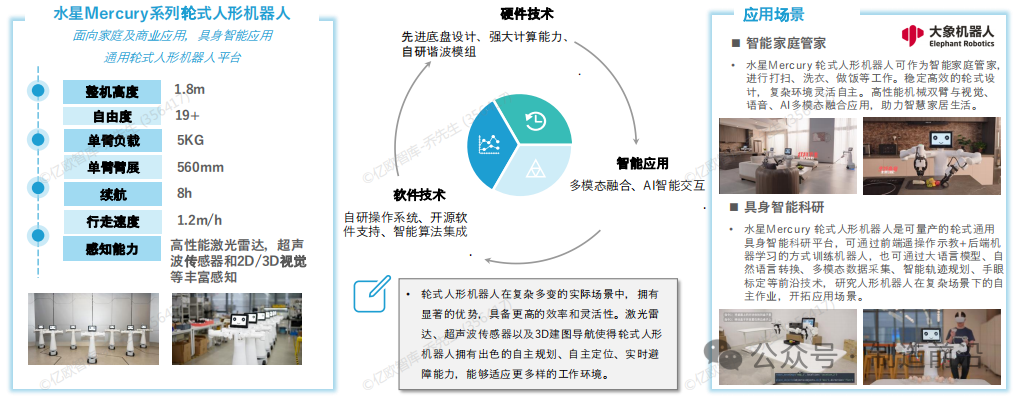
Image source: EEO Intelligence
Yushu Technology
Yushu, established in August 2016, focuses on the R&D, production, and sales of high-performance quadrupedal robots and dexterous six-axis robotic arms.
In August 2023, Yushu released the humanoid robot H1, which stands 180 cm tall, weighs 47 kg, has a walking speed of >1.5 m/s, and potential motion capability of >5 m/s. Degrees of freedom: single leg 5 (hip*3 + knee*1 + ankle*1)*2 + single arm 4*2 + dexterous hand optional (under research). It is equipped with self-developed M107 joint motors, with a peak torque density of 89 Nm/kg and a maximum joint torque of 360 Nm, utilizing hollow wiring.
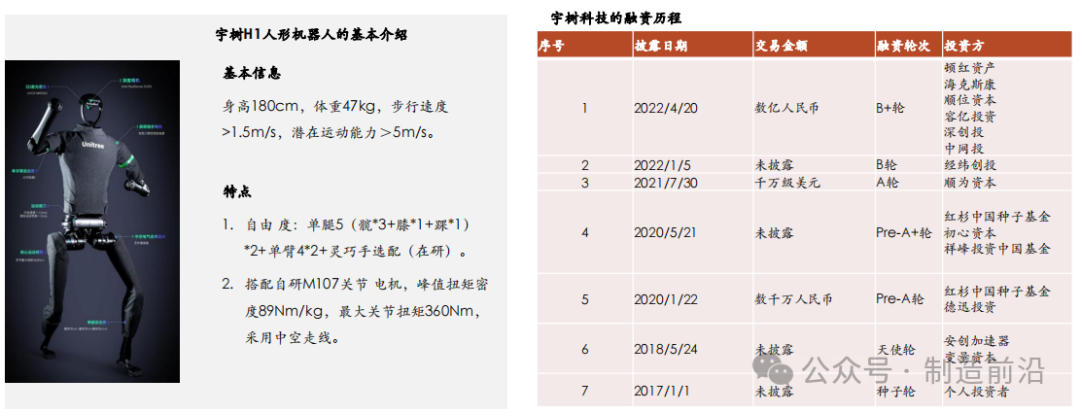
Image source: EEO Intelligence
DaTu Technology
DaTu Robotics was established in 2015 and is headquartered in Shanghai. Its main products include a cloud-based intelligent robot development platform, represented by Cloud Ginger, humanoid service cloud robots, which can be categorized into multifunctional cloud robots for delivery, patrolling, cleaning, vending, etc., mainly used in life scenarios such as hotels, schools, supermarkets, and industrial parks.
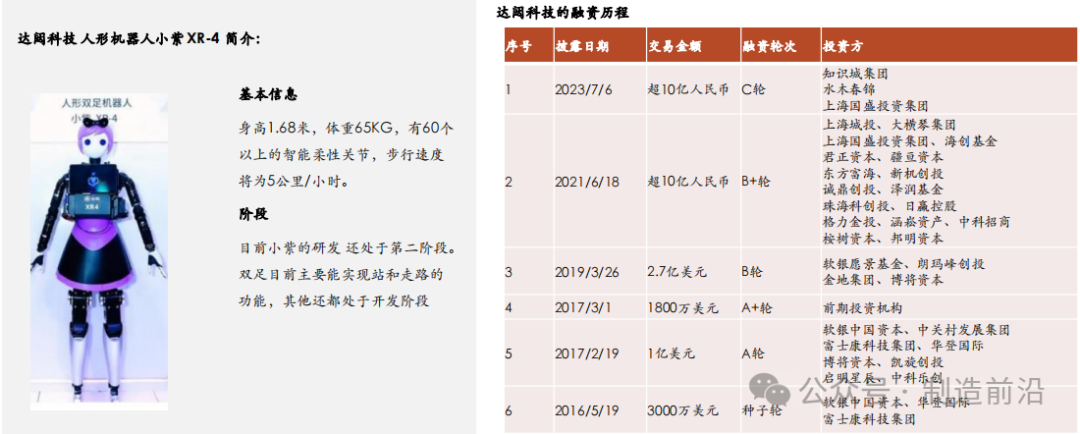
Image source: EEO Intelligence
iFlytek
At the 2023 iFlytek 1024 Global Developer Festival, the company released the Spark Cognition Model V3.0, as well as humanoid robots that integrate large models with embodied intelligence. Based on AIBOT development, it possesses a series of advanced capabilities such as walking on complex terrain, searching for objects in open scenes, and complex task decomposition. In the future, it will use humanoid robots as a traction force to promote the “visual-language-action” multi-modal embodied large model, assisting in the cognitive upgrade of robots.
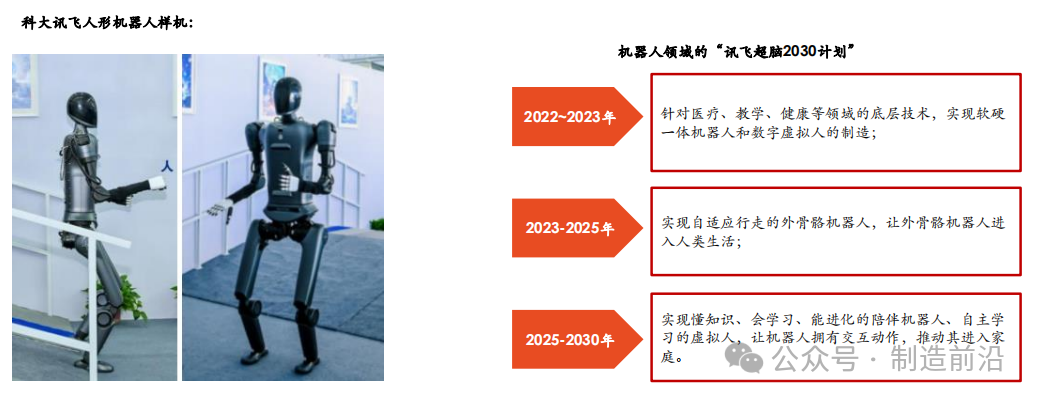
Image source: EEO Intelligence
Market Analysis
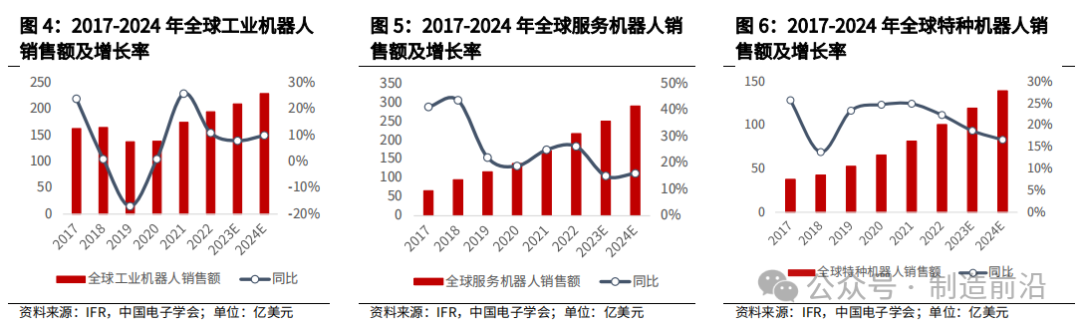
The entire robot industry is experiencing continuous growth in market size. According to the “China Robot Industry Development Report (2022)” compiled by the China Electronics Society, it is expected that by 2024, the global robot market size will likely exceed $65 billion, with a year-on-year growth of 12%; among them, the industrial robot market will reach $23 billion in 2024, with a year-on-year growth of 10%; the service robot market will reach $29 billion, with a year-on-year growth of 16%; and the special robot market will reach $14 billion, with a year-on-year growth of 16.7%.
It is expected that the growth rate of humanoid robots will significantly exceed the overall growth rate of the robot industry. According to data from StratisticsMRC, the global market size of humanoid robots in 2021 was $1.5 billion, expected to reach $26.4 billion by 2028, with a CAGR of 50.5% from 2021 to 2028; among them, in terms of fields, Stratistics MRC estimates that humanoid robots in the education and entertainment fields will have the fastest compound growth rate, while healthcare will occupy the largest market share; regionally, Stratistics MRC predicts that the Asia-Pacific region will have the fastest compound growth rate, while North America will have the highest share.
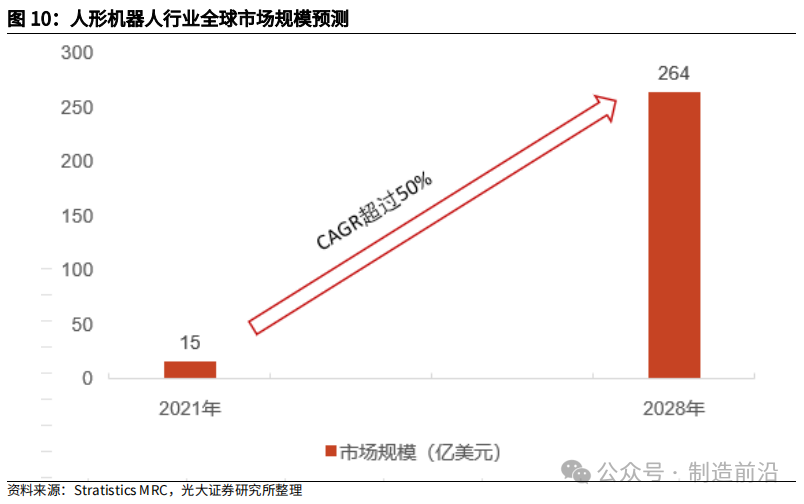
Image source: Guangda Securities
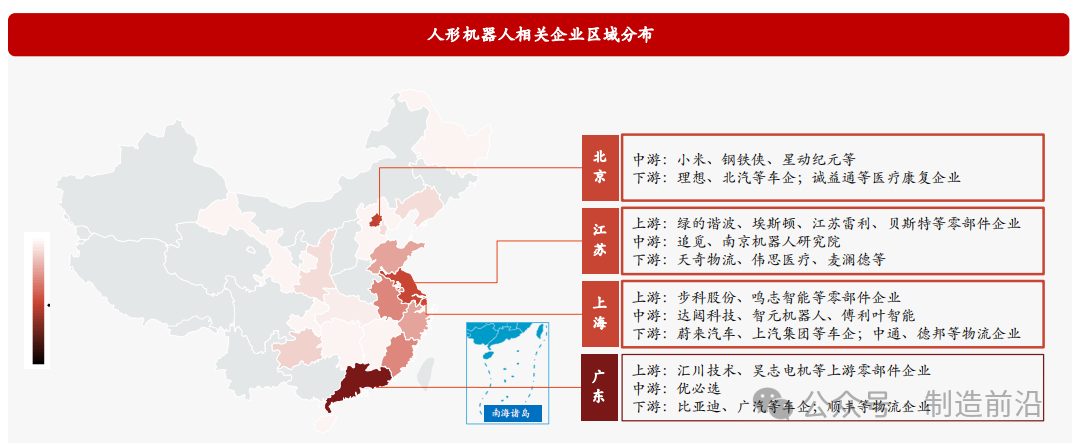
Starting in 2023, the investment heat in the humanoid robot market has surged, but it is still in the early stages, with angel rounds and A-round companies being the hotspots for investment in core components; regionally, Guangdong ranks first, followed by Shanghai and Jiangsu; in terms of investment enterprises, it is still mainly dominated by investments from investment institutions.
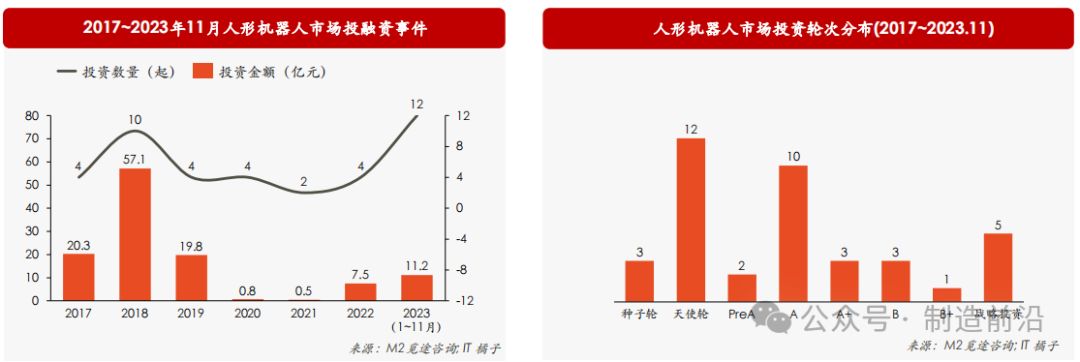
According to preliminary statistics from M2 MiTu Consulting, there are about 150 companies related to humanoid robots nationwide, with 55 concentrated in Guangdong Province, 16 in Beijing, 15 in Jiangsu, 12 in Shanghai, and relatively few in other regions.

Recommended Reading


(Click the image to read the article)



*Note: The images and information in this article are sourced from the public account, and the copyright belongs to the original author.
Source: Manufacturing Frontier
Editor: Lin Qinle
Review: Yu Jia
Want to join the Shanghai Industrial Internet Association?
Get the latest news and participate in the best events?
Please scan the QR code below to join us!
The Shanghai Industrial Internet Association is a professional and comprehensive social organization composed of relevant industrial and technological enterprises, research institutes, and experts in the field, under the guidance and management of the Shanghai Municipal Economic and Information Commission and the Shanghai Civil Affairs Bureau. The brand “Gongfu®” is registered and owned by the Shanghai Industrial Internet Association, and the Gongfu® trademark has been selected as part of the 13th batch of key trademark protection lists in Shanghai.
Since its establishment, the association has always adhered to the service purpose of “serving transformation, integrating ecology, highlighting value” and the cultural concept of “open cooperation, keeping integrity and innovation“, closely focusing on the strategic layout of digital transformation of the Shanghai economy, concentrating on the digital transformation and high-quality development of the manufacturing industry, cooperating with government work, serving enterprise development, and striving to build a social organization that is “trusted by the government, recognized by the industry, satisfied by members, and welcomed by society”, with international and domestic influence. In this new historical period, the association will seize the development opportunities in the new round of technological revolution and industrial transformation, continuously enhancing the new realm of association construction, and strive to make Shanghai’s digital economy bigger, stronger, and better, building new advantages in international competition.
Consultation:
Gongfu® Knight Yu Siyuan 13651886556

Scan the QR code to join

Join the association, click Read the original