
The “Innovation China” platform relies on innovative resources and data capabilities, focusing on “high-quality, transferable, and potential” scientific and technological achievements to launch the “Achievement Release Hall” section. This section regularly publishes high-quality achievements with practical conversion value, helping to accelerate the implementation of scientific and technological achievements and serve the high-quality development of regions and industries.
1
Control System for Reducing Collision Injuries in Intelligent Vehicles
Achievement Introduction
The active safety of vehicles in complex driving environments urgently needs further enhancement. Existing intelligent vehicles can plan and coordinate steering, driving, and braking to track collision avoidance trajectories based on environmental information. However, as the complexity of the driving environment increases, feasible trajectories become difficult to plan, and the characteristics of chassis actuators vary, making it challenging to execute feasible trajectories.
To address the above issues, this achievement adopts an integrated control architecture for vehicle path planning and tracking, establishing a representation of the mapping relationship between vehicle and wheel motion states and multi-characteristic actuator control inputs, forming an integrated system prediction model. By combining the laws of vehicle motion state changes under different driving speeds and road conditions, the stability boundary of vehicle operation is constructed, coordinating the multi-actuator execution capabilities of the vehicle to form system constraints. Target functions for normal path tracking, active collision avoidance, and collision injury mitigation are designed separately. The collision mitigation target function considers factors such as collision position, collision speed, and collision severity between vehicles, achieving switching between different control objectives based on the time to collision, accurately optimizing the multi-actuator inputs of vehicles under different driving environments, ensuring normal driving, active collision avoidance, and multi-objective driving needs for collision mitigation, thereby enhancing the active safety and dynamic performance of intelligent vehicles.
This achievement establishes the integrated control architecture for vehicle path planning and tracking, and constructs the collision injury mitigation target function by considering factors such as collision position, collision speed, and collision severity between vehicles, ensuring that vehicles can enhance the active safety level of intelligent vehicles under emergency conditions through optimized multi-actuator inputs.
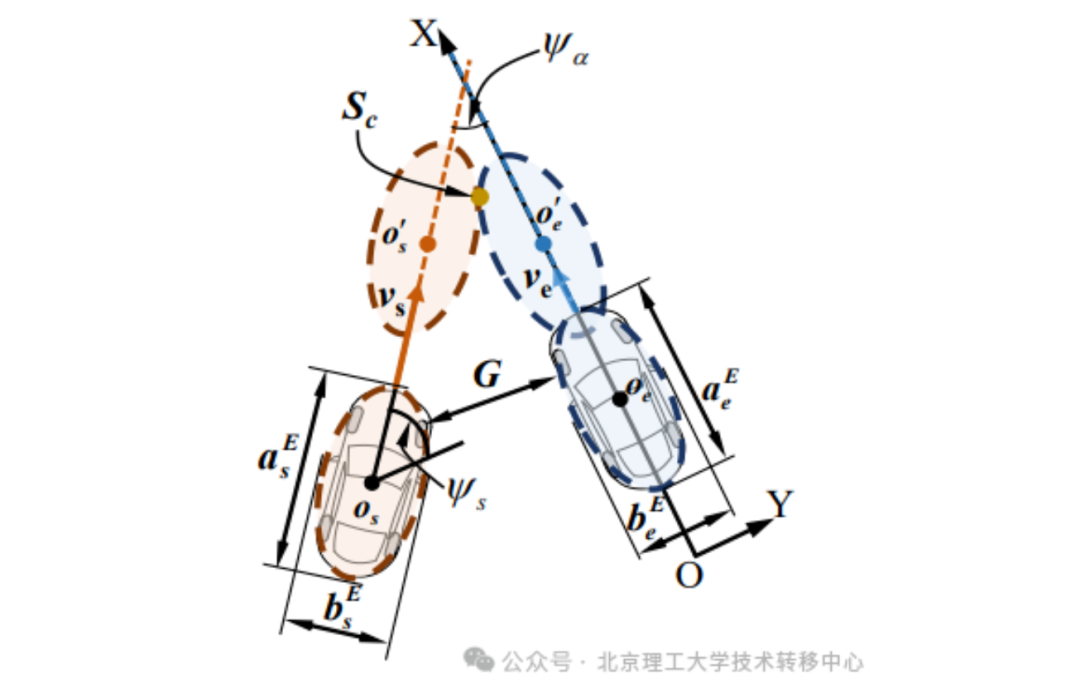
Calculation of Collision Risk Around Vehicles
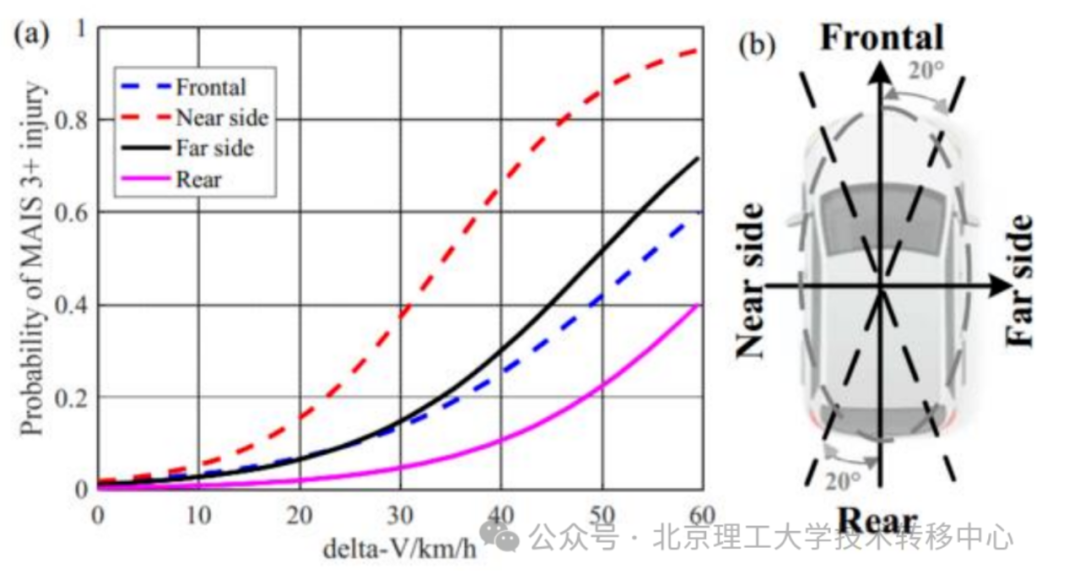
Calculation of Collision Severity Between Vehicles
Highlights of the Achievement
1. Comprehensive Stability Assurance: By integrating dynamic boundary constraints of vehicle speed and road conditions with multi-actuator execution capabilities, an integrated control architecture for vehicle path planning and tracking is constructed, resolving the contradiction between trajectory feasibility and execution reliability in complex traffic scenarios.
2. Multi-Objective Real-Time Optimization: By combining the integrated control architecture for vehicle path planning and tracking, the optimization distribution of front wheel angle, motor torque, and braking torque is achieved under different control objectives, meeting the multi-objective requirements of tracking accuracy, active collision avoidance, and collision injury minimization within a ≤50ms cycle.
3. Scene Generalization Capability: By completing various scene verifications with different road surfaces and numbers of vehicles on the driver-in-the-loop platform and multi-vehicle test platform, while ensuring control robustness, trajectory tracking accuracy is improved by 20%, and collision severity is reduced by 65%.
Application Fields
Applicable to active safety protection of unmanned systems, intelligent assisted driving, and other fields.
Market Prospects
Existing advanced driver assistance systems in intelligent vehicles can achieve active collision avoidance. However, in complex emergency avoidance scenarios, when vehicles cannot achieve active collision avoidance through steering or braking, they cannot achieve collision mitigation. This achievement not only ensures active collision avoidance but also enables collision injury mitigation when complete avoidance is not possible, significantly reducing the damage caused by collisions. The established achievement requires no additional hardware, only software algorithm upgrades.
Compatible with L2+ and above intelligent models, data shows global annual sales exceed 35 million units (2023), with an estimated annual market size of $2 billion based on a 20% penetration rate.
2
Alvarez Lens Zoom Scanning Device Based on Dielectric Elastomer Drive
Achievement Introduction
The zoom scanning imaging system has the ability to vary magnification and adjust the region of interest to be centered in the field of view, suitable for microscopy, lighting, biomedical, photography, smartphones, and virtual reality fields. Currently, there are many methods to achieve zoom scanning imaging, mainly including micro-electromechanical systems, servo motors, and manual methods. These mechanical methods are relatively mature but have limitations such as large physical size, heavy weight, high power consumption, low precision, and slow response speed. This achievement includes a scanning device and a zoom device. The scanning device is divided into four quadrants by applying flexible electrodes on the driver, and by applying voltage to one or several quadrants, the entire structure scans the region of interest, causing the dielectric elastomer to deform, thereby moving the position of the zoom device. After reaching the region of interest, the focal length of the Alvarez zoom lens is changed to perform zoom imaging on the region of interest, achieving zoom scanning imaging over a large area.
Highlights of the Achievement
This achievement can mimic the imaging of the human eye, transferring targets not in the central field of view to the central area of the field of view, effectively reducing the issues of aberration and distortion at the edges of the optical system, while utilizing the high-resolution imaging capability of the central area of the human eye to improve the imaging quality of the region of interest, holding significant application value and market prospects in the field of optical zoom scanning.
Application Fields
Applicable to microscopy, lighting, biomedical, photography, smartphones, virtual reality, and other fields.
Market Prospects
This achievement can achieve integrated imaging of zoom and scanning, with a large potential market size, suitable for optical fields requiring rapid zoom and scanning. Compared with traditional zoom scanning methods, the core competitiveness lies in the ability to quickly achieve large zoom ratios in scanning imaging while maintaining low costs and significant returns.
Data shows that the market size of optical lenses in China is growing year by year, reaching 16.13 billion yuan in 2023 (some sources state over 16 billion), with a year-on-year growth of 3.9%. Meanwhile, the precision optics market in China is also on an upward trend, expected to continue steady growth in the future.
Market Demand
There is an increasing demand for high-resolution, high-definition optical imaging systems in medical, scientific research, and industrial inspection fields, providing broad development space for the industry. Especially in the medical field, with advancements in medical technology and increasing health demands, the demand for medical imaging equipment will continue to grow.
3
Performance-Oriented Precision Mechanical System Accurate Digital Twin Modeling Software Platform
Achievement Introduction
Digital twin is one of the core concepts and main development directions of intelligent manufacturing technology. The purpose of proposing digital twins for precision electromechanical products is to establish a digital model that can accurately represent, analyze, predict, optimize, and control its physical state and behavior throughout its entire lifecycle (see ISO23247). However, there is currently no clear technical approach internationally on how to construct an accurate digital twin model that represents the macro and micro geometric shapes of products, accurately characterizes the distribution and evolution of micro-stress and strain, and establishes a model that can accurately predict and control the performance and behavior of products throughout their lifecycle.
Accurate digital twin modeling technology is particularly important for the precise prediction, optimization, and control of the entire lifecycle performance of electromechanical products such as aerospace major equipment, high-precision instruments, machine tools, and complex environmental operation equipment. In the future, physical product manufacturing will inevitably produce corresponding accurate digital twin products that operate and interact synchronously in a virtual environment, which is also a current research hotspot internationally. The team has proposed several innovative technologies with international leading levels, such as geometric distribution error modeling of precision assembly contact surfaces that can seamlessly integrate with three-dimensional design calculation models and accurate digital twin modeling calculation methods oriented towards precision and performance, breaking through the technical path of accurate digital twin modeling, and effectively applying it in simulation analysis of assembly processes for conventional micro-targets, aircraft engines, optical lenses, etc.
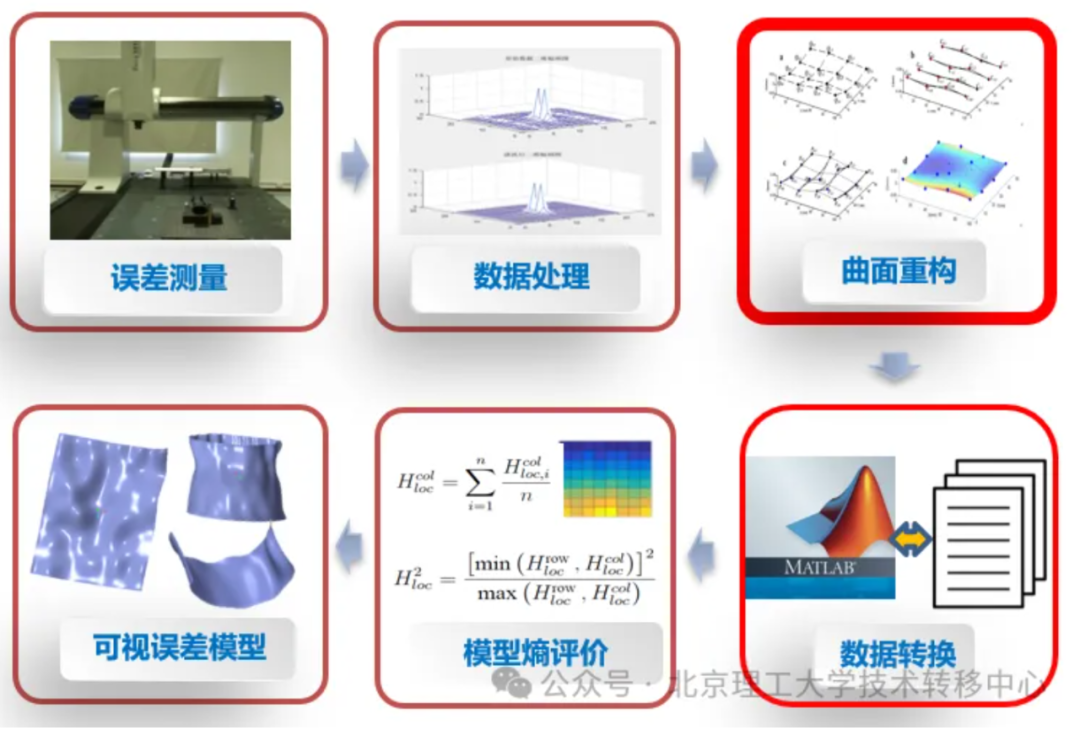
Modeling Process of Geometric Distribution Errors of Assembly Contact Surfaces
Highlights of the Achievement
Currently, there are no geometric distribution error modeling functions and accurate digital twin modeling functions in domestic and foreign three-dimensional design and FEM numerical simulation modeling software platforms. The development of this software platform will fill the domestic and international market gap and is expected to become an accurate digital twin modeling calculation software platform with overall international leading technology.
Application Fields
Intelligent manufacturing technology, software, and information services, etc.
Market Prospects
Establishing high-performance electromechanical product accurate digital twin models to achieve precise representation, analysis, prediction, optimization, and control throughout the product lifecycle is an inevitable development trend in the large manufacturing field and a necessary demand in the domestic and international markets. The market size for software sales and complete technical services is extremely broad and will be quite large. However, the market performance of our products entirely depends on the functionality, quality, and technological leadership of the software platform. As it involves interdisciplinary integration, combining mechanical design, manufacturing technology, mathematics, mechanics, computer science, information technology, and the continuous integration and transformation of artificial intelligence science and technology, it requires gathering many innovative talents, thus requiring significant investment.
The achievement has been effectively applied in simulation analysis of assembly processes for conventional micro-targets, optical instruments, inertial instruments, engines, precision machine tools, new energy vehicle molds, and more than a dozen products.
4
Thin Film Pressure Sensor (Flexible Thin Film Pressure Sensing Material)
Achievement Introduction
The team has developed a cellulose-based resistive flexible thin film pressure sensing material. The thickness of this film is approximately 30μm, exhibiting excellent flexibility and plasticity. Its detection range is approximately 6KPa to 600KPa, capable of accurately sensing and responding to different pressure changes. Additionally, its resistance change rate can reach around 300%, providing reliable assurance for high-precision pressure measurement. The film’s piezoresistive response and recovery time can both reach 20ms, ensuring rapid response and quick recovery to the initial state. Furthermore, the film has a wide safety range, remaining undamaged within 3MPa above the measurement threshold.
This sensor can operate stably in environments ranging from above 0°C to 80°C, adapting to various temperature changes, and possesses extremely high reliability. It requires no external power supply, greatly simplifying the configuration requirements of the application environment. Its structure supports bending and shearing at any angle, providing greater flexibility and adaptability, suitable for various complex application scenarios.
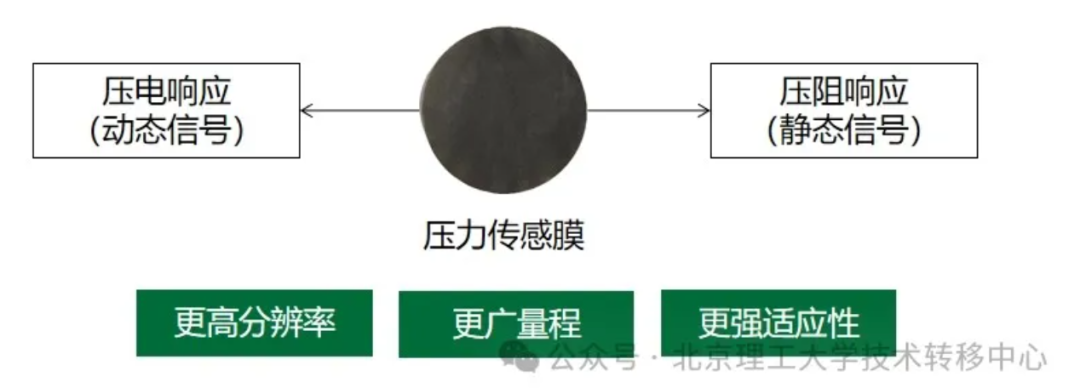
Innovations in Pressure Sensing Film
Highlights of the Achievement
Compared to similar products, this cellulose-based pressure sensor has significant technical advantages, especially in production processes that are scalable. Thanks to its low-cost, environmentally friendly materials and advanced manufacturing processes, it can be used in wearable devices, barometers, and other fields, as well as in intelligent medical, robotic tactile sensing, environmental monitoring, and multiple industries.
Application Fields
This achievement can be applied in wearable devices, barometers, and also in intelligent medical, robotic tactile sensing, and environmental monitoring.
Market Prospects
Currently, the global sensor market is continuously expanding, especially in consumer electronics, automotive electronics, intelligent manufacturing, smart homes, and healthcare fields, with the demand for sensors expected to continue to grow. According to data, the global sensor market size in 2023 is $225.91 billion. It is expected that this market will grow from $241.06 billion in 2024 to $457.26 billion in 2032, with a compound annual growth rate of 8.3% during the forecast period.
Thanks to the widespread application and technological innovation in industrial automation, smart homes, intelligent transportation, and smart cities, as well as strong support from national policies (for example, the key manufacturing technology MEMS for smart sensors has been included in the list of key technologies for scientific and technological frontiers in the “14th Five-Year Plan”), the development of the sensor industry in China is particularly rapid, with the market size reaching 364.47 billion yuan in 2023, a year-on-year increase of 14.9%, far exceeding the global growth rate. According to predictions by CCID Consulting, the market size of the sensor market in China is expected to reach 554.72 billion yuan by 2026.
5
Scene Adaptive System for Visual Analysis of Unmanned Mobile Terminals
Achievement Introduction
With the development of hardware such as sensors, communication technologies like 5G, and artificial intelligence, the concept of unmanned mobile terminals has been realized and widely applied in various industries, such as drones and unmanned vehicles. Drones include computer vision analysis applications such as image classification, target detection, and semantic segmentation; unmanned vehicles include computer vision analysis applications such as target detection, anomaly detection, and drivable area segmentation. Convolutional neural networks (CNNs) are the representative technology behind these computer vision analysis applications, extracting features and reducing dimensions of input data through numerous convolutional layers, normalization layers, pooling layers, and activation layers (this process is called inference), ultimately transforming human-readable image data into abstract data representations, such as the category and position coordinates of objects in images, and the motion trajectories of objects in videos. After determining the structure of the convolutional neural network, the network is trained using previously collected relevant scene data, and then deployed to the unmanned mobile terminal to enable the operation of the convolutional neural network on the unmanned mobile terminal.
However, the online environment where the unmanned mobile terminal is located presents various challenges, limiting the accuracy and usability of the convolutional neural network. The geographical location and environment of the unmanned mobile terminal may be in a dynamically evolving scene, causing the distribution of image data collected by the unmanned mobile terminal to continuously change and differ significantly from the training data; the accuracy of the convolutional neural network will significantly decrease when faced with unseen data distributions. Therefore, the continuous migration of the scene where the unmanned mobile terminal is located greatly affects its usability and even threatens human safety. The key to solving this problem is that when the scene continuously migrates, the convolutional neural network must also utilize the continuously collected data to train itself, allowing it to adapt to the migrating scene, a process known as scene adaptation. Another challenge is that unmanned mobile terminals typically have limited available resources, low computing power, and limited energy, while traditional scene adaptation techniques often require a large amount of time and high computing power, making it difficult to meet the rapid scene adaptation requirements of unmanned mobile terminals. These challenges make the development of scene adaptive systems for visual analysis of unmanned mobile terminals urgent.
Highlights of the Achievement
This achievement adjusts the original model structure through a scene knowledge extraction module in the unmanned mobile terminal, enabling it to generate scene knowledge. The module aggregates the scene knowledge generated by each convolutional layer in the model, ultimately producing lightweight and representative scene knowledge. The scene knowledge accumulation module in the unmanned mobile terminal first fine-tunes the knowledge accumulation model to continuously enhance its ability to extract scene knowledge, then stores the scene knowledge extracted from new scenes, avoiding the forgetting of knowledge from past scenes during continuous scene changes, and accelerating the subsequent adaptation to new scenes, continuously improving the model accuracy in the unmanned mobile terminal, ensuring the functionality and usability of the unmanned mobile terminal. Meanwhile, the scene knowledge extracted by the scene knowledge extraction module in the unmanned mobile terminal is lightweight and small in size, allowing for continuous extraction and accumulation during ongoing scene changes, at a low cost; the lightweight scene knowledge reduces the cost and time of model fine-tuning and helps determine the sensitivity of convolutional layers in the model to scene changes, allowing for fine-tuning only the most sensitive convolutional layers, further reducing resource consumption for scene adaptation, ensuring the feasibility of scene adaptation in unmanned mobile terminals.
Application Fields
Involves artificial intelligence technology fields. In various computer vision fields, applications can be continuously developed based on the technology of this achievement, including industrial IoT, smart agriculture, intelligent logistics, smart customs, and more.
Market Prospects
This achievement has already generated core technologies and overall solutions in the fields of vehicle networking and smart cities, allowing for rapid reuse. Compared to similar products, it has the advantage of generating more professional, detailed, and contextually relevant scene content. Additionally, the continuous evolution capability of core technologies can optimize its effects in specific edge intelligent scenarios.
6
Compound Eye Imaging System
Achievement Introduction
Large field optical design has always been a key and challenging application in optoelectronic imaging systems. To address the issues of current ordinary large field imaging systems, this achievement proposes a large field compound eye imaging system product based on multi-layer orthogonal refractive wedge prisms.
This achievement is primarily used for miniaturized optoelectronic imaging systems, aimed at large field target imaging and tracking.
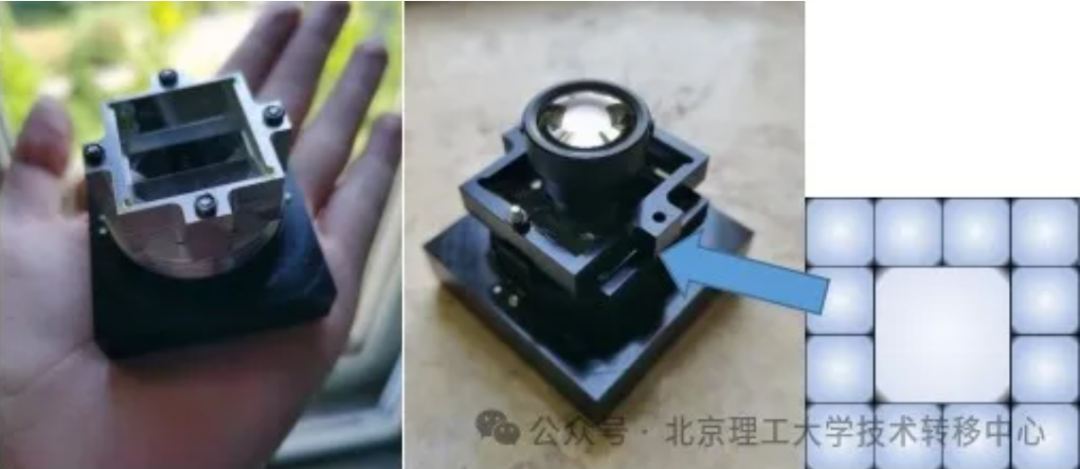
Two Types of Deflection Prisms (9 Paths, 13 Paths)
Highlights of the Achievement
1. Proposed a quadrant plane aperture array structure design for miniaturized optical systems, integrating the rectangular arrangement of aperture images on the sensor image plane, achieving large field imaging of the scene through scene-multi-layer prism-multiple parallel apertures-single sensor graphical output.
2. Proposed a wedge prism structure design and parameter indicators for optical axis deflection, solving the technical indicators for the optical axis deflection angle of light within the field of view, the total internal reflection threshold at the field edges, and the size limitations of the prism, achieving uniform and effective imaging over a large field.
3. Proposed a multi-layer orthogonal prism array arrangement structure to ensure that a single aperture undergoes multi-directional and multi-angle deflection through different layers of prisms, greatly enhancing the integration of the entire system and reducing the volume of the optical system.
Application Fields
Optical imaging technology field, new generation information technology field.
Market Prospects
1. Potential Market Size: The commercial application fields of large field optoelectronic imaging systems include video surveillance and airborne satellite remote sensing. The market size of video surveillance equipment in China is continuously expanding, and the remote sensing service market has seen rapid growth, reaching 10.2 billion yuan in 2020.
2. Core Competitiveness: The system is compact, with a small structure, high synchronization, and minimal parallax; it does not require high-precision collimation for lens light paths, nor does it require the installation of relay light paths, and has a stable structure; it offers good imaging quality, low processing difficulty, and high installation precision, with a large optical axis deflection range.
3. Potential Benefits: The bionic compound eye imaging system is an important technology currently being developed both domestically and internationally, capable of achieving large field and overlapping imaging of scenes through a small volume aperture array with diverging optical axes.
4. Social Value of Promotion: This achievement is based on the bionic design of insect compound eyes, using a simplified design of miniaturized sub-lenses and deflection prisms, avoiding complex optical system structures, reducing the manufacturing difficulty and deployment costs of large field imaging systems, and has significant practical significance in aerospace, remote sensing detection, missile navigation, autonomous driving, surveillance recognition, reconnaissance, and other fields.
7
Efficient Antibacterial Biomass Carbon Preparation of Boron Carbide Materials
Achievement Introduction
Current antibacterial technologies heavily rely on chemical bactericides, leading to increased bacterial resistance with long-term use, and the residual drugs cause serious environmental pollution. Existing physical antibacterial materials (such as nano-silver, zinc oxide) can avoid resistance issues but generally have high preparation costs, large action concentrations, and low bactericidal efficiency, especially insufficient effectiveness against Gram-positive bacteria and other thick-walled strains. Developing new antibacterial materials that are efficient, safe, and cost-effective has become an urgent need to address major public health issues such as medical infections, food safety, and water treatment.
This achievement focuses on the resource utilization of biomass carbon, breaking through the high-energy consumption preparation technology barriers of traditional boron carbide materials, and innovatively creating a gas-liquid-solid catalytic growth process based on renewable raw materials such as cotton, flour, corn silk, paper towels, and fallen leaves, constructing self-supporting boron carbide (B4C) nanowire arrays. This material achieves physical sterilization through a dual-effect synergistic mechanism of “adsorption-piercing” and “structural decomposition”: the nickel balls at the tips of the nanowires break through the surface tension threshold of bacteria through strong interfacial adsorption, completing the directional piercing of the cell membrane; after contact with the cell wall, the nanowires induce the decomposition of its peptidoglycan layer, accelerating the leakage of intracellular substances. Experiments confirm that B4C can achieve 100% sterilization against common pathogenic bacteria such as Staphylococcus aureus and Escherichia coli at ultra-low concentrations of 10μg/mL, and still maintains complete killing ability against multidrug-resistant bacteria (Acinetobacter baumannii). This achievement provides a new paradigm for developing low-cost, non-resistance-risk broad-spectrum antibacterial materials, which can be widely applied in key areas of people’s livelihoods such as wound dressings, medical device coatings, and water treatment.
Highlights of the Achievement
The achievement has reached an internationally leading level, achieving controllable synthesis of biomass carbon boron carbide nanowires and innovative dual-effect synergistic sterilization mechanisms for the first time, significantly outperforming domestic and foreign similar technologies in core indicators such as ultra-low action concentration (10μg/mL), complete inactivation of multidrug-resistant bacteria, and green transformation of biomass.
Application Fields
Mainly aimed at the medical health and environmental governance fields, focusing on the following scenarios:
Medical scenarios: Wound dressings, antibacterial coatings for surgical instruments, etc., serving home care and hospital settings.
Water treatment scenarios: Antibacterial filter membranes for water supply systems, medical wastewater treatment modules, with cooperation partners including environmental technology companies, water service groups, and public health management agencies.
Market Prospects
This achievement targets the global antibacterial materials market, addressing the rampant resistance to chemical bactericides and the high cost and low efficiency of physical antibacterial materials. By preparing high-performance bactericidal boron carbide materials from biomass carbon, its core competitiveness lies in replacing high-purity raw materials with waste biomass (cotton, corn silk, etc.), achieving low-cost large-scale preparation through gas-phase catalytic processes, and relying on the “adsorption-piercing” and “structural decomposition” synergistic mechanisms to achieve broad-spectrum high-efficiency sterilization at ultra-low concentrations of 10μg/mL, significantly reducing the action concentration compared to traditional physical materials. This achievement combines raw material availability, no chemical residues, no resistance risks, and high-efficiency broad-spectrum sterilization performance, seamlessly connecting with the rapidly growing markets for medical dressings, medical device coatings, and water treatment membranes, highly aligning with global trends in green healthcare and sustainable development. Through raw material cost control and process optimization, it has significant price advantages in the fields of medical health and water treatment, providing safe and economical solutions to replace chemical bactericides and traditional physical sterilization materials.
8
Multi-Level Neuron Transcranial Magnetic Stimulation Method for Brain Mapping
Achievement Introduction
The multi-level neuron transcranial magnetic stimulation method for brain mapping aims to enhance the clinical application effects of transcranial magnetic stimulation (TMS) technology by precisely regulating neuron activity. Traditional TMS technology has shortcomings in stimulation accuracy and individual adaptability, making it difficult to meet the needs of complex brain disease treatment and neuroscience research. This achievement constructs individualized, multi-level modeling of stimulation target areas by combining structural magnetic resonance imaging (MRI) and 7T functional magnetic resonance imaging (fMRI) data, establishing finite element simulation models and cranial nerve models. On this basis, by optimizing coil types, positions, angles, and stimulation intensities, the accuracy and effectiveness of stimulation are significantly improved.
Highlights of the Achievement
This method not only technically achieves deep integration of multimodal imaging data and fine simulation of neuron functional stratification but also enhances operational efficiency through automated optimization processes. Its innovation lies in the organic combination of anatomical and functional information, providing a new technical path for precise neural regulation. This achievement has broad application prospects in fields such as neural rehabilitation, mental illness treatment, and brain science research, and is expected to promote the clinical transformation and market promotion of related technologies.
Application Fields
1. Neural Rehabilitation Field
This method can be used for rehabilitation treatment of various neurological diseases, such as stroke and Parkinson’s disease. By precisely regulating the neuron activity in specific functional areas of the brain, it can effectively improve patients’ motor functions, cognitive functions, and speech abilities. For example, in Parkinson’s rehabilitation, this technology can provide personalized stimulation plans targeting patients’ symptoms of motor slowness and postural disorders, significantly enhancing rehabilitation outcomes.
2. Mental Illness Treatment
This technology provides a non-invasive treatment option for mental illnesses such as depression and anxiety. Compared to traditional drug treatments, transcranial magnetic stimulation has advantages such as rapid onset, fewer side effects, and no need for anesthesia, especially suitable for patients with drug-resistant conditions or those intolerant to drug side effects. Additionally, this method can achieve home-based treatment through remote monitoring, further enhancing treatment accessibility and compliance.
3. Brain Science Research
In basic brain science research, this method can be used to explore the neural mechanisms of brain functional areas, neuroplasticity, and the connection patterns between neurons. By combining 7T functional magnetic resonance imaging data and finite element simulation models, it can more accurately simulate the neural activity of the brain, providing new tools for neuroscience research.
4. Cooperation Partners and Application Scenarios
This technology can be widely applied in hospitals, rehabilitation centers, research institutions, and brain-computer interface companies. For example, collaborating with hospitals to conduct clinical trials to verify its application effects in neural rehabilitation; collaborating with research institutions to explore its application potential in brain science.
In summary, the multi-level neuron transcranial magnetic stimulation method has enormous application potential in neural rehabilitation, mental illness treatment, and brain science research, providing efficient and precise solutions for patients and researchers.
Market Prospects
1. Potential Market Size
The market size of transcranial magnetic stimulation (TMS) technology has grown rapidly in recent years. The global TMS market size has increased from approximately $1 billion in 2016 to nearly $1.5 billion in 2020, and is expected to reach about $2.5 billion by 2024. In China, the TMS market size has grown from about 100 million yuan in 2016 to 300 million yuan in 2020, and is expected to exceed 1 billion yuan by 2024. Additionally, the brain-computer interface technology, as an emerging field, is expected to reach a market size of $40 billion in China by 2030.
2. Core Competitiveness
Compared to traditional TMS technology, this achievement achieves precise positioning and multi-level neuron regulation of stimulation target areas by combining 7T functional magnetic resonance imaging (fMRI) and finite element simulation models. This innovative method not only improves the accuracy and effectiveness of stimulation but also allows for personalized treatment targeting individual differences, significantly outperforming existing technologies.
3. Cost and Revenue Analysis
Cost: The imaging data collection and analysis involved in this achievement require certain equipment investments, such as 7T fMRI devices and high-performance computing resources. However, as technology matures and equipment costs decrease, the application costs are expected to further decline.
Revenue: The precise stimulation technology can significantly enhance treatment outcomes, reduce ineffective treatments and side effects, thereby lowering overall medical costs. Furthermore, the widespread application of this technology in neural rehabilitation, mental illness treatment, and brain science research will bring significant economic and social benefits.
4. Market Prospects
Neural Rehabilitation Field: The global market size for neural rehabilitation treatment is expected to reach $7.18 billion by 2024 and $15.19 billion by 2032. This achievement can be widely applied in rehabilitation treatments for diseases such as stroke and Parkinson’s disease, holding enormous market potential.
Mental Illness Treatment: With the increasing awareness of mental health, the demand for TMS technology in the treatment of depression, anxiety, and other conditions is continuously rising.
Brain-Computer Interface Technology: It is expected that the global brain-computer interface market will reach $10.89 billion by 2033. This achievement can be combined with brain-computer interface technology to further expand its application scope, such as assisting in the recovery of motor functions and intelligent interactive devices.
9
Nonlinear Equalizer for OAM Mode Division Multiplexing System
Achievement Introduction
OAM (Orbital Angular Momentum) mode division multiplexing technology is an emerging communication multiplexing method that significantly increases the transmission capacity of optical fiber communication systems by introducing a new dimension of orbital angular momentum into optical signals. However, OAM mode division multiplexing systems face issues of inter-mode crosstalk and signal distortion caused by nonlinear effects in practical applications, which limit system performance and transmission distance.
To address this challenge, a highly efficient nonlinear equalizer has been proposed, employing advanced algorithms and circuit designs to effectively suppress nonlinear distortion and inter-mode crosstalk in OAM mode division multiplexing systems, thereby improving system transmission performance and stability. This equalizer not only possesses high flexibility and adaptability, allowing for optimization adjustments based on different transmission requirements and system configurations, but its compact design and low power consumption make it very suitable for modern optical fiber communication systems.
Highlights of the Achievement
The innovations of this achievement are mainly reflected in the following aspects: firstly, by introducing advanced nonlinear equalization algorithms, effective suppression of nonlinear distortion in OAM mode division multiplexing systems is achieved; secondly, optimized circuit design and signal processing techniques enhance the performance and stability of the equalizer; finally, this technology can be widely applied in various optical fiber communication systems, holding broad market prospects and application value.
Application Fields
With the rapid development of information technology, optical fiber communication has become the cornerstone of modern communication networks. As a cutting-edge technology in the field of optical fiber communication, OAM mode division multiplexing technology has extremely high transmission capacity and spectral efficiency, thus holding broad application prospects in future high-speed, large-capacity communication networks. The nonlinear equalizer of this achievement, as an important component of the OAM mode division multiplexing system, will also have a correspondingly vast application range.
Specifically, it can be applied in 5G/6G mobile communications, data center interconnections, and long-distance optical fiber transmission fields.
Market Prospects
With the rapid development of information technology and the explosive growth of global data traffic, the demand for high-speed, large-capacity communication technologies is continuously increasing. As a cutting-edge technology in the field of optical fiber communication, OAM mode division multiplexing technology holds broad application prospects in future high-speed, large-capacity communication networks. The nonlinear equalizer of this achievement, as a key component of the OAM mode division multiplexing system, will see its market scale expand as OAM mode division multiplexing technology becomes more widely adopted and applied.
According to market research institutions, the global optical fiber communication equipment market is expected to reach hundreds of billions of dollars, with OAM mode division multiplexing technology being one of the cutting-edge technologies, holding broad market prospects. The nonlinear equalizer of this achievement, as one of the key components of the OAM mode division multiplexing system, will see its market scale continuously expand with the popularization and application of OAM mode division multiplexing technology.
In terms of cost and revenue, although a certain amount of R&D investment and production costs are required, once mass production is achieved, the unit cost will significantly decrease. At the same time, due to the unique technological advantages and market competitiveness of this technology, its selling price is also relatively high. Therefore, we can enhance the product’s performance and stability, reduce production costs and selling prices, thereby improving the product’s market competitiveness and profitability.
10
New Hydrophilic Antibacterial Membrane and Preparation Method
Achievement Introduction
The mainstream preparation method for antibacterial membranes currently involves grafting antibacterial substances onto the surface of base membranes, with commonly used antibacterial materials including graphene oxide, carbon nanotubes, antibacterial polymers, and metal ions. However, these materials generally have complex grafting methods and environmental hazards. In contrast, quaternary ammonium salt antibacterial agents have good antibacterial effects and are environmentally friendly. Currently, water-soluble small molecules or polymer quaternary ammonium salt antibacterial agents have been widely applied in water treatment, food, medical hygiene, and packaging materials. However, the preparation of antibacterial membranes by directly grafting quaternary ammonium compounds onto membrane surfaces still faces issues of complex preparation processes and high costs, which has hindered the large-scale application of most developed quaternary ammonium functional membranes in actual water treatment systems. Therefore, developing a new preparation method for hydrophilic antibacterial functional membranes is urgently needed in the industry.
Highlights of the Achievement
The preparation method proposed in this achievement involves preparing chloromethylated polymers into hollow fiber porous membranes and fabricating them into shell-and-tube membrane components. Subsequently, quaternary ammonium compounds are directly grafted onto the hollow fiber membrane filaments in the component through a filtration operation mode, resulting in the preparation of quaternary ammonium functional membrane components with excellent antibacterial performance. This preparation method is simple and convenient, with high grafting stability, suitable for long-term large-scale application in actual membrane-based water treatment systems, and the prepared ultrafiltration membranes exhibit good hydrophilicity and antibacterial properties. The preparation of antibacterial membranes is simple and convenient, completed through filtration operations at room temperature and pressure, with high grafting stability and low costs, achieving over 99.9% removal rate of microorganisms in water, especially inhibiting the growth of microorganisms on the membrane (both inner and outer surfaces, pore wall surfaces).
Application Fields
Water treatment field, new materials field.
Market Prospects
Membrane-based water treatment has advantages such as low energy consumption, simple processes, stable operation, and high water quality, and has been widely applied in the water treatment field. However, during the long-term operation of membrane components, microorganisms present in the water environment will continuously attach, metabolize, and grow on the membrane surface, forming difficult-to-remove biofilms, leading to a decrease in membrane flux and a significant increase in operating costs. To date, membrane pollution, especially biological pollution, remains a key bottleneck limiting the application of membrane technology. Therefore, developing membrane materials and components with antibacterial functions has become one of the main approaches to controlling membrane biological pollution. The current mainstream preparation methods for antibacterial membranes involve grafting antibacterial agents onto base membranes, such as grafting graphene oxide, carbon nanotubes, antibacterial polymers, and metal ions. However, these materials generally have high costs, complex grafting methods, and environmental hazards. In contrast, quaternary ammonium salt antibacterial agents have good antibacterial effects and are environmentally friendly. Currently, water-soluble small molecules or polymer quaternary ammonium salt antibacterial agents have been widely applied in water treatment, food, medical hygiene, and packaging materials. However, directly grafting quaternary ammonium compounds onto membrane surfaces still faces issues of complex preparation processes and high costs, which has hindered the large-scale application of most developed quaternary ammonium functional membranes in actual water treatment processes. This achievement prepares chloromethylated polymers into hollow fiber porous membranes, with a simple and convenient preparation method and high stability, making it very suitable for long-term large-scale application in seawater desalination, drinking water preparation, wastewater treatment, and other actual water treatment processes, with a large market size and good prospects.
If you are interested in collaborating on related achievements, please contact us through the following methods:
Platform Operator: “Innovation China” Achievement Transformation Department
Phone: 010-56057693
Email: [email protected]
Website: www.kczg.org.cn
Achievement Holder: Beijing Institute of Technology Technology Transfer Center
Phone: 010-68914920
Email: [email protected]
Website: ttc.bit.edu.cn
Source of this issue’s achievements:WeChat Official Account of the Technology Transfer Center of Beijing Institute of Technology