1. Research Background
As the construction industry continues to explore information technology, smart construction sites have emerged. The deep integration of advanced technologies such as cloud computing, big data, the Internet of Things (IoT), and Building Information Modeling (BIM) plays a crucial role in the transformation and sustainable development of the construction industry. Among these, BIM technology is a key support for the construction of smart construction site platforms.
(1) The BIM model serves as a carrier of on-site construction information, enabling the association of abstract data with physical construction entities. (2) BIM data, as the foundation of the smart construction site database, helps enhance the structural level of abstract construction process data and improves data management efficiency. (3) Due to the varying professional capabilities of personnel on-site, there are differences in technical understanding; the visualization characteristics and standardized data of BIM technology can improve collaboration quality and enhance management efficiency.
Researching the data processes of smart construction sites driven by BIM technology helps to tap into data potential and innovate application directions, empowering broader digital construction management needs.
2. BIM-Based Smart Construction Site Platform Architecture
The BIM-based smart construction site platform can be divided into three levels architecturally.
(1) Terminal. Mainly through IoT sensors and mobile devices, real-time dynamic data from the construction site is collected, providing a data foundation for efficient construction process analysis and management.
(2) Platform. By building a Common Data Environment (CDE), also known as a common database, it serves as a single data center for the entire project team to collect, manage, and transmit drawings, documents, BIM models, and non-model information. This single data environment facilitates collaboration among project members and helps avoid duplication and errors. Multi-source heterogeneous data, after governance, is stored in the common database for filtering and calling by IoT platforms, big data intelligent analysis platforms, data resource planning platforms, etc., for computation, analysis, data association, and task-driven operations.
(3) Application End. Based on business objectives, various application modules provide convenient data analysis results display, construction data queries, and process data interactions for different construction tasks and scenarios, making project management processes more efficient and lean.
3. BIM-Based Smart Construction Site Data Processes
3.1 Creation of Original Static Data
This stage can use the design BIM model, deepening and correcting it according to construction management needs, or it can be created directly from construction drawings for the smart construction site platform’s BIM model. It is necessary to clarify the types and contents of data required for the construction phase, establish a data management mechanism, compile a unified component naming rule, and create standardized model templates, on this basis, carry out the creation of BIM models and the entry of basic information. Since the application of the smart construction site platform spans the construction phase and can provide services for operations, data interfaces related to procurement, construction, operation, and management must be reserved during the creation of the BIM model. After the original static data is uploaded to the smart construction site platform’s common data environment, it should be updated and maintained according to project phases.
3.2 Updating and Maintaining Process Data
The BIM-based smart construction site shifts construction management from a rough approach to a refined one, and the premise of refined management is the authenticity and timeliness of data. Therefore, an effective data updating and maintenance mechanism must be established. This stage typically involves two types of data: static management data and dynamic management data.
For static management data, it is generally determined during the preparation of the construction organization design, related to construction management needs, such as product models, construction plans, costs, coding, and other information data. This type of data should be entered and updated in the smart construction site platform by phase, and then associated with BIM model data, requiring review by designated personnel before being formally stored in the smart construction site platform database to ensure data authenticity.
For dynamic management data, it is generally generated due to personnel activities or events, such as actual construction progress, the status of construction tasks, material and component production and installation phases, quality inspection results, etc. This type of data should be entered into the smart construction site platform by project management personnel at regular intervals as construction progresses, or automated entry can be achieved through technical means. For example, construction progress data can be periodically updated using drone aerial photography to import on-site progress data, which is then compared with the BIM model to generate progress reports; for material management data, the site’s weighing system can automatically recognize transport vehicle license plates and tare weights, generating material delivery slips with QR codes, and synchronously uploading to the smart construction site platform to generate settlement tables based on preset material unit prices and transportation costs; for quality inspection data, inspectors can use an app system to conduct real-time quality tracking checks on various processes, with the system platform’s quality inspection data interfacing with BIM data, prompting inspectors to timely complete safety quality inspection records, rectification records, and rectification review records, and conduct monthly inspection data statistical analysis. The updating of dynamic data must follow standardized processes to ensure timeliness, and if necessary, it can also be dynamically associated with BIM model data.
3.3 Integration of Dynamic Monitoring Data
Dynamic monitoring data is typically collected for two purposes. One is for operating automated equipment, such as collecting coordinate data from drilling robots, which are driven by spatial information provided by BIM model data to carry out automated construction. The other is for analyzing and warning about the construction site situation, such as monitoring the progress of work areas and the entry and exit of vehicles and personnel at important entrances and exits, as well as energy consumption and environmental data monitored by on-site equipment instruments and sensors. Dynamic monitoring data relies on network technology for real-time transmission, such as Zigbee, LoRaWAN, NB-IoT, etc., to achieve physical connection communication between objects, and communication protocols such as REST/HTTP and MQTT support data exchange and communication over the internet. This dynamic monitoring data will be integrated, analyzed, and feedback warning results or drive specific control commands on the smart construction site platform.
4. Innovative Applications of BIM-Based Smart Construction Site Data
Traditional smart construction sites focus on solving issues related to technology, progress, cost, quality, and safety. BIM-based smart construction sites can further explore the value of data and diversify application scenarios, enhancing the “intelligence” of construction site management from three levels: “collaboration, insight, and prediction.”
4.1 Augmented Reality (AR) Simplifying Construction Collaboration
Collaboration on construction sites is complex; using augmented reality technology can simultaneously display the actual situation on-site and the visualized BIM model, assisting project personnel in communication and decision-making based on an intuitive unified data source. Extracting geometric data of BIM model components, setting reference point coordinates, and uploading them to the smart construction site platform’s common database. By using augmented reality devices connected to the smart construction site platform’s network environment, scanning the on-site reference points allows for the positioning and display of models in the augmented reality environment.
With this technology, the display and examination of design data combined with the actual on-site scenario will significantly enhance cross-team communication and coordination, especially in complex environment construction, structural construction reservations, and complex spatial electromechanical and decoration installations.
4.2 Real-Time Location System (RTLS) Enhancing Safety Insight
A mature real-time location system combines hardware and software dimensions to provide monitoring target location information, such as the GPS navigation system for cars, which is the most common application of real-time location technology in daily life. In construction sites, real-time location systems can be innovatively deployed within building interiors to address construction safety issues. For example, project personnel wearing construction vests or helmets equipped with real-time location devices will have their location data transmitted in real-time to the smart construction site platform and compared with BIM model data. Project management personnel can view the location of personnel in various areas on-site and the flow of people over a period in the application end’s visualized model. Dangerous areas can also be specified in the BIM model, and when project personnel enter these areas, their real-time location coordinates overlap with the danger zone, triggering warnings on the smart construction site platform (including linked on-site warning devices and possible worker-worn devices) to avoid safety issues.
4.3 Environmental Monitoring (EM) Strengthening On-Site Insight
Currently, there are high requirements for green construction in China, and the impact of construction sites on the external environment is an important monitoring indicator during project implementation, including dust, smoke, light, noise, etc. For projects with high environmental control requirements, environmental monitoring systems are typically installed on construction sites. The system generally includes modules for meteorological monitoring collection, data transmission processing, temperature and humidity monitoring, dust and noise monitoring, and interconnect terminal queries. Currently, the smart construction site platform leverages existing BIM data and surrounding environmental data, allowing massive data collected by traditional sensors, such as temperature, humidity, and dust concentration, to be structured and visualized based on BIM model spatial areas and component targets. Integrating the environmental monitoring system into the smart construction site platform allows monitoring data to be displayed centrally on the platform, ensuring information transparency for supervision by all project participants. Through analysis and processing of environmental monitoring data by the smart construction site platform, intelligent dust reduction and cooling systems can be activated, corresponding fire and sprinkler facilities can be turned on, and alerts can be sent to construction personnel’s mobile terminals. Figure 1 shows a smart construction site platform integrated with dust sensor information, allowing intuitive viewing of monitoring results based on BIM data on the platform. When dust levels exceed standards in a certain construction area, a warning is triggered on the platform, guiding construction personnel to evacuate and activating automatic sprinklers.
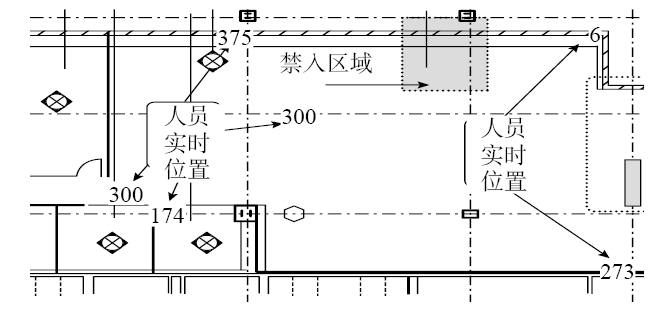
Figure 1: Real-time location indication of personnel on the smart construction site platform (Skanska case)
4.4 Artificial Intelligence (AI) Driving Risk Prediction
The data sources in the construction industry are experiencing explosive growth, with the amount of data generated on global construction sites in the past two years surpassing the total of the past century. How to fully utilize data to generate value is one of the key focuses of current digitalization research in the industry. In addition to the conventional applications of smart construction sites, such as managing current project safety, quality, and progress based on data, leveraging the power of artificial intelligence (AI) technology to learn and train from vast amounts of historical construction data to predict analysis, safety observation, and safety monitoring to reduce current project risks is a hot research and development direction for smart construction site platform applications.
For example, NewMetrix, a technology company in North America, has launched an AI specifically trained and built for construction safety risks, using safety incident data from over 1,000 projects and a database of more than 17 million construction images to identify risk indicators, rank projects based on risk, and predict which 20% of projects will experience 80% of safety incidents in the following week. For instance, Galliford Try, a UK engineering company, employs a trained AI system that can quickly structure chaotic construction site data and organize safety-related data into charts for analysis reports, freeing project managers from 8-10 hours of work each week. The AI system can also identify hazardous behaviors in site photos and videos, such as workers lacking protective equipment, disorganized construction materials, and unsafe construction operations, providing timely warnings and managing potential risks.
The core of data-based prediction is to use data to change behavior, and its data process is divided into four stages.
(1) Data Collection. Using historical data from similar projects, including BIM data and process data collected by the smart construction site platform. (2) Data Analysis. Integrating AI applications with the smart construction site platform to provide data analysis permissions to all project participants for informed and proactive decision-making. (3) Prediction Deployment. Benchmarking the current project against the construction database used for AI training, providing risk predictions for construction tasks and suggestions for risk reduction. (4) Risk Warning. AI prediction results are visually processed and displayed on the smart construction site platform, pushing data to relevant task personnel for timely warnings, ensuring safety, and enabling informed decision-making.
5. Conclusion
The construction of smart construction sites is an important part of the digital transformation of the engineering construction industry, a necessary path for the development of modern society, and a foundation and guarantee for entering a smart future. Fully understanding and tapping into the data processes and values within the BIM-based smart construction site platform helps integrate advanced scientific technologies into existing platforms, enhancing the digital and intelligent levels of construction sites, transforming traditional construction sites into “scientific, efficient, safe, and environmentally friendly” smart construction sites, and continuously leading the upgrade of construction technology and the transformation of management models.
Excerpt from “Building Technology“March 2023, Song Shan, Kou Qing
◎ All original articles published by this WeChat account are copyrighted by the Building Technology Magazine, and any media reproduction or excerpt must indicate the original source.