Source: “Research on Smart Society”, Issue 4, 2023
Authors: Yan Ping, Wang Juanfen, Chen Zhizhi
Abstract: In the face of the increasingly severe aging population in China, applying technologies such as the Internet, big data, and artificial intelligence in the elderly care sector is an important way to alleviate the shortage of elderly care resources. In recent years, with the continuous encouragement from the government for the integration of smart technology and the elderly care industry, smart elderly care has gradually emerged. However, due to the late start of smart elderly care in China, there are still many problems and difficulties in its development. The mature institutional models and technological practices abroad can provide valuable references for the development of smart elderly care in China. This study aims to analyze the concept, research progress, model system, and practical applications of smart elderly care abroad, outline the problems and difficulties faced by the development of smart elderly care in China, and summarize paths and suggestions for further advancing smart elderly care in China based on foreign experiences.
Keywords: Smart elderly care, Conceptual model, Technological practice, Review
1. Introduction
In recent years, the degree of population aging in China has deepened: in 2021, the proportion of the population aged 65 and over was 14.2% (National Bureau of Statistics, 2022), indicating that China has entered a moderately aging society; by 2022, the number of elderly people aged 65 and over approached 210 million, with the proportion rising to 14.9% (National Bureau of Statistics, 2023). In the future, the scale and proportion of the elderly population in China will continue to grow rapidly, posing greater challenges to the elderly care resources and service system. With the continuous development of the Internet, big data, and artificial intelligence technologies, smart homes, wearable devices, and nursing robots provide new ideas for solving elderly care issues, and their application in the elderly care service sector is an important way to alleviate the shortage of elderly care resources. In 2012, the National Aging Office proposed the concept of “smart elderly care”, and both central and local governments began to support the practice of smart elderly care; in 2015, the State Council issued the “Guiding Opinions on Actively Promoting the ‘Internet+’ Action”, clearly stating the need to “promote the development of the smart health and elderly care industry”; in 2021, the “Action Plan for the Development of the Smart Health and Elderly Care Industry (2021-2025)” jointly released by the Ministry of Industry and Information Technology and other ministries proposed to “create new products, new business formats, and new models for smart health and elderly care, providing strong support to meet the growing health and elderly care needs of the people”. Utilizing smart elderly care methods to solve the care issues of the elderly has become an important choice for the development of the elderly cause in China. However, as the development of smart elderly care in China is still in its initial exploratory stage, it faces difficulties such as insufficient development of technological products, lack of professional talent and social forces, and lagging interdisciplinary integration. Therefore, summarizing and analyzing the development status and experiences of smart elderly care in developed countries can provide valuable references for the development of smart elderly care in China.
2. The Concept of “Smart Elderly Care”
The concept of “smart elderly care” was first proposed by the UK Life Trust Fund, which relies on technologies such as the Internet, big data, and the Internet of Things to organically integrate various entities in the elderly care service system, breaking the limitations of time and space in traditional elderly care models, and providing higher quality elderly care services for the elderly (Xi Heng, Ren Xing, Zhai Shaoguo, 2014). Looking at the history of the evolution of elderly care models in Western countries, smart elderly care is a product of technological development, using intelligence as a means to achieve the goal of elderly care.
The realization of smart elderly care is based on information technology and is closely related to concepts such as “smart homes”. Li Nali (L. Lee) and others pointed out that smart elderly care promotes the physical and mental health of the elderly through technologies such as smart homes, remote monitoring, and emergency call systems (Lee & Kim, 2020). Demiris (G. Demiris) and Hensel (B. Hensel) view smart homes as a technology in an aging society, categorizing them into six types based on service objectives: physiological monitoring, emergency response, safety monitoring and assistance, social interaction assistance, cognitive and sensory support (Demiris & Hensel, 2008). Kong (B. Kon) and others believe that smart home technology provides convenience for the elderly in six aspects: safety, health and nutrition, physical activity, personal hygiene and care, social participation, and leisure (Kon, Lam & Chan, 2017). Chen (M. Chan) and others interpret the application and value of smart elderly care from the perspective of smart home technology, which relies on sensors, actuators, and biomedical monitors to help the elderly live independently (Chan, Campo & Estève et al., 2009). Overall, although the concept of “smart elderly care” lacks a clear and unified definition, there is no disagreement regarding the indispensable role of information technology and its functions in the field of elderly life (Wang Jian, Zhang Yue, Zhu Qinghua, 2019). Utilizing devices such as the Internet, the Internet of Things, and sensors to help the elderly overcome difficulties such as disabilities is the “intelligence” of smart elderly care.
3. The Evolution of Smart Elderly Care Issues Abroad
As investment in smart elderly care continues to increase, governments are placing greater emphasis on the design and promulgation of smart elderly care solutions, and academia has also conducted extensive research on the performance of smart elderly care products, their practical applications, and their impact on the lives of the elderly. The author has reviewed existing literature and found that the focus of foreign scholars on smart elderly care issues has shifted from a product-centered approach to a user-centered approach, and from an emphasis on external functions to a focus on internal ethics.
(1) Product-Centered: Smart Elderly Care Products and Their Applications
From the 1990s to the early 21st century, foreign scholars focused on the product level of smart elderly care, examining its technical principles, product performance, and applications. Washburn (R. Washburn) and others conducted a study in 1993, assessing a sample of elderly individuals using sensing devices and the “Physical Activity Scale for the Elderly” (PASE), researching the physical activity of the elderly based on motion sensor counts and physical activity diaries (Washburn, Smith & Jette et al., 1993). Raad (M. Raad) and others focused on the role of home care technology in home healthcare, establishing continuous communication between patients and caregivers using medical instrument technology, and introducing an integrated user-friendly smart home model to provide remote medical services for the elderly (Raad & Yang, 2009). In the development of wearable devices, the European “Wealthy Project” can obtain synchronized biomedical signals (ECG, respiration, activity, etc.), while Japan’s Life Minder is a “wearable healthcare assistant” that has achieved personal tracking and activity measurement.
After 2010, research on promoting active aging through smart information technology further enriched, possibly related to the international community’s launch of relevant initiatives. Starting in 2007, the “Ambient Assisted Living Joint Program” (AALJP), funded by the European Commission, was launched in Europe to encourage technological and business innovation in the elderly industry, determining how information and communication technology can meet the needs of the elderly and maximize their potential to address the growing elderly population issue in Europe. Similarly, countries in Asia such as Thailand, Japan, and South Korea followed suit, focusing on the role of smart living in preventing population aging. For example, in 2016, Thailand’s National Statistical Office (NSO) pointed out that the proportion of elderly individuals who are no longer working will undergo significant changes, thus the government must focus on increasing the public policy budget for retirement age in the near future. Subsequently, Thailand incorporated the transition to an aging smart living system into the “Thailand 4.0 Development Plan” to ensure appropriate budget allocation for the future.
(2) User-Centered: The Needs and Willingness of the Elderly for Smart Elderly Care
Although research focused on product functions has yielded fruitful results, an increasing number of scholars have gradually realized the central role of elderly users in smart elderly care, shifting their focus to user needs, willingness, and psychological accessibility. To gain a deeper understanding of the needs and evaluations of elderly users, various methods need to be employed, including surveys, interviews, and observations. Consequently, user-centered survey research has become popular over time. Visutsak (P. Visutsak) and others pointed out that although the use of smart home technology has a series of potential benefits for improving the quality of life of the elderly, the successful promotion of smart home technology requires necessary assessments of the needs, concerns, psychological accessibility, and perceptions of relevant stakeholders (doctors, nurses, elderly individuals, and adult children). He designed a self-administered questionnaire, and after the survey, it was found that relevant stakeholders highly recognized the necessity of assistive technology (average level of 4.23), and the investment intensity influenced the choice of smart device types (Visutsak & Daoudi, 2017). Ravishankar (V. Ravishankar) and others criticized traditional research for focusing only on technological advancements rather than the multifaceted needs and experiences of users. He conducted a longitudinal study on four healthy elderly individuals (aged 65 and above), confirming the importance of focusing on user-centered design and customizing technology based on individual user needs (Ravishankar, Burleson & Mahoney, 2015). Yu (J. Yu) and others designed a questionnaire to survey 271 elderly individuals in South Korea, aiming to investigate the residential lifestyle of the elderly and segment it to compare and analyze the real needs for smart home functions among each group. The study found that groups such as “tired of housework”, “just want to rest”, and “active at home” had relatively high demands for smart homes, while groups with “poor quality of life” and “good quality of life and good health” had relatively low demands for smart homes (Yu, Antonio & Villalba-Mora, 2020).
(3) From Focusing on External Functions to Addressing Internal Ethics: Ethical Issues in Smart Elderly Care
The application of smart elderly care technology undoubtedly brings great convenience to the lives of the elderly, but as the dual-edged sword effect of technology becomes increasingly apparent, people are gradually becoming aware of a series of ethical crises hidden in the application of technology. Demiris and others believe that the research agenda for smart homes must include the establishment of an ethical framework for their design and implementation, fully considering their impacts, including on social relationships and interactions, over-reliance, and privacy (Demiris & Hensel, 2008). Fisk (M. Fisk) argues that one obstacle to the development of smart homes is the “lack of a moral framework to support them”. With the growing global attention to rights issues, research on privacy issues in smart homes has become an emerging direction in the field of smart elderly care (Fisk, 2003). Chung (J. Chung) and others reviewed the ethical considerations and issues related to the use of smart home devices by the elderly, concluding that privacy and intrusiveness are the most important factors affecting the use of smart home devices (Chung, Demiris & Thompson, 2016). Talal (M. Talal) and others expressed concerns about information leakage in the Internet of Things, pointing out that IoT-based smart homes still provide limited capabilities for ordinary users regarding comprehensive security and privacy, and the continued use of existing IoT device design processes will lead to serious security and privacy issues in the next decade (Talal, Zaidan & Zaidan et al., 2019). Courtney (K. Courtney) found that privacy may become a barrier for the elderly in using smart devices, but their need for technology may outweigh their concerns about privacy (Courtney, 2008).
4. Experience Models of Smart Elderly Care in Developed Countries
Developed countries entered the aging society earlier and faced labor supply pressures and shortages of elderly care human resources sooner, thus beginning to explore the application of technological means in the elderly care service sector earlier, and have now formed relatively mature smart elderly care service systems and experience models.
(1) Japan: A Smart Elderly Care Model Balancing Institutional Design and Technological Development
Japan, facing the dual challenges of declining birth rates and aging population, places particular emphasis on applying technological means in the elderly care industry, while also focusing on building a comprehensive smart elderly care system. In 2001, Japan implemented the e-Japan strategy, clearly defining the goal of creating a “knowledge-based emerging society where everyone can actively utilize information technology and fully enjoy its benefits” and encouraging technological innovation in elderly social welfare and healthcare. In 2013, Japan’s Ministry of Internal Affairs and Communications organized the “ICT Super-Aging Society Concept” meeting, analyzing the practice and application of information and communication technology (ICT) in a super-aging society, and in 2014 continued to promote the “ICT Super-Aging Society Construction Promotion Project”. It can be seen that Japan has been committed to promoting the development of ICT-assisted health and elderly care, continuously driving technological innovation in the super-aging society, and playing an important role in addressing the elderly care issues arising from declining birth rates and super-aging society. In January 2016, Japan introduced the “Society 5.0 Plan”, defined as “the fifth phase of the basic plan for science and technology”. The Japanese government defines “Society 5.0” as a “human-centered society” aimed at balancing economic development through a system that combines cyberspace and physical space, addressing social issues such as severe aging, labor resource shortages, and productivity limitations, and achieving sustainable development. In “Society 5.0”, robots as caregivers will become a reality and phenomenon. In recent years, robots have played an important role in elderly care in Japan, providing effective social and psychological support for the elderly.
(2) United Kingdom: A Community-Centered Smart Elderly Care Model
The United Kingdom is one of the first countries to propose the concept of “smart elderly care”, believing that community-based elderly care is the most suitable model for its national conditions, and combining smart means with community-based elderly care is an effective way to meet the care needs of the elderly. The core of the UK’s smart elderly care model is community building, establishing smart elderly care service centers at the community level to create convenient and diverse service conditions for elderly residents to age in place (Xu Fengliang, Wang Mengyuan, 2019). The UK’s smart elderly care model emphasizes the application of technology, with community smart elderly care platforms relying on intelligent and information technology to provide elderly care services for home-based elderly individuals, such as using the Internet, sensors, and wearable devices to establish remote medical and mobile healthcare methods, monitoring the daily physical conditions and health status of the elderly in real-time, and providing remote medical consultations and care guidance through mobile communication devices, etc.
(3) United States: A Market-Oriented Model Based on Smart Homes and Remote Medical Care
The United States is also one of the earliest countries to explore smart elderly care practices, with its smart elderly care model primarily highlighting the use of technologies such as smart homes and Internet remote medical care. From the establishment of the first smart building in 1984 to the gradual establishment of mobile medical networks for the elderly in various states by 1999, it fully reflects the U.S. government’s emphasis on and investment in the construction of smart elderly care service systems. At the same time, the U.S. has also established a relatively complete health information science engineering database, achieving quantification and visualization of service objectives and quality standards, allowing the government, research institutions, and enterprises to objectively evaluate the service quality of various elderly institutions. To improve the quality of elderly care services and reduce government management costs, the U.S. elderly care service industry places great emphasis on introducing market mechanisms, adopting a capitalist market-oriented operation model. The U.S. government has introduced market competition into the smart elderly care industry, attracting high-tech companies such as Apple and Philips to invest in technology research and development, developing elderly-friendly products controlled by tablets and smartphones. For example, Apple has introduced two elderly-friendly features on its system’s built-in app, namely walking stability prediction and health sharing, the former being beneficial in preventing issues caused by falls among the elderly (Meng Ke, Ma Tingting, 2022). Compared to China, the U.S. has a higher Internet penetration rate (especially among the elderly population), creating favorable conditions for the rapid development of the smart elderly care industry. Major high-tech companies in the U.S. are competing for market dominance, actively promoting the research and development of smart elderly care products to meet the diverse elderly care service needs of the elderly.
(4) Germany: A Smart Technology Platform Construction Model for Smart Elderly Care
Germany has built a scalable smart technology platform to address the severe aging population issue, linking various smart service systems to this platform to achieve dual smart services for institutional and home-based elderly care. In 2007, Germany began promoting the “Ambient Assisted Living Joint Program”. The ambient assisted living system is a smart service system specifically designed for home-based elderly individuals, connecting various smart devices on a smart platform to monitor the physical condition and living environment of the elderly in real-time. With such an ambient assisted living system, elderly individuals can remotely control most facilities in their rooms through electronic devices, such as automatic adjustable beds and fall detection sensors, which are very friendly to elderly individuals with mobility impairments. As the birthplace of the Western social security system, Germany advocates a welfare system “from cradle to grave”, with the government playing an important role in elderly care service guarantees. However, as the complexity of aging issues increases, the German government has increasingly recognized that relying solely on fiscal allocations can no longer effectively address the new problems faced by modern elderly care. Against this backdrop, the German company Soziaheld, with government support, developed the “Wheelchair Map Interactive Platform”, which relies on the Google Maps engine framework to mark the accessible ramp routes in important community streets and business districts in Germany, greatly facilitating the travel of the elderly (Ding Tuo, 2021).
5. Development and Application of Smart Elderly Care Technologies Abroad
Practice shows that the concept of smart elderly care, along with technologies such as smart homes, artificial intelligence, and life assistance, jointly promote the development of smart elderly care. The application of these technologies plays an important role in elderly care, allowing the elderly to utilize monitoring systems, emergency systems, fall detection, and other technologies to achieve a healthy and safe life. In recent years, intelligent technologies related to elderly care have developed rapidly in developed countries such as the UK, the US, and Japan, which not only effectively alleviates the shortage of healthcare and elderly care resources against the backdrop of increasing aging in developed countries but also helps the elderly better achieve aging in place and home care.
(1) Remote Monitoring Systems Based on Smart Homes and Sensing Devices
With the increasing scale of the elderly population and the growing demand for healthcare, developed countries (represented by the US) have begun to vigorously develop remote medical technologies to reduce hospitalization rates among elderly patients with chronic diseases and promote the integration of social resources. Among them, smart home systems that monitor the daily activities of the elderly are key factors in promoting smart elderly care. Remote medical care and health monitoring mainly rely on sensors, monitoring the daily activities, vital signs, and body postures of the elderly through sensors installed in housing (such as doors, walls, ceilings, etc.) and household items (such as small appliances), and using wearable devices, environmental sensors, and wireless sensor networks to collect physiological and behavioral data to monitor the health and safety status of the elderly. In case of dangerous situations, the system will notify the elderly’s relatives or doctors and provide follow-up care and medical services.
As the model of health monitoring and care through remote medical care and sensors continues to develop, more and more foreign scholars have begun to study remote monitoring of home-based elderly individuals and the application of related technologies. Suryadevara (N. Suryadevara) and others proposed a health monitoring system composed of a wireless sensor network, including current sensors placed on power outlets to detect appliance usage and flexible pressure sensors to detect activities around non-electrical objects (Suryadevara, Mukhopadhyay & Wang et al., 2013). Fernandes (C. Fernandes) and others utilized LoRaWAN communication infrastructure and IoT technology to accurately locate the indoor and outdoor positions and behaviors of the elderly to achieve home assistance and relay information to remote caregivers (Fernandes, Depari & Sisinni et al., 2020). Abbate (S. Abbate) and others emphasized the role of using vision-based sensors and wearable sensors for fall detection in home care for the elderly in a survey (Abbate, Avvenuti & Corsini et al., 2010). To monitor mental health, it is also necessary to comprehensively use different sensing methods, such as using PIR or inertial sensors for physical activity monitoring, acoustic sensors for social monitoring, and vision-based sensors for nutritional assessment. Shen (J. Shen) and Naeim (A. Naeim) focused on remote monitoring of elderly cancer patients, achieving significant progress in chronic disease management treatment, greatly alleviating the peripheral neuropathy pain caused by chemotherapy through remote consultations (Shen & Naeim, 2017). It can be seen that developed countries fully utilize remote medical means, combining smart home systems with the Internet, sensing technologies, etc., to share the health data of home-based elderly individuals in real-time with relatives and remote medical institutions, better achieving health monitoring and chronic disease care for the elderly at home.
(2) Life Assistance Technologies Based on Smart Homes and Environmental Monitoring
With the development of information technology, the application of technologies such as the Internet of Things and radio frequency identification in home design has become increasingly widespread. Developed countries entered the aging society earlier, and the design of homes for the elderly has rapidly developed under the integration of computer science, engineering, medicine, and other multidisciplinary fields, with many high-tech products assisting elderly care becoming relatively mature. Developed countries focus on the physical health status and living habits of the elderly in the design of smart homes, paying attention to details and human-centered design, creating personalized smart homes and assistive devices suitable for the elderly.
In the “Ambient Assisted Living Joint Program” funded by the European Commission, some projects have developed appliance control systems to facilitate elderly use by examining the use of sensors, neural networks, and assistive software. Other projects aim to develop sustainable and scalable service platforms to coordinate ambient assisted living technologies, support the daily activities of the elderly, and protect them from health and environmental risks. For example, triggering alarms when the elderly fall, detecting smoke or leaks, automatically shutting off devices after a set time, or helping the elderly take the right medication at the right time by enhancing their independence. The design of assistive technologies in these smart homes can effectively help the elderly with some daily activities, improving their ability to live independently.
(3) Robot Care Technologies Based on Artificial Intelligence
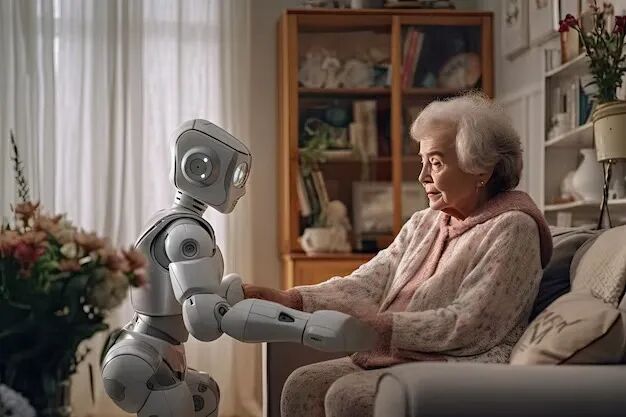
In the context of developed countries facing challenges of declining birth rates and aging populations, the development of artificial intelligence technology can, to some extent, replace human caregivers with robots, especially providing professional and effective care for elderly individuals with physical disabilities and chronic diseases. Additionally, care robots, as substitutes for caregivers, can also provide emotional comfort and psychological companionship, becoming social partners for the elderly in collaborative interactions. In recent years, the EU has accelerated the technological research and development of full-time care robots for the elderly, which can now perform the following functions: conducting simple medical care operations through wearable devices, such as measuring the temperature of the elderly; providing simple daily life services, such as delivering meals and turning appliances on and off; engaging in simple interactions and socialization with the elderly; maintaining remote contact with medical institutions and healthcare personnel; and more. Do (H. Do) and others developed a robot-integrated smart home (RiSH) for elderly assistance, which integrates multiple elderly care service functions (home service robots, home sensor networks, body sensor networks, mobile devices, cloud servers, and remote caregivers) to provide comprehensive technical support for home elderly care. Home service robots can use smart home sensor networks like their own sensors, thereby better assisting the elderly and collaborating with remote caregivers to provide daily life assistance and care guarantees for elderly individuals at home (Do, Pham & Sheng et al., 2018). Chen (M. Chen) proposed a novel robot and cloud-assisted healthcare system (ROCHAS), which includes four main components: robot-assisted health monitoring and healthcare services, wireless and wired networks, cloud-assisted healthcare systems, and healthcare service support infrastructure, aimed at providing universal healthcare services for elderly individuals who are old, lonely, and depressed (Chen, Ma & Ullah et al., 2013). Currently, care robots have occupied an important position in the research and development of elderly products and services, and their development can provide basic life assistance and psychological companionship for empty-nest elderly individuals, especially those with mental illnesses, while also alleviating the burden on caregivers. However, due to the high costs and lack of practical applications of artificial intelligence technology, its large-scale application in the elderly industry still has a long way to go.
6. Problems in Smart Elderly Care in China and Insights from Foreign Smart Elderly Care Experiences
(1) Problems in Smart Elderly Care in China
Against the backdrop of the national encouragement for smart elderly care and the development of the silver economy, smart elderly care in China has achieved initial development, forming some representative smart elderly care models, such as the “virtual nursing home” in Canglang District, Suzhou, “elderly care consultants” and “Happy No. 9” smart home elderly care services in Shanghai, the “one-click” smart home elderly care service exploration in Hangzhou, and the “020” smart elderly care new model in Xiamen. However, the development of smart elderly care in China still faces many problems and difficulties.
1. Difficulties in the Development of Smart Technology Products
First, the development of smart technology is lagging, and the technology products are singular. The development of smart elderly care technology in China is still in its early stages, with an incomplete classification system for smart elderly care products, and the developed products are relatively singular, making it difficult to meet the diverse and personalized elderly care service needs of the elderly. In contrast, European and American countries have more detailed research and development of smart technology products, such as developing smart homes and assistive technologies for elderly individuals with Alzheimer’s disease, diabetes, or disabilities. Helal (A. Helal) and others designed a behavior monitoring and health change platform for diabetic patients based on smart homes, collecting data through personal connection devices and smart home technology to help elderly patients overcome many obstacles in diabetes care (Helal, Cook & Schmalz, 2009). Alam (M. Alam) and others classified smart home services based on expected services to meet different levels of user needs for comfort, hygiene, and safety (Alam, Reaz & Ali, 2012). In contrast, the classification of smart elderly care products in China is relatively singular, lacking diversified smart elderly care products. Most enterprises can only provide simple services such as care services, emergency rescue, and online health consultations for the elderly, making it difficult to provide complex services such as health management, home elderly care, comprehensive rescue, and specific disease rehabilitation. Moreover, many products focus only on the auxiliary role of smart elderly care products in the daily lives of the elderly, such as heart rate and blood pressure measurement, safety monitoring, bathing, etc., neglecting the deeper emotional needs of the elderly. In contrast, foreign product developers consider the role of science and technology in regulating the emotions, mental health, and social support of the elderly, meeting their higher-level psychological needs.
Second, the data of smart elderly care is fragmented, and data resources are difficult to share. Although most home care apps have achieved remote monitoring and remote medical care for the elderly, and some regions in China have implemented technical applications such as electronic file backup, health management, and remote monitoring, the data collected still lacks effective integration. The information exchange between families, communities, and hospitals is difficult to achieve, and the collected data is often isolated, static, and outdated. The inability to share data in a timely manner not only leads to the loss of data analysis functions but also results in a waste of a large amount of data resources, and relevant digital products have failed to play the role of dynamic analysis for disease prevention and trend changes. Taking remote medical care as an example, Jiang Yijiao and others believe that the main problems faced by remote medical care in China are insufficient participation from both doctors and patients: on one hand, elderly patients have a limited understanding of emerging medical technologies and are not proficient in operating smart devices, leading to a “digital divide”; on the other hand, remote diagnosis and treatment projects are limited, and the service content cannot cover most medical categories (Jiang Yijiao, Wang Rui, Zhang Zhe, et al., 2023). Therefore, efforts should be made to break down the information barriers between the elderly, families, communities, and hospitals, helping the elderly overcome the “digital divide” and achieve effective sharing of data resources among different entities.
2. Incomplete Smart Elderly Care Service System
First, the role of the government in the smart elderly care service system is misaligned. The misalignment of government roles refers to the government exceeding its original functions and authority in administrative processes, taking on too many home elderly care services that should be provided by grassroots communities, social organizations, market organizations, and volunteer groups. Currently, smart elderly care in China is in its initial development stage, and the government undoubtedly plays a dominant role in top-level planning, policy guidance, resource integration, and market supervision. In November 2021, the “Opinions of the Central Committee of the Communist Party of China and the State Council on Strengthening Aging Work in the New Era” pointed out the need to “actively cultivate the silver economy”, stating that “enterprises and research institutions should increase the research and development of elderly products, support the transformation of key technological achievements in elderly products, service innovation, and actively develop smart, assistive, and rehabilitation products suitable for the elderly to meet their needs for improving quality of life”. This document reflects the government’s leading role and proposes new requirements for the positioning of enterprises and research institutions in the application of smart elderly care. Therefore, some scholars have pointed out that smart elderly care in China is a product driven by policy rather than driven by technological progress and demand (Zhang, Li & Wu, 2020).
Second, there is insufficient professional talent development. Compared to developed countries in Europe and America, the domestic smart elderly care sector is still in its early stages, lacking sufficient funding, policies, and talent. Under the existing hardware conditions of smart elderly care services, the quality of service is determined by the service personnel, and the satisfaction of the elderly with the services they receive is influenced to some extent by the quality and capabilities of the personnel. Currently, in the field of smart elderly care in China, there are issues such as insufficient matching of personnel, unclear job responsibilities, and lack of standardization in service content, leading to a lack of systematic and professional quality in the smart elderly care service system, and a shortage of professionals engaged in digital governance and services, which in turn affects service quality. Therefore, strengthening the team building of professional talent is crucial for constructing a high-quality smart elderly care service platform.
3. Issues with the Demand for Smart Elderly Care Among the Elderly
First, the passive expression of demand is a challenge. First, the vast majority of elderly individuals in China do not express their demand for smart elderly care actively, and the proportion of elderly individuals who actively voice their needs through the Internet and big data platforms is small. Zhou Jianfang and others believe that only elderly individuals with high digital literacy and self-expression willingness are likely to provide feedback and suggestions on service needs through smart elderly care service platforms (Zhou Jianfang, Xiao Yuqi, 2023), and digital literacy is influenced by the cultural level of the elderly. Second, subjective technological anxiety exacerbates the passivity of demand expression. Wang Yiyi and others found in their survey of smart elderly care needs in Zhejiang Province that the concerns of elderly individuals regarding the use of smart elderly care software mainly focus on “worrying that the use of smart software is complicated”, “safety cannot be guaranteed”, and “worrying about incurring costs” (Wang Yiyi, Li Ci, Song Jili, et al., 2023). Complicated operating processes and usage methods trigger the elderly’s fear of difficulty, leading to technological fear of this new phenomenon. Finally, from the perspective of service supply, most information platforms do not have feedback channels, and product developers cannot timely understand the elderly users’ experiences, opinions, and suggestions regarding related smart elderly care products.
Second, the elderly’s understanding of smart elderly care is low. The development of smart elderly care in China started later than in developed countries, and the social awareness of smart elderly care is poor, with elderly individuals lacking sufficient understanding of smart elderly care. Wang Yuqi and others conducted a survey in four smart health elderly care demonstration streets in Beijing and found that although many streets were selected as “smart health elderly care demonstration streets (towns)”, the actual understanding and awareness of smart elderly care among the elderly in the jurisdiction were not high. Among the 606 elderly individuals surveyed, 81.0% did not understand smart elderly care, while only 19.0% were aware of it (Wang Yuqi, Zhu Qin, Wang Hongman, 2023). At the same time, most elderly individuals in China view smart home elderly care services as a welfare product, adhering to a frugal traditional consumption concept, and do not have the habit of consuming expensive products or services. In contrast, care service providers view smart home care services as commodities, hoping to profit from providing services, which often makes smart home care services expensive, preventing economically disadvantaged elderly individuals from accessing these services, leading to certain difficulties in the popularization and promotion of smart home products, and some small and medium-sized enterprises have gone bankrupt due to low profits and inability to bear high research and development costs.
(2) Insights from Foreign Smart Elderly Care Development Models for China
Although China vigorously advocates the integration of smart elderly care and intelligent technology, due to the late start of smart elderly care development in China, there are still many limitations. To fully leverage the advantages of smart elderly care, it is necessary to comprehensively summarize the mature experience models abroad and draw on advanced management technologies from abroad. This article summarizes the research progress and development status of smart elderly care abroad, outlines the problems and difficulties faced by smart elderly care in China, and summarizes the paths and insights for further development of smart elderly care technology and service systems in China.
1. Refine the Classification of Smart Elderly Care Products to Meet the Personalized Needs of the Elderly
Compared to abroad, the classification of smart elderly care products and services in China is relatively vague, facing issues of singularity and superficiality in product functions, making it difficult to meet the actual needs of the elderly. Therefore, it is necessary to refine the development of smart elderly care products, drawing on the successful experiences of smart elderly care product classification in developed countries to meet the multi-level elderly care needs of the elderly. For example, smart elderly care services can be subdivided into aspects such as daily care, rehabilitation care, social support, cultural and recreational activities, and educational services, adhering to a user-oriented approach, respecting user experiences, and developing smart elderly care products that fit each elderly user. Market enterprises should identify their positioning, refine product and technology function development, timely obtain useful information, and occupy the market, filling the gaps in smart elderly care products in different subfields to provide high-quality smart elderly care services.
2. Build a Smart Elderly Care Service System with Multi-Party Collaborative Participation
The various parties involved in smart elderly care services should assume different responsibilities. Actively addressing population aging is a strategic, comprehensive, and systemic project that requires fully leveraging the strengths of the government, market, society, families, and the elderly to form a new situation of universal participation (Wu Yusheng, 2020). First, from the government dimension, the government is the leader of smart elderly care, playing a leading role in policy, funding, talent, management, and supervision. The government should neither neglect its duties nor take on everything. At the same time, grassroots governments should stimulate market vitality, establish incentive mechanisms, and strengthen enterprise support, such as providing tax support to relevant enterprises. Second, from the market dimension, enterprises should follow the trend of informatization, recognize the bright prospects of the smart elderly care industry, assist technology research and development teams in strengthening front-end market research, and develop smart elderly care products that meet the personalized needs of the elderly. At the same time, enterprises can undertake smart home elderly care service projects with certain government purchases of services, assuming social responsibilities to promote healthy aging. Third, from the social dimension, based on fully leveraging the central roles of the government and enterprises, social organizations, volunteers, social workers, and researchers should actively participate in the construction and operation of the smart elderly care service system, integrating resources from multiple parties, and fully utilizing the advantages of various parties to build a multi-party collaborative smart elderly care pattern. Finally, from the individual dimension, elderly individuals should actively understand the services and knowledge of smart elderly care, overcome technological fears, and enhance their digital literacy through learning, keeping pace with the trend of smart elderly care development.
3. Strengthen the Development of Professional Talent Teams to Build High-Level Smart Elderly Care Service Teams
Currently, there is a shortage of professional talent in the field of smart elderly care in China. First, universities should offer majors related to elderly care services, providing students with systematic theoretical knowledge and practical skills training, emphasizing the cultivation of interdisciplinary and cross-professional talents; at the same time, universities should keep pace with the times, offering courses related to information technology to ensure a high-quality talent supply for smart elderly care services. Second, an incentive system for smart elderly care service personnel should be established, encouraging enterprises to create effective and transparent promotion mechanisms for relevant personnel, improving the salary and welfare guarantees for smart elderly care service personnel, and enhancing their material and spiritual satisfaction. Finally, the government should continuously expand the workforce of smart elderly care service personnel, provide professional intelligent training for relevant personnel, and regularly evaluate and supervise the smart elderly care service process to improve the quality of elderly care services.
4. Broaden the Promotion Channels for Smart Elderly Care to Enhance Social Awareness of Smart Elderly Care
Currently, the government and communities are insufficiently promoting new smart elderly care, hindering the acceptance of smart elderly care products and services by the elderly: first, the digital literacy of the elderly is low, especially among rural elderly individuals who lack the ability to obtain information in a timely manner and have insufficient awareness of new smart elderly care products and services; second, insufficient promotion by the government and communities leads to distrust among the elderly towards smart home elderly care services, making them hesitant to accept new things. Therefore, it is necessary to broaden the promotion channels for smart elderly care. First, community staff should fully leverage the promotional role of the community, using broadcasts, television, posters, flyers, and bulletin boards to introduce the functions and roles of smart home elderly care services to elderly residents and their families, changing the deeply rooted concepts of elderly care among community residents; second, community staff should utilize the power of new media to promote smart elderly care services to the elderly in an easy-to-understand manner, such as through short videos on WeChat, community groups, and Douyin platforms, enhancing the awareness and acceptance of smart elderly care products among the elderly, and increasing their recognition of smart elderly care services.
Source: Journal of Smart Society Research