On September 23, the fourth Pazhou Algorithm Competition Ecological Empowerment Conference sparked a “brainstorming” session on artificial intelligence in Guangzhou Pazhou. In addition to the main venue, sub-forums on data industry, embodied intelligence, brain-machine interfaces, and more showcased a vivid picture of “AI+” empowering various industries: brain-machine interfaces precisely locating epilepsy foci, humanoid robots flexibly walking in factory workshops, and the data industry ecosystem thriving like a rainforest… At the scene, robotic dogs greeted guests, embodied intelligent robots interacted with people, and brain-machine interface devices decoded brain signals in real-time, making “thought control” no longer a science fiction. Representatives from enterprises, experts, scholars, and investors gathered to demonstrate the “last mile” of artificial intelligence technology moving from the laboratory to industrial application.
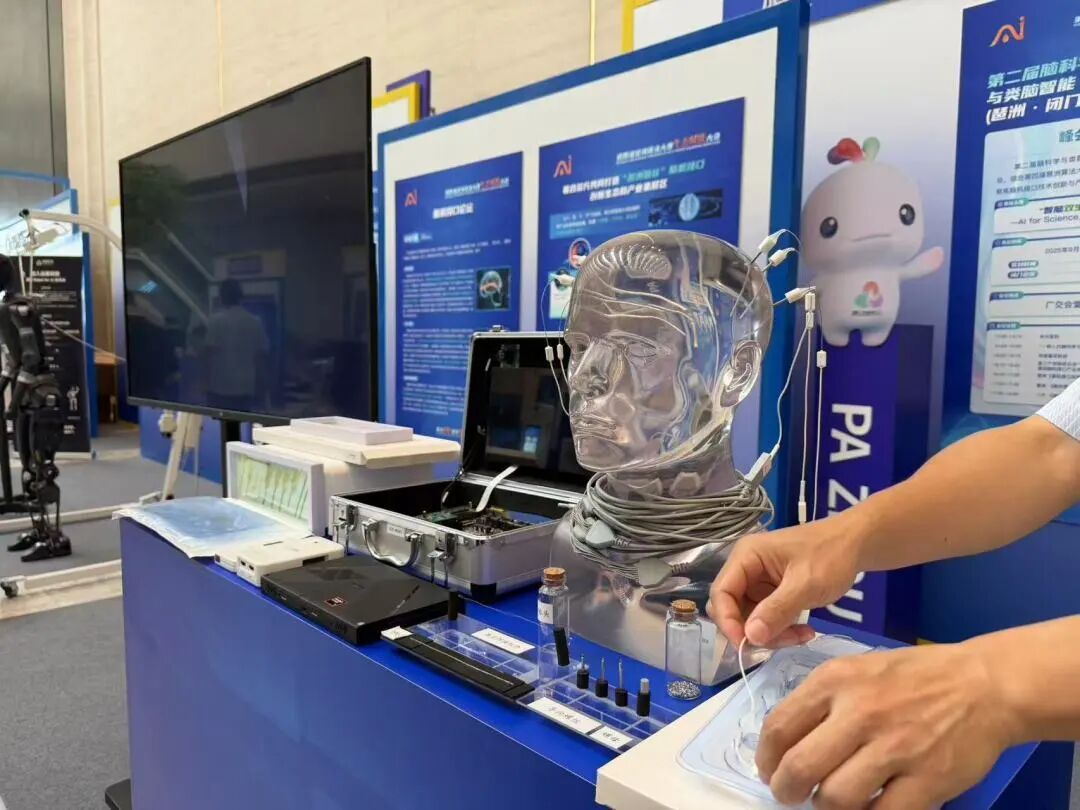
Brain-Machine Interface: Precise “Defusing” of Brain Disorders, Minimally Invasive Surgery Says Goodbye to Secondary Craniotomy
At the brain-machine interface sub-forum, Ren Hua, Marketing Director of Nuoer Medical (Shenzhen) Co., Ltd., delivered a vivid presentation on SEEG intracranial deep electrode technology. He introduced that this technology implants electrodes into the deep brain through minimally invasive methods to collect brain signals for locating epilepsy foci, replacing the traditional method that required two craniotomies.
“In the past, patients needed to first undergo craniotomy to attach scalp electrodes to locate the foci, and then undergo a second craniotomy for resection, which was highly traumatic and risky,” Ren said. “Now, with minimally invasive electrodes, a single surgery can create 150-200 signal contact points in the skull, accurately finding the area of abnormal discharge, significantly reducing patient suffering and surgical risks.” Currently, over 300 hospitals nationwide can perform such surgeries. Nuoer Medical has also developed an intelligent auxiliary diagnostic system combined with AI large models to automatically label abnormal brain signals, improving doctors’ decision-making efficiency.
The brain-machine interface industry chain layout showcased at the forum was also noteworthy: from Nuoer Medical’s clinical transformation of implanted brain-machine interfaces to Chip Motion Technology’s independent replacement of underlying chips, and the joint promotion of multimodal signal decoding frameworks by universities and enterprises—China’s brain-machine interface is moving from technological breakthroughs to industrial collaboration.
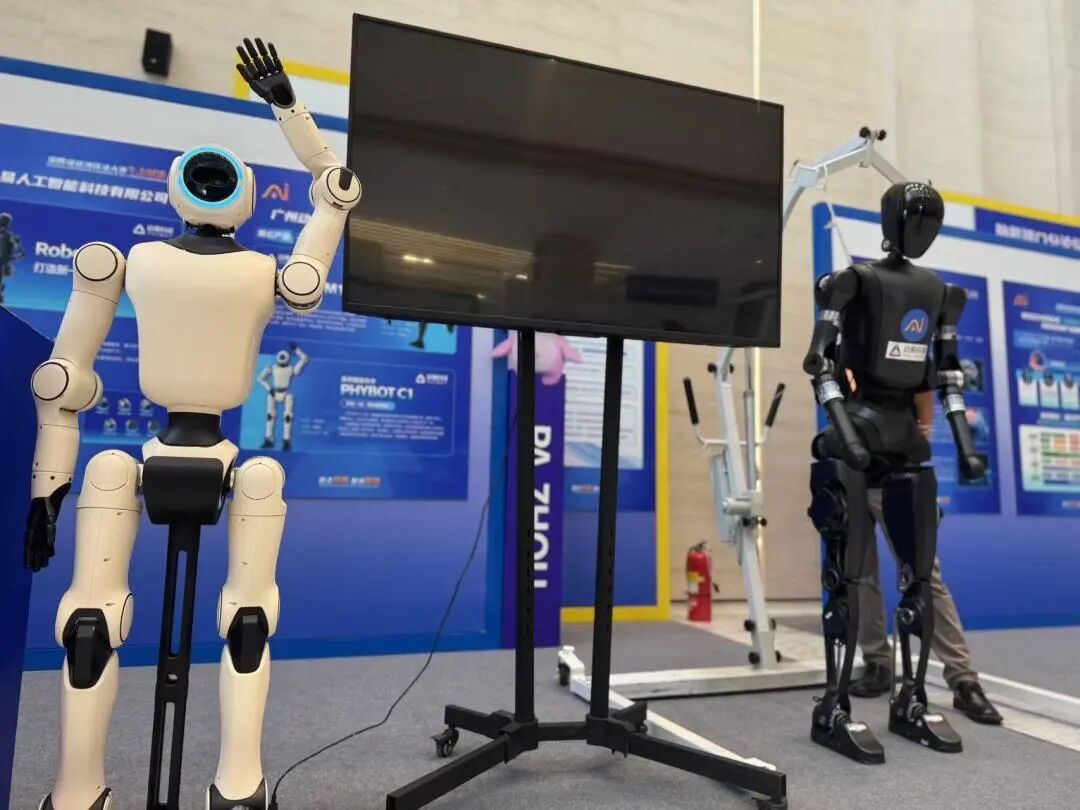
Embodied Intelligence: Humanoid Robots “Working” Countdown, General Joint Module Breaks Motion Bottleneck
“Robot for AI is not a concept; it is the next generation of productivity.” At the booth of Guangzhou Dongyi Artificial Intelligence Technology Co., Ltd., the 172 cm tall humanoid robot PHYBOT M1 walked steadily, with arms capable of carrying 10-20 kg, featuring quick response and high load-bearing characteristics. Dongyi Technology was established only a year ago but has formed a connection with Haizhu through the Pazhou Algorithm Competition, establishing a wholly-owned subsidiary here in May.
Dongyi Technology’s core products include the PhyArc series integrated joint modules and two humanoid robots. PHYBOT M1 is suitable for complex scenarios such as factories and logistics, while the smaller PHYBOT C1 is positioned as a companion and commercial service robot. The company representative stated: “The Pazhou Algorithm Competition is an authoritative window in the field of algorithms, and we hope to showcase China’s strength in humanoid robot hardware and algorithms here.”
At the scene, multiple robots demonstrated tasks such as transportation and interaction, with robotic dogs weaving among the audience, attracting many to take photos. Embodied intelligence is moving from being a “showpiece” to a “tool”, with the combination of algorithms and hardware becoming the key to breakthroughs.
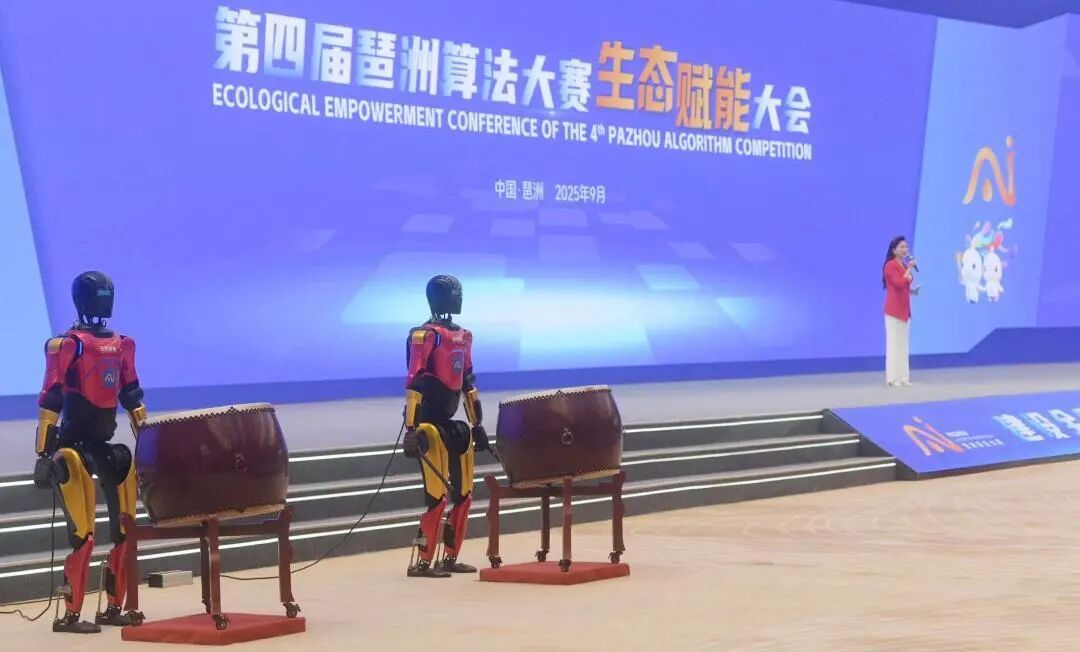
Data Industry: Hundreds of Billions Cluster “Rainforest” Growth, Haizhu Builds Digital China “Regional Sample”
“Creating nearly 10% of the total economic output with only 1.2% of the land in Guangzhou”—at the data industry sub-forum, Haizhu District presented impressive figures: by 2024, the revenue of the new generation information technology service industry in Haizhu District will exceed 100 billion yuan, with the added value of core digital economy industries accounting for 24.1% of the district’s GDP, achieving double-digit growth for ten consecutive years.
Currently, Haizhu has gathered 331 “four above” data enterprises, forming an ecological chain dominated by data application enterprises (52%) and data technology enterprises (35%). Yao Xiang, Deputy Director of the Pazhou Management Committee, revealed in an interview: “Since the Pazhou Algorithm Competition began, over 100 enterprises have directly landed, gathering more than 7,000 artificial intelligence companies and nurturing 27 registered large models.”
Yao further pointed out that this year’s competition explored market-oriented operations, with 13 leading AI companies proposing questions based on real scenarios in transportation, health, finance, etc., with 13 cup competition questions, “opening real data to solve industry pain points.” He mentioned a scene where a participating team stayed up until dawn to solve a problem, moving the judges to tears: “Chinese AI teams need time, but they will definitely make good use of these technologies, allowing innovation to truly empower industries and benefit the public.”
Written by/Guangzhou Daily New Flower City Reporter: Chen JunshengPhotos by/Guangzhou Daily New Flower City Reporter: Qiu Weirong, Chen JunshengEdited by/Guangzhou Daily New Flower City: Shi Xiufu