While the world was focused on Apple’s launch event early yesterday morning, ARM quietly introduced its next-generation C1 and G1 architectures. These two architectures are based on the Armv9.3 design and are ARM’s offerings for the next generation of mobile devices, featuring a CPU and GPU.
Speaking of which… MediaTek’s new Dimensity flagship is about to be released, right?
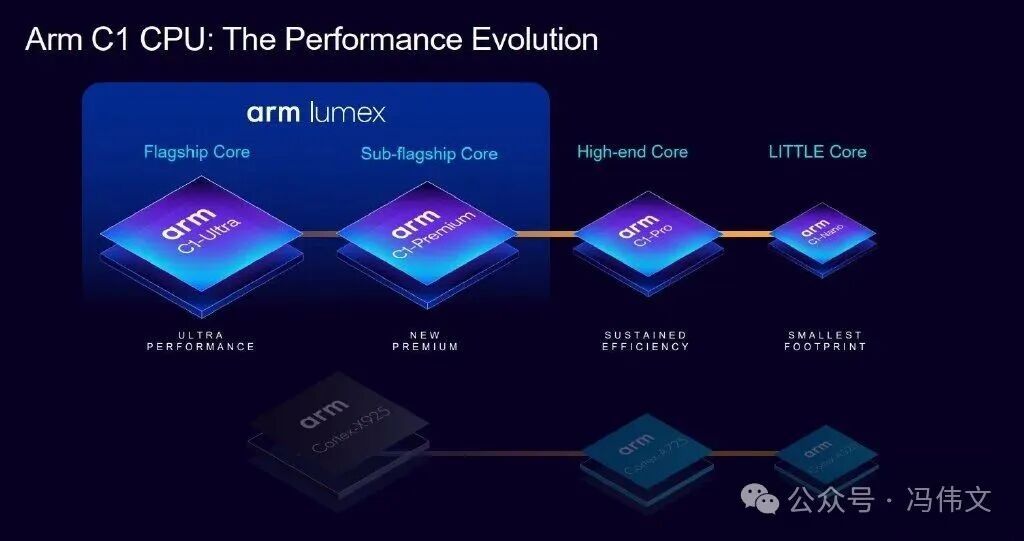
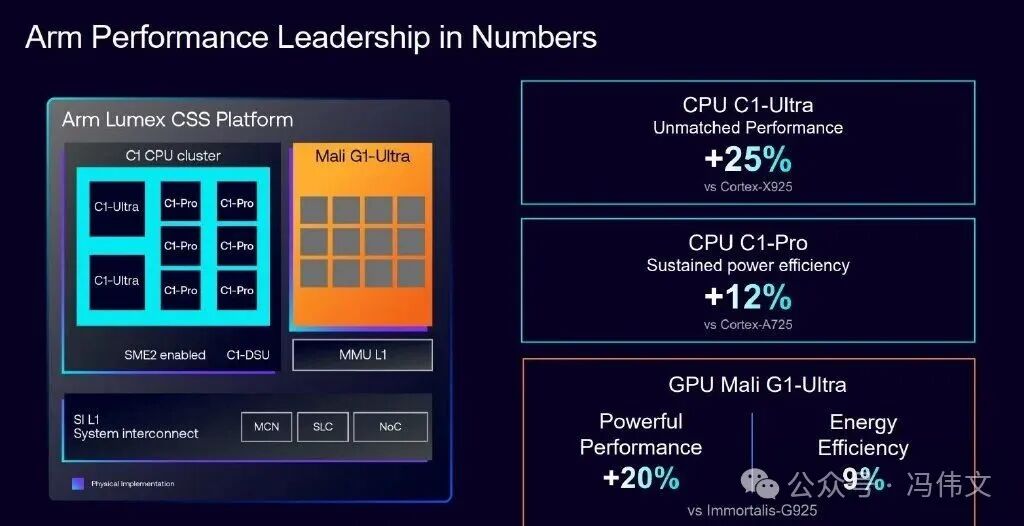
ARM’s new CPU core is no longer called Cortex; the C1 core serves as the CPU, while the G1 core is the GPU. The C1 core is divided into four different levels: C1-Ultra, C1-Premium, C1-Pro, and C1-Nano. These CPU cores are specifically designed for edge AI computing, with AI performance improvements of up to 5 times under the same conditions.
However, let’s be honest… no one really enjoys hearing manufacturers boast about AI, right? What we care about more is the actual performance improvements in daily use.
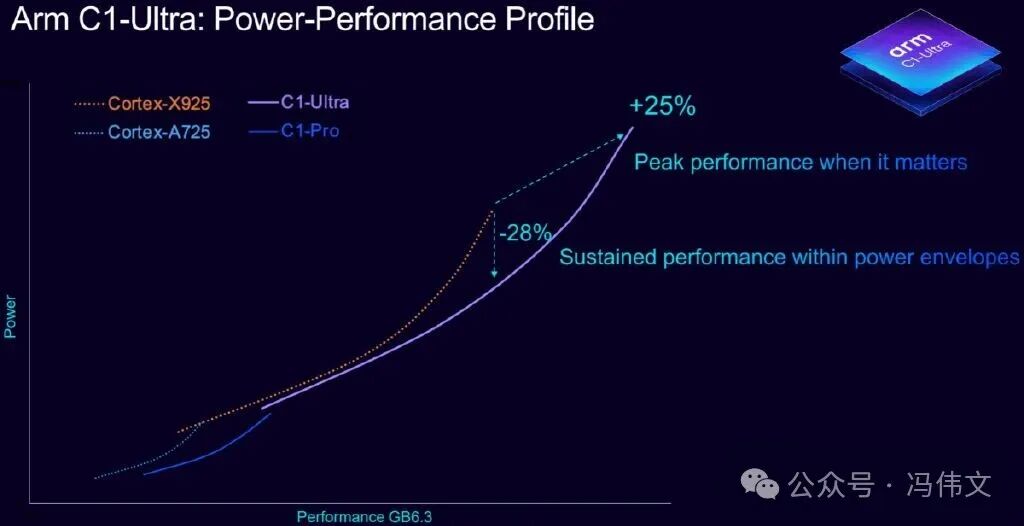
According to data provided by ARM, the new C1-Ultra processor core boasts a peak performance increase of up to 25% in single-threaded performance compared to the previous generation Cortex-A925, with an IPC improvement in the double-digit percentage range. When achieving the same peak performance as the X925, the C1-Ultra’s power consumption can be reduced by up to 28%.
In addition to the C1-Ultra, ARM has also introduced the C1-Premium, a mid-tier CPU core. This core is 35% smaller than the C1-Ultra but still includes exclusive L2 cache. This CPU core offers the best area efficiency in its class, providing the same performance while occupying significantly less area.
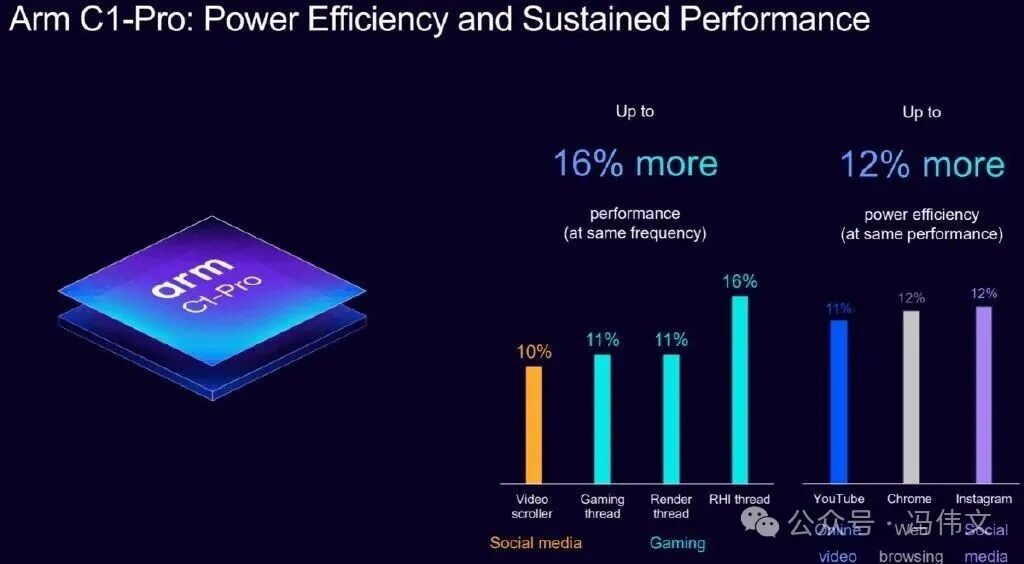
The C1-Pro is our traditional “big core”. Compared to the A725, the C1-Pro has higher performance per unit power consumption. Under sustained loads, the C1-Pro’s performance has improved by 16%. In everyday applications, such as web browsing and social media, the C1-Pro’s energy efficiency is 12% higher than that of the A725.
At the microarchitecture level, the C1-Pro introduces enhanced branch prediction and memory system upgrades, making it more suitable for multitasking in real-world applications. This CPU also adopts a high area efficiency design, allowing partners to achieve SME2 performance gains in a smaller area.
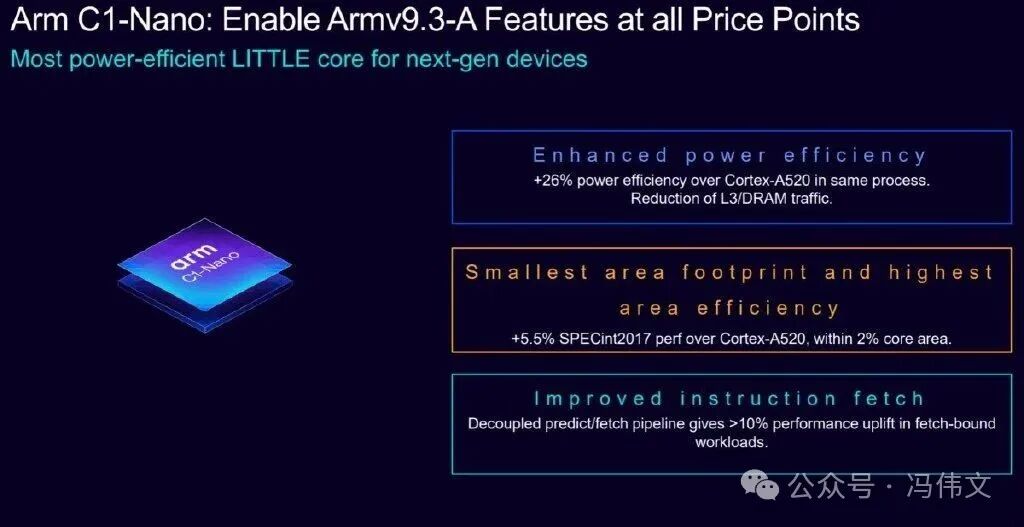
Finally, the C1-Nano is the successor to the A520, featuring a new ARM DynamIQ shared unit, with energy efficiency improved by 26% compared to the A520. The core area is also reduced by 2% compared to the A520, making it ideal for wearable and compact devices.
ARM’s new DynamIQ shared unit also has its own story, with the entire C1 core system built around the C1-DSU. Compared to the previous generation DSU-120, the C1-DSU can save up to 26% in power consumption while enhancing bandwidth allocation capabilities to better adapt to AI applications.
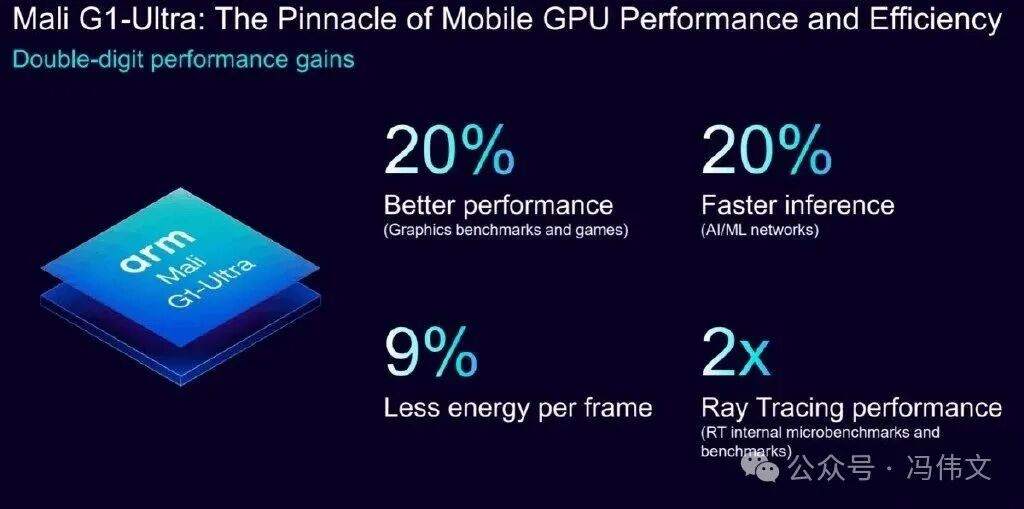
In terms of GPU, ARM’s new Mali G1 GPU currently has only one derivative, the G1-Ultra. In terms of naming, ARM has not discarded the Mali name and has not indicated whether it will release a multitude of derivatives like the C1 CPU in the future.
The G1-Ultra is aimed at the next generation of mobile devices, featuring a new generation of ARM ray tracing units and a restructured graphics pipeline. Compared to the G925, the G1-Ultra’s ray tracing performance has doubled, with a 20% performance increase in mainstream graphics tests and a 9% reduction in power consumption per frame of graphics. The speed of running AI and machine learning tasks has increased by 20%, along with improvements in memory, scheduling, and development tools.
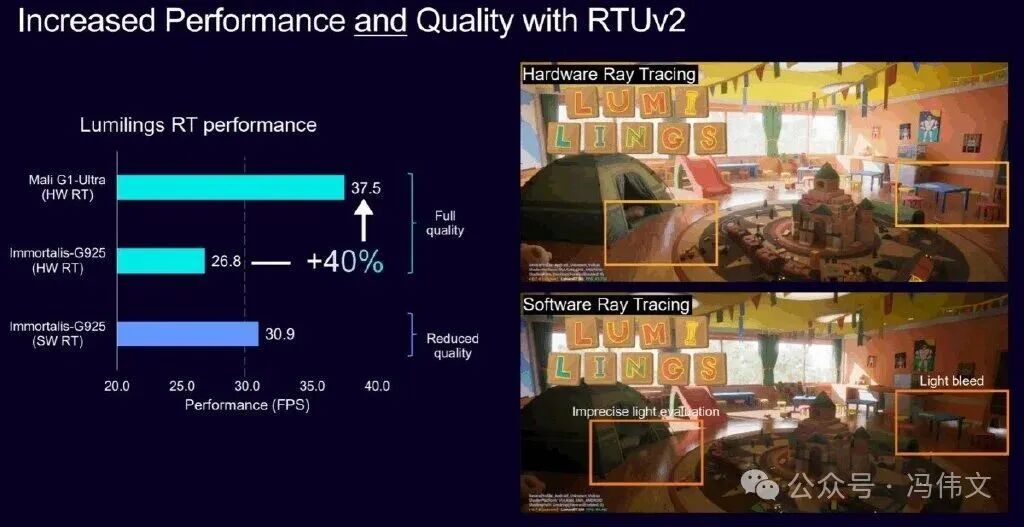
ARM claims that the second-generation ray tracing unit in the G1-Ultra is smarter, focusing on a single ray tracing model, enhancing support for non-logical lighting, and becoming an independent hardware unit within the GPU. These design changes bring gains in energy efficiency and performance, with an overall modular design and independent power domains allowing it to shut down during device standby, reducing chip power consumption when processing other applications.
The Mali G1-Ultra introduces multiple core-level optimizations specifically designed to handle increasingly complex graphics computing tasks without exceeding preset power consumption. Its dual-stack shading core design can double internal bandwidth and reduce congestion. Additionally, the increased number of quickly accessible unified registers minimizes memory access during shader operations.
These optimizations directly improve the overall responsiveness of the GPU. Furthermore, the G1-Ultra introduces ARM’s image area association, a smarter scheduler that allows the GPU to handle rendering tasks for different parts of the screen simultaneously. This can enhance performance and reduce idle time for the GPU in complex scenes.
According to data provided by ARM, the G1-Ultra GPU shows a 19% performance increase in “Honkai: Star Rail”, a 17% increase in “Genshin Impact”, an 11% increase in the mobile version of “Fortnite”, and a 26% performance increase in its own Mori Demo.
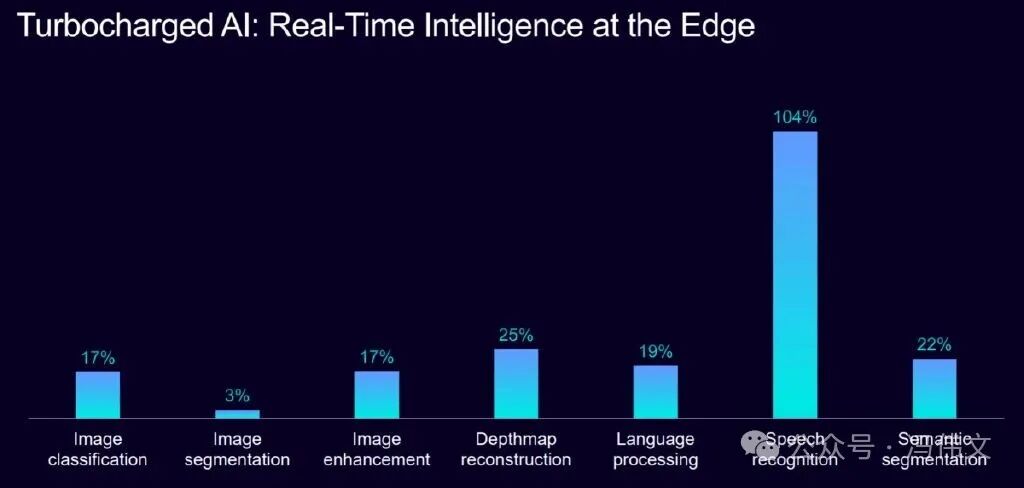
When running AI tasks, the Mali G1-Ultra introduces a new MMUL FP16 instruction set that can accelerate critical edge AI workloads, such as scene differentiation, noise reduction, depth prediction, object recognition, speech recognition, and image enhancement. Compared to the previous generation G925, performance in some scenarios has increased by up to 104%. After expanding the L2 cache and optimizing interconnects, the Mali G1-Ultra can run AI and graphics processing simultaneously, minimizing memory bottlenecks and keeping devices responsive and smooth.
If all goes well, the upcoming new generation of MediaTek’s Dimensity flagship chip will adopt ARM’s new architecture. The specific performance improvements will be confirmed when the Dimensity new products are unveiled.