Introduction
In the era of the digital economy, computing power determines the efficiency and effectiveness of transforming data factors into economic and social value, gradually becoming a core productivity that matches data factors; the network, as the artery connecting users, data, and computing power, is increasingly integrated and coexisting with computing power. As a key infrastructure that effectively carries and fully stimulates the new momentum of computing power, the computing power network has emerged, which is not only a strategic requirement for national, social, and industrial development but also an important opportunity for operators’ transformation and development.
While the industry has sufficiently elaborated on the definition and technical points of computing power networks, research on the current state of the industry is relatively weak. Therefore, this article will take the industry chain as a starting point to outline the computing power network industry chain map, analyze the development of key links, and provide references for operators’ computing power network development.
Authors: Yuan Ping, Zhang Jiheng, Li Xinyang, Huang Shi, Tian Yu; Xu Liang
Affiliation:China Mobile Research Institute; China Mobile Network Division
Source: Mobile Labs, Communication World
1
Computing Power Network Industry Chain Map
As an original concept proposed after years of accumulation in China’s information and communication field, the computing power network can be defined as a new type of information infrastructure that integrates computing power and network resources. The computing power industry is derived from the integration of the computing power industry and the communication industry. Currently, the computing power industry mainly includes sub-industries such as cloud computing, IDC, and artificial intelligence; the communication industry mainly includes sub-industries such as base stations, access networks, and core networks.
With the advancement of information and communication technology from cloud-network integration to computing-network integration, the boundaries between the computing power and network industries are becoming increasingly blurred, forming a computing power network industry pattern centered on “computing + network + collaboration”. The upstream consists of underlying hardware infrastructure, the midstream consists of computing power network-related platforms, services, and key technologies, and the downstream consists of empowered application scenarios and end users. The key links of the industry chain are illustrated in Figure 1.
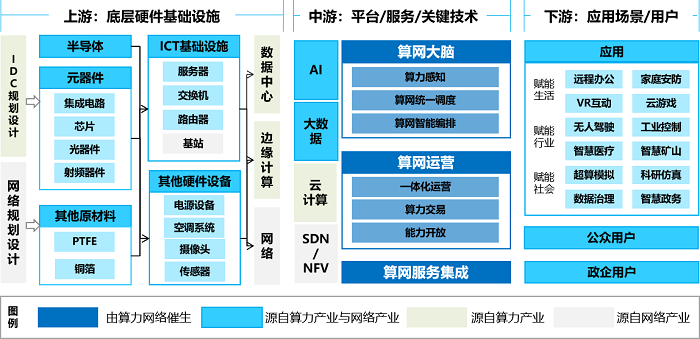
Figure 1 Key Links of the Computing Power Network Industry Chain
Operators are involved in multiple links of the computing power network industry chain, both upstream, midstream, and downstream, and have an irreplaceable business advantage in the network field. Therefore, from the operator’s perspective, the core of computing power network construction lies in “ubiquitous high-quality computing power” and “flexible and highly collaborative scheduling.” The explosive growth of centralized processing and distributed computing demands massive data, with the data center and edge computing industries being key to achieving ubiquitous high-quality computing power; the implementation of computing-network services requires computing power and network to provide services in an integrated form, and the computing-network brain with intelligent orchestration and management capabilities is the core supporting flexible and highly collaborative scheduling. Therefore, the following sections will focus on analyzing three key links in the industry chain: data centers, edge computing, and the computing-network brain.
2
Analysis of Key Industry Links
2.1 Current Development Status of the Data Center Industry
The data center industry has high barriers to entry due to factors such as operational qualifications, network deployment, and resources. Currently, China’s data center market has formed a diversified pattern dominated by telecom operators, with third-party IDC vendors accelerating their development and cloud service providers entering strongly, as shown in Figure 2.
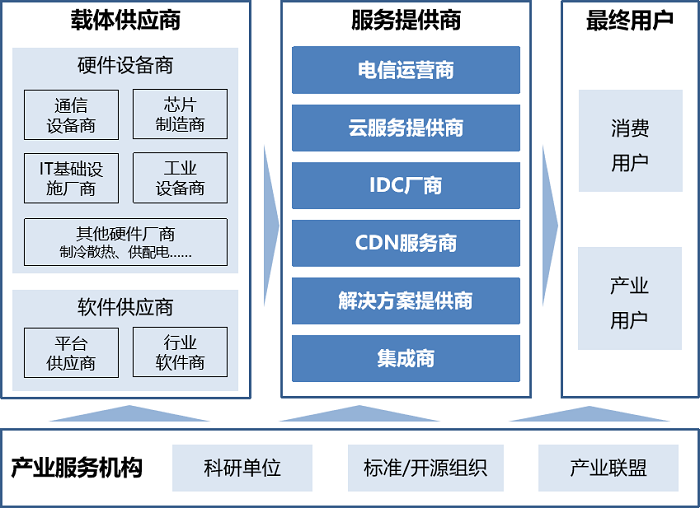
Figure 2 Roles in the Data Center and Edge Computing Industry
Telecom operators, relying on advantages such as network bandwidth, data center resources, and capital, entered the market early, capturing over 60% market share. Operators mainly provide “network access + IDC” services to their own government and enterprise customers, gradually adding IDC value-added services such as security and industry cloud, seeking a differentiated development path. However, due to the slow progress in deeply engaging with user scenarios, there is still a risk of being “pipelined.” The data center is the foundation for carrying computing power, and as the three major operators fully engage in the computing power network, they are expected to revitalize IDC business by providing integrated computing-network services.
Third-party IDC vendors, relying on their layout of IDC resources in core cities, follow closely behind operators and rank as the second tier in the data center industry. Third-party IDC vendors have strong operational capabilities, quick response times, and diverse service methods, providing customized solutions that combine IDC basic services with intelligent DNS, intelligent disaster recovery, CDN, and other value-added services on demand. Driven by the “new infrastructure” policy, third-party IDC vendors can accelerate their development through more flexible deployment methods such as mergers and acquisitions and cooperative construction.
Cloud service providers actively build cloud infrastructure based on their business needs, renting and integrating operator bandwidth resources to establish data center networks (DCI) to provide users with “one-point access, all-network services” for cloud businesses. In recent years, cloud service providers such as Alibaba Cloud, Tencent Cloud, and Baidu Cloud have made significant investments in cloud infrastructure, continuously expanding their investments in the data center field, which has had a significant impact on the traditional data center market. Therefore, the data center industry may present the following three major trends.
-
The demand for intelligent computing will accelerate the development of intelligent computing data centers. As the scale of data explodes and the complexity of algorithm models deepens, intelligent computing data centers featuring AI chip-level servers, high-speed interconnects, deep learning, and superior resource scheduling will achieve scale implementation, with an expected 70% share of intelligent computing by 2023.
-
In the context of carbon neutrality, green energy efficiency becomes a key direction for data center transformation. To further save energy and reduce consumption, future IDC data centers will fully utilize renewable green energy such as photovoltaics, wind power, and hydropower, and will also accelerate the innovation of new energy-saving technologies such as cooling energy efficiency and variable frequency, as well as the application of intelligent operation and maintenance methods in data centers.
-
REITs will become a new operating model actively explored by various parties. In 2020, the country issued pilot policies for REITs in the infrastructure sector, including data centers and other new infrastructure in the “pilot encouragement” category. The REITs model can help service providers achieve equity financing based on IDC assets, fully activate IDC assets, and reduce investment pressure. With the pilot work underway and supporting systems in place, IDC service providers may fully utilize the REITs model for rapid expansion, forming more super-large-scale data centers nationwide.
At the same time, achieving high-quality development in data centers still faces certain challenges.On the one hand, the iterative development of upper-layer applications and the “dual carbon” goals require data centers to provide lossless and efficient network architectures and high-quality energy-efficient infrastructures. However, current industry chain collaboration is insufficient, and the landing of new technologies is limited, leaving significant room for improvement in data center operational efficiency;on the other hand, the data center network still faces certain end-to-end delays in transmission, and the existing network performance cannot support the surging demand for computing power.
2.2 Current Development Status of the Edge Computing Industry
The Internet of Everything accelerates the peak of centralized computing service capabilities, drives the descent of computing nodes through intelligent ubiquity, and the continuous rapid growth of data traffic drives edge computing to become one of the important computing paradigms today. Industry participants overlap significantly with the data center industry, but the competitive landscape is somewhat different, with fierce competition among telecom operators, equipment suppliers, cloud service providers, and solution providers, and no leading tier has yet formed.
Telecom operators enter the market through the DC transformation of edge room and MEC deployment, gradually building end-to-end capabilities in edge computing. Telecom operators generally start from the transformation of local rooms, relying on their rich network pipelines, municipal-level data center resources, localized operational capabilities, and unique advantages of deeply integrating edge technology with 5G performance. By continuously strengthening independent research and development and creating segmented industry solutions, they gradually form integrated capabilities from cloud to edge and expand related value-added services to obtain better investment and construction benefits.
Equipment suppliers build a “moat” for edge computing solutions and services based on hardware advantages. Companies such as Huawei and Cisco, riding the rapid development of IoT, have evolved from smart-enabled devices to integrated edge devices and are now moving towards building edge systems and platforms. In collaboration with cloud services, equipment vendors, except for Huawei, generally choose to interconnect with leading companies’ cloud platforms to ensure they provide users with overall services from edge to cloud.
Cloud computing service providers actively deploy edge computing to achieve a win-win situation with their own cloud computing products. Amazon AWS was the first to release the edge computing framework Greengrass, followed by Microsoft Azure, Alibaba Cloud, Baidu Cloud, and others launching their respective edge computing frameworks, empowering AI and data processing capabilities at the edge, fully leveraging the ultra-large storage and strong analytical capabilities of cloud computing, as well as the low latency and security characteristics of edge computing, and actively promoting cloud-edge collaboration.
Solution providers are driven by business demands to create an integrated service experience for vertical industries. CDN companies quickly build advantages in edge computing operations and system integration based on their dispersed node resources and technical reserves; application developers generally choose to collaborate with cloud computing service providers and operators to co-build edge computing platforms and applications.
The future development of the edge computing industry may focus on three major capabilities.First is end-to-end capability. The collaborative development of “network (5G) – cloud – edge” has become a consensus in the edge computing industry, and the market will form a pattern of cross-competition and symbiotic integration. Coordinating technical resources and streamlining end-to-end capabilities will become a core advantage.Second is personalized service capability. Unlike cloud computing technology-driven, edge computing is user-demand driven, and there are significant differences in users’ task types, computing volume, and storage volume. Suppliers need to meet users’ customized and flexible demands based on differentiated node resource situations at any time.Third is solution service capability. Although there is currently no mature business model, it can be preliminarily inferred from cloud computing experience that edge computing will form four business models: selling connectivity, selling resources, selling capabilities, and selling solutions. Among these four models, there is a significant gap between investment and returns; the model that provides integrated solutions combining “cloud-edge-network” can obtain greater value in the edge computing industry.
The edge computing industry still faces two major challenges: technical and governance challenges. Technical challenges include security risks due to weak defense mechanisms of edge devices, heterogeneity of operating systems and protocols of edge devices, and poor programmability. Governance challenges include the profit model still being explored, standards not being mature, relevant laws and regulations still being imperfect, and unclear industrial collaboration methods.
2.3 Current Development Status of the Computing-Network Brain Industry
The computing-network brain, as the core system of the computing power network, plays a central role in the overall orchestration of computing networks and flexible scheduling of resources, undertaking diversified business logic upwards and connecting to the enabling layer of the computing network and various resource control systems downwards. It serves as the hub in the overall computing network, and is key to realizing “intelligent orchestration” and “integrated services.” The distribution of roles in the computing-network brain industry is shown in Figure 3.
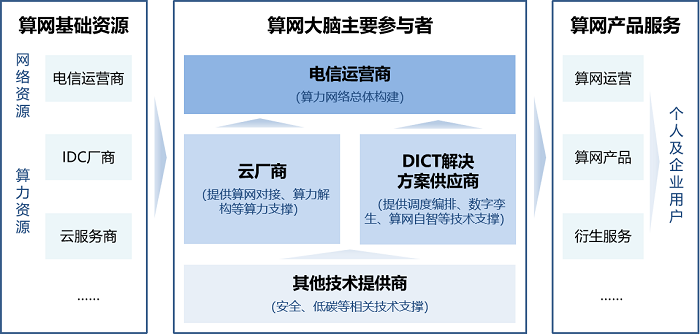
Figure 3 Roles in the Computing-Network Brain Industry
Currently, the construction of the computing-network brain is still in its infancy, with multiple parties exploring collaboratively, and a unified solution has yet to be formed. However, from the industrial pattern perspective, the construction of the domestic computing-network brain will be led by operators, with computing power suppliers and DICT solution providers working together to promote it. This pattern is determined by the computing-network brain’s global perception and scheduling capabilities for computing, communication networks, and the integration of diverse technologies.On the one hand, looking at the industry development status, compared to international operators and other domestic participants, domestic operators uniquely possess the overall infrastructure of “network and computing,” having both the subjective motivation and foundational capabilities to achieve the optimal solution for combining computing power and network performance, making them the best choice for constructing the computing-network brain.On the other hand, from a technical support perspective, the computing-network brain requires not only the strong capabilities of operators in integrated orchestration and ubiquitous scheduling but also the introduction of diversified emerging technologies such as computing power deconstruction, digital twins, and intent networks. Therefore, computing power suppliers and DICT solution providers with flexible innovation advantages will become the technical resource suppliers, jointly assisting in the realization of the computing-network brain’s functions.
All three major domestic operators have begun to build the computing-network brain system, but their construction methods vary. China Mobile has elevated the computing power network to a very high strategic level, with both network lines and cloud energy lines working in sync, continuously promoting the construction of the computing-network brain in stages. In the preliminary plan, it will establish four major capabilities: computing-network perception, intelligent management, collaborative orchestration, and capability opening, helping achieve differentiated computing-network capability supply of “computing follows business selection, network follows computing movement.”
The computing-network brain is the key to realizing the collaborative functions of the computing network, and will become a battleground for the three major operators. In addition to further strengthening important functional constructions such as perception, orchestration, scheduling, and optimization, continuing to move towards integration, automation, and intelligence, the development of the computing-network brain at the industrial level may present two major trends.One is, vertically, aligning with business scenarios. The essence of the computing-network brain is a replicable and sustainably iterative capability that needs specific business forms to carry it. Its development trajectory will gradually approach actual demand from theoretical design. In addition to the overall functions that are “large and complete,” the “small and beautiful” computing-network brain capabilities driven by specific business scenario demands are also expected to become a focus of effort.Two is, horizontally, integrating the strength of the entire chain. Operators, to gain greater dominance in the computing-network ecosystem, need to achieve breakthroughs in platformization, transforming the computing-network brain from value creation to value co-creation, leveraging their advantages to open cooperation, enabling partners, and co-prospering the ecosystem.
The construction of the computing-network brain is still in its early stages, and future development may face two major challenges: the lack of unified standards and the difficulty of integrating heterogeneous resources from multiple parties. On the one hand, the interconnection of computing networks relies on the unification of computing power, networks, and data in terms of identification, measurement, invocation, and transaction dimensions. However, current participating vendors act independently, and there is still a distance to forming a systematic consensus. On the other hand, the decentralized distribution of data and computing power requires multi-party interaction and collaborative resource aggregation, but the cooperation relationships in the computing power market have not yet been effectively established.
3
Four Development Suggestions
Summarizing the development status of the three representative key industry links, the computing power network industry chain currently presents four major characteristics.
First, the computing power network is still at the initial stage of establishing the industry pattern, with relatively mature business accumulation only in the infrastructure sector, while other industry links still have significant competition space and cooperation opportunities.Second, computing power and computing-network services have not yet formed market consensus, and products that meet personalized and diversified needs may be the key to user-side development.Third, core technology research and unified standard formulation urgently need to be accelerated.Fourth, the green and efficient operational model of the computing-network industry still needs to be explored and established.
Based on the above industry analysis, it is recommended that operators strengthen the construction of the computing power network from the following four aspects.
➣ First, in terms of industry, take on the role of “chain leader” in the computing power network industry chain and promote coordinated industrial development. As the main force in national information and communication construction, operators should actively play a leading role in the computing power network industry chain, positioned at the key connection point coordinating upstream and downstream. On one hand, they should continuously strengthen the integration and innovation of information technology and system innovation, becoming leaders in the fields of 5G, computing power networks, and other “new infrastructure,” continuously enhancing the construction of the computing power system, improving the top-level design of the computing-network brain, and exploring forward-looking issues such as computing-network business models and security operation and maintenance models, optimizing the integrated strategy concept of computing networks. On the other hand, they should accelerate the integration of multi-source heterogeneous resources, forming a unified resource and capability view of data, computing power, and networks, continuously promoting resource sharing, complementary advantages, and win-win cooperation along the industry chain, driving the overall maturity of information technology and the industry chain, and promoting the deep integration of information technology with economic and social livelihood.
➣ Second, in terms of market, be user-demand driven and build a computing power network product system. First, adhere to market-driven principles, focus on key and hot business scenarios, explore product, service, and business model innovations in the supply of “cloud-edge-end” computing resources and integrated computing-network services, and create a dual-pronged standardized and customized computing power network product system. Second, take the lead and test in vertical industries such as intelligent manufacturing, smart transportation, and AR/VR, forming practical cases first, breaking through application scenario bottlenecks, creating typical application demonstration projects, and gradually achieving replication and promotion across all business fields.
➣ Third, in terms of technology, drive standard formulation and technology research and development simultaneously to form core advantages in computing-network technology. First, in computing-network construction, standards should take precedence. Strengthen standard leadership, actively promote the formulation of relevant standards for computing networks, achieve consensus in domestic and international standard organizations as soon as possible, and orderly advance the commercialization process after standardization, continuously enhancing China’s international influence and voice in the field of information and communication. Second, continuously increase R&D investment to improve the ability to independently control core technologies of computing networks. Collaborate with “industry-university-research” units to break through core technologies such as AI chips, edge computing architecture, intelligent computing center platform software, and model algorithms, concentrating superior forces to fill in weak links in the cloud computing field, leveraging the “long board effect” in the fields of 5G and artificial intelligence, and building a leading advantage in computing-network technology.
➣ Finally, in terms of operations, build a refined operation model to create a green and efficient computing power network. First, strengthen the refined operation of computing-network businesses, aligning with the market’s general demand for strong security, strong interconnection, and high computing power, as well as the differentiated needs of various industries, providing high-value customized solutions with “IDC + computing-network + industry solutions,” enriching the value-added service system; at the same time, optimize the operation and maintenance capabilities of network and computing resources and service response efficiency, comprehensively enhancing user service perception. Second, increase efforts to upgrade data centers for green energy efficiency, embedding clean energy and cooling energy-saving technology ecosystems in newly added data centers in advance, and fully introducing intelligent operation and maintenance methods in existing data centers to optimize energy consumption levels at all stages. Third, actively explore the REITs operation model for data centers, collaborating with asset management companies to design REITs products that align with their development models and risk control, introducing social capital to alleviate financial pressures caused by high asset investment and enhance data center operational efficiency.
Extra, welcome to attend the Global Edge Computing Conference on August 6 in Shenzhen. Here, you can see the best edge computing software and hardware solutions in the country, and we have invited leading players in domestic edge computing such as Volcano Engine, Lenovo Group, Wangsu Technology, EMQ, and Wangxin Technology to share their insights.