In today’s article, we will discuss computing power.Over the past two years, computing power has become a hot topic in the ICT industry. It frequently appears in news reports and speeches by industry leaders.So, what exactly is computing power? What categories does it include, and what are their uses? What is the current state of computing power development globally?Next, I will provide a detailed explanation.
█ What Is Computing Power
The literal meaning of computing power is well understood, which is computing ability(Computing Power).More specifically, computing power is the ability to process information data to achieve desired output results. Humans actually possess such abilities. Throughout our lives, we are constantly performing calculations. Our brains are powerful computing engines.Most of the time, we perform calculations using mental arithmetic or mental calculations without tools. However, this type of computing power is somewhat limited. Therefore, when faced with complex situations, we utilize computing tools for in-depth calculations.In ancient times, our primitive tools were made of grass ropes and stones. Later, with the advancement of civilization, we developed more practical computing tools such as counting rods and abacuses, continuously improving our computing power.By the 1940s, we welcomed the computing revolution.In February 1946, the world’s first digital electronic computer, ENIAC, was born, marking the official entry of human computing power into the digital electronic age.
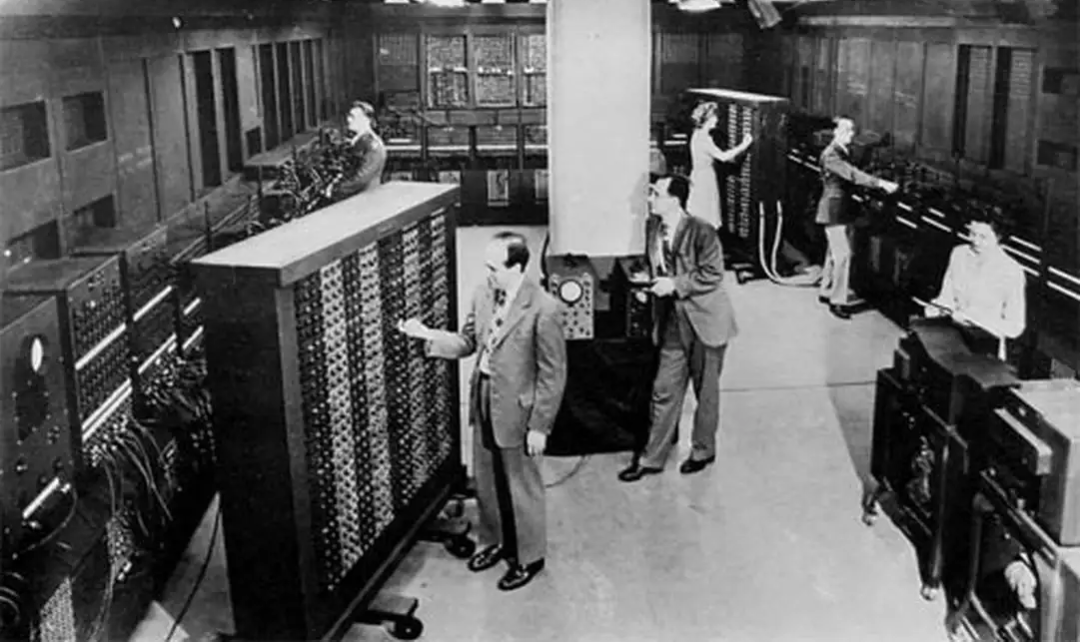 ENIAC, 1946Later, with the emergence and development of semiconductor technology, we entered the chip era. Chips became the main carriers of computing power.
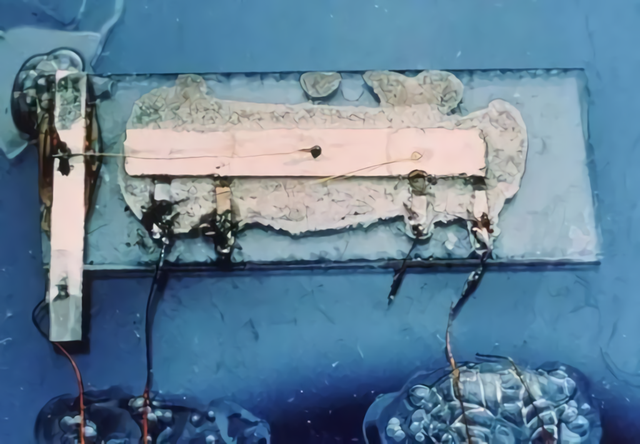
The world’s first integrated circuit (chip), 1958
As time went on, by the 1970s and 1980s, chip technology had made significant progress under Moore’s Law. The performance of chips continued to improve, and their size kept shrinking. Finally, computers became smaller in size, and the PC (personal computer) was born.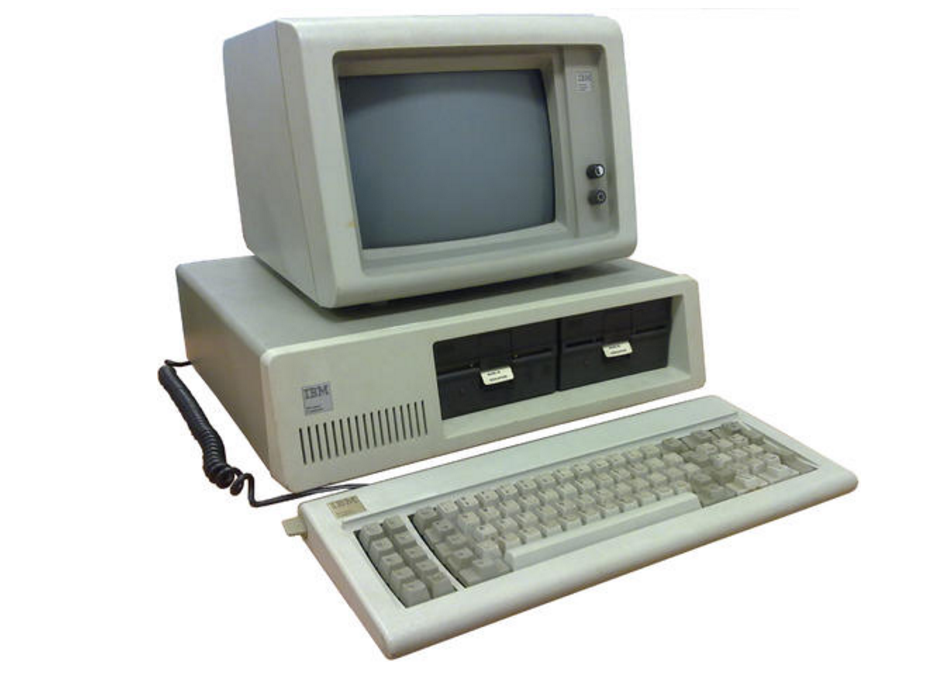 The world’s first PC (IBM5150), 1981The birth of the PC was of great significance. It marked the transition of IT computing power from serving only a few large enterprises (mainframes) to entering ordinary households and small and medium-sized enterprises.It successfully opened the door to the information age for all, promoting the widespread informatization of society.With the help of PCs, people fully experience the improvement in quality of life and productivity brought by IT computing power. The emergence of PCs, also laid the foundation for the subsequent rapid development of the Internet.Entering the 21st century, computing power once again underwent tremendous changes.The hallmark of this transformation is the emergence of cloud computing technology.
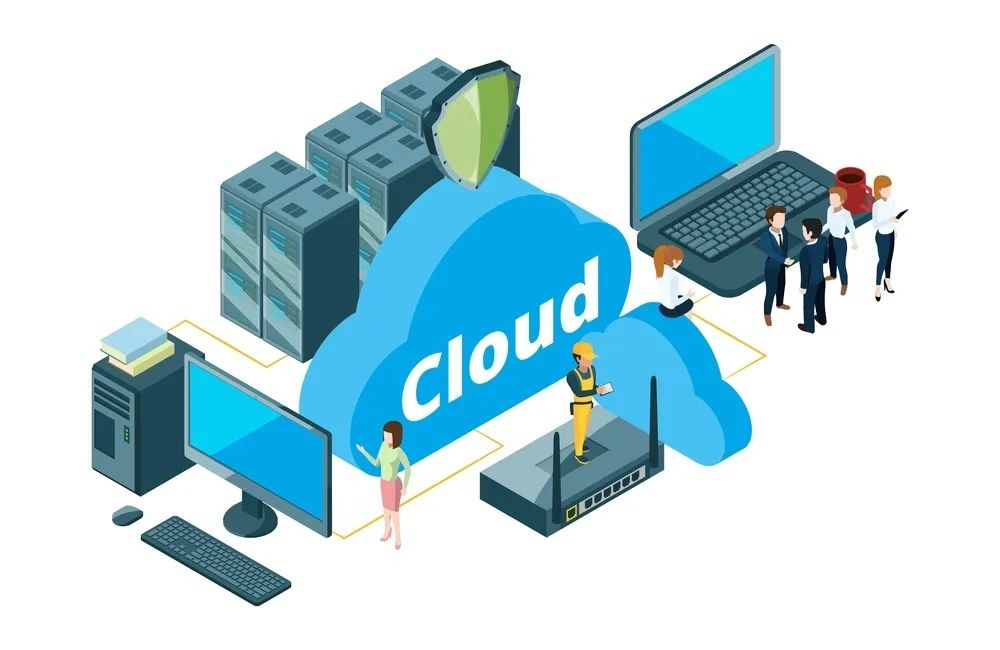 Cloud computing, Cloud ComputingBefore cloud computing, humans struggled with insufficient computing power due to single-point computing (a mainframe or a PC independently completing all computing tasks) and had attempted grid computing (breaking down a huge computing task into many small tasks to be completed by different computers) and other distributed computing architectures.Cloud computing is a new attempt at distributed computing. Its essence is to package and aggregate a large number of scattered computing resources to achieve higher reliability, better performance, and lower cost of computing power.Specifically, in cloud computing, computing resources such as central processing units (CPUs), memory, hard drives, and graphics processing units (GPUs) are gathered together through software to form a virtual and infinitely scalable “computing resource pool”.If users have computing power needs, the “computing resource pool” will dynamically allocate computing resources, and users pay according to their needs.Compared to users purchasing their own devices, building their own data centers, and maintaining them, cloud computing has significant cost-performance advantages.
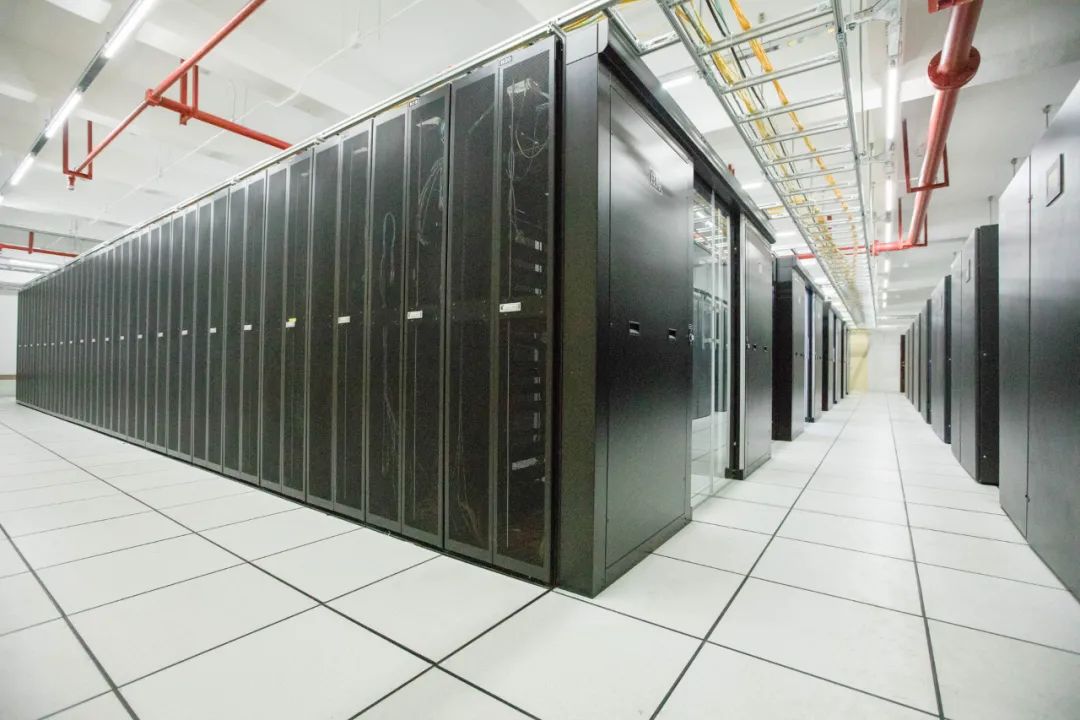
Cloud computing data center
After the cloudification of computing power, data centers became the main carriers of computing power. The scale of human computing power began a new leap.
█ Classification of Computing Power
The emergence of cloud computing and data centers is due to the continuous deepening of informatization and digitalization, which has triggered strong demand for computing power across society.This demand comes from both the consumer sector (mobile internet, binge-watching, online shopping, ride-hailing, O2O, etc.) and the industrial sector (industrial manufacturing, transportation logistics, financial securities, education, healthcare, etc.), as well as the urban governance sector (smart cities, one-card access, urban brain, etc.).Different applications and demands for computing power have different algorithms. Different algorithms also have different requirements for the characteristics of computing power.Generally, we divide computing power into two main categories: general computing power and specialized computing power.
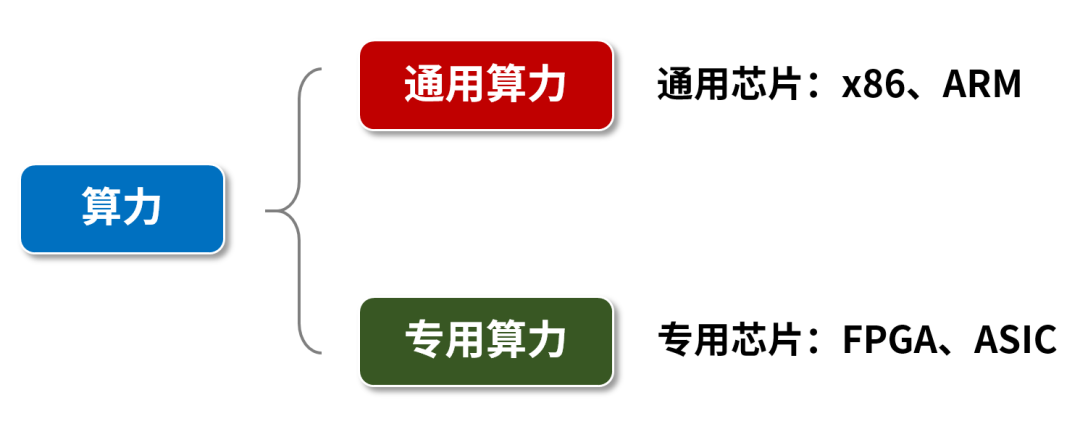
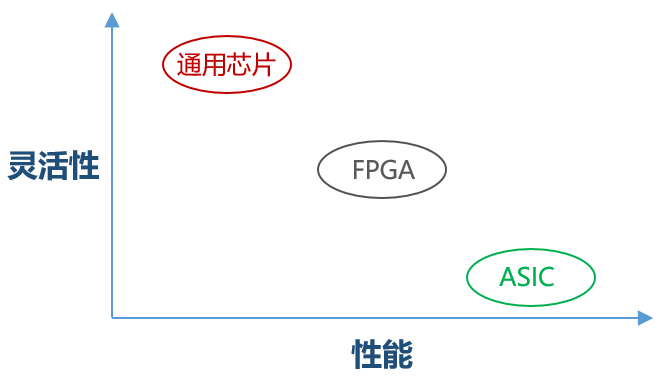
You may have heard that the chips responsible for outputting computing power are divided into general-purpose chips and specialized chips.For example, CPUs like x86 are general-purpose chips. They can perform a variety of computing tasks flexibly, but they consume more power.
Specialized chips mainly refer to FPGAs and ASICs.
FPGAs are field-programmable gate arrays. They can change the internal logic structure of the chip through hardware programming, but the software is deeply customized to perform specific tasks.ASICs are application-specific integrated circuits. As the name suggests, they are chips customized for specific purposes, with most software algorithms hardcoded into the silicon.ASICs can perform specific computational functions, but they are relatively singular in function and have low energy consumption. FPGAs are in between general-purpose chips and ASICs.
For example, in Bitcoin mining.In the past, people used PCs (x86 general-purpose chips) for mining, but as the difficulty increased, computing power became insufficient. So, they started using graphics cards (GPUs) for mining. Later, the power consumption of graphics cards was too high, and the value of the mined coins did not even cover the electricity costs, so they began to use FPGA and ASIC cluster arrays for mining.In data centers, computing tasks are also categorized, divided into basic general computing and HPChigh-performance computing(High-performance computing).HPC computing is further subdivided into three categories:Scientific computing: Physics and chemistry, meteorology and environmental protection, life sciences, oil exploration, astronomical detection, etc.Engineering computing: Computer-aided engineering, computer-aided manufacturing, electronic design automation, electromagnetic simulation, etc.Intelligent computing: Referring to artificial intelligence (AI, Artificial Intelligence) computing, including machine learning, deep learning, data analysis, etc.Scientific and engineering computing are well-known fields that generate large amounts of data and have high computing power requirements.For instance, in oil and gas exploration, simply put, it is like performing a CT scan of the earth’s surface. A single project may generate raw data exceeding 100TB, and it could even exceed 1PB. Such a massive amount of data requires vast computing power to support it.Intelligent computingneeds to be emphasized.AI artificial intelligence is currently a key development focus across all sectors. No matter the field, research is being conducted on the applications and implementation of artificial intelligence.The three core elements of artificial intelligence are computing power, algorithms, and data.
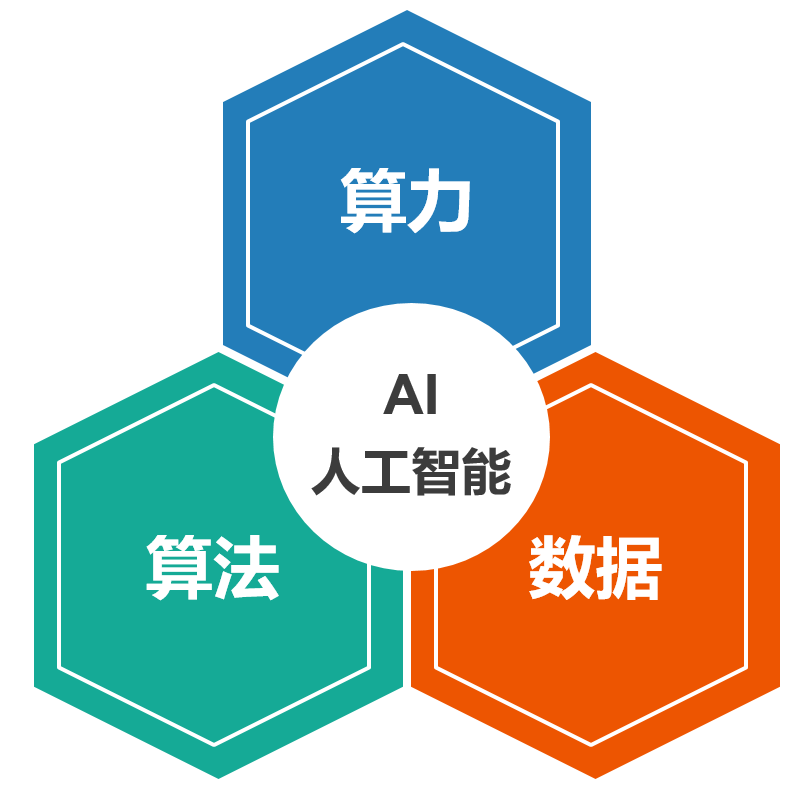
Everyone knows that AI artificial intelligence is a major consumer of computing power, especially it is very “greedy” for computing power. In AI computing, there are many matrix or vector multiplications and additions involved, which are highly specialized, making them unsuitable for CPU computation.In practical applications, people mainly use GPUs and the aforementioned specialized chips for computation. In particular, GPUs are currently the main force in AI computing.Although GPUs are graphics processing units, their GPU cores (logical operation units) far exceed those of CPUs, making them suitable for sending the same instruction stream in parallel to multiple cores and executing different input data, thus completing massive simple operations in graphics processing or big data processing.Therefore, GPUs are more suitable for handling computation-intensive and highly parallelized tasks (such as AI computing).In recent years, due to the strong demand for artificial intelligence computing, many intelligent computing centers have been specially established by the government, which are data centers dedicated to intelligent computing.
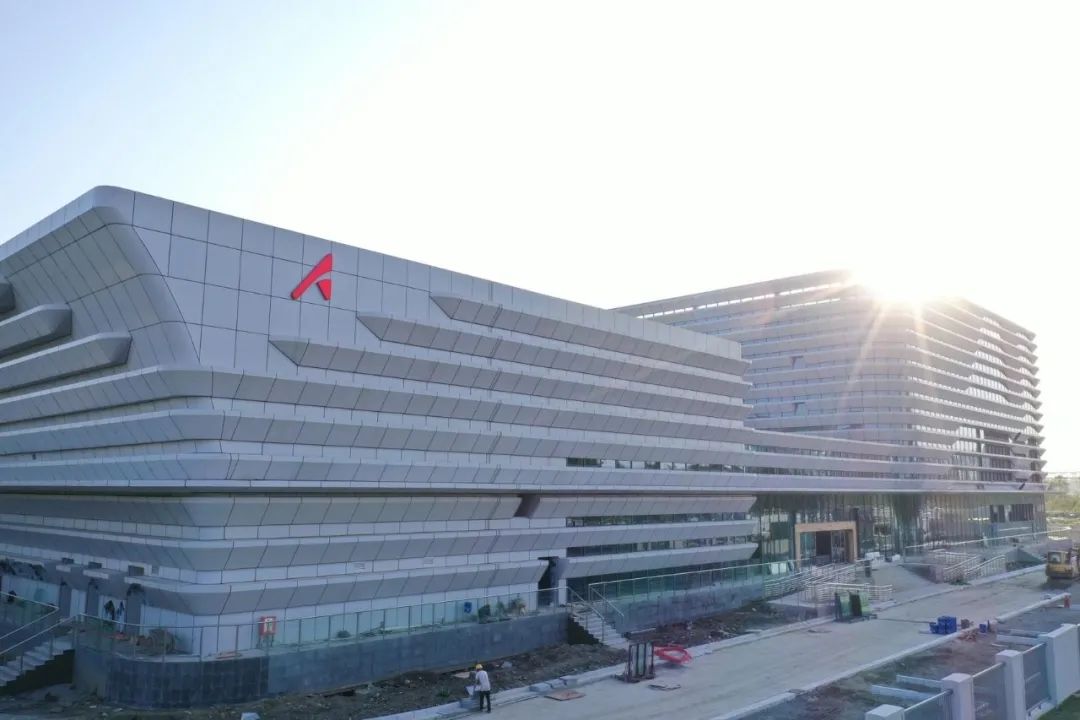
Chengdu Intelligent Computing Center (Image from the Internet)
In addition to intelligent computing centers, there are now many supercomputing centers. Inside supercomputing centers, there are supercomputers like “Tianhe-1”, which are specifically designed to undertake various large-scale scientific computing and engineering computing tasks.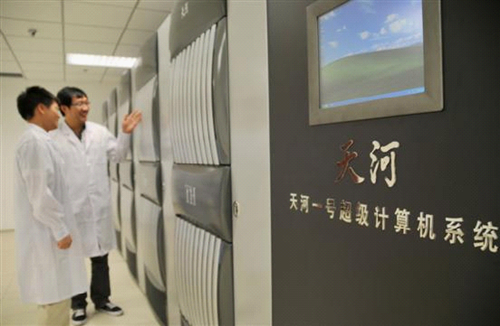 (Image from the Internet)The data centers we usually see basically belong to cloud computing data centers.
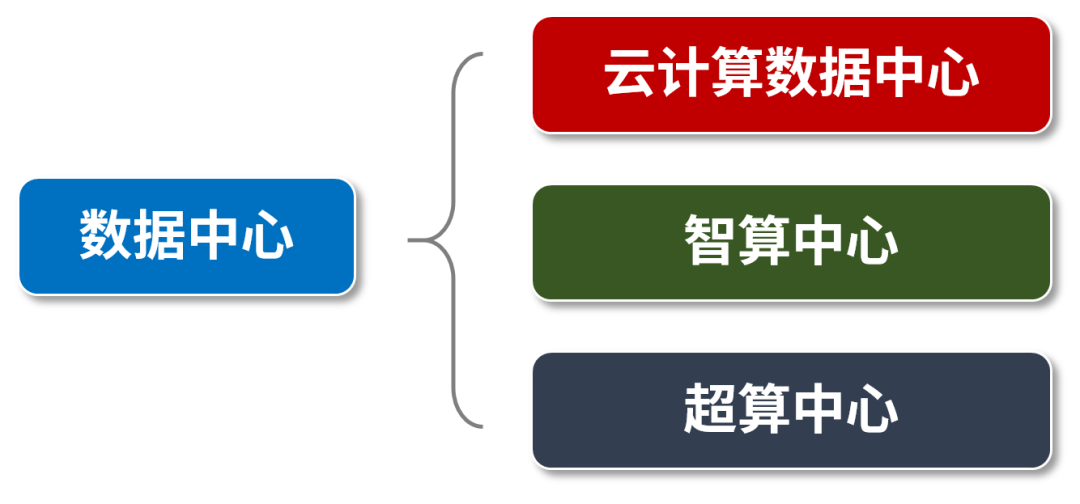 They handle various tasks, including both basic general computing and high-performance computing, and there is also a large amount of heterogeneous computing (using different instruction sets simultaneously). As the demand for high-performance computing continues to grow, the proportion of specialized computing chips is gradually increasing.In recent years, the gradually popularized TPU, NPU, and DPU, etc., are all specialized chips.
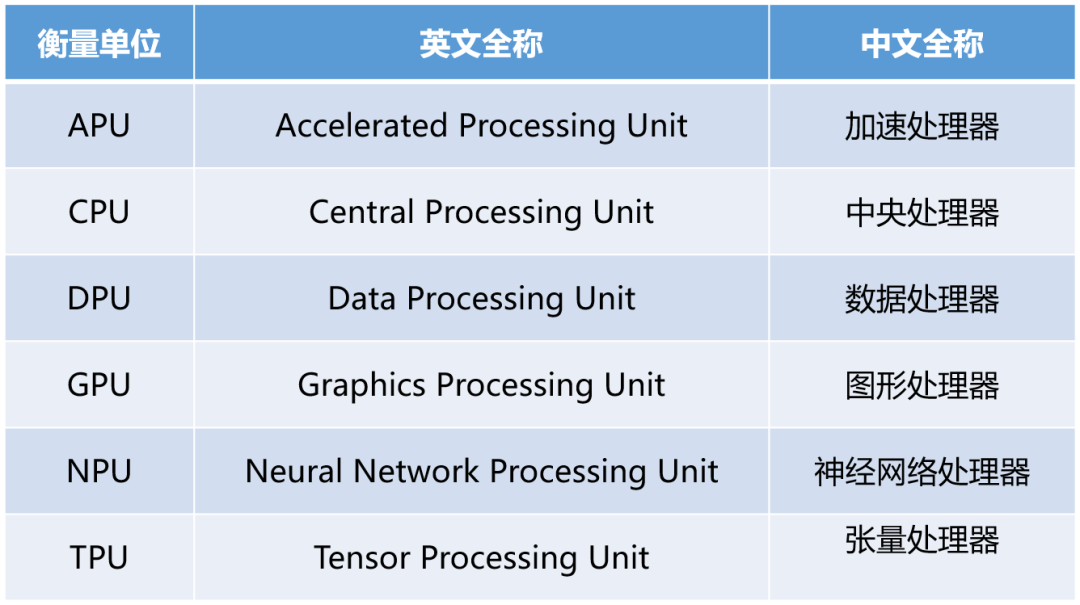 The so-called “computing power offloading” that you often hear about is not about deleting computing power, but rather transferring many computing tasks (such as virtualization, data forwarding, compression storage, encryption and decryption, etc.) from the CPU to NPU, DPU, and other chips to lighten the computing burden on CPUs.In recent years, in addition to basic general computing power, intelligent computing power, and supercomputing power, the scientific community has also introduced the concept of frontier computing power, mainly including quantum computing, photonic computing, etc., which are worth paying attention to.
█ Measuring Computing Power
Since computing power is a “capability”, there are naturally indicators and benchmark units to measure its strength. The units that most people are familiar with are FLOPS, TFLOPS, etc.In fact, there are many other indicators for measuring computing power, such as MIPS, DMIPS, OPS, etc.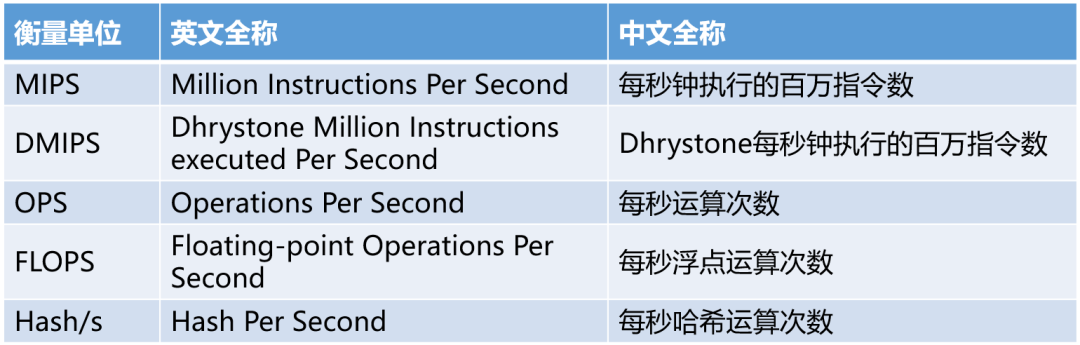 MFLOPS, GFLOPS, TFLOPS, PFLOPS, etc., are different magnitudes of FLOPS. The specific relationships are as follows:
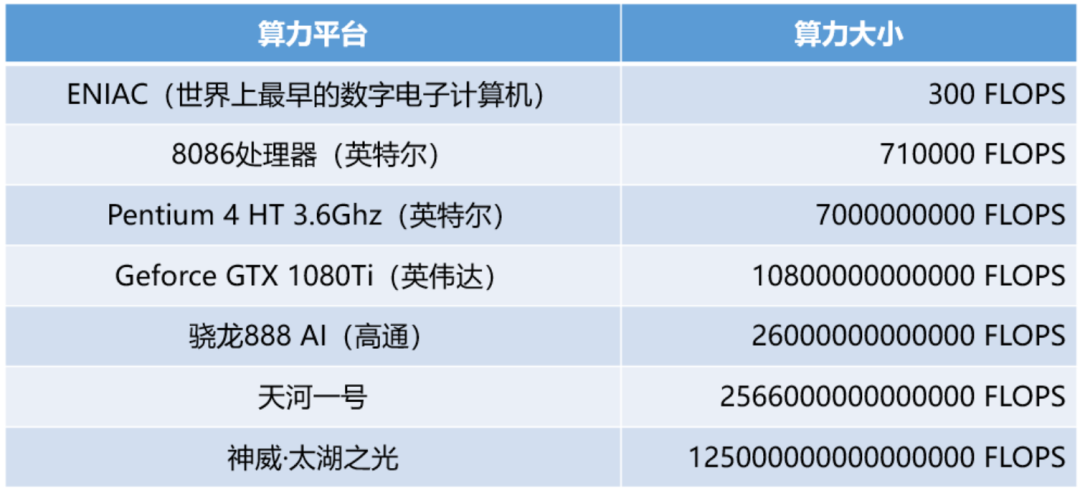
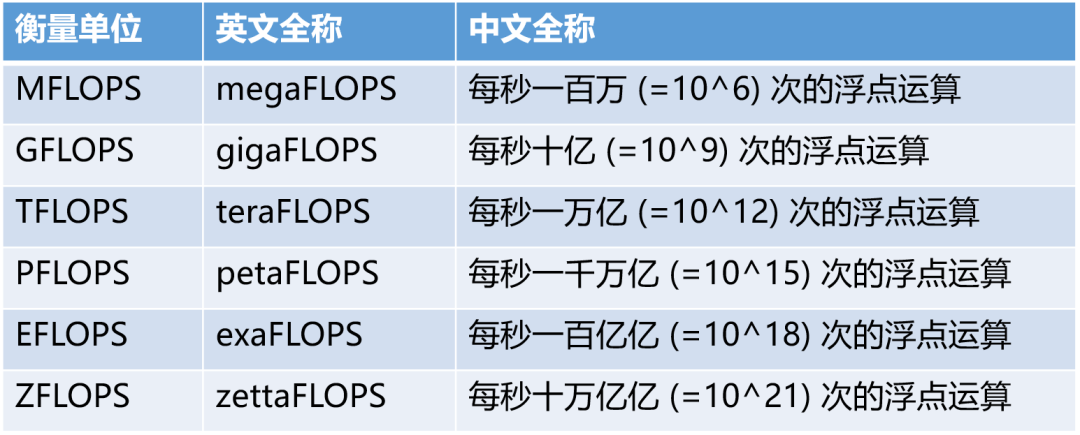 Floating-point numbers have different specifications such as FP16, FP32, FP64.There is a significant difference in computing power between different computing carriers. To help everyone better understand this difference, I have created a comparison table for computing power:
 Earlier, we mentioned general computing, intelligent computing, and supercomputing.From a trend perspective, the growth rate of intelligent computing and supercomputing far exceeds that of general computing.According to GIV statistics, by 2030, general computing power (FP32) will grow tenfold to reach 3.3 ZFLOPS. Meanwhile, AI intelligent computing power (FP16) will grow 500 times to reach 105 ZFLOPS.█ Current Status and Future of Computing PowerAs early as 1961, “the father of artificial intelligence” John McCarthy proposed the goal of Utility Computing. He believed that “one day, computing might be organized as a public utility, just like the telephone system.”Today, his vision has become a reality. In the digital wave, computing power has become a public resource similar to water and electricity, and data centers and communication networks have become important public infrastructure.This is the result of the hard work of the IT and communication industries over the past half-century.For the entire human society, computing power is no longer just a technical concept. It has risen to the economic and philosophical dimensions, becoming the core productivity of the digital economy era and the cornerstone of the entire society’s intelligent transformation.Our daily lives, the operation of factories and enterprises, and the functioning of government departments all rely on computing power. In critical areas such as national security, defense construction, and fundamental research, we also need vast computing power.Computing power determines the speed of digital economic development and the level of social intelligence development.According to data released jointly by IDC, Inspur, and Tsinghua University’s Global Industry Research Institute, every point increase in the computing power index leads to a 3.5‰ and 1.8‰ increase in the digital economy and GDP, respectively.
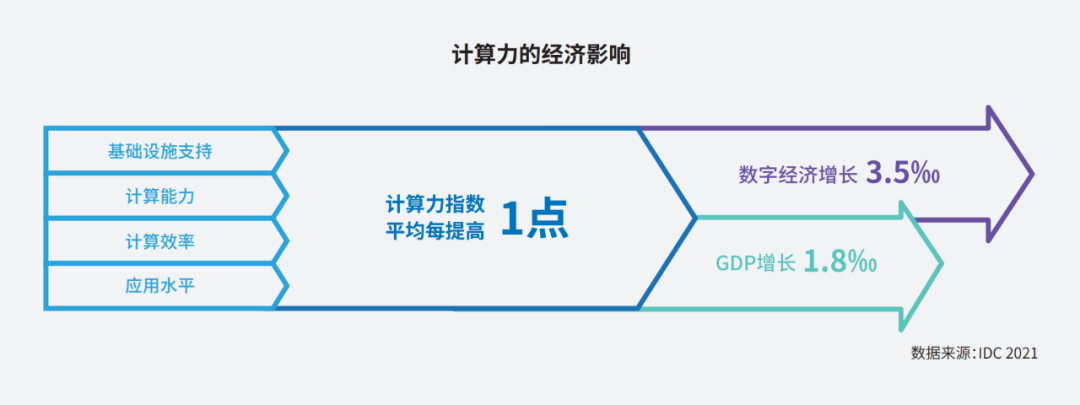 The scale of computing power in various countries has shown a significant positive correlation with the level of economic development. The larger a country’s computing power scale, the higher its economic development level.
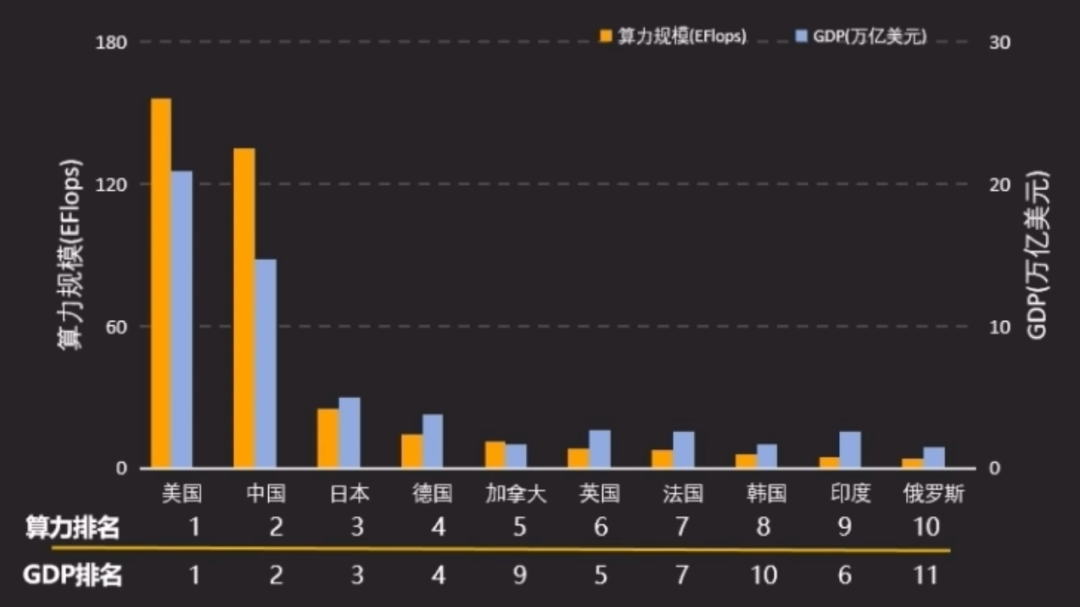 Comparison of computing power and GDP rankings among countries(Source: Chi Jiuhong, Huawei Computing Power Era Summit Speech)In the field of computing power, competition among countries is becoming increasingly fierce.In 2020, China’s total computing power scale reached 135 EFLOPS, a year-on-year increase of 55%, exceeding the global growth rate by about 16 percentage points. Currently, our absolute computing power ranks second in the world.However, from a per capita perspective, we do not hold an advantage and are only at a medium computing power country level.
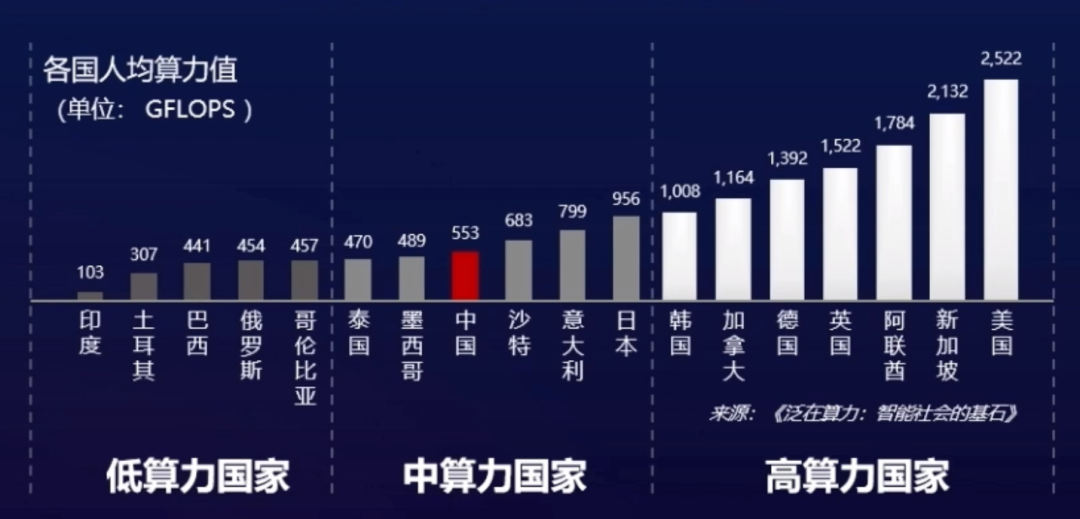 Comparison of per capita computing power among countries(Source: Tang Xiongyan, Huawei Computing Power Era Summit Speech)Especially in core technologies such as chips, we still have a significant gap compared to developed countries. Many critical technologies remain unresolved, severely affecting our computing power security, which in turn impacts national security.Therefore, we still have a long way to go, and we need to continue working hard.
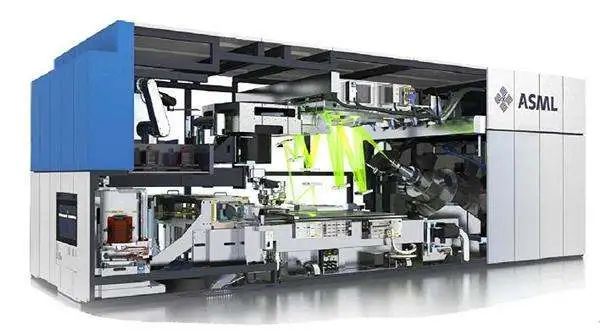
Recently, our competitors have turned their attention to lithography machines (image from the Internet)
In the future, the processes of informatization, digitalization, and intelligence will accelerate further. The arrival of the era of Internet of Everything, the introduction of numerous intelligent IoT terminals, and the implementation of AI intelligent scenarios will generate an unimaginable amount of data.This data will further stimulate the demand for computing power.According to Roland Berger’s predictions, from 2018 to 2030, the demand for computing power from autonomous driving will increase by 390 times, the demand for smart factories will grow by 110 times, and the per capita computing power demand of major countries will increase from less than 500 GFLOPS today to 20 times, reaching 10,000 GFLOPS by 2035.According to Inspur’s AI Research Institute predictions, by 2025, global computing power scale will reach 6.8 ZFLOPS, which is 30 times higher than in 2020.A new round of computing power revolution is accelerating to start.█ ConclusionComputing power is such an important resource, yet in reality, we still face many issues in utilizing it.For example, there are problems with computing power utilization rates and the balance of computing power distribution. According to IDC data, the utilization rate of small computing power among enterprises is currently only 10%-15%, leading to significant waste.Moore’s Law has slowed since 2015, and the growth rate of computing power per unit energy consumption has gradually fallen behind the growth rate of data volume.While we continue to explore the potential of chip computing power, we must also consider the issue of computing power resource scheduling.So, how should we schedule computing power? Can existing communication network technologies meet the scheduling needs of computing power?Please look forward to the next episode: What Exactly Is a “Computing Power Network”?—— End of the text ——References:1. “China Computing Power Development Index White Paper”, China Academy of Information and Communications Technology;2. “Computing Power Network Technology White Paper”, China Mobile;3. “What Is Computing Power Network (CAN, CFN, CPN) and Eastern Data and Western Computing”, QianLing, Zhihu;4. “China Unicom Computing Power Network White Paper”, China Unicom;5. “Introduction and Outlook of Computing Power Network”, Cao Chang;6. “What Is Computing Power Network”, Wu Zhuoran;7. “Thoughts on the Underlying Technology of Computing Power Network”, Yan Guihai;8. “AI Computing Power Demand Rapid Growth, Platform Infrastructure Becomes the Focus”, GF Securities, Liu Xuefeng, Li Aoyuan, Wu Zupeng.