Introduction
Anyone who has used large models like ChatGPT or DeepSeek has experienced this: AI chatbots can sound reasonable, yet the content may be completely fabricated. OpenAI’s latest research suggests they have finally found the reason why chatbots often experience “hallucinations.” The company’s recent study indicates that solving the hallucination problem may not be complex — the key is to teach the model to “admit when it doesn’t know.”
Engineers in the UK have developed a fixed-wing drone that can perch on edges, navigate narrow gaps, and achieve precise air superiority, exhibiting bird-like agility. Future drones may resemble “biological” entities rather than “machines.”
Today’s Highlights
-
OpenAI reveals why chatbots hallucinate
-
Anthropic agrees to a $1.5 billion settlement with authors
-
OpenAI partners with Broadcom to develop proprietary AI chips
-
Four new AI tools
-
Raptor-inspired new drones
-
Boston Dynamics Atlas brain upgrade
-
Robot dog Mars training program
Latest Developments
# OPENAI
OpenAI Reveals Causes of Chatbot Hallucinations
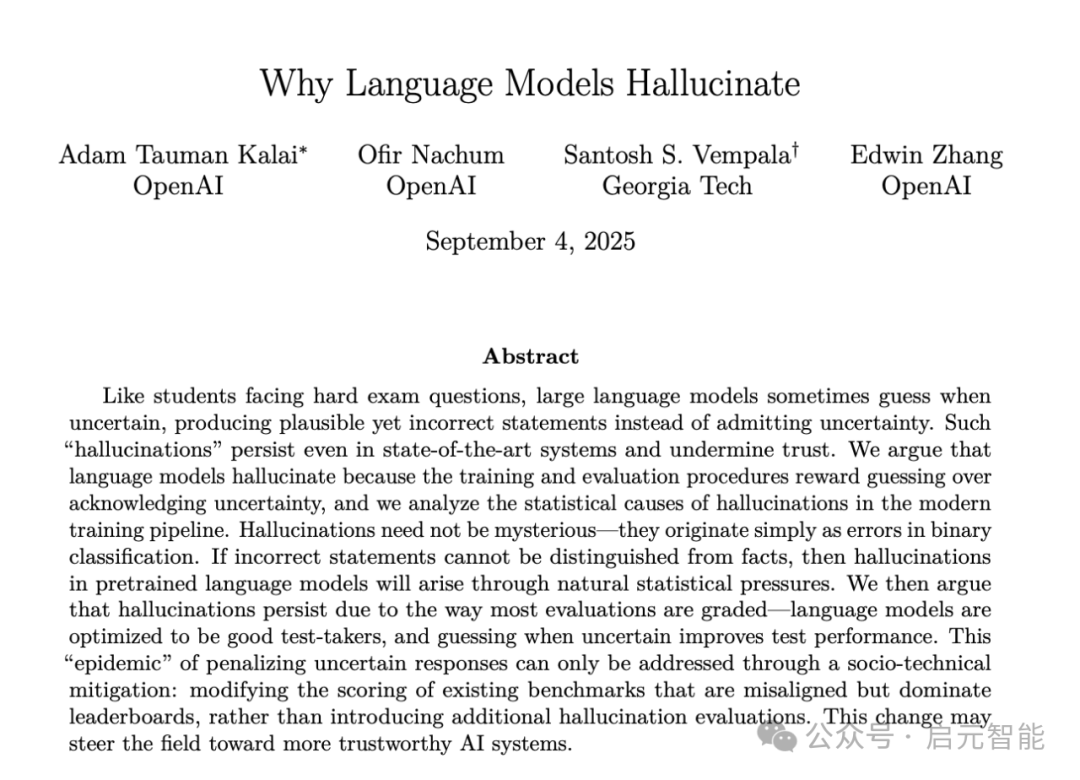
A recent paper published by OpenAI suggests that AI systems hallucinate because current training methods tend to favor “confident guessing” over “honestly saying I don’t know,” which may provide new insights into solving the AI hallucination problem.
Details:
-
Researchers found that the model fabricates facts because in training assessments, “guessing correctly” can earn full marks, while answering “I don’t know” scores 0 points.
-
This mechanism leads the model to learn to “guess hard even when uncertain,” resulting in erroneous outputs.
-
In tests, OpenAI asked the model questions about its birthday, paper titles, etc., and found that the model confidently provided various incorrect answers.
-
The research team proposed that the evaluation system should penalize “confident errors” more heavily rather than penalizing “admitting uncertainty.”
Significance:If AI labs start to “reward honesty rather than blind guessing” during training, future models may learn to “know what they know and know what they don’t know,” which may lead to a decrease in performance on some metrics but increase reliability in critical scenarios.
# ANTHROPIC
Anthropic Agrees to Pay $1.5 Billion Settlement to Authors

Anthropic has agreed to pay at least $1.5 billion to resolve a collective lawsuit by authors. This is the first major settlement by an AI company for using pirated books to train its models.
Details:
-
Authors discovered that Anthropic downloaded 7 million pirated books from shadow libraries like LibGen to train the Claude model, leading to the lawsuit.
-
In June of this year, a federal judge ruled:Legally purchased books used for training are considered fair use, but downloading pirated books violates copyright.
-
The settlement agreement covers about 500,000 books, with $3,000 compensation per book, and additional payments if more pirated data is found.
-
Anthropic must also destroy all pirated files and copies, and this agreement does not grant future training licenses.
Significance:This is the first real-world AI copyright lawsuit, and while the ruling addresses piracy rather than “fair use,” it sets a precedent for the industry. Although the $1.5 billion amount is substantial, considering Anthropic’s recent $13 billion funding and $183 billion valuation, the impact is relatively limited.
# OPENAI
OpenAI Partners with Broadcom to Develop Proprietary AI Chips

According to the Financial Times, OpenAI will collaborate with Broadcom to mass-produce proprietary AI chips starting next year to reduce reliance on NVIDIA GPUs.
Details:
-
The CEO of Broadcom stated that a mysterious client placed a $10 billion chip order, and sources confirmed that the client is OpenAI.
-
The new chips will be used for internal deployment, helping OpenAI to double its computing power within five months, alleviating GPU shortages.
-
The collaboration began last year, but the specific mass production timeline was only confirmed this week.
-
Google, Amazon, and Meta already have proprietary chips, and analysts expect that they will continue to capture market share from NVIDIA.
Significance:Top AI labs are accelerating their expansion of computing power. As proprietary chips become more common, NVIDIA’s “kingly status” is beginning to be challenged. For OpenAI, mastering full-stack technology also helps control high external hardware costs.
Raptor-Inspired New Drones
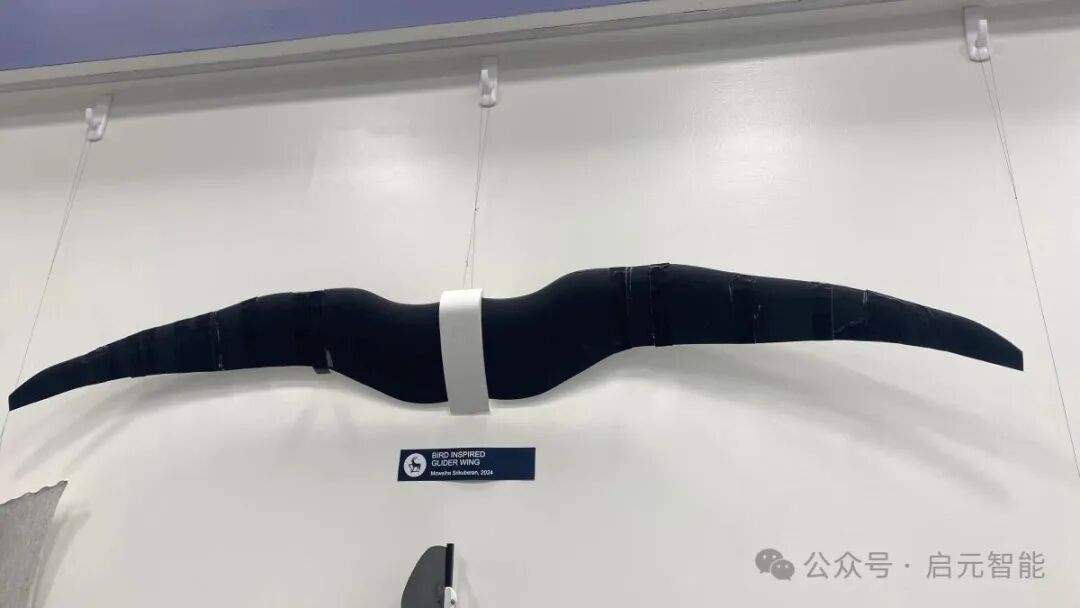
Engineers at the University of Surrey in the UK are developing fixed-wing drones inspired by owls and raptors, capable of perching, agilely navigating narrow urban spaces, and exhibiting raptor-like agility.
Details:
-
The drones developed under the “Learning2Fly” project mimic the perching and maneuvering flight patterns of raptors.
-
The design goal is to enhance energy efficiency and long-range capabilities, overcoming the limitations of traditional fixed-wing drones in terms of flexibility.
-
The team collects flight data through motion capture experiments and onboard sensors to train machine learning models.
-
The prototypes are lightweight, some even modified from toy planes, and have undergone flight testing in the lab.
Significance:The next generation of fixed-wing drones is expected to navigate cities flexibly like raptors, responding to strong winds, and bringing great potential in scenarios such as infrastructure inspection and package delivery.
Boston Dynamics Atlas Brain Upgrade
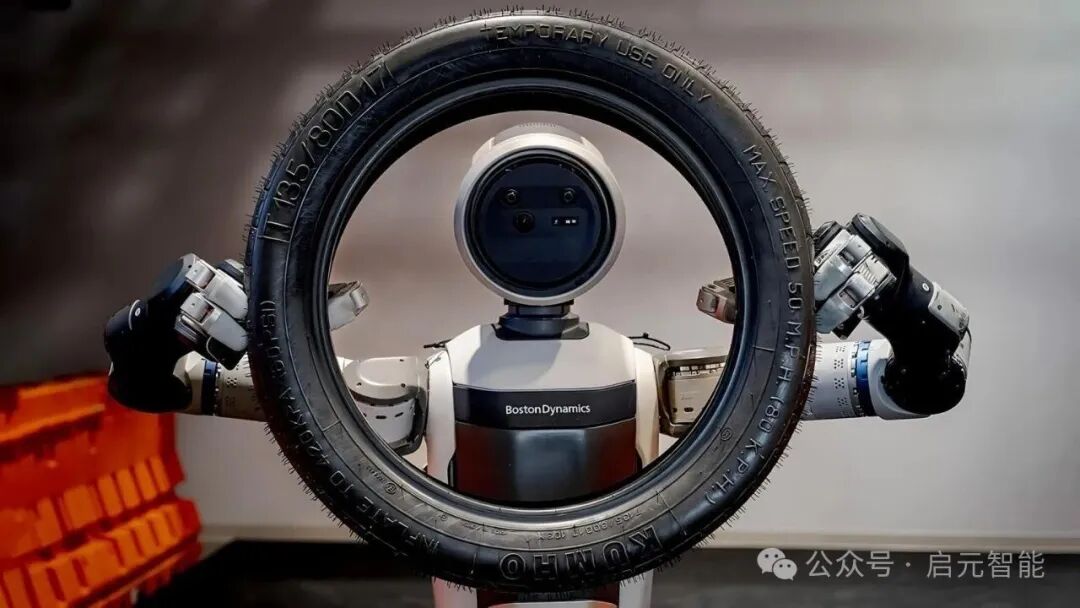
Boston Dynamics has introduced a Large Behavior Model (LBM) for its humanoid robot Atlas, co-developed with the Toyota Research Institute, enabling the robot to coordinate its entire body to perform complex tasks like a human.
Details:
-
The LBM has 450 million parameters, integrating image, sensor, and language prompts to plan coordinated actions.
-
It can perform various tasks such as folding fabric and tying knots, relying on data-driven learning rather than programming.
-
Inference speed has increased by 1.5 to 2 times, allowing task execution to be faster than manual remote control, with minimal loss of agility.
-
The model achieves unified control of the entire body, treating hands and feet almost equally, making movements closer to human-like.
Significance:With the LBM, the introduction of new skills no longer relies on cumbersome coding but is quickly acquired through data learning. Atlas is gradually gaining the ability to execute complex tasks smoothly and cohesively.
Robot Dogs Conducting “Mars Training”

At White Sands National Park in the United States, researchers from Oregon State University conducted a five-day field trial with quadruped robot dogs, simulating the harsh terrain of Mars.
Details:
-
The robots are trained to autonomously explore, map, and recommend sampling points, becoming “partners” for astronauts.
-
The articulated quadrupedal structure allows them to sense surface stability in real-time, avoiding dangerous areas.
-
The robots collect mechanical and geological data, aiming to collaborate with humans and rovers in the future.
-
This research is part of NASA’s “From Moon to Mars” program.
Significance:These robots demonstrate the ability to perceive the ground and make autonomous decisions “like humans,” simulating future collaborative control between Earth and Mars missions.
Popular AI Tools
-
EmbeddingGemma: Google’s open-source local embedding model
-
Lovable Voice Mode: Write code and build applications using voice commands
-
Qwen3-Max: Alibaba’s latest 1T parameter large model
-
Higgsfield Ads 2.0: Generate realistic custom AI advertisements
AI Industry News
-
Alibaba releases Qwen3-Max, surpassing Kimi K2, Deepseek V3.1, and Claude Opus 4 in multiple benchmark tests.
-
OpenAI is expected to spend $115 billion over the next four years, with costs primarily from data centers, talent, and computing power.
-
French AI startup Mistral is raising $1.7 billion in Series C funding, with a valuation reaching $11.7 billion, making it the most valuable company in Europe.
-
Joanne Jang, head of OpenAI’s model behavior, announced the establishment of OAI Labs to explore new interfaces for human-machine collaboration.
-
A group of authors has filed a class-action lawsuit against Apple, accusing its OpenELM model of using a dataset of pirated books.
-
Beijing’s Robot Shopping Center sold over 19,000 products, generating more than 330 million yuan in revenue.
-
AgiBot launched six new products, including humanoid robots, dexterous hands, and robot dogs, now available on JD.com.
-
Chipotle partners with Zipline to pilot drone delivery service “Zipotle” in Dallas.
-
The Nottinghamshire police in the UK are piloting AI robot dogs that can replace officers in high-risk scenarios, with plans for nationwide rollout by 2026.
-
Just Eat is testing autonomous delivery robots that can climb stairs in Zurich.
-
Researchers at the University of Waterloo in Canada have developed a micro-magnetic robot that can dissolve kidney stones, providing a new method for non-invasive treatment.
-
Researchers have designed a micro propeller robot that mimics water striders, capable of moving quickly across the water surface.
References
-
https://cdn.openai.com/pdf/d04913be-3f6f-4d2b-b283-ff432ef4aaa5/why-language-models-hallucinate.pdf
-
https://www.npr.org/2025/09/05/nx-s1-5529404/anthropic-settlement-authors-copyright-ai
-
https://arstechnica.com/ai/2025/09/openai-links-up-with-broadcom-to-produce-its-own-ai-chips
-
https://www.surrey.ac.uk/news/bird-inspired-drones-could-be-key-navigating-through-dense-cities-and-offshore-wind-farms
-
https://bostondynamics.com/blog/large-behavior-models-atlas-find-new-footing
-
https://news.oregonstate.edu/news/researchers-are-teaching-robots-walk-mars-sand-new-mexico