News Flash
April 22, 2025
Tuesday
Background
background
01
In 2025, the smoke of the automotive market in China is not only lingering on the battlefield of price wars but also hidden in the undercurrents of technological upgrades. As “cost reduction and efficiency enhancement” becomes the industry’s mantra, the clamor of electrification has not subsided, and a competition centered around intelligence has already begun.
Current News
Making Automation Technology Smarter
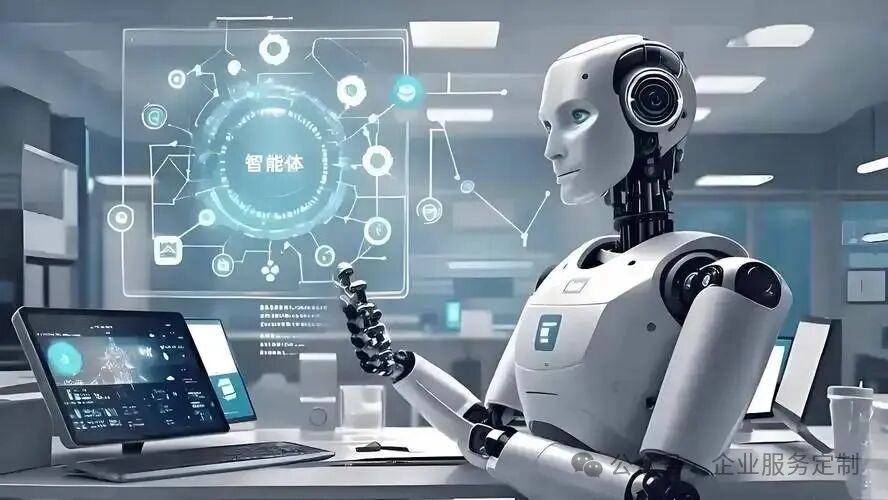
Automation technology is reshaping the global manufacturing landscape at an unprecedented speed, becoming a key pillar for driving production efficiency and industrial innovation. From the technical displays at various industry exhibitions, it is evident that mechanical systems are gradually breaking through traditional cognitive boundaries, taking on production tasks that were once considered “complex and difficult to control.” For instance, Google’s Intrinsic company is deeply embedding AI technology into the innovative practices of computer numerical control (CNC) machines, becoming a microcosm of industry transformation. The machine management solutions offered by such companies integrate AI perception technology with automated motion planning, achieving intelligent upgrades in production processes: AI-based visual recognition systems can accurately detect the shape and position of raw materials, paired with automated grasping planning algorithms, allowing for the picking and placing of parts without human intervention.
Making Robots Easier to Control
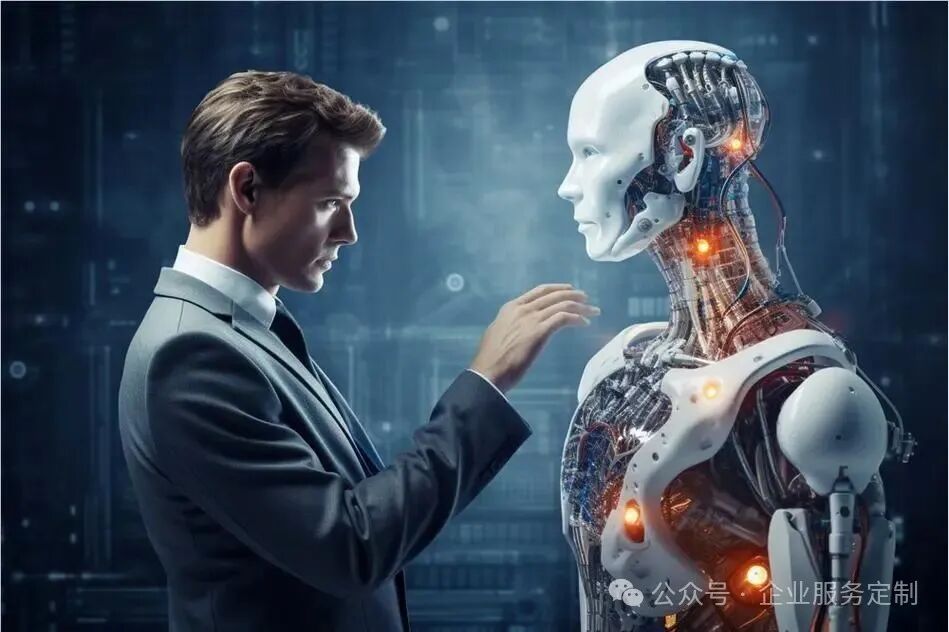
As a global leader in intelligent automation solutions, KUKA is redefining the control logic of industrial robots through technology. Its latest scalable robot operating system, iiQKA.OS2, marks a critical leap from “preset program execution” to “intelligent autonomous decision-making.” This software and controller integration platform deeply merges artificial intelligence with visual systems, breaking down traditional programming barriers through a modular architecture, enabling robots to achieve flexible adjustments on production lines with a lower technical threshold. For example, in scenarios such as sorting 3C products or assembling automotive components, the system can autonomously plan grasping paths based on visual recognition, eliminating the need for engineers to write complex code. From a technological evolution perspective, the collaboration of iiQKA.OS2 with cloud platforms constructs a new industrial robot architecture of “edge intelligence + cloud brain”: the edge side executes real-time tasks through AI vision and autonomous control, while the cloud relies on Microsoft Azure’s computing power to complete data iteration and process optimization.
Enabling Humanoid Robots to Learn from Each Other
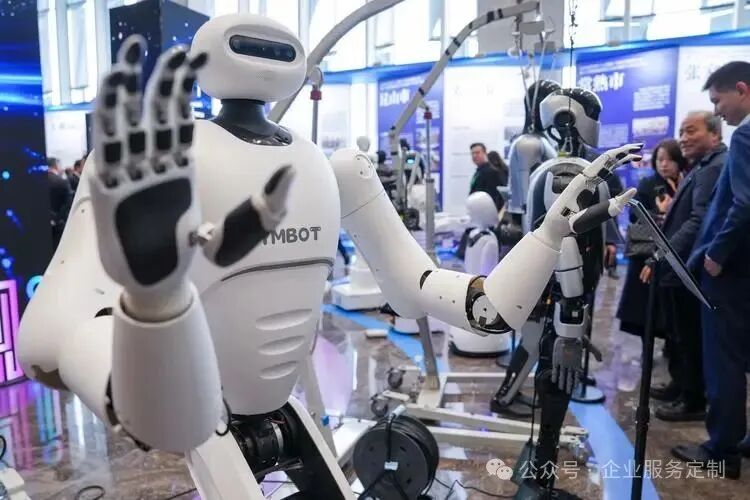
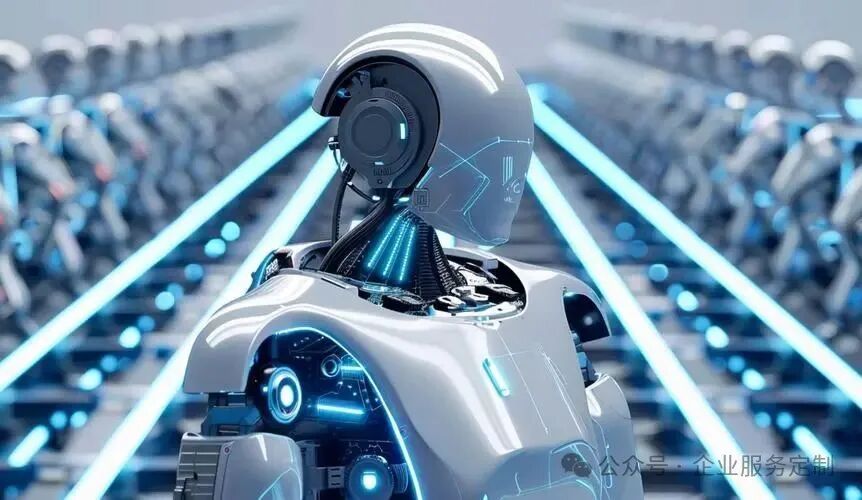
In the wave of intelligent transformation in manufacturing, humanoid robots are becoming a new variable driving production automation due to their unique flexibility and adaptability to environments. With breakthroughs in motion control and AI perception technologies, these intelligent devices with humanoid forms are increasingly attractive to manufacturing enterprises. Notably, leading German automotive companies are at the forefront of exploration: BMW is piloting the technology of the American humanoid robot company Figure at its Spartanburg plant in California, attempting to apply it in material handling and precision assembly scenarios; Mercedes-Benz is deploying Apptronik’s Apollo humanoid robot at its digital production innovation center in Berlin, exploring its potential in flexible production line switching and complex workstation operations. From a technological logic perspective, the core advantage of humanoid robots lies in their low-threshold adaptation to traditional industrial scenarios — their bipedal mobility allows them to navigate human work environments without the need to modify production line infrastructure; the seven-degree-of-freedom operation mode of their robotic arms can perform delicate actions such as tightening screws and inserting or removing components, which traditional robotic arms struggle to accomplish.
Chinese Companies Developing the German Market
At the exhibition, Chinese robot manufacturers such as Estun, KUKA, and Siasun showcased their products and technologies on a large scale. Representatives from Estun informed the Science and Technology Daily that their robots have been deployed in battery assembly at the CATL factory in Erfurt, Germany. Through vertical integration of the supply chain and highly automated operations, Estun can provide robots in a very economical manner. However, German media believe that Chinese robot manufacturers still have a long way to go in entering the German and European markets. Chinese manufacturers need to learn and understand local standards and dispel users’ doubts about the reliability of local services. Additionally, in Germany and Europe, artificial intelligence is subject to strict regulations. For humanoid robots, many issues remain unresolved, and there are still many reservations regarding data security.
END
Previous Review
Journalist’s Day
Journalist’s Day, also known as Press Day or Publishing Day in some countries, is celebrated on November 8 each year in China. In 2000, the State Council officially approved the China Journalists Association’s request to designate November 8, the founding day of the association, as Journalist’s Day.
Editor | An Shenshen
Decorative Material | Xiumi
Copyright Statement | Some content of this article is sourced from the internet and is used for learning and communication purposes. If there is any infringement, please contact for deletion.