 As urbanization advances and land use indicators become tighter, the construction of venues for public fitness becomes increasingly challenging. Creatively integrating sports facilities into “leftover” land in urban construction, such as park green spaces, under elevated bridges, and rooftops, can effectively alleviate this contradiction.
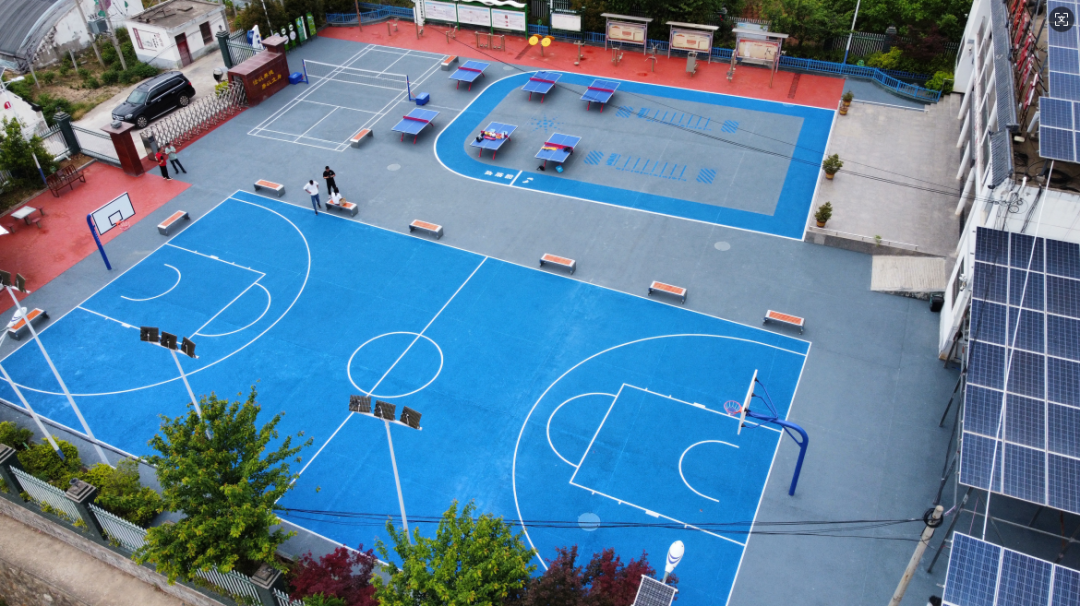 What are “Embedded Sports Venues”Embedded sports venue facilities refer to sports facilities built in a convenient, beneficial, and accessible manner in areas such as communities, park green spaces, under bridges, and on rooftops, tailored to local conditions.
Addressing the shortfall in public fitness venue facilities.Embedded sports venue facilities have the advantage of flexible site selection and overcoming spatial limitations. Whether it is an idle community carport, a commercial building rooftop, or urban street green space, as long as the corresponding conditions are met, they can be planned as sports activity spaces. This “embedded” construction model has dual value: first, it significantly expands the supply of sports facilities without occupying additional land resources, creating richer fitness and leisure opportunities for citizens; second, through scientific planning of facility layout, it can optimize the allocation of urban sports resources and enhance venue accessibility, allowing residents to participate in sports activities more conveniently, effectively responding to the growing demand for healthy lifestyles among the public.
Promoting urban renewal actions.Building embedded sports venue facilities can transform the “empty corners” of the city, which are underutilized, into high-quality spaces for public fitness—these reactivated “golden corners and silver edges” not only become new carriers for citizens’ exercise but also effectively promote the improvement of urban functions, driving the deep integration of sports facility construction with overall urban planning, playing a key role in optimizing urban spatial layout and promoting structural upgrades.
Facilitating community integration and development.As physical space carriers, embedded sports venue facilities build bridges for community interaction, healthy living, and cultural cultivation, effectively promoting the coordinated development of community structure and function. These facilities are often located in the core areas of communities and within residents’ daily activity ranges, creating a convenient social environment that strengthens daily interactions and connections among residents, fostering a sense of shared community awareness, thus accelerating the internal integration process of the community; at the same time, embedded sports venue facilities provide a foundational platform for communities to carry out diverse activities—whether it is sports competitions, fitness exercises, or parent-child interactions, these collective participation activities not only cultivate residents’ teamwork abilities but also become an important bond for building community consensus and enhancing a sense of belonging.

 Source: China Sports NewsLayout: Zhang Shengjie Editor: Zhang Yajun Review: Zhang Xin