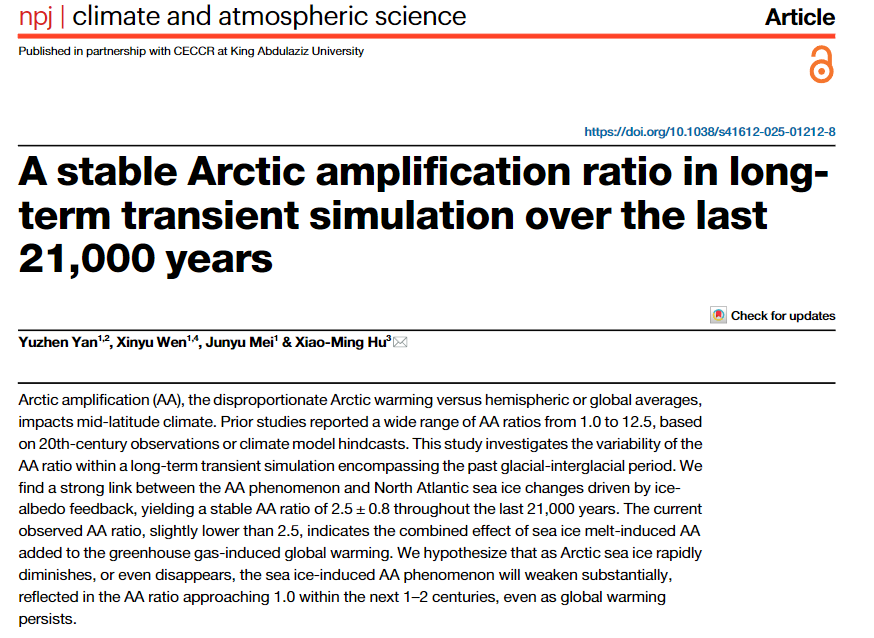
Citation Information:Yan, Y., Wen, X., Mei, J. et al. A stable Arctic amplification ratio in long-term transient simulation over the last 21,000 years. npj Clim Atmos Sci 8, 321 (2025). https://doi.org/10.1038/s41612-025-01212-8
Main Content:
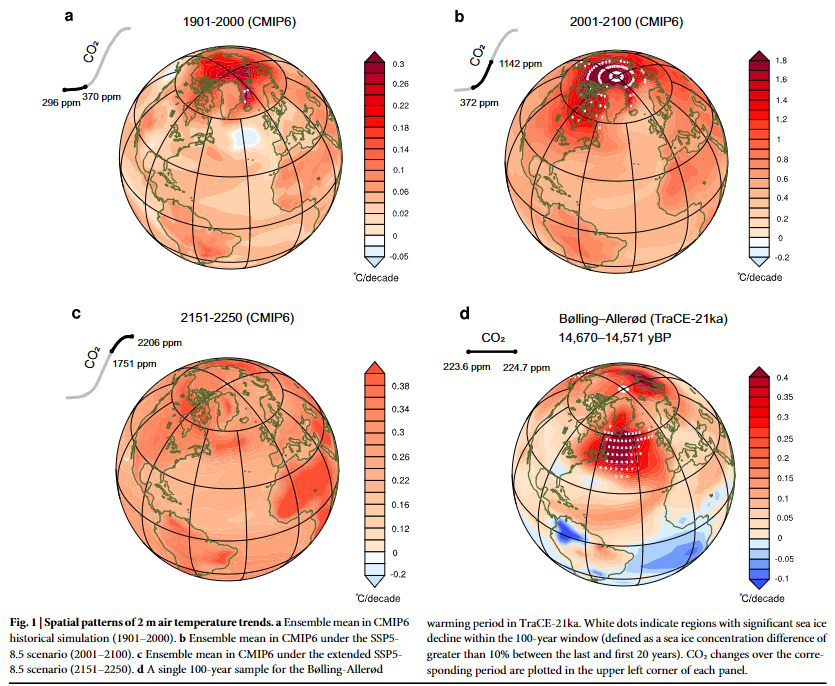
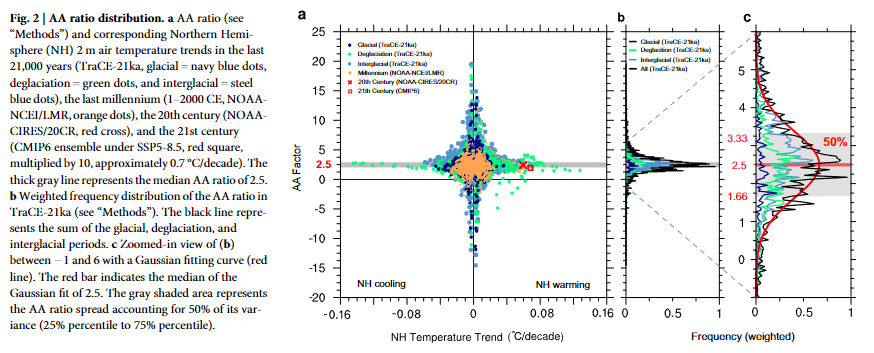
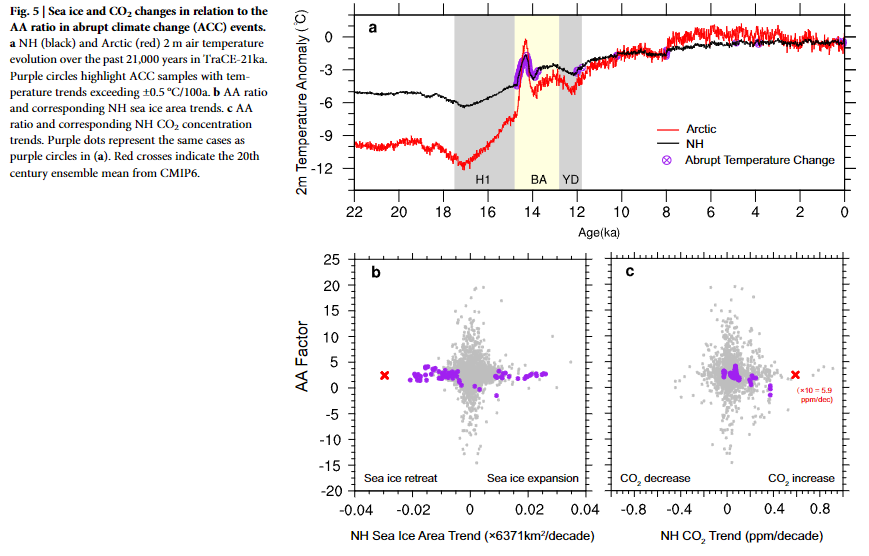
The paper investigates the changes in the Arctic Amplification (AA) phenomenon over the past 21,000 years and explores the underlying physical mechanisms. The AA phenomenon refers to the greater warming in the Arctic region compared to the Northern Hemisphere or global average temperatures. The study finds that the AA ratio (the ratio of Arctic temperature change to Northern Hemisphere temperature change) has remained relatively stable over the past 21,000 years, approximately 2.5 ± 0.8. This indicates that natural climatic processes have played a more significant role in shaping AA, while recent anthropogenic forcing has had a relatively minor impact on the AA ratio. In the future, as Arctic sea ice continues to decline, the Arctic amplification phenomenon will significantly weaken, and the AA ratio may approach 1.0 within the next 1-2 centuries, despite ongoing global warming.。
Materials and Methods:
Definition of AA Index:
The AA index is defined as the ratio of the surface temperature trend in the Arctic region (60° N–90° N) to the surface temperature trend in the Northern Hemisphere.
A 100-year time window is chosen to calculate the linear trend to balance index stability and data processing efficiency.
Datasets:
TraCE-21ka: This dataset provides simulation data for the past 20,000+ years, covering the entire Arctic and Northern Hemisphere with consistent spatial and temporal resolution.
NOAA-NCEI/LMR: This dataset provides reanalysis data for the past 2,000+ years, useful for analyzing the diversity of the AA ratio.
NOAA-CIRES/20CR: This dataset provides reanalysis data for the past 100+ years, useful for analyzing the diversity of the AA ratio.
PMIP3: This dataset provides snapshot simulation data from 8 models during the mid-Holocene (6ka) and the Last Glacial Maximum (21ka), useful for validating the reliability of TraCE-21ka simulation results.
Data Analysis Methods:
Statistical Analysis: Statistical analysis of AA ratio samples from the TraCE-21ka dataset, including weighted probability density function analysis and linear regression analysis, to assess the stability and variability of the AA ratio.
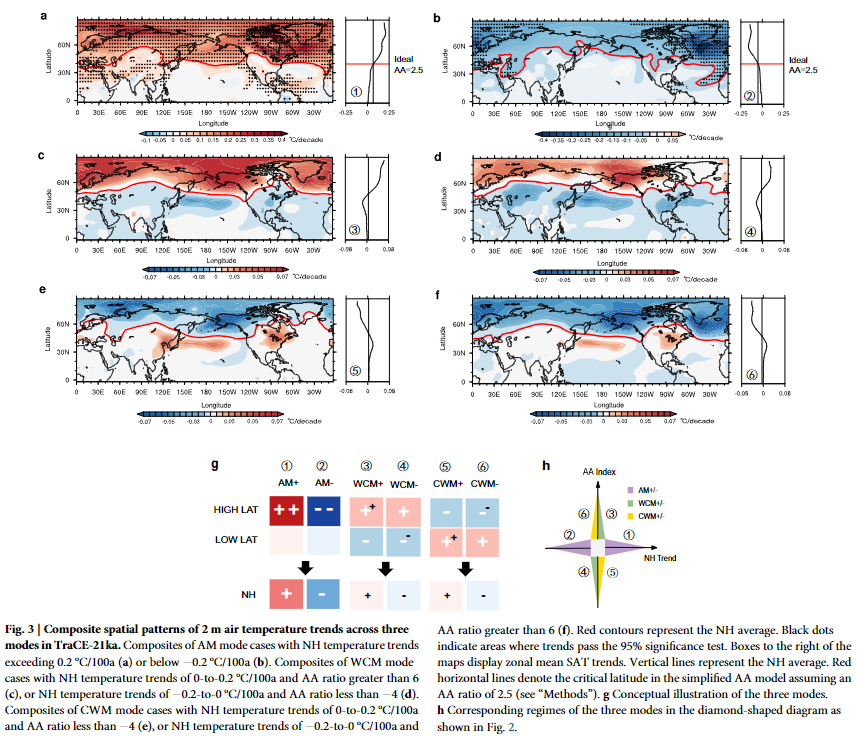
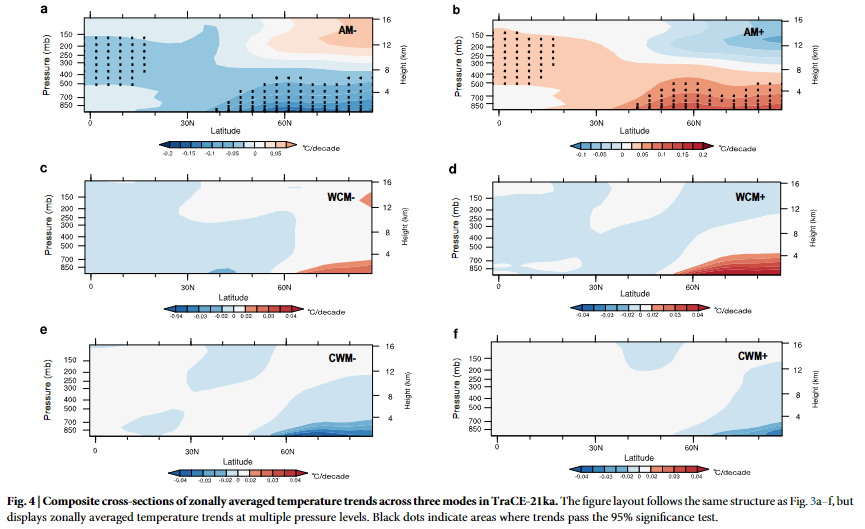
Synthesis Analysis: The AA ratio samples from the TraCE-21ka dataset are divided into three patterns (Arctic pattern, warm Arctic-cold tropics pattern, and cold Arctic-warm tropics pattern), and the composite spatial patterns and vertical structures of surface temperature changes are analyzed for each pattern.
Conceptual Model: A simple conceptual model is established to estimate the southern boundary of the high-latitude AA region, i.e., the critical latitude.
Main Results:
Related Content:
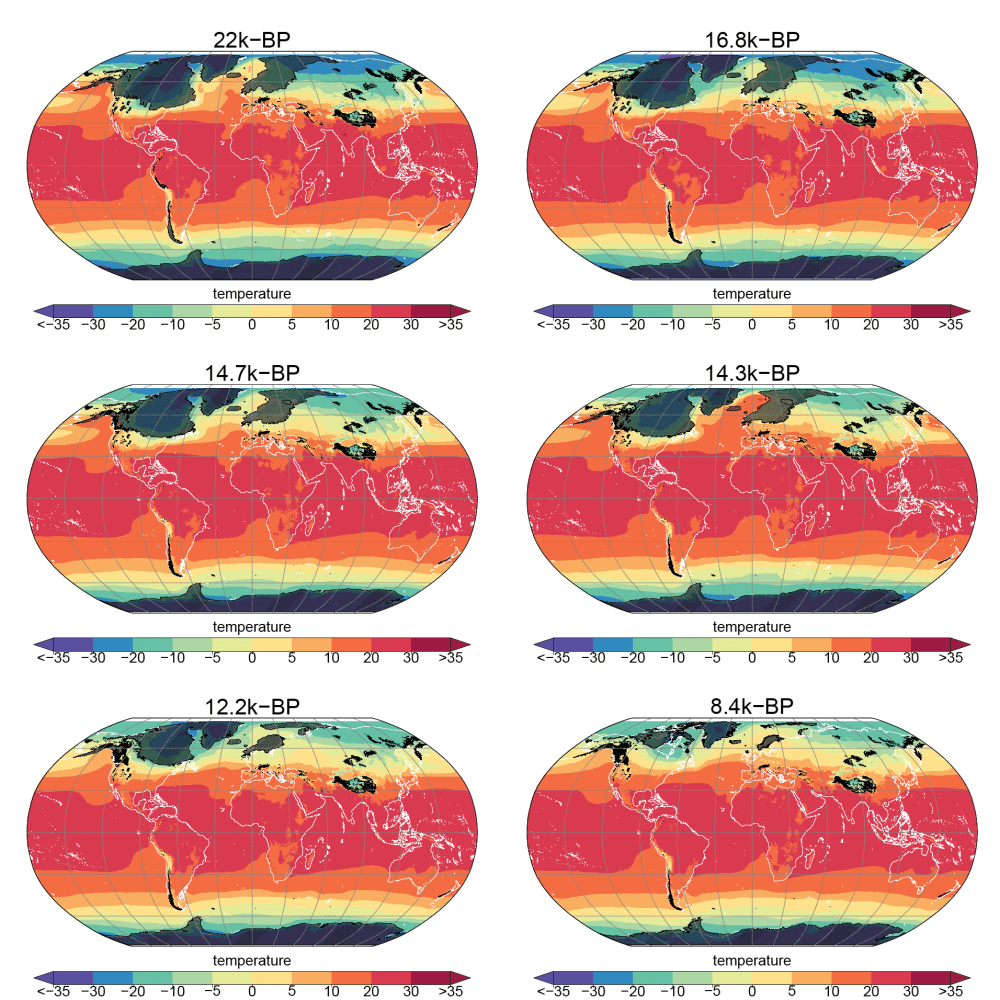
CHELSA-TraCE21k – 1km climate timeseries since the LGM:
Data: https://chelsa-climate.org/chelsa-trace21k/
Disclaimer
This article is a forwarded piece (data) sourced from public channels, with relevant information sources indicated, and copyright belongs to the original author or source. This article is intended for academic exchange and information sharing,using AI tools to assist in content organization, and readers are welcome to point out any issues or errors. Readers are encouraged to share the content of this public account, and can leave messages or privately message for authorization,please indicate the source when reprinting, infringement will be deleted.