Click the blue text above to follow us

📋📋📋 The contents of this article are as follows: 🎁🎁🎁
Contents
⛳️ Gift to Readers
💥1 Overview
📚2 Results
🎉3 References
🌈4 MATLAB Code and Documentation


Gift to Readers

👨💻 Conducting research involves a profound system of thought, requiring researchers to be logical, meticulous, and serious. However, effort alone is not enough; leveraging resources is often more important than sheer hard work. Additionally, one must have innovative ideas and inspirations that look up to the stars. When a philosophy teacher asks you what science is and what electricity is, do not find these questions amusing. Philosophy is the mother of science; it seeks to explore ultimate questions and find those self-evident questions that only children would ask but you cannot answer. It is recommended that readers browse through the contents in order to avoid suddenly falling into a dark maze without finding their way back. This may not reveal all the answers to your questions, but if it can raise clouds of doubt in your mind, it may create a beautiful sunset of colors. If it brings you a spiritual downpour, then take the opportunity to wash away the dust that has settled on your ‘lying flat’ mindset. Perhaps, after the rain, the world will be clearer…🔎🔎🔎



1 Overview

Overview of Electrical Testing Simulation for Power Transformers: This article includes MATLAB code for simulating electrical testing of power transformers. The simulation exercises focus on modeling various scenarios using the Electromagnetic Transient Program (EMTP), including normal operation and internal faults. Key features: Transformer Model: Detailed MATLAB model including parameters such as resistance, inductance, mutual inductance, capacitance, and specifications like rated voltage, power, and frequency. Simulation Scenarios: Three specific scenarios are simulated:
Scenario 1: No Faults (Normal Operation)
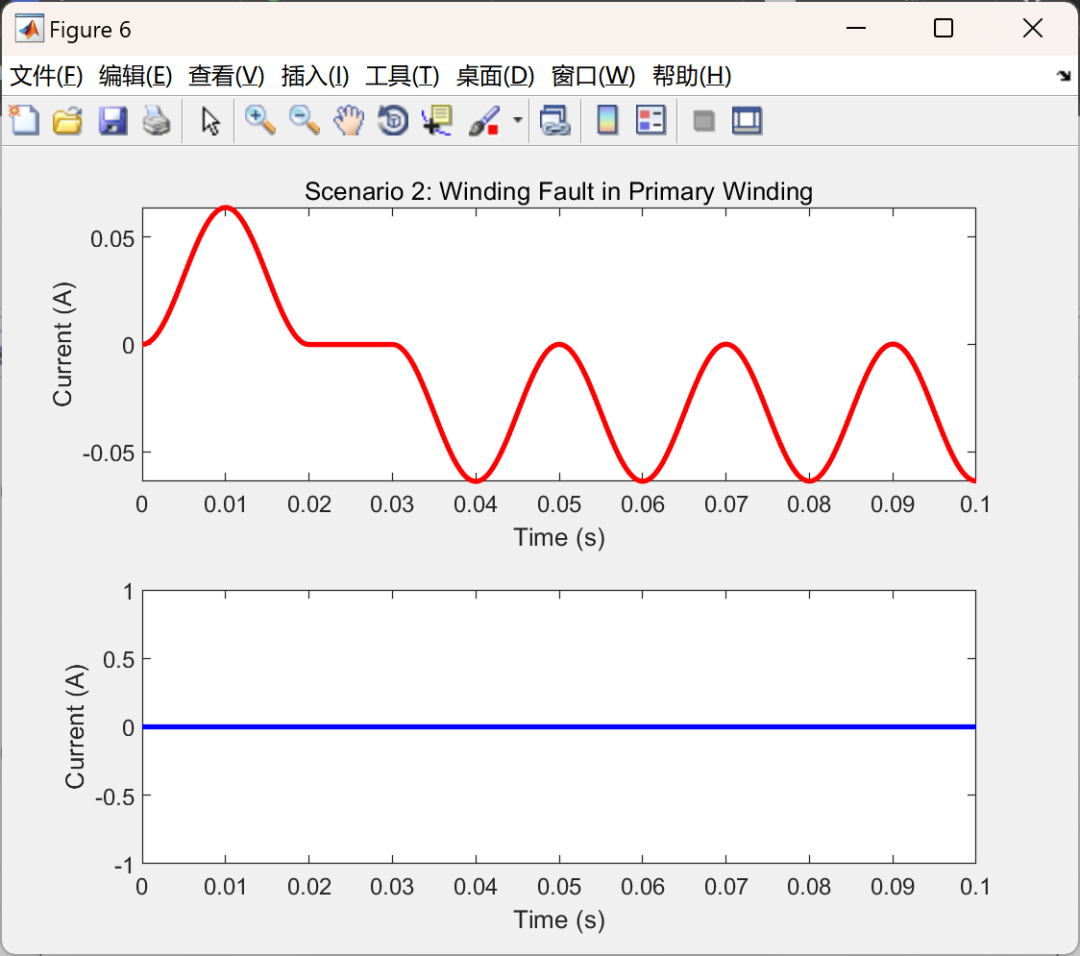
Scenario 2: Primary Winding Fault
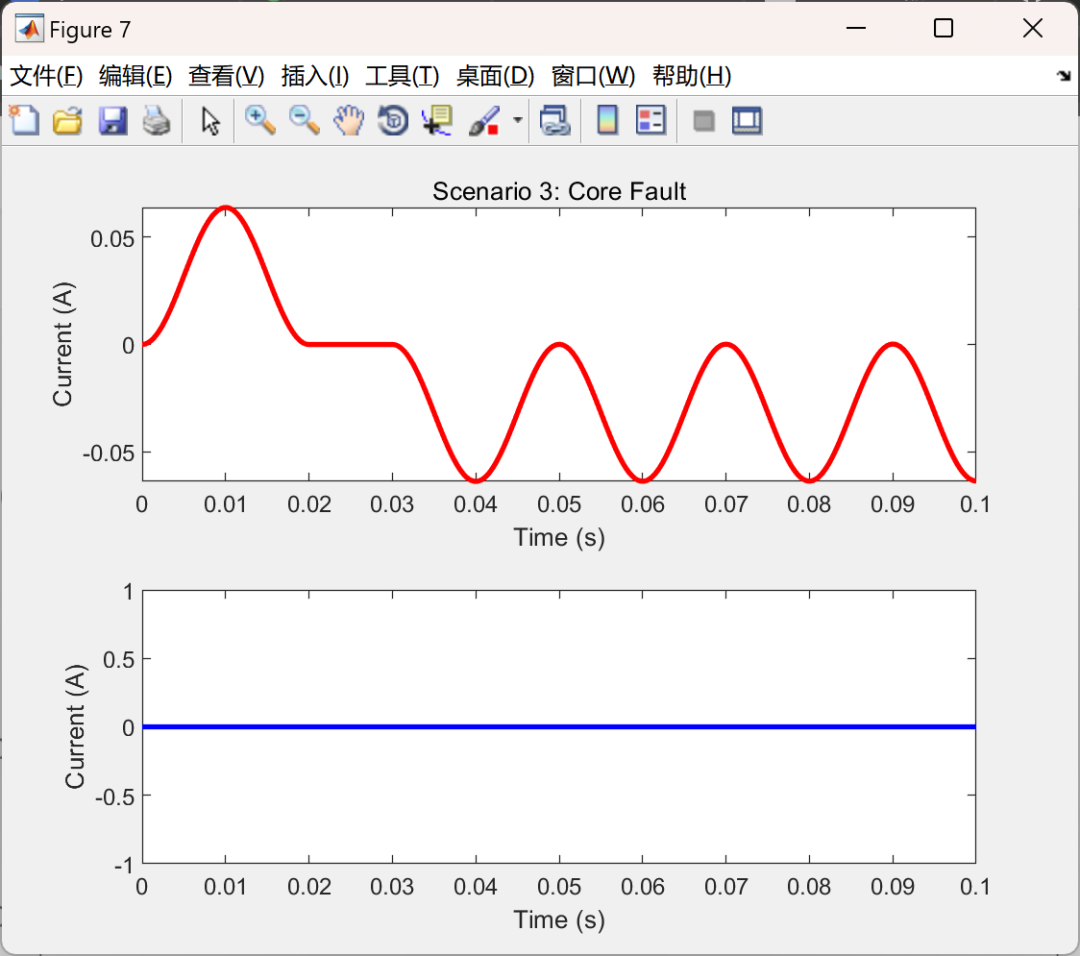
Scenario 3: Core Fault
Simulation Results: This article includes MATLAB code for executing the simulations and generating graphs for each scenario. The results will be presented and analyzed, demonstrating the impact of internal faults on transformer behavior. Electrical Testing Simulation of Power Transformers 1. Introduction This report outlines the simulation exercises for electrical testing of power transformers. The main objective is to analyze the behavior of power transformers under different scenarios, including normal operation and various fault conditions. The simulation is based on a defined set of transformer parameters, specifications, and simulation parameters. 2. Simulation Model The simulation model is implemented in MATLAB, including differential equations representing the electrical behavior of the primary and secondary windings of the power transformer. The model considers parameters such as resistance, inductance, mutual inductance, capacitance, rated voltage, rated power, and frequency. 3. Normal Operation In the first scenario, the simulation demonstrates the normal operation of the power transformer without any faults. The input voltage is a sine wave, and the current in the primary and secondary windings is plotted over time. This simulation exercise provides valuable insights into the behavior of power transformers under different operating conditions and fault scenarios. The results of each scenario can be further analyzed to enhance transformer design and reliability. 1. Introduction: Electrical testing is a critical aspect of ensuring the reliability and performance of power transformers within transmission and distribution systems. This section briefly outlines the importance of electrical testing, emphasizing the significance of factory tests, acceptance tests, and maintenance tests throughout the lifecycle of power transformers. 1.1 Importance of Electrical Testing: Power transformers play a vital role in the functionality of transmission and distribution systems. Electrical testing is essential for verifying design specifications, validating performance metrics, and identifying potential defects, ensuring the long-term performance and efficiency of these critical assets. 1.2 Types of Transformer Testing: Testing of power transformers encompasses three main categories: factory testing, acceptance testing, and maintenance testing. Factory tests are conducted before delivery to confirm design specifications, while acceptance tests are performed on-site after installation to validate specifications and establish baseline performance metrics. Maintenance tests are conducted during the lifespan to assess the condition of the transformer and prevent premature failures. 2. Objectives: The simulation exercise aims to achieve the following objectives: – Develop a comprehensive understanding of electrical testing of power transformers, simulation techniques, and internal faults. – Utilize simulation software (such as EMTP) to model and simulate internal faults in power transformers. – Assess the impact of simulated internal faults on transformer performance. – Interpret simulation results in real-world contexts. – Compare simulation results with industry standards and best practices. 3. Literature Review: The literature review serves as a foundational exploration of existing knowledge related to electrical testing of power transformers, simulation techniques, and internal faults. 3.1 Electrical Testing of Power Transformers: A thorough analysis of literature related to electrical testing of power transformers will be conducted. This includes examining standard factory tests performed by manufacturers before delivery to confirm design specifications and identify potential issues prior to delivery. Acceptance tests conducted on-site after installation will also be explored to validate specifications and establish baseline performance metrics. Additionally, literature regarding regular maintenance testing will be reviewed, which is crucial for assessing transformer condition during its lifespan. The focus will be on understanding the basis, methods, and limitations of these tests. 3.2 Simulation Techniques: A comprehensive survey of literature on simulation techniques, particularly in the context of power transformers, will be conducted. This includes exploring various software tools used for transient analysis, with a particular emphasis on the Electromagnetic Transient Program (EMTP). The review will highlight the capabilities, advantages, and limitations of EMTP and other relevant simulation tools. 3.3 Internal Faults in Transformers: The literature review will delve into research regarding internal faults in transformers. This includes examining the types of faults that transformers may encounter, such as winding faults, core faults, and insulation breakdown. Relevant symptoms and diagnostic techniques used to identify and analyze these faults will be explored. Understanding the nuances of internal faults is crucial for accurately characterizing scenarios in simulation exercises. 3.4 Literature Integration: The integrative analysis will synthesize information from the literature on electrical testing of power transformers, simulation techniques, and internal faults. This synthesis will provide a comprehensive understanding of the current state of knowledge in the field, guiding the design of simulation exercises and ensuring alignment with industry standards and best practices. The literature review will be a key component in shaping the methodology, guiding the selection of simulation parameters, and providing a solid foundation for subsequent phases of the project. 4. Methodology: 4.1 Simulation Software: The Electromagnetic Transient Program (EMTP) will be used for simulations, which is widely recognized software for transient analysis in power systems. 4.2 Simulation Setup: The simulations will replicate real-world conditions, including parameters such as transformer specifications, electrical configurations, and environmental factors. Specific tests and fault scenarios will be selected based on industry standards and the objectives of the exercise. 4.3 Justification for Test Selection: The selection of specific tests and scenarios will be justified based on their relevance to real transformer operation, potential impact on performance, and the need for diagnostic insights. 5. Simulation Results: This section will present and analyze the simulation results, demonstrating any simulated internal faults and their impact on the electrical behavior of the transformer. Graphical representations and numerical data will be included for a comprehensive understanding. 6. Discussion: The interpretation of simulation results will be discussed in real-world contexts. Comparisons will be made with expected results based on industry standards and best practices, providing a basis for evaluating the effectiveness of the simulation exercise. 7. Conclusion: This project aims to enhance understanding of electrical testing of power transformers through simulation exercises, providing valuable insights into fault diagnosis and electrical testing methods. The results will contribute to the development of effective testing strategies, ensuring the reliability and longevity of power transformers in transmission and distribution systems. The comprehensive approach outlined in this report ensures a thorough and detailed exploration of the project objectives. Detailed documentation can be found in Section 4.


2 Results

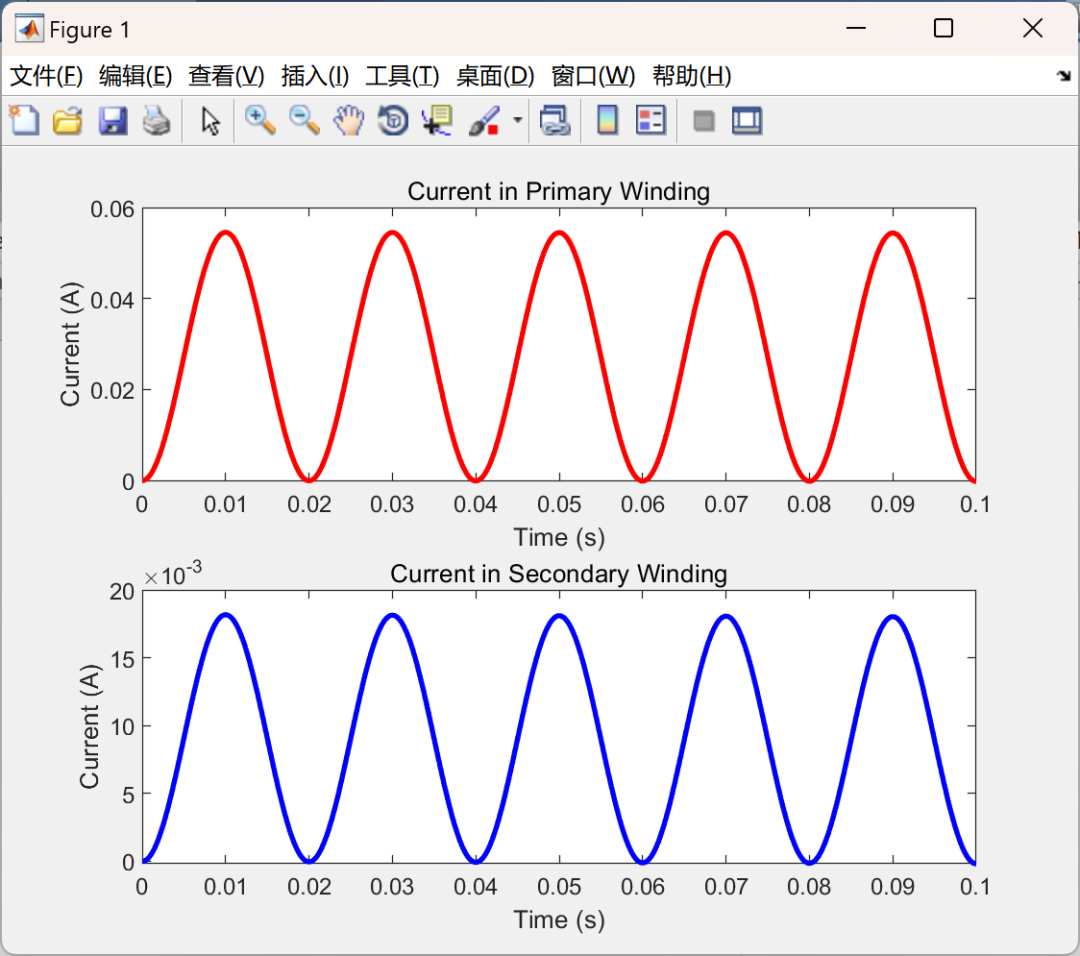
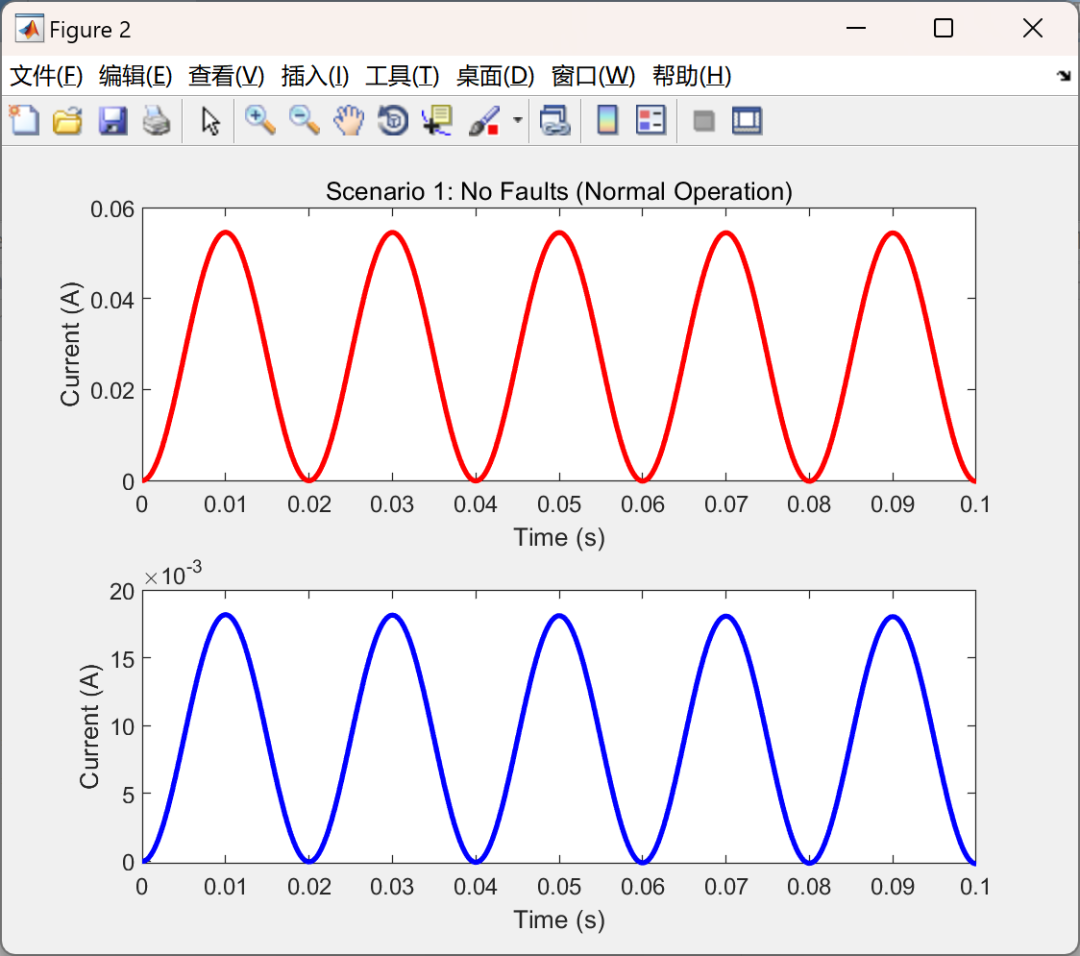
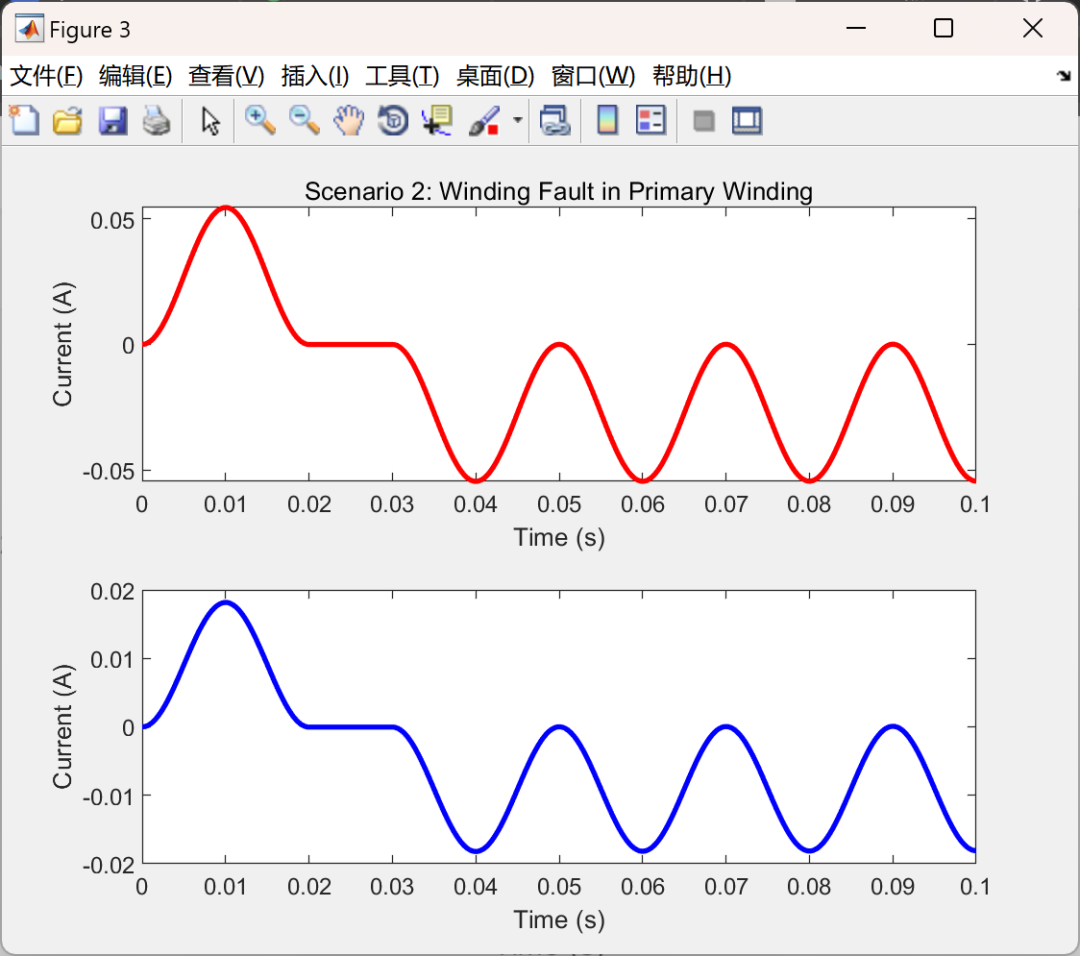
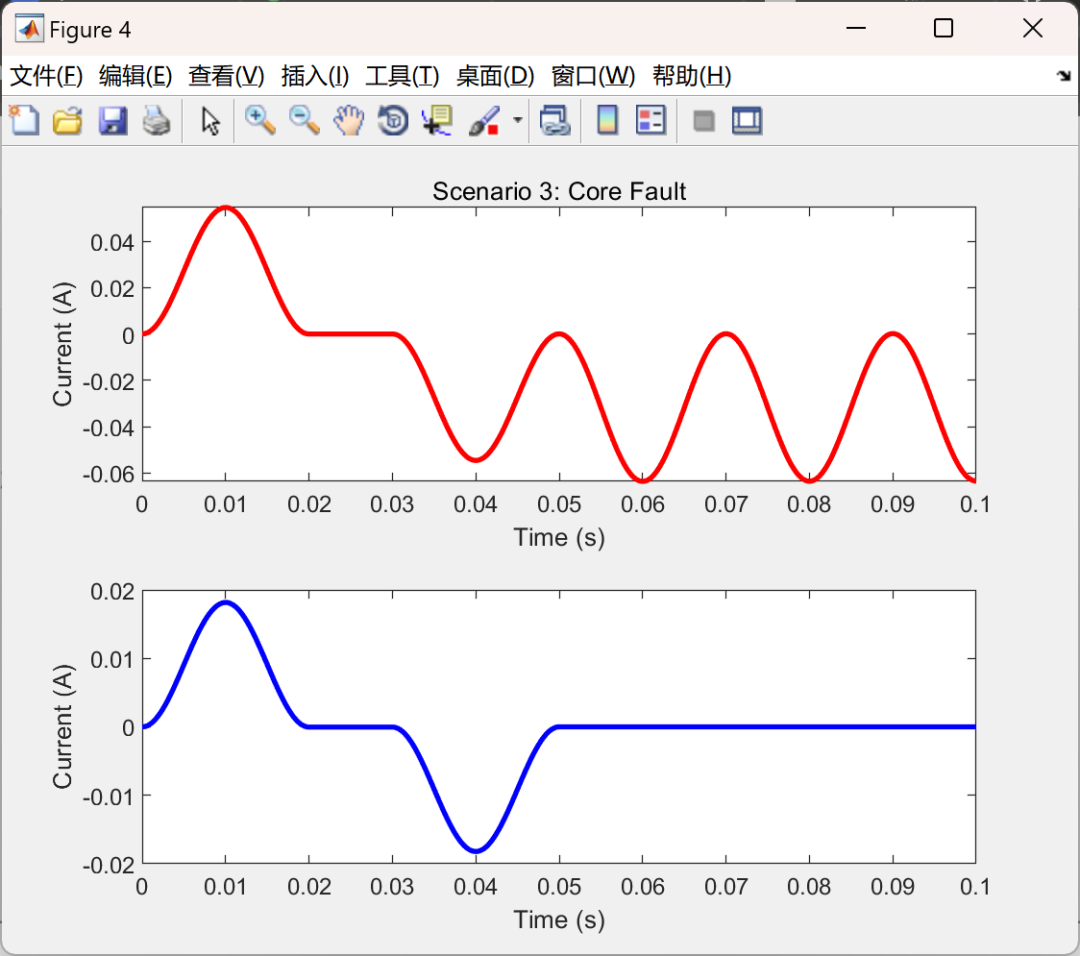
% Scenario 1: No Faults (Normal Operation)
I1_scenario1 = zeros(size(t));
I2_scenario1 = zeros(size(t));
for i = 2:length(t)
    dI1 = (V_in(i-1) - R1 * I1_scenario1(i-1) - M * dI2) / L1;
    dI2 = (M * dI1 - R2 * I2_scenario1(i-1)) / L2;
    I1_scenario1(i) = I1_scenario1(i-1) + dI1 * timestep;
    I2_scenario1(i) = I2_scenario1(i-1) + dI2 * timestep;
end
% Plot Scenario 1
figure;
subplot(2, 1, 1);
plot(t, I1_scenario1, 'r', 'LineWidth', 2);
title('Scenario 1: No Faults (Normal Operation)');
xlabel('Time (s)');
ylabel('Current (A)');
subplot(2, 1, 2);
plot(t, I2_scenario1, 'b', 'LineWidth', 2);
xlabel('Time (s)');
ylabel('Current (A)');
% Scenario 2: Winding Fault in Primary Winding
I1_scenario2 = zeros(size(t));
I2_scenario2 = zeros(size(t));
for i = 2:length(t)
    % Introduce winding fault in primary winding
    if t(i) > 0.02 && t(i) < 0.03
        V_in(i) = 0;  % Simulate a short circuit in the primary winding
    end
    dI1 = (V_in(i-1) - R1 * I1_scenario2(i-1) - M * dI2) / L1;
    dI2 = (M * dI1 - R2 * I2_scenario2(i-1)) / L2;
    I1_scenario2(i) = I1_scenario2(i-1) + dI1 * timestep;
    I2_scenario2(i) = I2_scenario2(i-1) + dI2 * timestep;
end
% Plot Scenario 2
figure;
subplot(2, 1, 1);
plot(t, I1_scenario2, 'r', 'LineWidth', 2);
title('Scenario 2: Winding Fault in Primary Winding');
xlabel('Time (s)');
ylabel('Current (A)');
subplot(2, 1, 2);
plot(t, I2_scenario2, 'b', 'LineWidth', 2);
xlabel('Time (s)');
ylabel('Current (A)');
% Scenario 3: Core Fault
I1_scenario3 = zeros(size(t));
I2_scenario3 = zeros(size(t));
for i = 2:length(t)
    % Introduce core fault
    if t(i) > 0.05 && t(i) < 0.06
        M = 0;  % Simulate a breakdown in the core
    end
end

3 References

Some content in this article is sourced from the internet, and references will be noted. If there are any inaccuracies, please feel free to contact us for removal.

[1] Zhu Yi. Research on Electromagnetic Transient Simulation Models and Algorithms for Power Transformers [D]. Tianjin University, 2012. DOI:10.7666/d.Y2242950. [2] Xu Chaoying, Li Haifeng, Zhao Jiancang, et al. Simulation Research on Excitation Inrush Current and Fault Current of Power Transformers [J]. Relay, 2002. DOI:CNKI:SUN:JDQW.0.2002-06-008.
[3] Wang Qiuhong, Luo Jian. Application of Electromagnetic Transient Program EMTP in Relay Protection of Power Systems [J]. Journal of Chongqing Electric Power College, 2008, 013(004):15-17. DOI:10.3969/j.issn.1008-8032.2008.04.005.
[4] Han Lina, Yang Zhijian. Application of Electromagnetic Transient Program EMTP in Power Systems [J]. Guangdong Transmission and Substation Technology, 2006(2):4. DOI:10.3969/j.issn.1672-6324.2006.02.005.



4 MATLAB Code and Documentation
 Public AccountDASHU
Lychee Research Society